Results by title
7 books match the query 'Bankers'
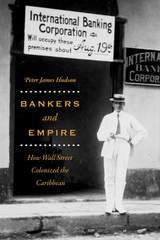
Bankers and Empire
How Wall Street Colonized the CaribbeanPeter James Hudson
University of Chicago Press, 2017
Bankers in the Ivory Tower
The Troubling Rise of Financiers in US Higher EducationCharlie Eaton
University of Chicago Press, 2022
Exposes the intimate relationship between big finance and higher education inequality in America.
Elite colleges have long played a crucial role in maintaining social and class status in America, while public universities have offered a major stepping stone to new economic opportunities. However, as Charlie Eaton reveals in Bankers in the Ivory Tower, finance has played a central role in the widening inequality in recent decades, both in American higher education and in American society at large.
With federal and state funding falling short, the US higher education system has become increasingly dependent on financial markets and the financiers that mediate them. Beginning in the 1980s, the government, colleges, students, and their families took on multiple new roles as financial investors, borrowers, and brokers. The turn to finance, however, has yielded wildly unequal results. At the top, ties to Wall Street help the most elite private schools achieve the greatest endowment growth through hedge fund investments and the support of wealthy donors. At the bottom, takeovers by private equity transform for-profit colleges into predatory organizations that leave disadvantaged students with massive loan debt and few educational benefits. And in the middle, public universities are squeezed between incentives to increase tuition and pressures to maintain access and affordability. Eaton chronicles these transformations, making clear for the first time just how tight the links are between powerful financiers and America’s unequal system of higher education.
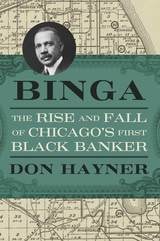
Binga
The Rise and Fall of Chicago's First Black BankerDon Hayner
Northwestern University Press, 2020
Binga is the definitive full-length biography of Jesse Binga, the first black banker in Chicago. Born into a large family in Detroit, Binga arrived in Chicago in 1892 in his late twenties with virtually nothing. Through his wits and resourcefulness, he rose to wealth and influence as a real estate broker, and in 1908 he founded the Binga Bank, the first black-owned bank in the city. But his achievements were followed by an equally notable downfall. Binga recounts this gripping story about race, history, politics, and finance.
The Black Belt, where Binga’s bank was located, was a segregated neighborhood on Chicago’s South Side—a burgeoning city within a city—and its growth can be traced through the arc of Binga’s career. He preached and embodied an American gospel of self-help and accrued wealth while expanding housing options and business opportunities for blacks. Devout Roman Catholics, he and his wife Eudora supported church activities and various cultural and artistic organizations; their annual Christmas party was the Black Belt’s social event of the year. But Binga’s success came at the price of a vicious backlash. After he moved his family into a white neighborhood in 1917, their house was bombed multiple times, his offices were attacked twice, and he became a lightning rod for the worst race riots in Chicago history, which took place in 1919. Binga persevered, but, starting with the stock market crash of October 1929, a string of reversals cost him his bank, his property, and his fortune.
A quintessentially Chicago story, Binga tells the history of racial change in one of the most segregated cities in America and how an extraordinary man stood as a symbol of hope in a community isolated by racial animosity.
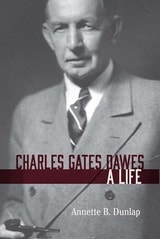
Charles Gates Dawes
A LifeAnnette B. Dunlap
Northwestern University Press, 2016
Charles Gates Dawes: A Life is the first comprehensive biography of an American in whose fascinating story contemporary readers can follow the struggles and triumphs of early twentieth-century America and Europe.
Dawes is most known today as vice president of the United States under Calvin Coolidge, but he also distinguished himself and his hometown of Evanston, Illinois, on the world stage with the 1925 Nobel Peace Prize. This engrossing biography traces how, when the punitive armistice that ended the First World War resulted in a disabled, restive Germany, Dawes’s diplomatic legerdemain averted war through a renegotiation of Germany’s debt repayments.
Dawes’s diplomatic and political achievements, however, were only the illustrious capstones to a multifaceted career that included military service, law, finance, and business on the local, state, national, and global stages. In every arena of his life, he combined the social graces of the Gilded Age with the spirit of service of the Progressive Era.
Despite his life of disciplined service, Dawes was an ebullient and irrepressible figure. Dawes’s salty language was often colorful fodder for tabloid and magazine writers of his era. In this captivating biography, Annette B. Dunlap recounts the story of an original American who enlightened and enlivened his world.
This book was published in cooperation with the Evanston History Center and with generous support from the Tawani Foundation.
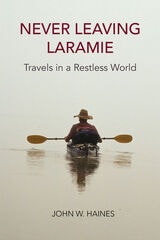
Never Leaving Laramie
Travels in a Restless WorldJohn W. Haines
Oregon State University Press, 2020
In the years since, Haines has added writer to a resume that already included baker and banker. In Never Leaving Laramie, he pulls stories about traveling into an exploration of home: How a rural home fueled and sustained a worldview. How beauty and danger blend together with humility and ego. How itchy feet combine with the comfort of home in Laramie, a tough railroad town turned college town and a launchpad for wanderers. Throughout, Haines returns to ideas of rivers and movement. He ends with a chapter on a different kind of travel, reflecting on how his accident did and did not change him and the varied ways that people can move through the world.
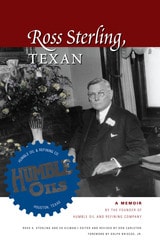
Ross Sterling, Texan
A Memoir by the Founder of Humble Oil and Refining CompanyBy Ross S. Sterling and Ed Kilman
University of Texas Press, 2007
Born on a farm near Anahuac, Texas, in 1875 and possessed of only a fourth-grade education, Ross Sterling was one of the most successful Texans of his generation. Driven by a relentless work ethic, he become a wealthy oilman, banker, newspaper publisher, and, from 1931 to 1933, one-term governor of Texas. Sterling was the principal founder of the Humble Oil and Refining Company, which eventually became the largest division of the ExxonMobil Corporation, as well as the owner of the Houston Post.
Eager to "preserve a narrative record of his life and deeds," Ross Sterling hired Ed Kilman, an old friend and editorial page editor of the Houston Post, to write his biography. Though the book was nearly finished before Sterling's death in 1949, it never found a publisher due to Kilman's florid writing style and overly hagiographic portrayal of Sterling.
In this volume, by contrast, editor Don Carleton uses the original oral history dictated by Ross Sterling to Ed Kilman to present the former governor's life story in his own words. Sterling vividly describes his formative years, early business ventures, and active role in developing the Texas oil industry. He also recalls his political career, from his appointment to the Texas Highway Commission to his term as governor, ending with his controversial defeat for reelection by "Ma" Ferguson. Sterling's reminiscences constitute an important primary source not only on the life of a Texan who deserves to be more widely remembered, but also on the history of Houston and the growth of the American oil industry.
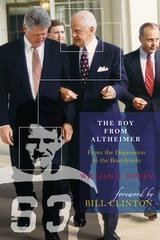
The Boy from Altheimer
From the Depression to the BoardroomWilliam H. Bowen
University of Arkansas Press, 2006