Results by title
365 books match the query 'Correspondence' and 88 start with t
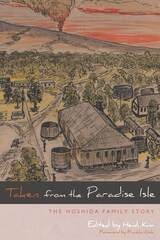
Taken from the Paradise Isle
The Hoshida Family StoryHeidi Kim
University Press of Colorado, 2015
Crafted from George Hoshida’s diary and memoir, as well as letters faithfully exchanged with his wife Tamae, Taken from the Paradise Isle is an intimate account of the anger, resignation, philosophy, optimism, and love with which the Hoshida family endured their separation and incarceration during World War II.
George and Tamae Hoshida and their children were a Japanese American family who lived in Hawai‘i. In 1942, George was arrested as a “potentially dangerous alien” and interned in a series of camps over the next two years. Meanwhile, forced to leave her handicapped eldest daughter behind in a nursing home in Hawai‘i, Tamae and three daughters, including a newborn, were incarcerated at the Jerome Relocation Center in Arkansas. George and Tamae regularly exchanged letters during this time, and George maintained a diary including personal thoughts, watercolors, and sketches. In Taken from the Paradise Isle these sources are bolstered by extensive archival documents and editor Heidi Kim’s historical contextualization, providing a new and important perspective on the tragedy of the incarceration as it affected Japanese American families in Hawai‘i.
This personal narrative of the Japanese American experience adds to the growing testimony of memoirs and oral histories that illuminate the emotional, psychological, physical, and economic toll suffered by Nikkei as the result of the violation of their civil rights during World War II.
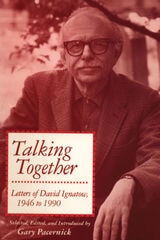
Talking Together
Letters of David Ignatow, 1946-1990David Ignatow; Selected, Edited and Introduced by Gary Pacernick
University of Alabama Press, 1992
The letters of David Ignatow reveal the poet in “company” with a community of writers as he shares with them the details and nuances of his everyday existence: the key acts of friendship and enmity, of good news and bad, of struggle, work, success, and failure that comprise a life devoted to making art. The letters also serve as a vehicle for Ignatow to express his views on a whole range of issues from writing, teaching, and editing poetry, to his visions of the self, death and the cosmos. But the key is “company”—the support system that helps sustain the poet and that enables him to help others.
One of the many things we may learn from the letters of David Ignatow is the power of the individual to affect another’s life, to help sustain and even change it.
Teaching Peace
Students Exchange Letters with Their TeacherColman McCarthy
Vanderbilt University Press, 2015
The discussions range from peace and war to a host of other issues of social justice, such as the death penalty, human rights, poverty, the living wage, animal rights, and vegetarianism. The wide-ranging letters suggest how teacher and students co-create a world of more love and less hate.

Teresa de Avila, Lettered Woman
Barbara Mujica
Vanderbilt University Press, 2009
Teresa's epistolary writing reveals how she used her political acumen to dodge inquisitors and negotiate the thorny issues of the reform, facing off the authorities--albeit with considerable tact--and reprimanding priests and nuns who failed to follow her orders. Her letters bring to light the different strategies she used--code names, secret routing--in order to communicate with nuns and male allies. They show how she manipulated language, varying her tone and rhetoric according to the recipient or slipping into deliberate vagueness in order to avoid divulging secrets. What emerges from her correspondence is a portrait of extraordinary courage, ability, and shrewdness.
In the sixteenth century, the word letrado (lettered) referred to the learned men of the Church. Teresa treated letrados with great respect and always insisted on her own lack of learning. The irony is that although women could not be letradas, Teresa was, as her correspondence shows, "lettered" in more ways than one.
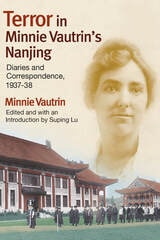
Terror in Minnie Vautrin's Nanjing
Diaries and Correspondence, 1937-38Minnie Vautrin. Edited and with an Introduction by Suping Lu
University of Illinois Press, 2007
In December of 1937, the Japanese Imperial Army marched into China's capital city of Nanjing and launched six weeks of carnage that would become known as the Rape of Nanjing. In addition to the deaths of Chinese POWs and civilians, tens of thousands of women were raped, tortured, and killed by Japanese soldiers. In this traumatic environment, both native and foreign-born inhabitants of Nanjing struggled to carry on with their lives.
This volume collects the diaries and correspondence of Minnie Vautrin, a farmgirl from Illinois who had dedicated herself to the education of Chinese women at Ginling College in Nanjing. Faced with the impending Japanese attack, she turned the school into a sanctuary for ten thousand women and girls. Vautrin's firsthand accounts of daily life in Nanjing and the intensifying threat of Japanese invasion reveal the courage of the occupants under siege--Chinese nationals as well as Western missionaries, teachers, surgeons and business people--and the personal costs of violence in wartime.
Thanks to Vautrin's painstaking effort in keeping a day-to-day account, present-day readers are able to examine this episode of history at close range through her eyes. With detailed maps, photographs, and carefully researched in-depth annotations, Terror in Minnie Vautrin's Nanjing: Diaries and Correspondence, 1937-38 presents a comprehensive and detailed daily account of the events and of life during the horror-stricken days within the city walls and in particular on the Ginling campus. Through chronologically arranged diaries, letters, reports, documents, and telegrams, Vautrin bears witness to those terrible events and to the magnitude of trauma that the Nanjing Massacre exacted on the populace.
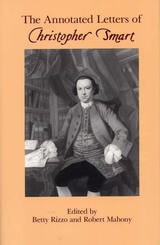
The Annotated Letters of Christopher Smart
Edited by Betty Rizzo and Robert Mahony
Southern Illinois University Press, 1991
The only collection of all known letters of Christopher Smart provides the best psychological explanation to date of that complex and elusive eighteenth-century poet.
The significant characteristics that distinguish Smart’s prose letters from his poetry, Betty Rizzo and Robert Mahony note, are that his letters were requests for assistance while his verses were bequests, gifts in which he set great store. Indeed, it was Smart’s lifelong conviction that he was a poet of major importance.
As Smart biographer Karina Williamson notes, "The splendidly informative and vivaciously written accounts of the circumstances surrounding each letter, or group of letters, add up to what is in effect a miniature biography."
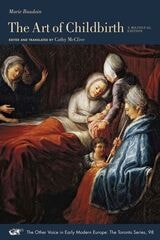
The Art of Childbirth
A Seventeenth-Century Midwife’s Epistolary Treatise to Doctor Vallant: A Bilingual EditionMarie Baudoin
Iter Press, 2022
In 1671, Marie Baudoin (1625–1700), head midwife and governor of the Hôtel-Dieu of Clermont-Ferrand, sent a treatise on the art of childbirth to her powerful Parisian patron, Dr. Vallant. The story of how Baudoin’s knowledge and expertise as a midwife came to be expressed, recorded, and archived raises the question: Was Baudoin exceptional because she was herself extraordinary, or because her voice has reached us through Vallant’s careful archival practices? Either way, Baudoin’s treatise invites us to reconsider the limits of what we thought we knew midwives “could be and do” in seventeenth-century France. Grounding Marie Baudoin’s text in a microanalysis of her life, work, and the Jansenist network between Paris and Clermont-Ferrand, this book connects historiographies of midwifery, Jansenism, hospital administration, public health, knowledge and record-keeping, and women’s work, underscoring both Baudoin’s capabilities and the archival accidents and intentions behind the preservation of her treatise in a letter.

The Centenary Edition of the Works of Nathaniel Hawthorne
Vol. XIX, The Consular Letters, 1853–1855Nathaniel Hawthorne
The Ohio State University Press, 1988
The Centenary Edition of the Works of Nathaniel Hawthorne
Vol. XV, The Letters, 1813-1843Nathaniel Hawthorne
The Ohio State University Press, 1985
The Centenary Edition of the Works of Nathaniel Hawthorne
Vol. XX, The Consular Letters, 1856–1857Nathaniel Hawthorne
The Ohio State University Press, 1988

The Collected Letters of George Gissing Volume 5
1892-1895George Gissing
Ohio University Press, 1994
Gissing’s career, which spanned the period of about 1877 to his death in 1903, was characterized by prodigious output (almost a novel a year in the early days), modest recognition, and modest income. He wrote of poverty, socialism, class differences, social reform, and later on, about the problems of women and industrialization. His best known works are New Grub Street (1891) and Private Papers of Henry Ryecroft (1903), rich sources of social commentary that reflect a literary transition from the Victorian to the modern period.
For many years, the only Gissing letters available to the public were those in the modest selection of letters to his family published in 1927. Now the editors have culled widely scattered sources—private and public collections, journals, newspapers, memoirs, biographies, and sales catalogs—to gather and organize Gissing’s correspondence, including letters to him, and to provide an editorial context.
The years 1892-1895 saw an increase in the bulk and scope of Gissing’s literary production, coinciding with his new and cordial association with publishers Bullen and Lawrence. During this period, the partners published Denzil Quarrier, The Odd Women, In the Year of Jubilee, ad Eve’s Ransom, while A. and C. Black brought out Born in Exile. Gissing’s correspondence with his publishers, some of which is printed here for the first time, is matched in significance by his letters to his literary agent William Morris Colles and to editors such as Clement Shorter, who were instrumental in turning Gissing to the short story. His domestic life remained grim: his unfortunate marriage ruled out the possibility of satisfactory social relationships, and his anxiety over the care of his son Walter was eased only by sending the infant away to stay with strangers. New friends, especially Clara Collet and Edward Clodd, were a precious asset—in their presence he could be his better self, a highly cultured, joy-loving individual whose work was finding greater favor with the public.
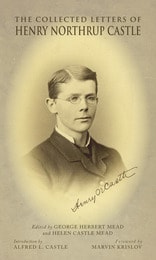
The Collected Letters of Henry Northrup Castle
Henry Northrup Castle
Ohio University Press, 2012
George Herbert Mead, one of America’s most important and influential philosophers, a founder of pragmatism, social psychology, and symbolic interactionism, was also a keen observer of American culture and early modernism. In the period from the 1870s to 1895, Henry Northrup Castle maintained a correspondence with family members and with Mead—his best friend at Oberlin College and brother-in-law—that reveals many of the intellectual, economic, and cultural forces that shaped American thought in that complex era. Close friends of John Dewey, Jane Addams, and other leading Chicago Progressives, the author of these often intimate letters comments frankly on pivotal events affecting higher education, developments at Oberlin College, Hawaii (where the Castles lived), progressivism, and the general angst that many young intellectuals were experiencing in early modern America.
The letters, drawn from the Mead-Castle collection at the University of Chicago, were collected and edited by Mead after the tragic death of Henry Castle in a shipping accident in the North Sea. Working with his wife Helen Castle (one of Henry’s sisters), he privately published fifty copies of the letters to record an important relationship and as an intellectual history of two progressive thinkers at the end of the nineteenth century. American historians, such as Robert Crunden and Gary Cook, have noted the importance of the letters to historians of the late nineteenth century.
The letters are made available here using the basic Mead text of 1902. Additional insights into the connection between Mead, John Dewey, Henry and Harriet Castle, and Hawaii’s progressive kindergarten system are provided by the foundation’s executive director Alfred L. Castle. Marvin Krislov, president of Oberlin College, has added additional comments on the importance of the letters to understanding the intellectual relationship that flourished at Oberlin College.
Published with the support of the Samuel N. and Mary Castle Foundation.
The Collected Works of Benjamin Hawkins, 1796–1810
Benjamin Hawkins, edited and with an introduction by H. Thomas Foster, II
University of Alabama Press, 2003
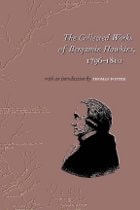
In 1795 Benjamin Hawkins, a former US senator and advisor to George Washington, was appointed US Indian agent and superintendent of all the tribes south of the Ohio River. Unlike most other agents, he lived among the Creek Indians for his entire tenure, from 1796 to 1816. Journeying forth from his home on the Flint River in Georgia, he served southeastern Indians as government intermediary during one of the longest eras of peace in the historic period.
Hawkins’s journals provide detailed information about European-Indian relations in the 18th-century frontier of the South. His descriptions of the natural and cultural environment are considered among the best sources for the ethnohistory of the Choctaw, Cherokee, Chickasaw, and, especially, the Creek Indians and the natural history of their territory.
Two previously published bodies of work by Benjamin Hawkins are included here—A Sketch of the Creek Country in the Years 1798 and 1799 and The Letters of Benjamin Hawkins 1796-1806. A third body of work that has never been published, “A Viatory or Journal of Distances” (describing routes and distances of a 3,578-mile journey through parts of Georgia, Alabama, and Mississippi), has been added. Together, these documents make up the known body of Hawkins’ work—his talks, treaties, correspondence, aboriginal vocabularies, travel journals, and records of the manners, customs, rites, and civil polity of the tribes. Hawkins' work provides an invaluable record of the time period.

The Complete Civil War Journal and Selected Letters of Thomas Wentworth Higginson
Thomas Wentworth Higginson
University of Chicago Press, 1999
So wrote Thomas Wentworth Higginson about his role in one of the most compelling and fascinating episodes in the history of the United States. As the colonel of the first regiment of black men in the Union army during the Civil War, Higginson was an early, articulate, and powerful crusader for civil rights, and his journal and letters, collected for the first time in this volume, present some of the most extraordinary documents of the Civil War.
Higginson was a politically engaged intellectual at the forefront of radical antislavery, labor, and feminist causes. Born in 1823 to a formerly wealthy but still prominent Brahmin family, he became one of America's leading social activists and a prominent writer, minister, and reformer. With the publication in 1869 of his classic Army Life in a Black Regiment, which drew on this journal, Higginson became one of the most important chroniclers of the Civil War. The Complete Civil War Journal and Selected Letters of Thomas Wentworth Higginson is the first comprehensive edition of his journal. Sensitively and thoroughly annotated by Christopher Looby and supplemented by a large selection of Higginson's wartime letters, this volume offers the most vivid and intimate picture of the radical interracial solidarity brought about by the transformative experience of the army camp and of Civil War life.
"The immediacy of Higginson's reflections, as well as their sharp insights, make this journal both distinctive and enduringly compelling . . . . Higginson's vivid texts can once again educate, gratify and delight readers."—Publishers Weekly
"This volume will enrich our understanding of the transformations that emancipation and war wrought."—Library Journal
The Complete Writings and Selected Correspondence of John Dickinson
Volume 1Jane E. Calvert
University of Delaware Press, 2011
The Complete Writings and Selected Correspondence of John Dickinson
Volume 2Jane E. Calvert
University of Delaware Press, 2021
Dickinson’s hard work on behalf of his clients brought him success in other areas of his public life. In October 1759, he was elected to his first public position as a representative for Kent County, Del., the following year he was elevated to the position of speaker, and in 1762, he became a representative for Philadelphia County, Pa. As a legislator in two colonies, learning his craft as a global war unfolded, he contributed to bills on military and defense, Indian relations, infrastructure improvements and city management, and served on various committees. The death of George II occasioned debates over laws and judges, in which Dickinson participated. This era concludes with Dickinson playing a central role in managing the unfolding Paxton Riots, in which frontiersmen massacred peaceful Indians and threatened the Quaker leadership of Pennsylvania.
In private, Dickinson lost the two most prominent male figures in his life in 1760, his father, Samuel, and soon thereafter, his mentor, colleague, and friend, John Moland. In honor of Moland, Dickinson published a poem and became a proxy head to Moland’s large family. Though his extant correspondence during this period is small, he exchanged letters with Mary Cadwalader Dickinson, Israel Pemberton, William Allason, George Read, Thomas McKean, and others. Perhaps most significant, he wrote a lengthy, unpublished essay on the flag-of-truce trade and also maintained commonplace books as he considered his place within the British Empire, opening up the next phase in Dickinson’s life as a leader of the resistance against Britain.
Published by the University of Delaware Press. Distributed worldwide by Rutgers University Press.
The Complete Writings and Selected Correspondence of John Dickinson
Volume 3Jane E. Calvert
University of Delaware Press, 2024
The Confessions and Correspondence, Including the Letters to Malesherbes
Jean-Jacques Rousseau
Dartmouth College Press, 1998
The Converse of the Pen
Acts of Intimacy in the Eighteenth-Century Familiar LetterBruce Redford
University of Chicago Press, 1987
Redford examines six masters of the "talking letter": Lady Mary Wortley Montagu, William Cowper, Thomas Gray, Horace Walpole, James Boswell, and Samuel Johnson. All seek the paradoxical goal of artful spontaneity. Each exploits the distinctive resources of the eighteenth-century letter writer: a flexible conversational manner, a repertoire of literary and social allusion, a flair for dramatic impersonation. The voices of these letter writers "make distance, presence," in Samuel Richardson's phrase, by devising substitutes for gesture, vocal inflection, and physical context, turning each letter into a performance—an act. The resulting verbal constructs create a mysterious tension between the claims of fact and the possibilities of art. Redford recovers a neglected literary form and makes possible a deeper understanding of major eighteenth-century writers who devoted much of their talent and time to "the converse of the pen."
The Correspondence between Princess Elisabeth of Bohemia and René Descartes
Princess Elisabeth of Bohemia and René Descartes
University of Chicago Press, 2007
Between the years 1643 and 1649, Princess Elisabeth of Bohemia (1618–80) and René Descartes (1596–1650) exchanged fifty-eight letters—thirty-two from Descartes and twenty-six from Elisabeth. Their correspondence contains the only known extant philosophical writings by Elisabeth, revealing her mastery of metaphysics, analytic geometry, and moral philosophy, as well as her keen interest in natural philosophy. The letters are essential reading for anyone interested in Descartes’s philosophy, in particular his account of the human being as a union of mind and body, as well as his ethics. They also provide a unique insight into the character of their authors and the way ideas develop through intellectual collaboration.
Philosophers have long been familiar with Descartes’s side of the correspondence. Now Elisabeth’s letters—never before available in translation in their entirety—emerge this volume, adding much-needed context and depth both to Descartes’s ideas and the legacy of the princess. Lisa Shapiro’s annotated edition—which also includes Elisabeth’s correspondence with the Quakers William Penn and Robert Barclay—will be heralded by students of philosophy, feminist theorists, and historians of the early modern period.
The Correspondence of Edmund Burke, Volume X
IndexEdmund Burke
University of Chicago Press, 1978
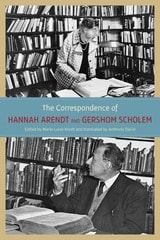
The Correspondence of Hannah Arendt and Gershom Scholem
Hannah Arendt and Gershom Scholem
University of Chicago Press, 2017
Arendt and Scholem met in 1932 in Berlin and quickly bonded over their mutual admiration for and friendship with Walter Benjamin. They began exchanging letters in 1939, and their lively correspondence continued until 1963, when Scholem’s vehement disagreement with Arendt’s Eichmann in Jerusalem led to a rupture that would last until Arendt’s death a dozen years later. The years of their friendship, however, yielded a remarkably rich bounty of letters: together, they try to come to terms with being both German and Jewish, the place and legacy of Germany before and after the Holocaust, the question of what it means to be Jewish in a post-Holocaust world, and more. Walter Benjamin is a constant presence, as his life and tragic death are emblematic of the very questions that preoccupied the pair. Like any collection of letters, however, the book also has its share of lighter moments: accounts of travels, gossipy dinner parties, and the quotidian details that make up life even in the shadow of war and loss.
In a world that continues to struggle with questions of nationalism, identity, and difference, Arendt and Scholem remain crucial thinkers. This volume offers us a way to see them, and the development of their thought, anew.
The Correspondence of Jeremy Bentham, Volume 14
Supplementary LettersEdited by Philip Schofield, Tim Causer, and Chris Riley
University College London, 2026
Over 250 letters and other materials by the philosopher and reformer Jeremy Bentham, published in full and in authoritative form for the first time.
This volume is a supplement to the chronological series The Correspondence of Jeremy Bentham. It contains over 250 letters offering new biographical information and deepens our knowledge of Bentham’s relationship with his family, with the panopticon penitentiary scheme, and with notable “disciples” such as Étienne Dumont, Henry Bickersteth, and Leicester Stanhope. Additionally, this volume deepens our understanding of Bentham’s relationship with his younger brother, Samuel Bentham, and provides a detailed account of Samuel's journey to and sojourn in the Russian Empire.
The Correspondence of Johann Amerbach
Early Printing in its Social ContextSelected, Translated, Edited, and with Commentary by Barbara C. Halporn
University of Michigan Press, 2000
Between 1478 and 1513 Amerbach published more than a hundred substantial works. He is best known for his monumental editions of the works of early church fathers. Crucial to his success was the information network he kept through correspondence with scholars, teachers, printers, booksellers, library curators, and other members of the literate community. The letters reveal how books were made, by whom, and for whom. The Correspondence of Johann Amerbach allows us to see the tensions in the new alliance between commerce and the republic of letters. Filling out the scene more fully, letters between the Amerbach children and their parents tell of the daily life, expectations, and aspirations of an intellectual bourgeois family at the end of the fifteenth century.
Barbara C. Halporn is Head of the Collection Development Department, Widener Library, Harvard University.
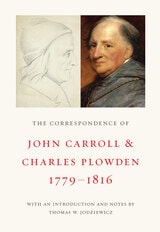
The Correspondence of John Carroll and Charles Plowden, 1779-1816
Thomas W. Jodziewicz
Catholic University of America Press, 2025
The Correspondence of Michael Faraday
1811-1831, Volume 1Frank A.J.L. James
The Institution of Engineering and Technology, 1991
The Correspondence of Michael Faraday
1832-1840, Volume 2Frank A.J.L. James
The Institution of Engineering and Technology, 1993
The Correspondence of Michael Faraday
1841-1848, Volume 3Frank A.J.L. James
The Institution of Engineering and Technology, 1996
The Correspondence of Michael Faraday
1849-1855, Volume 4Frank A.J.L. James
The Institution of Engineering and Technology, 1999
The Correspondence of Michael Faraday
1855-1860, Volume 5Frank A.J.L. James
The Institution of Engineering and Technology, 2008
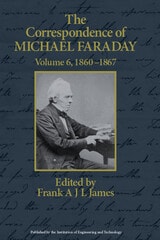
The Correspondence of Michael Faraday
1860-1867, Volume 6Frank A.J.L. James
The Institution of Engineering and Technology, 2011
The Correspondence of Pope Julius I
Glen Thompson
Catholic University of America Press, 2015

The Correspondence of Richard Price, Volume II
March 1778–February 1786D. O. Thomas, ed.
Duke University Press, 1983
The Correspondence of Richard Price, Volume III
February 1786–February 1791William Bernard Peach, editor
Duke University Press, 1983
Price's correspondence with Adams, Franklin, Jefferson, Rush, and other Americans concern the issues of slavery, the rebellion in Massachusetts, use of paper money, opposition to the establishment of religion, and the status of the federal government. Letters to Priestly, Lansdowne, and others in Britain are about science and technology, the crisis in the United Provinces, armed neutrality, the national debt, revolution, religious sects, and foreign relations. In his correspondence with French leaders following the fall of the Bastille, particularly with le Duc del la Rochefoucauld, Price expresses his high hopes for the growth of civil and religious freedom in France.
Indispensable for an understanding of the work of one of the best known and most distinguished Welshmen of the eighteenth century, this book—and the series—will also be of interest to those who study the history of ideas.
The Correspondence of Theodoret of Cyrus
The Collectio Sirmondiana, Volume 4John F. Theodoret of Cyrus
Catholic University of America Press, 2025
The Correspondence of Theodoret of Cyrus
The Collectio Sirmondiana, Volume 5John F. Theodoret of Cyrus
Catholic University of America Press, 2025
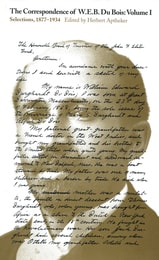
The Correspondence of W.E.B. Du Bois, Volume I
Selections, 1877–1934W.E.B. Du Bois
University of Massachusetts Press, 1997
Scholar, author, editor, teacher, reformer, and civil rights leader, W.E.B. Du Bois (1868–1963) was a major figure in American life and one of the earliest proponents of equality for Black Americans. He was a founder and leader of the Niagara Movement, the NAACP, and the Pan-African Movement; a progenitor of the 1920s Harlem Renaissance; an advocate of anticolonialism, anti-imperialism, unionism, and equality for women; and a champion of the rights of oppressed people around the world.
The three-volume Correspondence of W.E.B. Du Bois offers a unique perspective on Du Bois's experiences and views. In recognition of the significance of the Correspondence, the final volume was named a Best Book of the Year by the New York Times Book Review.
Herbert Aptheker has provided an introduction and notes to each volume, illuminating the circumstances and identifying the personalities involved in the correspondence. A long time friend and colleague of Du Bois, Aptheker is a well-known historian of the African American experience. In 1939 and again in 1969, he won the history award given by the Association for the Study of Negro Life and History. Among his most prominent works are American Negro Slave Revolts and the three-volume Documentary History of the Negro People in the United States.
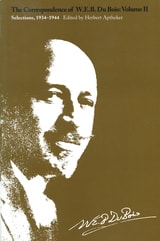
The Correspondence of W.E.B. Du Bois, Volume II
Selections, 1934–1944W.E.B. Du Bois
University of Massachusetts Press, 1997
Scholar, author, editor, teacher, reformer, and civil rights leader, W.E.B. Du Bois (1868–1963) was a major figure in American life and one of the earliest proponents of equality for black Americans. He was a founder and leader of the Niagara Movement, the NAACP, and the Pan-African Movement; a progenitor of the 1920s Harlem Renaissance; an advocate of anticolonialism, anti-imperialism, unionism, and equality for women; and a champion of the rights of oppressed people around the world.
The three-volume Correspondence of W.E.B. Du Bois offers a unique perspective on Du Bois's experiences and views. In recognition of the significance of the Correspondence, the final volume was named a Best Book of the Year by the New York Times Book Review.
Herbert Aptheker has provided an introduction and notes to each volume, illuminating the circumstances and identifying the personalities involved in the correspondence. A long time friend and colleague of Du Bois, Aptheker is a well-known historian of the African American experience. In 1939 and again in 1969, he won the history award given by the Association for the Study of Negro Life and History. Among his most prominent works are American Negro Slave Revolts and the three-volume Documentary History of the Negro People in the United States.
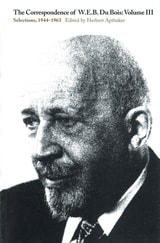
The Correspondence of W.E.B. Du Bois, Volume III
Selections, 1944–1963W.E.B. Du Bois
University of Massachusetts Press, 1997
Scholar, author, editor, teacher, reformer, and civil rights leader, W.E.B. Du Bois (1868–1963) was a major figure in American life and one of the earliest proponents of equality for black Americans. He was a founder and leader of the Niagara Movement, the NAACP, and the Pan-African Movement; a progenitor of the 1920s Harlem Renaissance; an advocate of anticolonialism, anti-imperialism, unionism, and equality for women; and a champion of the rights of oppressed people around the world.
The three-volume Correspondence of W.E.B. Du Bois offers a unique perspective on Du Bois's experiences and views. In recognition of the significance of the Correspondence, the final volume was named a Best Book of the Year by the New York Times Book Review.
Herbert Aptheker has provided an introduction and notes to each volume, illuminating the circumstances and identifying the personalities involved in the correspondence. A long time friend and colleague of Du Bois, Aptheker is a well-known historian of the African American experience. In 1939 and again in 1969, he won the history award given by the Association for the Study of Negro Life and History. Among his most prominent works are American Negro Slave Revolts and the three-volume Documentary History of the Negro People in the United States.
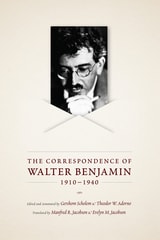
The Correspondence of Walter Benjamin, 1910-1940
Walter Benjamin
University of Chicago Press, 1994
A powerful, mesmerizing collection of letters from one of the most important intellectuals and writers of the twentieth century
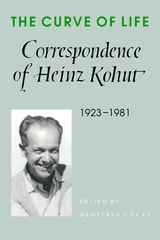
The Curve of Life
Correspondence of Heinz Kohut, 1923-1981Heinz Kohut
University of Chicago Press, 1994
The Curve of Life reveals Kohut's private and public life through a unique collection of lively and thoughtful correspondence with colleagues, public figures, family, and close friends. Over 300 never-before-published letters, drawn from Kohut's private files and from colleagues, cover Kohut's life from his native Austria in the 1930s until his death in 1981. Because many of his letters were so substantive, this rich collection clarifies Kohut's landmark published works. In letters to such diverse personalities as Anna Freud and Bruno Walter, Kohut meditated on some of the most intriguing psychoanalytic questions of the day—the nature of psychological cure, the relationship between doctor and patient, and the role of the Oedipus complex in psychoanalysis. The correspondence also reveals Kohut's lively interest in literature, music, history, and culture, as well as his deep and often contentious involvement in the politics of the psychoanalytic movement.
Kohut discussed his theories in letters to August Aichhorn, Heinz Hartmann, the Surgeon General, and even Jacqueline Kennedy, and the responses, some published here for the first time, prompted him to explore his ideas from a variety of perspectives. A letter from Anna Freud provoked Kohut to respond this way:
"What you had to say gave me great pleasure, and your approval was a welcome support amidst the inescapable insecurities under pressure to which we are all exposed. Strangely enough, it was not the discussion of scientific contributions and other statements that I had sent to you but the very last, parting sentence of your letter which gave me the most food for thought. You sent me your best wishes for the presidency of the American Psychoanalytic Association, and expressed the hope that '...this office permits opportunity for some revolutionary moves.'"
The Curve of Life illuminates the evolution of Kohut's theory of the psychology of the self, and provides a rare glimpse into the institutional and intellectual history of psychoanalysis in the last half of this century. These letters will fascinate not only scholars in psychoanalysis, but also those in the humanities, social sciences, and even theology, as well as general readers curious about the private thoughts of a towering figure in intellectual life.
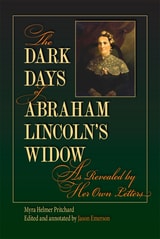
The Dark Days of Abraham Lincoln's Widow, as Revealed by Her Own Letters
Myra Helmer Pritchard, edited and annotated by Jason Emerson
Southern Illinois University Press, 2011
Written in 1927 but barred from timely publication by the Lincoln family, The Dark Days of Abraham Lincoln's Widow, as Revealed by Her Own Letters is based on nearly two dozen intimate letters written between Mary Lincoln and her close friend Myra Bradwell mainly during the former's 1875 incarceration in an insane asylum. By the 1920s most accounts of Mrs. Lincoln focused on her negative qualities and dismissed her as "crazy." Bradwell's granddaughter Myra Helmer Pritchard wrote this distinctly sympathetic manuscript at the behest of her mother, who wished to vindicate Mary Lincoln in the public eye by printing the private correspondence. Pritchard fervently defends Mrs. Lincoln's conduct and sanity, arguing that she was not insane but rather the victim of an overzealous son who had his mother committed.
The manuscript and letters were thought to have been destroyed, but fortunately the Lincolns' family lawyer stored copies in a trunk, where historian Jason Emerson discovered them in 2005. While leaving the manuscript intact, Emerson has enhanced it with an introduction and detailed annotations. He fills in factual gaps; provides background on names, places, and dates; and analyzes Pritchard's interpretations, making clear where she was right and where her passion to protect Mrs. Lincoln led to less than meticulous research and incorrect conclusions. This volume features an easy-to-follow format that showcases Pritchard's text on the left-hand pages and Emerson's insightful annotations on the right-hand pages.
Following one of the most revered and reviled, famous and infamous of the First Ladies, this book provides a unique perspective of Mrs. Lincoln's post-White House years, with an emphasis on her commitment to a sanitarium. Emerson's contributions make this volume a valuable addition to the study of the Lincoln family. This fascinating work gives today's Lincoln enthusiasts the chance to read this intriguing interpretation of the former First Lady that predates nearly every other book written about her.

The Elizabeth Cady Stanton-Susan B. Anthony Reader
Correspondence, Writings, SpeechesEllen Carol DuBois
University of Massachusetts Press, 0
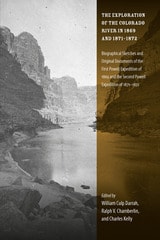
The Exploration of the Colorado River in 1869 and 1871-1872
Biographical Sketches and Original Documents of the First Powell Expedition of 1869 and the Second Powell Expedition of 1871-1872William Culp Darrah
University of Utah Press, 2009
This volume contains the journals of Major John Wesley Powell, George Young Bradley, Walter Henry Powell, and J. C. Sumner. Also included are various letters and notes by the members of the first expedition, and the journal of Francis Marion Bishop from the second expedition. All of the writings offer vivid descriptions of both adventure and of able and energetic scientific field work, and are of enduring interest and importance.
The Fatal Conceit
The Errors of SocialismF. A. Hayek
University of Chicago Press, 1988
"The achievement of The Fatal Conceit is that it freshly shows why socialism must be refuted rather than merely dismissed—then refutes it again."—David R. Henderson, Fortune.
"Fascinating. . . . The energy and precision with which Mr. Hayek sweeps away his opposition is impressive."—Edward H. Crane, Wall Street Journal
F. A. Hayek is considered a pioneer in monetary theory, the preeminent proponent of the libertarian philosophy, and the ideological mentor of the Reagan and Thatcher "revolutions."
The Gift of Correspondence in Classical Rome
Friendship in Cicero's Ad Familiares and Seneca's Moral EpistlesAmanda Wilcox
University of Wisconsin Press, 2012
Amanda Wilcox offers an innovative approach to two major collections of Roman letters—Cicero’s Ad Familiares and Seneca’s Moral Epistles—informed by modern cross-cultural theories of gift-giving.
By viewing letters and the practice of correspondence as a species of gift exchange, Wilcox provides a nuanced analysis of neglected and misunderstood aspects of Roman epistolary rhetoric and the social dynamics of friendship in Cicero’s correspondence. Turning to Seneca, she shows that he both inherited and reacted against Cicero’s euphemistic rhetoric and social practices, and she analyzes how Seneca transformed the rhetoric of his own letters from an instrument of social negotiation into an idiom for ethical philosophy and self-reflection. Though Cicero and Seneca are often viewed as a study in contrasts, Wilcox extensively compares their letters, underscoring Cicero’s significant influence on Seneca as a prose stylist, philosopher, and public figure.
The Gold Rush Letters of E. Allen Grosh and Hosea B. Grosh
Ronald M. James
University of Nevada Press, 2016
The Groshes’ letters are rich in color and important historical details. Generously annotated and with an introduction that provides a context for the brothers’ career and the setting in which they tried to make their fortune, these documents powerfully depict the often harsh realities of Gold Rush life and society.
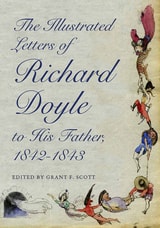
The Illustrated Letters of Richard Doyle to His Father, 1842–1843
Richard Doyle
Ohio University Press, 2015
Before he joined the staff of Punch and designed its iconic front cover, illustrator Richard “Dicky” Doyle was a young man whose father (political caricaturist John Doyle) charged him with sending a weekly letter, even though they lived under the same roof. This volume collects the fifty-three illustrated missives in their entirety for the first time and provides an uncommon peek into the intimate but expansive observations of a precocious social commentator and artist.
In a series of vivid manuscript canvases, Doyle observes Victorian customs and society. He visits operas, plays, and parades. He watches the queen visiting the House of Commons and witnesses the state funeral of the Duke of Sussex. He is caught up in the Chartist riots of August 1842 and is robbed during one of the melees. And he provides countless illustrations of ordinary people strolling in the streets and swarming the parks and picture galleries of the metropolis. The sketches offer a fresh perspective on major social and cultural events of London during the early 1840s by a keen observer not yet twenty years old.
Doyle’s epistles anticipate the modern comic strip and the graphic novel, especially in their experimentation with sequential narrative and their ingenious use of space. The letters are accompanied by a full biographical and critical introduction with new material about Doyle’s life.
The Kingdom Suffereth Violence
The Machiavelli / Erasmus / More Correspondence and Other Unpublished DocumentsPhilippe Bénéton
St. Augustine's Press, 2012
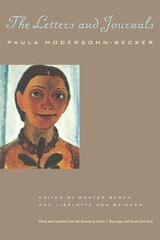
The Letters and Journals
Paula Modersohn-Becker
Northwestern University Press, 1998