Results by title
81 books match the query 'Creation' and 16 start with t
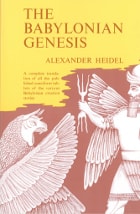
The Babylonian Genesis
The Story of the CreationAlexander Heidel
University of Chicago Press, 1963
The Babylonian Genesis offers, in one compact, accessible volume, a complete translation of all the published cuneiform tablets of the various Babylonian creation stories, of both the Semitic Babylonian and the Sumerian material. Each creation account is preceded by a brief introduction from renowned scholar and translator Alexander Heidel dealing with the age and provenance of the tablets, the aim and purpose of the story, and everything else that a reader of any level of knowledge needs to understand these stories in their context. Also included is a translation and discussion of two Babylonian creation versions written in Greek. The final chapter presents a detailed examination of the Babylonian creation accounts in their relation to our Old Testament literature.
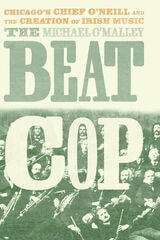
The Beat Cop
Chicago's Chief O'Neill and the Creation of Irish MusicMichael O'Malley
University of Chicago Press, 2022
The remarkable story of how modern Irish music was shaped and spread through the brash efforts of a Chicago police chief.
Irish music as we know it today was invented not just in the cobbled lanes of Dublin or the green fields of County Kerry, but also in the burgeoning metropolis of early-twentieth-century Chicago. The genre’s history combines a long folk tradition with the curatorial quirks of a single person: Francis O’Neill, a larger-than-life Chicago police chief and an Irish immigrant with a fervent interest in his home country’s music.
Michael O’Malley’s The Beat Cop tells the story of this singular figure, from his birth in Ireland in 1865 to his rough-and-tumble early life in the United States. By 1901, O’Neill had worked his way up to become Chicago’s chief of police, where he developed new methods of tracking criminals and recording their identities. At the same time, he also obsessively tracked and recorded the music he heard from local Irish immigrants, enforcing a strict view of what he felt was and wasn’t authentic. Chief O’Neill’s police work and his musical work were flip sides of the same coin, and O’Malley delves deep into how this brash immigrant harnessed his connections and policing skills to become the foremost shaper of how Americans see, and hear, the music of Ireland.

The Creation of Dangerous Violent Criminals
Lonnie H. Athens
University of Illinois Press, 1992
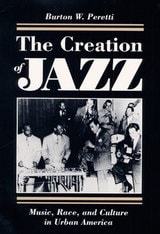
The Creation of Jazz
Music, Race, and Culture in Urban AmericaBurton W. Peretti
University of Illinois Press, 1992
The story of jazz is more than a history of the music. The racial and cultural dynamics of American cities created the music, life, and business that was jazz.
Burton W. Peretti's classic study charts the life of jazz culture from its origins in the jook joints of sharecroppers and the streets and dance halls of 1890s New Orleans to the eve of bebop and World War II. As Perett shows, jazz was the epic story of players who transitioned from childhood spasm bands to Carnegie Hall and worldwide touring and fame. It became the music of the Twenties, a decade of Prohibition, of adolescent discontent, of Harlem pride, and of Americans hoping to preserve cultural traditions in an urban, commercial age. Finally, jazz was where black and white musicians performed together, as uneasy partners, in the big bands of Artie Shaw and Benny Goodman.
Drawing on archives and the firsthand testimony of more than seventy musicians and singers (among them Benny Carter, Bud Freeman, Kid Ory, and Mary Lou Williams), The Creation of Jazz offers a comprehensive analysis of the role of early jazz in American social history.
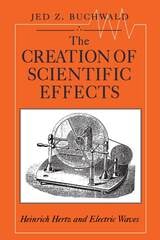
The Creation of Scientific Effects
Heinrich Hertz and Electric WavesJed Z. Buchwald
University of Chicago Press, 1994
Drawing on the lab notes, published papers, and unpublished manuscripts of Heinrich Hertz, Buchwald recreates Hertz's 1887 invention of a device that produced electromagnetic waves in wires. The invention itself was serendipitous and the device was quickly transformed, but Hertz's early experiments led to major innovations in electrodynamics. Buchwald explores the difficulty Hertz had in reconciling the theories of other physicists, including Hermann von Helmholtz and James Clerk Maxwell, and he considers the complex and often problematic connections between theory and experiment.
In this first detailed scientific biography of Hertz and his scientific community, Buchwald demonstrates that tacit knowledge can be recovered so that we can begin to identify the unspoken rules that govern scientific practice.
The Creation of an Ethnic Identity
Being Swedish American in the Augustana Synod, 1860-1917Dag Blanck
Southern Illinois University Press, 2006
Analyzing the development of a Swedish American identity
The Creation of an Ethnic Identity: Being Swedish American in the Augustana Synod, 1860–1917 analyzes how Swedish American identity was constructed, maintained, and changed in the late nineteenth and early twentieth centuries. The Augustana Synod, the largest religious-based organization created by Swedish immigrants in the United States, played an important role in establishing what it meant to be Swedish American.
In this study, author Dag Blanck poses three fundamental questions: How did an ethnic identity develop in the Augustana Synod? What was that identity? Why was an ethnic identity formed? Based on primary sources formerly unknown or neglected, The Creation of an Ethnic Identity examines the Lutheran Augustana Synod, Augustana College, and the Augustana Book Concern to provide insights into how ethnic identity is constructed within a major religious body, a central educational institution, and a major publishing house.
Starting from the concept of ethnicity as something created or invented, Blanck goes on to explore how it was possible for a white European immigrant group like the Swedes to use its ethnicity as a tool of integration into American society. The nature of their ethnicity, says Blanck, was both determined by their cultural origins and also the values and nature of American society as they perceived it. Becoming Swedish American was also a way of becoming American.
The volume, which is augmented by illustrations, integrates the most critical scholarship on immigration and ethnicity over the past half century and provides a strong argument about how ethnicity is shaped over time within an immigrant group.
The Elusive Empire
Kazan and the Creation of Russia, 1552–1671Matthew P. Romaniello
University of Wisconsin Press, 2012
In 1552, Muscovite Russia conquered the city of Kazan on the Volga River. It was the first Orthodox Christian victory against Islam since the fall of Constantinople, a turning point that, over the next four years, would complete Moscow’s control over the river. This conquest provided a direct trade route with the Middle East and would transform Muscovy into a global power. As Matthew Romaniello shows, however, learning to manage the conquered lands and peoples would take decades.
Russia did not succeed in empire-building because of its strength, leadership, or even the weakness of its neighbors, Romaniello contends; it succeeded by managing its failures. Faced with the difficulty of assimilating culturally and religiously alien peoples across thousands of miles, the Russian state was forced to compromise in ways that, for a time, permitted local elites of diverse backgrounds to share in governance and to preserve a measure of autonomy. Conscious manipulation of political and religious language proved more vital than sheer military might. For early modern Russia, empire was still elusive—an aspiration to political, economic, and military control challenged by continuing resistance, mismanagement, and tenuous influence over vast expanses of territory.
The Indiscrete Image
Infinitude and Creation of the HumanThomas A. Carlson
University of Chicago Press, 2008
Framed in response to Martin Heidegger’s influential account of the relation between technological modernity and theological tradition, The Indiscrete Image builds an understanding of creativity as conditioned by insurmountable unknowing and incalculable possibility through alternative readings of Christian theological tradition and technological culture—and the surprising resonance between these two. Carlson concludes that the always ongoing work of world creation, tied essentially to human self-creation, implies neither an idol’s closure nor an icon’s transcendence, but the “indiscrete image” whose love makes possible—by keeping open—both the human and its world.
The New Gods
E. M. Cioran
University of Chicago Press, 1974

The Presence of God and Union with God
Creation, Divine Indwelling Through Grace, Incarnation and the Blessed Vision According to Saint Thomas AquinasGilles Emery, OP
Catholic University of America Press, 2027
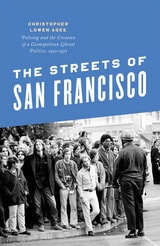
The Streets of San Francisco
Policing and the Creation of a Cosmopolitan Liberal Politics, 1950-1972Christopher Lowen Agee
University of Chicago Press, 2014
The Streets of San Francisco uncovers the seldom reported, street-level interactions between police officers and San Francisco residents and finds that police discretion was the defining feature of mid-century law enforcement. Postwar police officers enjoyed great autonomy when dealing with North Beach beats, African American gang leaders, gay and lesbian bar owners, Haight-Ashbury hippies, artists who created sexually explicit works, Chinese American entrepreneurs, and a wide range of other San Franciscans. Unexpectedly, this police independence grew into a source of both concern and inspiration for the thousands of young professionals streaming into the city's growing financial district. These young professionals ultimately used the issue of police discretion to forge a new cosmopolitan liberal coalition that incorporated both marginalized San Franciscans and rank-and-file police officers. The success of this model in San Francisco resulted in the rise of cosmopolitan liberal coalitions throughout the country, and today, liberal cities across America ground themselves in similar understandings of democracy, emphasizing both broad diversity and strong policing.
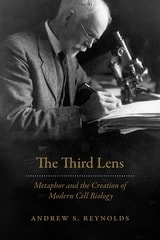
The Third Lens
Metaphor and the Creation of Modern Cell BiologyAndrew S. Reynolds
University of Chicago Press, 2018
Reynolds here investigates the role of metaphors in the creation of scientific concepts, theories, and explanations, using cell theory as his primary case study. He explores the history of key metaphors that have informed the field and the experimental, philosophical, and social circumstances under which they have emerged, risen in popularity, and in some cases faded from view. How we think of cells—as chambers, organisms, or even machines—makes a difference to scientific practice. Consequently, an accurate picture of how scientific knowledge is made requires us to understand how the metaphors scientists use—and the social values that often surreptitiously accompany them—influence our understanding of the world, and, ultimately, of ourselves.
The influence of metaphor isn’t limited to how we think about cells or proteins: in some cases they can even lead to real material change in the very nature of the thing in question, as scientists use technology to alter the reality to fit the metaphor. Drawing out the implications of science’s reliance upon metaphor, The Third Lens will be of interest to anyone working in the areas of history and philosophy of science, science studies, cell and molecular biology, science education and communication, and metaphor in general.
The Turk in America
The Creation of an Enduring PrejudiceJustin McCarthy
University of Utah Press, 2010
Utah Series in Middle East Studies
In The Turk in America, historian Justin McCarthy seeks to explain the historical basis for American prejudice towards Turks in the nineteenth and early twentieth centuries. The volume focuses on fraudulent characterizations of Turks, mostly stemming from an antipathy in Europe and America toward non-Christians, and especially Muslims. Spanning one hundred and fifty years, this history explores the misinformation largely responsible for the negative stereotypes of Turks during this period.
Time, Creation and the Continuum
Theories in Antiquity and the Early Middle AgesRichard Sorabji
University of Chicago Press, 2006
“Splendid. . . . The canvas is vast, the picture animated, the painter nonpareil. . . . Sorabji’s work will encourage more adventurers to follow him to this fascinating new-found land.”—Jonathan Barnes, Times Literary Supplement
“One of the most important works in the history of metaphysics to appear in English for a considerable time. No one concerned with the problems with which it deals either as a historian of ideas or as a philosopher can afford to neglect it.”—Donald MacKinnon, Scottish Journal of Theology
“Unusually readable for such scholarly content, the book provides in rich and cogent terms a lively and well-balanced discussion of matters of concern to a wide academic audience.”—Choice

Travel Technologies for All
Social and business opportunities in the creation of inclusive mobilitySimon Edwards
The Institution of Engineering and Technology, 2026

Turin 1564-1680
Urban Design, Military Culture, and the Creation of the Absolutist CapitalMartha D. Pollak
University of Chicago Press, 1991