Results by title
161 books match the query 'Cuba' and 26 start with t
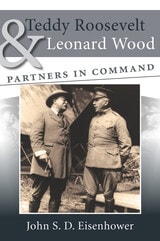
Teddy Roosevelt and Leonard Wood
Partners in CommandJohn S. D. Eisenhower
University of Missouri Press, 2013
Theodore Roosevelt was a man of wide interests, strong opinions, and intense ambition for both himself and his country. When he met Leonard Wood in 1897, he recognized a kindred spirit. Moreover, the two men shared a zeal for making the United States an imperial power that would challenge Great Britain as world leader. For the remainder of their lives, their careers would intertwine in ways that shaped the American nation.
When the Spanish American War came, both men seized the opportunity to promote the goals of American empire. Roosevelt resigned as assistant secretary of the navy in William McKinley’s administration to serve as a lieutenant colonel of the Rough Riders, a newly organized volunteer cavalry. Wood, then a captain in the medical corps and physician to McKinley, was promoted to colonel and given charge of the unit.
Roosevelt later took over command of the Rough Riders. In the Battle of San Juan Hill, he led it in a charge up Kettle Hill that would end in victory for the American troops and make their daring commander a household name, a war hero, and, eventually, president of the United States.
At the Treaty of Paris in 1898, Spain ceded Cuba, Puerto Rico, Guam, and the Philippines to the United States. The next year, Wood became military governor of Cuba. He remained in the post until 1902. By that time Roosevelt was president. One of the major accomplishments of his administration was reorganization of the War Department, which the war with Spain had proved disastrously outdated. In 1909, when William Howard Taft needed a strong army chief of staff to enforce the new rules, he appointed Leonard Wood.
Both Wood and Roosevelt were strong proponents of preparedness, and when war broke out in Europe in August 1914, Wood, retired as chief of staff and backed by Roosevelt, established the “Plattsburg camps,” a system of basic training camps. When America entered the Great War, the two men’s foresight was justified, but their earlier push for mobilization had angered Woodrow Wilson, and both were denied the command positions they sought in Europe.
Roosevelt died in 1919 while preparing for another presidential campaign. Wood made a run in his place but was never taken seriously as a candidate. He retired from the army and spent the last seven years of his life as civilian governor of the Philippines.
It was a quiet end for two men who had been giants of their time. While their modernization of the army is widely admired, they were not without their critics. Roosevelt and Wood saw themselves as bold leaders but were regarded by some as ruthless strivers. And while their shared ambitions for the United States were tempered by a strong sense of duty, they could, in their certainty and determination, trample those who stood in their path. Teddy Roosevelt and Leonard Wood: Partners in Command is a revealing and long overdue look at the dynamic partnership of this fascinating pair and will be welcomed by scholars and military history enthusiasts alike.
The Cooking of History
How Not to Study Afro-Cuban ReligionStephan Palmié
University of Chicago Press, 2013
The Coolie Speaks
Chinese Indentured Laborers and African Slaves in CubaLisa Yun
Temple University Press, 2009
Introducing radical counter-visions of race and slavery, and probing the legal and philosophical questions raised by indenture, The Coolie Speaks offers the first critical reading of a massive testimony case from Cuba in 1874. From this case, Yun traces the emergence of a "coolie narrative" that forms a counterpart to the "slave narrative." The written and oral testimonies of nearly 3,000 Chinese laborers in Cuba, who toiled alongside African slaves, offer a rare glimpse into the nature of bondage and the tortuous transition to freedom. Trapped in one of the last standing systems of slavery in the Americas, the Chinese described their hopes and struggles, and their unrelenting quest for freedom.
Yun argues that the testimonies from this case suggest radical critiques of the "contract" institution, the basis for free modern society. The example of Cuba, she suggests, constitutes the early experiment and forerunner of new contract slavery, in which the contract itself, taken to its extreme, was wielded as a most potent form of enslavement and complicity. Yun further considers the communal biography of a next-generation Afro-Chinese Cuban author and raises timely theoretical questions regarding race, diaspora, transnationalism, and globalization.
The Cuba Reader
History, Culture, PoliticsAviva Chomsky, Barry Carr, and Pamela Maria Smorkaloff, eds.
Duke University Press, 2003
The Cuba Reader combines songs, paintings, photographs, poems, short stories, speeches, cartoons, government reports and proclamations, and pieces by historians, journalists, and others. Most of these are by Cubans, and many appear for the first time in English. The writings and speeches of José Martí, Fernando Ortiz, Fidel Castro, Alejo Carpentier, Che Guevera, and Reinaldo Arenas appear alongside the testimonies of slaves, prostitutes, doctors, travelers, and activists. Some selections examine health, education, Catholicism, and santería; others celebrate Cuba’s vibrant dance, music, film, and literary cultures. The pieces are grouped into chronological sections. Each section and individual selection is preceded by a brief introduction by the editors.
The volume presents a number of pieces about twentieth-century Cuba, including the events leading up to and following Castro’s January 1959 announcement of revolution. It provides a look at Cuba in relation to the rest of the world: the effect of its revolution on Latin America and the Caribbean, its alliance with the Soviet Union from the 1960s until the collapse of the Soviet bloc in 1989, and its tumultuous relationship with the United States. The Cuba Reader also describes life in the periodo especial following the cutoff of Soviet aid and the tightening of the U.S. embargo.
For students, travelers, and all those who want to know more about the island nation just ninety miles south of Florida, The Cuba Reader is an invaluable introduction.
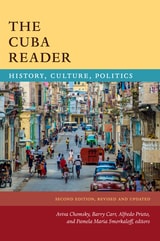
The Cuba Reader
History, Culture, PoliticsAviva Chomsky, Barry Carr, Alfredo Prieto, and Pamela Maria Smorkaloff, editors
Duke University Press, 2019
The Cuban Counterrevolution
Jesús Arboleya
Ohio University Press, 2000
For forty years the Cuban Revolution has been at the forefront of American public opinion, yet few are knowledgeable about the history of its enemies and the responsibility of the U.S. government in organizing and sustaining the Cuban counterrevolution. Available in English for the first time, this outstanding study by Cuban historian and former diplomat Jesús Arboleya traces the evolution of the counterrevolutionary movement from its beginnings before 1959, to its transformation into the Cuban-American groups that today dominate U.S. policy toward Cuba. Arboleya also analyzes the role played by Cuban immigrants to the U.S. and the perspectives for improvement in relations between the two nations as a result of the generational and social changes that have been occurring in the Cuban-American community.
The Cuban Cure
Reason and Resistance in Global ScienceS. M. Reid-Henry
University of Chicago Press, 2010
After Fidel Castro came to power in 1959, his second declaration, after socialism, was that Cuba would become a leader in international science. In biotechnology he would be proven right and, today, Cuba counts a meningitis B vaccine and cutting-edge cancer therapies to its name. But how did this politically and geographically isolated country make such impressive advances? Drawing on a unique ethnography, and blending the insights of anthropology, sociology, and geography, The Cuban Cure shows how Cuba came to compete with U. S. pharmaceutical giants—despite a trade embargo and crippling national debt.
In uncovering what is distinct about Cuban biomedical science, S. M. Reid-Henry examines the forms of resistance that biotechnology research in Cuba presents to the globalization of western models of scientific culture and practice. He illustrates the epistemic, social, and ideological clashes that take place when two cultures of research meet, and how such interactions develop as political and economic circumstances change. Through a novel argument about the intersection of socioeconomic systems and the nature of innovation, The Cuban Cure presents an illuminating study of politics and science in the context of globalization.
The Cuban Hustle
Culture, Politics, Everyday LifeSujatha Fernandes
Duke University Press, 2020

The Cuban Revolution in the 21st Century
George Lambie
Pluto Press, 2010
While most books and articles on Cuba seek to analyse the island’s socialist experiment from the perspective of internal dynamics or international relations, this book attempts to understand the revolutionary process as part of a counter-current against neoliberal globalisation.
Rather than presenting Cuba as a socialist survivor, whose performance must be measured against the standards set by the ‘international community’, George Lambie judges Cuban socialism on the goals which the revolution sets for itself. He shows that despite Cuba’s isolation in the ‘New World Order’, and the enormous pressures it has faced to ‘conform’, its faith in an alternative socialist project has continued and grown.
Now that neoliberalism is in crisis, Cuba’s promotion of socialist values is finding a renewed relevance. In this fascinating study Lambie argues that Cuba is again becoming a symbol, and practical example, of socialism in action. This book is essential reading for students of politics and Latin American studies.
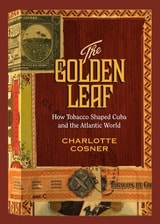
The Golden Leaf
How Tobacco Shaped Cuba and the Atlantic WorldCharlotte Cosner
Vanderbilt University Press, 2015
Through the rise and fall of empires, ideologies, and economies, tobacco grown on the tiny island of Cuba has remained an enduring symbol of pleasure and extravagance. Cultivated as one of the first reliable commodities for those inhabitants who remained after conquistadors moved on in search of a mythical wellspring of gold, tobacco quickly became crucial to the support of the swelling Spanish Empire in the seventeenth and eighteenth centuries. Eventually, however, tobacco became one of the final stabilizing forces in the empire, and it ultimately proved more resilient than the best laid plans of kings and queens. Tobacco, and those whose livelihoods depended on it, shrugged off the Empire's collapse and pressed on into the twentieth century as an economic force any state or political power must reckon with.
Cosner explores the history of this golden leaf through the personal narratives of farmers, bureaucrats, and laborers, all struggling to build an independent and lucrative economic engine. Through conquest, rebellion, colonial and imperial schemes, and the eventual Communist revolution, Cuban tobacco and cigars became a luxury item that commanded loyalty that defied mere borders or embargoes. Ultimately, The Golden Leaf is a story of two carefully cultivated products: Cuban tobacco, and its lofty reputation.
The Guantanamo Files
The Stories of the 774 Detainees in America's Illegal PrisonAndy Worthington
Pluto Press, 2007
Deprived of the safeguards of the Geneva Conventions, and, for the most part, sold to the Americans by their allies in Afghanistan and Pakistan, the detainees have struggled for five years to have their stories heard. Looking in detail at the circumstances of their capture, and at the coercive interrogations and unsubstantiated allegations that have been used to justify their detention. Stories of torture in Afghanistan and Guantanamo are uncovered, as well as new information about the process of 'extraordinary rendition' that underpins the US administration's 'war on terror'.
Who will speak for the 773 men who have been held in Guantanamo? This passionate and brilliantly detailed book brings their stories to the world for the first time.
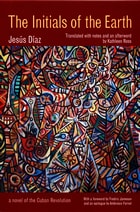
The Initials of the Earth
Jesús Díaz
Duke University Press, 2006
Originally written in the 1970s, then rewritten and published simultaneously in Havana and Madrid in 1987, The Initials of the Earth spans the tumultuous years from the 1950s until the 1970s, encompassing the Revolution and its immediate aftermath. The novel opens as the protagonist, Carlos Pérez Cifredo, sits down to fill out a questionnaire for readmission to the Cuban Communist Party. It closes with Carlos standing before a panel of Party members charged with assessing his merit as an “exemplary worker.” The chapters between relate Carlos’s experiences of the pre- and postrevolutionary era. His family is torn apart as some members reject the Revolution and flee the country while others, including Carlos, choose to stay. He witnesses key events including the Bay of Pigs invasion, the Cuban missile crisis, and the economically disastrous sugar harvest of 1970. Throughout the novel, Díaz vividly renders Cuban culture through humor, slogans, and slang; Afro-Cuban religion; and references to popular music, movies, and comics.
This edition of The Initials of the Earth includes a bibliography and filmography of Diaz’s works and a timeline of the major events of the Cuban revolutionary period. In his epilogue, the Cuban writer Ambrosio Fornet reflects on Díaz’s surprising 1992 renunciation of the Revolution, their decades-long friendship, and the novel’s reception, structure, and place within Cuban literary history.
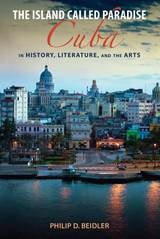
The Island Called Paradise
Cuba in History, Literature, and the ArtsPhilip D. Beidler
University of Alabama Press, 2014
In The Island Called Paradise, Philip D. Beidler shares his personal discovery of the vast, rich, and astonishing history of the island of Cuba and the interrelatedness of Cuba and the US.
Cuba first entered Beidler’s consciousness in the early 1960s when he watched with mesmerized anxiety the televised reports of the Cuban missile crisis, a conflict that reduced a multifaceted, centuries-old history between North America and Cuba to the stark duotones of Cold War politics. Fifty years later, when Beidler traveled to the US’s island neighbor, he found a Cuba unlike the nation portrayed in truculent political rhetoric or in the easy preconceptions of US popular culture. Instead he found an entrancing people and landscape with deep historical connections to the US and a dazzling culture that overwhelmed his creative spirit.
In twelve original essays, Beidler reintroduces to English-speaking readers many of the central figures, both real and literary, of Cuban and Cuban-American history. Meet Cecilia Valdés, the young mixed-race heroine of a 1839 novel that takes readers to the poor streets and sumptuous salons of Spanish colonial Cuba, and Narciso López, a real-life Venezuelan adventurer and filibustero who attempted to foment a Cuban uprising against Spain. Both would have been familiar figures to nineteenth-century Americans. Beidler also visits the twentieth-century lives of “the two Ernestos” (Ernest Hemingway and Che Guevara), and the pop-culture Cuban icon Ricky Ricardo.
A country not with one history but multiple layers of history, Cuba becomes a fertile island for Beidler’s exploration. Art, he argues, perpetually crosses walls erected by politics, history, and nationality. At its core, The Island Called Paradise renews and refreshes our knowledge of an older Atlantic world even as we begin to envision a future in which the old bonds between our nations may be restored.
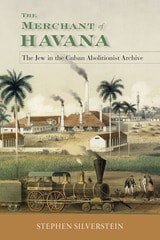
The Merchant of Havana
The Jew in the Cuban Abolitionist ArchiveStephen Silverstein
Vanderbilt University Press, 2016
As Cuba industrialized in the nineteenth century, an epochal realignment of the social order occurred. In this period of change, two seemingly disparate, yet nevertheless intertwined, ideological forces appeared: anti-Semitism and abolitionism. As the antislavery movement became organized in Cuba, the argument grew that Jews participated in the African slave trade and in New World slavery, and that this participation gave Jews extraordinary influence in the new Cuban economy and culture. What was remarkable about this anti-Semitism was the decidedly small Jewish population on the island in this era. This form of anti-Semitism, Silverstein reveals, sprang almost exclusively from mythological beliefs.
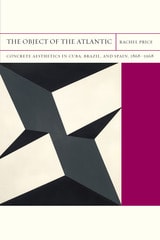
The Object of the Atlantic
Concrete Aesthetics in Cuba, Brazil, and Spain, 1868–1968Rachel Price
Northwestern University Press, 2014
The Object of the Atlantic is a wide-ranging study of the transition from a concern with sovereignty to a concern with things in Iberian Atlantic literature and art produced between 1868 and 1968. Rachel Price uncovers the surprising ways that concrete aesthetics from Cuba, Brazil, and Spain drew not only on global forms of constructivism but also on a history of empire, slavery, and media technologies from the Atlantic world. Analyzing Jose Marti’s notebooks, Joaquim de Sousandrade’s poetry, Ramiro de Maeztu’s essays on things and on slavery, 1920s Cuban literature on economic restructuring, Ferreira Gullar’s theory of the “non-object,” and neoconcrete art, Price shows that the turn to objects—and from these to new media networks—was rooted in the very philosophies of history that helped form the Atlantic world itself.
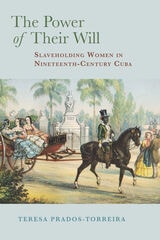
The Power of Their Will
Slaveholding Women in Nineteenth-Century CubaTeresa Prados-Torreira
University of Alabama Press, 2021
CHOICE OUTSTANDING ACADEMIC TITLE, 2022
“This fascinating book explores the unique circumstances of white slaveholding women in 19th-century Cuba and the enslaved peoples they controlled . . .This is a must read for scholars of the Caribbean and the African diaspora. Essential.” —CHOICE
In the early nineteenth century, while abolitionism was rising and the slave trade was declining in the Atlantic world, Spain used this opportunity to massively expand plantation slavery in Cuba. Between 1501 and 1866, more than 778,000 Africans were torn from their homelands and brought to work for the Cuban slaveholding class.
An understudied aspect of Cuban slaveholding society is the role of the white Cuban slave mistress (amas). The Power of Their Will: Slaveholding Women in Nineteenth-Century Cuba illuminates the interaction of female slaveholders and the enslaved during this time. Teresa Prados-Torreira shows, despite the lack of political power in a highly patriarchal society, Cuban women as property owners were instrumental in supporting the long duration of slavery, whether by enforcing the disciplining of the enslaved in the domestic sphere or helping to create the illusion of slavery as a humane institution. Thousands of Creole slaveholding women relied on slaves to lead a comfortable life. Even the subsistence of many poor women depended on the income derived from the hiring out of their enslaved.
In this accessible cultural history, culled from government documents, fiction, newspaper articles, traveler’s accounts, women’s wills, and archival research, Prados-Torreira coalesces a valuable narrative out of the often paradoxical and conflicting stories of the human bonds between the female owner and the enslaved. Narrative chapters, enlivened by vignettes, describe the daily life of slave mistresses in the main cities of Havana and Santiago and other towns, workings of sugar mills and coffee plantations, how slaveholding women coping with slave rebellions and wartime during the Ten Years’ War, and how personal relationships could occasionally affect the balance of power.
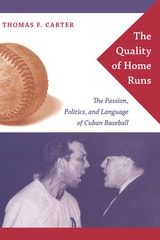
The Quality of Home Runs
The Passion, Politics, and Language of Cuban BaseballThomas F. Carter
Duke University Press, 2008
As an avid baseball fan, Carter draws on his experiences listening to and participating in discussions of baseball in Cuba (particularly in Havana) and among Cubans living abroad to describe how baseball provides the ground for negotiations of national, masculine, and class identities wherever Cubans gather. He considers the elaborate spectacle of Cuban baseball as well as the relationship between the socialist state and the enormously popular sport. Carter provides a detailed history of baseball in Cuba, analyzing players, policies, rivalries, and fans, and he describes how the sport has forged connections (or reinforced divisions) between Cuba and other nations. Drawing on insights from cultural studies, political theory, and anthropology, he maintains that sport and other forms of play should be taken seriously as crucibles of social and cultural experience.
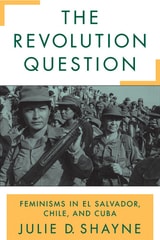
The Revolution Question
Feminisms in El Salvador, Chile, and CubaShayne, Julie D.
Rutgers University Press, 2004
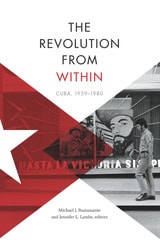
The Revolution from Within
Cuba, 1959–1980Michael J. Bustamante and Jennifer L. Lambe, editors
Duke University Press, 2019
Contributors. Michael J. Bustamante, María A. Cabrera Arús, María del Pilar Díaz Castañón, Ada Ferrer, Alejandro de la Fuente, Reinaldo Funes Monzote, Lillian Guerra, Jennifer L. Lambe, Jorge Macle Cruz, Christabelle Peters, Rafael Rojas, Elizabeth Schwall, Abel Sierra Madero
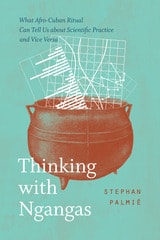
Thinking with Ngangas
What Afro-Cuban Ritual Can Tell Us about Scientific Practice and Vice VersaStephan Palmié
University of Chicago Press, 2023
Inspired by the exercises of Father Lafitau, an eighteenth-century Jesuit priest and protoethnographer who compared the lives of the Iroquois to those of the ancient Greeks, Stephan Palmié embarks on a series of unusual comparative investigations of Afro-Cuban ritual and Western science. What do organ transplants have to do with ngangas, a complex assemblage of mineral, animal, and vegetal materials, including human remains, that serve as the embodiment of the spirits of the dead? How do genomics and “ancestry projects” converge with divination and oracular systems? What does it mean that Black Cubans in the United States took advantage of Edisonian technology to project the disembodied voice of a mystical entity named ecué onto the streets of Philadelphia? Can we consider Afro-Cuban spirit possession as a form of historical knowledge production?
By writing about Afro-Cuban ritual in relation to Western scientific practice, and vice versa, Palmié hopes to challenge the rationality of Western expert practices, revealing the logic that brings together enchantment and experiment.
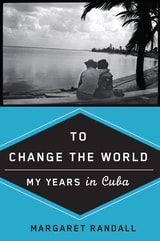
To Change the World
My Years in CubaRandall, Margaret
Rutgers University Press, 2009
Randall gives readers an inside look at her children's education, the process through which new law was enacted, the ins and outs of healthcare, employment, internationalism, culture, and ordinary people's lives. She explores issues of censorship and repression, describing how Cuban writers and artists faced them. She recounts one of the country's last beauty pageants, shows us a night of People's Court, and takes us with her when she shops for her family's food rations. Key figures of the revolution appear throughout, and Randall reveals aspects of their lives never before seen.
More than fifty black and white photographs, most by the author, add depth and richness to this astute and illuminating memoir. Written with a poet's ear, depicted with a photographer's eye, and filled with a feminist vision, To Change the Worldùneither an apology nor gratuitous attackùadds immensely to the existing literature on revolutionary Cuba.
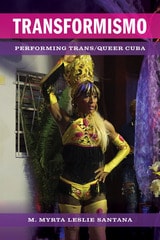
Transformismo
Performing Trans/Queer CubaM. Myrta Leslie Santana
University of Michigan Press, 2025
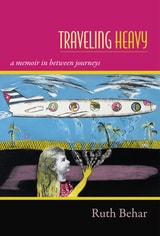
Traveling Heavy
A Memoir in between JourneysRuth Behar
Duke University Press, 2013
Behar calls herself an anthropologist who specializes in homesickness. Repeatedly returning to her homeland of Cuba, unwilling to utter her last goodbye, she is obsessed by the question of why we leave home to find home. For those of us who travel heavy with our own baggage, Behar is an indispensable guide, full of grace and hope, in the perpetual search for connection that defines our humanity.
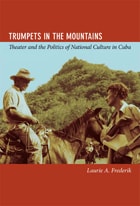
Trumpets in the Mountains
Theater and the Politics of National Culture in CubaLaurie A. Frederik
Duke University Press, 2012
Campesinos inhabit some of the island's most isolated areas, including the mountainous regions in central and eastern Cuba where Laurie A. Frederik conducted research among rural communities and professional theater groups. Analyzing the ongoing dialogue of cultural officials, urban and rural artists, and campesinos, Frederik provides an on-the-ground account of how visions of the nation are developed, manipulated, dramatized, and maintained in public consciousness. She shows that cubanía is defined, and redefined, in the interactive movement between intellectual, political, and everyday worlds.
Truth in Motion
The Recursive Anthropology of Cuban DivinationMartin Holbraad
University of Chicago Press, 2012
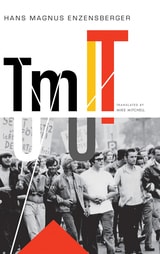
Tumult
Hans Magnus Enzensberger
Seagull Books, 2016
Hans Magnus Enzensberger, widely regarded as Germany’s greatest living poet, was already well known in the 1960s, the tempestuous decade of which Tumult is an autobiographical record. Derived from old papers, notes, jottings, photos, and letters that the poet stumbled upon years later in his attic, the volume is not so much about the man, but rather the many places he visited and people whom he met on his travels through the Soviet Union and Cuba during the 1960s. The book is made up of four long-form pieces written from 1963 to 1970, each episode concluding with a poem and postscript written in 2014. Translated by Mike Mitchell, the book is a lively and deftly written travelogue offering a glimpse into the history of leftist thought. Dedicated to “those who disappeared,” Tumult is a document of that which remains one of humanity’s headiest times.