Results by title
170 books match the query 'Death, Grief, Loss' and 34 start with t
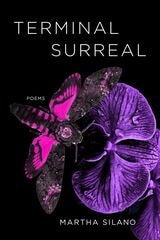
Terminal Surreal
PoemsMartha Silano
Acre Books, 2025
In her masterful poetry collection Terminal Surreal, Martha Silano confronts the reality of mortality with gorgeous attention to imagery and scene. The book follows a trajectory from early symptoms before diagnosis with amyotrophic lateral sclerosis (ALS) to full-blown illness and its effects on friends and family, including her children, who appear in poems like “After Dropping My Son Off at College” and “My Nineteen-Year-Old Daughter Is My Personal Assistant.”
With a devoted naturalist’s eye, Silano revels in birds, trees, and flowers in a way that reminds readers we are connected to the world around us. The book touches on the medical, the metaphysical, and even the cosmological (through encounters in medical offices and on a moon of Mars). With Nutter Butters and Lorna Doones, abecedarians and self-elegies, Silano’s singular, feisty, contemporary voice propels these poems of grief and acceptance as they explore the transformational power of art.
When I Learn Catastrophically
is an anagram of amyotrophic lateral sclerosis.
When I learn I probably have a couple years,
maybe (catastrophically) less, crossword puzzles
begin to feel meaningless, though not the pair
of mergansers, not the red cardinal of my heart.
The sky does all sorts of marvelously uncatastrophic
things that winter I shimmy between science
& song, between widgeons & windows, weather
& its invitation to walk. Walking, which becomes
my lose less, my less morsels, my lose smile
while more sore looms. . . .
Terra Incognita
PoemsSara Henning
Ohio University Press, 2022
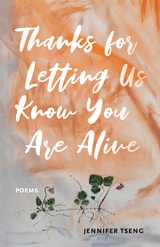
Thanks for Letting Us Know You Are Alive
PoemsJennifer Tseng
University of Massachusetts Press, 2024
Crafted with lines from her late father’s letters, Jennifer Tseng’s Thanks for Letting Us Know You Are Alive is a portrait of an immigrant, a rootless person whose unspoken loss—that of his native geography, family, traditions, language—underlies every word. Though her father’s first language was Mandarin, for more than twenty years he wrote these letters in English, so that she could understand them. Some are riddled with errors, some nearly unintelligible. Lines from his letters appear as titles and are scattered throughout the poems, blending voices of father and daughter. This collection enacts what it means to lose someone and commune with them simultaneously—the paradox of grief and all it gives us.
The Afterlife of Sweetness
PoemsJaia Hamid Bashir
The Ohio State University Press, 2026
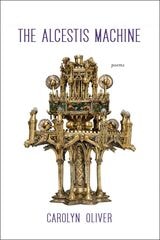
The Alcestis Machine
PoemsCarolyn Oliver
Acre Books, 2024
Inspired by the Greek myth of Alcestis, this poetry collection brings to life myriad voices who venture beyond the known world and exist between realities.
In Greek mythology, Alcestis descends to the mysterious kingdom of death in her beloved’s place. In The Alcestis Machine, Carolyn Oliver’s second poetry collection, loss and queer desire echo across the multiverse. “In another life, I’m a . . .” sea witch or swineherd, vampire or troubadour, florist or fossil or museum guard, Oliver writes. These parallel personas inhabit space stations and medieval villages, excavate the Devonian seabed, and plumb a subterranean Anthropocene. In possible futures and imagined pasts, they might encounter “all wrong turns and broken signs” or carry “a suitcase full of stars.”
Oliver’s poems are animated by lush, unsettling verse and forms both traditional and experimental. The Alcestis Machine demonstrates how very present absence can be and how desire knows no boundaries. In neighborhood subdivisions or the vast reaches of space, it’s impossible to know “whose time is slipping / again.” Anyone “could come loose / from gravity’s shine.”
The Blue Divide
PoemsLinda Nemec Foster
New Issues Poetry and Prose, 2021
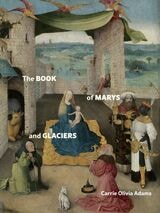
The Book of Marys and Glaciers
Carrie Olivia Adams
Tupelo Press, 2026
The poems collected in The Book of Marys and Glaciers traverse both the psychological and physical landscape to explore the too-muchness and overwhelm that categorizes our demand-driven age. The longest series, “Dust Cover,” is a meditation on deserts of all kinds—geographic, urban, celestial, domestic, and linguistic. The poems themselves enact their own ideas of space and emptiness, building to a work that grain after grain becomes heavy as a whole. In contrast, the title sequence “The Book of Marys and Glaciers” is an expansive work of feminist ecopoetics that asks questions about the role of women as mothers, religious figures, friends, and lovers in a society that rarely makes room for quietude anymore.
Altogether, the poems are controlled, precise investigations and interrogations of the ideas and images we take for granted.
The Certain Body
Julia Guez
Four Way Books, 2022
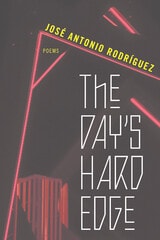
The Day's Hard Edge
PoemsJose A. Rodriguez
Northwestern University Press, 2024
In his fourth poetry collection, José Antonio Rodríguez investigates how one constructs a relationship to the self, to community, and to poetry itself. The Day's Hard Edge is composed of three sections, the first of which situates the reader in the speaker’s world, one marked by multiple forms of trauma. Here are the contours of the Texas/Mexico borderlands where the speaker’s initial sense of self and community emerges. The second section broadens in scope and considers the potential and limitations of poetry as a site for meaning-making. The third section brings the speaker to a new understanding of the poem as it relates to the transformative and destabilizing experience of trauma. Ultimately this book lays bare an individual and, in doing so, shows how poetry acts as a place of succor and vulnerability for one’s very identity. Together these poems explore what it means to be queer, immigrant, and Chicano.
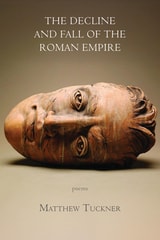
The Decline and Fall of the Roman Empire
Matthew Tuckner
Four Way Books, 2025
The Decline and Fall of the Roman Empire is a book-length sequence of 53 poems with identical eponymous titles. Heartbreaking and searingly lucid, this debut collection from poet Matthew Tuckner chronicles his best friend's illness and subsequent death from cancer. Its brilliance is not only in recognizing the vastness and particularity of grief — how the loss of a beloved is so personally all encompassing that it splits time irrevocably, separating our personal history into distinct eras of before and after as the governing principles of our lives crumble — but also in joining the discrete experience of one person's sickness to a carcinogenic imperial core, the late-capitalist global order that ensnares all people in toxic landscapes that make us sick.
Describing a trip to Japan, Tuckner evokes the brute force of appetite alongside the delicacy of life as he recalls "memories of its greedy koi fish, a ceramic bowl / of goji berries perfectly balanced on a tree branch." Beholden to a ticking clock, we catalogue, becoming evidentiary and encyclopedic in our impulses. "We fatten the time until it bursts into artifacts: / sixteen photographs of a single puddle // taking shape in the red glow of your darkroom." In borrowing the title of Edward Gibbon's seminal 6-volume history, Tuckner anchors the associative detours of his sprawling intellect and executes a stunning metacommentary on his own lyrics: time collapses every era into a spattering of sentences, tyrannical as it forcibly converts the present to the past, and yet the barbarous recursion of human feeling resists oblivion, evoking the eternity of emotional significance. Tuckner's shrewd balance of irony and tenderness make this cerebral inversion possible: this friendship is the poet's canon event, the Rome at which every road in his mind arrives, and yet it is also the singular dialect that will not cede to death's subsuming lingua franca.
Damien Hirst's taxidermy art, The John Keats House, superfund sites in Rome, NY, the 2023 Ohio Train Derailment, a children's book titled Oil Spill! — these poems travel widely in their topics to understand the specific ravages of disease on the human body, and in turn, the ravages of human beings on the planet. Its trenchant criticism isn't pessimistic, though — its redemption is the restorative, unending love that made these elegies possible. Equally gutted and mesmerized by our infinite, arbitrary ability to discern meaning in mess, these poems ask us to bear witness to what we can develop if we will sit in the darkness. To read the photo essay of a storm's aftermath. It tells an ancient story that becomes brand new, the one about "a puddle you glimpsed the moon in & stopped for. // A puddle that was just plain rain until it fell."
The Haunting
Cate Peebles
Tupelo Press, 2025
The Haunting is a book of feminist-horror visitations, incantations, and possessions embodied in unruly forms that subvert genre and generic definitions of poetry and prose. This is a collection that is concerned with how the living and the dead coexist, how to survive trauma, and the power of persistence. Drawing from a variety of texts including Mary Shelley’s Frankenstein, Emily Bronte’s Wuthering Heights, twentieth-century horror films, the Velvet Underground, and Ovid, The Haunting explores the anxieties of ancestral and artistic inheritance, rage, transformation, motherhood, maternal ambivalence, and the drive to create.
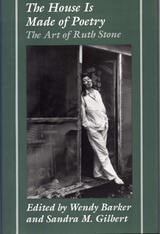
The House is Made of Poetry
The Art of Ruth StoneEdited by Wendy Barker and Sandra M. Gilbert
Southern Illinois University Press, 1996
Ruth Stone has always eschewed self-promotion and, in the words of Leslie Fiedler, "has never been a member of any school or clique or gaggle of mutual admirers." But her poems speak so vibrantly for her that she cannot be ignored.
In her preface to this volume, Sandra M. Gilbert declares that Stone’s "intense attention to the ordinary transforms it into (or reveals it as) the extraordinary. Her passionate verses evoke impassioned responses." At the same time, Gilbert continues, the essays collected here "consistently testify to Stone’s radical unworldliness, in particular her insouciant contempt for the ‘floor walkers and straw bosses’ who sometimes seem to control the poetry ‘factory’ both inside and outside the university."
Wendy Barker and Sandra Gilbert have organized the book into three sections: "Knowing Ruth Stone," "A Life of Art," and "Reading Ruth Stone." In "Knowing Ruth Stone," writers of different generations who have known the poet over the years provide memoirs. Noting Stone’s singularity, Fiedler points out that "she resists all labels" and is "one of the few contemporaries whom it is possible to think of simply as a ‘poet.’" Sharon Olds defines her vitality ("A Ruth Stone poem feels alive in the hands"), and Jan Freeman praises her aesthetic intensity ("Everything in the life of Ruth Stone is integrated with poetry").
"A Life of Art" sketches the outlines of Stone’s career and traces her evolution as a poet. Barker and Norman Friedman, for example, trace her development from the "high spirits and elegant craft" of her first volume—Inan Iridescent Time— through the "deepening shadows," "poignant wit," and "bittersweet meditations" of her later work. In interviews separated by decades (one in the 1970s and one in the 1990s), Sandra Gilbert and Robert Bradley discuss with Stone her own sense of her aesthetic origins and literary growth.
"Reading Ruth Stone" is an examination of Stone’s key themes and modes. Diane Wakoski and Diana O’Hehir focus on the tragicomic vision that colors much of her work; Kevin Clark and Elyse Blankley explore the political aspects of her poetry; Roger Gilbert analyzes her "often uncannily astute insights into the ‘otherness’ of other lives"; Janet Lowery and Kandace Brill Lombart draw on the biographical background of Stone’s "grief work"; and Sandra Gilbert studies her caritas, her empathic love that redeems pain.
The Land of the Dead Is Open for Business
Jacob Strautmann
Four Way Books, 2020
The Lantern Room
Chloe Honum
Tupelo Press, 2021
—Allison Benis Whit
The Listening Chamber
PoemsWilliam Aberg
University of Arkansas Press, 1997
The Listening Skin
Glenis Redmond
Four Way Books, 2022
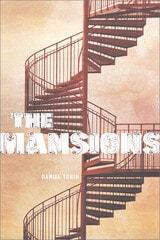
The Mansions
Daniel Tobin
Four Way Books, 0

The Many Deaths of Inocencio Rodriguez
Iliana Rocha
Tupelo Press, 2022

The Rendering
Anthony Cody
Omnidawn, 2023
Through a series of experimental poems centered on ecology, Anthony Cody’s The Rendering confronts the history of the Dust Bowl and its residual impacts on our current climate crisis, while acknowledging the complicities of capitalism. These poems grapple with questions of wholeness and annihilation in an Anthropocenic world where the fallout of settler colonialism continues to inflict environmental and cultural devastation. Cody encourages readers to participate in radical acts of refreshing and reimagining the page, poem, collection, and the self, and he invites us to reflect on what lies ahead should our climate continue on its current trajectory toward destruction.
These poems consider if wholeness, or a journey toward wholeness, can exist in the Anthropocene. And, if wholeness cannot exist in these times, we are invited to look at our lives and the world through and beyond annihilation.
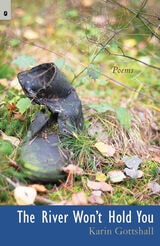
The River Won’t Hold You
Karin Gottshall
The Ohio State University Press, 2014
Haunting and haunted, The River Won’t Hold You navigates loneliness and loss with a quiet, relentless clarity. In poems shaped at the uneasy crossroads of imagination and lived experience, Karin Gottshall searches for solace in the charged spaces between them. “I tell myself I can be content with the pleasures / permitted ghosts,” she writes in “Afterlife,” “but my body wakes up / leaking saltwater, and won’t let my ghost-self be.”
Across the collection, poetic structure and the music of language become vessels for memory, philosophy, and ache. Generous in their formal range and attentive to both sound and silence, these poems resist tidy answers. The beauty of Gottshall's work arises from the steadiness of her gaze, and the startling precision of the images it lands on:
“Wide-open, staring eyes of the tiger / I drew and had to destroy because it wouldn’t sleep.”
The River Won’t Hold You shows how the places we fear most—the gaps, the afterlives, the undefinable spaces—can also be the ones that hold us.
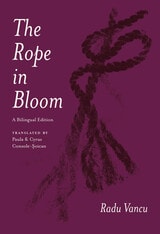
The Rope in Bloom
A Bilingual EditionRadu Vancu
University of Chicago Press, 2026
The first English translation of a Romanian poet’s celebrated and devastating 2012 collection.
In 1997, when he was nineteen, Radu Vancu discovered the body of his father, who had hanged himself in the family home. In the dark years that followed, Vancu turned to literature and self-medication. By 2009, after a decade of “Schopenhauer and vodka” and the publication of seven influential volumes of poetry and essays, Vancu was married, newly sober, and expecting his first child. With these themes in mind—bereavement, love, fatherhood, and poetry—he began writing Frânghia înflorită, or The Rope in Bloom, a poem of Dantesque ambition and scope. Through twenty-four cantos interwoven with prose vignettes, Vancu revisits the scene of the suicide and speaks with the lost soul of his father, who guides and advises him. Each canto begins with the same lines:
What your dead one, what the best-
beloved of your dead loved ones says to you
when you have the heart to dream of him:
Vancu’s verse depicts a nightmare underworld, at once terrible and banal, containing both rivers of blood and family movie nights. Prose vignettes punctuating the book narrate tender years in the early life of a new family. Here, the poet appears in everyday moments, watching cartoons with his son and seeing his wife off to work. Together, the cantos and prose accumulate into a charged collection, where the loss of a father looms over the joy of becoming one.
This volume is the first full-length English translation of Vancu’s work, marking a long-overdue introduction of the poet to anglophone audiences.
The Soluble Hour
Hillary Gravendyk
Omnidawn, 2017
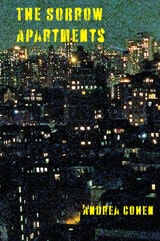
The Sorrow Apartments
Andrea Cohen
Four Way Books, 2024
What would I
think, coming
up after
my world
had evaporated?
I'd wish
I were water.
The Sorrow Apartments is home to spare and uncanny lyricism––as well as leaping narratives of mystery and loss and wonder. These poems race at once into the past and the possible. And yet, instead of holding things up to the light for a better view, Cohen lifts them to the dark and light, as in "Acapulco," where an unlikely companion points out, “as men tend to, / the stars comprising Orion’s belt — / as if it were the lustrous sparks and not / the leveling dark that connects us.” For a poet who has been called unfashionable from the get-go, unfashionable never looked so good.
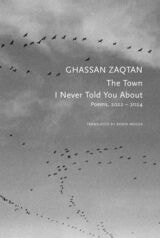
The Town I Never Told You About
Poems, 2022–2024Ghassan Zaqtan
Seagull Books, 2026
The Town I Never Told You About gathers poems written by celebrated Palestinian poet Ghassan Zaqtan between 2022 and 2024, at a time of intensifying conflict ravaging his homeland. Emerging from both memory and imagination, these poems trace the contours of hillscapes and villages, mapping a Palestine that is both historical and mythic, personal and collective. In Zaqtan’s hands, language threads its way through time—winding across landscapes marked by war, displacement, and enduring beauty. Each poem feels like part of a longer thread: a moment lifted from an ongoing inner epic, stitched into being with dreamlike clarity and haunting precision.
Long meditative pieces drift through shadow and sunlight, while other poems strike with the sharpness of remembered incident. This is poetry as pilgrimage—quiet, persistent, and full of echoes. A book that doesn’t so much end as continue resonating long after the last page is turned.
The Trouble with Light
Jeremy Michael Clark
University of Arkansas Press, 2024
The Wendys
Allison Benis White
Four Way Books, 2020
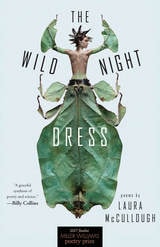
The Wild Night Dress
PoemsLaura McCullough
University of Arkansas Press, 2017
Finalist, 2017 Miller Williams Poetry Prize, edited by Billy Collins
“A graceful synthesis of poetry and science.”
—Billy Collins
Laura McCullough finds passage through the darkest times as she loses, in short order, her mother and her marriage. Through her near unbearable grief, she creates poems that slip between science and nature as she grasps at coordinates in a world spun out of its orbit. From the God Particle to toroidal vortexes, from the slippery linguistics of translation to the translation of the body, McCullough brings readers to the mystery of surrender, and the paradox that what we bear can make us more beautiful, that there is a gift in grief.
These Many Rooms
Laure-Anne Bosselaar
Four Way Books, 2019
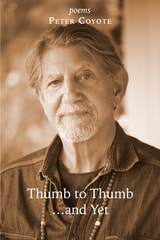
Thumb to Thumb… and Yet
Peter Coyote
Four Way Books, 2026
If Emmy Award-winner Peter Coyote’s debut collection represents the culmination of a half-century’s devotion to writing poetry, his second functions as a true encore: triumphant and raw. Thumb to Thumb… and Yet presents eighty-plus years of living — the countercultural adventures, the journey from Zen Buddhist discipleship to priesthood, marriage and divorce, a public career in entertainment, and the private work and rewards of parenthood — not as a retrospective but as a perpetual process of becoming. Coyote captures often-elusive wisdom and infuses these pages with the fullness of human experience: weariness that labor never ceases, that we cannot outgrow suffering, that we’re like “Manteaux ducks, immobilized so the fat / of everything can be forced down our gullets,” the glut of gavage neverending and “no option to stop swallowing”; frustration that ambition and ego persist despite the “pre-dawn Zendo chill” and over five decades spent “thumb-to-thumb sitting” in devoted practice; the satisfaction of pleasure, “smiling in the ruined sheets”; gratitude for life consummated and life ongoing and life that will continue long after us, for the opportunity of existence, for the work itself, for the “single nuthatch [that] bows / upside down on the grand oak” and its reminder during meditation that “everything presents itself as a partner.” The titular qualification of that “and yet” is an argument against and a celebration of conclusion; in a masterful encapsulation of the lyrical moment itself, these poems find Coyote returning to the stage only to perform another finale, every end recycled toward beginning. One song cedes to another, and yet the music flows on.
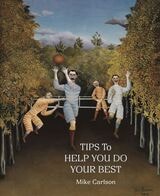
Tips to Help You Do Your Best
Mike Carlson
Tupelo Press, 2025
Written over a fifteen-year period, a period in which events and politics seemed to defy reason, the poems collected in Tips to Help You Do Your Best seek an imaginative wisdom on the outskirts of conventional thinking. By writing obsessively about the landscape, the objects that litter it, and the people he finds loitering there, Mike Carlson arrives at the emotional truth of his experience, mapping the distance between irreverence and irony, cowardice, and courage, condolences and pure clear words.
In doing so, he also lays out a theory of poetry, a philosophical, aesthetic, and spiritual treatise that values object matter over subject matter. These poems approach understanding by image and rhythm, by light and shadow, and by means of encountering motorcycles and mushrooms and silos. While these poems often assume the authoritative and axiomatic tone of a guide book or set of instructions, they are at odds with easy explanation and drudgery.
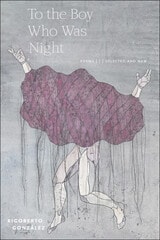
To the Boy Who Was Night
Poems: Selected and NewRigoberto González
Four Way Books, 2023
The capstone of a quarter-century career in poetry, To the Boy Who Was Night collects the poetry published by Rigoberto González since 1999, including selections from five previous books as well as new work. Mirroring González’s personal trajectory, the arc of this work articulates the course of a life: these poems recall leaving a beloved homeland, confront masculinity and sexuality in new adulthood, imagine the earth devoid of human inhabitants, descend into the realm of ghosts, and return to arrive at Dispatches from the Broken World. This latest section ventures into foreign terrain — an autobiographical confrontation with isolation and the aging body. His lyrical exploration, like the weather reports scrawled on ancient temple walls, will preserve this age-old message: “likely a poem, surely an epitaph.” To the Boy Who Was Night bears the fruit of 25 years of poetry, González’s boldest and most comprehensive volume yet.
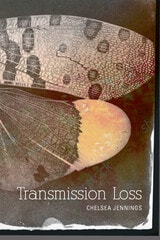
Transmission Loss
Chelsea Jennings
University of Massachusetts Press, 2018
In the study of sound waves and optics, the term transmission loss refers to how a signal grows weaker as it travels across distance and between objects. In this book, Chelsea Jennings reimagines the term in poems that register attenuated signals, mark presence and loss, and treat the body as an instrument sensitive to the weather of immediate experience. Threading together landscapes, abstract paintings, family heirlooms, maps, manuscripts, and photographs, these poems follow the seasons and traverse the spectrum of visible light. Vivid and precise, Transmission Loss brings us to the boundary between inside and outside, “As if what the hand knows / could be held in the hand.”
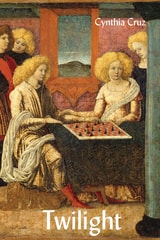
Twilight
Cynthia Cruz
Four Way Books, 2026
Twilight is the intermediary state of becoming, the suspension between, when one is no longer who one was and not yet who they will be. At the end of psychoanalysis, after one has worked through the symbolic investitures one has been relegated to, one is reduced to such a state. In this state of momentary suspension, one is, in a sense, nothing.
Twilight also names a historical moment, when one world is ending but the next has yet to appear. That we are existing in the suspension between the the end of the world as we have known it and the void of what has yet to come is a commonly repeated truth. Hegel describes twilight as “a flash” that in “a single stroke brings to view the structure of the new world,” suggesting that novelty arises out of darkness and obscurity. We are living, in other words, in a state of twilight.
Cruz’s tenth poetry collection takes the concept of twilight and presents, through a series of elliptical poems, a working through of the term. The speakers in these poems exist within this wavering. As she writes in one of several poems titled “Twilight,” “Twilight, its world between worlds / its miraculous suspension. / I belong to the school of Freud’s / hypothetical boarding school girls. / We wait and we wait / for the world to begin.”