Results by title
114 books match the query 'Decision Making' and 19 start with t
The Art of Military Coercion
Why the West's Military Superiority Scarcely MattersRob de Wijk
Amsterdam University Press, 2014
The Challenger Launch Decision
Risky Technology, Culture, and Deviance at NASADiane Vaughan
University of Chicago Press, 1995
Journalists and investigators have historically cited production problems and managerial wrong-doing as the reasons behind the disaster. The Presidential Commission uncovered a flawed decision-making process at the space agency as well, citing a well-documented history of problems with the O-ring and a dramatic last-minute protest by engineers over the Solid Rocket Boosters as evidence of managerial neglect.
Why did NASA managers, who not only had all the information prior to the launch but also were warned against it, decide to proceed? In retelling how the decision unfolded through the eyes of the managers and the engineers, Vaughan uncovers an incremental descent into poor judgment, supported by a culture of high-risk technology. She reveals how and why NASA insiders, when repeatedly faced with evidence that something was wrong, normalized the deviance so that it became acceptable to them.
No safety rules were broken. No single individual was at fault. Instead, the cause of the disaster is a story not of evil but of the banality of organizational life. This powerful work explains why the Challenger tragedy must be reexamined and offers an unexpected warning about the hidden hazards of living in this technological age.
The Challenger Launch Decision
Risky Technology, Culture, and Deviance at NASA, Enlarged EditionDiane Vaughan
University of Chicago Press, 2015
When the Space Shuttle Challenger exploded on January 28, 1986, millions of Americans became bound together in a single, historic moment. Many still vividly remember exactly where they were and what they were doing when they heard about the tragedy. Diane Vaughan recreates the steps leading up to that fateful decision, contradicting conventional interpretations to prove that what occurred at NASA was not skullduggery or misconduct but a disastrous mistake.
Why did NASA managers, who not only had all the information prior to the launch but also were warned against it, decide to proceed? In retelling how the decision unfolded through the eyes of the managers and the engineers, Vaughan uncovers an incremental descent into poor judgment, supported by a culture of high-risk technology. She reveals how and why NASA insiders, when repeatedly faced with evidence that something was wrong, normalized the deviance so that it became acceptable to them. In a new preface, Vaughan reveals the ramifications for this book and for her when a similar decision-making process brought down NASA's Space Shuttle Columbia in 2003.
The Collision of Political and Legal Time
Foreign Affairs and the Supreme Court's Transformation of Executive AuthorityKimberley L. Fletcher
Temple University Press, 2018
How does the U.S. Supreme Court shape constitutional and political development? In The Collision of Political and Legal Time, Kimberley Fletcher answers this question by analyzing the key role the Court has played in interpreting presidential decision-making in the area of foreign affairs since 1936. She reconsiders the Curtiss-WrightCourt, which instituted a new constitutional order that established plenary powers independent of congressional delegation. Fletcher also reexamines Japanese internment and detainee cases, demonstrating the entrenchment of the new constitutional order and how presidential ascendency becomes institutionalized. Other cases, such as Youngstown, illustrate how the Court, during a time of war, will check Executive power and authority.
The Collision of Political and Legal Time examines these cases and controversies in foreign policymaking through the twentieth and into the twenty-first centuries to show that the Court is not passive or constrained; it does not merely follow politics or the majority coalition. Through her nuanced analysis, Fletcher makes a larger argument about the role of the U.S. Supreme Court as an agent of change, which ultimately transforms power, shapes politics, and redirects history.

The Crowd You're In With
A PlayRebecca Gilman
Northwestern University Press, 2009
The Crowd You're in With is the fifth play by award-winning American playwright Rebecca Gilman. In it, a Fourth of July backyard barbecue is the setting for a comic, thought-provoking, ultimately disquieting exploration of the question of whether to have children. Melinda and Jasper, the hosts, are deeply divided by the issue; Tom and Karen, their landlords, decided long ago to remain childless; Windsong and her husband, Dan, are expecting a baby.
As the play progresses, the motivations of these characters reveal themselves as ever more complex. Even as the characters often speak in very practical terms about their decisions, Gilman never loses sight of the mystery underlying a life-shaping decision guided by both rational thought and biological imperative, which ultimately speaks to the even larger question of free will and determinism faced by every person.
The Chicago-based Gilman has won numerous awards including the Evening Standard Award for Most Promising Playwright and the Scott McPherson Award. Her play The Glory of Living was a finalist for the Pulitzer Prize.

The Difference Women Make
The Policy Impact of Women in CongressMichele L. Swers
University of Chicago Press, 2002
Swers combines quantitative analyses of bills with interviews with legislators and their staff to compare legislative activity on women's issues by male and female members of the House of Representatives during the 103rd (1993-94) and 104th (1995-96) Congresses. Tracking representatives' commitment to women's issues throughout the legislative process, from the introduction of bills through committee consideration to final floor votes, Swers examines how the prevailing political context and members' positions within Congress affect whether and how aggressively they pursue women's issues.
Anyone studying congressional behavior, the role of women, or the representation of social identities in Congress will benefit from Swers's balanced and nuanced analysis.

The Economics of Information and Uncertainty
Edited by John J. McCall
University of Chicago Press, 1982
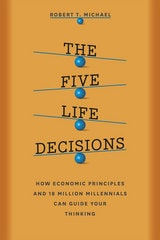
The Five Life Decisions
How Economic Principles and 18 Million Millennials Can Guide Your ThinkingRobert T. Michael
University of Chicago Press, 2016
Economist Robert T. Michael won’t tell you what to choose. Instead, he’ll show you how to make smarter choices. Michael focuses on five critical decisions we all face about college, career, partners, health, and parenting. He uses these to demonstrate how the science of scarcity and choice—concepts used to guide major business decisions and shape national legislation—can offer a solid foundation for our own lives. Employing comparative advantage can have a big payoff when picking a job. Knowing how to work the marketplace can minimize uncertainty when choosing a partner. And understanding externalities—the ripple of results from our actions—can clarify the if and when of having children.
Michael also brings in data from the National Longitudinal Survey of Youth, a scientific sample of 18 million millennials in the United States that tracks more than a decade of young adult choices and consequences. As the survey’s longtime principal investigator and project director, Michael shows that the aggregate decisions can help us understand what might lie ahead along many possible paths—offering readers insights about how their own choices may turn out.
There’s no singular formula for always making the right choice. But the adaptable framework and rich data at the heart of The Five Life Decisions will help you feel confident in whatever you decide.
The Foreign Policy Disconnect
What Americans Want from Our Leaders but Don't GetBenjamin I. Page with Marshall M. Bouton
University of Chicago Press, 2006
With world affairs so troubled, what kind of foreign policy should the United States pursue? Benjamin Page and Marshall Bouton look for answers in a surprising place: among the American people. Drawing on a series of national surveys conducted between 1974 and 2004, Page and Bouton reveal that—contrary to conventional wisdom—Americans generally hold durable, coherent, and sensible opinions about foreign policy. Nonetheless, their opinions often stand in opposition to those of policymakers, usually because of different interests and values, rather than superior wisdom among the elite. The Foreign Policy Disconnect argues that these gaps between leaders and the public are harmful, and that by using public opinion as a guideline policymakers could craft a more effective, sustainable, and democratic foreign policy.
Page and Bouton support this argument by painting a uniquely comprehensive portrait of the military, diplomatic, and economic foreign policies Americans favor. They show, for example, that protecting American jobs is just as important to the public as security from attack, a goal the current administration seems to pursue single-mindedly. And contrary to some officials’ unilateral tendencies, the public consistently and overwhelmingly favors cooperative multilateral policy and participation in international treaties. Moreover, Americans’ foreign policy opinions are seldom divided along the usual lines: majorities of virtually all social, ideological, and partisan groups seek a policy that pursues the goals of security and justice through cooperative means. Written in a clear and engaging style, The Foreign Policy Disconnect calls, in an original voice, for a more democratic approach to creating such a policy.

The Limits of Rationality
Edited by Karen Schweers Cook and Margaret Levi
University of Chicago Press, 1990
Intended to introduce novices to rational choice theory, this accessible, interdisciplinary book collects writings by leading researchers. The Limits of Rationality illuminates the rational choice paradigm of social and political behavior itself, identifies its limitations, clarifies the nature of current controversies, and offers suggestions for improving current models.
In the first section of the book, contributors consider the theoretical foundations of rational choice. Models of rational choice play an important role in providing a standard of human action and the bases for constitutional design, but do they also succeed as explanatory models of behavior? Do empirical failures of these explanatory models constitute a telling condemnation of rational choice theory or do they open new avenues of investigation and theorizing?
Emphasizing analyses of norms and institutions, the second and third sections of the book investigate areas in which rational choice theory might be extended in order to provide better models. The contributors evaluate the adequacy of analyses based on neoclassical economics, the potential contributions of game theory and cognitive science, and the consequences for the basic framework when unequal bargaining power and hierarchy are introduced.
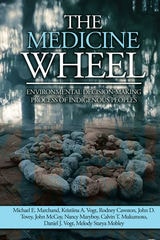
The Medicine Wheel
Environmental Decision-Making Process of Indigenous PeoplesMichael E. Marchand
Michigan State University Press, 2020
The Political Influence of Business in the European Union
Andreas Dür, David Marshall, and Patrick Bernhagen
University of Michigan Press, 2019
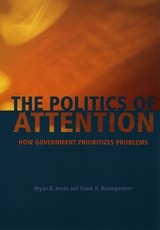
The Politics of Attention
How Government Prioritizes ProblemsBryan D. Jones and Frank R. Baumgartner
University of Chicago Press, 2005
Analyzing fifty years of data, Jones and Baumgartner's book is the first study of American politics based on a new information-processing perspective. The authors bring together the allocation of attention and the operation of governing institutions into a single model that traces public policies, public and media attention to them, and governmental decisions across multiple institutions.
The Politics of Attention offers a groundbreaking approach to American politics based on the responses of policymakers to the flow of information. It asks how the system solves, or fails to solve, problems rather than looking to how individual preferences are realized through political action.
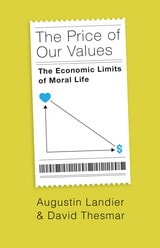
The Price of Our Values
The Economic Limits of Moral LifeAugustin Landier and David Thesmar
University of Chicago Press, 2025
The economic case for self-interest at the outer limits of being morally good.
Modern life is an exercise in discomfort. In the face of endless injustice, how much selfishness is permissible? How do we square suffering elsewhere with our hope to thrive at home? How does one strive for the greater good while guarding one's personal interests? The Price of Our Values argues that the answers to these questions are economic: by weighing our sense of the personal costs associated with the outer limits of our moral beliefs.
These tradeoffs—the want to be good, the personal costs of being good, and the points at which people abandon goodness due to its costs—are somewhat unsettling. But as economists Augustin Landier and David Thesmar show, they are highly predictable, even justified. Our values guide us, but we are also forced to consider economic costs to settle decisions.
The Price of Our Values is an economic reckoning with the universal unease of contemporary moral life. Wielding insights from the philosophical founders of the field, Landier and Thesmar provide frameworks for thinking about the place of values—justice, freedom, beauty— in the decisions of modern life. They do so in terms that seek to be consistent with both our good intentions and their limits.
The Rebel's Dilemma
Mark Irving Lichbach
University of Michigan Press, 1998
". . . a significant contribution to the understanding of collective behavior, protest, and rebellion." --Choice
"The book is interesting and thought-provoking, and its insights extend beyond the narrow subject of rebellion to help illuminate many issues related to organizing groups to undertake collective action." --Public Choice
"[Lichbach's] book is monumental and pivotal. . . . [It] consolidates over three decades of research on collective action problems and sets the agenda for future studies of collective dissent and rebellion. . . . [This] book is a major step forward. It will have an enormous impact in the field of conflict studies and belongs on the shelf of anyone even casually interested in dissent, rebellion, and revolution. . . . [This] book is a major step forward. It will have an enormous impact in the field of conflict studies and belongs on the shelf of anyone even casually interested in dissent, rebellion, and revolution." --American Political Science Review
"For scholars interested in game-theoretic analyses of politics . . . essential reading." --Manus I. Midlarsky, Journal of Politics
"Lichbach has to be praised for providing valuable insight on the logic of collective dissent. . . ." --Political Studies
Mark Irving Lichbach is Professor of Political Science, University of Colorado.

The Sanctity of Social Life
Physician's Treatment of Critically Ill PatientsDiana Crane
Russell Sage Foundation, 1975
The Theory of Rules
Karl N. Llewellyn
University of Chicago Press, 2011
Karl N. Llewellyn was one of the founders and major figures of legal realism, and his many keen insights have a central place in American law and legal understanding. Key to Llewellyn’s thinking was his conception of rules, put forward in his numerous writings and most famously in his often mischaracterized declaration that they are “pretty playthings.” Previously unpublished, The Theory of Rules is the most cogent presentation of his profound and insightful thinking about the life of rules.
This book frames the development of Llewellyn’s thinking and describes the difference between what rules literally prescribe and what is actually done, with the gap explained by a complex array of practices, conventions, professional skills, and idiosyncrasies, most of which are devoted to achieving a law’s larger purpose rather than merely following the letter of a particular rule. Edited, annotated, and with an extensive analytic introduction by leading contemporary legal scholar Frederick Schauer, this rediscovered work contains material not found elsewhere in Llewellyn’s writings and will prove a valuable contribution to the existing literature on legal realism.
Time and Decision
Economic and Psychological Perspectives of Intertemporal ChoiceGeorge Loewenstein
Russell Sage Foundation, 2003
Towards a Cognitive Mode in Global Finance?
The Governance of a Knowledge-Based Financial SystemEdited by Torsten Strulik and Helmut Willke
Campus Verlag, 2007