Results by title
117 books match the query 'Digital media' and 23 start with t
Tactical Media
Rita Raley
University of Minnesota Press, 2009
In Tactical Media, Rita Raley provides a critical exploration of the new media art activism that has emerged out of, and in direct response to, postindustrialism and neoliberal globalization. Through close readings of projects by the DoEAT group, the Critical Art Ensemble, Electronic Civil Disobedience, and other tactical media groups, she articulates their divergent methods and goals and locates a virtuosity that is also boldly political. Contemporary models of resistance and dissent, she finds, mimic the decentralized and virtual operations of global capital and the post-9/11 security state to exploit and undermine the system from within.
Emphasizing the profound shift from strategy to tactics that informs new media art-activism, Raley assesses the efficacy of its symbolic performances, gamings, visualizations, and hacks. With its cogent analyses of new media art and their social impact, Tactical Media makes a timely and much needed contribution to wider debates about political activism, contemporary art, and digital technology.
Technology and the Historian
Transformations in the Digital AgeAdam Crymble
University of Illinois Press, 2021
Historians have seen their field transformed by the digital age. Research agendas, teaching and learning, scholarly communication, the nature of the archive—all have undergone a sea change that in and of itself constitutes a fascinating digital history. Yet technology's role in the field's development remains a glaring blind spot among digital scholars.
Adam Crymble mines private and web archives, social media, and oral histories to show how technology and historians have come together. Using case studies, Crymble merges histories and philosophies of the field, separating issues relevant to historians from activities in the broader digital humanities movement. Key themes include the origin myths of digital historical research; a history of mass digitization of sources; how technology influenced changes in the curriculum; a portrait of the self-learning system that trains historians and the problems with that system; how blogs became a part of outreach and academic writing; and a roadmap for the continuing study of history in the digital era.

Teens, Digital Media, and the Chicago Public Library
Penny Bender Sebring, Eric R. Brown, Kate M. Julian, Stacy B. Ehrlich, Susan E. Sporte, Erin Bradley, and Lisa Meyer
University of Chicago Press, 2013
Consortium on Chicago School Research finds.
-Illuminates how the design of YOUmedia shapes youth participation
-Describes the teens that YOUmedia serves, their patterns of participation, and the activities in which they engage
-Provides examples of the benefits youth perceive from their participation
-Characterizes the roles adults play in engaging teens and the ways programmatic choices have shifted
-Offers suggestions for organizations intending to launch similar initiatives
-Illustrates how YOUmedia instantiates elements of the emerging Connected Learning Model
Television as Digital Media
James Bennett and Niki Strange, eds.
Duke University Press, 2011
Introducing the collection, James Bennett explains how television as digital media is a non-site-specific, hybrid cultural and technological form that spreads across platforms such as mobile phones, games consoles, iPods, and online video services, including YouTube, Hulu and the BBC’s iPlayer. Television as digital media threatens to upset assumptions about television as a mass medium that has helped define the social collective experience, the organization of everyday life, and forms of sociality. As often as we are promised the convenience of the television experience “anytime, anywhere,” we are invited to participate in communities, share television moments, and watch events live. The essays in this collection demonstrate the historical, production, aesthetic, and audience changes and continuities that underpin the emerging meaning of television as digital media.
Contributors. James Bennett, William Boddy, Jean Burgess, John Caldwell, Daniel Chamberlain, Max Dawson, Jason Jacobs, Karen Lury, Roberta Pearson, Jeanette Steemers, Niki Strange, Julian Thomas, Graeme Turner
The Afterlife of Data
What Happens to Your Information When You Die and Why You Should CareCarl Öhman
University of Chicago Press, 2024
A short, thought-provoking book about what happens to our online identities after we die.
These days, so much of our lives takes place online—but what about our afterlives? Thanks to the digital trails that we leave behind, our identities can now be reconstructed after our death. In fact, AI technology is already enabling us to “interact” with the departed. Sooner than we think, the dead will outnumber the living on Facebook. In this thought-provoking book, Carl Öhman explores the increasingly urgent question of what we should do with all this data and whether our digital afterlives are really our own—and if not, who should have the right to decide what happens to our data.
The stakes could hardly be higher. In the next thirty years alone, about two billion people will die. Those of us who remain will inherit the digital remains of an entire generation of humanity—the first digital citizens. Whoever ends up controlling these archives will also effectively control future access to our collective digital past, and this power will have vast political consequences. The fate of our digital remains should be of concern to everyone—past, present, and future. Rising to these challenges, Öhman explains, will require a collective reshaping of our economic and technical systems to reflect more than just the monetary value of digital remains.
As we stand before a period of deep civilizational change, The Afterlife of Data will be an essential guide to understanding why and how we as a human race must gain control of our collective digital past—before it is too late.
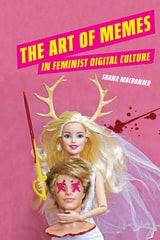
The Art of Memes in Feminist Digital Culture
Shana MacDonald
The Ohio State University Press, 2025
In The Art of Memes in Feminist Digital Culture, Shana MacDonald argues that memes are a unique medium of communication that both respond to and reflect the current cultural moment. The book—the first to treat memes as a unique medium of communication distinct from other internet and digital media—examines feminist and queer activist uses of memes as a form of digital resistance, demonstrating through collage, reenactment, and montage that countercultural meme makers intervene in the status quo and offer cultural critiques with potentially broad circulation. In this way, MacDonald situates memes as part of a lineage of aesthetic resistance, exploring the operational logic of bricolage, intertextuality, and intermediality within contemporary internet meme cultures on the left.
MacDonald examines memes from feminist, queer, antiracist, and anticapitalist accounts on Instagram, as well as how meme genres and themes shift when they travel across different platforms and subcultures. By considering memes as a medium, she sheds light on how they operate within contemporary digital culture as a beacon for online public discourse that pushes against dominant norms.
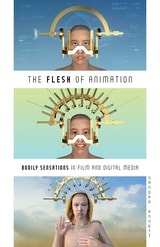
The Flesh of Animation
Bodily Sensations in Film and Digital MediaSandra Annett
University of Minnesota Press, 2024
How animation can reconnect us with bodily experiences
Film and media studies scholarship has often argued that digital cinema and CGI provoke a sense of disembodiment in viewers; they are seen as merely fantastic or unreal. In her in-depth exploration of the phenomenology of animation, Sandra Annett offers a new perspective: that animated films and digital media in fact evoke vivid embodied sensations in viewers and connect them with the lifeworld of experience.
Starting with the emergence of digital technologies in filmmaking in the 1980s, Annett argues that contemporary digital media is indebted to the longer history of animation. She looks at a wide range of animation—from Disney films to anime, electro swing music videos to Vocaloids—to explore how animation, through its material forms and visual styles, can evoke bodily sensations of touch, weight, and orientation in space. Each chapter discusses well-known forms of animation from the United States, France, Japan, South Korea, and China, examining how they provoke different sensations in viewers, such as floating and falling in Howl’s Moving Castle and My Beautiful Girl Mari, and how the body is mediated in films that combine animation and live action, as seen in Who Framed Roger Rabbit and Song of the South. These films set the stage for an exploration of how animation and embodiment manifest in contemporary global media, from CGI and motion capture in Disney’s “live action remakes” to new media installations by artists like Lu Yang.
Leveraging an array of case studies through a new approach to film phenomenology, The Flesh of Animation offers an enlightening discussion of why animation provides a sensational experience for viewers not replicable through other media forms.
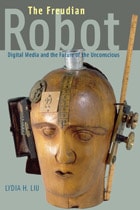
The Freudian Robot
Digital Media and the Future of the UnconsciousLydia H. Liu
University of Chicago Press, 2011
The identity and role of writing has evolved in the age of digital media. But how did writing itself make digital media possible in the first place? Lydia H. Liu offers here the first rigorous study of the political history of digital writing and its fateful entanglement with the Freudian unconscious.
Liu’s innovative analysis brings the work of theorists and writers back into conversation with one another to document significant meetings of minds and disciplines. She shows how the earlier avant-garde literary experiments with alphabetical writing and the word-association games of psychoanalysis contributed to the mathematical making of digital media. Such intellectual convergence, she argues, completed the transformation of alphabetical writing into the postphonetic, ideographic system of digital media, which not only altered the threshold of sense and nonsense in communication processes but also compelled a new understanding of human-machine interplay at the level of the unconscious.
Ranging across information theory, cybernetics, modernism, literary theory, neurotic machines, and psychoanalysis, The Freudian Robot rewrites the history of digital media and the literary theory of the twentieth century.
The Hyperlinked Society
Questioning Connections in the Digital AgeJoseph Turow and Lokman Tsui, Editors
University of Michigan Press, 2008
"Links" are among the most basic---and most unexamined---features of online life. Bringing together a prominent array of thinkers from industry and the academy, The Hyperlinked Society addresses a provocative series of questions about the ways in which hyperlinks organize behavior online. How do media producers' considerations of links change the way they approach their work, and how do these considerations in turn affect the ways that audiences consume news and entertainment? What role do economic and political considerations play in information producers' creation of links? How do links shape the size and scope of the public sphere in the digital age? Are hyperlinks "bridging" mechanisms that encourage people to see beyond their personal beliefs to a broader and more diverse world? Or do they simply reinforce existing bonds by encouraging people to ignore social and political perspectives that conflict with their existing interests and beliefs?
This pathbreaking collection of essays will be valuable to anyone interested in the now taken for granted connections that structure communication, commerce, and civic discourse in the world of digital media.
"This collection provides a broad and deep examination of the social, political, and economic implications of the evolving, web-based media environment. The Hyperlinked Society will be a very useful contribution to the scholarly debate about the role of the internet in modern society, and especially about the interaction between the internet and other media systems in modern society."
---Charles Steinfield, Professor and Chairperson, Department of Telecommunication, Information Studies, and Media, Michigan State University
Joseph Turow is Robert Lewis Shayon Professor at the Annenberg School for Communication, University of Pennsylvania. He was named a Distinguished Scholar by the National Communication Association and a Fellow of the International Communication Association in 2010. He has authored eight books, edited five, and written more than 100 articles on mass media industries. His books include Niche Envy: Marketing Discrimination in the Digital Age and Breaking up America: Advertisers and the New Media World.
Lokman Tsui is a doctoral candidate at the Annenberg School for Communication, University of Pennsylvania. His research interests center on new media and global communication.
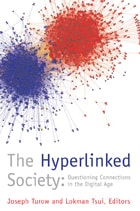
Cover image: This graph from Lada Adamic's chapter depicts the link structure of political blogs in the United States. The shapes reflect the blogs, and the colors of the shapes reflect political orientation---red for conservative blogs, blue for liberal ones. The size of each blog reflects the number of blogs that link to it.
digitalculturebooks is an imprint of the University of Michigan Press and the Scholarly Publishing Office of the University of Michigan Library dedicated to publishing innovative and accessible work exploring new media and their impact on society, culture, and scholarly communication. Visit the website at www.digitalculture.org.
The Laws of Cool
Knowledge Work and the Culture of InformationAlan Liu
University of Chicago Press, 2004
The Little Database
A Poetics of Media FormatsDaniel Scott Snelson
University of Minnesota Press, 2025
A poetics for reading the everyday objects that populate a hard drive
Bespoke online archives like PennSound and Eclipse host an astounding array of “old media” artifacts, posing a handcrafted counterpoint to the immense databases aggregated by digital titans like Google and Facebook. In The Little Database, Daniel Scott Snelson argues for the significance of these comparatively “small” collections, exploring how digital archives dramatically transform the artifacts they host and how they might help us better understand our own private collections in turn.
Examining curated collections such as Textz, UbuWeb, and the Electronic Poetry Center, Snelson explores media-specific works by poets and artists, including William Carlos Williams, Tracie Morris, bill bissett, Nam June Paik, and Vicki Bennett. He develops creative tools and contingent methods for reading cultural data, whether found on the internet or in our own collections of TXT, JPG, MP3, and MOV artifacts, presenting case studies to show how these objects have come to find revised meaning in their digital contexts. Along the way, experimental poetic interludes give readers practical entry points into the creative practice of producing new meanings in any given little database.
Inventive and interdisciplinary, The Little Database grapples with the digitized afterlives of cultural objects, showing how the past is continually reconfigured to shape the present. It invites readers to find playful and personal means for unpacking their own data collections, in the process discovering idiosyncratic ways to explore and connect with digital archives.
Retail e-book files for this title are screen-reader friendly with images accompanied by short alt text and/or extended descriptions.
The Maya Art of Speaking Writing
Remediating Indigenous Orality in the Digital AgeTiffany D. Creegan Miller
University of Arizona Press, 2022
Based on nearly a decade of fieldwork in the Guatemalan highlands, Tiffany D. Creegan Miller discusses images that are sonic, pictorial, gestural, and alphabetic. She reveals various forms of creativity and agency that are woven through a rich media landscape in Indigenous Guatemala, as well as Maya diasporas in Mexico and the United States. Miller discusses how technologies of inscription and their mediations are shaped by human editors, translators, communities, and audiences, as well as by voices from the natural world.
These texts push back not just on linear and compartmentalized Western notions of media but also on the idea of the singular author, creator, scholar, or artist removed from their environment. The persistence of orality and the interweaving of media forms combine to offer a challenge to audiences to participate in decolonial actions through language preservation.
The Maya Art of Speaking Writing calls for centering Indigenous epistemologies by doing research in and through Indigenous languages as we engage in debates surrounding Indigenous literatures, anthropology, decoloniality, media studies, orality, and the digital humanities.
The Media Swirl
Politics, Audiovisuality, and AestheticsCarol Vernallis
Duke University Press, 2023
The Media Welfare State
Nordic Media in the Digital EraTrine Syvertsen, Gunn Enli, Ole J. Mjøs, and Hallvard Moe
University of Michigan Press, 2014
The Media Welfare State: Nordic Media in the Digital Era comprehensively addresses the central dynamics of the digitalization of the media industry in the Nordic countries—Sweden, Norway, Denmark, Finland, and Iceland—and the ways media organizations there are transforming to address the new digital environment. Taking a comparative approach, the authors provide an overview of media institutions, content, use, and policy throughout the region, focusing on the impact of information and communication technology/internet and digitalization on the Nordic media sector. Illustrating the shifting media landscape the authors draw on a wide range of cases, including developments in the press, television, the public service media institutions, and telecommunication.
The Message Is Murder
Substrates of Computational CapitalJonathan Beller
Pluto Press, 2017
The News Event
Popular Sovereignty in the Age of Deep MediatizationFrancis Cody
University of Chicago Press, 2023
Not merely the act of representing events with words or images, a “news event” is the reciprocal relationship between the events being reported in the news and the event of the news coverage itself. In The News Event, Francis Cody focuses on how imaginaries of popular sovereignty have been remade through the production and experience of such events. Political sovereignty is thoroughly mediated by the production of news, and subjects invested in the idea of democracy are remarkably reflexive about the role of publicly circulating images and texts in the very constitution of their subjectivity. The law comes to stand as both a limit and positive condition in this process of event making, where acts of legal and extralegal repression of publication can also become the stuff of news about news makers. When the subjects of news inhabit multiple participant roles in the unfolding of public events, when the very technologies of recording and circulating events themselves become news, the act of representing a political event becomes difficult to disentangle from that of participating in it. This, Cody argues, is the crisis of contemporary news making: the news can no longer claim exteriority to the world on which it reports.
The Paradox of Connection
How Digital Media Is Transforming Journalistic LaborDiana Bossio, Valérie Bélair-Gagnon, Avery Holton, and Logan Molyneux
University of Illinois Press, 2024
Using a framework of online connection and disconnection, The Paradox of Connection examines how journalists’ practices are formed, negotiated, and maintained in dynamic social media environments. The interactions of journalists with the technological, social, and cultural features of online and social media environments have shaped new values and competencies--and the combination of these factors influence online work practices. Merging case studies with analysis, the authors show how the tactics of online connection and disconnection interact with the complex realities of working in today’s media environments. The result is an insightful portrait of fast-changing journalistic practices and their implications for both audiences and professional identities and norms.
The Prison House of the Circuit
Politics of Control from Analog to DigitalJeremy Packer
University of Minnesota Press, 2023
Has society ceded its self-governance to technogovernance?
The Prison House of the Circuit presents a history of digital media using circuits and circuitry to understand how power operates in the contemporary era. Through the conceptual vocabulary of the circuit, it offers a provocative model for thinking about governance and media.
The authors, writing as a collective, provide a model for collective research and a genealogical framework that interrogates the rise of digital society through the lens of Foucault’s ideas of governance, circulation, and power. The book includes five in-depth case studies investigating the transition from analog media to electronic and digital forms: military telegraphy and human–machine incorporation, the establishment of national electronic biopolitical governance in World War I, media as the means of extending spatial and temporal policing, automobility as the mechanism uniting mobility and media, and visual augmentation from Middle Ages spectacles to digital heads-up displays. The Prison House of the Circuit ultimately demonstrates how contemporary media came to create frictionless circulation to maximize control, efficacy, and state power.

The World Computer
Derivative Conditions of Racial CapitalismJonathan Beller
Duke University Press, 2021
Time and the Digital
Connecting Technology, Aesthetics, and a Process Philosophy of TimeTimothy Scott Barker
Dartmouth College Press, 2012
Transient Images
Personal Media in Public FrameworksAuthored by Eric Freedman
Temple University Press, 2010
In this probing study, Eric Freedman focuses on what images from photography, mobile communications, and the Internet reveal about looking. Exploring subjectivity by critically examining the look, he elaborates on the nature of the photographic frame and its relation to interpretive practices. Freedman scrutinizes what he calls "technobiography"—a life written through technology, and considers the movement of personal images into public spaces. He also considers authorship that situates the self as inherently engaged with and inscribed by information technology.
All of the chapters in Transient Images explore Freedman's interest in examining how media technologies activate particular notions of self and community. He provides examples that address trauma—pictures of missing children on milk cartons and episodes of the reality series Intervention—as well as the strategies behind creating and distributing personal advertisements on the Internet. Transient Images draws out the tensions that exist in images circulating in the digital era.
Transmedia Geographies
Decoloniality, Democratization, Cultural Citizenship, and Media ConvergenceKevin Glynn
Rutgers University Press, 2025
The authors explore the cultural politics that have developed within this new media environment by moving across the mediated landscapes of the first, third, and fourth (Indigenous people’s) worlds, which are deeply intertwined and interconnected under contemporary conditions of neoliberal globalization and emergent regimes of authoritarian postdemocracy. The book attends both to the platforms and digital networks of the new media environment and to the cultural forms and practices that have constituted television as the dominant medium of communication throughout the second half of the twentieth century. In the new media environment, transmediation works on behalf not only of those corporate megaconglomerates that have become all too familiar to media consumers around the world but also of many communities that have previously been excluded from access to the means of electronic textual production and circulation. For the latter, grassroots transmediation has become an important technique for the production of cultural citizenship.
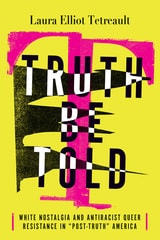
Truth Be Told
White Nostalgia and Antiracist Queer Resistance in “Post-Truth” AmericaLaura Elliot Tetreault
The Ohio State University Press, 2025
Taking a critical disinformation studies approach, Tetreault analyzes post-truth political messaging in the US after 2016. Using racial rhetorical criticism combined with a queer lens, they focus on how contemporary antiracist, queer, and feminist activists used various forms of cultural production to work against disinformation and its circulation, enacting refusal and insisting on the validity of their own knowledges as a form of community care. Tetreault ultimately argues that it’s not just the truth that academics must advocate for; they must question whose truth and how that truth is mediated and circulated.