Results by title
74 books match the query 'Discourse analysis' and 14 start with t
Tense Times
Rhetoric, Syntax, and Politics in US Crisis CultureLee M. Pierce
University of Alabama Press, 2023
American public culture is obsessed with crisis. Political polarization, economic collapse, moral decline—the worst seems always yet to come and already here. Tense Times argues that the ways we discuss these crises, especially through verb tenses, not only contribute to our perception and description of such crises but create them.
Past. Present. Future. These are the three principal verb tenses—the category of syntax that allows us to discuss time—that account for much of what is written about our crisis culture. Lee M. Pierce invites readers to expand their syntactic inventory beyond tense to include aspect (duration) and mood (attitude). Doing so opens new possibilities for understanding crisis discourse, as Pierce demonstrates with close readings of three syntaxes: the historical present, the past imperfective, and the retroactive subjunctive. Each mode produces a different experience of crisis and can help us understand our current political reality.
The book investigates a dozen widely circulated discourses from the past decade of US political culture, from Beyoncé’s controversial hit single “Formation” to the presidential campaign slogans of Hillary Clinton and Donald Trump, from the dueling rallies of Glenn Beck and Jon Stewart at the National Mall to the Ground Zero Mosque controversy and the 2007–2008 bailout. Taking a comparative approach that integrates theories of syntax from rhetorical, literary, affect, and cultural studies as well as linguistics, computer science, and Black studies, Tense Times suggests that the public’s conjuring of crisis is not inherently problematic. Rather, it is the openness of that crisis to contingency—the possibility that things could have been otherwise—that ought to concern anyone interested in language, politics, American culture, current events, or the direction this country is headed.

Terrorism
The Self-Fulfilling ProphecyJoseba Zulaika
University of Chicago Press, 2009
In counterterrorism circles, the standard response to questions about the possibility of future attacks is the terse one-liner: “Not if, but when.” This mantra supposedly conveys a realistic approach to the problem, but, as Joseba Zulaika argues in Terrorism, it functions as a self-fulfilling prophecy. By distorting reality to fit their own worldview, the architects of the War on Terror prompt the behavior they seek to prevent—a twisted logic that has already played out horrifically in Iraq. In short, Zulaika contends, counterterrorism has become pivotal in promoting terrorism.
Exploring the blind spots of counterterrorist doctrine, Zulaika takes readers on a remarkable intellectual journey. He contrasts the psychological insight of Truman Capote’s In Cold Blood with The 9/11 Commission Report, plumbs the mindset of terrorists in works by Orianna Fallaci and Jean Genet, maps the continuities between the cold war and the fight against terrorism, and analyzes the case of a Basque terrorist who tried to return to civilian life. Zulaika’s argument is powerful, inventive, and rich with insights and ideas that provide a new and sophisticated perspective on the War on Terror.

Text and Culture
The Politics of InterpretationDaniel Cottom
University of Minnesota Press, 1989
Text and Culture was first published in 1989. Minnesota Archive Editions uses digital technology to make long-unavailable books once again accessible, and are published unaltered from the original University of Minnesota Press editions.
In Text & Culture, Daniel Cottom examines the political aspects of contemporary disciplines of interpretation. He pleads against limiting the act of reading by disqualifying some readings as "wrong" or unscholarly, and he argues for the necessity of multiple readings, claiming that a closed-off text glosses over differences that are political in nature. He proceeds, then, from the notion of text to culture. Just as the reading of the text is conditioned by irreducible political differences, so is the reading of culture. Finally, to illustrate and further develop his arguments, Cottom presents an extensive analysis of Great Expectations.
Cottom's materials range from academic jokes to King Lear, and the writers he discusses range from Kant to Derrida, from Freud to Basil Bernstein, from Ludwig Wittgenstein and Bronislaw Malinowski to Erving Goffman, Clifford Geertz, and Stanley Fish. This study is especially concerned with the way "culture" and related terms, such as "context" and "norm," are part of a larger discourse in the contemporary humanities and social sciences - a discourse in which their effect is to repress recognition of important historical differences, conflicts, and possibilities. At the same time that he shows how difficult it is to get "beyond culture," he tries to indicate how interpretation may be turned into a more socially responsible practice.
Daniel Cottom is associate professor of English at the University of Florida. He is the author of Social Figures: George Eliot, Social History, and Literary Representation (Minnesota, 1987) and The Civilized Imagination: A Study of Ann Radcliffe, Jane Austen, and Sir Walter Scott.
Text at Scale
Corpus Analysis in Technical CommunicationStephen Carradini
University Press of Colorado, 2024
Textual Dynamics
Historical & Contemporary Studies OfCharles Bazerman
University of Wisconsin Press, 1991
Invaluable to the new pedagogical field of “writing across the curriculum,” Textual Dynamics of the Professions is also a significant intervention into the studies of rhetoric, writing theory, and the sociology of knowledge.

The Conundrum of Class
Public Discourse on the Social Order in AmericaMartin J. Burke
University of Chicago Press, 1995
Surveying American political, social, and intellectual life from the late 17th to the end of the 19th century, Burke examines in detail the contested discourse about equality—the way Americans thought and wrote about class, class relations, and their meaning in society.
Burke explores a remarkable range of thought to establish the boundaries of class and the language used to describe it in the works of leading political figures, social reformers, and moral philosophers. He traces a shift from class as a legal category of ranks and orders to socio-economic divisions based on occupations and income. Throughout the century, he finds no permanent consensus about the meaning of class in America and instead describes a culture of conflicting ideas and opinions.
The Cultural Prison
Discourse, Prisoners, and PunishmentJohn M. Sloop
University of Alabama Press, 2005
The Cultural Prison brings a new dimension to the study of prisoners and punishment by focusing on how the punishment of American offenders is represented and shaped in the mass media through public arguments. The study is based on an analysis of 642 articles collected by the author from American popular journals and magazines, as well as newspaper accounts, films, and public speeches, spanning the years 1950 to 1992. By piecing together and studying these popular narratives, he divides the history of prisoners and punishment into four eras, each marked by a shift in value system. He argues that the discourse, or rhetoric, surrounding prisoners and punishment on the public level works as a historical force that shapes contemporary culture.
The author is concerned that the public seems to have an inability or unwillingness to question or resist cultural definitions of normalcy and legal behavior. He explains that ideally moral behavior should be a matter of public debate rather than of unquestioned perpetuation, and he urges increased understanding of institutional and cultural discipline and our questioning the ways in which the constitution of punishment and prisoners influences us culturally.
The"cultural prison" refers to the way in which this study acts as an investigation of "the discipline of discipline"; it is an examination of the way in which discipline is shaped and formed in public discourse. The volume concludes with a fascinating account of the move to electronic means of surveillance; coupled with the representations of the prisoner along the lines of race and gender, it explains what these new techniques mean to contemporary culture.
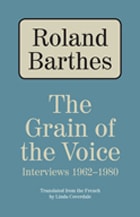
The Grain of the Voice
Interviews 1962-1980Roland Barthes
Northwestern University Press, 2009
This book brings together the great majority of Barthes’s interviews that originally appeared in French in Le Figaro Littéraire, Cahiers du Cinéma, France-Observateur, L'Express, and elsewhere. Barthes replied to questions—on the cinema, on his own works, on fashion, writing, and criticism—in his unique voice; here we have Barthes in conversation, speaking directly, with all his individuality. These interviews provide an insight into the rich, probing intelligence of one of the great and influential minds of our time.
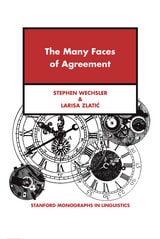
The Many Faces of Agreement
Morphology, Syntax, Semantics, and Discourse Factors in Serbo-Croatian AgreementStephen Wechsler and Larisa Zlatic
CSLI, 2003
With this framework in place, the authors explore a number of factors that affect agreement processes. The theory even explains the striking cross-linguistic generalizations expressed in Corbett's Agreement Hierarchy. Agreement is shown to be a distributed phenomenon, manifesting its many faces among the various components of grammar.
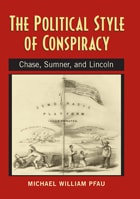
The Political Style of Conspiracy
Chase, Sumner, and LincolnMichael William Pfau
Michigan State University Press, 2005
The turbulent history of the United States has provided a fertile ground for conspiracies, both real and imagined. From the American Revolution to the present day, conspiracy discourse—linguistic and symbolic practices and artifacts revolving around themes, claims, or accusations of conspiracy—has been a staple of political rhetoric. Some conspiracy theories never catch on with the public, while others achieve widespread popularity. Whether successful or not, the means by which particular conspiracy theories spread is a rhetorical process, a process in which persuasive language, symbolism, and arguments act upon individual minds within concrete historical and political settings.
Conspiracy rhetoric was a driving force in the evolution of antebellum political culture, contributing to the rise and fall of the great parties in the nineteenth century. One conspiracy theory in particular—the "slave power" conspiracy—was instrumental in facilitating the growth of the young Republican Party's membership and ideology. The Political Style of Conspiracy analyzes the concept and reality of the "slave power" in the rhetorical discourse of the mid-nineteenth-century, in particular the speeches and writing of politicians Salmon P. Chase, Charles Sumner, and Abraham Lincoln. By examining their mainstream texts, Pfau reveals that, in addition to the "paranoid style" of conspiracy rhetoric that inhabits the margins of political life, Lincoln, Chase, and Sumner also engaged in a distinctive form of conspiracy rhetoric that is often found at the center of mainstream American society and politics.
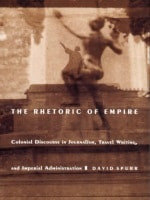
The Rhetoric of Empire
Colonial Discourse in Journalism, Travel Writing, and Imperial AdministrationDavid Spurr
Duke University Press, 1993
Despite historical differences among British, French, and American versions of colonialism, their rhetoric had much in common. The Rhetoric of Empire identifies these shared features—images, figures of speech, and characteristic lines of argument—and explores them in a wide variety of sources. A former correspondent for the United Press International, the author is equally at home with journalism or critical theory, travel writing or official documents, and his discussion is remarkably comprehensive. Ranging from T. E. Lawrence and Isak Dineson to Hemingway and Naipaul, from Time and the New Yorker to the National Geographic and Le Monde, from journalists such as Didion and Sontag to colonial administrators such as Frederick Lugard and Albert Sarraut, this analysis suggests the degree to which certain rhetorical tactics penetrate the popular as well as official colonial and postcolonial discourse.
Finally, Spurr considers the question: Can the language itself—and with it, Western forms of interpretation--be freed of the exercise of colonial power? This ambitious book is an answer of sorts. By exposing the rhetoric of empire, Spurr begins to loosen its hold over discourse about—and between—different cultures.
The Semantics of Incorporation
From Argument Structure to Discourse TransparencyDonka F. Farkas and Henriëtte de Swart
CSLI, 2003
The analysis presented in this book has important consequences for a cross-linguistic theory of anaphora. Linguists and logicians interested in discourse structure, cross-linguistic semantics, and the relationship between morpho-syntax and meaning will find this an engaging and innovative work.
The Subtlety of the Street
The Discourse of ResponsibilityM Peregrine Balmat
University of Michigan Press, 2026
The Subtlety of the Street examines the effects of small, seemingly mundane words that occur in conversations between street-level workers and those they serve. Combining discourse analysis, public policy studies, and higher education and social work research, M Peregrine Balmat examines data from two distinct ethnographies that comprise over 1100 pages of transcribed social interaction and 24 months of participant observation fieldwork. Balmat uses Interactional Linguistics to examine how responsibility is constructed over time in social work (homeless shelter) and higher education (community college) contexts, bringing to light systemic issues that face street-level disciplines. Analyzing constellations of words—personal pronouns, terms referring to performance benchmarks and assessments, and cultural mythologies—the author shows that clusters of seemingly generic phrases street-level workers use to communicate responsibility can function, in concert, as racialized microaggressions —termed the Gestalt of Responsibility.
These problematic linguistic choices can accumulate over a student’s time in the classroom or over a person’s time in shelter. They shift in response to performance assessments and measurements, increasing in unfriendly, morally-loaded constructions of responsibility as testing days and shelter restrictions approach. While street-level research suggests that strategies like these are utilized because workers believe those discourse practices work, the phrases reflect historical English Poor Laws and racialized ideologies leveled against enslaved Black people as well as more modern neoliberal welfare state and education politics where such ideologies persist. The Subtlety of the Street offers recommendations for street-level workers’ collaborative professional development and implications for street-level approaches to pedagogy and practice.
Theory and Practice of Sociocriticism
Thl Vol 53Edmond CrosTranslated by Jerome SchwartzForeword by Jurgen Link and Ursula Link-Heer
University of Minnesota Press, 1988
Theory and Practice of Sociocriticism was first published in 1988. Minnesota Archive Editions uses digital technology to make long-unavailable books once again accessible, and are published unaltered from the original University of Minnesota Press editions.
Edmond Cros is a leading French Hispanicist whose work is unique in Continental theory because it brings Spanish and Mexican texts into current literary debates, which have so far centered mainly on the French and German traditions. Equally distinctive is the nature of his work, which Cros terms sociocriticism. Unlike most sociological approaches to literature, which leave the structure of texts untouched, sociocriticism aims to prove that the encounter with "ideological traces," and with antagonistic tensions between social classes, is central to any reading of texts. Cros's method distinguishes between the "semiotic and "ideological" elements within a text, and involves the patient, exacting reconstruction of the concrete text from these elements, a process that enables the sociocritic to interpret its fault lines, its internal contradictions - in the end , its irreducibly social nature.
As its title suggests, Theory and Practice of Sociocriticism is structured in two parts. Its opening chapters analyze sociological theories of discourse, including those of Foucault, Bakhtin, and Goldman; in the second part, Cros applies theory to practice in readings of specific works: the film Scarface, contemporary Mexican poetry and prose (Octavio Paz, Carlos Fuentes), and the picaresque novel of the Spanish Golden Age. In their foreword, Jurgen Link and Ursula Link-Heer differentiate sociocriticism from other social approaches to literature and show how Cros's method works in specific textual readings. They emphasize his resistance to the reductive modes and "misreadings" that dominate much of contemporary theory.
Edmond Cros is a professor of literary theory and Hispanic studies at the Universite Paul Valery in Montpellier, France, and Andrew W. Mellon Professor of Hispanic Studies at the University of Pittsburgh. Jurgen Link teaches at the Ruhr-Universitat Bochum and Ursula Link-Heer at the Universitat Siegen, both in West Germany.