56 books match the query 'Diversity' and 15 start with t
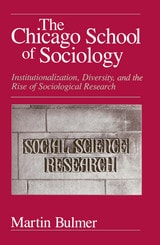
cover of The Chicago School of Sociology: Institutionalization, Diversity, and the Rise of Sociological Research

The Chicago School of Sociology

Institutionalization, Diversity, and the Rise of Sociological Research

Martin Bulmer

University of Chicago Press, 1984

From 1915 to 1935 the inventive community of social scientists at the University of Chicago pioneered empirical research and a variety of qualitative and quantitative methods, shaping the future of twentieth-century American sociology and related fields as well. Martin Bulmer's history of the Chicago school of sociology describes the university's role in creating research-based and publication-oriented graduate schools of social science.

"This is an important piece of work on the history of sociology, but it is more than merely historical: Martin Bulmer's undertaking is also to explain why historical events occurred as they did, using potentially general theoretical ideas. He has studied what he sees as the period, from 1915 to 1935, when the 'Chicago School' most flourished, and defines the nature of its achievements and what made them possible . . . It is likely to become the indispensible historical source for its topic."—Jennifer Platt, Sociology
[more]
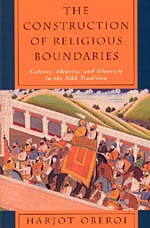
cover of The Construction of Religious Boundaries: Culture, Identity, and Diversity in the Sikh Tradition

The Construction of Religious Boundaries

Culture, Identity, and Diversity in the Sikh Tradition

Harjot Oberoi

University of Chicago Press, 1994

In this major reinterpretation of religion and society in India, Harjot Oberoi challenges earlier accounts of Sikhism, Hinduism and Islam as historically given categories encompassing well-demarcated units of religious identity. Through a searching examination of Sikh historical materials, he shows that early Sikh tradition was not concerned with establishing distinct religious boundaries. Most Sikhs recognized multiple identities grounded in local, regional, religious, and secular loyalties. Consequently, religious identities were highly blurred and several competing definitions of what constituted a Sikh were possible.

In the closing decades of the nineteenth century, however, the Singh Sabha, a powerful new Sikh movement, began to view the multiplicity in Sikh identity with suspicion and hostility. Aided by social and cultural forces unleashed by the British Raj, the Singh Sabha sought to recast Sikh tradition and purge it of diversity. The ethnocentric logic of a new elite dissolved alternative ideals under the highly codified culture of modern Sikhism.

A study of the process by which a pluralistic religious world view is replaced by a monolithic one, this important book calls into question basic assumptions about the efficacy of fundamentalist claims and the construction of all social and religious identities. An essential book for the field of South Asian religions, this work is also an important contribution to cultural anthropology, postcolonial studies, and the history of religion in general.
[more]
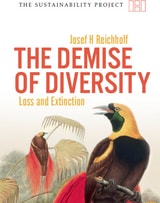
cover of The Demise of Diversity: Loss and Extinction

The Demise of Diversity

Loss and Extinction

Josef Reichholf

Haus Publishing, 2009

Maintaining the natural diversity of the countless species on Earth is of fundamental importance for the continued existence of life on this planet. Nevertheless, ecosystems are being destroyed, as the cultivation of land for agriculture, industry and housing is intensified and oceans continue to be exploited. The Demise of Diversity: Loss and Extinction deals with biodiversity on this planet and the vital importance of sustaining it—nothing less than the future of life on Earth.
[more]
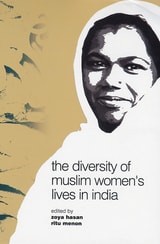
cover of The Diversity of Muslim Women's Lives in India

The Diversity of Muslim Women's Lives in India

Hasan, Zoya

Rutgers University Press, 2005

To what extent does Muslim personal law, such as polygamy and triple talaq (the allowance for men to instantly divorce their wives), affect the lives of Muslim women? Are these factors more or less important than other lifestyle issues such as socioeconomic status?

Over the past several decades, the most influential approaches to the study of Muslim women and nearly all the significant campaigns for their rights have focused on religious practices and the urgency to reform Islamic laws. Such focused views, however, give the false sense that religion is the main, if not the only, aspect of Muslim women’s lives.

In order to broaden the lens through which this demographic is typically seen, a group of researchers in India carried out a large and unprecedented study of one of the most disadvantaged sections of Indian society. The editors of The Diversity of Muslim Women’s Lives in India bring together this research in a comprehensive collection of informative and revealing case studies. The essays examine Muslim identity, not only in terms of religious doctrine, but as a heterogeneous set of characteristics produced at the intersections of class, religion, and gender.

Addressing issues of law, politics, education, race, and other neglected secular subjects, this volume is essential reading for policy-makers, social activists, and scholars.
[more]
cover of The Diversity of Religions: A Christian Perspective

The Diversity of Religions

A Christian Perspective

J. A. DiNoia, O.P.

Catholic University of America Press, 1992
DiNoia approaches the debate in the theology of religions with a fresh, lucid, critical and informed mind. . . . This book is timely, provocative and explores new territories and recasts old debates in a fresh and intelligent manner. It will appeal to philosophers, theologians, indologists and those concerned with the meeting of Christianity and the world religions.--Gavin D'Costa, University of Bristol
[more]
cover of The Enigma of Diversity: The Language of Race and the Limits of Racial Justice

The Enigma of Diversity

The Language of Race and the Limits of Racial Justice

Ellen Berrey

University of Chicago Press, 2015

Diversity these days is a hallowed American value, widely shared and honored. That’s a remarkable change from the Civil Rights era—but does this public commitment to diversity constitute a civil rights victory? What does diversity mean in contemporary America, and what are the effects of efforts to support it?

Ellen Berrey digs deep into those questions in The Enigma of Diversity. Drawing on six years of fieldwork and historical sources dating back to the 1950s and making extensive use of three case studies from widely varying arenas—housing redevelopment in Chicago’s Rogers Park neighborhood, affirmative action in the University of Michigan’s admissions program, and the workings of the human resources department at a Fortune 500 company—Berrey explores the complicated, contradictory, and even troubling meanings and uses of diversity as it is invoked by different groups for different, often symbolic ends. In each case, diversity affirms inclusiveness, especially in the most coveted jobs and colleges, yet it resists fundamental change in the practices and cultures that are the foundation of social inequality. Berrey shows how this has led racial progress itself to be reimagined, transformed from a legal fight for fundamental rights to a celebration of the competitive advantages afforded by cultural differences.

Powerfully argued and surprising in its conclusions, The Enigma of Diversity reveals the true cost of the public embrace of diversity: the taming of demands for racial justice.
[more]
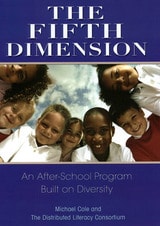
cover of The Fifth Dimension: An After-School Program Built on Diversity

The Fifth Dimension

An After-School Program Built on Diversity

Michael Cole

Russell Sage Foundation, 2006
The significant increase in the number of working mothers over the last twenty years has led to widespread worries about the plight of "latchkey kids," who return from school each day to empty homes. Concerned that unsupervised children might be at greater risk of delinquency, schools and communities across the nation began providing after-school activities. But many of these programs were hastily devised with little understanding of what constitutes a quality program that meets children's developmental needs. The Fifth Dimension explores and evaluates one of the country's most successful and innovative after-school programs, providing insightful and practical lessons about what works and doesn't work after-school. The Fifth Dimension program was established in the 1980s as a partnership between community centers and local colleges to establish an educational after-school program. With an emphasis on diversity and computer technology, the program incorporates the latest theories about child development and gives college students the opportunity to apply their textbook understanding of child development to real learning environments. The Fifth Dimension explores the design, implementation, and evaluation of this thriving program. The authors attribute the success of the Fifth Dimension to several factors. First, the program offers a balance of intellectually enriching exercises with development enhancing games. Second, by engaging undergraduates as active participants in both learning and social activities, the program gives local community organizations a large infusion of high-quality help for their educational efforts. Third, by rewarding children for their achievements and good behavior with greater flexibility in choosing their own schedules, the Fifth Dimension acts as a powerful, enduring motivator. The Fifth Dimension program serves as a model for what an enriching after-school program can be. The product of years of innovation and careful assessment, The Fifth Dimension is a valuable resource for all who are interested in developing successful community-based learning programs.
[more]
cover of The Inclusion Marathon: On Diversity and Equity in the Workplace

The Inclusion Marathon

On Diversity and Equity in the Workplace

Zoë Papaikonomou

Amsterdam University Press, 2023

In recent years, more and more organisations have realised that diversity and inclusion in the workplace is both crucial and enormously beneficial. But how do you stop this realisation from remaining empty words and flashy statements, and turn awareness into action?

In The Inclusion Marathon, Kauthar Bouchallikht and Zoë Papaikonomou interview 41 practitioners and researchers about their knowledge and experience within the field of diversity, equity and inclusion in the Netherlands. These experts discuss different approaches and the bumps and barriers they come across. The Inclusion Marathon is a revealing book exploring the persistent lack of diversity and equity within many organisations. At the same time, it is a constructive, concrete guide to how organisations may become more diverse, equitable and inclusive.

The Inclusion Marathon is an extensive English summary of the Dutch book De inclusiemarathon.
[more]
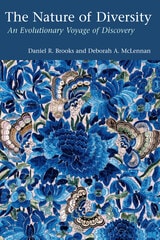
cover of The Nature of Diversity: An Evolutionary Voyage of Discovery

The Nature of Diversity

An Evolutionary Voyage of Discovery

Daniel R. Brooks and Deborah A. McLennan

University of Chicago Press, 2002

All living things on earth—from individual species to entire ecosystems—have evolved through time, and evolution is the acknowledged framework of modern biology. Yet many areas of biology have moved from a focus on evolution to much narrower perspectives.

Daniel R. Brooks and Deborah A. McLennan argue that it is impossible to comprehend the nature of life on earth unless evolution—the history of organisms—is restored to a central position in research. They demonstrate how the phylogenetic approach can be integrated with ecological and behavioral studies to produce a richer and more complete picture of evolution. Clearly setting out the conceptual, methodological, and empirical foundations of their research program, Brooks and McLennan show how scientists can use it to unravel the evolutionary history of virtually any characteristic of any living thing, from behaviors to ecosystems. They illustrate and test their approach with examples drawn from a wide variety of species and habitats.

The Nature of Diversity provides a powerful new tool for understanding, documenting, and preserving the world's biodiversity. It is an essential book for biologists working in evolution, ecology, behavior, conservation, and systematics. The argument in The Nature of Diversity greatly expands upon and refines the arguments made in the authors' previous book Phylogeny, Ecology, and Behavior.
[more]
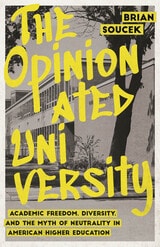
cover of The Opinionated University: Academic Freedom, Diversity, and the Myth of Neutrality in American Higher Education

The Opinionated University

Academic Freedom, Diversity, and the Myth of Neutrality in American Higher Education

Brian Soucek

University of Chicago Press, 2026

Why institutional neutrality is nothing but an illusion.
 
Can a university ever truly be neutral in today’s social and political climate? Pushing against the tide of universities increasingly pledging to stay neutral about contentious issues, law professor Brian Soucek argues that their promises are doomed to fail—universities can’t help being opinionated.

In The Opinionated University, Soucek shows that neutrality is a myth by taking a deep dive into several prominent campus controversies of the day, including diversity, equity, and inclusion (DEI) efforts and restrictions on campus speech and protest. Each issue requires universities to choose a side in what they do, if not also in what they say. In everything from curricular and admissions decisions to their response to outside rankings and their evaluation of faculty, universities express the values at the heart of their mission. Soucek argues that those pushing for neutrality are only preventing universities from standing up for their values, whether in today’s current moment of crisis or in periods of political calm.

Both timely and deeply engaging, The Opinionated University calls on universities to dispense with neutrality as a governing principle and focus instead on what their mission should be, and who should determine it.  
 
[more]
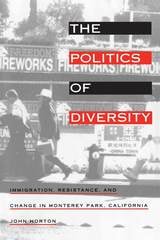
cover of The Politics of Diversity: Immigration, Resistance, and Change in Monterey Park, California

The Politics of Diversity

Immigration, Resistance, and Change in Monterey Park, California

John Horton

Temple University Press, 1995

Advertised in Asia as "The Chinese Beverly Hills," this small city minutes east of downtown Los Angeles, became by the late 1970s a regional springboard for a new type of Chinese immigration—suburban and middle class with a diversified and globally-oriented economy. Freed from the isolation of old Chinatowns, new immigrants now confronted resistance from more established Anglo, Asian American, and Latino neighbors, whose opposition took the form of interconnected "English Only" and slow-growth movements.

In The Politics of Diversity, a multiethnic team of researches employ ethnography, interviewing, and exit polls to capture the process of change as newcomers and established residents come to terms with the meaning of diversity and identity in their everyday lives. The result is an engaging grass-roots account of immigration and change: the decline of the loyal old-boy Anglo network; the rise of women, minorities, and immigrants in the political scene; and a transformation of ethnic and American identities.
[more]
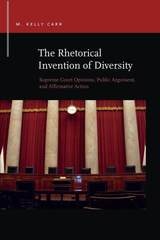
cover of The Rhetorical Invention of Diversity: Supreme Court Opinions, Public Arguments, and Affirmative Action

The Rhetorical Invention of Diversity

Supreme Court Opinions, Public Arguments, and Affirmative Action

M. Kelly Carr

Michigan State University Press, 2018
Despite the tepid reception of Regents of the University of California v. Bakke in 1978, the Supreme Court has thrice affirmed its holding: universities can use race as an admissions factor to achieve the goal of a diverse student body. This book examines the process of rhetorical invention followed by Justice Lewis F. Powell Jr., his colleagues, and other interlocutors as they sifted through arguments surrounding affirmative action policies to settle on diversity as affirmative action’s best constitutional justification. Here M. Kelly Carr explores the goals, constraints, and argumentative tools of the various parties as they utilized the linguistic resources available to them, including arguments about race, merit, and the role of the public university in civic life. Using public address texts, legal briefs, memoranda, and draft opinions, Carr looks at how public arguments informed the amicus briefs, chambers memos, and legal principles before concluding that Powell’s pragmatic decision making fused the principle of individualism with an appreciation of multiculturalism to accommodate his colleagues’ differing opinions. She argues that Bakke is thus a legal and rhetorical milestone that helped to shift the justificatory grounds of race-conscious policy away from a recognition of historical discrimination and its call for reparative equality, and toward an appreciation of racial diversity.
[more]
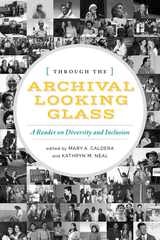
cover of Through the Archival Looking Glass: A Reader on Diversity and Inclusion

Through the Archival Looking Glass

A Reader on Diversity and Inclusion

Mary A. Caldera

Society of American Archivists, 2014

Realizing Diversity and Inclusion in Archives and the Archival Profession The impulse to create archives is rooted in the very human need to leave one’s mark on the world. Whether through letters, diaries, reports, photographs, films, or a teenager’s simple need to scrawl “I was here” on a subway wall, there’s a deep desire in individuals to tell their stories, to be seen literally and figuratively in archives. With this desire also comes the need to ensure that archives are as diverse as the world we live in and to preserve the individuals and cultures that have been consciously or unconsciously underserved in the archives. Through the Archival Looking Glass: A Reader on Diversity and Inclusion, edited by Mary A. Caldera and Kathryn M. Neal, features ten essays that explore prominent themes related to diversity, including: • Creating a diverse record • Recruiting diversity to the profession and retaining a diverse workforce • Questioning the archive itself, on representation, authority, neutrality, objectivity, and power Through the Archival Looking Glass illustrates a multitude of perspectives and issues so that fresh voices can emerge alongside more familiar ones, and new concepts can be examined with new treatments of established ideas. Diversity is an ever-evolving concept; the term itself is increasingly rephrased as inclusion. By stimulating further ideas and conversation, we can come closer to a common understanding of what diversity and inclusion are or can be and, perhaps most importantly, how they may be realized in archives and the archival profession.
[more]
cover of Through the Archival Looking Glass: A Reader on Diversity and Inclusion

Through the Archival Looking Glass

A Reader on Diversity and Inclusion

Mary Caldera

American Library Association, 2017
[more]
cover of Transforming the Academy: Faculty Perspectives on Diversity and Pedagogy

Transforming the Academy

Faculty Perspectives on Diversity and Pedagogy

Willie-LeBreton, Sarah

Rutgers University Press, 2016

In recent decades, American universities have begun to tout the “diversity” of their faculty and student bodies. But what kinds of diversity are being championed in their admissions and hiring practices, and what kinds are being neglected? Is diversity enough to solve the structural inequalities that plague our universities? And how might we articulate the value of diversity in the first place? 
 
Transforming the Academy begins to answer these questions by bringing together a mix of faculty—male and female, cisgender and queer, immigrant and native-born, tenured and contingent, white, black, multiracial, and other—from public and private universities across the United States. Whether describing contentious power dynamics within their classrooms or recounting protests that occurred on their campuses, the book’s contributors offer bracingly honest inside accounts of both the conflicts and the learning experiences that can emerge from being a representative of diversity. 
 
The collection’s authors are united by their commitment to an ideal of the American university as an inclusive and transformative space, one where students from all backgrounds can simultaneously feel intellectually challenged and personally supported. Yet Transforming the Academy also offers a wide range of perspectives on how to best achieve these goals, a diversity of opinion that is sure to inspire lively debate. 
 
[more]