Results by title
55 books match the query 'Documentary films' and 3 start with t
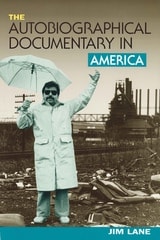
The Autobiographical Documentary in America
Jim Lane
University of Wisconsin Press, 2002
Since the late 1960s, American film and video makers of all genres have been fascinated with themes of self and identity. Though the documentary form is most often used to capture the lives of others, Jim Lane turns his lens on those media makers who document their own lives and identities. He looks at the ways in which autobiographical documentaries—including Roger and Me, Sherman’s March, and Silverlake Life—raise weighty questions about American cultural life. What is the role of women in society? What does it mean to die from AIDS? How do race and class play out in our personal lives? What does it mean to be a member of a family? Examining the history, diversity, and theoretical underpinnings of this increasingly popular documentary form, Lane tracks a fundamental transformation of notions of both autobiography and documentary.
The Rhetoric of the New Political Documentary
Edited by Thomas W. Benson and Brian J. Snee
Southern Illinois University Press, 2008
The Rhetoric of the New Political Documentary explores the most visible and volatile element in the 2004 presidential campaign—the partisan documentary film. This collection of original critical essays by leading scholars and critics—including Shawn J. and Trevor Parry-Giles, Jennifer L. Borda, and Martin J. Medhurst—analyzes a selection of political documentaries that appeared during the 2004 election season. The editors examine the new political documentary with the tools of rhetorical criticism, combining close textual analysis with a consideration of the historical context and the production and reception of the films.
The essays address the distinctive rhetoric of the new political documentary, with the films typically having been shot with relatively low budgets, in video, and using interviews and stock footage rather than observation of uncontrolled behavior. The quality was often good enough and interest was sufficiently intense that the films were shown in theaters and on television, which provided legitimacy and visibility before they were released soon afterwards on DVD and VHS and marketed on the Internet.
The volume reviews such films as Michael Moore’s Fahrenheit 9/11; two refutations of Moore’s film, Fahrenhype 9/11 and Celsius 41.11;Unprecedented: The 2000 Presidential Election; and George W. Bush: Faith in the White House—films that experimented with a variety of angles and rhetorics, from a mix of comic disparagement and earnest confrontation to various emulations of traditional news and documentary voices.
The Rhetoric of the New Political Documentary represents the continued transformation of American political discourse in a partisan and contentious time and showcases the independent voices and the political power brokers that struggled to find new ways to debate the status quo and employ surrogate “independents” to create a counterrhetoric.
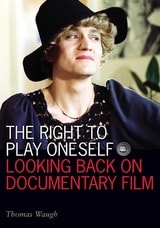
The Right to Play Oneself
Looking Back on Documentary FilmThomas Waugh
University of Minnesota Press, 2010
Waugh analyzes an eclectic international selection of films and issues from the 1920s to the present day. The essays provide a transcultural focus, moving from documentaries of the industrialized societies of North America and Europe to those of 1980s India and addressing such canonical directors as Dziga Vertov, Emile de Antonio, Barbara Hammer, Rosa von Praunheim, and Anand Patwardhan. Woven through the volume is the relationship of the documentary with the history of the Left, including discussions of LGBT documentary pioneers and the firebrand collectives that changed the history of documentary, such as Challenge for Change and ACT UP’s Women’s Collective.
Together with the introduction by the author, Waugh’s essays advance a defiantly and persuasively personal point of view on the history and significance of documentary film.