Results by title
295 books match the query 'Ecosystems & Habitats' and 73 start with t
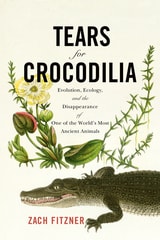
Tears for Crocodilia
Evolution, Ecology, and the Disappearance of One of the World's Most Ancient AnimalsZach Fitzner
Westholme Publishing, 2025
Seventy million years ago in what would become North America, a monstrous thirty-five-foot-long Cretaceous crocodile lurked on a marshy riverbank. Springing suddenly, its huge jaws trapped and crushed a juvenile hadrosaur. Today, the remains of that ancient crocodile are being painstakingly reconstructed in Colorado, where naturalist Zach Fitzner continues his life-long fascination with this amazing animal family.
In Tears for Crocodilia: Evolution, Ecology, and the Disappearance of One of the World’s Most Ancient Animals, Fitzner tracks the evolution of crocodilians from prehistoric predators to modern endangered wildlife, using his own experiences with these reptiles as a lens to understanding wildlife conservation and our relationship with the natural world. Traveling the world to interact with crocodiles, from observing alligators in a wildlife refuge in Texas and paddling a canoe in the Everglades searching for crocodiles to trekking the jungles in Nepal to find endangered gharials, the author expresses a wonder in exploring these diverse ecosystems, making a connection between crocodilians and the lands they live in. As the story follows crocodilians, it also illuminates their often complicated relationship with humans, from crocodile cults in ancient Egypt to American alligators living on golf courses. Fitzner also closely examines the dark side of this relationship, including habitat destruction and poaching as well as the mechanistic view of traditional conservation that turns these magnificent animals into agricultural products. Tears for Crocodilia delves deeply into issues of wildlife conservation, ethics, and how we can coexist with other creatures. It is also a tribute to a magnificent group of animals, survivors from the age of dinosaurs.
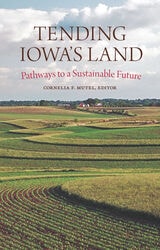
Tending Iowa’s Land
Pathways to a Sustainable FutureCornelia F. Mutel
University of Iowa Press, 2022
In the last 200 years, Iowa’s prairies and other wildlands have been transformed into vast agricultural fields. This massive conversion has provided us with food, fiber, and fuel in abundance. But it has also robbed Iowa’s land of its native resilience and created the environmental problems that today challenge our everyday lives: polluted waters, increasing floods, loss and degradation of rich prairie topsoil, compromised natural systems, and now climate change.
In a straightforward, friendly style, Iowa’s premier scientists and experts consider what has happened to our land and outline viable solutions that benefit agriculture as well as the state’s human and wild residents.
Tending the Valley
A Prairie Restoration OdysseyAlice D'Alessio
Wisconsin Historical Society Press, 2020
In Tending the Valley, Alice chronicles their efforts to return the land to its natural prairie state and to manage their oak and pine woods. Along the way they joined the land restoration movement, became involved in a number of stewardship groups, and discovered the depths of dedication and toil required to bring their dream to fruition. With hard-earned experience and the evocative language of a poet, D’Alessio shares her personal triumphs and setbacks as a prairie steward, along with a profound love for the land and respect for the natural history of the Driftless.
The Abstract Wild
Jack Turner
University of Arizona Press, 1996
How wild is wilderness and how wild are our experiences in it, asks Jack Turner in the pages of The Abstract Wild. His answer: not very wild. National parks and even so-called wilderness areas fall far short of offering the primal, mystic connection possible in wild places. And this is so, Turner avows, because any managed land, never mind what it's called, ceases to be wild. Moreover, what little wildness we have left is fast being destroyed by the very systems designed to preserve it.
Natural resource managers, conservation biologists, environmental economists, park rangers, zoo directors, and environmental activists: Turner's new book takes aim at these and all others who labor in the name of preservation. He argues for a new conservation ethic that focuses less on preserving things and more on preserving process and "leaving things be." He takes off after zoos and wilderness tourism with a vengeance, and he cautions us to resist language that calls a tree "a resource" and wilderness "a management unit."
Eloquent and fast-paced, The Abstract Wild takes a long view to ask whether ecosystem management isn't "a bit of a sham" and the control of grizzlies and wolves "at best a travesty." Next, the author might bring his readers up-close for a look at pelicans, mountain lions, or Shamu the whale. From whatever angle, Turner stirs into his arguments the words of dozens of other American writers including Thoreau, Hemingway, Faulkner, and environmentalist Doug Peacock.
We hunger for a kind of experience deep enough to change our selves, our form of life, writes Turner. Readers who take his words to heart will find, if not their selves, their perspectives on the natural world recast in ways that are hard to ignore and harder to forget.

The Abyss Stares Back
Encounters with Deep-Sea LifeStacy Alaimo
University of Minnesota Press, 2025
In an era of accelerating extinctions, what does it mean to discover thousands of new species in the deep sea?
As we see the catastrophic effects of the Anthropocene proliferate, advanced technologies also grant us greater access to the furthest reaches of the world’s oceans, facilitating the discovery of countless new species. Sorting through the implications of this strange paradox, Stacy Alaimo explores the influence this newfound intimacy with the deep sea might have on our broader relationship to the nonhuman world. While many images of these abyssal creatures circulate as shallow clickbait, aesthetic representations can be enticing lures for speculating about their lives, profoundly expanding our environmental concern.
The Abyss Stares Back analyzes a diverse range of scientific, literary, and artistic accounts of deep-sea exploration, including work from the naturalist William Beebe and the artist Else Bostelmann as well as results of the Census of Marine Life that began at the turn of the twenty-first century. As she focuses on oft-overlooked creatures of the deep, such as tubeworms, hatchetfish, siphonophores, and cephalopods, which are typically cast as “alien,” Alaimo shows how depictions of the deep seas have been enmeshed in long colonial histories and racist constructions of a threatening abyss.
Drawing on feminist environmentalism, posthumanism, science and technology studies, and Indigenous and non-Western perspectives, Alaimo details how our understanding of science is fundamentally altered by aesthetic encounters with these otherworldly life forms. She argues that, although the deep sea is often thought of as a lifeless void with little connection to human existence, our increasing devastation of this realm underscores our ethical obligation to protect the biodiverse life in the depths. When the abyss stares back, it demands recognition.
Retail e-book files for this title are screen-reader friendly with images accompanied by short alt text and/or extended descriptions.
The Accidental Reef and Other Ecological Odysseys in the Great Lakes
Lynne Heasley
Michigan State University Press, 2022
The Albatross and the Fish
Linked Lives in the Open SeasBy Robin W. Doughty and Virginia Carmichael
University of Texas Press, 2011
Breeding on remote ocean islands and spending much of its life foraging for food across vast stretches of seemingly empty seas, the albatross remains a legend for most people. And yet, humans are threatening the albatross family to such an extent that it is currently the most threatened bird group in the world. In this extensively researched, highly readable book, Robin W. Doughty and Virginia Carmichael tell the story of a potentially catastrophic extinction that has been interrupted by an unlikely alliance of governments, conservation groups, and fishermen.
Doughty and Carmichael authoritatively establish that the albatross's fate is linked to the fate of two of the highest-value table fish, Bluefin Tuna and Patagonian Toothfish, which are threatened by unregulated commercial harvesting. The authors tell us that commercial fishing techniques are annually killing tens of thousands of albatrosses. And the authors explain how the breeding biology of albatrosses makes them unable to replenish their numbers at the rate they are being depleted. Doughty and Carmichael set the albatross's fate in the larger context of threats facing the ocean commons, ranging from industrial overfishing to our habit of dumping chemicals, solid waste, and plastic trash into the open seas. They also highlight the efforts of dedicated individuals, environmental groups, fishery management bodies, and governments who are working for seabird and fish conservation and demonstrate that these efforts can lead to sustainable solutions for the iconic seabirds and the entire ocean ecosystem.
The Alewives' Tale
The Life History and Ecology of River Herring in the NortheastBarbara Brennessel
University of Massachusetts Press, 2014
The Alewives' Tale describes the plight of alewives and blueback herring, two fish species that have similar life histories and are difficult to distinguish by sight. Collectively referred to as river herring, they have been economically important since colonial times as food, fertilizer, and bait. In recent years they have attracted much attention from environmentalists, especially as attempts are being made, on and beyond Cape Cod, to restore the rivers, streams, ponds, lakes, and estuaries that are crucial for their reproduction and survival.
Brennessel provides an overview of the biology of the fish—from fertilized eggs to large schools of adults that migrate in the Atlantic Ocean—while describing the habitats at different stages of their life history. She explores the causes of the dramatic decline of river herring since the mid-twentieth century and the various efforts to restore these iconic fish to the historic populations that treated many onlookers to spectacular inland migrations each spring.
The Bark River Chronicles
Stories from a Wisconsin WatershedMilton J. Bates
Wisconsin Historical Society Press, 2012
The Bark River valley in southeastern Wisconsin is a microcosm of the state's - indeed, of the Great Lakes region's - natural and human history. "The Bark River Chronicles" reports one couple's journey by canoe from the river's headwaters to its confluence with the Rock River and several miles farther downstream to Lake Koshkonong. Along the way, it tells the stories of Ice Age glaciation, the effigy mound builders, the Black Hawk War, early settlement and the development of waterpower sites, and recent efforts to remove old dams and mitigate the damage done by water pollution and invasive species.
Along with these big stories, the book recounts dozens of little stories associated with sites along the river. The winter ice harvest, grain milling technology, a key supreme court decision regarding toxic waste disposal, a small-town circus, a scheme to link the Great Lakes to the Mississippi River by canal, the murder of a Chicago mobster, controversies over race and social class in Waukesha County's lake country, community efforts to clean up the river and restore a marsh, visits to places associated with the work of important Wisconsin writers - these and many other stories belong to the Bark River chronicles.
For the two voyageurs who paddle the length of the Bark, it is a journey of rediscovery and exploration. As they glide through marshes, woods, farmland, and cities, they acquire not only historical and environmental knowledge but also a renewed sense of the place in which they live. Maps and historical photographs help the reader share their experience.
The Battle for the Buffalo River
The Story of America's First National RiverNeil Compton
University of Arkansas Press, 2010

The Botanical Odyssey of Richard S. Felger
Edited by Benjamin T. Wilder, Bill Broyles, and Thomas Bowen
University of Arizona Press, 2026
This work is a vibrant tribute to Richard Stephen Felger, who was one of the most influential scientists of the American Southwest and northwestern Mexico. Known as a desert botanist, Felger’s work transcended regional boundaries, blending rigorous fieldwork with global ecological vision. This work offers an intimate and multifaceted portrait of a man whose tireless advocacy for biodiversity and biocultural conservation shaped generations of desert scientists..
Edited by Benjamin T. Wilder, Bill Broyles, and Thomas Bowen, this book is both a celebration and a resource. The work is separated into four parts. With humor, insight, and deep empathy, Felger’s own voice leads the journey in part 1, recounting his most memorable field experiences with masterful prose and sly wit. Part 2 brings together heartfelt reflections from colleagues who worked alongside Felger in the field, revealing the eccentric brilliance and relentless curiosity that defined his career. Part 3 explores his family history and the unconventional path that shaped his life’s work, while part 4 presents a comprehensive bibliography of his most important publications. The book contains four maps that help take you around the world on Felger’s journeys, and fifty images selected from the thousands of slides from his archive that further transport and anchor you in the adventure.
Felger’s own voice, paired with reflections from twenty colleagues, creates a rich, multifaceted narrative, offering readers a rare glimpse into the life of a scientific icon whose legacy continues to inspire desert researchers and conservationists across the globe.
Contributors
James Aronson
Thomas Bowen
Bill Broyles
Alberto Búrquez
Susan Davis Carnahan
Mark Alan Dimmitt
Exequiel Ezcurra
Gil Gillenwater
Russ Kleinman
Angelina Martínez-Yrízar
Gregory McNamee
Cathy Moser Marlett
Gary Paul Nabhan
Wallace J. Nichols
William R. Norris
Humberto Romero Morales
Sue Rutman
Silke Schneider
Jeffrey Seminoff
Jane Spinti
Benjamin T. Wilder
The Changing Nature of the Maine Woods
Andrew M. Barton
University of New Hampshire Press, 2012
The Changing Nature of the Maine Woods is both a fascinating introduction to the forests of Maine and a detailed but accessible narrative of the dynamism of these ecosystems. This is natural history with a long view, starting with an overview of the state's geological history, the reemergence of the forest after glacial retreat, and the surprising changes right up to European arrival. The authors create a vivid picture of Maine forests just before the impact of Euro-Americans and trace the profound transformations since settlement.
Ambitious in its geographic range, this book explores how and why Maine forests differ across the state, from the top of Mount Katahdin to the coast. Through groundbreaking research and engaging narratives, the authors assess key ecological forces such as climate change, insects and disease, nonnative organisms, natural disturbance, and changing land use to create a dramatic portrait of Maine forests—past, present, and future.
This book both synthesizes the latest scientific discoveries regarding the changing forest and relates the findings to an educated lay and academic audience.
The Chicago River
A Natural and Unnatural HistoryLibby Hill
Southern Illinois University Press, 2019
This widely acclaimed volume weaves the perspectives of science, engineering, commerce, politics, economics, and the natural world into a chronicle of the river from its earliest geologic history through its repeated adaptations to the city that grew up around it. While explaining the river’s role in massive public works, such as drainage and straightening, designed to address the infrastructure needs of a growing population, Hill focuses on the synergy between the river and the people of greater Chicago, whether they be the tribal cultures that occupied the land after glacial retreat, the first European inhabitants, or more recent residents.
In the first edition, Hill brought together years of original research and the contributions of dozens of experts to tell the Chicago River’s story up until 2000. This revised edition features discussions of disinfection, Asian carp, green strategies, the evolution of the Chicago Riverwalk, and the river’s rejuvenation. It also explores how earlier solutions to problems challenge today’s engineers, architects, environmentalists, and public policy agencies as they address contemporary issues.
Revealing the river to be a microcosm of the uneasy relationship between nature and civilization, The Chicago River offers the tools and knowledge for the city’s residents to be champions on the river’s behalf.
The Chicago River
An Illustrated History and Guide to the River and Its Waterways, Second EditionDavid M. Solzman
University of Chicago Press, 2006
The river is indeed the soul of the city—it runs through the heart of downtown, and it is a vehicle for both pleasure and the industry that keeps Chicago humming. With The Chicago River, Solzman has succeeded in writing an encyclopedic work—at once guidebook and history—that explores the river’s physical character and natural history. Examining the river’s past, contemplating its present, and forecasting its future, Solzman draws on his unparalleled knowledge to point out places of scientific and historic interest—involving everything from infamous murder cases to invasive zebra mussels. The book’s 200 photographs and maps perfectly complement Solzman’s vivid prose, leading readers on a visual journey as sinuous as the river it celebrates—a journey interspersed with plenty of river lore, facts, and literary quotations.
Solzman, a veteran Chicago River tour guide, has also compiled a diverse collection of easy and enjoyable tours for anyone who wants to experience the river by foot, boat, canoe, or car. And he provides an appendix that lists river-related organizations, museums, tours, and riverfront restaurants and clubs.
With practical tips, evocative language, and an astonishing array of anecdotes, TheChicago River is the most comprehensive guide to the river and its waterways, the perfect companion for everyone from the active river enthusiast to the armchair traveler.
The Chippewa
Biography of a Wisconsin WaterwayRichard D. Cornell
Wisconsin Historical Society Press, 2017
The Desert Year
Joseph Wood Krutch
University of Iowa Press, 1952
Now back in print, Joseph Wood Krutch’s Burroughs Award–winning The Desert Year is as beautiful as it is philosophically profound. Although Krutch—often called the Cactus Walden—came to the desert relatively late in his life, his curiosity and delight in his surroundings abound throughout The Desert Year, whether he is marveling at the majesty of the endless dry sea, at flowers carpeting the desert floor, or at the unexpected appearance of an army of frogs after a heavy rain.
Krutch’s trenchant observations about life prospering in the hostile environment of Arizona’s Sonoran Desert turn to weighty questions about humanity and the precariousness of our existence, putting lie to Western denials of mind in the “lower” forms of life: “Let us not say that this animal or even this plant has ‘become adapted’ to desert conditions. Let us say rather that they have all shown courage and ingenuity in making the best of the world as they found it. And let us remember that if to use such terms in connection with them is a fallacy then it can only be somewhat less a fallacy to use the same terms in connection with ourselves.”
This edition contains 33 exacting drawings by noted illustrator Rudolf Freund. Closely tied to Krutch’s uncluttered text, the drawings tell a story of ineffable beauty.

The Detroit River
Stories of Development and Industrialization, 1874–1912Richard Gebhart
Michigan State University Press, 2027
Covering the period from the first government survey of the treacherous Limekiln Crossing to the completion of the Livingstone Channel, The Detroit River tells the story of the industrial transformation of the city’s most important waterway.
The Ecological City
Preserving and Restoring Urban BiodiversityRutherford H. Platt
University of Massachusetts Press, 1994
Interdisciplinary in content as well as approach, this collection of original essays takes a fresh look at the ecology of urban communities. Written by experts from a variety of professions—academic researchers, private and public program managers, and citizen activists—the book explores issues of geography, ecology, landscape architecture, urban forestry, law, and environmental education. Contributions include broad overviews of common problems a well as detailed case studies of specific programs.
Although several contributors are natural scientists, the book focuses on matters of public policy and public-private collaboration. The aim is not only to assess the impact of increasing urbanization on biodiversity, but also to propose new ways of preserving and restoring the balance between the natural and the built environment through planning and design.

The Economic Approach
Unpublished Writings of Gary S. BeckerGary S. Becker
University of Chicago Press, 2023
Now in paperback, a revealing collection from the intellectual titan whose work shaped the modern world.
As an economist and public intellectual, Gary S. Becker was a giant. The recipient of a Nobel Prize, a John Bates Clark Medal, and a Presidential Medal of Freedom, Becker is widely regarded as the greatest microeconomist in history.
After forty years at the University of Chicago, Becker left a slew of unpublished writings that used an economic approach to human behavior, analyzing such topics as preference formation, rational indoctrination, income inequality, drugs and addiction, and the economics of family.
These papers unveil the process and personality—direct, critical, curious—that made him a beloved figure in his field and beyond. The Economic Approach examines these extant works as a capstone to the Becker oeuvre—not because the works are perfect, but because they offer an illuminating, instructive glimpse into the machinations of an economist who wasn’t motivated by publications. Here, and throughout his works, an inquisitive spirit remains remarkable and forever resonant.
The Fate of the Forest
Developers, Destroyers, and Defenders of the Amazon, Updated EditionSusanna B. Hecht and Alexander Cockburn
University of Chicago Press, 2010
The Amazon rain forest covers more than five million square kilometers, amid the territories of nine different nations. It represents over half of the planet’s remaining rain forest. Is it truly in peril? What steps are necessary to save it? To understand the future of Amazonia, one must know how its history was forged: in the eras of large pre-Columbian populations, in the gold rush of conquistadors, in centuries of slavery, in the schemes of Brazil’s military dictators in the 1960s and 1970s, and in new globalized economies where Brazilian soy and beef now dominate, while the market in carbon credits raises the value of standing forest.
Susanna Hecht and Alexander Cockburn show in compelling detail the panorama of destruction as it unfolded, and also reveal the extraordinary turnaround that is now taking place, thanks to both the social movements, and the emergence of new environmental markets. Exploring the role of human hands in destroying—and saving—this vast forested region, The Fate of the Forest pivots on the murder of Chico Mendes, the legendary labor and environmental organizer assassinated after successful confrontations with big ranchers. A multifaceted portrait of Eden under siege, complete with a new preface and afterword by the authors, this book demonstrates that those who would hold a mirror up to nature must first learn the lessons offered by some of their own people.
The Forests of Michigan
Donald I. Dickmann and Larry A. Leefers
University of Michigan Press, 2003
No book currently on bookstore shelves explores, as The Forests of Michigan does, the natural history, ecology, management, economic importance, and use of the rich and varied forests that cover about half of the state's 36.3 million acres. The authors look at the forests, where they are, how they got to be, and their present-day usage, using the story of Michigan forests as a backdrop for the state's history, including its archaeology.
The Forests of Michigan explores how the forests came back after the great Wisconsin glacier began to recede over 12,000 years ago, and how they recovered from the onslaught of unrestrained logging and wildfire that, beginning in the mid-1800s, virtually wiped them out. The emphasis of the book is on sustaining for the long term the forests of the state, with a view of sustainability that builds not only upon the lessons learned from native peoples' attitude and use of trees but also on the latest scientific principles of forest ecology and management.
Generously illustrated and written in an engaging style, The Forests of Michigan sees the forest and the trees, offering both education and delight. "As forest scientists," the authors note, "we opted for a hearty serving of meat and potatoes; anyone who reads this book with the intention of learning something will not be disappointed. Nonetheless, we do include some anecdotal desserts, too."
Donald I. Dickmann is Professor of Forestry at Michigan State University and holds a doctorate from the University of Wisconsin. He is the author of The Culture of Poplars. Larry A. Leefers is Associate Professor in the Department of Forestry at Michigan State University. He holds a doctorate from Michigan State University.
The Forests of Michigan, Revised Ed.
Donald I. Dickmann and Larry A. Leefers
University of Michigan Press, 2016

The Gardener's Guide to Prairie Plants
Neil Diboll and Hilary Cox
University of Chicago Press, 2023
The Gardener’s Guide to Prairie Plants is the one-stop compendium for all gardeners aspiring to use native prairie plants in their gardens. Neil Diboll and Hilary Cox—two renowned prairie gardeners—compile more than four decades’ worth of research to offer a wide-ranging and definitive reference for starting and maintaining prairie and meadow gardens and restorations. Alongside detailed synopses of plant life cycles, meticulous range maps, and sweeping overviews of natural history, Diboll and Cox also include photographs of 148 prairie plants in every stage of development, from seedling to seedhead. North America’s grasslands once stretched from the Blue Ridge to the Rocky Mountains, and from Texas to Manitoba, blanketing the mid-continent with ecologically important, garden-worthy, native species. This book provides all the inspiration and information necessary for eager native planters from across the country to welcome these plants back to their landscapes. The Gardener’s Guide to Prairie Plants is a must-have reference for gardeners, restorationists, and every flora fan with a passion for native plants, prairies and meadows.
The Guadalupe Mountains of Texas
Photographs and drawings by Michael Allender, Text by Alan Tennant
University of Texas Press, 1997
The Heart of the Lakes
Freshwater in the Past, Present and Future of Southeast MichiganDave Dempsey
Michigan State University Press, 2019
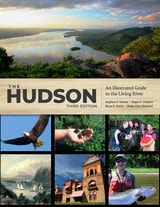
The Hudson
An Illustrated Guide to the Living RiverStephen P. Stanne
Rutgers University Press, 2021
This volume gives a detailed account of the Hudson River’s history, including the geological forces that created it, the various peoples who have lived on its banks, and the great works of art it has inspired. It also showcases the many species making a home on this waterway, including the Atlantic sturgeon, the bald eagle, the invasive zebra mussel, and the herons of New York Harbor. Combining both scientific and historical perspectives, this book demonstrates why the Hudson and its valley have been so central to the environmental movement.
As it charts the progress made towards restoring the river ecosystem and the effects of emerging threats like climate change, The Hudson identifies concrete ways that readers can help. To that end, royalties from the sale of this book will go to the non-profit environmental advocacy group Hudson River Sloop Clearwater, Inc.

The Jersey Shore
The Past, Present & Future of a National TreasureMazzagetti, Dominick
Rutgers University Press, 2018
Divided into chronological and thematic sections, this book will attract general readers interested in the history of the Shore: how it appeared to early European explorers; how the earliest settlers came to the beaches for the whaling trade; the first attractions for tourists in the nineteenth century; and how the coming of railroads, and ultimately automobiles, transformed the Shore into a major vacation destination over a century later. Mazzagetti also explores how the impact of changing national mores on development, race relations, and the environment, impacted the Shore in recent decades and will into the future. Ultimately, this book is an enthusiastic and comprehensive portrait by a native son, whose passion for the region is shared by millions of beachgoers throughout the Northeast.

The Last Beach
Orrin H. Pilkey and J. Andrew G. Cooper
Duke University Press, 2014
After explaining beaches as dynamic ecosystems, Pilkey and Cooper assess the harm done by dense oceanfront development accompanied by the construction of massive seawalls to protect new buildings from a shoreline that encroaches as sea levels rise. They discuss the toll taken by sand mining, trash that washes up on beaches, and pollution, which has contaminated not only the water but also, surprisingly, the sand. Acknowledging the challenge of reconciling our actions with our love of beaches, the geologists offer suggestions for reversing course, insisting that given the space, beaches can take care of themselves and provide us with multiple benefits.

The Last River
Life Along Arkansas's Lower WhiteTurner Browne
University of Arkansas Press, 1993
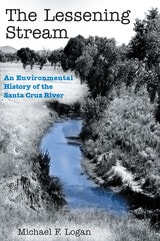
The Lessening Stream
An Environmental History of the Santa Cruz RiverMichael F. Logan
University of Arizona Press, 2002
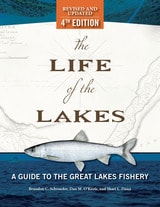
The Life of the Lakes, 4th Ed.
A Guide to the Great Lakes FisheryBrandon C. Schroeder, Dan M. O'Keefe, and Shari L. Dann
University of Michigan Press, 2019
Now in its fourth edition, The Life of the Lakes examines the complex portrait of the Great Lakes fishery, including the history of the fishery’s exploitation and management, the current health of the Lakes, and the outlook for the future. Featuring more graphics, photos, and illustrations than ever, all printed in full color, the new edition of this engaging book is a perfect resource for general readers, teachers, and students looking for an easy-to-follow guide to the Great Lakes fishery. This book is published in collaboration with Michigan Sea Grant (www.michiganseagrant.org), a cooperative program of the University of Michigan and Michigan State University.
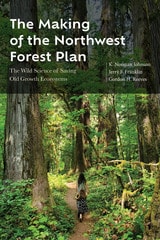
The Making of the Northwest Forest Plan
The Wild Science of Saving Old Growth EcosystemsK. Norman Johnson
Oregon State University Press, 2023
Tree sitters. Logger protests. Dying timber towns. An iconic species on the brink. The Timber Wars consumed the Pacific Northwest in the late 1980s and early1990s and led political leaders to ask scientists for a solution. The Northwest Forest Plan was the result.
For most of the twentieth century, the central theme of federal forest management in the Pacific Northwest had been logging old-growth forests to provide a sustained yield of timber. During the 1970s and 1980s, however, a series of studies by young scientists highlighted the destructive impact of that logging on northern spotted owls, salmon, and the old-growth ecosystem itself.
Combining this new science with newly minted environmental laws like the Endangered Species Act, environmental activists obtained court injunctions to stop old-growth logging on federal land, setting off a titanic struggle in the Pacific Northwest to find a way to accommodate conservation imperatives as well as the logging that provided employment for tens of thousands of people. That effort involved years of controversy and debate, federal courts, five science assessments, Congress, and eventually the president of the United States. It led to creation of the Northwest Forest Plan, which sharply and abruptly shifted the primary goal of federal forestry toward conserving the species and ecosystems of old-growth forests. Scientists went from spectators to planners and guides, employing their latest scientific findings and expertise to create a forest plan for 20 million acres that would satisfy the courts. The largest upheaval in federal forest management in history had occurred, along with a precipitous decline in timber harvest, and there was no going back.
In this book, three of the scientists who helped craft that change tell the story as they know it: the causes, development, adoption, and implementation of the Northwest Forest Plan. The book also incorporates personal reflections from the authors, short commentaries and histories from key figures— including spotted owl expert Eric Forsman—and experiences from managers who implemented the Plan as best they could. Legal expert Susan Jane M. Brown helped interpret court cases and Debora Johnson turned spatial data into maps. The final chapters cover the Plan’s ongoing significance and recommendations for conserving forest and aquatic ecosystems in an era of megafires and climate change.
The Meaning of Rivers
Flow and Reflection in American LiteratureT. S. McMillin
University of Iowa Press, 2011
The Mountain
Journeys in High PlacesRobin Patten
University of Utah Press, 2025
Since antiquity, mountains have captured the human imagination. The Mountain takes readers into higher realms, exploring the complex kinship between mountains and human thought, traditions, and ways of being. Told through the author’s own journeys, the narrative ranges across cultures and iconic naturalists to consider how varied ideas and experiences related to mountains—from sacred to scientific, romantic to retreat, to simply home—are all facets of the same intricate topography.
No matter where one starts on the spectrum of understanding, an intimate encounter with a mountain leads to a broader perspective. High places create a simultaneous humbleness at our human insignificance and a sense of belonging within the greater world. That quality of belonging, and the associated commitment of caring for the planet and all that it holds, has never been more important than it is today.
The Natural Heritage of Illinois
Essays on Its Lands, Waters, Flora, and FaunaJohn E. Schwegman
Southern Illinois University Press, 2016
Author John E. Schwegman looks at the state’s early natural history, including its prehistoric vegetation and wildlife. He describes surviving remnants of formerly widespread species, such as biting horseflies so abundant they could kill a horse and flights of passenger pigeons dense enough to block the sun. The book addresses issues of species decline, the ways animals adapt to climate change and dwindling habitats, and the problem of invasive exotic species. Ecosystem preservation is discussed, and readers will witness prescribed burning techniques and volunteers aiding in natural land management.
Animal and plant conservation in Illinois is illustrated by essays that examine the efforts to save our dwindling Prairie Chicken population and to reintroduce river otters, the return of nesting bald eagles and cormorants to the state, the discovery of armadillos in southern Illinois, the pros and cons of feeding birds, and the biological significance of frog calls. Essays on Illinois’ native plants cover a wide range of topics, from defensive strategies to poisonous and edible species, prairie’s dependence on fire, how to recognize our wild roses, orchids, prairie grasses, and more. Full of fascinating information and expert knowledge, this book will prove invaluable to scholars, students, teachers, and casual nature lovers.
The Natural History of Madagascar
Edited by Steven M. Goodman and Jonathan P. Benstead
University of Chicago Press, 2003
The Natural History of Madagascar provides the most comprehensive, up-to-date synthesis available of this island nation's priceless biological treasures. Contributions by nearly three hundred world-renowned experts cover the history of scientific exploration in Madagascar, its geology and soils, climate, forest ecology, human ecology, marine and coastal ecosystems, plants, invertebrates, fishes, amphibians, reptiles, birds, and mammals. Detailed discussions of conservation efforts in Madagascar highlight several successful park reserve programs that could serve as models for other areas. Beautifully illustrated throughout, the book includes over one hundred color illustrations, with fifty color photos by nature photographer Harald Schütz, as well as more than three hundred black-and-white photographs and line drawings.
The Natural History of Madagascar will be the invaluable reference for anyone interested in the Malagasy environment, from biologists and conservationists to policymakers and ecotourists.
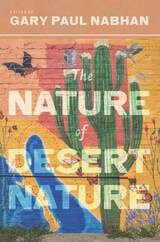
The Nature of Desert Nature
Edited by Gary Paul Nabhan
University of Arizona Press, 2020
Nabhan invites a prism of voices—friends, colleagues, and advisors from his more than four decades of study of deserts—to bring their own perspectives. Scientists, artists, desert contemplatives, poets, and writers bring the desert into view and investigate why these places compel us to walk through their sands and beneath their cacti and acacia. We observe the spines and spears, stings and songs of the desert anew. Unexpected. Surprising. Enchanting. Like the desert itself, each essay offers renewed vocabulary and thoughtful perceptions.
The desert inspires wonder. Attending to history, culture, science, and spirit, The Nature of Desert Nature celebrates the bounty and the significance of desert places.
Contributors
Thomas M. Antonio
Homero Aridjis
James Aronson
Tessa Bielecki
Alberto Búrquez Montijo
Francisco Cantú
Douglas Christie
Paul Dayton
Alison Hawthorne Deming
Father David Denny
Exequiel Ezcurra
Thomas Lowe Fleischner
Jack Loeffler
Ellen McMahon
Rubén Martínez
Curt Meine
Alberto Mellado Moreno
Paul Mirocha
Gary Paul Nabhan
Ray Perotti
Larry Stevens
Stephen Trimble
Octaviana V. Trujillo
Benjamin T. Wilder
Andy Wilkinson
Ofelia Zepeda

The News at the Ends of the Earth
The Print Culture of Polar ExplorationHester Blum
Duke University Press, 2019
The Ocean Reader
History, Culture, PoliticsEric Paul Roorda, editor
Duke University Press, 2020
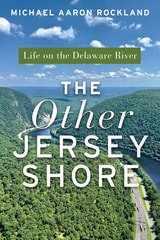
The Other Jersey Shore
Life on the Delaware RiverMichael Aaron Rockland
Rutgers University Press, 2024
The Other Jersey Shore takes readers on a personal tour of the New Jersey portion of the Delaware River and its surroundings. You will learn about the role that the river played in human history, including Washington’s four crossings of the Delaware during the Revolutionary War. And you will also learn about the ecological history of the river itself, once one of the most polluted waterways in the country and now one of the cleanest, providing drinking water for 17 million people. Michael Aaron Rockland, a long-time New Jersey resident, shows readers his very favorite spots along the Delaware, including the pristine waterfalls and wilderness in the Delaware Water Gap recreation area. Along the way, he shares engrossing stories and surprising facts about the river that literally defines western New Jersey.
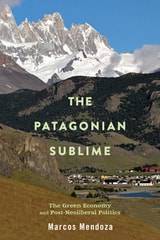
The Patagonian Sublime
The Green Economy and Post-Neoliberal PoliticsMendoza, Marcos
Rutgers University Press, 2019
Mendoza explores the fraught intersection of the green economy with the New Left politics of the Néstor Kirchner and Cristina Fernández de Kirchner governments. Mendoza documents the strategies of capitalist development, national representation, and political rule embedded in the “green productivist” agenda pursued by Kirchner and Fernández. Mendoza shows how Andean Patagonian communities have responded to the challenges of community-based conservation, the fashioning of wilderness zones, and the drive to create place-based monopolies that allow ecotourism destinations to compete in the global consumer economy.
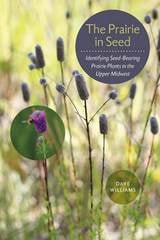
The Prairie in Seed
Identifying Seed-Bearing Prairie Plants in the Upper MidwestDave Williams
University of Iowa Press, 2016
As interest in these wildflowers and grasses has grown, so has demand for better resources to identify the hundreds of species that make up the native prairie. In The Prairie in Seed, Dave Williams shows us how to identify wildflowers when they are out of bloom and, in particular, how to harvest their seeds. Without the flower color and shape as guides, it can be difficult to identify prairie plants. Imagine trying to distinguish between a simple prairie sunflower and an ox-eye sunflower with no flowers to look at!
In this richly illustrated guide, Williams offers dormant plant identification information, seed descriptions, and advice on seed harvesting and cleaning for seventy-three of the most common wildflowers found in the tallgrass prairie. He includes photographs and descriptions of the plants in bloom and in seed to assist in finding them when you are ready to harvest. Each species description explains where the seeds are located on the plant, when seed ripening begins, and how many seeds each species produces, along with a photograph and approximate measurements of the actual seed. Finally, this guide provides assistance on how and when to hand-harvest seeds for each species, as well as some simple tips on seed cleaning.
An indispensable guide for anyone involved in prairie restoration or conservation, this book is the perfect complement to Williams’s The Tallgrass Prairie Center Guide to Seed and Seedling Identification in the Upper Midwest.
The River Knows Everything
Desolation Canyon and the GreenJames M Aton
Utah State University Press, 2009
The River We Have Wrought
A History of the Upper MississippiJohn O. Anfinson
University of Minnesota Press, 2005

The Safe House
A NovelChristophe Boltanski
University of Chicago Press, 2017
When the Nazis came, Étienne Boltanski divorced his wife and walked out the front door, never to be seen again during the war. So far as the outside world knew, the Jewish doctor had fled. The truth was that he had sneaked back to hide in a secret crawl space at the heart of the house. There he lived for the duration of the war. With the Liberation, Étienne finally emerged, but he and his family were changed forever—anxious, reclusive, yet proudly eccentric. Their lives were spent, amid Bohemian disarray and lingering wartime fears, in the mansion’s recesses or packed comically into the protective cocoon of a Fiat.
That house (and its vehicular appendage) is at the heart of Christophe Boltanski’s ingeniously structured, lightly fictionalized account of his grandparents and their extended family. The novel unfolds room by room—each chapter opening with a floorplan—introducing us to the characters who occupy each room, including the narrator’s grandmother—a woman of “savage appetites”—and his uncle Christian, whose haunted artworks would one day make him famous. “The house was a palace,” Boltanski writes, “and they lived like hobos.” Rejecting convention as they’d rejected the outside world, the family never celebrated birthdays or even marked the passage of time, living instead in permanent stasis, ever more closely bonded to the house itself.
The Safe House was a literary sensation when published in France in 2015 and won the Prix de Prix, France’s most prestigious book prize. A French-language film adaptation, La cache, was released in 2025 from director Lionel Baier. With hints of Oulipian playfulness and an atmosphere of dark humor, The Safe House is an unforgettable portrait of a self-imprisoned family.
The Scars of Project 459
The Environmental Story of the Lake of the OzarksTraci Angel
University of Arkansas Press, 2014
The Shenandoah
Julia Davis
West Virginia University Press, 2011
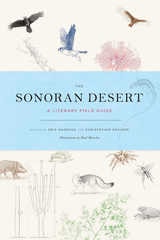
The Sonoran Desert
A Literary Field GuideEdited by Eric Magrane and Christopher Cokinos, Illustrations by Paul Mirocha
University of Arizona Press, 2016
Both literary anthology and hands-on field guide, The Sonoran Desert is a groundbreaking book that melds art and science. It captures the stunning biodiversity of the world’s most verdant desert through words and images. More than fifty poets and writers—including Christopher Cokinos, Alison Hawthorne Deming, Ken Lamberton, Eric Magrane, Jane Miller, Gary Paul Nabhan, Alberto Ríos, Ofelia Zepeda, and many others—have composed responses to key species of this striking desert. Each creative contribution is joined by an illustration by award-winning artist Paul Mirocha and scientific information about the creature or plant authored by the book’s editors.
From the saguaro to the mountain lion, from the black-tailed jackrabbit to the mesquite, the species represented here have evoked compelling and creative responses from each contributor. Just as writers such as Edward Abbey and Ellen Meloy have memorialized the desert, this collection is sure to become a new classic, offering up the next generation of voices of this special and beautiful place, the Sonoran Desert.
The Southern Forest
A ChronicleBy Laurence C. Walker
University of Texas Press, 1991
When the first European explorers reached the southern shores of North America in the early seventeenth century, they faced a solid forest that stretched all the way from the Atlantic coast to eastern Texas and Oklahoma. The ways in which they and their descendants used—and abused—the forest over the next nearly four hundred years form the subject of The Southern Forest.
In chapters on the explorers, pioneers, lumbermen, boatbuilders, and foresters, Laurence Walker chronicles the constant demands that people have made on forest resources in the South. He shows how the land's very abundance became its greatest liability, as people overhunted the animals, clearcut the forests, and wore out the soil with unwise farming practices—all in a mistaken belief that the forest's bounty (including new ground to be broken) was inexhaustible.
With the advent of professional forestry in the twentieth century, however, the southern forest has made a comeback. A professional forester himself, Walker speaks from experience of the difficulties that foresters face in balancing competing interests in the forest. How, for example, does one reconcile the country's growing demand for paper products with the insistence of environmental groups that no trees be cut? Should national forests be strictly recreational areas, or can they support some industrial logging? How do foresters avoid using chemical pesticides when the public protests such natural management practices as prescribed burning and tree cutting?
This personal view of the southern forest adds a new dimension to the study of southern history and culture. The primeval southern forest is gone, but, with careful husbandry on the part of all users, the regenerated southern forest may indeed prove to be the inexhaustible resource of which our ancestors dreamed.

The Swimming Holes of Texas
By Julie Wernersbach and Carolyn Tracy; photography by Carolyn Tracy
University of Texas Press, 2020
Nothing beats a natural swimming hole for cooling off on a scorching summer day in Texas. Cold, clear spring water, big old shade trees, and a quiet stretch of beach or lawn offer the perfect excuse to pack a cooler and head out with family and friends to the nearest natural oasis. Whether you’re looking for a quick getaway or an unforgettable summer vacation, let The Swimming Holes of Texas be your guide.
Julie Wernersbach and Carolyn Tracy highlight one hundred natural swimming spots across the entire state. The book is organized by geographic regions, so you can quickly find local places to swim—or plan a trip to a more distant spot you’d like to explore. Each swimming hole is illustrated with an inviting color photo and a description of what it’s like to swim there, as well as the site’s history, ecology, and conservation. The authors include all the pertinent info about admission fees and hours, parking, and on-site amenities such as showers and restrooms. They also offer tips for planning your trips and lists of the swimming holes that are most welcoming to families and pets.
So when the temperature tops 100 and there’s nothing but traffic in sight, take a detour down the backroads and swim, sunbathe, revel, and relax in the swimming holes of Texas.