Results by title
78 books match the query 'Editors, Journalists, Publishers' and 12 start with t
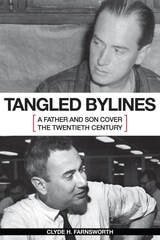
Tangled Bylines
A Father and Son Cover the Twentieth CenturyClyde H. Farnsworth
University of Missouri Press, 2017
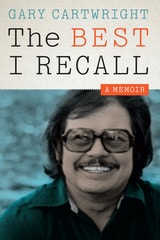
The Best I Recall
A MemoirBy Gary Cartwright
University of Texas Press, 2015
Gary Cartwright is one of Texas’s legendary writers. In a career spanning nearly six decades, he has been a newspaper reporter, Senior Editor of Texas Monthly, and author of several acclaimed books, including Blood Will Tell, Confessions of a Washed-up Sportswriter, and Dirty Dealing. Cartwright was a finalist for a National Magazine Award for reporting excellence, and he has won several awards from the Texas Institute of Letters, including its most prestigious—the Lon Tinkle Award for lifetime achievement. His personal life has been as colorful and occasionally outrageous as any story he reported, and in this vivid, often hilarious, and sometimes deeply moving memoir, Cartwright tells the story of his writing career, tangled like a runaway vine with great friendships, love affairs, four marriages, four or five great dogs . . . looking always to explain, at least to himself, how the pattern probably makes a kind of perverted sense.
Cartwright’s career began at the Fort Worth Star-Telegram and Fort Worth Press, among kindred spirits and fellow pranksters Edwin “Bud” Shrake and Dan Jenkins. He describes how the three rookie writers followed their mentor Blackie Sherrod to the Dallas Times Herald and the Dallas Morning News, becoming the “best staff of sportswriters anywhere, ever” and creating a new kind of sportswriting that “swept the country and became standard.” Cartwright recalls his twenty-five years at Texas Monthly, where he covered everything from true crime to notable Texans to Texas’s cultural oddities. Along the way, he tells lively stories about “rebelling against sobriety” in many forms, with friends and co-conspirators that included Willie Nelson, Ann Richards, Dennis Hopper, Willie Morris, Don Meredith, Jack Ruby, and countless others. A remarkable portrait of the writing life and Austin’s counterculture, The Best I Recall may skirt the line between fact and fiction, but it always tells the truth.
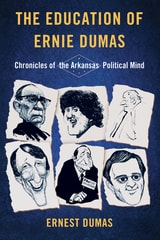
The Education of Ernie Dumas
Chronicles of the Arkansas Political MindErnest Dumas
Butler Center for Arkansas Studies, 2019
Beginning with the defeat of Governor Francis Cherry by the son of a hillbilly socialist at the end of the Joe McCarthy era, Dumas traces the development of a modernist political cast that eventually produced Arkansas’s first president of the United States. It follows the seed from 1978 that would germinate into the second impeachment of an American president.
Dumas has written for newspapers and about politics for sixty-three years, since 1954, the year that the stolid Cherry fell to Orval Eugene Faubus. The book is a political memoir that describes not only his education in the ways of politicians but the politicians’ own education and miseducation in how you win voters and then how you get things done.
It is mostly a collection of untold stories, often deeply personal, that reveal the inner struggles and sometimes the tribulations of the state’s leaders—Cherry, Faubus, Winthrop Rockefeller, Dale Bumpers, David Pryor, John McClellan, J. William Fulbright, Bill Clinton, Jim Guy Tucker, and others.
The Haygoods of Columbus
A Love StoryWil Haygood
The Ohio State University Press, 2016
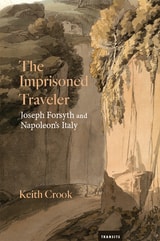
The Imprisoned Traveler
Joseph Forsyth and Napoleon's ItalyKeith Crook
Bucknell University Press, 2020
Published by Bucknell University Press. Distributed worldwide by Rutgers University Press.
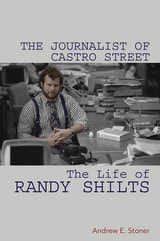
The Journalist of Castro Street
The Life of Randy ShiltsAndrew E. Stoner
University of Illinois Press, 2019
In-depth and dramatic, Andrew E. Stoner's biography follows the remarkable life of the brash, pioneering journalist. Shilts's reporting on AIDS in San Francisco broke barriers even as other gay writers and activists ridiculed his overtures to the mainstream and labeled him a traitor to the movement, charges the combative Shilts forcefully answered. Behind the scenes, Shilts overcame career-threatening struggles with alcohol and substance abuse to achieve the notoriety he had always sought, while the HIV infection he had purposely kept hidden began to take his life.
Filled with new insights and fascinating detail, The Journalist of Castro Street reveals the historic work and passionate humanity of the legendary investigative reporter and author.
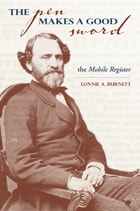
The Pen Makes a Good Sword
John Forsyth of the Mobile RegisterLonnie A. Burnett
University of Alabama Press, 2006
One editor. One era. A pen that cut through history.
This book is a biography of Alabama native John Forsyth Jr. and documents his career as a southern newspaper editor during the antebellum, Civil War, and Reconstruction periods. From 1837 to 1877 Forsyth wrote about many of the most important events of the 19th century. He used his various positions as an editor, Civil War field correspondent, and Reconstruction critic at the MobileRegister to advocate on behalf of both the South and the Democratic Party.
In addition, Forsyth played an active role in the events taking place around him through his political career, as United States Minister to Mexico, state legislator, Confederate Peace Commissioner to the Lincoln administration, staff officer to Braxton Bragg, and twice mayor of the city of Mobile.
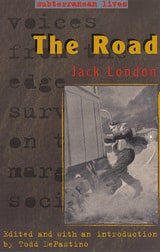
The Road
DePastino, Todd
Rutgers University Press, 2006
In 1894, an eighteen-year-old Jack London quit his job shoveling coal, hopped a freight train, and left California on the first leg of a ten thousand-mile odyssey. His adventure was an exaggerated version of the unemployed migrations made by millions of boys, men, and a few women during the original "great depression of the 1890s. By taking to the road, young wayfarers like London forged a vast hobo subculture that was both a product of the new urban industrial order and a challenge to it. As London's experience suggests, this hobo world was born of equal parts desperation and fascination. "I went on 'The Road,'" he writes, "because I couldn't keep away from it . . . Because I was so made that I couldn't work all my life on 'one same shift'; because-well, just because it was easier to than not to."
The best stories that London told about his hoboing days can be found in The Road, a collection of nine essays with accompanying illustrations, most of which originally appeared in Cosmopolitan magazine between 1907 and 1908. His virile persona spoke to white middle-class readers who vicariously escaped their desk-bound lives and followed London down the hobo trail. The zest and humor of his tales, as Todd DePastino explains in his lucid introduction, often obscure their depth and complexity. The Road is as much a commentary on London's disillusionment with wealth, celebrity, and the literary marketplace as it is a picaresque memoir of his youth.
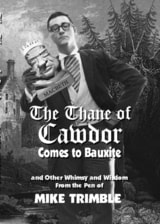
The Thane of Cawdor Comes to Bauxite
And Other Whimsy and Wisdom From the Pen of Mike TrimbleErnie Dumas
Butler Center for Arkansas Studies, 2024
“Although of a relatively scarce breed,” the Arkansas Times observed in the obituary of the itinerant writer it had once employed, “Mike Trimble was Arkansas’s and perhaps the country’s greatest self-deprecating journalist.” Readers will find in this fifty-year inventory of Trimble’s wit and wisdom all the vindication they might seek for that quaint judgment—the rare humble author. Whether he was chronicling, in the 1980s, rising political worthies like the far-into-the-future governors Asa Hutchinson and Mike Beebe, or, more often, the ordinary and feckless people that he encountered every day, befriended, and spent most of his career writing about, Trimble usually found a way, subtly or artlessly, to bring up his own failings, such as identifying the wrong person as the dead woman in an obituary he had written in his earliest days for his first employer, the Texarkana Gazette. Like the yokels in the vaudeville duos Laurel and Hardy, Abbott and Costello, Rowan and Martin, and Fey and Poehler, Trimble’s confessed bumblings were purposeful and studied instruments of his humor.
Arkansas produced more than its quota of weirdos, fabulists, con men, oleaginous politicians, charlatans, creeps, visionaries, and fantastical creatures—from Albert Pike, Arvin the Wino, Dr. Brinkley the Great Depression’s goat-gland sex therapist, Editor Weston, and the salty riverboat queen Ray Dorthy all the way to Say McIntosh and Red the Irish Setter. Mike Trimble, the South’s best and funniest storyteller, put them all down on paper for some of the best reading since Catch-22. Trimble turned humor into art and history into vaudeville.
The World of Mike Royko
Doug Moe
University of Wisconsin Press, 1999
This illustrated biography is the first account of the colorful life of Chicago newspaper columnist Mike Royko, Pulitzer Prize winner, best-selling author, and legendary journalist who personified Chicago in all its rough-edged charm. Drawing on exclusive photos and interviews with Royko’s family and intimates, the book chronicles Royko’s rise from a “flat-above-a-tavern” youth—raised above a bar on Chicago’s Polish northwest side—to one of the best-known names in American journalism.
Readers will get the inside scoop on Royko’s epic battles with Mayor Richard J. Daley and other politicians and his hilarious columns featuring “Slats Grobnik.” They’ll also meet a softer, largely unknown, side of Royko, through the love letters he sent to his wife-to-be from an Air Force base in Washington State.
More than 100 photos—many never before available to the public—capture the man and his times. Millions of readers—in 800 newspapers around the world—followed Royko’s work and life. In The World of Mike Royko—he lives again.
Theodore H. White and Journalism As Illusion
Joyce Hoffmann
University of Missouri Press, 1995
In this groundbreaking study, Joyce Hoffmann examines a critical twenty-five-year period in the work of one of the most influential journalists of the twentieth century. Theodore H. White was already a celebrated reporter when Jacqueline Kennedy summoned him for an exclusive interview in the aftermath of her husband's assassination. With her help, White would preserve what the First Lady claimed had been John F. Kennedy's vision of the New Frontier as an incarnation of that wistful, romantic kingdom--Camelot. Over the years, friends and advisers to Kennedy declared that they had never heard the president speak of Camelot. But White's article, which ran in Life magazine, created a myth that still endures in the popular consciousness.
That story was just one of many by Theodore White that had a lasting impact on the nation. As a correspondent for several of the country's most popular magazines, he covered the crucial events of the 1940s, '50s, and '60s. His best-selling book The Making of the President 1960 changed political reporting forever.
A gifted and likable man with a remarkable skill for ingratiating himself with others, White earned the confidence of key political, military, and diplomatic leaders. First in the Far East, later in Europe, and finally in Washington, D.C., he became a confidant and adviser rather than an adversary to the figures he covered for the news, following a pattern set by elite journalists. Even as he played the impartial reporter, White kept secrets in order to maintain access to his important sources, and he occasionally allowed his subjects, including John F. Kennedy and Nelson Rockefeller, to make changes in his work before publication.
Clinging to the illusion of objectivity, White--like other leading journalists in the postwar years--wrote about the world not as it was but as he believed it ought to be. Hoffmann relates the little-known episode in White's career when he intentionally obscured the truth about Chiang Kai-shek's corrupt and inept Nationalist government because he believed that undermining China's cause would be "a disservice to democracy."
No other book so thoroughly documents how a first-rank journalist can become a political insider and distort the news without losing the gloss of impartiality that is supposed to accompany the profession. Impressively researched, skillfully written, Theodore H. White and Journalism as Illusion is an unflinching look at a key figure in the history of American journalism and at the profession itself.
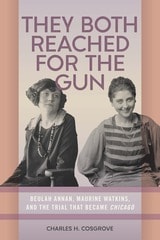
They Both Reached for the Gun
Beulah Annan, Maurine Watkins, and the Trial That Became ChicagoCharles H. Cosgrove
Southern Illinois University Press, 2024
Honorable Mention, 2025 Society of Midland Authors Award in History!
Examining the case that inspired a pop culture phenomenon
In 1924 Beulah Annan was arrested and incarcerated for killing her lover, Harry Kalsted. Six weeks later, a jury acquitted her of murder. Inspired by the sordid event, trial, and acquittal, Maurine Watkins, a reporter at the time, wrote the play Chicago, a Broadway hit that was adapted several times. Through a fresh retelling of the story of Annan and of Watkins’s play, Charles H. Cosgrove provides the first critical examination of the criminal case, and an initial exploration of the era’s social assumptions that made the message of the play so plausible in its own time. His careful historical research challenges the received portrait of Annan as a killer who got away with murder, and of Watkins as a savvy cub reporter and precocious playwright.
In They Both Reached for the Gun, Charles H. Cosgrove expertly combines inquest and police records, and interviews with Annan’s relatives, to analyze the participants, the trial, and the subsequent play. Although no one will ever know what really happened in the Kenwood apartment on Chicago’s south side one hundred years ago, Cosgrove’s interrogation shows how sensationalized Watkins’s writing was. Her reporting on the Annan case perpetuated falsehoods about Annan’s so-called “confession,” and her play gave an inaccurate portrayal of Chicago’s criminal justice system. Despite Watkins’s insistence that her drama revealed the truth about its subjects without any exaggeration, her play depicted police, prosecutors, and judges as the only “good guys” in the story, ignoring those who lied, misled, and used brutal methods to obtain forced confessions.