Results by title
193 books match the query 'Empire' and 38 start with t
Technologies of Empire
Writing, Imagination, and the Making of Imperial Networks, 1750–1820Dermot Ryan
University of Delaware Press, 2013
Published by University of Delaware Press. Distributed worldwide by Rutgers University Press.
Telecommunications and Empire
Jill Hills
University of Illinois Press, 2007
Jill Hills picks up from her pathbreaking study The Struggle for Control of Global Communication: The Formative Century to continue her examination of the political, technological, and economic forces at work in the global telecommunications market from World War II to the World Trade Organization agreement of 1997. In the late twentieth century, focus shifted from the creation and development of global communication markets to their intense regulation. The historical framework behind this control--where the market was regulated, by what institution, controlled by what power, and to whose benefit--masterfully complements Hills's analysis of power relations within the global communications arena.
Hills documents attempts by governments to direct, replace, and bypass international telecommunications institutions. As she shows, the results have offered indirect control over foreign domestic markets, government management of private corporations, and government protection of its own domestic communication market. Hills reveals that the motivation behind these powerful, regulatory efforts on person-to-person communication lies in the unmatched importance of communication in the world economy.
As ownership of communications infrastructure becomes more valuable, governments have scrambled to shape international guidelines. Hills provides insight into struggles between U.S. policymakers and the rest of the world, illustrating the conflict between a growing telecommunications empire and sovereign states that are free to implement policy changes. Freshly detailing the interplay between U.S. federal regulation and economic power, Hills fosters a deep understanding of contemporary systems of power in global communications.
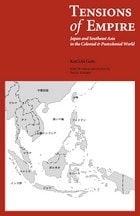
Tensions Of Empire
Japan and Southeast Asia in the Colonial and Postcolonial WorldKen’ichi Goto
Ohio University Press, 2003
Beginning with the closing decade of European colonial rule in Southeast Asia and covering the wartime Japanese empire and its postwar disintegration, Tensions of Empire focuses on the Japanese in Southeast Asia, Indonesians in Japan, and the legacy of the war in Southeast Asia. It also examines Japanese perceptions of Southeast Asia and the lingering ambivalence toward Japanese involvement in Asia and toward the war in particular.
Drawing on extensive multilingual archival research and interviews, Ken‘ichi Goto has produced a factually rich and balanced view of this region’s historical events of the last century.
Tensions of Empire features detailed discussions of Portuguese Timor in the 1930s and 1940s, the decolonization of Malaya, and twentieth-century Indonesia. This extended inquiry yields a unique view of the complicated network within and beyond the colonial and imperial relationships between a one-time nonwestern colonial power and an entire region.
Of great interest to students of Japan-Southeast Asia relations and to specialists in the modern history of both Southeast Asia and Japan, Professor Goto’s Tensions of Empire is a fascinating account of Japan’s recent past from the inside.
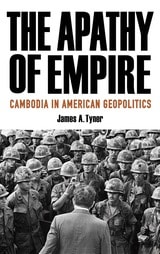
The Apathy of Empire
Cambodia in American GeopoliticsJames A. Tyner
University of Minnesota Press, 2024
What America’s intervention in Cambodia during the Vietnam War reveals about Cold War–era U.S. national security strategy
The Apathy of Empire reveals just how significant Cambodia was to U.S. policy in Indochina during the Vietnam War, broadening the lens to include more than the often-cited incursion in 1970 or the illegal bombing after the Paris Peace Accords in 1973. This theoretically informed and thoroughly documented case study argues that U.S. military intervention in Cambodia revealed America’s efforts to construct a hegemonic spatial world order.
James Tyner documents the shift of America’s post-1945 focus from national defense to national security. He demonstrates that America’s expansionist policies abroad, often bolstered by military power, were not so much about occupying territory but instead constituted the construction of a new normal for the exercise of state power. During the Cold War, Vietnam became the geopolitical lodestar of this unfolding spatial order. And yet America’s grand strategy was one of contradiction: to build a sovereign state (South Vietnam) based on democratic liberalism, it was necessary to protect its boundaries—in effect, to isolate it—through both covert and overt operations in violation of Cambodia’s sovereignty. The latter was deemed necessary for the former.
Questioning reductionist geopolitical understandings of states as central or peripheral, Tyner explores this paradox to rethink the formulation of the Cambodian war as sideshow, revealing it instead as a crucial site for the formation of this new normal.
Retail e-book files for this title are screen-reader friendly.

The Bases of Empire
The Global Struggle Against U.S. Military PostsCatherine Lutz
Pluto Press, 2008

The Business State
Empire and Big Business in the Twentieth-Century British StateIan Kumekawa
University of Chicago Press, 2027
Narrates how big business guided policy and expanded the state in early twentieth-century Britain.
During World War I, British businessmen streamed into government service. When Britain faced unprecedented economic challenges after the war’s end, civil servants turned to the same businessmen with whom they had worked. The result was a durable public-private network of both bureaucrats and executives: the business state.
In this book, Ian Kumekawa throws light on the previously obscured and hidden world of the business state and the economic thinking of its administrators. He breaks new methodological ground by treating the state and business together as a single entity. Twentieth-century states, he argues, were porous networks in which lines between business and governance were not clearly defined. In liberal democracies, the term “business-friendly” has long been understood as synonymous with laissez-faire. The Business State explores the historical limits of that assumption by focusing on Britain, the self-identified small, liberal state par excellence. In doing so, the book shows how a liberal democracy was effectively co-opted by private interests and explores how actively assisting big business became not just acceptable—but a political necessity.
The Cherokees and Their Chiefs
In the Wake of EmpireStan Hoig
University of Arkansas Press, 1999
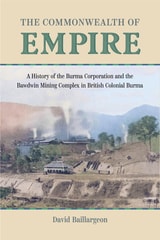
The Commonwealth of Empire
A History of the Burma Corporation and the Bawdwin Mining Complex in British Colonial BurmaDavid Baillargeon
University of Nevada Press, 2026
The Commonwealth of Empire explores the overlooked history of the Bawdwin mining complex in Burma's Northern Shan States, focusing on its development during the British colonial period. Drawing on global and imperial history, author David Baillargeon showcases how industrial-scale mining transformed Bawdwin into a hub of commerce and migration, especially under the Burma Corporation in the early twentieth century. By the 1920s, Bawdwin had become one of the largest industrial sites in the world, staffed by a multinational workforce from South, Southeast, and East Asia, and managed by foreign engineers from the United States and Australia. Known as the “Commonwealth of Namtu” for its diverse workforce, the site exemplifies how colonial and corporate interests overlapped, and how such commercial spaces were shaped, contested, and reimagined locally. In telling the stories of the diverse agents and workers who developed the site and made it their home, The Commonwealth of Empire uncovers how and why a space like Bawdwin has been forgotten over time, interrogating its marginalization in national and regional histories and linking such forgetting to the nature of Britain's colonial project.
Baillargeon argues that recovering such forgotten histories requires moving beyond nation-based frameworks and embracing methods that illuminate the global forces behind colonial enterprises. In doing so, the book offers opportunities to decolonize histories and spaces of occupation that fit uneasily into existing frameworks of empire and nation.
The Crimes of Empire
Rogue Superpower and World DominationCarl Boggs
Pluto Press, 2010
Imperial Nations advance their own interests by exploiting other societies. To those on the receiving end this is obvious, while inside the empire, a powerful ideological system of justification tends to hide all but the worst excess.
Carl Boggs argues that that the US began life two centuries ago as a nascent colonialist regime plundering and conquering the Native Tribes. The Indian wars were followed by perpetual militarism and warfare fuelled by a deep sense of national exceptionalism. The Crimes Of Empire examines several trends in this process, and illustrates the new depths plumbed since 9/11.
Violation of international agreements, treaties and laws and the use of prohibited weapons, support for death squads and torture are just some of the practices that Boggs highlights as he shows how technical superiority and media control prolong the American nightmare.
The Demographics of Empire
The Colonial Order and the Creation of KnowledgeKarl Ittmann
Ohio University Press, 2010
The Demographics of Empire is a collection of essays examining the multifaceted nature of the colonial science of demography in the last two centuries. The contributing scholars of Africa and the British and French empires focus on three questions: How have historians, demographers, and other social scientists understood colonial populations? What were the demographic realities of African societies and how did they affect colonial systems of power? Finally, how did demographic theories developed in Europe shape policies and administrative structures in the colonies? The essays approach the subject as either broad analyses of major demographic questions in Africa’s history or focused case studies that demonstrate how particular historical circumstances in individual African societies contributed to differing levels of fertility, mortality, and migration. Together, the contributors to The Demographics of Empire question demographic orthodoxy, and in particular the assumption that African societies in the past exhibited a single demographic regime characterized by high fertility and high mortality.
The Earth That Modernism Built
Empire and the Rise of Planetary DesignKenny Cupers
University of Texas Press, 2024
An intellectual history of architectural modernism for an age of rising global inequality and environmental crisis.
The Earth That Modernism Built traces the rise of planetary design to an imperialist discourse about the influence of the earthly environment on humanity. Kenny Cupers argues that to understand how the earth became an object of design, we need to radically shift the terms of analysis. Rather than describing how new design ideas and practices traveled and transformed people and places across the globe, this book interrogates the politics of life and earth underpinning this process. It demonstrates how approaches to modern housing, landscape design, and infrastructure planning are indebted to an understanding of planetary and human ecology fueled by settler colonialism and imperial ambition.
Cupers draws from both canonical and unknown sources and archives in Germany, Namibia, and Poland to situate Wilhelmine and Weimar design projects in an expansive discourse about the relationship between soil, settlement, and race. This reframing reveals connections between colonial officials planning agricultural hinterlands, garden designers proselytizing geopolitical theory, soil researchers turning to folklore, and Bauhaus architects designing modern communities according to functionalist principles. Ultimately, The Earth That Modernism Built shows how the conviction that we can design our way out of environmental crisis is bound to exploitative and divisive ways of inhabiting the earth.
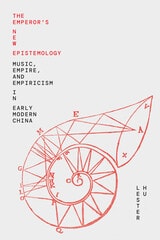
The Emperor’s New Epistemology
Music, Empire, and Empiricism in Early Modern ChinaLester Hu
University of Chicago Press, 2027
An innovative account of listening and empire-building in 17th- and 18th-century China.
The Emperor’s New Epistemology explores how listening shaped knowledge and empire-building in seventeenth- and eighteenth-century China. As the Manchu dynasty expanded deep into Inner Asian territories deemed foreign by the majority-Han population, the Qing Empire’s musical culture encompassed the sounds of Mongols, Uyghurs, and Tibetans, as well as Western music brought by Jesuit and other Christian missionaries. Lester Hu reveals that this diversity transformed not only Qing court culture but the very grounds on which knowledge and power could be established.
In one revealing episode from 1692, the Kangxi Emperor (1654–1722) misinterpreted a key term of Classical Chinese music after studying European music with the Jesuits. Hu situates this anecdote within the political, social, and epistemic shifts that transformed late-imperial China. As Hu shows, listening was an instrument of Qing imperial authority: Knowledge about music, language, and even the universe could only be verified through the emperor’s ears. Furthermore, listening facilitated new theories of empirical knowledge, which both lent themselves to Qing-imperial ideology and generated new epistemic tensions. By exploring their echoes in similar shifts in early modern Europe, Hu’s book brings a global perspective to the study of music in the early modern world and reconsiders the transcendental ground on which such comparative and intercultural knowledge is possible.
The Empire of Civilization
The Evolution of an Imperial IdeaBrett Bowden
University of Chicago Press, 2009
The term “civilization” comes with considerable baggage, dichotomizing people, cultures, and histories as “civilized”—or not. While the idea of civilization has been deployed throughout history to justify all manner of interventions and sociopolitical engineering, few scholars have stopped to consider what the concept actually means. Here, Brett Bowden examines how the idea of civilization has informed our thinking about international relations over the course of ten centuries.
From the Crusades to the colonial era to the global war on terror, this sweeping volume exposes “civilization” as a stage-managed account of history that legitimizes imperialism, uniformity, and conformity to Western standards, culminating in a liberal-democratic global order. Along the way, Bowden explores the variety of confrontations and conquests—as well as those peoples and places excluded or swept aside—undertaken in the name of civilization. Concluding that the “West and the rest” have more commonalities than differences,this provocative and engaging bookultimately points the way toward an authentic intercivilizational dialogue that emphasizes cooperation over clashes.
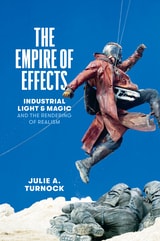
The Empire of Effects
Industrial Light and Magic and the Rendering of RealismJulie A. Turnock
University of Texas Press, 2022
2024 Finalist, Marshall McLuhan Outstanding Book Award, Media Ecology Association
How one company created the dominant aesthetic of digital realism.
Just about every major film now comes to us with an assist from digital effects. The results are obvious in superhero fantasies, yet dramas like Roma also rely on computer-generated imagery to enhance the verisimilitude of scenes. But the realism of digital effects is not actually true to life. It is a realism invented by Hollywood—by one company specifically: Industrial Light & Magic.
The Empire of Effects shows how the effects company known for the puppets and space battles of the original Star Wars went on to develop the dominant aesthetic of digital realism. Julie A. Turnock finds that ILM borrowed its technique from the New Hollywood of the 1970s, incorporating lens flares, wobbly camerawork, haphazard framing, and other cinematography that called attention to the person behind the camera. In the context of digital imagery, however, these aesthetic strategies had the opposite effect, heightening the sense of realism by calling on tropes suggesting the authenticity to which viewers were accustomed. ILM’s style, on display in the most successful films of the 1980s and beyond, was so convincing that other studios were forced to follow suit, and today, ILM is a victim of its own success, having fostered a cinematic monoculture in which it is but one player among many.
The Empire of Love
Toward a Theory of Intimacy, Genealogy, and CarnalityElizabeth A. Povinelli
Duke University Press, 2006
For more than twenty years, Povinelli has traveled to the social worlds of indigenous men and women living at Belyuen, a small community in the Northern Territory of Australia. More recently she has moved across communities of alternative progressive queer movements in the United States, particularly those who identify as radical faeries. In this book she traces how liberal binary concepts of individual freedom and social constraint influence understandings of intimacy in these two worlds. At the same time, she describes alternative models of social relations within each group in order to highlight modes of intimacy that transcend a reductive choice between freedom and constraint.
Shifting focus away from identities toward the social matrices out of which identities and divisions emerge, Povinelli offers a framework for thinking through such issues as what counts as sexuality and which forms of intimate social relations result in the distribution of rights, recognition, and resources, and which do not. In The Empire of Love Povinelli calls for, and begins to formulate, a politics of “thick life,” a way of representing social life nuanced enough to meet the density and variation of actual social worlds.
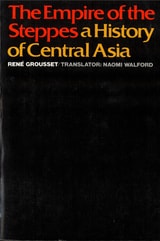
The Empire of the Steppes
A History of Central AsiaGrousset, René
Rutgers University Press, 1970
Hailed as a masterpiece when first published in 1939, this great work of synthesis rapidly became indispensable to scholars fluent in French. Now, after a decade of preparation, this unique history of Central Asia is available in English, in a felicitous translation by Naomi Walford from the 1952 French edition, the last published in Grousset's lifetime. Nineteen maps have been expressly prepared for the Rutgers edition, and a comprehensive 54-page index has been added. In addition, specialists have checked the text, notes, and bibliographical references to bring this vast work into conformity with present-day academic standards.
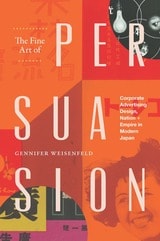
The Fine Art of Persuasion
Corporate Advertising Design, Nation, and Empire in Modern JapanGennifer Weisenfeld
Duke University Press, 2025
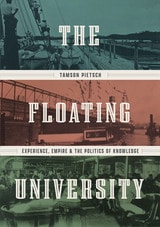
The Floating University
Experience, Empire, and the Politics of KnowledgeTamson Pietsch
University of Chicago Press, 2023
In 1926, New York University professor James E. Lough—an educational reformer with big dreams—embarked on a bold experiment he called the Floating University. Lough believed that taking five hundred American college students around the globe by ship would not only make them better citizens of the world but would demonstrate a model for responsible and productive education amid the unprecedented dangers, new technologies, and social upheavals of the post–World War I world. But the Floating University’s maiden voyage was also its last: when the ship and its passengers returned home, the project was branded a failure—the antics of students in hotel bars and port city back alleys that received worldwide press coverage were judged incompatible with educational attainment, and Lough was fired and even put under investigation by the State Department.
In her new book, Tamson Pietsch excavates a rich and meaningful picture of Lough’s grand ambition, its origins, and how it reveals an early-twentieth-century America increasingly defined both by its imperialism and the professionalization of its higher education system. As Pietsch argues, this voyage—powered by an internationalist worldview—traced the expanding tentacles of US power, even as it tried to model a new kind of experiential education. She shows that this apparent educational failure actually exposes a much larger contest over what kind of knowledge should underpin university authority, one in which direct personal experience came into conflict with academic expertise. After a journey that included stops at nearly fifty international ports and visits with figures ranging from Mussolini to Gandhi, what the students aboard the Floating University brought home was not so much knowledge of the greater world as a demonstration of their nation’s rapidly growing imperial power.
The Floating University
Experience, Empire, and the Politics of KnowledgeTamson Pietsch
University of Chicago Press, 2023
This is an auto-narrated audiobook edition of this book.
The Floating University sheds light on a story of optimism and imperialist ambition in the 1920s.In 1926, New York University professor James E. Lough—an educational reformer with big dreams—embarked on a bold experiment he called the Floating University. Lough believed that taking five hundred American college students around the globe by ship would not only make them better citizens of the world but would demonstrate a model for responsible and productive education amid the unprecedented dangers, new technologies, and social upheavals of the post–World War I world. But the Floating University’s maiden voyage was also its last: when the ship and its passengers returned home, the project was branded a failure—the antics of students in hotel bars and port city back alleys that received worldwide press coverage were judged incompatible with educational attainment, and Lough was fired and even put under investigation by the State Department.
In her new book, Tamson Pietsch excavates a rich and meaningful picture of Lough’s grand ambition, its origins, and how it reveals an early-twentieth-century America increasingly defined both by its imperialism and the professionalization of its higher education system. As Pietsch argues, this voyage—powered by an internationalist worldview—traced the expanding tentacles of US power, even as it tried to model a new kind of experiential education. She shows that this apparent educational failure actually exposes a much larger contest over what kind of knowledge should underpin university authority, one in which direct personal experience came into conflict with academic expertise. After a journey that included stops at nearly fifty international ports and visits with figures ranging from Mussolini to Gandhi, what the students aboard the Floating University brought home was not so much knowledge of the greater world as a demonstration of their nation’s rapidly growing imperial power.
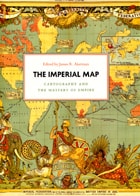
The Imperial Map
Cartography and the Mastery of EmpireEdited by James R. Akerman
University of Chicago Press, 2009
Critically reflecting on elements of mapping and imperialism from the late seventeenth century to the early twentieth century, the essays discuss the nature of the imperial map through a series of case studies of empires, from the Qing dynasty of China, to the Portuguese empire in South America, to American imperial pretensions in the Pacific Ocean, among others. Collectively, the essays reveal that the relationship between mapping and imperialism, as well as the practice of political and economic domination of weak polities by stronger ones, is a rich and complex historical theme that continues to resonate in our modern day.
The Imperial Sublime
A Russian Poetics of EmpireHarsha Ram
University of Wisconsin Press, 2003
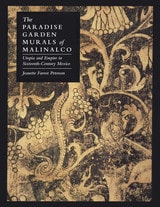
The Paradise Garden Murals of Malinalco
Utopia and Empire in Sixteenth-Century MexicoBy Jeanette Favrot Peterson
University of Texas Press, 1993
Winner, Charles Rufus Morey Award, 1993
The valley of Malinalco, Mexico, long renowned for its monolithic Aztec temples, is a microcosm of the historical changes that occurred in the centuries preceding and following the Spanish conquest in the sixteenth century. In particular, the garden frescoes uncovered in 1974 at the Augustinian monastery of Malinalco document the collision of the European search for Utopia with the reality of colonial life.
In this study, Jeanette F. Peterson examines the murals within the dual heritage of pre-Hispanic and European muralism to reveal how the wall paintings promoted the political and religious agendas of the Spanish conquerors while preserving a record of pre-Columbian rituals and imagery. She finds that the utopian themes portrayed at Malinalco and other Augustinian monasteries were integrated into a religious and political ideology that, in part, camouflaged the harsh realities of colonial policies toward the native population.
That the murals were ultimately whitewashed at the end of the sixteenth century suggests that the "spiritual conquest" failed. Peterson argues that the incorporation of native features ultimately worked to undermine the orthodoxy of the Christian message. She places the murals' imagery within the pre-Columbian tlacuilo (scribe-painter) tradition, traces a "Sahagún connection" between the Malinalco muralists and the native artists working at the Franciscan school of Tlatelolco, and explores mural painting as an artistic response to acculturation.
The book is beautifully illustrated with 137 black-and-white figures, including photographs and line drawings. For everyone interested in the encounter between European and Native American cultures, it will be essential reading.
The Quiet Violence of Empire
How USAID Waged Counterinsurgency in AfghanistanWesley Attewell
University of Minnesota Press, 2023
How the U.S. empire-state transformed post-1945 Afghanistan into a key site for reimagining development
Established in 1961 by President Kennedy, the United States Agency for International Development (USAID) is often viewed as an extension of the security state, playing a constant role on the ground in Afghanistan since the early sixties. The Quiet Violence of Empire traces USAID’s long and bloody history of development work in the region, revealing an empirically rich account of the transnational entanglements of imperialism and racial capitalism.
Wesley Attewell carefully analyzes three chronological moments of development as counterinsurgency in action: the Helmand Valley Project, the Soviet–Afghan conflict, and the post-9/11 occupation in Afghanistan. These case studies expose how USAID’s very public commitment to bringing seemingly inclusionary forms of self-help, technical assistance, and market development to Afghanistan has been undergirded by longer-standing infrastructures of race war and racial management. Attewell exposes how one of the net effects of USAID’s development mission to Afghanistan has been to constrain the life chances of Afghan beneficiaries while simultaneously diverting development capital back to U.S. contractors, deftly underscoring the notion of development as a form of slow violence.
The Quiet Violence of Empire asks the critical question: how might we refuse the ruse of USAID and its endlessly deferred promise of development? Thinking relationally across the fields of human geography, global studies, and critical ethnic studies, it uncovers the explicitly racial underpinnings of international development theory and praxis.
The Religion of Empire
Political Theology in Blake's Prophetic SymbolismG. A. Rosso
The Ohio State University Press, 2016
The Religion of Empire also reevaluates Blake’s relationship with Milton, whose influence Blake both affirms and contests in a unique appropriation of Milton’s prophetic legacy. In this context, Rosso challenges recent views of Blake as complicit with the nationalism and sexism of his time, expanding the religion-empire nexus to include Blake’s esoteric understanding of gender. Foregrounding the role of female characters in the longer prophecies, Rosso discloses the variegated and progressive nature of Blake’s apocalyptic humanism.
The Rhetoric of Empire
Colonial Discourse in Journalism, Travel Writing, and Imperial AdministrationDavid Spurr
Duke University Press, 1993
Despite historical differences among British, French, and American versions of colonialism, their rhetoric had much in common. The Rhetoric of Empire identifies these shared features—images, figures of speech, and characteristic lines of argument—and explores them in a wide variety of sources. A former correspondent for the United Press International, the author is equally at home with journalism or critical theory, travel writing or official documents, and his discussion is remarkably comprehensive. Ranging from T. E. Lawrence and Isak Dineson to Hemingway and Naipaul, from Time and the New Yorker to the National Geographic and Le Monde, from journalists such as Didion and Sontag to colonial administrators such as Frederick Lugard and Albert Sarraut, this analysis suggests the degree to which certain rhetorical tactics penetrate the popular as well as official colonial and postcolonial discourse.
Finally, Spurr considers the question: Can the language itself—and with it, Western forms of interpretation--be freed of the exercise of colonial power? This ambitious book is an answer of sorts. By exposing the rhetoric of empire, Spurr begins to loosen its hold over discourse about—and between—different cultures.
The Sexual Politics of Empire
Postcolonial Homophobia in HaitiErin L. Durban
University of Illinois Press, 2023
Evangelical Christians and members of the global LGBTQI human rights movement have vied for influence in Haiti since the 2010 earthquake. Each side accuses the other of serving foreign interests. Yet each proposes future foreign interventions on behalf of their respective causes despite the country’s traumatic past with European colonialism and American imperialism. As Erin L. Durban shows, two discourses dominate discussions of intervention. One maintains imperialist notions of a backward Haiti so riddled with cultural deficiencies that foreign supervision is necessary to overcome Haitians’ resistance to progress. The other sees Haiti as a modern but failed state that exists only through its capacity for violence, including homophobia. In the context of these competing claims, Durban explores the creative ways that same-sex desiring and gender creative Haitians contend with anti-LGBTQI violence and ongoing foreign intervention.
Compelling and thought-provoking, The Sexual Politics of Empire examines LGBTQI life in contemporary Haiti against the backdrop of American imperialism and intervention.
The Siege of Tyre
Alexander the Great and the Gateway to EmpireDavid A. Guenther
Westholme Publishing, 2024
The Siege of Tyre: Alexander the Great and the Gateway to Empire by David A. Guenther is the first book-length treatment of this critical and fascinating campaign, featuring catapults, triremes, religious invocations, close combat, and marvels of engineering, including a massive manmade causeway from the mainland to the island. The siege is thoroughly analyzed from the standpoint of what is plausible given the nature of the technology of the time and what we now know of the geology and physical fortifications of ancient Tyre. The book begins with the background leading up to the siege: Alexander’s army, his invasion of Asia Minor, the sieges of Miletus and Halicarnassus, and the battles of the Granicus and Issus. It also describes the culture, people, cities, and economy of ancient Phoenicia to place the story of the siege in a broader context. Critical to the siege were the evolving technologies in the ancient Mediterranean world, including innovations in catapult design, military engineering, and naval architecture. Guenther also takes into account recent scientific discoveries about the geology of the ancient seabed around Tyre and its effect on the siege. Finally, the book points out possible gender-biased views on topics such as sacred temple prostitution among the ancient Phoenicians and the fate of women in besieged cities of the ancient world. An engrossing blend of ancient wonder and historical and technological analysis, The Siege of Tyre is the remarkable story of Alexander the Great’s “masterpiece.”
The Spacious Word
Cartography, Literature, and Empire in Early Modern SpainRicardo Padrón
University of Chicago Press, 2004
Padrón contends too that maps and geographic writings heavily influenced the Spanish imperial imagination. During the early modern period, the idea of "America" was still something being invented in the minds of Europeans. Maps of the New World, letters from explorers of indigenous civilizations, and poems dramatizing the conquest of distant lands, then, helped Spain to redefine itself both geographically and imaginatively as an Atlantic and even global empire. In turn, such literature had a profound influence on Spanish ideas of nationhood, most significantly its own.
Elegantly conceived and meticulously researched, The Spacious Word will be of enormous interest to historians of Spain, early modern literature, and cartography.

The Transit of Empire
Indigenous Critiques of ColonialismJodi A. Byrd
University of Minnesota Press, 2011
In 1761 and again in 1768, European scientists raced around the world to observe the transit of Venus, a rare astronomical event in which the planet Venus passes in front of the sun. In The Transit of Empire, Jodi A. Byrd explores how indigeneity functions as transit, a trajectory of movement that serves as precedent within U.S. imperial history. Byrd argues that contemporary U.S. empire expands itself through a transferable “Indianness” that facilitates acquisitions of lands, territories, and resources.
Examining an array of literary texts, historical moments, and pending legislations—from the Cherokee Nation of Oklahoma’s vote in 2007 to expel Cherokee Freedmen to the Native Hawaiian Government Reorganization bill—Byrd demonstrates that inclusion into the multicultural cosmopole does not end colonialism as it is purported to do. Rather, that inclusion is the very site of the colonization that feeds U.S. empire.
Byrd contends that the colonization of American Indian and indigenous nations is the necessary ground from which to reimagine a future where the losses of indigenous peoples are not only visible and, in turn, grieveable, but where indigenous peoples have agency to transform life on their own lands and on their own terms.
The Tsar, The Empire, and The Nation
Dilemmas of Nationalization in Russia's Western Borderlands, 1905-1915Darius Staliunas
Central European University Press, 2021
This collection of essays addresses the challenge of modern nationalism to the tsarist Russian Empire. First appearing on the empire’s western periphery this challenge, was most prevalent in twelve provinces extending from Ukrainian lands in the south to the Baltic provinces in the north, as well as to the Kingdom of Poland.
At issue is whether the late Russian Empire entered World War I as a multiethnic state with many of its age-old mechanisms run by a multiethnic elite, or as a Russian state predominantly managed by ethnic Russians. The tsarist vision of prioritizing loyalty among all subjects over privileging ethnic Russians and discriminating against non-Russians faced a fundamental problem: as soon as the opportunity presented itself, non-Russians would increase their demands and become increasingly separatist.
The authors found that although the imperial government did not really identify with popular Russian nationalism, it sometimes ended up implementing policies promoted by Russian nationalist proponents. Matters addressed include native language education, interconfessional rivalry, the “Jewish question,” the origins of mass tourism in the western provinces, as well as the emergence of Russian nationalist attitudes in the aftermath of the first Russian revolution.
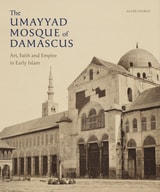
The Umayyad Mosque of Damascus
Art, Faith and Empire in Early IslamAlain George
Gingko, 2020
The Umayyad Mosque of Damascus is one of the oldest continuously used religious sites in the world. The mosque we see today was built in 705 CE by the Umayyad caliph al-Walid on top of a fourth-century Christian church that had been erected over a temple of Jupiter. Incredibly, despite the recent war, the mosque has remained almost unscathed, but over the centuries has been continuously rebuilt after damage from earthquakes and fires. In this comprehensive biography of the Umayyad Mosque, Alain George explores a wide range of sources to excavate the dense layers of the mosque’s history, also uncovering what the structure looked like when it was first built with its impressive marble and mosaic-clad walls. George incorporates a range of sources, including new information he found in three previously untranslated poems written at the time the mosque was built, as well as in descriptions left by medieval scholars. He also looks carefully at the many photographs and paintings made by nineteenth-century European travelers, particularly those who recorded the building before the catastrophic fire of 1893.
Thomas Mann's World
Empire, Race, and the Jewish QuestionTodd Kontje
University of Michigan Press, 2011
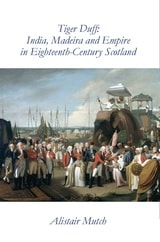
Tiger Duff
India, Madeira and Empire in Eighteenth-Century ScotlandAlistair Mutch
Aberdeen University Press, 2017
Town in the Empire
Government, Politics, and Society in Seventeenth Century PopayánBy Peter Marzahl
University of Texas Press, 1979
During the seventeenth century, many of the fundamental characteristics of Spanish America were established. Peter Marzahl adds significantly to our understanding of this period with this study of Popayán, a town in what was then part of New Granada and is now Colombia. New Granada was something of a backwater of the empire, but very likely Popayán was more typical of everyday colonial life than the major centers that have drawn most attention from historians.
In the first part of his study, Marzahl describes both town and region, depicts economic activities (agriculture, gold mining, trade), and analyzes urban and rural society. Of particular interest is his discussion of the complex interaction among the different ethnic groups: Spaniards, Mestizos, Indians, and Blacks. In the longer second part he presents a detailed account of the makeup and operations of the town councils. His extensive research in primary sources makes possible a thorough examination of Popayán's administration and politics and their relationship to economic and social patterns. He also describes the councils' relations with the provincial governors, the viceregal authorities in Bogotá, and the Church. Because this study treats a neglected period and region and, in so doing, offers fresh materials and insights, it is an important contribution to our knowledge and comprehension of colonial Spanish America.
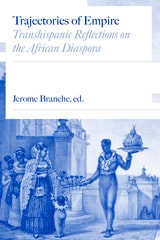
Trajectories of Empire
Transhispanic Reflections on the African DiasporaJerome C. Branche
Vanderbilt University Press, 2022
The book’s chapters explore what Blackness means in the so-called racial democracies of Brazil and Cuba today. Among the historical narratives and themes it covers are the role of medical science in the objectification and nullification of Black female personhood during slavery in nineteenth-century Brazil; the protocols of portraiture in the colonial period that, in including enslaved individuals, pictorially highlight and freeze their supposed inferiority vis-à-vis their owners; and those aspects of discourse that promote colonial capture and oppression in terms of evangelization and the saving of souls, or simply create the discursive template as early as the fifteenth century, for their continued alienation and marginalization across generations.
Trajectories of Empire’s contributions come from the fields of literary criticism, visual culture, history, anthropology, popular culture (rap), and cultural studies. As the product of an interdisciplinary collective, this book will be of interest to scholars in Iberian or Hispanic studies, Africana studies, postcolonial studies, and transatlantic studies, as well as the general public.
Transoceanic Blackface
Empire, Race, PerformanceKellen Hoxworth
Northwestern University Press, 2024
A material history of racialized performance throughout the Anglophone imperial world, Transoceanic Blackface: Empire, Race, Performance revises prevailing understandings of blackface and minstrelsy as distinctively US American cultural practices. Tracing intertwined histories of racialized performance from the mid-eighteenth through the early twentieth century across the United States and the British Empire, this study maps the circulations of blackface repertoires in theatrical spectacles, popular songs, visual materials, comic operas, closet dramas, dance forms, and Shakespearean burlesques.
Kellen Hoxworth focuses on overlooked performance histories, such as the early blackface minstrelsy of T. D. Rice’s “Jump Jim Crow” and the widely staged blackface burlesque versions of Othello, as traces of the racial and sexual anxieties of empire. From the nascent theatrical cultures of Australia, Britain, Canada, India, Jamaica, South Africa, and the United States, Transoceanic Blackface offers critical insight into the ways racialized performance animated the imperial “common sense” of white supremacy on a global scale.
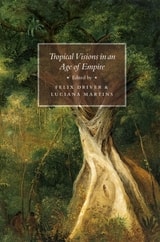
Tropical Visions in an Age of Empire
Edited by Felix Driver and Luciana Martins
University of Chicago Press, 2005
Bringing together a group of distinguished contributors from disciplines across the arts and humanities, this volume contains eleven beautifully illustrated essays—arranged in three sections devoted to voyages, mappings, and sites—that consider the ways that tropical places were encountered, experienced, and represented in visual form. Covering a wide range of tropical sites in the Pacific, South Asia, West Africa, the Caribbean, and Latin America, the book will appeal to a broad readership: scholars of postcolonial studies, art history, literature, imperial history, history of science, geography, and anthropology.
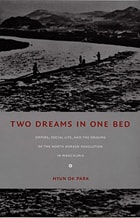
Two Dreams in One Bed
Empire, Social Life, and the Origins of the North Korean Revolution in ManchuriaHyun Ok Park
Duke University Press, 2005
Drawing on a rich archive of Korean, Japanese, and Chinese sources, Park describes how Koreans negotiated the contradictory demands of national and colonial powers. She demonstrates that the dynamics of global capitalism led the Chinese and Japanese to pursue capitalist expansion while competing for sovereignty. Decentering the nation-state as the primary analytic rubric, her emphasis on the role of global capitalism is a major innovation for understanding nationalism, colonialism, and their immanent links in social space.
Through a regional and temporal comparison of Manchuria from the late nineteenth century until 1945, Park details how national and colonial powers enacted their claims to sovereignty through the regulation of access to land, work, and loans. She shows that among Korean migrants, the complex connections among Chinese laws, Japanese colonial policies, and Korean social practices gave rise to a form of nationalism in tension with global revolution—a nationalism that laid the foundation for what came to be regarded as North Korea’s isolationist politics.