Results by title
60 books match the query 'Energy' and 15 start with t
Thank You Fossil Fuels and Good Night
The 21st Century's Energy TransitionGregory Meehan
University of Utah Press, 2017
Everything is subject to a lifecycle. In the field of energy, the obvious question is, “Where are we in the lifecycle of fossil fuels?” Competitive technology for sourcing renewable energy, marketplace readiness, and pressures from climate change all signal that the fossil fuel era is coming to an end. This book explains the alternatives and suggests when and how change will occur. Employing a global perspective and detailed analysis, it provides recommendations on policies and strategies to make a smooth and wholesale transition to renewables before the continued use of fossil fuels becomes economically and socially disruptive.
Gregory Meehan’s overview eschews politics in favor of comprehensive coverage and logical explanation. He addresses economic, environmental, and security concerns and does not shy away from illuminating limitations and problems with various energy sources. Meehan’s dogged pursuit of the current state of knowledge and energy practices around the world shows that different answers are proving viable for different social and environmental contexts. This is the most wide-ranging and thorough introduction to the world’s energy issues and choices to date.
Lecture and exercise guides available upon request.
Click here to hear the Friends of the Marriott Library event with Gregory Meehan. https://youtu.be/YqmNhEN09_c
The Birth of Energy
Fossil Fuels, Thermodynamics, and the Politics of WorkCara New Daggett
Duke University Press, 2019
The Eighth Day
Social Evolution as the Self-Organization of EnergyBy Richard Newbold Adams
University of Texas Press, 1988
Can human social evolution be described in terms common to other sciences, most specifically, as an energy process? The Eighth Day reflects a conviction that the human trajectory, for all its uniqueness and indeterminism, will never be satisfactorily understood until it is framed in dynamics that are common to all of nature. The problem in doing this, however, lies in ourselves. The major social theories have failed to treat human social evolution as a component of broader natural processes.
The Eighth Day argues that the energy process provides a basis for explaining, comparing, and measuring complex social evolution. Using traditional ecological energy flow studies as background, society is conceived as a self-organization of energy. This perspective enables Adams to analyze society in term of the natural selection of self-organizing energy forms and the trigger processes basic to it. Domestication, civilization, socioeconomic development, and the regulation of contemporary industrial nation-states serve to illustrate the approach. A principal aim is to explore the limitation that energy process imposes on human social evolution as well as to clarify the alternatives that it allows.
Richly informed by contemporary anthropological historicism, sociobiology, and Marxism, The Eighth Day avoids simple reductionism and denies facile ideological categorization. Adams builds on work in nonequilibrium thermodynamics and theoretical biology and brings three decades of his own work to an analysis of human society that demands an extreme materialism in which human thought and action find a central place.
The Electric City
Energy and the Growth of the Chicago Area, 1880-1930Harold L. Platt
University of Chicago Press, 1991
The Energy of Nature
E. C. Pielou
University of Chicago Press, 2001
In The Energy of Nature, E. C. Pielou explores energy's role in nature—how and where it originates, what it does, and what becomes of it. Drawing on a wide range of scientific disciplines, from physics, chemistry, and biology to all the earth sciences, as well as on her own lifelong experience as a naturalist, Pielou opens our eyes to the myriad ways energy and its transfer affect the earth and its inhabitants. Along the way we learn how energy is delivered to the earth from the sun; how it causes weather, winds, and tides; how it shapes the earth through mountain building and erosion; how it is captured and used by living things; how it is stored in chemical bonds; how nuclear energy is released; how it heats the unseen depths of the planet and is explosively revealed in the turmoil of earthquakes and volcanoes; how energy manifests itself in magnetism and electromagnetic waves; how we harness it to fuel human societies; and much more.
Filled with fascinating information and and helpful illustrations (hand drawn by the author), The Energy of Nature is fun, readable, and instructive. Science buffs of all ages will be delighted.
The Great Texas Wind Rush
How George Bush, Ann Richards, and a Bunch of Tinkerers Helped the Oil and Gas State Win the Race to Wind PowerBy Kate Galbraith and Asher Price
University of Texas Press, 2013
In the late 1990s, West Texas was full of rundown towns and pumpjacks, aging reminders of the oil rush of an earlier era. Today, the towns are thriving as 300-foot-tall wind turbines tower above those pumpjacks. Wind energy has become Texas’s latest boom, with the Lone Star State now leading the nation. How did this dramatic transformation happen in a place that fights federal environmental policies at every turn? In The Great Texas Wind Rush, environmental reporters Kate Galbraith and Asher Price tell the compelling story of a group of unlikely dreamers and innovators, politicos and profiteers.
The tale spans a generation and more, and it begins with the early wind pioneers, precocious idealists who saw opportunity after the 1970s oil crisis. Operating in an economy accustomed to exploiting natural resources and always looking for the next big thing, their ideas eventually led to surprising partnerships between entrepreneurs and environmentalists, as everyone from Enron executives to T. Boone Pickens, as well as Ann Richards, George W. Bush and Rick Perry, ended up backing the new technology. In this down-to-earth account, the authors explain the policies and science that propelled the “windcatters” to reap the great harvest of Texas wind. They also explore what the future holds for this relentless resource that is changing the face of Texas energy.
The Living Line
Modern Art and the Economy of EnergyRobin Veder
Dartmouth College Press, 2015

The Low Cost Planet
Energy and Environmental Problems, Solutions and CostsDavid Toke
Pluto Press, 1995
The Political Economy of Pipelines
A Century of Comparative Institutional DevelopmentJeff D. Makholm
University of Chicago Press, 2012
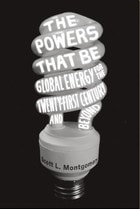
The Powers That Be
Global Energy for the Twenty-first Century and BeyondScott L. Montgomery
University of Chicago Press, 2010
Thirty years ago, our global energy landscape did not look remarkably different from what it does today. Three or four decades from now, it certainly will: dwindling oil reserves will clash with skyrocketing demand, as developing nations around the world lead their citizens into the modern energy economy, and all the while, the grave threat of catastrophic climate change looms ever larger. Energy worries are at an all-time high—just how will we power our future?
With The Powers That Be, Scott L. Montgomery cuts through the hype, alarmism, and confusion to give us a straightforward, informed account of where we are now, and a map of where we’re going. Starting with the inescapable fact of our current dependence on fossil fuels—which supply 80% of all our energy needs today—Montgomery clearly and carefully lays out the many alternative energy options available, ranging from the familiar, like water and solar, to such nascent but promising sources as hydrogen and geothermal power. What is crucial, Montgomery explains, is understanding that our future will depend not on some single, wondrous breakthrough; instead, we should focus on developing a more diverse, adaptable energy future, one that draws on a variety of sources—and is thus less vulnerable to disruption or failure.
An admirably evenhanded and always realistic guide, Montgomery enables readers to understand the implications of energy funding, research, and politics at a global scale. At the same time, he doesn’t neglect the ultimate connection between those decisions and the average citizen flipping a light switch or sliding behind the wheel of a car, making The Powers That Be indispensible for our ever-more energy conscious age.

The Renewable Energy Alternative
How the United States and the World Can Prosper without Nuclear Energy or CoalJohn O. Blackburn
Duke University Press, 1987
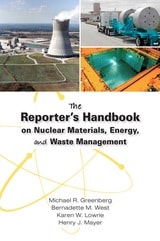
The Reporter's Handbook on Nuclear Materials, Energy & Waste Management
Michael R. Greenberg
Vanderbilt University Press, 2009
Each "brief" is based on interviews with named scientists, engineers, or administrators in a nuclear specialty, and each has been reviewed by a team of independent experts. The objective is not to make a case for or against nuclear-related technologies, but rather to provide definitive background information. (The approach is based on that of The Reporter's Environmental Handbook, published in 1988, which won a special award for journalism from the Sigma Delta Chi Society of professional journalists.)
Other features of the book include: a glossary of hundreds of terms, an introduction to risk assessment, environmental and economic impacts, and public perceptions, an article by an experienced reporter with recommendations about how to cover nuclear issues, quick guides to the history of nuclear power in the United States, important federal legislation and regulations, nuclear position statements, and key organizations, print and electronic resources.
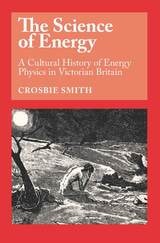
The Science of Energy
A Cultural History of Energy Physics in Victorian BritainCrosbie Smith
University of Chicago Press, 1999
Replacing the language and concepts of classical mechanics with terms such as "actual" and "potential" energy, the North British group conducted their revolution in physics so astutely and vigorously that the concept of "energy"—a valuable commodity in the early days of industrialization—became their intellectual property. Smith skillfully places this revolution in its scientific and cultural context, exploring the actual creation of scientific knowledge during one of the most significant episodes in the history of physics.
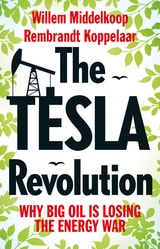
The Tesla Revolution
Why Big Oil is Losing the Energy WarRembrandt Koppelaar
Amsterdam University Press, 2017
In clear, unsensational style, Willem Middelkoop and Rembrandt Koppelaar offer a layman's tour of the energy landscape, now and to come. They show how rapid technological advances in batteries and solar technologies are already driving large-scale transformations in power supply, while economic and geopolitical changes, combined with a growing political awareness that there are alternatives to fossil fuels will combine in the coming years to bring an energy revolution ever closer. Within in our lifetimes, the authors argue, we will see changes that will reshape economics, the balance of political power, and even the most mundane aspects of our daily lives.
Determinedly forward-looking and optimistic, though never straying from hard facts, The Tesla Revolution paints a striking picture of our global energy future.
The Three Sustainabilities
Energy, Economy, TimeAllan Stoekl
University of Minnesota Press, 2021
Bringing the word sustainability back from the brink of cliché—to a substantive, truly sustainable future
Is sustainability a hopelessly vague word, with meager purpose aside from a feel-good appeal to the consumer? In The Three Sustainabilities, Allan Stoekl seeks to (re)valorize the word, for a simple reason: it is useful. Sustainability designates objects in time, their birth or genesis, their consistency, their survival, their demise. And it raises the question, as no other word does, of the role of humans in the survival of a world that is quickly disappearing—and perhaps in the genesis of another world.
Stoekl considers a range of possibilities for the word, touching upon questions of object ontology, psychoanalysis, urban critique, technocracy, and religion. He argues that there are three varieties of sustainability, seen from philosophical, cultural, and economic perspectives. One involves the self-sustaining world “without us”; another, the world under our control, which can run the political spectrum from corporatism to Marxism to the Green New Deal; and a third that carries a social and communitarian charge, an energy of the “universe” affirmed through, among other things, meditation and gifting. Each of these carves out a different space in the relations between objects, humans, and their survival and degradation. Each is necessary, unavoidable, and intimately bound with, and infinitely distant from, the others.
Along the way, Stoekl cites a wide range of authors, from philosophers to social thinkers, literary theorists to criminologists, anthropologists to novelists. This beautifully written, compelling, and nuanced book is a must for anyone interested in questions of ecology, energy, the environmental humanities, contemporary theories of the object, postmodern and posthuman aesthetics, or religion and the sacred in relation to community.