Results by title
7 books match the query 'Immortality'
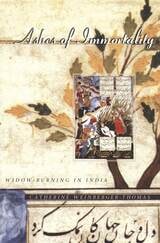
Ashes of Immortality
Widow-Burning in IndiaCatherine Weinberger-Thomas
University of Chicago Press, 1999
Ashes of Immortality attempts to see the satis through Hindu eyes, providing an extensive experiential and psychoanalytic account of ritual self-sacrifice and self-mutilation in South Asia. Based on fifteen years of fieldwork in northern India, where the state-banned practice of sati reemerged in the 1970s, as well as extensive textual analysis, Weinberger-Thomas constructs a radically new interpretation of satis. She shows that their self-immolation transcends gender, caste and class, region and history, representing for the Hindus a path to immortality.
Death And Immortality
Josef Pieper
St. Augustine's Press, 1999
Dialogues
Saint Gregory the Great
Catholic University of America Press, 1959
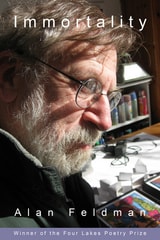
Immortality
Alan Feldman
University of Wisconsin Press, 2015
In a collection where the dead do speak, Feldman’s poems in his first segment, “Self-Portraits,” are more likely to be about others than about himself. The segment “Partners” reflects on marriage and divorce, the latter an “uncontested victor over marriage, / the way the flood is champion over the flood plain.” In the section “Offshore” Feldman writes about travel to Uruguay, his impractical love of sailing, and his wonder at Walter Cronkite’s obtuseness about Vietnam. In his final segment, “What Now?,” he asks about meaning itself. Babysitting his tiny granddaughter, he thinks of sailing—hours of boredom punctuated by moments of terror—and wonders if even this suggests something world-encompassing he’s “still hoping to find a name for. / If it isn’t joy.”
Winner of the Mass Book Award for Poetry, Massachusetts Center for the Book

On Not Dying
Secular Immortality in the Age of TechnoscienceAbou Farman
University of Minnesota Press, 2020
An ethnographic exploration of technoscientific immortality
Immortality has long been considered the domain of religion. But immortality projects have gained increasing legitimacy and power in the world of science and technology. With recent rapid advances in biology, nanotechnology, and artificial intelligence, secular immortalists hope for and work toward a future without death.
On Not Dying is an anthropological, historical, and philosophical exploration of immortality as a secular and scientific category. Based on an ethnography of immortalist communities—those who believe humans can extend their personal existence indefinitely through technological means—and an examination of other institutions involved at the end of life, Abou Farman argues that secular immortalism is an important site to explore the tensions inherent in secularism: how to accept death but extend life; knowing the future is open but your future is finite; that life has meaning but the universe is meaningless. As secularism denies a soul, an afterlife, and a cosmic purpose, conflicts arise around the relationship of mind and body, individual finitude and the infinity of time and the cosmos, and the purpose of life. Immortalism today, Farman argues, is shaped by these historical and culturally situated tensions. Immortalist projects go beyond extending life, confronting dualism and cosmic alienation by imagining (and producing) informatic selves separate from the biological body but connected to a cosmic unfolding.
On Not Dying interrogates the social implications of technoscientific immortalism and raises important political questions. Whose life will be extended? Will these technologies be available to all, or will they reproduce racial and geopolitical hierarchies? As human life on earth is threatened in the Anthropocene, why should life be extended, and what will that prolonged existence look like?
The Immortality of the Soul; The Magnitude of the Soul; On Music; The Advantage of Believing; On Faith in Things Unseen
Saint Augustine
Catholic University of America Press, 1947
The Miracle of Immortality
What Follows This Earthly Life?Gerhard Cardinal Muller
Catholic University of America Press, 2026