Results by title
615 books match the query 'England' and 143 start with t
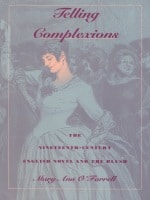
Telling Complexions
The Nineteenth-Century English Novel and the BlushMary Ann O Farrell
Duke University Press, 1997
Although the blush was used to tell the truth of character and body, O’Farrell shows how it is actually undermined as a stable indicator of character in novels such as Pride and Prejudice, Persuasion, North and South, and David Copperfield. She reveals how these writers then moved on in search of other bodily indicators of mortification and desire, among them the swoon, the scar, and the blunder. Providing unique and creative insights into the constructedness of the body and its semiotic play in literature and in culture, Telling Complexions includes parallel examples of the blush in contemporary culture and describes ways that textualized bodies are sometimes imagined to resist the constraints imposed by such construction.
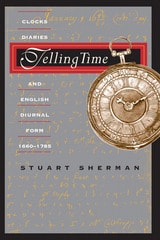
Telling Time
Clocks, Diaries, and English Diurnal Form, 1660-1785Stuart Sherman
University of Chicago Press, 1997
Through brilliant readings of Samuel Pepys's diary, Joseph Addison and Richard Steele's daily Spectator, the travel writings of Samuel Johnson and James Boswell, and the novels of Daniel Defoe and Frances Burney, Sherman traces the development of a new way of counting time in prose—the diurnal structure of consecutively dated installments—within the cultural context of the daily institutions which gave it form and motion. Telling Time is not only a major accomplishment for seventeenth- and eighteenth-century literary studies, but it also makes important contributions to current discourse in cultural studies.
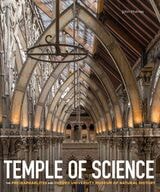
Temple of Science
The Pre-Raphaelites and Oxford University Museum of Natural HistoryJohn Holmes
Bodleian Library Publishing, 2020
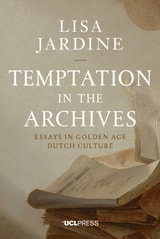
Temptation in the Archives
Essays in Golden Age Dutch CultureLisa Jardine
University College London, 2015
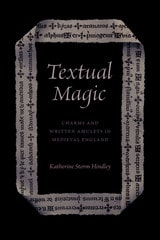
Textual Magic
Charms and Written Amulets in Medieval EnglandKatherine Storm Hindley
University of Chicago Press, 2023
Katherine Storm Hindley explores words at their most powerful: words that people expected would physically change the world. Medieval Europeans often resorted to the use of spoken or written charms to ensure health or fend off danger. Hindley draws on an unprecedented archive of more than a thousand such charms from medieval England—more than twice the number gathered, transcribed, and edited in previous studies and including many texts still unknown to specialists on this topic. Focusing on charms from 1100 to 1350 CE as well as previously unstudied texts in Latin, French, and English, Hindley addresses important questions of how people thought about language, belief, and power. She describes seven hundred years of dynamic, shifting cultural landscapes, where multiple languages, alphabets, and modes of transmission gained and lost their protective and healing power. Where previous scholarship has bemoaned a lack of continuity in the English charms, Hindley finds surprising links between languages and eras, all without losing sight of the extraordinary variety of the medieval charm tradition: a continuous, deeply rooted part of the English Middle Ages.
The Acoustic World of Early Modern England
Attending to the O-FactorBruce R. Smith
University of Chicago Press, 1999
In this ear-opening journey into the sound-worlds of Shakespeare's contemporaries, Bruce R. Smith explores both the physical aspects of human speech (ears, lungs, tongue) and the surrounding environment (buildings, landscape, climate), as well as social and political structures. Drawing on a staggeringly wide range of evidence, he crafts a historical phenomenology of sound, from reconstructions of the "soundscapes" of city, country, and court to detailed accounts of the acoustic properties of the Globe and Blackfriars theaters and how scripts designed for the two spaces exploited sound very differently.
Critical for anyone who wants to understand the world of early modern England, Smith's pathbreaking "ecology" of voice and listening also has much to offer musicologists and acoustic ecologists.
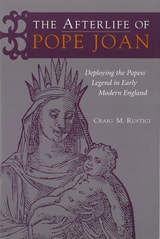
The Afterlife of Pope Joan
Deploying the Popess Legend in Early Modern EnglandCraig M. Rustici
University of Michigan Press, 2010
The legend concerning a popess had first taken written form in the thirteenth century and for several hundred years was more or less accepted. The Reformation, however, polarized discussions of the legend, pitting Catholics, who denied the story’s veracity, against Protestants, who suspected a cover-up and instantly cited Joan as evidence of papal depravity. In this heated environment, writers reimagined Joan variously as a sorceress, a hermaphrodite, and even a noteworthy author.
The Afterlife of Pope Joan examines sixteenth- and seventeenth-century debates concerning the popess’s existence, uncovering the disputants’ historiographic methods, rules of evidence, rhetorical devices, and assumptions concerning what is probable and possible for women and transvestites. Author Craig Rustici then investigates the cultural significance of a series of notions advanced in those debates: the claim that Queen Elizabeth I was a popess in her own right, the charge that Joan penned a book of sorcery, and the curious hypothesis that the popess was not a disguised woman at all but rather a man who experienced a sort of spontaneous sex change.
The Afterlife of Pope Joan draws upon the discourses of religion, politics, natural philosophy, and imaginative literature, demonstrating how the popess functioned as a powerful rhetorical instrument and revealing anxieties and ambivalences about gender roles that persist even today.
Craig M. Rustici is Associate Professor of English at Hofstra University.
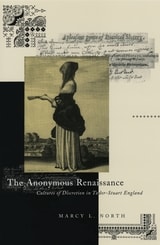
The Anonymous Renaissance
Cultures of Discretion in Tudor-Stuart EnglandMarcy L. North
University of Chicago Press, 2003
The Renaissance was in many ways the beginning of modern and self-conscious authorship, a time when individual genius was celebrated and an author's name could become a book trade commodity. Why, then, did anonymous authorship flourish during the Renaissance rather than disappear? In addressing this puzzle, Marcy L. North reveals the rich history and popularity of anonymity during this period.
The book trade, she argues, created many intriguing and paradoxical uses for anonymity, even as the authorial name became more marketable. Among ecclesiastical debaters, for instance, anonymity worked to conceal identity, but it could also be used to identify the moral character of the author being concealed. In court and coterie circles, meanwhile, authors turned name suppression into a tool for the preservation of social boundaries. Finally, in both print and manuscript, anonymity promised to liberate an authentic female voice, and yet made it impossible to authenticate the gender of an author. In sum, the writers and book producers who helped to create England's literary culture viewed anonymity as a meaningful and useful practice.
Written with clarity and grace, The Anonymous Renaissance will fill a prominent gap in the study of authorship and English literary history.
The Audacious Ministry of Zilpha Elaw
Race, Religion, and RebellionKimberly D. Blockett
Duke University Press, 2026
The Author's Due
Printing and the Prehistory of CopyrightJoseph Loewenstein
University of Chicago Press, 2002
As Loewenstein shows, copyright is a form of monopoly that developed alongside a range of related protections such as commercial trusts, manufacturing patents, and censorship, and cannot be understood apart from them. The regulation of the press pitted competing interests and rival monopolistic structures against one another—guildmembers and nonprofessionals, printers and booksellers, authors and publishers. These struggles, in turn, crucially shaped the literary and intellectual practices of early modern authors, as well as early capitalist economic organization.
With its probing look at the origins of modern copyright, The Author's Due will prove to be a watershed for historians, literary critics, and legal scholars alike.
The Black Death in Egypt and England
A Comparative StudyBy Stuart J. Borsch
University of Texas Press, 2005
Throughout the fourteenth century AD/eighth century H, waves of plague swept out of Central Asia and decimated populations from China to Iceland. So devastating was the Black Death across the Old World that some historians have compared its effects to those of a nuclear holocaust. As countries began to recover from the plague during the following century, sharp contrasts arose between the East, where societies slumped into long-term economic and social decline, and the West, where technological and social innovation set the stage for Europe's dominance into the twentieth century. Why were there such opposite outcomes from the same catastrophic event?
In contrast to previous studies that have looked to differences between Islam and Christianity for the solution to the puzzle, this pioneering work proposes that a country's system of landholding primarily determined how successfully it recovered from the calamity of the Black Death. Stuart Borsch compares the specific cases of Egypt and England, countries whose economies were based in agriculture and whose pre-plague levels of total and agrarian gross domestic product were roughly equivalent. Undertaking a thorough analysis of medieval economic data, he cogently explains why Egypt's centralized and urban landholding system was unable to adapt to massive depopulation, while England's localized and rural landholding system had fully recovered by the year 1500.
The Bloodless Revolution
England, 1688Stuart E. Prall
University of Wisconsin Press, 1985
The Glorious Revolution of 1688 represented a crucial turning point in modern British history by decisively shifting political power from the monarchy to Parliament. In this cogent study, first published in 1972, Stuart Prall offers a well-balanced account of the Revolution, its roots, and its consequences. The events of 1688, Prall argues, cannot be viewed in isolation. Examining the tempestuous half-century that preceded and precipitated William and Mary’s accession, he provides a comprehensive overview of the Revolution’s context and of its historical meaning.
“[Prall] insists that the Revolution of 1688 was the culmination of a long crisis begun back in 1640, and the revolution settlement was the resolution of problems which the Puritan Revolution and the Restoration had left unsolved. This is an admirable combination of analysis, commentary upon views of historians, and chronological narrative, starting with the Restoration in 1660 and continuing through the Act of Settlement in 1701.”—Choice
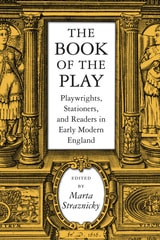
The Book of the Play
Playwrights, Stationers, and Readers in Early Modern EnglandMarta Straznicky
University of Massachusetts Press, 2006
The Book of the Play is a collection of essays that examines early modern drama in the context of book history. Focusing on the publication, marketing, and readership of plays opens fresh perspectives on the relationship between the cultures of print and performance and more broadly between drama and the public sphere. Marta Straznicky's introduction offers a survey of approaches to the history of play reading in this period, and the collection as a whole consolidates recent work in textual, bibliographic, and cultural studies of printed drama.
Individually, the essays advance our understanding of play reading as a practice with distinct material forms, discourses, social settings, and institutional affiliation. Part One, “Real and Imagined Communities,” includes four essays on play-reading communities and the terms in which they are distinguished from the reading public at large. Cyndia Clegg surveys the construction of readers in prefaces to published plays; Lucy Munro traces three separate readings of a single play, Edward Sharpham's The Fleer; Marta Straznicky studies women as readers of printed drama; and Elizabeth Sauer describes how play reading was mobilized for political purposes in the period of the Civil War.
In Part Two, “Play Reading and the Book Trade,” five essays consider the impact of play reading on the public sphere through the lens of publishing practices. Zachary Lesser offers a revisionist account of black-letter typeface and the extent to which it may be understood as an index of popular culture; Alan Farmer examines how the emerging news trade of the 1620s and 1630s affected the marketing of printed drama; Peter Berek traces the use of generic terms on title pages of plays to reveal their intersection with the broader culture of reading; Lauren Shohet demonstrates that the Stuart masque had a parallel existence in the culture of print; and Douglas Brooks traces the impact print had on eclipsing performance as the medium in which the dramatist could legitimately lay claim to having authored his text.
The individual essays focus on selected communities of readers, publication histories, and ideologies and practices of reading; the collection as a whole demonstrates the importance of textual production and reception to understanding the place of drama in the early modern public sphere.

The Building of Castle Howard
Charles Saumarez Smith
University of Chicago Press, 1990
The Calamity Form
On Poetry and Social LifeAnahid Nersessian
University of Chicago Press, 2020
Anahid Nersessian explores works by Friedrich Hölderlin, William Wordsworth, John Keats, and others to argue that as the human and ecological costs of industry became clear, Romantic poetry adopted formal strategies—among them parataxis, the setting of elements side by side in a manner suggestive of postindustrial dissonance, and apostrophe, here an address to an absent or vanishing natural environment—as it tried and failed to narrate the calamities of capitalism. These tropes reflect how Romantic authors took their bewilderment and turned it into a poetics: a theory of writing, reading, and understanding poetry as an eminently critical act. Throughout, Nersessian pushes back against recent attempts to see literature as a source of information on par with historical or scientific data, arguing instead for an irreducibility of poetic knowledge. Revealing the ways in which these Romantic works are of their time but not about it, The Calamity Form ultimately exposes the nature of poetry’s relationship to capital—and capital’s ability to hide how it works.
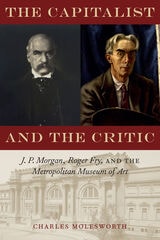
The Capitalist and the Critic
J. P. Morgan, Roger Fry, and the Metropolitan Museum of ArtBy Charles Molesworth
University of Texas Press, 2016
A skillful and fascinating retelling of the often testy relationship between J. P. Morgan and Roger Fry, two men who did more to establish the preeminence of the Metropolitan Museum of Art than any collector and curator before or since.
Shortly after the turn of the twentieth century, the Metropolitan Museum of Art began an ambitious program of collection building and physical expansion that transformed it into one of the world’s foremost museums, an eminence that it has maintained ever since. Two men of singular qualities and accomplishments played key roles in the Met’s transformation—J. P. Morgan, America’s leading financier and a prominent art collector, and Roger Fry, the headstrong English expert in art history who served as the Met’s curator of painting. Their complicated, often contentious relationship embodies and illuminates the myriad tensions between commerce and art, philanthropists and professional staff, that a great museum must negotiate to define and fulfill its mission.
In this masterful, multidisciplinary narrative, Charles Molesworth offers the first in-depth look at how Morgan and Fry helped to mold the cultural legacy of masterpieces of painting and the development of the “encyclopedic” museum. Structuring the book as a joint biography, Molesworth describes how Morgan used his vast wealth to bring European art to an American citizenry, while Fry brought high standards of art history from the world of connoisseurs to a general public. Their clashes over the purpose and functions of the Met, which ultimately led to Fry’s ouster, reveal the forces—personal and societal—that helped to shape the Metropolitan Museum and other major American cultural institutions during the twentieth century.
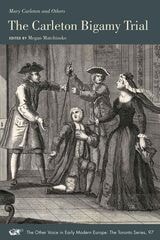
The Carleton Bigamy Trial
Mary Carleton
Iter Press, 2023
Mary Carleton was an ordinary woman from Canterbury who entered historical records when she was accused of bigamy. The seven pamphlets in this edition focus on the bigamy trial of Mary Carleton, in which the accused eloquently defends herself and is ultimately acquitted. Written in the early years of the English Restoration, they demonstrate that narratives presenting what “she said” and what “he said” can reveal, forcefully and painfully, how truth can be fragmented in the different arenas of law, love, and politics. Through their disparate accounts of a marriage gone wrong, these pamphlets reinforce the social status quo even while they radically shatter the very foundations that give it heft. In asking readers to question absolutes, they unmask the precarious relationship between words and the world.

The Centenary Edition of the Works of Nathaniel Hawthorne
VOL. V, OUR OLD HOMENathaniel Hawthorne
The Ohio State University Press, 1970
The Centenary Edition of the Works of Nathaniel Hawthorne
Vol. XXI, the English Notebooks, 1853–1856Nathaniel Hawthorne
The Ohio State University Press, 1997
The Centenary Edition of the Works of Nathaniel Hawthorne
Vol. XXII, The English Notebooks, 1856–1860Nathaniel Hawthorne
The Ohio State University Press, 1997
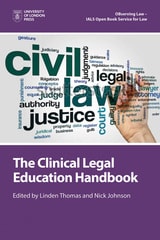
The Clinical Legal Education Handbook
Edited by Linden Thomas and Nicholas Johnson
University of London Press, 2020
CLE has become an increasingly popular method of legal education in recent years. By the end of 2013 at least 70% of all law schools in the United Kingdom were delivering some type of CLE, and 25% of these offered credit-bearing CLE programs. It is almost certain that this number will increase in the years to come with the advent of the forthcoming Solicitors’ Qualifying Examination, which will allow time spent volunteering in a student law clinic to count as “qualifying work experience.” However, despite the popularity of CLE, there is currently very little information available about the best practices for setting up and delivering these programs.
The Handbook seeks to remedy this gap, offering an invaluable resource to staff involved in running law clinics, both as a practical guide to establishing and running their programs and as a teaching resource and recommended text on clinical programs. It will also act as a resource for clinical legal education researchers who wish to engage in regulatory, pedagogic, and legal service delivery research in this area.
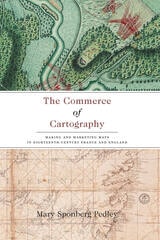
The Commerce of Cartography
Making and Marketing Maps in Eighteenth-Century France and EnglandMary Sponberg Pedley
University of Chicago Press, 2005
Conceptualizing the relationship between economics and cartography, Pedley traces the process of mapmaking from compilation, production, and marketing to consumption, reception, and criticism. In detailing the rise of commercial cartography, Pedley explores qualitative issues of mapmaking as well. Why, for instance, did eighteenth-century ideals of aesthetics override the modern values of accuracy and detail? And what, to an eighteenth-century mind and eye, qualified as a good map?
A thorough and engaging study of the business of cartography during the Enlightenment, The Commerce of Cartography charts a new cartographic landscape and will prove invaluable to scholars of economic history, historical geography, and the history of publishing.
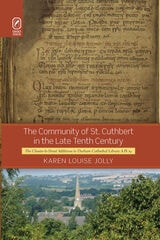
The Community of St. Cuthbert in the Late Tenth Century
The Chester-le-Street Additions to Durham Cathedral Library A.IV.19Karen Louise Jolly
The Ohio State University Press, 2012
The Community of St. Cuthbert in the Late Tenth Century: The Chester-le-Street Additions to Durham Cathedral Library A.IV.19 reveals the dynamic role a seemingly marginalized community played during a defining period for the emergence of English religious identity. Based on her new critical edition of additions made to Durham Cathedral Library A.IV.19 and by questioning the purpose of those late tenth-century additions, Karen Louise Jolly is able to uncover much about the Chester-le-Street scribes and their tumultuous time, rife as it was with various political tensions, from Vikings and local Northumbrian nobles to an increasingly dominant West Saxon monarchy.
Why, for instance, would a priest laboriously insert an Old English gloss above every Latin word in a collection of prayers intended to be performed in Latin? What motivated the same English scribe to include Irish-derived Christian materials in the manuscript, including prayers invoking the archangel Panchiel to clear birds from a field?
The Complete Short Stories, Volume 1
Enid Dinnis
Catholic University of America Press, 2023

The Complete Works of Robert Browning, Volume IX
With Variant Readings and AnnotationsRobert Browning
Ohio University Press, 1990
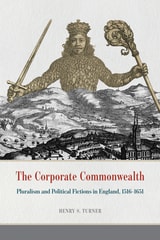
The Corporate Commonwealth
Pluralism and Political Fictions in England, 1516-1651Henry S. Turner
University of Chicago Press, 2016
Henry S. Turner uses the resources of economic and political history, literary analysis, and political philosophy to demonstrate how a number of English institutions with corporate associations—including universities, guilds, towns and cities, and religious groups—were gradually narrowed to the commercial, for-profit corporation we know today, and how the joint-stock corporation, in turn, became both a template for the modern state and a political force that the state could no longer contain. Through innovative readings of works by Thomas More, William Shakespeare, Francis Bacon, and Thomas Hobbes, among others, Turner tracks the corporation from the courts to the stage, from commonwealth to colony, and from the object of utopian fiction to the subject of tragic violence. A provocative look at the corporation’s peculiar character as both an institution and a person, The Corporate Commonwealth uses the past to suggest ways in which today’s corporations might be refashioned into a source of progressive and collective public action.
The Crooked Stick
A History of the LongbowHugh D. H. Soar
Westholme Publishing, 2004
The Complete Story of a Legendary Weapon
"Spendidly enthusiastic. . . . Soar's book is indispensable."—Bernard Cornwell
"A fascinating study of a forgotten weapon. . . . For centuries the longbow dominated battle, affecting the fates of nations" —Wall Street Journal
"Bowyers, bowhunters, target archers and students of archery history should all find cause for celebration with Hugh Soar's concise but authoritative text." —Traditional BowhunterOn a clear July morning in 1346, a small force approached the walls of Caen for battle. The attackers rode to the field on horseback, banners and pennants fluttering in the light breeze. Behind them marched bowmen in tightly ranked units. At the sound of a crisp battle horn, they halted. A twinge of apprehension rippled through the thousands of Norman defenders as they looked down at the opposing army, for precision archery formation had long since disappeared as a military concept in medieval France. Here was not the expected rabble of unrated bucolics cowed by the might of France; confronting them was a quietly determined group of trained soldiers armed not with the familiar arbalest but with a new and strange weapon of great length. The defenders of Caen were about to meet the English war bow and its deadly battle shaft. For the next 100 years, this weapon, the "crooked stick," would command continental battlefields, etching its fearsome reputation at Crécy, Poitiers, Agincourt, and Verneuil, while establishing England as an international power for the first time.
Although the longbow is best known for its deployment during the Hundred Years' War, its origins lie with ancient Saxon seafighters and Welsh craftsmen, while today the bow is a vibrant part of the traditional archery scene. In The Crooked Stick: A History of the Longbow, historian Hugh D. H. Soar pulls together all of these strings, presenting the engaging story of this most charismatic standoff weapon. After a careful consideration of Neolithic bows and arrows, the author describes the bow's use in the medieval hunt and its associated customs. The longbow made its deepest mark in warfare, however, and the author follows the weapon's development and tactical deployment from the hand-bow of William the Conqueror's campaigns to the continental set-piece battles between England and France. Although soldiers reluctantly gave up the longbow for firearms, its recreational use became immensely popular, particularly during the Regency and Victorian periods. In the twentieth century it appeared as if the longbow would disappear into the fog of legend, but a new interest in traditional craft and expertise gained hold, and the pleasure of using this ancient instrument is now firmly part of archery around the world.
Through a remarkable command of manuscript and printed sources and a judicious use of material evidence, including his own important collection of rare longbows, Hugh Soar establishes the deep connections of this bow to England, Scotland, and Wales. Figures in the past like William Wallace, Edward III, and Henry V appear alongside detailed descriptions of bows, strings, arrows, and arrowheads, while the rise of institutions and craftsmen devoted to the longbow are presented to show how knowledge of this weapon was carried forward across the centuries. Today, those in the sport of archery and military historians will find that The Crooked Stick will enhance their own interests in a weapon of legendary status.
In addition to the illustrated text, the book contains appendices detailing the history and design of bracers, tabs and tips, quivers, and arrowheads associated with the longbow.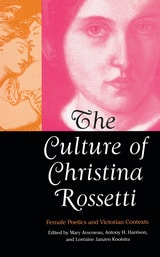
The Culture of Christina Rossetti
Female Poetics and Victorian ContextsMary Arseneau
Ohio University Press, 1999
The Culture of Christina Rossetti explores a “new” Christina Rossetti as she emerges from the scrutiny of the particular historical and cultural context in which she lived and wrote. The essays in this collection demonstrate how the recluse, saint, and renunciatory spinster of former studies was in fact an active participant in her society’s attempt to grapple with new developments in aesthetics, theology, science, economics, and politics.
The volume examines Rossetti’s poetry, fiction, and nonfiction from a variety of theoretical and critical perspectives in order to reevaluate her place in the Victorian world of art, literature, and ideas. The essays offer a radical rethinking of her best-known poems, retrieve neglected works, establish the diversity of her writing, and reposition Rossetti within a canon continually under formation.
Contributing to the ongoing retrieval of the nineteenth-century woman poet, The Culture of Christina Rossetti highlights Rossetti’s responses to both male and female literary traditions and explores her incorporation and revision of literary influences from medieval Italian sources to contemporary writers.
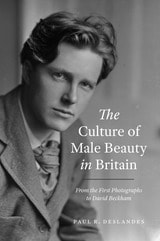
The Culture of Male Beauty in Britain
From the First Photographs to David BeckhamPaul R. Deslandes
University of Chicago Press, 2021
Spanning the decades from the rise of photography to the age of the selfie, this book traces the complex visual and consumer cultures that shaped masculine beauty in Britain, examining the realms of advertising, health, pornography, psychology, sport, and celebrity culture. Paul R. Deslandes chronicles the shifting standards of male beauty in British culture—from the rising cult of the athlete to changing views on hairlessness—while connecting discussions of youth, fitness, and beauty to growing concerns about race, empire, and degeneracy. From earlier beauty show contestants and youth-obsessed artists, the book moves through the decades into considerations of disfigured soldiers, physique models, body-conscious gay men, and celebrities such as David Beckham and David Gandy who populate the worlds of television and social media.
Deslandes calls on historians to take beauty and gendered aesthetics seriously while recasting how we think about the place of physical appearance in historical study, the intersection of different forms of high and popular culture, and what has been at stake for men in “looking good.”
The Cut of His Coat
Men, Dress, and Consumer Culture in Britain, 1860–1914Brent Shannon
Ohio University Press, 2006
The English middle class in the late nineteenth century enjoyed an increase in the availability and variety of material goods. With that, the visual markers of class membership and manly behavior underwent a radical change. In The Cut of His Coat: Men, Dress, and Consumer Culture in Britain, 1860–1914, Brent Shannon examines familiar novels by authors such as George Eliot, Anthony Trollope, Thomas Hughes, and H. G. Wells, as well as previously unexamined etiquette manuals, period advertisements, and fashion monthlies, to trace how new ideologies emerged as mass-produced clothes, sartorial markers, and consumer culture began to change.
While Victorian literature traditionally portrayed women as having sole control of class representations through dress and manners, Shannon argues that middle-class men participated vigorously in fashion. Public displays of their newly acquired mannerisms, hairstyles, clothing, and consumer goods redefined masculinity and class status for the Victorian era and beyond.
The Cut of His Coat probes the Victorian disavowal of men’s interest in fashion and shopping to recover men’s significant role in the representation of class through self-presentation and consumer practices.
The Daily Lives of the Anglo-Saxons
Carole Biggam
Arizona Center for Medieval and Renaissance Studies, 2017
Insights into the lives of any group of historical people are provided by three main types of evidence: their language, their literature and their material culture. The contributors to this volume draw on all three types of evidence in order to present new research into the lives of the Anglo-Saxons. The particular focus is on daily life – the ordinary rather than the extraordinary, the normal rather than the exceptional. Rather than attempting an overview, the essays address individual scenarios in greater depth, but with an emphasis on shared experience.
The following scholars have contributed essays to this collection:
Martha Bayless
University of Oregon
Carole P. Biggam
University of Glasgow
Paul Cavill
University of Nottingham
Amy W. Clark
University of California, Berkeley
James Graham-Campbell
University College London
Antonina Harbus
Macquarie University, Sydney
Carole Hough
University of Glasgow
Daria Izdebska
Liverpool Hope University
Karen Louise Jolly
University of Hawai‘i at Mānoa
Alexandra Lester-Makin
University of Manchester
Elisabeth Okasha
University College, Cork
Phyllis Portnoy
University of Manitoba
Jane Roberts
University of London
The Darkened Room
Women, Power, and Spiritualism in Late Victorian EnglandAlex Owen
University of Chicago Press, 2004
The hugely popular spiritualist movement, which maintained that women were uniquely qualified to commune with spirits of the dead, offered female mediums a new independence, authority, and potential to undermine conventional class and gender relations in the home and in society.
Using previously unexamined sources and an innovative approach, Alex Owen invokes the Victorian world of darkened séance rooms, theatrical apparitions, and moving episodes of happiness lost and regained. She charts the struggles between spiritualists and the medical and legal establishments over the issue of female mediumship, and provides new insights into the gendered dynamics of Victorian society.

The Dawn of Green
Manchester, Thirlmere, and Modern EnvironmentalismHarriet Ritvo
University of Chicago Press, 2009
The Demon and the Damozel
Dynamics of Desire in the Works of Christina Rossetti and Dante Gabriel RossettiSuzanne M. Waldman
Ohio University Press, 2008
The Dilemma of Style
Architectural Ideas from the Picturesque to the PostmodernJ. Mordaunt Crook
University of Chicago Press, 1987
This challenging book confronts one of the central problems of architectural theory: the nature—and necessity—of style.
The Disappearance of Sherlock Holmes
Larry Millett
University of Minnesota Press, 2012
SHERLOCK HOLMES DISAPPEARS, POLICE SUSPECT FAMED DETECTIVE IN KIDNAPPING AND MURDER reads a New York headline. So begins the fifth mystery in Larry Millett’s series.
A letter, written in a secret cipher he recognizes all too well, reveals that an old foe of Holmes—a murderer he once captured after an incredible duel of wits—is back, has kidnapped his previous victim’s widow, and is now impersonating Holmes himself. Holmes must once again match wits with a particularly cunning adversary, one whose hatred of Holmes has seemingly become the killer’s single greatest obsession.
Chasing the kidnapper from London to New York to Chicago, Holmes and Watson race to keep up. Every move Holmes makes is expected; every trap proves elusive. Only with the assistance of his American cohort, the saloonkeeper Shadwell Rafferty, can Holmes hope to settle the score once and for all—or be framed for the crime himself.
The Diversity Bargain
And Other Dilemmas of Race, Admissions, and Meritocracy at Elite UniversitiesNatasha Warikoo
University of Chicago Press, 2016
What Warikoo uncovers—talking with both white students and students of color at Harvard, Brown, and Oxford—is absolutely illuminating; and some of it is positively shocking. As she shows, many elite white students understand the value of diversity abstractly, but they ignore the real problems that racial inequality causes and that diversity programs are meant to solve. They stand in fear of being labeled a racist, but they are quick to call foul should a diversity program appear at all to hamper their own chances for advancement. The most troubling result of this ambivalence is what she calls the “diversity bargain,” in which white students reluctantly agree with affirmative action as long as it benefits them by providing a diverse learning environment—racial diversity, in this way, is a commodity, a selling point on a brochure. And as Warikoo shows, universities play a big part in creating these situations. The way they talk about race on campus and the kinds of diversity programs they offer have a huge impact on student attitudes, shaping them either toward ambivalence or, in better cases, toward more productive and considerate understandings of racial difference.
Ultimately, this book demonstrates just how slippery the notions of race, merit, and privilege can be. In doing so, it asks important questions not just about college admissions but what the elite students who have succeeded at it—who will be the world’s future leaders—will do with the social inequalities of the wider world.
The Doom of the Great City; Being the Narrative of a Survivor, Written A.D. 1942
William Delisle Hay
West Virginia University Press, 2025
The End of the House of Alard
Sheila Kaye-Smith
Catholic University of America Press, 2022
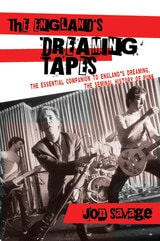
The England’s Dreaming Tapes
Jon Savage
University of Minnesota Press, 2010
Here is the story of a generation that changed the world in just a few months in 1976, as told by the scene's major figures: all four original Sex Pistols as well as Joe Strummer, Chrissie Hynde, Jordan, Siouxsie Sioux, Viv Albertine, Adam Ant, Lee Black Childers, Howard Devoto, Pete Shelley, Syl Sylvain, Debbie Wilson, Tony Wilson, Jah Wobble, and many others. Together, they offer a sweeping history of the late 1960s and the 1970s-not just the era's music, but also its radical politics, social issues, fashion, and culture.
An invaluable source of information about a movement that has become obscured by myth, these vivid, unvarnished interviews were conducted when punk was only a decade old. In many cases, this was the first time that the subjects had talked about the period. The interviews describe the founding of the Sex Pistols; 430 King's Road, site of the legendary boutique Sex, which helped establish the punk aesthetic; punk rock New York; the cultural landscapes of London and its suburbs; the writers who covered punk; and the Manchester music scene centered around Factory Records.
With The England's Dreaming Tapes, Savage gives us the first and final word on the music, fashion, and attitude that defined this influential and incendiary era.
The English House, 1860-1914
The Flowering of English Domestic ArchitectureGavin Stamp and André Goulancourt
University of Chicago Press, 1986
Stamp suggests that the characteristic features of British domestic design in this era were symbolic and interpretive as well as functional. Reacting against modern industrialism and materialism, Victorian builders, in tandem with the Arts and Crafts Movement in Britain, revived vernacular traditions. Emphasis was placed on the proper use of building materials found locally and on elements that would later recur in the American Prairie House: the heavy pitched roof and the oversized and centrally placed chimney and fireplace. A number of domestic styles that emerged during this period, such as the Shingle style and the Queen Anne style, were imported by American architects and clients who shared the Victorian reverence for home, privacy, and the family unit.
In addition to the interpretive text and catalog of eighty-seven buildings, The English House, 1860-1914 includes brief biographies of the sixty-three architects represented, including Pugin, Butterfield, Street, and Prior. Historians of both English and American architecture, as well as practicing architects and critics, will welcome this comprehensive volume.

The English Virtuoso
Art, Medicine, and Antiquarianism in the Age of EmpiricismCraig Ashley Hanson
University of Chicago Press, 2009
At the heart of this profoundly interdisciplinary study lies the Royal Society of London for the Improvement of Natural Knowledge, which from its founding in 1660 served as the major professional organization for London’s leading physicians, many of them prominent virtuosi. Craig Ashley Hanson reveals that a vital art audience emerged from the Royal Society—whose members assembled many of the period’s most important nonaristocratic collections—a century before most accounts date the establishment of an institutional base for the arts in England. Unearthing the fascinating stories of an impressive cast of characters, Hanson establishes a new foundation for understanding both the relationship between British art and science and the artistic accomplishments of the late eighteenth and nineteenth centuries.
The Ethics of Space
Homelessness and Squatting in Urban EnglandSteph Grohmann
HAU, 2020
Set against the backdrop of economic crisis, austerity, and a disintegrating British state, Steph Grohmann tells the story of a flourishing squatter community in the city of Bristol and how it was eventually outlawed by the state. The first ethnography of homelessness done by a researcher who was formally homeless throughout fieldwork, this volume explores the intersection between spatial existence, subjectivity, and ethics. The result is a book that rethinks how ethical views are shaped and constructed through our own spatial existences.
The Experimental Fire
Inventing English Alchemy, 1300–1700Jennifer M. Rampling
University of Chicago Press, 2020
In medieval and early modern Europe, the practice of alchemy promised extraordinary physical transformations. Who would not be amazed to see base metals turned into silver and gold, hard iron into soft water, and deadly poison into elixirs that could heal the human body? To defend such claims, alchemists turned to the past, scouring ancient books for evidence of a lost alchemical heritage and seeking to translate their secret language and obscure imagery into replicable, practical effects.
Tracing the development of alchemy in England over four hundred years, from the beginning of the fourteenth century to the end of the seventeenth, Jennifer M. Rampling illuminates the role of alchemical reading and experimental practice in the broader context of national and scientific history. Using new manuscript sources, she shows how practitioners like George Ripley, John Dee, and Edward Kelley, as well as many previously unknown alchemists, devised new practical approaches to alchemy while seeking the support of English monarchs. By reconstructing their alchemical ideas, practices, and disputes, Rampling reveals how English alchemy was continually reinvented over the space of four centuries, resulting in changes to the science itself. In so doing, The Experimental Fire bridges the intellectual history of chemistry and the wider worlds of early modern patronage, medicine, and science.
The Experimental Self
Humphry Davy and the Making of a Man of ScienceJan Golinski
University of Chicago Press, 2016
In The Experimental Self, Golinski argues that Davy’s life is best understood as a prolonged process of self-experimentation. He follows Davy from his youthful enthusiasm for physiological experiment through his self-fashioning as a man of science in a period when the path to a scientific career was not as well-trodden as it is today. What emerges is a portrait of Davy as a creative fashioner of his own identity through a lifelong series of experiments in selfhood.

The Fallen Angel
Chastity, Class and Women's Reading, 1835–1880Sally Mitchell
University of Wisconsin Press, 1981
This book discusses the figure of the unchaste woman in a wide range of fiction written between 1835 and 1880; serious novels by Dickens, Mrs. Gaskell, Meredith, and George Eliot; popular novels that provided light reading for middle-class women (including books by Dinah Craik, Rhoda Broughton, and Ouida); sensational fiction; propaganda for social reform; and stories in cheap periodicals such as the Family Herald and the London Journal, which reached a different and far wider audience than either serious or popular novels.
The Farther Adventures of Robinson Crusoe
The Stoke Newington EditionMaximillian E. Novak
Bucknell University Press, 2022
Published by Bucknell University Press. Distributed worldwide by Rutgers University Press.
The Friend
Alan Bray
University of Chicago Press, 2003
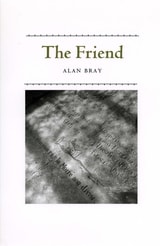
There was a time, as made clear by this monument, when the English church not only revered such relations between men, but also blessed them. Taking this remarkable idea as its cue, The Friend explores the long and storied relationship between friendship and the traditional family of the church in England. This magisterial work extends from the year 1000, when Europe acquired a shape that became its enduring form, and pursues its account up to the eighteenth and nineteenth centuries. Spanning a vast array of fascinating examples, which range from memorial plaques and burial brasses to religious rites and theological imagery to classic works of philosophy and English literature, Bray shows how public uses of private affection were very common in premodern times. He debunks the now-familiar readings of friendship by historians of sexuality who project homoerotic desires onto their subjects when there were none. And perhaps most notably, he evaluates how the ethics of friendship have evolved over the centuries, from traditional emphases on loyalty to the Kantian idea of moral benevolence to the more private and sexualized idea of friendship that emerged during the modern era.
Finely nuanced and elegantly conceived, The Friend is a book rich in suggestive propositions as well as eye-opening details. It will be essential reading for anyone interested in the history of England and the importance of friendship in everyday life.
History Today’s Book of the Year, 2004
“Bray’s loving coupledom is something with a proper historical backbone, with substance and form, something you can trace over time, visible and archeologicable. . . . Bray made a great contribution in helping to bring this long history to light.”— James Davidson, London Review of Books

The GEC Research Laboratories 1919-1984
Robert Clayton
The Institution of Engineering and Technology, 1989
The Gendering of Men, 1600–1750
The English PhallusThomas A. King
University of Wisconsin Press, 2004
Taking on nothing less than the formation of modern genders and sexualities, Thomas A. King develops a history of the political and performative struggles that produced both normative and queer masculinities in the seventeenth and eighteenth centuries. The result is a major contribution to gender studies, gay studies, and theater and performance history.
The Gendering of Men, 1600–1750 traces the transition from a society based on alliance, which had subordinated all men, women, and boys to higher ranked males, to one founded in sexuality, through which men have embodied their claims to personal and political privacy. King proposes that the male body is a performative production marking men’s resistance to their subjection within patriarchy and sovereignty. Emphasizing that categories of gender must come under historical analysis, The Gendering of Men explores men’s particpation in an ongoing struggle for access to a universal manliness transcending other biological and social differentials.
This is volume one of two projected volumes.