Results by title
1832 books match the query 'Essays' and 450 start with t
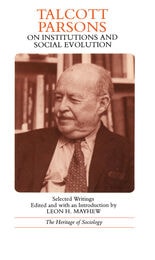
Talcott Parsons on Institutions and Social Evolution
Selected WritingsTalcott Parsons
University of Chicago Press, 1983
In his extensive introduction to this volume, Leon H. Mayhew brings a new focus and clarity to Talcott Parsons's work. Explicating Parsons on his own terms, Mayhew discusses the basic tools of Parsonian analysis and interprets the larger themes of his work. He provides a chronological account of the development of Parsons's thought, his presuppositions, and his position on the ideological spectrum of social thought.
Mayhew then presents twenty of Parsons's essays, touching on each of the major aspects of his work, including "action" theory and the celebrated four-function scheme. Other topics covered include the role of theory in social research, evolutionary universals in society, influence, control, and the mass media.
"Talcott Parsons on Institutions and Social Evolution will become a standard reference for those studying that development of his sociological ideas."—Martin Bulmer, The Times Higher Education Supplement
Talking Classics
The Shock of the OldMary Beard
University of Chicago Press, 2026
Why the ongoing fascination with the ancient world? This witty, approachable book asks why—for better or (sometimes) worse—antiquity continues to exert such a powerful hold on the contemporary imagination. Recalling a formative childhood encounter with a four-thousand-year-old piece of bread in a museum, Beard introduces the idea of thauma, or wonder, that kick-started a lifetime engaging with classics. It was not the canonical “greats” of ancient literature and art that initially drew her in, she confesses, but rather the more intimate, messy, and humdrum evidence of daily life in the remote past.
Confronting the uses and abuses of symbols of the ancient world, Beard reminds us that the traditions and “masterpieces” of Greece and Rome have certainly been politicized, but they belong to neither the left nor the right. Happily, no one owns the past. She warns us not to let a sense of reverence or overfamiliarity dampen the “shock of the old,” arguing that one of the most important things that classics teach us is how to grapple with complicated and controversial things. “The Greeks and Romans are long dead, they cannot answer back, and you can say what you like about them,” she reminds readers. “The simple fact that classics belong to none of us can offer a safe space to argue about the most difficult debates we face now.”
Beard welcomes everyone into classics. “It is not compulsory to be excited by the ancient world,” she writes. “But it can be a shame not to be.” This charming, sharp, and readable book from one of the world’s most entertaining classicists offers something for both new and established fans of classics, bringing new wonder and curiosity to even the most ancient of ideas.
Talking Classics
The Shock of the OldMary Beard
University of Chicago Press, 2026
Why the ongoing fascination with the ancient world? This witty, approachable book asks why—for better or (sometimes) worse—antiquity continues to exert such a powerful hold on the contemporary imagination. Recalling a formative childhood encounter with a four-thousand-year-old piece of bread in a museum, Beard introduces the idea of thauma, or wonder, that kick-started a lifetime engaging with classics. It was not the canonical “greats” of ancient literature and art that initially drew her in, she confesses, but rather the more intimate, messy, and humdrum evidence of daily life in the remote past.
Confronting the uses and abuses of symbols of the ancient world, Beard reminds us that the traditions and “masterpieces” of Greece and Rome have certainly been politicized, but they belong to neither the left nor the right. Happily, no one owns the past. She warns us not to let a sense of reverence or overfamiliarity dampen the “shock of the old,” arguing that one of the most important things that classics teach us is how to grapple with complicated and controversial things. “The Greeks and Romans are long dead, they cannot answer back, and you can say what you like about them,” she reminds readers. “The simple fact that classics belong to none of us can offer a safe space to argue about the most difficult debates we face now.”
Beard welcomes everyone into classics. “It is not compulsory to be excited by the ancient world,” she writes. “But it can be a shame not to be.” This charming, sharp, and readable book from one of the world’s most entertaining classicists offers something for both new and established fans of classics, bringing new wonder and curiosity to even the most ancient of ideas.
Teacher of the Logos
Essays on Origen's Rediscovered Last WorkJoseph W. Trigg
Catholic University of America Press, 2025
Teaching About Place
Learning From The LandLaird Christensen
University of Nevada Press, 2008
Teaching Lives
Essays & StoriesWendy Bishop
Utah State University Press, 1997

Teaching and Learning Design
Re:Research, Volume 1Edited by Gjoko Muratovski and Craig Vogel
Intellect Books, 2020
Opening a Design Education Pipeline from University to K-12 and Back
• Peter Scupelli, Doris Wells-Papanek, Judy Brooks, Arnold Wasserman
To prepare students to imagine desirable futures amidst current planetary-level challenges, design educators must think and act in new ways. In this paper, we describe a pilot study that illustrates how educators might teach K-12 students and university design students to situate their making within transitional times in a volatile and exponentially changing world. We describe how to best situate students to align design thinking and learning with future foresight. Here we present a pilot test and evaluate how a university-level Design Futures course content, approach, and scaffolded instructional materials – can be adapted for use in K-12 Design Learning Challenges. We describe the K-12 design-based learning challenges/experiences developed and implemented by the Design Learning Network (DLN). The Design Futures course we describe in this paper is a required course for third-year undergraduate students in the School of Design at Carnegie Mellon University. The “x” signifies a different type of design that aligns short-term action with long-term goals. The course integrates design thinking and learning with long-horizon future scenario foresight. Broadly speaking, we ask how might portions of a design course be taught and experienced by teachers and students of two different demographics: within the university (Design Undergraduates) and in K-12 (via DLN). This pilot study is descriptive in nature; in future work, we seek to assess learning outcomes across university and K-12 courses. We believe the approach described is relevant for lifelong learners (e.g., post-graduate-level, career development, transitional adult education).
Re-Clarifying Design Problems Through Questions for Secondary School Children: An Example Based on Design Problem Identification in Singapore Pre-Tertiary Design Education
• Wei Leong, Leon Loh, Hwee Mui, Grace Kwek, Wei Leong Lee
It is believed that secondary school students often define design problems in the design coursework superficially due to various reasons such as lack of exposure, inexperience and the lack of research skills. Questioning techniques have long been associated with the development of critical thinking. Based on this context and assumption, the current study aimed to explore the use of questioning techniques to enable pre-tertiary students to improve their understanding of design problems by using questions to critique their thinking and decision-making processes and in turn, generate more effective design solutions. A qualitative approach is adopted in this study to identify the trajectories of students during design problem identification and clarification process. Using student design journals as a form of record for action and thoughts, they are analyzed and supplemented by hearing survey with the teacher-in-charge. From the study, the following points can be concluded: (1) questions can be a useful tool to facilitate a better understanding of the design problem. (2) The process of identification and clarification of design problem is important in the development of critical thinking skills and social-emotional skills of the students. (3) It is important that students are given time and opportunity to find out the problems by themselves. (4) Teachers can be important role models as students may pick up questioning techniques from teacher–student discussions. (5) Departmental reviews and built-in professional development time for weekly reviews on teaching and learning strategies are necessary for the continual improvement D&T education.
Surveying Stakeholders: Research Informing Design Curriculum
• Andrea Quam
Fundamental to design education is the creation and structure of curriculum. Neither the creation of design curriculum, nor the revaluation of existing curriculum is well documented. With no clear documentation of precedent, best practices are left open to debate. This paper and presentation will discuss the use of a survey as a research tool to assess existing curriculum at Iowa State University in the United States. This tool allowed the needs and perspectives of the program’s diverse stakeholders to be better understood. Utilizing survey methods, research revealed the convergence and divergence of stakeholders’ philosophies, theories and needs in relation to design curriculum. Accreditation and professional licensing provide base level of guidelines for design curriculum in the United States. However, each program’s curricular structure beyond these guidelines is a complicated balance of resources, facilities, faculty and the type of institution in which it is housed. Once established, a program’s curriculum is rarely reassessed as a whole, but instead updated with the hasty addition of classes upon an existing curricular structure. Curriculum is infrequently re-addressed, and when it is, it is typically based on the experience and opinions of a select group of faculty. This paper presents how a survey was developed to collect data to inform curricular decision-making, enabling the reduction of faculty bias and speculation in the process. Lessons learned from the development of this research tool will be shared so it might be replicated at other institutions, and be efficiently repeated periodically to ensure currency of a program’s curriculum.
New Challenges when Teaching UX Students to Sketch and Prototype
• Joep Frens, Jodi Forlizzi, John Zimmerman
In this paper we report on new challenges when teaching User Experience (UX) students how to sketch and prototype their designs. We argue that UX students sketch and prototype differently than other design students, and we discuss how changes in the field necessitate a response in education. We describe sketching and prototyping as a continuum that students successfully traverse when they follow a process of “double loop learning.” We highlight three new challenges: (1) New computational design materials, (2) new maker tools and (3) changes within the tech industry. We explore these three challenges through examples from our students, and we outline strategies for sketching and prototyping in this new reality. We conclude that this is a starting point for further work on keeping education up to speed with practice.
How to Teach Industrial Design?: A Case Study of College Education for Design Beginners
• Joomyung Rhi
Industrial design education has existed for a long time as part of the university system, but the curriculum and contents of each subject vary considerably from school to school. In recent years, the introduction of new concepts that change the definition of design has blurred the boundaries of design, making the curriculum different. Establishing a standard curriculum to address these challenges is an important task, but it is necessary to fully understand how design education actually takes place and to share content with educators. This paper aims to contribute to the debate on industrial design education by fully disclosing the process and results of the first stage of industrial design education of a university by autobiographical method. The first course, Product Design Practice 1, is a studio class based on a task feedback iteration system. Students are required to submit assignments showing weekly progress. The instructor reviewed the assignments submitted before the class and gave written comments in class. In addition, details of the design process and method that are difficult to identify as novice students are learned through twelve case studies and applied to the project. This Task Feedback Repeating Class system gives students the opportunity to implement design ability while gaining detailed skills with a comprehensive view. Through this process, the researcher got a reflection on the class and implications for the improvement of the class.
Preliminary Study on the Learning Pressure of Undergraduate Industrial Design Students
- Wenzhi Chen
Learning pressure affects students’ learning process and performance. Industrial design education emphasizes that operations on real design problems that have heavy working loads may cause learning pressure. The purpose of this study is to explore the issues causing learning pressure and the pressure management strategies of undergraduate industrial design students. There were 297 students who participated in the questionnaire survey. The main findings are as follows: First, learning pressure includes academic pressure, peer pressure, self-expectations, time pressure, financial pressure, pressure from instructors, external pressure, future career, pressure from parents, resource pressure, achievement and situational pressure. In addition, the main learning pressure is caused by finance, time, resources, external issues and future career. Second, the pressure management strategies include problem solving, procrastination and escape, help seeking, leisure, emotional management and self-adjustment. The most useful strategy for managing pressure is leisure, and procrastination and escape is the least useful strategy. Third, all learning pressures are significantly correlated with procrastination and escape strategy, but the coefficients are low. The results can be a reference for industrial design education and related research.
Rewarding Risk: Exploring How to Encourage Learning that Comes from Taking Risks
• Dennis Cheatham
High-stakes testing that became the norm after the “No Child Left Behind Act” of 2001 helped condition students to strive for correct answers for clear problems, all on the first try. However, the iterative process inherent in designing requires risk-taking to conduct a trial-and-error process of defining problems and exploring possible solutions. This design research project was operated with Miami University Graphic Design students to test their willingness to take risks in their coursework to achieve their self-defined measures of success. Students identified that improving their skills was how they defined success. An interaction design assignment involving front-end coding was modified to test students’ comfort taking risks to grow their skills. Most students took risks in the assignment to grow their interaction design skills. The project revealed that closer attention to student motivation when developing learning experiences could help students make the transition to practicing design as an iterative process fraught with risk.
An Analysis of the Educational Value of PBL Design Workshops
• Ikjoon Chang, Suhong Hwang
The purpose of this study is to plan and operate design-workshops based on project-based learning (PBL), and examine their educational value for students. The PBL workshop encourages direct participation from students and produces educational value, and it is important to raise the interest level of workshops to elicit proactive participation. The workshop in this study was carried out over 2 weeks in January 2017 at Korea’s Yonsei University. The workshop was composed of eight teams of students from three countries, including Korea, China and Japan, and the course was primarily divided into two sessions. The workshop participants examined in this thesis were notably satisfied with the elements of the course meant to garner interest. In the questionnaire results, participants also indicated that they obtained ample educational value through the workshop. An important element of the workshop was to connect the participants with businesses, which is also an important component of design education. Despite this, participants expressed a relatively lower level of satisfaction compared to other elements of the workshop. The results and analysis of this study will hopefully become a meaningful resource for educators when designing workshops in the future.
Collaborative Design Education with Industry: Student Perspective by Reflection
- Nathan Kotlarewski, Louise Wallis, Michael Lee, Gregory Nolan, Megan Last
This study suggests that student reflection on academic and industry collaborative projects can enhance student’s understanding on the design process to solve live industry problems. It contributes to the body of design literature to support students learning of explicit and implicit knowledge. A 2017 learning by-making (LBM) unit in the School of Architecture and Design, at the University of Tasmania, Australia, developed a unit for students to collaborate with Neville Smith Forest Products Pty. Ltd (NSFP). NSFP is a local Tasmanian timber product manufacturer who currently stockpiles out-of-grade timber that has limited market applications. Undergraduate design students from second- and third-year Furniture, Interior and Architecture degrees collaborated with NSFP to value-add to their out-of-grade resource in the LBM unit. A series of design challenges, observations of industry practice and access to out-of-grade timber from NSFP exposed students to live industry problems and provided them the opportunity to build professional design skills. Students reflected on the collaborative LBM unit in a reflection journal, which was used to provide evidence of their learning experiences. The collaborative environment between academia and industry allowed students to acquire an understanding of timber product manufacturing that helped them develop empathy toward the industry problem and influence the development of new products. This study presents how student reflections influenced a change in their design process as they progressed through sequential design challenges to address an industry problem by adopting Valkenburg and Dorst reflective learning framework.
Interdisciplinary Trends in Design Education: The Analysis of Master Dissertation of College of Design and Innovation, Tongji University
• Lisha Ren, Yan Wang
This paper expounds the background of Chinese design education as well as the orientation of the design education of Tongji University in the new times, it also collects 458 Master Thesis of College of Design and Innovation during 2010–2016 as analyzed sample. Based on the coding of subject classification, quantitative analysis and content analysis are made in order to understand the interdisciplinary education status of College of Design and Innovation from the two perspectives: the overall cross-disciplinary performance and the relationship between different cross-disciplinary directions.
From ANT to Material Agency: A Design and Science Research Workshop
• Anne-Lyse Renon, A. De Montbron, Annie Gentes, Julien Bobroff
This paper studies a design workshop that investigates complex collaboration between fundamental physics and design. Our research focuses on how students create original artifacts that bridge the gap between disciplines that have very little in common. Our goal is to study the micro-evolutions of their projects. Elaborating first on Actor Network Theory we study how students’ projects evolved over time and through a diversity of inputs and media. Throughout this longitudinal study, we use then a semiotic and pragmatic approach to observe three “aesthetical formations”: translation, composition and stabilization. These formations suggest that the question of material agency developed in the field of archeology and cognitive science need to be considered in the design field to explain metamorphoses from the brief to the final realizations.

Technology's Pulse
Essays on Rhythm in German ModernismMichael Cowan
University of London Press, 2011
Technology, Pessimism, and Postmodernism
Yaron Ezrahi
University of Massachusetts Press, 1995
This collection of essays from international scholars across various disciplines addresses the compelling theme of technological pessimism—the conviction that technology has simultaneously given humanity the means to achieve unlimited progress while simultaneously providing the tools for self-destruction and the degradation of our most cherished values.
Edited by Yaron Ezrahi, Everett Mendelsohn, and Howard P. Segal, this intellectually rigorous anthology examines the paradoxes and contradictions inherent in contemporary technological society through a postmodern lens. The contributors explore how technology shapes human experience, culture, and social structures in the late twentieth century, questioning the foundational narratives of technological progress and enlightenment that have dominated Western thought.

Teleology and the Conceptual Genesis of the Modern State
Essays on the Nature of PhilosophyFrancis Slade
Catholic University of America Press, 2027
Television after TV
Essays on a Medium in TransitionLynn Spigel and Jan Olsson, eds.
Duke University Press, 2004
With historical, critical, and speculative essays by some of the leading television and media scholars, Television after TV examines both commercial and public service traditions and evaluates their dual (and some say merging) fates in our global, digital culture of convergence. The essays explore a broad range of topics, including contemporary programming and advertising strategies, the use of television and the Internet among diasporic and minority populations, the innovations of new technologies like TiVo, the rise of program forms from reality tv to lifestyle programs, television’s changing role in public places and at home, the Internet’s use as a means of social activism, and television’s role in education and the arts. In dialogue with previous media theorists and historians, the contributors collectively rethink the goals of media scholarship, pointing toward new ways of accounting for television’s past, present, and future.
Contributors. William Boddy, Charlotte Brunsdon, John T. Caldwell, Michael Curtin, Julie D’Acci, Anna Everett, Jostein Gripsrud, John Hartley, Anna McCarthy, David Morley, Jan Olsson, Priscilla Peña Ovalle, Lisa Parks, Jeffrey Sconce, Lynn Spigel, William Uricchio
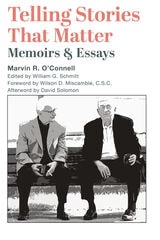
Telling Stories That Matter
Memoirs and EssaysMarvin R. O'Connell
St. Augustine's Press, 2020
In Miscamble’s thorough introduction of O’Connell, he writes that the latter “utilized his striking talents as a historian as an integral part of his fundamental vocation as a priest. [O’Connell] once described the historian as a veritable ‘midwife to our faith,’ who must capture, as best as evidence will allow, the truth of the past.” This position lends itself to the structure of this work. The first part is the sadly incomplete memoirs of Fr. O’Connell, wherein the reader meets the historian and moves with eagerness and confidence into the essays that follow. Highlights of these collected essays include thoughts on Cardinal Newman, Belloc, the Spanish Inquisition, and the historical perspective of evangelization in the United States and modernism at large. What one reads are stories that might have been lost but are here preserved in what can with all moral certainty be called truthfulness. As his friend Ralph McInerny once qualified him, O’Connell combined compassion and judgment such that his histories were always indeed primarily stories and, as the reader well knows, stories have layers and threads and are not told simply for their conclusions.
O’Connell succeeds in showing one how human history is written. Above all, he reveals that history is made by humans, but must also be remembered and deciphered by humans who cannot forego leaving their own marks and prints on everything they encounter (in memory or otherwise). The objectivity we seek can be found in one historical account alone, asserts the priest-storyteller, yet a sharp eye to the past is always consonant with a compassionate desire to understand. Bill Schmitt, Fr. Bill Miscamble and David Solomon do posterity a service by giving us this man and his masterful engagement of history. These friends of O’Connell deem the historian’s passion for truth-in-context to be foundational for shaping stories that matter, including his own.
"This artful combination of memoir and selected essays reawakens our memory of Father O'Connell in all his immense personal charm, intellectual energy, rich erudition, keen wit, and steadfast dedication to his interlocking callings as priest and historian." —J. Philip Gleason, Emeritus Professor, History Department, University of Notre Dame
"The work of a master historian, these memoirs and essays are reliable in recounting what happened, insightful in judging how and why, and eloquent in presenting it all with a flair and wit rarely equaled in historical writing. Moreover, they come forth from a Catholic faith so deep and secure that it need not be imposed on the reader. Rather, they do what good historical writing does, placing the reader into a past that can be seen and felt, recognized and understood. Whether it be his colorful accounts of the tumultuous life and times of Thomas More, or the valiant struggles of Newman and the Oxford Movement, or his own seminary training and teaching in St. Paul, or his fortunes as a graduate student at Notre Dame under the tutelage of the eminent Monsignor Phillip Hughes—whatever the topic, reading O’Connell’s history gives one the gift of being able to say, I remember that happening and I wasn’t even there!"—Michael J. Baxter, Director of Catholic Studies, Regis University in Denver
"O'Connell was a master story teller. He was not, however, just a story teller. He was painstakingly rigorous in what and how he taught. His stories always perfectly illustrated a point, but they were never a substitution for the truth--rather an illustration of it." —Bradley Birzer, Russell Amos Kirk Chair in American Studies, Hillsdale College
Templeton Science and Religion Book Series Bundle
J. Wetzel van Huysssteen
Templeton Press, 2013
The books found in the bundle are:
•Neuroscience, Psychology and Religion by Malcolm Jeeves and Warren Brown
•Technology and Religion by Noreen Herzfeld
•Horizons of Cosmology by Joseph Silk
•Paleontology by Ian Tttersall
•Cognitive Science, Religion, and Theology by Justin L. Barrett
•Ecology and the Environment by R. J. Berry
•The Language of Genetics by Denis Alexander
•Mathematics and Religion by Javier Leach
•The Templeton Science and Religion Reader
•The Templeton Science and Religion Study Guide
This bundle is only sold in e-book format!
Ten Theses for an Aesthetics of Politics
Davide Panagia
University of Minnesota Press, 2016
Ten Theses for an Aesthetics of Politics is an invitation to culture makers, political thinkers of all kinds, and everyday spectators to reconsider their love of the world of appearances. Inspired by Jacques Rancière’s Ten Theses on Politics and work by Hannah Arendt, Stanley Cavell, and Roland Barthes, Davide Panagia offers conceptual provocations that emphasize the sense of conviction one has when facing the frictions of aesthetic experience. Rooted in varied and variable experiences of border crossings, Panagia invites readers to reflect on the relational practices that appearances engender.
Forerunners: Ideas First is a thought-in-process series of breakthrough digital publications. Written between fresh ideas and finished books, Forerunners draws on scholarly work initiated in notable blogs, social media, conference plenaries, journal articles, and the synergy of academic exchange. This is gray literature publishing: where intense thinking, change, and speculation take place in scholarship.
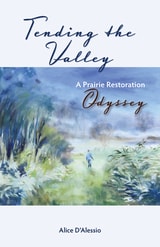
Tending the Valley
A Prairie Restoration OdysseyAlice D'Alessio
Wisconsin Historical Society Press, 2020
In Tending the Valley, Alice chronicles their efforts to return the land to its natural prairie state and to manage their oak and pine woods. Along the way they joined the land restoration movement, became involved in a number of stewardship groups, and discovered the depths of dedication and toil required to bring their dream to fruition. With hard-earned experience and the evocative language of a poet, D’Alessio shares her personal triumphs and setbacks as a prairie steward, along with a profound love for the land and respect for the natural history of the Driftless.
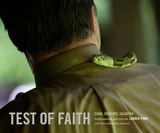
Test of Faith
Signs, Serpents, SalvationLauren Pond
Duke University Press, 2017
Who are the serpent handlers? What motivates them to continue their potentially lethal practices through the generations? Documentary photographer Lauren Pond traveled to West Virginia in search of answers to these questions. There she met Pastor Randy “Mack” Wolford, one of the best-known Signs Following preachers in the region, and spent the following year documenting Mack and his family. The course of her work changed dramatically in May 2012, when Mack, then forty-four years old, suffered a fatal rattlesnake bite during a worship service she attended. Pond photographed the events that followed and has continued her relationship with Mack’s family.
Test of Faith provides a deeply nuanced, personal look at serpent handling that not only invites greater understanding of a religious practice that has long faced derision and criticism; it also serves as a meditation on the photographic process, its ethics, and its capacity to generate empathy.
Published by Duke University Press and the Center for Documentary Studies at Duke University
Tests of Time
EssaysWilliam H. Gass
University of Chicago Press, 2003
Text and the City
Essays on Japanese ModernityMaeda Ai
Duke University Press, 2004
Maeda remapped the study of modern Japanese literature and culture in the 1970s and 1980s, helping to generate widespread interest in studying mass culture on the one hand and marginalized sectors of modern Japanese society on the other. These essays reveal the broad range of Maeda’s cultural criticism. Among the topics considered are Tokyo; utopias; prisons; visual media technologies including panoramas and film; the popular culture of the Edo, Meiji, and contemporary periods; maps; women’s magazines; and women writers. Integrally related to these discussions are Maeda’s readings of works of Japanese literature including Matsubara Iwagoro’s In Darkest Tokyo, Nagai Kafu’s The Fox, Higuchi Ichiyo’s Growing Up, Kawabata Yasunari’s The Crimson Gang of Asakusa, and Narushima Ryuhoku’s short story “Useless Man.” Illuminating the infinitely rich phenomena of modernity, these essays are full of innovative, unexpected connections between cultural productions and urban life, between the text and the city.
That Third Guy
A Comedy from the Stalinist 1930s with Essays on TheaterSigizmund Krzhizhanovsky, Translated and edited by Alisa Ballard Lin, Foreword by Caryl Emerson
University of Wisconsin Press, 2018
The volume also features selections from Krzhizhanovsky's compelling and idiosyncratic essays on Shakespeare, Pushkin, Shaw, and the philosophy of theater. Professionally, he worked with director Alexander Tairov at the Moscow Kamerny Theater, and his original philosophy of the stage bears comparison with the great theater theorists of the twentieth century. In these writings, he reflects on the space and time of the theater, the resonance of language onstage, the experience of the actor, and the relationship between the theater and the everyday. Commentary by Alisa Ballard Lin and Caryl Emerson contextualizes Krzhizhanovsky's writings.
The "Spirit of Poesy"
Essays on Jewish and German Literature and Thought in Honor of Geza von MolnarRichard Block and Peter Fenves
Northwestern University Press, 2000
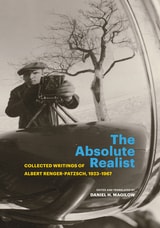
The Absolute Realist
Collected Writings of Albert Renger-Patzsch, 1923–1967Albert Renger-Patzsch
J. Paul Getty Trust, The, 2022
A towering figure in the history of photography, Albert Renger-Patzsch (1897–1966) has come to epitomize New Objectivity, the neorealist movement in modernist literature, film, and the visual arts recognized as the signature artistic style of Germany’s Weimar Republic. Today, his images are regularly exhibited and widely considered key influences on contemporary photographers. Whether they capture geometrically intricate cacti, flooded tidal landscapes, stacks of raw materials, or imposing blast furnace towers, Renger-Patzsch’s photographs embody what his peer Hugo Sieker termed “absolute realism,” an approach predicated upon the idea that photographers have one task: to exploit the camera’s unique capacity to document with uncompromising detail.
Not only a photographer, Renger-Patzsch was also an influential and lucid writer who advocated his unique brand of uncompromising realism in almost a half century’s worth of articles, essays, lectures, brochures, and unpublished manuscripts addressing photography, technology, and modernity. Drawing on his papers at the Getty Research Institute and other archives, The Absolute Realist unites in one volume this skillful photographer’s ideas about the defining visual medium of modernity.
The Abstract Wild
Jack Turner
University of Arizona Press, 1996
How wild is wilderness and how wild are our experiences in it, asks Jack Turner in the pages of The Abstract Wild. His answer: not very wild. National parks and even so-called wilderness areas fall far short of offering the primal, mystic connection possible in wild places. And this is so, Turner avows, because any managed land, never mind what it's called, ceases to be wild. Moreover, what little wildness we have left is fast being destroyed by the very systems designed to preserve it.
Natural resource managers, conservation biologists, environmental economists, park rangers, zoo directors, and environmental activists: Turner's new book takes aim at these and all others who labor in the name of preservation. He argues for a new conservation ethic that focuses less on preserving things and more on preserving process and "leaving things be." He takes off after zoos and wilderness tourism with a vengeance, and he cautions us to resist language that calls a tree "a resource" and wilderness "a management unit."
Eloquent and fast-paced, The Abstract Wild takes a long view to ask whether ecosystem management isn't "a bit of a sham" and the control of grizzlies and wolves "at best a travesty." Next, the author might bring his readers up-close for a look at pelicans, mountain lions, or Shamu the whale. From whatever angle, Turner stirs into his arguments the words of dozens of other American writers including Thoreau, Hemingway, Faulkner, and environmentalist Doug Peacock.
We hunger for a kind of experience deep enough to change our selves, our form of life, writes Turner. Readers who take his words to heart will find, if not their selves, their perspectives on the natural world recast in ways that are hard to ignore and harder to forget.
The Advice King Anthology
Chris Crofton
Vanderbilt University Press, 2022
If you are looking for traditional advice, this might not be the book for you. But if you care to find the incendiary, subversive, and hilarious alongside actual thoughts about addiction, depression, gentrification, politics, poetry, music, economic policy, living in New Nashville, and (inevitably) romance, the Advice King has much to offer.
The Advice King Anthology
Chris Crofton
Vanderbilt University Press, 2022
The African Genius
Basil Davidson
Ohio University Press, 2004
The African Genius presents the ideas, social systems, religions, moral values, arts, and metaphysics of a range of African peoples. Basil Davidson points toward the Africa that might emerge from an ancient civilization that was overlaid and battered by colonialism, then torn apart by the upheaval of colonialism’s dismantlement. Davidson disputes the notion that Africa gained under colonialism by entering the modern world. He sees, instead, an ancient order replaced by modern dysfunction. Davidson’s depiction of the sophisticated “native genius” that has carried Africans through centuries of change is vital to an understanding of modern Africa as well.
The Aftermath of War
Jean-Paul Sartre
Seagull Books, 2008

The Allegorical Epic
Essays in its Rise and DeclineMichael Murrin
University of Chicago Press, 1980
The Allure of Grammar
The Glamour of Angie Estes's PoetryDoug Rutledge, Editor
University of Michigan Press, 2019
In addition to presenting an overview of critical reactions to Estes’s oeuvre, reviews by Langdon Hammer, Julianne Buchsbaum, and Christopher Spaide also provide a helpful context for approaching a poet who claims to distrust narrative. Original essays consider the craft of Estes’s poetry and offer literary analysis. Ahren Warner uses line breaks to explore a postmodern analysis of Estes’s work. Mark Irwin looks at her poetic structure. Lee Upton employs a feminist perspective to explore Estes’s use of italics, and B. K. Fischer looks at the way she uses dance as a poetic image. Doug Rutledge considers her relationship to Dante and to the literary tradition through her use of ekphrasis. An interview with Estes herself, in which she speaks of a poem as an “arranged place . . . where experience happens,” adds her perspective to the mix, at turns resonating with and challenging her critics.
The Allure of Grammar will be useful for teachers and students of creative writing interested in the craft of non-narrative poetry. Readers of contemporary poetry who already admire Estes will find this collection insightful, while those not yet familiar with her work will come away from these essays eager to seek out her books.
The American Sonnet
An Anthology of Poems and EssaysDora Malech
University of Iowa Press, 2023
Contributor List: Essayists
Abdul Ali, Baltimore, MD
Anna Lena Phillips Bell, University of North Carolina, Wilmington
Jodie Childers, Queens, New York
Benjamin Crawford, University of Alabama
Meg Day, Franklin and Marshall College
Donna Denizé, St. Albans School
Michael Dumanis, Bennington College
Jordan Finkin, Hebrew Union College
Rebecca Morgan Frank, Northwestern University
Anna Maria Hong, Mount Holyoke College
Gillian Huang-Tiller, University of Virginia, Wise
Walt Hunter, Clemson University
John James, University of California, Berkeley
Matthew Kilbane, University of Notre Dame
Diana Leca, University of Oxford
Ariel Martino, Colgate University
Nate Mickelson, New York University
Lisa L. Moore, University of Texas at Austin
Timo Müller, University of Konstanz, Germany
Carl Phillips, Washington University in St. Louis
Zoë Pollak, Columbia University
Jonathan F.S. Post, UCLA
Stephen Regan, Durham University, UK
Jahan Ramazani, University of Virginia
Hollis Robbins, University of Utah
Nathan Spoon, Joelton, TN
Marlo Starr, Wittenberg University
Yuki Tanaka, Hosei University, Japan
Tess Taylor, Ashland University
Michael Theune, Illinois Wesleyan University
Eleanor Wakefield, University of Oregon
Lesley Wheeler, Washington and Lee University
Jon Woodson, Howard University emeritus
Contributors List: Poets
Elizabeth Alexander, Agha Shahid Ali, Julia Alvarez, Maggie Anderson, Tacey Atsitty, Charles Bernstein, Ted Berrigan, Jen Bervin, Elizabeth Bishop, Louise Bogan, Ruth Muskrat Bronson, Gwendolyn Brooks, Jericho Brown, Lucille Clifton, Henri Cole, Wanda Coleman, Countee Cullen, William Cullen Bryant, E.E. Cummings, Meg Day, Natalie Diaz, Paul Laurence Dunbar, Alice Moore Dunbar-Nelson, Ralph Waldo Emerson, Rhina Espaillat, Tarfia Faizullah, Robert Frost, torrin a. greathouse, Marilyn Hacker, Robert Hayden, Terrance Hayes, Anthony Hecht, Lynn Hejinian, Leslie Pinckney Hill, Anna Maria Hong, Langston Hughes, David Humphreys, Helen Hunt Jackson, Tyehimba Jess, Helene Johnson, James Weldon Johnson, June Jordan, Douglas Kearney, Richard Kenney, Joan Larkin, Emma Lazarus, Mani Levb, Amy Lowell, Robert Lowell, Nate Marshall, Bernadette Mayer, George Marion McClellan, Brandy Nalani McDougall, Claude McKay, Joyelle McSweeney, Lo Kwa Mei-en, James Merrill, Phillip Metres, Edna St. Vincent Millay, Simone Muench, Marilyn Nelson, Craig Santos Perez, Carl Phillips, Sylvia Plath, Alexander Posey, Lizette Woodworth Reese, Adrienne Rich, Lola Ridge, Muriel Rukeyeser, Kay Ryan, Diane Seuss, Fradel Shtok, Aaron Shurin, giovanni singleton, Patricia Smith, Mary Ellen Solt, Nathan Spoon, Gertrude Stein, Adrienne Su, Lorenzo Thomas, Dunstan Thompson, Natasha Tretheway, Fredrick Goddard Tuckerman, Mona Van Duyn, Ellen Bryant Voight, Margaret Walker, Lucian B. Watkins, Phillis Wheatley, John Wheelwright, Jackie K. White, Walt Whitman, James Wright, Elinor Wylie
The Americanization of the Global Village
Essays in Comparative Popular CultureRoger Rollin
University of Wisconsin Press, 1989
This collection of essays taken from a series of papers given at the Popular Culture division of the MLA convention in 1987 consists of a serious investigation of Popular Culture and in simplest terms investigates what people do and why they do it. Rolin's collection deals with the national identity of consumer countries and comes to grips with the fact that the consumption of foreign products could generate emoions of disjunction and displacement.
The Ancient Order of Things
Essays on the Mormon TempleChristian Larsen
Signature Books, 2019
Christian Larsen has assembled a collection of essays that illuminate the role of the temple and its rocky relationship with controversial subjects such as race and marriage. Some temples were built, abandoned, and given new life; others were either constructed for temporary use or never built at all. The nature of LDS temple ordinances is such that what LDS members deem sacred, others dismiss as secret.
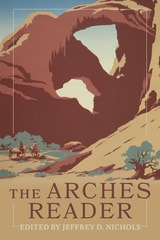
The Arches Reader
Edited by Jeffrey D. Nichols
University of Utah Press, 2024
Part of the National Park Readers series, The Arches Reader is an anthology of writing about Arches National Park and the surrounding area. The selections range from creative nonfiction to short fiction to poetry to amateur versions of scientific reports; they are wide-ranging and have never before been collected in one place; several selections are previously unpublished. Photographs collected here include both historic black-and-white images and beautiful, full-color images of some of Arches’ most striking features. The Arches Reader is an essential companion for anyone who wants to better understand its unique natural and human past.
The Architecture of the Screen
Essays in Cinematographic SpaceGraham Cairns
Intellect Books, 2013
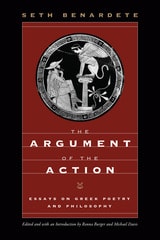
The Argument of the Action
Essays on Greek Poetry and PhilosophySeth Benardete
University of Chicago Press, 2000
This volume brings together Seth Benardete’s studies of Hesiod, Homer, and Greek tragedy, eleven Platonic dialogues, and Aristotle’s Metaphysics.
The Argument of the Action spans four decades of Seth Benardete’s work, documenting its impressive range. Benardete’s philosophic reading of the poets and his poetic reading of the philosophers share a common ground, guided by the key he found in the Platonic dialogue: probing the meaning of speeches embedded in deeds, he uncovers the unifying intention of the work by tracing the way it unfolds through a movement of its own. Benardete’s original interpretations of the classics are the fruit of this discovery of the “argument of the action.”
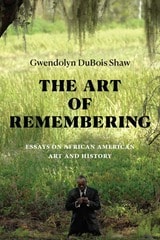
The Art of Remembering
Essays on African American Art and HistoryGwendolyn DuBois Shaw
Duke University Press, 2024
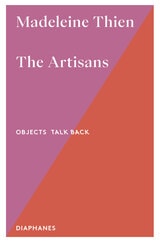
The Artisans
Madeleine Thien
Diaphanes, 2025
Canadian writer Madeleine Thien reflects on a fragment of a mural depicting Three Uighur Princes from one of the Bezeklik Caves along the Northern Silk Road, in what is now the Xinjiang Uighur Autonomous Region of China. This most renowned donor portrait of Uighur-Buddhist art was brought to the Berlin museums following the Second German Turfan Expedition (1904–5). Thien responds to its vibrant colors and expressive lines with a literary text, transporting us into the daily lives of the painters who adorned the caves with strikingly lifelike murals in the tenth century.
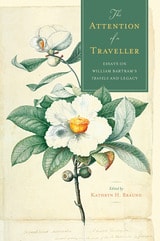
The Attention of a Traveller
Essays on William Bartram's "Travels" and LegacyEdited by Kathryn H. Braund
University of Alabama Press, 2022
An interdisciplinary reevaluation of William Bartram’s Travels, illuminating the natural, cultural, and intellectual landscapes of the eighteenth‑century Southeast through diverse scholarly lenses.
William Bartram, author of Travels through North and South Carolina, Georgia, East and West Florida, the Cherokee Country, the Extensive Territories of the Muscogulees, or Creek Confederacy, and the Country of the Chactaws, was colonial America’s first native born naturalist and artist, and the first author in the modern genre of writers who portrayed nature through personal experience as well as scientific observation. His book, first published in 1791, was based on his journeys through southern Indian nations and Britain’s southern colonies in the years just prior to the American Revolution and provides descriptions of the natural and cultural environments of what would soon become the American South. Scholars and general readers alike have long appreciated Bartram’s lush, vivid prose, his clarity of observation and evident wonder at the landscapes he traversed, and his engagement with the native nations whose lands he traveled through.
The Attention of a Traveller: Essays on William Bartram’s “Travels” and Legacy offers an interdisciplinary assessment of Bartram’s influence and evolving legacy, opening new avenues of research concerning the flora, fauna, and people connected to Bartram and his writings. Featuring 13 essays divided into five sections, contributors to the volume weave together scholarly perspectives from geology, art history, literary criticism, geography, and philosophy, alongside the more traditional Bartram-affiliated disciplines of biology and history. The collection concludes with a comprehensive treatment of the book as a material historical artifact.
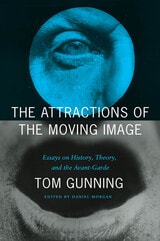
The Attractions of the Moving Image
Essays on History, Theory, and the Avant-GardeTom Gunning
University of Chicago Press, 2025
Tom Gunning is the author of multiple books and nearly two hundred essays that have defined the field of cinema and media studies. His works have transformed our understanding of early cinema and the American avant-garde and reset the terms of many central debates in film and media history and theory. His 1986 essay “The Cinema of Attractions” is among the most cited essays on film ever published. Gunning’s writings articulate a distinctive and powerful model for thinking about cinema’s history and likely future, addressing the full range of moving-image media, from film to still photography to digital media. His discussions draw on stage melodrama and magic lantern shows, as well as criminology, world’s fairs, and Spiritualism, surveying the medium as a cultural phenomenon informed by the industrial and information ages, psychiatry, urban experience, discourses on art and aesthetics, and more.
This collection brings together twenty-six essays that showcase the depth and range of Gunning’s scholarship, including four that have never before been published. Together, they solidify Gunning’s place as a scholar who has transformed the way generations of scholars, archivists, critics, and artists think about cinema.
The Author's Dimension
Selected EssaysChrista Wolf
University of Chicago Press, 1995
"An important publication, ably served by the editing of Alexander Stephan; the knowledgeable translation by Jan Van Heurck; and Grace Paley's sisterly introduction, which . . . claims at least the later Christa Wolf for a pacifist feminism."—Peter Demetz, New York Times
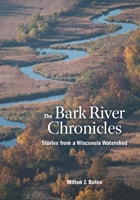
The Bark River Chronicles
Stories from a Wisconsin WatershedMilton J. Bates
Wisconsin Historical Society Press, 2012
The Bark River valley in southeastern Wisconsin is a microcosm of the state's - indeed, of the Great Lakes region's - natural and human history. "The Bark River Chronicles" reports one couple's journey by canoe from the river's headwaters to its confluence with the Rock River and several miles farther downstream to Lake Koshkonong. Along the way, it tells the stories of Ice Age glaciation, the effigy mound builders, the Black Hawk War, early settlement and the development of waterpower sites, and recent efforts to remove old dams and mitigate the damage done by water pollution and invasive species.
Along with these big stories, the book recounts dozens of little stories associated with sites along the river. The winter ice harvest, grain milling technology, a key supreme court decision regarding toxic waste disposal, a small-town circus, a scheme to link the Great Lakes to the Mississippi River by canal, the murder of a Chicago mobster, controversies over race and social class in Waukesha County's lake country, community efforts to clean up the river and restore a marsh, visits to places associated with the work of important Wisconsin writers - these and many other stories belong to the Bark River chronicles.
For the two voyageurs who paddle the length of the Bark, it is a journey of rediscovery and exploration. As they glide through marshes, woods, farmland, and cities, they acquire not only historical and environmental knowledge but also a renewed sense of the place in which they live. Maps and historical photographs help the reader share their experience.
The Barthes Effect
The Essay as Reflective TextRéda BensmaïaTranslated by Pat FedkiewForeword by Michèle H. Richman
University of Minnesota Press, 1987
The Barthes Effect was first published in 1987. Minnesota Archive Editions uses digital technology to make long-unavailable books once again accessible, and are published unaltered from the original University of Minnesota Press editions.
The author acknowledges the essay as an eccentric phenomenon in literary history, one that has long resisted entry into the taxonomy of genres, as it concentrates on four works by Roland Barthes: The Pleasure of the Text, A Lover's Discourse, Roland Barthes by Roland Barthes, and Camera Lucida. Maintains that with Barthes the essay achieves a status of its own, as reflective text.
". . . a study rigorously conscious of the critical maneuvers it executes and, more importantly, questions as critical practice . . . " Bensmaïa's strategy produces a successful investigation of the interstices and slippages of meaning which Barthes addressed in his work." SubStance
Reda Bensmaia is associate professor in the departments of French and comparative literature at the University of Minnesota, and translator Pat Fedkiew, a graduate student in French at Minnesota. Michele Richman is associate professor of French at the University of Pennsylvania and author of Reading Georges Bataille: Beyond the Gift.
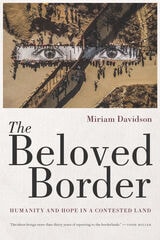
The Beloved Border
Humanity and Hope in a Contested LandMiriam Davidson
University of Arizona Press, 2021
The book draws on a variety of sources to explain how border issues intersect and how the current situation, while made worse under the Trump administration, is in fact the result of decades of prohibition, crackdowns, and wall building on the border. Davidson addresses subjects such as violence in Mexico, particularly against the press; cross-border gun smuggling and legal gun sales; the rise in migrant detentions, deportations, and deaths since the crackdown began; controversy over humanitarian aid in the desert; border patrol crimes and abuses; and the legal, ethical, and moral issues raised by increased police presence and militarization on the border. The book also looks at the environmental impact of wall building and construction of a planned copper mine near Tucson, especially on the jaguar and other endangered species.
Davidson shares the history of sanctuary and argues that this social movement and others that have originated on the border are vanguards of larger global movements against the mistreatment of migrant workers and refugees, police brutality, and other abuses of human and natural rights. She gives concrete examples of positive ways in which border people are promoting local culture and cross-border solidarity through health care, commerce, food, art, and music. While death and suffering continue to occur, The Beloved Border shows us how the U.S.-Mexico border could be, and in many ways already is, a model for peaceful coexistence worldwide.
The Benchley Roundup
A Selection by Nathaniel Benchley of his FavoritesRobert C. Benchley
University of Chicago Press, 1983
"It took me fifteen years to discover that I had no talent for writing, but I couldn't give it up because by then I was too famous."
—Robert Benchley
The Best of Bacon
Select CutsJohn U. Bacon
University of Michigan Press, 2018
From the Preface:
“I wrote these stories between 1992 and 2018. They cover a dozen different sports for a dozen different media outlets, from the Ann Arbor News to National Public Radio, and they stretch from a couple pages to a dozen. But they have one thing in common: they all meant a lot to me when I wrote them, and they still do today.”
The Best of Bacon presents both new and familiar stories by best-selling author John U. Bacon, all centered on sports in his home state of Michigan. Best known for his acclaimed books on college football, Bacon’s writing has been praised for going beyond traditional Xs and Os sports reporting. True to that reputation, this collection showcases personal, behind-the-scenes stories of players, coaches, and even fans. Many of these stories are connected to specific moments in time—a great season, the passing of a legendary broadcaster, or a star player’s daily grind before a big game—and will immediately transport readers to some of the highs (and lows) of their own sports memories. More often, Bacon’s writing explores timeless themes—why we love sports, how we pass that passion down to the next generation, and how it will be threatened or preserved in the future.
Michigan is one of the nation’s best sports states, home to countless amateur squads, two Big Ten schools, and professional teams in all four major sports whose histories reach back to the start of their leagues—something only New York, Massachusetts, and Illinois can also claim. This book covers the spectrum, from insider profiles of big names like Magic Johnson, Bo Schembechler, and Joe Louis, to cautionary tales of the debilitating greed threatening our favorite pastimes, to uplifting stories of the unsung heroes whose passion drives them to coach Little League baseball teams or run summer camps for peanuts. These stories speak to the value of sports, but also to our values. Whether a Spartan or a Wolverine, a long-suffering Lions’ backer or a diehard Wing-Nut, a lifetime sports fan or just someone who loves a good story, there is something here for everyone.
The Best of Technology Writing 2006
Brendan I. Koerner, Editor
University of Michigan Press, 2006
—James Fallows, National Correspondent for Atlantic Monthly
“The human experience is being shaped by our symbiotic relationship to technology. What makes this collection wonderful is that it’s not about the technology, per se, but it’s about this changing human experience. I will look forward to it every year.”
—Po Bronson, author of What Should I Do With My Life?
The Best of Technology Writing 2006 brings together some of the most important, timely, and just plain readable writing in the fast-paced, high-stakes field of technology. The first annual collection to target this vibrant and versatile area, The Best of Technology Writing 2006 features innovative work from an unusually diverse array of writers: best-selling authors, noted academics, and indie journalists and bloggers. The culmination of an open, on-line nominating process, this collection covers topics ranging from jetpacks, to the ethics of genetically cloned pets, to the meaning of life in the information age. By turns epic and intimate, serious and playful, The Best of Technology Writing 2006 captures the vitality, importance, and complexity of technology today. Koerner
Featuring contributions from:
digitalculturebooks is an imprint of the University of Michigan Press and the Scholarly Publishing Office of the University of Michigan Library dedicated to publishing innovative and accessible work exploring new media and their impact on society, culture, and scholarly communication. Visit the website at www.digitalculture.org.
The Best of Technology Writing 2007
Steven Levy, Editor
University of Michigan Press, 2007
The year’s best writing on tech: a collection as imaginative and compelling as its dynamic subject
“This book is not just an illuminating and instructive guide to our high-tech frontier. It’s also a great testimony to the power of that most ancient of technologies, the written word.”
—Steven Johnson, author of Everything Bad is Good for You
Together the essays in The Best of Technology Writing 2007 capture the versatility and verve of technology writing today. Solicited through an open online nominating process, these pieces explore a wide range of intriguing topics—from “crowdsourcing” to the online habits of urban moms to the digital future of movie production. The Best of Technology Writing 2007 will appeal to anyone who enjoys stellar writing.
Steven Levy is a Senior Editor at Newsweek, where he writes the biweekly column “The Technologist.” One of the most acclaimed and versatile technology writers in the country, Levy has written six books, including The Perfect Thing (about Apple’s iPod) and Hackers, which PC Magazine’s readers voted the best sci-tech book written in the last twenty years. He has written for many publications, including the New Yorker, the New York Times Magazine, Rolling Stone, and Wired.
Featuring contributions from
Kevin Berger
Paul Boutin
Kiera Butler
Joshua Davis
Julian Dibbell
Matt Gaffney
Lori Gottlieb
John Gruber
Jeff Howe
Kevin Kelly
Jaron Lanier
Preston Lerner
Farhad Manjoo
Justin McElroy
Ben McGrath
Katharine Mieszkowski
Emily Nussbaum
Jeffrey M. O’Brien
Larry O’Brien
The Onion
Adam L. Penenberg
John Seabrook
Philip Smith
Aaron Swartz
Clive Thompson
Jeffrey R. Young
digitalculturebooks is an imprint of the University of Michigan Press and the Scholarly Publishing Office of the University of Michigan Library dedicated to publishing innovative and accessible work exploring new media and their impact on society, culture, and scholarly communication. Visit the website at www.digitalculture.org.
The Best of Technology Writing 2008
Clive Thompson, Editor
University of Michigan Press, 2008
"No one covers technology with more insight or panache than Clive Thompson. I can't imagine anyone better qualified to curate this fascinating series."
---Chris Anderson, editor in chief of Wired magazine and author of The Long Tail
"Editor Clive Thompson suggests we are in a ‘golden age of technology journalism.' Reading this collection, one suspects he is right---it sparkles with beautifully written narratives not only about what technology can do for us but what it does to us as people, to our ways of thinking about ourselves, our relationships, and how we envisage our world."
---Sherry Turkle, Director, MIT Initiative on Technology and Self, Massachusetts Institute of Technology
The Best of Technology Writing 2008 proves that technology writing is a bona fide literary genre with some of the most stylish, compelling, and just plain readable work in journalism today.
The third volume in this annual series, The Best of Technology Writing 2008 covers a fascinating mix of topics---from a molecular gastronomist's recipe for the perfect gin and tonic; to "the Mechanism," an ancient Greek artifact that might be the world's first laptop computer; to social media, privacy, and what is possibly the biggest generation gap since rock 'n' roll.
Featuring contributions from
- Ted Allen
- Michael Behar
- Caleb Crain
- Julian Dibbell
- Cory Doctorow
- David Glenn
- Thomas Goetz
- Charles Graeber
- Alex Hutchinson
- Walter Kirn
- Robin Mejia
- Emily Nussbaum
- Ben Paynter
- Jeffrey Rosen
- John Seabrook
- Cass R. Sunstein
digitalculturebooks is an imprint of the University of Michigan Press and the Scholarly Publishing Office of the University of Michigan Library dedicated to publishing innovative and accessible work exploring new media and their impact on society, culture, and scholarly communication. Visit the website at www.digitalculture.org.
The Birth of the Penitentiary in Latin America
Essays on Criminology, Prison Reform, and Social Control, 1830-1940Edited by Ricardo D. Salvatore and Carlos Aguirre
University of Texas Press, 1996
Opening a new area in Latin American studies, The Birth of the Penitentiary in Latin America showcases the most recent historical outlooks on prison reform and criminology in the Latin American context. The essays in this collection shed new light on the discourse and practice of prison reform, the interpretive shifts induced by the spread of criminological science, and the links between them and competing discourses about class, race, nation, and gender. The book shows how the seemingly clear redemptive purpose of the penitentiary project was eventually contradicted by conflicting views about imprisonment, the pervasiveness of traditional forms of repression and control, and resistance from the lower classes.
The essays are unified by their attempt to view the penitentiary (as well as the variety of representations conveyed by the different reform movements favoring its adoption) as an interpretive moment, revealing of the ideology, class fractures, and contradictory nature of modernity in Latin America. As such, the book should be of interest not only to scholars concerned with criminal justice history, but also to a wide range of readers interested in modernization, social identities, and the discursive articulation of social conflict. The collection also offers an up-to-date sampling of new historical approaches to the study of criminal justice history, illuminates crucial aspects of the Latin American modernization process, and contrasts the Latin American cases with the better known European and North American experiences with prison reform.
The Black Rock Desert
Text by William L. Fox; Photographs by Mark Klett
University of Arizona Press, 2002
The Body Can Speak
Essays on Creative Movement Education with Emphasis on Dance and DramaEdited by Annelise Mertz. Foreword by Joseph Roach
Southern Illinois University Press, 2002
Movement is our first language, our universal language. Expression of body movement is the very basis of life as the nineteen contributors to The Body Can Speak: Essays on Creative Movement Education with Emphasis on Dance and Drama attest. Students use their bodies as an instrument of expression, and movement as medium; this means investigating space, energy, time, and motion in order to gain insight into these basic principles. At the same time they gain essential awareness of the self. Such work stimulates the senses and intellect, and develops a tangible new vision to satisfy the human need for aesthetic and artistic expression.
As editor of this collection, accomplished dancer and artistic director Annelise Mertz provides both an aesthetic appreciation for creative movement education as well as practical pedagogy for incorporating dance and drama into contemporary curriculum. Mertz has assembled here a definitive body of work from fellow artists and former students that speaks to the need to actively promote art as part of education.
The book gives voice to accomplished teachers, actors, dancers, directors, authors, and choreographers who share their experiences while they address creative movement education from preschool through college. Forty-eight photographs add an illuminating visual dimension to this wealth of stimulating ideas. The Body Can Speak provides a balanced and varied mosaic, with each essay offering evidence that creative movement education is vital for human development.
Contributors include Becky Engler-Hicks, Ruth Grauert, Anna Halprin, Joanna G. Harris, Margaret N. H’Doubler, Michael Hoeye, Murray Louis, Annelise Mertz, Jaime Nisenbaum, Carol North, Jeff Rehg, Shirley Ririe, G. Hoffman Soto, Emma D. Sheehy, Harold Taylor, Branislav Tomich, Dorothy M. Vislocky, and Joan J. Woodbury.