Results by title
61 books match the query 'Expeditions & Discoveries' and 19 start with t
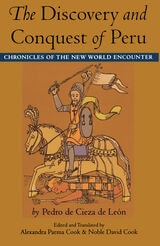
The Discovery and Conquest of Peru
Pedro de Cieza de León
Duke University Press, 1998
Alexandra Parma Cook and Noble David Cook present this recently discovered third book of a four-part chronicle that provides the most thorough and definitive record of the birth of modern Andean America. It describes with unparalleled detail the exploration of the Pacific coast of South America led by Francisco Pizarro and Diego de Almagro, the imprisonment and death of the Inca Atahualpa, the Indian resistance, and the ultimate Spanish domination.
Students and scholars of Latin American history and conquest narratives will welcome the publication of this volume.
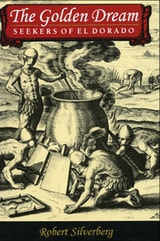
The Golden Dream
Seekers Of El DoradoRobert Silverberg
Ohio University Press, 1996
One of the most persistent legends in the annals of New World exploration is that of the Land of Gold. This mythical site was located over vast areas of South America (and later, North America); the search for it drove some men mad with greed and, as often as not, to their untimely deaths.
In this history of quest and adventure, Robert Silverberg traces the fate of Old World explorers lured westward by the myth of El Dorado. From the German conquistadores licensed by the Spanish king to operate out of Venezuela, to the journeys of Gonzalo Pizarro in the Amazon basin, and to the nearly miraculous voyage of Francisco Orellana to the mouth of the Amazon River, encountering the warlike women who gave the river its name, violence and bloodshed accompanied the determined adventurers. Sir Walter Raleigh and a host of other explorers spent small fortunes and many lives trying to locate Manoa, a city that was rumored to be El Dorado—City of Gold. Celebrated science fiction author Robert Silverberg recreates these legendary quests in The Golden Dream: Seekers of El Dorado.
The Great Ages of Discovery
How Western Civilization Learned About a Wider WorldStephen J. Pyne
University of Arizona Press, 2021
Historian and MacArthur Fellow Stephen J. Pyne identifies three great ages of discovery in his fascinating new book. The first age of discovery ranged from the early 15th to the early 18th century, sketched out the contours of the globe, aligned with the Renaissance, and had for its grandest expression the circumnavigation of the world ocean. The second age launched in the latter half of the 18th century, spanning into the early 20th century, carrying the Enlightenment along with it, pairing especially with settler societies, and had as its prize achievement the crossing of a continent. The third age began after World War II, and, pivoting from Antarctica, pushed into the deep oceans and interplanetary space. Its grand gesture is Voyager’s passage across the solar system. Each age had in common a galvanic rivalry: Spain and Portugal in the first age, Britain and France—followed by others—in the second, and the USSR and USA in the third.
With a deep and passionate knowledge of the history of Western exploration, Pyne takes us on a journey across hundreds of years of geographic trekking. The Great Ages of Discovery is an interpretive companion to what became Western civilization’s quest narrative, with the triumphs and tragedies that grand journey brought, the legacies of which are still very much with us.

The James Ford Bell Collection
A List of Additions, 1951-1954John Parker
University of Minnesota Press, 1955
The James Ford Bell Collection
A List of Additions, 1955-1959John Parker
University of Minnesota Press, 1961
The James Ford Bell Collection
A List of Additions, 1960-1964John Parker
University of Minnesota Press, 1967
The James Ford Bell Library
A List of Additions, 1965-1969John Parker
University of Minnesota Press, 1970
The Juan Pardo Expeditions
Exploration of the Carolinas and Tennessee, 1566-1568Charles Hudson. Afterword by David G. Moore, Robin A. Beck Jr., and Christopher B. Rodning
University of Alabama Press, 2005
The Land Lies Open
Theodore Blegen
University of Minnesota Press, 1949
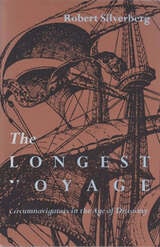
The Longest Voyage
Circumnavigators in the Age of DiscoveryRobert Silverberg
Ohio University Press, 1997
From the intense and brooding Magellan and the glamorous and dashing Sir Francis Drake; to Thomas Cavendish, who set off to plunder Spain’s American gold and the Dutch circumnavigators, whose numbers included pirates as well as explorers and merchants, Robert Silverberg captures the adventures and seafaring exploits of a bygone era.
Over the course of a century, European circumnavigators in small ships charted the coast of the New World and explored the Pacific Ocean. Characterized by fierce nationalism, competitiveness, and bloodshed, The Longest Voyage: Circumnavigators in the Age of Discovery captures the drama, danger, and personalities in the colorful story of the first voyages around the world. These accounts begin with Magellan’s unprecedented 1519–22 circumnavigation, providing an immediate, exciting, and intimate glimpse into that historic venture. The story includes frequent threats of mutiny; the nearly unendurable extremes of heat, cold, hunger, thirst, and fatigue; the fear, tedium, and moments of despair; the discoveries of exotic new peoples and strange new lands; and, finally, Magellan’s own dramatic death during a fanatical attempt to convert native Philippine islanders to Christianity.
Capturing the total context of political climate and historical change that made the Age of Discovery one of excitement and drama, Silverberg brings a motley crew of early ocean explorers vividly to life.
The Misunderstood Mission of Jean Nicolet
Uncovering the Story of the 1634 JourneyPatrick J. Jung
Wisconsin Historical Society Press, 2018
In more recent decades, historians have pieced together a story that is not only more likely but more complicated and interesting. Patrick Jung synthesizes the research about Nicolet and his superior Samuel de Champlain, whose diplomatic goals in the region are crucial to understanding this much misunderstood journey across the Great Lakes. Additionally, historical details about Franco-Indian relations and the search for the Northwest Passage provide a framework for understanding Nicolet’s famed mission.
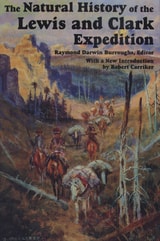
The Natural History of Lewis and Clark Expedition
Raymond Darwin Burroughs
Michigan State University Press, 1995
First published in 1961, The Natural History of the Lewis and Clark Expedition was the first work to discuss in detail the contributions to America's natural history made by the Corps of Discovery (1804-1806), or the Lewis and Clark Expedition, as it is popularly known. Raymond Darwin Burroughs tallied the quantity of game killed and consumed during the course of the expedition.
This paperback edition of Burroughs' work contains the entire original text, as well as a new introduction by Lewis and Clark scholar Robert Carriker. The major contribution of The Natural History of the Lewis and Clark Expedition was to organize and catalog the disparate discussions of animal and plant life that are scattered throughout the original journals by expedition members. These observations are presented in the explorers' words along with Burroughs's expert commentary.
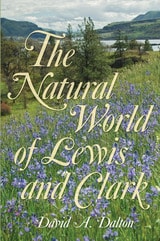
The Natural World of Lewis and Clark
David A. Dalton
University of Missouri Press, 2007
On their journey westward, Lewis and Clark demonstrated an amazing ability to identify the new plants and animals they encountered, and their observations enriched science’s understanding of the trans-Mississippi West. Others have written about their discoveries and have faithfully cataloged their findings; now a twenty-first-century biologist reexamines some of those discoveries in the light of modern science to show for the first time their lasting biological significance.
The Natural World of Lewis and Clark interprets the expedition’s findings from a modern perspective to show how advances such as DNA research, modern understanding of proteins, and the latest laboratory methods shed new light on them. David Dalton recounts the expedition’s observations and, in clear, readily accessible terms, relates them to principles of ecology, genetics, physiology, and even animal behavior.
Writing in informal language with a bit of wry humor, Dalton invites readers to imagine the West that Lewis and Clark found, revealing the dynamic features of nature and the dramatic changes that earlier peoples brought about. He explains surprising facts, ranging from why Indians used cottonwood bark as winter feed for horses to why the explorers experienced gastric distress with some foods, and even why the Expedition’s dog would have been well-advised to avoid a diet of salmon.
Dalton introduces the tools and techniques of today’s science in a way that won’t intimidate nonspecialist readers. Throughout the book he expertly balances botanical and zoological information, with coverage ranging from the extinction of large animals in North America a few thousand years ago to the expected effects of invasive species and climate change in the coming centuries.
Enhanced with unusual and informative illustrations—not only nature photography but also historical images—this book will fascinate any reader with an interest in the natural history of the American West as well as broader issues in conservation and ecology. The Natural World of Lewis and Clark tells the story behind the story of this remarkable expedition and shows that its legacy extended not only across a continent but also into our own time.
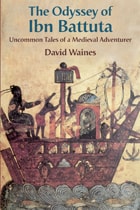
The Odyssey of Ibn Battuta
Uncommon Tales of a Medieval AdventurerDavid Waines
University of Chicago Press, 2010
Ibn Battuta was, without doubt, one of the world’s truly great travelers. Born in fourteenth-century Morocco, and a contemporary of Marco Polo, Ibn Battuta left an account in his own words of his remarkable journeys, punctuated by adventure and peril, throughout the Islamic world and beyond. Whether sojourning in Delhi and the Maldives, wandering through the mazy streets of Cairo and Damascus, or contesting with pirates and shipwreck, the indefatigable Ibn Battuta brought to vivid life a medieval world brimming with marvel and mystery. Carefully observing the great diversity of civilizations that he encountered, Ibn Battuta exhibited an omnivorous interest in such matters as food and drink; religious differences among Christians, Hindus, and Shia Muslims; and ideas about purity and impurity, disease, women, and sex.
David Waines offers here a graceful analysis of Ibn Battuta’s travelogue. This is a gripping treatment of the life and times of one of history’s most daring, and at the same time most human, adventurers.
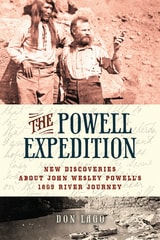
The Powell Expedition
New Discoveries about John Wesley Powell's 1869 River JourneyDon Lago
University of Nevada Press, 2017
Lago offers a feast of new and important material about the river trip, and it will significantly rewrite the story of Powell’s famous expedition. This book is not only a major work on the Powell expedition, but on the history of American exploration of the West.
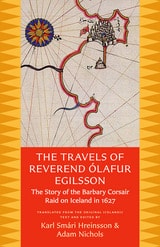
The Travels of Reverend Olafur Egilsson
Karl Smari Hreinsson
Catholic University of America Press, 2016
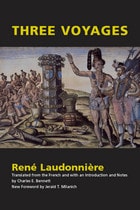
Three Voyages
Rene Laudonniere
University of Alabama Press, 2001
This translation of an eyewitness account by a major participant offers valuable information about all three attempts to establish a French colony on the south Atlantic coast of North America.
Rene Laudonniere's account of the three attempts by France to colonize what is now the United States is uniquely valuable because
he played a major role in each of the ventures—first, in 1562, as second in command during the founding of the ill-fated Charlesport, then as commander for the establishment of Fort Caroline on Florida's St. Johns River in 1564, and finally as the one to welcome French reinforcements the following year. It was also Laudonniere's destiny to witness the tragic fall of Fort Caroline to Spanish claims one month later.
Laudonniere wrote his chronicle, L'histoire Notable de la Floride, in 1565 following the fall of Fort Caroline as he recuperated in England. Much more than an account of his feelings and adventures, Laudonniere's history reveals him to be an exceedingly able and accurate geographer with a highly developed interest in anthropology.
The first English translation was published by Richard Hakluyt in 1587. Charles E. Bennett's graceful and accurate rendering in modern English was first published in 1975 by the University Press of Florida. Besides the account, thoroughly annotated and with present-day names identifying sites visited by the Frenchman, this volume includes a valuable introductory essay. The appendices to the volume are four noteworthy documents, the last of which—a guide to plants of 16th-century Florida—will be of exceptional interest to naturalists, gardeners, and students of folklore. The account itself will fascinate professional historians and anthropologists as well as general readers interested in the exciting and often moving
events of early European settlement in the New World.
Rene Laudonniere was a French adventurer and explorer of the 16th century who wrote L'histoire Notable de la Floride. Charles E. Bennett is a historian and former Florida congressman. He was coauthor of the Moss-Bennett legislation and was instrumental in the establishment of the Fort Caroline National Memorial and the Timucuan Ecological and Historical Preserve. Jerald T. Milanich is Curator in Archaeology at the Florida Museum of Natural History.
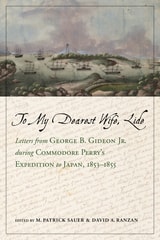
To My Dearest Wife, Lide
Letters from George B. Gideon Jr. during Commodore Perry’s Expedition to Japan, 1853–1855Edited by M. Patrick Sauer and David A. Ranzan
University of Alabama Press, 2019
George B. Gideon Jr. served as second assistant engineer aboard the USS Powhatan from 1852 to 1856. From his position on the steam frigate, Gideon traveled to Singapore, Labuan, Borneo, Hong Kong, and many other Asian lands. During his time at sea, Gideon penned dozens of letters to his wife, Lide, back home in Philadelphia. Recently discovered in the attic of his great-great-grandniece, were fifty-one letters penned by Gideon providing thorough and insightful commentary throughout the voyage.
Through these correspondences, Gideon laboriously documents the details of his daily life on board, from the food they ate to the technical aspects of his work, as well as observations concerning the historical events unfolding around him, such as Chinese piracy, the Taiping Rebellion, the Crimean War, and the devastation of Shimoda. To My Dearest Wife, Lide: Letters from George B. Gideon Jr. during Commodore Perry’s Expedition to Japan, 1853–1855 is a rare first-person account of the landmark American naval expedition to Japan to establish commercial relations between the two countries. Gideon’s letters have been meticulously transcribed and annotated by the editors and are an invaluable primary historical source.
Gideon’s letters are candid and revealing, delving into the rampant dysfunction in the navy of the 1850s—sickness and disease, alcohol abuse, and poor leadership, among other challenges. Gideon also unabashedly shares his own cynical views of the navy’s role in supporting American economic interests in Japan. This firsthand account of the political mission of the Perry expedition is a unique contribution to naval and military history and gives readers a better view of life aboard a navy ship.
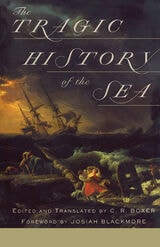
Tragic History Of The Sea
C.R. Boxer
University of Minnesota Press, 2001
Compelling stories of shipwreck, adventure, and death on the high seas, now back in print.
The sixteenth and seventeenth centuries were a time of great colonial expansion, marked by a mercantile frenzy of ships carrying merchants, aristocrats, missionaries, sailors, Inquisitors, botanists, and statesmen pursuing the spoils of empire. Among the narratives that chronicled these voyages, those of the Portuguese are unequaled. C. R. Boxer’s fascinating translations of famous Portuguese shipwreck stories detail the disasters and terrors plaguing the perilous sea trading route between Portugal and India.
In the tradition of Homer, Virgil, Shakespeare, Defoe, and Poe, these dramatic stories of shipwreck—and those who lived to tell about it—represent existence and survival pushed to the limits. They describe disastrous turns of fate and miraculous rescues, heroism and cowardice, and offer the exhilaration and sheer emotive appeal of a tale of adventure well told. Often circulated in pamphlet form, these stories recounting the dangers and terrors of storm-tossed ocean voyages and the fate of castaways in distant lands were a popular genre, rife with compelling and often gory details. This first ever paperback edition includes a new translation of the tragic tale of Captain Manuel de Sousa Sepúlveda, shipwrecked with his family on the sands of Africa in 1552, the previous English versions of which have long been unavailable. Vividly descriptive and engrossing, these tales of selfishness, cruelty, despair, pirates, mayhem, and harrowing storms will captivate readers.