Results by title
50 books match the query 'Experiments' and 4 start with t
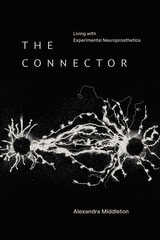
The Connector
Living with Experimental NeuroprostheticsAlexandra Middleton
Duke University Press, 2026
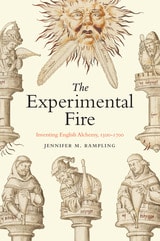
The Experimental Fire
Inventing English Alchemy, 1300–1700Jennifer M. Rampling
University of Chicago Press, 2020
In medieval and early modern Europe, the practice of alchemy promised extraordinary physical transformations. Who would not be amazed to see base metals turned into silver and gold, hard iron into soft water, and deadly poison into elixirs that could heal the human body? To defend such claims, alchemists turned to the past, scouring ancient books for evidence of a lost alchemical heritage and seeking to translate their secret language and obscure imagery into replicable, practical effects.
Tracing the development of alchemy in England over four hundred years, from the beginning of the fourteenth century to the end of the seventeenth, Jennifer M. Rampling illuminates the role of alchemical reading and experimental practice in the broader context of national and scientific history. Using new manuscript sources, she shows how practitioners like George Ripley, John Dee, and Edward Kelley, as well as many previously unknown alchemists, devised new practical approaches to alchemy while seeking the support of English monarchs. By reconstructing their alchemical ideas, practices, and disputes, Rampling reveals how English alchemy was continually reinvented over the space of four centuries, resulting in changes to the science itself. In so doing, The Experimental Fire bridges the intellectual history of chemistry and the wider worlds of early modern patronage, medicine, and science.
The Experimental Side of Modeling
Isabelle F. Peschard
University of Minnesota Press, 2018
An innovative, multifaceted approach to scientific experiments as designed by and shaped through interaction with the modeling process
The role of scientific modeling in mediation between theories and phenomena is a critical topic within the philosophy of science, touching on issues from climate modeling to synthetic models in biology, high energy particle physics, and cognitive sciences. Offering a radically new conception of the role of data in the scientific modeling process as well as a new awareness of the problematic aspects of data, this cutting-edge volume offers a multifaceted view on experiments as designed and shaped in interaction with the modeling process.
Contributors address such issues as the construction of models in conjunction with scientific experimentation; the status of measurement and the function of experiment in the identification of relevant parameters; how the phenomena under study are reconceived when accounted for by a model; and the interplay between experimenting, modeling, and simulation when results do not mesh. Highlighting the mediating role of models and the model-dependence (as well as theory-dependence) of data measurement, this volume proposes a normative and conceptual innovation in scientific modeling—that the phenomena to be investigated and modeled must not be precisely identified at the start but specified during the course of the interactions arising between experimental and modeling activities.
Contributors: Nancy D. Cartwright, U of California, San Diego; Anthony Chemero, U of Cincinnati; Ronald N. Giere, U of Minnesota; Jenann Ismael, U of Arizona; Tarja Knuuttila, U of South Carolina; Andrea Loettgers, U of Bern, Switzerland; Deborah Mayo, Virginia Tech; Joseph Rouse, Wesleyan U; Paul Teller, U of California, Davis; Michael Weisberg, U of Pennsylvania; Eric Winsberg, U of South Florida.
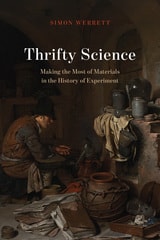
Thrifty Science
Making the Most of Materials in the History of ExperimentSimon Werrett
University of Chicago Press, 2018
Thrifty Science explores this distinctive culture of experiment and demonstrates how the values of the household helped to shape an array of experimental inquiries, ranging from esoteric investigations of glowworms and sour beer to famous experiments such as Benjamin Franklin’s use of a kite to show lightning was electrical and Isaac Newton’s investigations of color using prisms. Tracing the diverse ways that men and women put their material possessions into the service of experiment, Werrett offers a history of practices of recycling and repurposing that are often assumed to be more recent in origin. This thriving domestic culture of inquiry was eclipsed by new forms of experimental culture in the nineteenth century, however, culminating in the resource-hungry science of the twentieth. Could thrifty science be making a comeback today, as scientists grapple with the need to make their research more environmentally sustainable?