55 books match the query 'Exploring' and 7 start with t
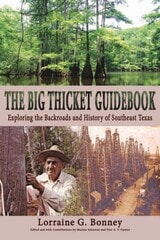
cover of The Big Thicket Guidebook: Exploring the Backroads and History of Southeast Texas

The Big Thicket Guidebook

Exploring the Backroads and History of Southeast Texas

Lorraine G. Bonney

University of North Texas Press, 2011
[more]
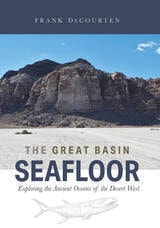
cover of The Great Basin Seafloor: Exploring the Ancient Oceans of the Desert West

The Great Basin Seafloor

Exploring the Ancient Oceans of the Desert West

Frank DeCourten

University of Utah Press, 2022

Many people appreciate the stunning vistas of the Great Basin desert; understanding the region’s geological past can provide a deeper way to know and admire this landscape. In The Great Basin Seafloor, Frank DeCourten immerses readers in a time when the Basin was covered by a vast ocean in which volcanoes exploded and sea life flourished.

Written for a nontechnical audience, this book interprets the rock record left by more than 500 million years of oceanic activity, when mud and sand accumulated and solidified to produce today’s Great Basin across parts of modern Utah, Nevada, and California. DeCourten deciphers clues within exposed slopes and canyons to reconstruct the vanished seafloor and its volcanic events and examines fossils to reveal once-thriving ancient marine communities. Supplemental material is available online to serve as a field guide for readers wishing to explore this ancient ocean themselves as they travel through the region.

[more]
cover of The House on Ipswich Marsh: Exploring the Natural History of New England

The House on Ipswich Marsh

Exploring the Natural History of New England

William Sargent

University Press of New England, 2015

In 2003, Bill Sargent bought a big pink house in Ipswich, Massachusetts. His home sits on what is known as the Great Marsh, a fascinating patch of wetland shared by Massachusetts and New Hampshire. Sargent received a grant to study some of the rare and endangered ground-nesting birds that inhabit the public land adjacent to his property. Ipswich Marsh is about these birds, but much else as well. Organized by the seasons of the year, The House on Ipswich Marsh features Sargent’s trademark interplay of information about the natural world, ecology, and politics. In “Spring,” the reader learns about the geological history of the Marsh; the migration patterns of bobolinks; the courtship flights of woodcocks; ticks and Lyme disease; the mating of horseshoe crabs and the underwater arrival of zooplankton, fish eggs, and moon jellyfish. “Summer” introduces plate tectonics and glaciers; sea level rise and glacial rebound; diving at night among lobsters and stone crabs; a day on Crane’s Beach; and a bike trip on Argilla Road. “Autumn” illuminates fishing; the natural and cultural history of Hog Island; harvest time on Appelton Farm; and a Native American Thanksgiving. “Winter” describes the formation of dunes and sandbars; the mating behavior of seals; coyote hunting deer at night; and a late-winter blizzard in which Sargent spies a red-tailed hawk, waiting, like the author, for the return of spring.
[more]
cover of The Poverty Law Canon: Exploring the Major Cases

The Poverty Law Canon

Exploring the Major Cases

Marie A. Failinger and Ezra Rosser, Editors

University of Michigan Press, 2016

The Poverty Law Canon takes readers into the lives of the clients and lawyers who brought critical poverty law cases in the United States. These cases involved attempts to establish the right to basic necessities, as well as efforts to ensure dignified treatment of welfare recipients and to halt administrative attacks on federal program benefit levels. They also confronted government efforts to constrict access to justice, due process, and rights to counsel in child support and consumer cases, social welfare programs, and public housing. By exploring the personal narratives that gave rise to these lawsuits as well as the behind-the-scenes dynamics of the Supreme Court, the text locates these cases within the social dynamics that shaped the course of litigation.
 
Noted legal scholars explain the legal precedent created by each case and set the case within its historical and political context in a way that will assist students and advocates in poverty-related disciplines in their understanding of the implications of these cases for contemporary public policy decisions in poverty programs. Whether the focus is on the clients, on the lawyers, or on the justices, the stories in The Poverty Law Canon illuminate the central legal themes in federal poverty law of the late 20th century and the role that racial and economic stereotyping plays in shaping American law.
 
[more]
cover of The Science of Synthesis: Exploring the Social Implications of General Systems Theory

The Science of Synthesis

Exploring the Social Implications of General Systems Theory

Debora Hammond

University Press of Colorado, 2003

Debora Hammond's The Science of Synthesis explores the development of general systems theory and the individuals who gathered together around that idea to form the Society for General Systems Research. In examining the life and work of the SGSR's five founding members-Ludwig von Bertalanffy, Kenneth Boulding, Ralph Gerard, James Grier Miller, and Anatol Rapoport-Hammond traces the emergence of systems ideas across a broad range of disciplines in the mid-twentieth century.

Both metaphor and framework, the systems concept as articulated by its earliest proponents highlights relationship and interconnectedness among the biological, ecological, social, psychological, and technological dimensions of our increasingly complex lives. Seeking to transcend the reductionism and mechanism of classical science-which they saw as limited by its focus on the discrete, component parts of reality-the general systems community hoped to complement this analytic approach with a more holistic orientation. As one of many systems traditions, the general systems group was specifically interested in fostering collaboration and integration among different disciplinary perspectives, with an emphasis on nurturing more participatory and truly democratic forms of social organization.

The Science of Synthesis documents a unique episode in the history of modern thought, one that remains relevant today. This book will be of interest to historians of science, system thinkers, scholars and practicioners in the social sciences, management, organization development and related fields, as well as the general reader interested in the history of ideas that have shaped critical developments in the second half of the twentieth century.
[more]
cover of The Value of Critique: Exploring the Interrelations of Value, Critique, and Artistic Labour

The Value of Critique

Exploring the Interrelations of Value, Critique, and Artistic Labour

Edited by Isabelle Graw and Christoph Menke

Campus Verlag, 2019
The Value of Critique casts its gaze on the two dominant modes of passing judgment in art—critique and value (or evaluation). The act of critique has long held sway in the world of art theory but has recently been increasingly abandoned in favor of evaluation, which advocates alternate modes of judgment aimed at finding the intrinsic “value” of a given work rather than picking apart its intentions and relative success. This book’s contributors explore the relationship between these two practices, finding that one cannot exist with the other. As soon as a critic decides an object is worthy enough of their interest and time to critique it, they have imbued that object with a certain value. Similarly, theories of value are typically marked by a critical impetus: as much as critique takes part in the construction of evaluations, bestowing something with value can then trigger critiques. Assembling essays from an international array of authors, this book is the first to put value, critique, and artistic labor in conversation with one another, making clear just how closely all three are related.
[more]
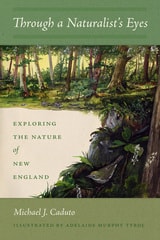
cover of Through a Naturalist's Eyes: Exploring the Nature of New England

Through a Naturalist's Eyes

Exploring the Nature of New England

Michael J. Caduto

University Press of New England, 2016

For native and visitor alike, the New England landscape has a rich allure. This grand sweep of land is a living tapestry woven of interconnected bioregions and natural communities whose compositions of plants and animals have evolved over time. In more than fifty essays, Michael J. Caduto brings readers into the complex stories to be found in nature. Drawing on first-hand experiences and reflections on the relationship between the natural world and humans, Caduto explores some of the plants, animals, natural places, and environmental issues of New England—from dragonflies, cuckoos, and chipmunks to circumpolar constellations and climate change. Stunning illustrations by Adelaide Murphy Tyrol illuminate these elegant and humorous essays.
[more]