Results by title
95 books match the query 'Fairy Tales, Folk Tales, Legends & Mythology' and 24 start with t
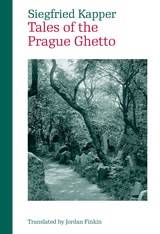
Tales of the Prague Ghetto
Siegfried Kapper
Karolinum Press, 2022
Trained in philosophy and medicine, the writer, translator, scholar, and political and cultural activist Siegfried Kapper (1821–1879) devoted significant effort to the advancement of Jewish culture in Bohemia, Jewish emancipation, and to the commitment of Jews to contemporary Czech society. The three stories in this collection, which first appeared in the press in the 1840s and were posthumously published as a collection at the end of the century, offer a Romantic and folkloric vision of Jewish culture in Prague.
The first story, “Genenda,” displays Kapper’s operatic eye for detail and drama with its account of a dutiful rabbi’s daughter being swept away by a dashing young man, a Christian nobleman disguised as a Jew. “The Curious Guest” is an intricate tale of a quest for wisdom and power. The final story, “Glowing Coals,” is a supernatural tale of romantic desire and revenge, displaying Kapper’s skill at deploying the tropes of folklore for dramatic literary effect. The collection not only provides a colorful snapshot of nineteenth-century Czech-Jewish culture but also resonates with universal human themes that transcend a single national experience.
The Adventures of Mr. Nicholas Wisdom
Ignacy Krasicki
Northwestern University Press, 1992
Winner, 1993 PEN Book-of-the-Month Club Translation Prize
Published in 1776 and considered the first Polish novel ever written, The Adventures of Mr. Nicholas Wisdom is a picaresque tale following the naïve title character's coming of age. Having conquered (and fled) sophisticated Warsaw, Nicholas enjoys many adventures across Europe, South America, and the high seas. He finally lands among the natives of an unknown isle who reject his allegedly superior European ways and instead tutor him for an "enlightened" existence. Resonant with Enlightenment ideas, The Adventures of Mr. Nicholas Wisdom provides a sly portrait of the era's Polish society and a fascinating perspective on the broader problems of eighteenth-century European culture.
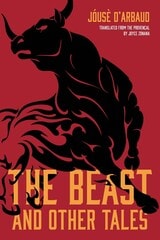
The Beast, and Other Tales
Jóusè d'Arbaud; Translated from the Provençal by Joyce Zonana
Northwestern University Press, 2020
Winner of the Global Humanities Prize
A classic of modern Provençal literature, Jóusè d’Arbaud’s 1926 masterpiece “The Beast of Vacarés” (also known as “The Beast of Vaccarès”) is a haunting parable. Set during the fifteenth century, the tale is narrated by a solitary bull herder—known as a gardian—who stumbles upon a starving creature that is half man, half goat. Terrified, the gardian is nonetheless drawn to the eloquent Beast, a dying demigod who laments the loss of his glorious past even as he wields power over the animals around him. Torn between pity and fear, unable to understand his experiences and afraid he will be condemned for heresy, the gardian records his encounters in a journal, hoping that one day readers will make sense of what he cannot.
Set in the vast, lonely landscape of the Camargue delta, where the Rhône meets the Mediterranean, The Beast seamlessly melds fantasy with naturalistic detail about the region’s flora and fauna. Three additional stories—“The Caraco,” “Pèire Guilhem’s Remorse,” and “The Longline”—explore the lives of twentieth-century gardians in the region. Each man succumbs to fears and social pressure, tragically losing what he most loves.
The Bird Who Cleans the World and Other Mayan Fables
Victor Montejo
Northwestern University Press, 1995
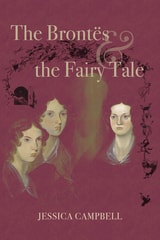
The Brontës and the Fairy Tale
Jessica Campbell
Ohio University Press, 2024
Scholars have long characterized the fairy tale as a form with tremendous power to influence cultures and individuals. The late twentieth century saw important critical work revealing the sinister aspects of that power, particularly its negative effects on female readers. But such an approach can inadvertently reduce the history of the fairy tale to a linear development from the “traditional” tale (pure, straight, patriarchal, and didactic) to the “postmodern” tale (playful, sophisticated, feminist, and radical). Campbell joins other contemporary scholars in arguing that the fairy tale has always been a remarkably elastic form, allowing writers and storytellers of all types to reshape it according to their purposes.
The Brontës are most famous today for Jane Eyre and Wuthering Heights, haunting novels that clearly repurpose fairy tales and folklore. Campbell’s book, however, reveals similar repurposing throughout the entire Brontë oeuvre. The Brontës and the Fairy Tale is recursive: in demonstrating the ubiquity and multiplicity of uses of fairy tales in the works of the Brontës, Campbell enhances not only our understanding of the Brontës’ works but also the status of fairy tales in the Victorian period.
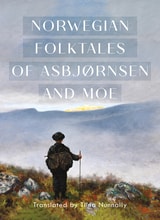
The Complete and Original Norwegian Folktales of Asbjørnsen and Moe
Peter Christen Asbjørnsen
University of Minnesota Press, 2019
The definitive English translation of the celebrated story collection regarded as a landmark of Norwegian literature and culture—now in paperback
The extraordinary folktales collected by Peter Christen Asbjørnsen and Jørgen Moe began appearing in Norway in 1841. Over the next two decades the publication of subsequent editions under the title Norske folkeeventyr made the names Asbjørnsen and Moe synonymous with Norwegian storytelling traditions. Tiina Nunnally’s vivid translation of their monumental collection is the first new English translation in more than 150 years—and the first ever to include all sixty original tales.
Magic and myth inhabit these pages in figures both familiar and strange. Giant trolls and talking animals are everywhere. The winds take human form. A one-eyed old woman might seem reminiscent of the Norse god Odin. We meet sly aunts, resourceful princesses, and devious robbers. The clever and fearless boy Ash Lad often takes center stage as he ingeniously breaks spells and defeats enemies to win half the kingdom. These stories, set in Norway’s majestic landscape of towering mountains and dense forests, are filled with humor, mischief, and sometimes surprisingly cruel twists of fate. All are rendered in the deceptively simple narrative style perfected by Asbjørnsen and Moe—now translated into an English that is as finely tuned to the modern ear as it is true to the original Norwegian.
Included here—for the very first time in English—are Asbjørnsen and Moe’s Forewords and Introductions to the early Norwegian editions of the tales. Asbjørnsen gives us an intriguing glimpse into the actual collection process and describes how the stories were initially received, both in Norway and abroad. Equally fascinating are Moe’s views on how central characters might be interpreted and his notes on the regions where each story was originally collected. Nunnally’s informative Translator’s Note places the tales in a biographical, historical, and literary context for the twenty-first century.
The Norwegian folktales of Asbjørnsen and Moe are timeless stories that will entertain, startle, and enthrall readers of all ages.
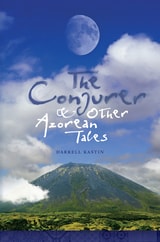
The Conjurer and Other Azorean Tales
Darrell Kastin
Tagus Press, 2012
Born from the fertile volcanic soil and the sea and mists surrounding the Azorean islands, the characters who inhabit these stories blend realism with magic. Like the nine Muses, each island has its own special attributes. Whether searching for love, power, or meaning, these characters are subject to the whims of Fate and Fortune. Here the commonplace present confronts forces both natural and supernatural. In the Azorean microcosm, they come to represent a far larger sphere, embodying the foibles and idiosyncrasies of humanity the world over.
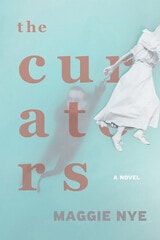
The Curators
A NovelMaggie Nye
Northwestern University Press, 2024
A dark, lyrical blend of historical fiction and magical realism, The Curators examines a critically underexplored event in American history through unlikely eyes. All of Atlanta is obsessed with the two-year-long trial and subsequent lynching of Jewish factory superintendent Leo Frank in 1915. None more so than thirteen-year-old Ana Wulff and her friends, who take history into their own hands—quite literally—when they use dirt from Ana’s garden to build and animate a golem in Frank’s image. They’ll do anything to keep his story alive, but when their scheme gets out of hand, they must decide what responsibility requires of them. The Curators tells the story of five zealous girls and the cyclonic power of their friendship as they come of age in a country riven by white supremacy.
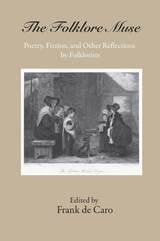
The Folklore Muse
Poetry, Fiction, and Other Reflections by FolkloristsFrank de Caro
Utah State University Press, 2008
Folklore—the inherently creative expression, transmission, and performance of cultural traditions—has always provided a deep well of material for writers, musicians, and artists of all sorts. Folklorists usually employ descriptive and analytical prose, but they, like scholars in other social sciences, have increasingly sought new, creative and reflexive modes of discourse. Many folklorists are also creative writers, some well known as such, and the folk traditions they research often provide shape and substance to their work. This collection of creative writing grounded in folklore and its study brings together some of the best examples of such writing.
Contributors to this collection include Teresa Bergen, John Burrison, Norma E. Cantu, Frank de Caro, Holly Everett, Danusha Goska, Neil R. Grobman, Carrie Hertz, Edward Hirsch, Laurel Horton, Rosan Augusta Jordan, Paul Jordan-Smith, Elaine J. Lawless, Cynthia Levee, Jens Lund, Mary Magoulick, Bernard McCarthy, Joanne B. Mulcahy, Kirin Narayan, Ted Olson, Daniel Peretti, Leslie Prosterman, Jo Radner, Susan Stewart, Jeannie Banks Thomas, Jeff Todd Titon, Libby Tucker, Margaret Yocom, and Steve Zeitlin.
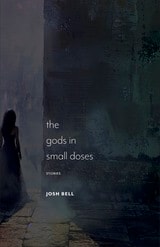
The Gods in Small Doses
StoriesJosh Bell
University of Massachusetts Press, 2026
The magical and mundane twist together in this collection of surreal stories
In this collection of stories set in an uncanny American suburbia and haunted by a lurking unease, the peculiar feeling of ephemeral youth finds its voice. The stories in The Gods in Small Doses depict childhood through a funhouse mirror, as a time of myth and damage, of tenderness and terror. Anything—except what should happen—can happen next.
A retired witch traps a goat-killing feral child, a girl becomes obsessed with the regenerative properties of her younger brother’s body, Armageddon is fought between the forces of good (those who like to go to bed early) and evil (those who prefer to stay up late), a supernatural orphan insinuates his way into an all-American family, the god Poseidon wrecks a high-school house party, and the women of a fabulated island city all mysteriously disappear overnight. In these fast, comic, and troubling tales, sweetness and violence vie to become synonymous.
This is a universe of both realism and surrealism, of magic and the mundane, where strong but deeply flawed characters fight to exert control over things—time, death, themselves—that can’t be controlled. Dreamlike moments of body horror, catastrophe, and absurdity challenge the reader to embrace the taboo and to expect—always—the unexpected. Bell’s stories offer a twisted, unique, and utterly fascinating take on what it means to “grow up,” and all of the questions that the notion inspires.
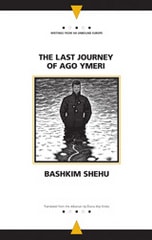
The Last Journey of Ago Ymeri
Bashkim Shehu
Northwestern University Press, 2007
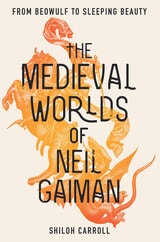
The Medieval Worlds of Neil Gaiman
From Beowulf to Sleeping BeautyShiloh Carroll
University of Iowa Press, 2023
Readers love to sink into Gaiman’s medieval worlds—but what makes them “medieval”? Shiloh Carroll offers an introduction to the idea of medievalism, how the literature and culture of the Middle Ages have been reinterpreted and repurposed over the centuries, and how the layers of interpretation have impacted Gaiman’s own use of medieval material. She examines influences from Norse mythology and Beowulf to medieval romances and fairy tales in order to expand readers’ understanding and appreciation of Gaiman’s work, as well as the rest of the medievalist films, TV shows, and books that are so popular today.
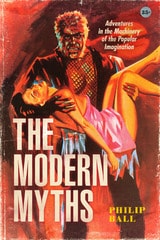
The Modern Myths
Adventures in the Machinery of the Popular ImaginationPhilip Ball
University of Chicago Press, 2021
Myths are usually seen as stories from the depths of time—fun and fantastical, but no longer believed by anyone. Yet, as Philip Ball shows, we are still writing them—and still living them—today. From Robinson Crusoe and Frankenstein to Batman, many stories written in the past few centuries are commonly, perhaps glibly, called “modern myths.” But Ball argues that we should take that idea seriously. Our stories of Dracula, Dr. Jekyll and Mr. Hyde, and Sherlock Holmes are doing the kind of cultural work that the ancient myths once did. Through the medium of narratives that all of us know in their basic outline and which have no clear moral or resolution, these modern myths explore some of our deepest fears, dreams, and anxieties. We keep returning to these tales, reinventing them endlessly for new uses. But what are they really about, and why do we need them? What myths are still taking shape today? And what makes a story become a modern myth?
In The Modern Myths, Ball takes us on a wide-ranging tour of our collective imagination, asking what some of its most popular stories reveal about the nature of being human in the modern age.
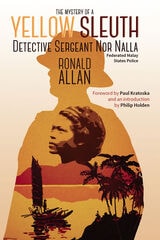
The Mystery of A Yellow Sleuth
Detective Sergeant Nor Nalla, Federated Malay States PoliceRonald Allan
National University of Singapore Press, 2018
Nor Nalla is an anagram for Ron Allan, who spent four years working on a rubber plantation in Malaya shortly before World War I. Like Kipling’s famous colonial spy, Kim, the “yellow sleuth” is a master of undercover operations, and this reissued work explores vast locales, from the forests of Malaya to the ports of Java, from London’s underbelly to the camps of Chinese laborers in WWI Flanders. Throughout, readers are left to differentiate between fiction and fact, and ponder questions of authorship, in this “impossible fantasy of hybridity,” as Phillip Holden calls it in his perceptive introduction.
Contemporary readers will not only savor the book’s tales of adventure and detection, they will also appreciate the ways that the author brings to life— and reveals the contradictions of—late colonial society.
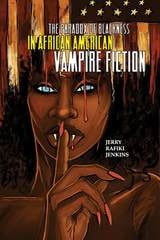
The Paradox of Blackness in African American Vampire Fiction
Jerry Rafiki Jenkins
The Ohio State University Press, 2019
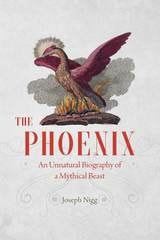
The Phoenix
An Unnatural Biography of a Mythical BeastJoseph Nigg
University of Chicago Press, 2016
Beginning in ancient Egypt and traveling around the globe and through the centuries, Nigg’s vast and sweeping narrative takes readers on a brilliant tour of the cross-cultural lore of this famous, yet little-known, immortal bird. Seeking both the similarities and the differences in the phoenix’s many myths and representations, Nigg describes its countless permutations over millennia, including legends of the Chinese “phoenix,” which was considered one of the sacred creatures that presided over China’s destiny; classical Greece and Rome, where it can be found in the writings of Herodotus and Ovid; nascent and medieval Christianity, in which it came to embody the resurrection; and in Europe during the Renaissance, when it was a popular emblem of royals. Nigg examines the various phoenix traditions, the beliefs and tales associated with them, their symbolic and metaphoric use, the skepticism and speculation they’ve raised, and their appearance in religion, bestiaries, and even contemporary popular culture, in which the ageless bird of renewal is employed as a mascot and logo, including for our own University of Chicago.
Never bested by hardship or defeated by death, the phoenix is the ultimate icon of hope and rebirth. And in The Phoenix: An Unnatural Biography of a Mythical Beast, it finally has its due—a complete chronicle worthy of such a fantastic and phantasmal creature. This entertaining and informative look at the
life and transformation of the phoenix will be the authoritative source for anyone fascinated by folklore and mythology, re-igniting our curiosity about one of myth’s greatest beasts.
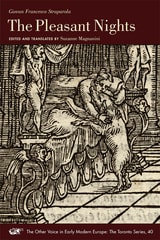
The Pleasant Nights
Giovan Straparola
Iter Press, 2015
In Giovan Francesco Straparola’s The Pleasant Nights, a group of men and women gather together in a villa on the Venetian island of Murano during Carnival to sing songs, tell tales, and solve riddles. A sixteenth-century bestseller, The Pleasant Nights is today a fundamental text for European folk and fairy tale studies, for alongside triumphal and tragic love stories, comical tales of practical jokes, and accounts of witty retorts, Straparola (1480? – 1557?) placed some of the first fairy tales printed in Europe. Straparola’s eloquent female narrators and the fairy tales they recount became a model for a generation of French women writers in Parisian salons, who used the fairy tale to interrogate the gender norms of their day. This book presents the first new and complete English translation of Straparola’s tales and riddles to be published since the nineteenth century.
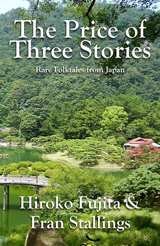
The Price of Three Stories
Rare Folktales from JapanHiroko Fujita & Fran Stallings
Parkhurst Brothers, Inc., 2015
“This delightful compendium of short, savory, and highly tellable tales embodies the beliefs and folkways of rural Japan—specifically the area most impacted by the recent tsunami and nuclear disaster. It adds immeasurably to our insight into that endangered world.”
—Joseph Sobol, Ph.D., director, ETSU Storytelling Graduate Program
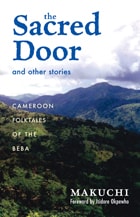
The Sacred Door and Other Stories
Cameroon Folktales of the BebaMakuchi
Ohio University Press, 2007
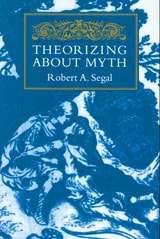
Theorizing about Myth
Robert A. Segal
University of Massachusetts Press, 1999
For two hundred years the subject of myth—its origin, function, and significance—has been addressed again and again, first by theologians and philosophers and then by anthropologists, sociologists, and psychologists. From the outset the topic has sparked intense debate, with differing opinions expressed on everything from issues of epistemology and methodology to the meaning of “myth” itself. In this collection of essays, Robert A. Segal surveys the contours of this ongoing discussion, comparing and evaluating the leading theories of myth.
Among the theorists discussed are Edward Tylor, William Robertson Smith, James Frazer, Jane Harrison, S. H. Hooke, Mircea Eliade, Rudolf Bultmann, Hans Jonas, Sigmund Freud, C. G. Jung, Joseph Campbell, Claude Lévi-Strauss, and Hans Blumenberg. Author and editor of numerous books and articles in the fields of theories of myth and theories of religion, Segal has developed a reputation as a preeminent proponent of a social-scientific approach to the study of both. The essays in this book represent some of the best of his writing on myth over the past ten years.
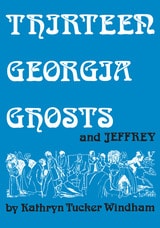
Thirteen Georgia Ghosts and Jeffrey
Commemorative EditionKathryn Tucker Windham
University of Alabama Press, 1987
Haunting tales from Georgia—where history lingers in every shadow.
Petrifying the Peach State, hosts of haints have beset the state of Georgia throughout its storied history. In Thirteen Georgia Ghosts and Jeffrey, best-selling folklorist Kathryn Tucker Windham, along with her trusty spectral companion Jeffrey, introduce thirteen of Georgia’s most famous ghost stories.
Windham won hearts across the nation in her regular radio broadcasts and many public appearances. The South’s most prolific raconteur of revenants, Windham, giving new meaning to the phrase “ghost-writer,” does more than tell ghost stories—she captures the true spirit of the place.
Evoking Georgia’s colonial era, “The Eternal Dinner Party” explains why the sounds of an elegant dinner soirée still waft from the grove of Savannah’s Bonaventure estate. At the onset of the Revolution, the Tattnall family abandoned Bonaventure and slipped away to England. Young Josiah Tattnall eventually returned to fight in the Revolution, restored Bonaventure, and later became Georgia’s governor. One holiday eve, when the mansion was bedecked with magnolia and holly and crowded with visitors, a fire too large to control swept through the old house. Tattnall, exhibiting his cool head and impeccable manners, ordered the massive dinner table carried out to the garden where he enjoined his holiday revelers to continue their stately meal. The melancholy strains of Tattnall’s dinner guests still echo through Bonaventure’s ancient oaks on moonlight nights.
In “The Ghost of Andersonville,” Windham takes visitors near the woebegone Confederate prisoner-of-war camp. A plaque there still recounts the tale of Swiss immigrant and Confederate captain Henry Wirz. Convicted—many thought wrongly—of war crimes, Wirz’s restless ghost still perambulates the highways of south Georgia. Writing for the Georgia Historical Commission, Miss Bessie Lewis quips in her preface to this beloved collection, “Who should be better able to tell of happenings long past than the ghosts of those who had a part in them?”
A perennial favorite, this commemorative edition restores Thirteen Georgia Ghosts and Jeffrey to the ghastly grandeur of its original 1973 edition.
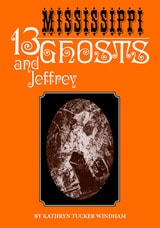
Thirteen Mississippi Ghosts and Jeffrey
Commemorative EditionKathryn Tucker Windham
University of Alabama Press, 2015
A deluxe, commemorative edition of famed southern author and folklorist Kathryn Tucker Windham’s introduction to Mississippi’s thirteen most famous haunted houses and ghostly visitations.
For as long as Mississippi has existed (and then some), flocks of phantoms have haunted the mortal inhabitants of the Magnolia State. In Thirteen Mississippi Ghosts and Jeffrey, best-selling folklorist Kathryn Tucker Windham, along with her trusty spectral companion Jeffrey, introduces thirteen of the state’s most famous ghost stories.
Although stories about Mississippi’s spirits seemingly outnumber the ghosts themselves, Windham observes that “Southern ghost tales are disappearing because people no longer sit around on the porch on summer nights and tell stories. The old folks who grew up with these stories are dying now, and the stories are dying with them.”
Fortunately for us, Windham was a writer dedicated to preserving these tales in print. The veteran author spent many years tracking down these stories and chronicling the best ones. From the ghost of Mrs. McEwen still wearing her beloved cameo pin and keeping a watchful eye over Featherston Place, her home in Holly Springs, where, she swore, she would stay forever, to the ghostly visage fixed permanently on the bedroom window pane of Catherine McGehee, who searched the horizon ardently for her unrequited love to come to her as promised at Cold Spring Plantation in Pinckneyville, Windham’s stories cover the breadth and depth of Mississippi—at times more moonlight than magnolia.
An enduring classic, this commemorative edition restores Thirteen Mississippi Ghosts and Jeffrey to the ghastly grandeur of its original 1974 edition.
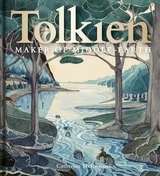
Tolkien
Maker of Middle-earthEdited by Catherine McIlwaine
Bodleian Library Publishing, 2018
Tolkien: Maker of Middle-earth explores the huge creative endeavor behind Tolkien’s enduring popularity. Lavishly illustrated with three hundred images of his manuscripts, drawings, maps, and letters, the book traces the creative process behind his most famous literary works—The Hobbit, The Lord of the Rings, and The Silmarillion—and reproduces personal photographs and private papers, many of which have never been seen before in print.
Six essays introduce the reader to the person of J. R. R. Tolkien and to main themes in his life and work, including the influence of northern languages and legends on the creation of his own legendarium; his concept of “Faërie” as an enchanted literary realm; the central importance of his invented languages in his fantasy writing; his visual imagination and its emergence in his artwork; and the encouragement he derived from his close friend C. S. Lewis and their literary group the Inklings.
The book brings together the largest collection of original Tolkien material ever assembled in a single volume. Drawing on the extensive archives of the Tolkien collections at the Bodleian Libraries, Oxford, which stretch to more than five hundred boxes, and Marquette University, Milwaukee, as well as private collections, this hugely ambitious and exquisitely produced book draws together the worlds of J. R. R. Tolkien – scholarly, literary, creative, and domestic—offering a rich and detailed understanding and appreciation of this extraordinary author.
This landmark publication, produced on the occasion of a major exhibition at the Bodleian Libraries in Oxford in 2018 and at the Morgan Library in New York in 2019, is set to become a standard work in the literature on J. R. R. Tolkien.
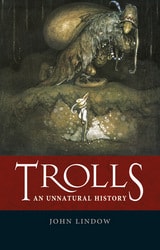
Trolls
An Unnatural HistoryJohn Lindow
Reaktion Books, 2014
To explain why trolls still hold our interest, John Lindow goes back to their first appearances in Scandinavian folklore, where they were beings in nature living beside a preindustrial society of small-scale farming and fishing. He explores reports of actual encounters with trolls—meetings others found plausible in spite of their better judgment—and follows trolls’ natural transition from folktales to other domains in popular culture. Trolls, Lindow argues, would not continue to appeal to our imaginations today if they had not made the jump to illustrations in Nordic books and Scandinavian literature and drama. From the Moomins to Brothers Grimm and Three Billy Goats Gruff to cartoons, fantasy novels, and social media, Lindow considers the panoply of trolls that surround us and their sometimes troubling connotations in the contemporary world.
Taking readers into Norwegian music and film and even Yahoo Finance chat rooms, Trolls is a fun and fascinating book about these strange creatures.