Results by title
120 books match the query 'Family Life' and 35 start with t
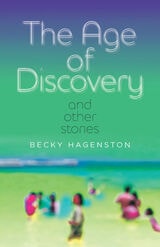
The Age of Discovery and Other Stories
Becky Hagenston
The Ohio State University Press, 2021
“These ingenious stories are so funny and sparkling and slyly inventive that their pain catches you by surprise, like a sunburn after a day at the beach.”—Eric Puchner
Winner, 2022 Mississippi Institute for Arts and Letters Prize for Best Fiction
In Becky Hagenston’s fourth collection, the real and the fantastic collide in stories that span from Mississippi to Europe, and from the recent past to the near future. The characters are sex-toy sellers, internet trolls, parents, students, and babysitters—all trying to make sense of a world where nothing is quite what it appears to be. A service robot makes increasingly disturbing requests. A middle school teacher is accused of witchcraft—and realizes the accusations might be true. Two college students devise a way to avoid getting hit on in bars. A baker finds bizarre anomalies in his sourdough. A librarian follows her dead ex-husband through the Atlanta airport. In these stories, men and women confront grief, danger, loneliness, and sometimes—the strangest discovery of all—unexpected joy. Hagenston delivers a collection that is, at its weird and shining heart, about people discovering what—for better or worse—they are capable of.
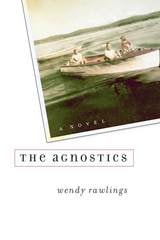
The Agnostics
Wendy Rawlings
University of Michigan Press, 2007
“Who knows if there’s a God? There’s us, now, and caterpillars and other insects and mulch. So thinks Stephen Wirth as he watches his marriage collapse. Between bouts of alcoholism and attempts to restore a fleet of decrepit boats, Stephen does his best to help his daughters cope with their mother having fallen in love with another woman. But growing up and making sense of the world is something the girls must do on their own, just as for their mother there is no easy way around building a new life. Set on Long Island, The Agnostics follows the Wirths through several decades as they struggle to redefine themselves and their idea of family.
Painting with a fine and delicate brush, Wendy Rawlings reveals her characters’ lives as a series of discrete moments, illuminating the intimate story of one American middle-class family.

The American Wife
Elaine Ford
University of Michigan Press, 2009
Of Elaine Ford’s novel, Missed Connections, the Washington Post wrote that it is a work “of small episodes, of precise sentences, of unusual clarity.” That same clarity proves an unsettling force in Ford’s stories, where precision of prose often belies uncertainties hidden beneath. In the title piece, an American woman in England, embroiled in a relationship doomed to fail, discovers how little she understands about her own desires and impulses. In another story, another American wife, abandoned in Greece by her archaeologist husband, struggles to solve a crime no one else believes to have been committed.
Throughout her stories Ford touches on the mysteries that make up our lives. Each story in itself is a masterpiece of such detail and power as to transform the way we see the world.
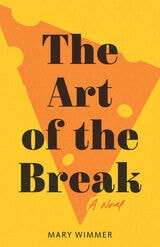
The Art of the Break
Mary Wimmer
University of Wisconsin Press, 2022
Hyperaware of her own childhood losses and the challenges posed by Rick’s PTSD and heavy drinking, Charlie strives to build a stable home for Lucy. Her degree in biochemistry from the University of Wisconsin gives her a leg up, and the quiet joys of working at the cheese vat provide a deep, healing peace that points the way toward happiness.
But Falls River is too narrow-minded to accept a female business owner, and Charlie is ill-prepared for the pettiness and conventions of small-town life. When debts come due, including a lien against her family’s land, she must quickly figure out who is on her side—and how to keep her dreams alive.
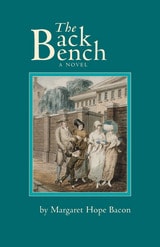
The Back Bench
Margaret Hope Bacon
QuakerPress, 2007

The Blood of the Lamb
A NovelPeter De Vries
University of Chicago Press, 2005
One of John Green's "favorite books ever," a powerful, moving novel of family, parenthood, and loss
The most poignant of all Peter De Vries's novels, The Blood of the Lamb is also the most autobiographical. It follows the life of Don Wanderhop from his childhood in an immigrant Calvinist family living in Chicago in the 1950s through the loss of a brother, his faith, his wife, and finally his daughter-a tragedy drawn directly from De Vries's own life. Despite its foundation in misfortune, The Blood of the Lamb offers glimpses of the comic sensibility for which De Vries was famous. Engaging directly with the reader in a manner that buttresses the personal intimacy of the story, De Vries writes with a remarkableblend of grief, love, wit, and fury.
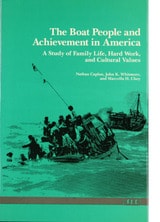
The Boat People and Achievement in America
A Study of Family Life, Hard Work, and Cultural ValuesNathan Caplan, John K. Whitmore, and Marcella H. Choy
University of Michigan Press, 1989
The Brightest Place in the World
A NovelDavid Philip Mullins
University of Nevada Press, 2020
Inspired by true events, The Brightest Place in the World traces the lives of four characters haunted by an industrial disaster. On an ordinary sunny morning in 2012, a series of explosions level a chemical plant on the outskirts of Las Vegas. The shock waves are felt as far away as Fremont Street. Homes and businesses suffer broken windows and caved-in roofs. Hundreds are injured, and eight employees of the plant are unaccounted for, presumed dead.
One of the missing is maintenance technician Andrew Huntley, a husband and father who is an orbital force in the novel as those who loved him grapple with his loss. Andrew’s best friend, Russell Martin—an anxiety-plagued bartender who calms his nerves with a steady inflow of weed—misses him more than he might a brother. Meanwhile Emma, Russell’s wife—a blackjack dealer at a downtown casino—tries to keep her years-long affair with Andrew hidden. Simon Addison, a manager at the plant who could have saved Andrew’s life, is afflicted by daily remorse, combined with a debilitating knowledge of his own cowardice. And then there’s Maddie, Andrew’s only child, a model high-school student whose response to the tragedy is to experiment with shoplifting and other deviant behavior.
Against the sordid backdrop of Las Vegas—and inspired by the PEPCON disaster of May 4, 1988—this engaging novel is a story of grief and regret, disloyalty and atonement, infatuation and love.

The Daughters
A NovelBen Rogers
University of Nevada Press, 2025
IndieReader Approved!
Renowned—albeit washed-up—author Peter Zemeckis (“Z”) is relishing the sunset of a life spent single when Dr. Nancy Chu crash-lands in the bungalow next door. As Nancy’s family drags him into deeper water, Z must rethink the ending to his own story.
Spanning from Amarillo, Texas, in 1977 to La Jolla, California, in 2012, The Daughters is a kaleidoscopic meditation on family, memory, and the invisible forces that bind us. Z’s narrative interweaves small-town rodeos with amateur radios, teen angst with parental love. Shard by shard, he pieces together the story of a fractured family struggling to reassemble itself.
Like particles, Z’s characters (and neighbors) are both small and singular, but their stories ripple like waves—colliding, refracting, and reshaping one another across generations. Elegant, intricate, and deeply moving, The Daughters reverberates long after its final page is turned.

The End and the End
Holly Goddard Jones
University of Iowa Press, 2027
The Faith Healer of Olive Avenue
StoriesManuel Muñoz and Cherríe Moraga
Northwestern University Press, 2025
From the divergent paths of triplet brothers to a grieving father confronting his mistreatment of his son, these stories interweave a recurring cast of neighborhood characters, many of them in search of escape or release. Lauded for its empathetic portrayals of communities often ignored, The Faith Healer of Olive Avenue won a Whiting Award and an O. Henry Award; it was shortlisted for the Frank O’Connor International Short Story Award as one of the best collections published in English worldwide. A new foreword by author and activist Cherríe Moraga gives testament to Muñoz’s status as “the cartographer of a people.”

The Faulkes Chronicle
David Huddle
Tupelo Press, 2015
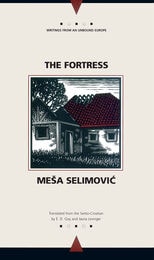
The Fortress
A NovelMesa Selimovic, translated from the Serbian by Edward Dennis Goy and Jasna Levinger-Goy
Northwestern University Press, 1999
Set in Bosnia in the late 1700s, the novel sometimes functions as an artful metaphor for the communist Yugoslavia of Selimovic's day. At other times, the author explores the nuances of Ottoman rule in the Balkans. Muslim Ahmet's sustaining marriage to a young Christian woman provides a multicultural tension that strongly resonates with contemporary readers and sensibilities.
The Ghost of Bud Parrott
a novelJudson N Hout
Parkhurst Brothers, Inc., 2010
A teen’s life is complicated. Add an overworked dad, a distraught mom.
Enter an old man from the wrong side of the tracks.
He knows things. He’s there when you need him.
This happens to someone; it’s not a maybe thing. People get hurt. People die. There’s a dad who loves his kid but works all the time. When he doesn’t work, he drinks. When he drinks he’s out of control.
There’s a mom. She knows dad is overworked, a good man carrying too much responsibility.
The kid turns to the handy man to learn a man’s skills. In the old man from the wrong side of the tracks, the kid finds unusual skills and terrible—but true—lessons. He finds that his own safety comes at a cost to his unfortunate friend. He finds growing up comes at a cost to himself. This is the story of such a kid, told by himself after he has lived much of his life, come to terms with his parents’ weaknesses, and learned that seemingly insignificant people carry more pain than he can imagine, though he has already seen plenty.
The Goat Bridge
A NovelT. M. McNally
University of Michigan Press, 2005
As he drifts through the countryside, Stephen struggles to resolve the trauma and sorrow of losing his son, and soon the landscape begins to mirror his own inner battles. After a return trip to America fails to heal the rift between himself and the mother of his child, Stephen returns to Sarajevo, where he begins a project to document images of the Bosnian people—not war images, but personal portraits of an embattled nation. There he finds himself falling in love with a German journalist, who helps to heal his ailing body and to overcome his tragic loss.
The Goat Bridge is an unforgettable tale of memory and oblivion, a probing story of loss and redemption, of letting go and holding on, and of the universal human search for meaning. In the end, it is also a love story about finding the wisdom and courage to surrender to one’s own and another’s heart.
The Golden Land
Elizabeth Shick
New Issues Poetry and Prose, 2022
When Etta's grandmother dies, she is compelled to travel to Myanmar to explore complicated adolescent memories of her grandmother's family and the violence she witnessed there. Full of rich detail and complex relationships, The Golden Land explores those personal narratives that might lie beneath the surface of historical accounts.
The Home of the Drowned
A NovelElin Anna Labba
University of Minnesota Press, 2026
The haunting, multigenerational saga of a family of Sámi women fighting the devastation of their way of life
Nothing is true, and everything is true; poetry will never hurt more than what has happened. Every summer, Iŋgá, her mother Rávdná, and her Aunt Ánne travel west to their village on the lake. But the summer Iŋgá is thirteen, they arrive to find their home and possessions have disappeared under water, the land flooded by a dam built to supply hydropower to a society that has continually stolen from them.
The Home of the Drowned follows these women’s fortunes over forty years—from 1942 to 1982—as the water their people have lived near for centuries is transformed into a menacing force that threatens all they hold dear. Defying the authorities, Rávdná decides to build a proper house on the lake to replace what was lost, becoming an unlikely activist even as her actions isolate her family from the rest of the community. Meanwhile, Ánne’s health is in decline, and a concerned Iŋgá merely longs to live like everyone else—an impossible wish when the Swedish state is relentlessly drowning her world.
Drawing on her own family’s history of forced relocation and violent colonial dispossession, Elin Anna Labba’s debut novel brings Sámi history to the fore through this intimate story. In poetic prose deftly translated by Elizabeth Clark Wessel, she reveals connections between land, water, and people that hauntingly reverberate with the question: what is it that makes a home?
Retail e-book files for this title are screen-reader friendly.
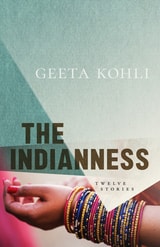
The Indianness
Twelve StoriesGeeta Kohli
University of Massachusetts Press, 2027
A bold debut story collection about first- and second-generation South Asian Americans coming of age—and coming undone
From Ivy League dormitories and Delhi wedding stages to Roman balconies and North Carolina motels, the twelve stories of The Indianness map the distance between the life a person is expected to build and the one they actually inhabit.
Women anchor the collection: a mother alone in Rome with three young daughters tests the edges of her marriage; a college student arrives at NYU with one rule—save her virginity for an Indian husband—and breaks it before the week is out; a woman manages an abortion alone in a Manhattan clinic, too afraid to tell her husband she was ever pregnant; a former lawyer in Manhattan keeps a diary of a marriage she cannot bring herself to leave. But the men are equally undone: a Harvard-educated lawyer raised in a North Carolina motel confronts a past he can never quite verify; a history teacher in suburban Massachusetts assigns a racist essay, loses his wife, and isn't certain which failure came first; a man raised as a girl until the age of twelve sits with all he has inherited.
The collection challenges the model minority narrative not by dismissing success but by exposing what it costs, moving openly through sex, abortion, marital dissatisfaction, mental health, and sexual violence, and through the silences that live inside families. The Indianness offers a portrait of a community rarely rendered with such interior depth, insisting that South Asian Americans—women and men alike—deserve the same moral complexity, desire, and contradiction long afforded to others in American literary fiction.
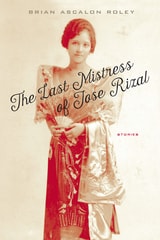
The Last Mistress of Jose Rizal
StoriesBrian Ascalon Roley
Northwestern University Press, 2016
Roley’s work has been praised by everyone from New York Times literary critics to APIA author Helen Zia for his bare, poetic style and raw emotionalism. In the collection’s title story, a woman living with her daughter and her daughter’s American husband fears the loss of Filipino tradition, especially Catholicism, as she tries to secretly permeate her granddaughter’s existence with elements of her ancestry. In "New Relations," an American-born son introduces his mother to his Caucasian bride and her family, only to experience his first marital discord around issues of politesse, the perception of culture, and post-colonial legacies. Roley’s delicately nuanced collection often leaves the audience with the awkwardness that comes from things lost in translation or entangled in generational divides.
The Lines
Anthony Varallo
University of Iowa Press, 2019
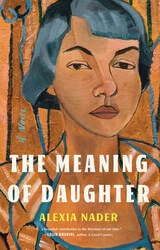
The Meaning of Daughter
Nader, Alexia
University of Iowa Press, 2026
After immigrating from Lebanon to Haiti as a young girl, Merjan comes of age in an insular, conservative community, where it seems as though her sole escape is marriage. Striking a bargain with a young art dealer, she marries and dreams of becoming a painter, only to discover her husband’s support tethered with expectations.
In the late 1970s, Merjan’s daughter Yvonne is a young woman on the cusp of a marriage of convenience. Though resentful of her mother, Yvonne dreams of establishing a Haitian art gallery in New York with the help of a well-connected older man—but her time there ends disastrously, creating a deep rift between her and her family.
In the present day, Yvonne’s daughter Eva is a student whose art draws inspiration from her grandmother Merjan’s largely undiscovered work. When Eva becomes unexpectedly pregnant, she moves back to her childhood home in Miami to sort out her ambivalent feelings, where she finds her family upended by feuds. An intimate family saga, The Meaning of Daughter explores questions about maternal ambivalence, ambition, artmaking, and how desire resists gendered expectations.
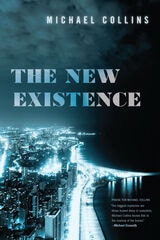
The New Existence
Michael Collins
University of Iowa Press, 2021
Chicagoan Helen Price, a dying woman, recounts her life while driving toward an oncology appointment. She attempts to take her own life, survives, then dies under tragic circumstances.
In death, Helen bequeaths the family home to her only son, gay playwright Norman Price. Father to an adopted Chinese child, and recently broken up with his partner, Norman’s life is in crisis. Helen also bequeaths a series of tapes to Nate Feldman, a Vietnam draft dodger ensconced in the far reaches of Canada, and the son of Helen’s former boss, Theodore Feldman. Nate’s return to America to claim the tapes occasions confronting a history of animus between father and son, but also the nature of the relationship between Helen Price and Theodore Feldman.
Told from moving cars, the journeys of Norman Price and Nate Feldman converge toward unexpected mysteries and revelations that uncover not so much lies as understandings of life that no longer hold under the scrutiny of the present.
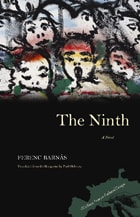
The Ninth
A NovelFerenc Barnas
Northwestern University Press, 2009
Set in a sleepy village north of Budapest in 1968, this touching, unsettling novel paints a richly wrought portrait of mid-twentieth-century Hungary. The narrator is the ninth child of a family distinguished by its size, poverty, faith, and abundance of physical and psychological disabilities. His confusion is exacerbated by the strict, secretive Catholic household his parents keep in the face of a Communist system. These dual oppressions propel him toward an inevitable realization of his guilt and desire that speaks to his struggle with a fateful, seamless beauty.
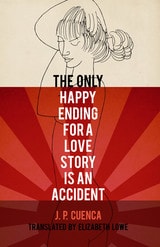
The Only Happy Ending for a Love Story Is an Accident
J. P. Cuenca
Tagus Press, 2013
The Posthumous Affair
James Friel
Tupelo Press, 2012
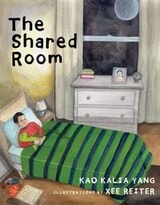
The Shared Room
Kao Kalia Yang
University of Minnesota Press, 2020
A family gradually moves forward after the loss of a child—a story for readers of all ages
When someone you love dies, you know what doesn’t die? Love. On the hot beach, among colorful umbrellas blooming beneath a bright sun, no one saw a little girl walk into the water. Now, many months later, her bedroom remains empty, her drawers hold her clothes, her pillows and sheets still have her scent, and her mother and father, brothers and sister carry her in their hearts, along with their grief, which takes up so much space. Then one snowy day, the mother and father ask the girl’s older brother, “Would you like a room of your own?” He wants to know, “Whose?” They say, “Your sister’s.”
Tenderly, and with refreshing authenticity, beloved Minnesota writer Kao Kalia Yang tells the story of a Hmong American family living with loss and tremendous love. Her direct and poignant words are accompanied by the evocative and expressive drawings of Hmong American artist Xee Reiter. The Shared Room brings a message of comfort and hope to readers young and old.

The Ski Jumpers
A NovelPeter Geye
University of Minnesota Press, 2022
Now in paperback: a writer and former ski jumper facing a terminal diagnosis takes one more leap—into a past of soaring flights and broken family bonds
A brilliant ski jumper has to be fearless—Jon Bargaard remembers this well. His memories of daring leaps and risks might be the key to the book he’s always wanted to write: a novel about his family, beginning with Pops, once a champion ski jumper himself, who also took Jon and his younger brother Anton to the heights. But Jon has never been able to get past the next, ruinous episode of their history, and now that he has received a terrible diagnosis, he’s afraid he never will.
In a bravura performance, Peter Geye follows Jon deep into the past he tried so hard to leave behind, telling the story he spent his life escaping. It begins with a flourish, his father and his hard-won sweetheart fleeing Chicago, and a notoriously ruthless gangster, to land in North Minneapolis. That, at least, was the tale Jon heard, one that becomes more and more suspect as he revisits the events that eventually tore the family in two, sending his father to prison, his mother to the state hospital, and placing himself, a teenager, in charge of thirteen-year-old Anton. Traveling back and forth in time, Jon tells his family’s story—perhaps his last chance to share it—to his beloved wife Ingrid, circling ever closer to the truth about those events and his own part in them, and revealing the perhaps unforgivable violence done to the brothers’ bond.
The dream of ski jumping haunts Jon as his tale unfolds, daring time to stop just long enough to stick the landing. As thrilling as those soaring flights, as precarious as the Bargaard family’s complicated love, as tender as Jon’s backward gaze while disease takes him inexorably forward, Peter Geye’s gorgeous prose brings the brothers to the precipice of their relationship, where they have to choose: each other, or the secrets they’ve held so tightly for so long.
Cover alt text: Lightly gradiented periwinkle sky background with white cloud in upper right corner and snow in lower left. At top, a cutout black-and-white image of a ski jumper appears and is cut off at the neck. Foreground: Book title in all-caps red, with author name beneath in all-caps white and “A Novel” beneath in all-cap dark grey. All text reads at a motion slant.
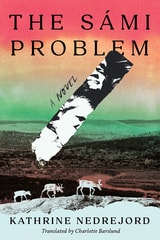
The Sámi Problem
A NovelKathrine Nedrejord
University of Minnesota Press, 2027
An incisive novel illuminating a young mother’s reckoning with her own identity and Sámi lineage through the lives and struggles of her ancestors
As a freelance journalist living in France, Marie Engmo has traveled far and wide to write about languages and local cultures threatened with extinction. But when she returns home to Norway for her áhkku’s (grandmother’s) funeral, she recognizes how far she has strayed from her own sense of self and her Sámi identity. Kathrine Nedrejord’s acclaimed novel—winner of Norway’s national book award—is the lucid and compelling story of Marie’s emotional search through her family’s past for a history and legacy that she might bequeath to her own infant daughter.
In spare and elegant prose, Nedrejord illuminates a young woman’s fierce and clear-eyed reckoning with the sacrifice and oppression that has marked the women and men in her family and generations of Indigenous Sámi communities in the northern reaches of Norway. As Marie awakens to the lengths her mother, grandmother, and great-grandmother traversed to survive discrimination and displacement, she uncovers and embodies their strength and dignity that are her—and her daughter’s—inheritance. What emerges is an unflinching examination of belonging to a minority that can never dominate, that will always have to negotiate and compromise its place in the world. As stirring as it is troubling, The Sámi Problem is itself an awakening and a literary triumph.
Retail e-book files for this title are screen-reader friendly.
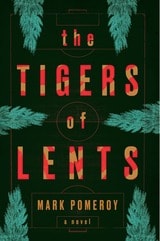
The Tigers of Lents
Mark Pomeroy
University of Iowa Press, 2024
2025 Independent Publishers Book Awards (IPPY Awards) gold medalist, Best Regional Fiction: West-Pacific
This is the story of the Garrison family, who live in Lents, an outer neighborhood of Portland, Oregon. At the heart of it all, there are the three Garrison sisters: Sara, the eldest, a fiery soccer star on the precipice of pulling herself out of the life of poverty she’s always known; Elaine, shy and struggling with the weight she carries both physically and mentally; and Rachel, a reader and poet whose imagination stalls at trying to picture a better life.
As the Garrisons struggle to communicate with each other, as they battle self-doubts and self-sabotage, they too draw on a fierce shared strength that allows them to push back at the reality that’s been handed to them. Each Garrison fights to hold on to their dignity—often through daily acts of grace and good humor, to say nothing of quiet perseverance—and to prove to themselves and each other that they shouldn’t be underestimated.
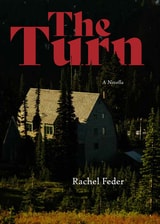
The Turn
A NovellaRachel Feder
Northwestern University Press, 2026
A contemporary gothic delving into the power of unmoored lust and familial bonds
When Baxter, a young writer and recent college graduate, accepts a live-in nanny position for an affluent professor’s family in the foothills of the Rocky Mountains, she rapidly becomes aware of strange happenings orbiting the family and their children, Quinn and Thebes. After the father becomes estranged and the mother disappears into the night with only one child, Baxter is left utterly lost and in charge of the baby, Thebes, as she struggles to make sense of the bizarre occurrences within the family, the house, and even her own body. But the unnatural occurrences are far from over, and as Baxter stumbles in the dark to protect the child, something sinister stalks the night, looking to sink in its teeth.
For fans of gothic classics such as The Turn of the Screw and Carmilla, The Turn is an eerie and magnificent modern gothic tale about the monstrous bond of love between caregiver and child.

The Upside-Down Forest
The Vanished Souls Duology, Book 2Richard Zimler
Tagus Press, 2027
When cruelty is sanctified, betrayal is rewarded as virtue, and the innocent must hide their true identities to survive, seventeen-year-old Isaaque Zarco struggles to preserve the principles he lives by and protect the people he loves in this luminous and deeply moving conclusion to The Vanished Souls duology.
As Isaaque attempts to put his life back together, mysteries and conflicts continue to haunt him, most prominently his father’s inexplicable rejection and the knowledge that his survival depends on concealing his identity and faith.
His world is shaken by a letter saying his grandmother, Flor, has been arrested. Unable to abandon the woman who guided him throughout his childhood, Isaaque crosses into Spain, entering a society ruled by fear and deception, where anonymous accusations carry the force of law and compassion itself has become an act of defiance. Flor has been transferred to a prison in Madrid. She has been physically broken by imprisonment. Isaaque learns that, under torture, she revealed the names of two of his oldest friends as secret Jews. Racing back to his home village, he embarks on a desperate attempt to help them escape before the Inquisition comes for them.
The Upside-Down Forest portrays a society in which slander is revered as truth, mercy is condemned as weakness, and persecution masquerades as justice. Giving voice to victims whose suffering has too often been erased from history, Richard Zimler explores how systems of fear corrupt not only institutions but also the bonds between family, friends, and neighbors. Ultimately, it asks what remains of our humanity when the moral order itself has been turned upside down—and whether a life shaped by love, loyalty, and compassion can still endure when survival itself demands treachery and betrayal.
The Village of Vanished Souls
The Vanished Souls Duology, Book 1Richard Zimler
Tagus Press, 2027
Winner of Book of the Year in Portugal, The Village of Vanished Souls is a sweeping historical tale inspired by authentic records of the Portuguese Inquisition and the real lives of villagers whose stories have long been forgotten.
Portugal, 1671—Nine-year-old Isaaque Zarco lives a peaceful life in the remote mountain village of Castelo Rodrigo, where he helps his mother prepare meals, roams the surrounding forests with his spirited best friend Lena, and learns about nature from the village apothecary, Samuel. But his idyllic childhood is shattered when Lena and her family suddenly vanish, followed by a series of brutal murders that plunge the isolated community into fear.
When Isaaque’s formidable Castilian grandmother visits, she says what no one else dares: the Inquisition is hunting descendants of Jews who continue to secretly practice. Then she entrusts Isaaque with an even more dangerous secret—that he, too, belongs to a secret Jewish family. As she introduces him to the forbidden traditions and sacred writings of their ancestors, Isaaque’s understanding of his parents, his village, and himself is transformed forever.
As Isaaque comes of age, he is drawn into a clandestine network that helps persecuted Jews escape Portugal. Every mission carries the risk of imprisonment, torture, and death, yet this dangerous work gives Isaaque a profound sense of purpose while deepening his commitment to his heritage. When he learns that his beloved grandmother is ill, he embarks on a journey that will expose long-buried family secrets and reveal that learning to embrace his heritage is only the beginning of what will soon be asked of him.
Inspired by the names, arrest records, and testimonies preserved in Inquisitional archives, The Village of Vanished Souls recreates a little-known chapter of history with vivid historical detail and emotional depth. At once an unforgettable coming-of-age story and a moving portrait of resilience, identity, faith, and love, it gives voice to people whose courage endured despite centuries of persecution and forced silence.
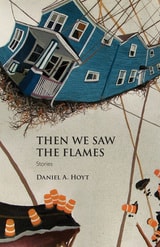
Then We Saw the Flames
StoriesDaniel A. Hoyt
University of Massachusetts Press, 2009
In this freewheeling debut collection, Daniel A. Hoyt takes us from the swamps of Florida to the streets of Dresden, to the skies above America, to the tourist hotels of Acapulco, to the southwest corner of Nebraska. Along the way, we encounter a remarkable group of characters all struggling to find their footing in an unsettling world.
Sometimes magical, sometimes realistic, sometimes absurd, these stories reveal people teetering on the dangerous edge of their lives. In “Amar,” a Turkish restaurant owner deals with skinheads and the specter of violence that haunts his family. In “Boy, Sea, Boy,” a shipwrecked sailor receives a surreal visitor, a version of himself as a child. In “The Collection,” a father and son squander a trove of bizarre and fanciful objects. And in “The Kids,” a suburban couple grasp for meaning after discovering children eating from their trash.
In each of these stories, characters find themselves challenged by the political, cultural, and spiritual forces that define their lives. With a clear eye and a steady hand, Hoyt explores a fragile balance: the flames—fueled by love, loss, hope, and family—shed new light on us. Sometimes we feel warmth, and sometimes we simply burn.
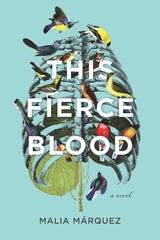
This Fierce Blood
A NovelMalia Márquez
Acre Books, 2021
In rural late-nineteenth-century New England, Wilhelmina Sylte is a settler starting a family with her Norwegian immigrant husband. When she forms an inexplicable connection with a mountain lion and her cubs living near their farm, Mina grapples with divided loyalties and the mysterious bond she shares with the animals.
In 1927 in southern Colorado, Josepa is accused of witchcraft by a local priest for using the healing practices passed down from her Native mother. Fighting for her family’s reputation and way of life, Sepa finds strength in worldly and otherworldly sources.
When Magdalena, an ecologist, inherits her great-grandmother Wilhelmina’s Vermont property, she and her astrophysicist husband decide to turn the old farm into a summer science camp for teens. As Magda struggles with both personal and professional responsibilities, the boundary between science and myth begins to blur.
Rich in historical and cultural detail, This Fierce Blood combines magical realism with themes of maternal ancestral inheritance, and also explores the ways Hispano/Indigenous traditions both conflicted and wove together, shaping the distinctive character of the American Southwest. Readers of Téa Obreht and Ruth Ozeki will find much to admire in this debut novel.

Tsing
David Albahari
Northwestern University Press, 1997