Results by title
78 books match the query 'Fascism & Totalitarianism' and 21 start with t
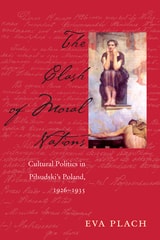
The Clash of Moral Nations
Cultural Politics in Pilsudski’s Poland, 1926–1935Eva Plach
Ohio University Press, 2006
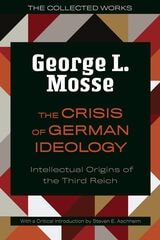
The Crisis of German Ideology
Intellectual Origins of the Third ReichGeorge L. Mosse
University of Wisconsin Press, 2021
George L. Mosse (1918–99) was a legendary scholar, teacher, and mentor. A refugee from Nazi Germany, in 1955 he joined the Department of History at the University of Wisconsin–Madison, where he was both influential and popular. Mosse was an early leader in the study of modern European cultural and intellectual history, fascism, and the history of sexuality and masculinity. Over his career he authored more than two dozen books.
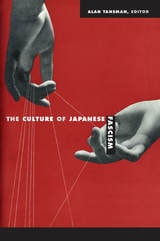
The Culture of Japanese Fascism
Alan Tansman, ed.
Duke University Press, 2009
Several contributors examine how fascism was understood in the 1930s by, for example, influential theorists, an antifascist literary group, and leading intellectuals responding to capitalist modernization. Others explore the idea that fascism’s solution to alienation and exploitation lay in efforts to beautify work, the workplace, and everyday life. Still others analyze the realization of and limits to fascist aesthetics in film, memorial design, architecture, animal imagery, a military museum, and a national exposition. Contributors also assess both manifestations of and resistance to fascist ideology in the work of renowned authors including the Nobel-prize-winning novelist and short-story writer Kawabata Yasunari and the mystery writers Edogawa Ranpo and Hamao Shirō. In the work of these final two, the tropes of sexual perversity and paranoia open a new perspective on fascist culture. This volume makes Japanese fascism available as a critical point of comparison for scholars of fascism worldwide. The concluding essay models such work by comparing Spanish and Japanese fascisms.
Contributors. Noriko Aso, Michael Baskett, Kim Brandt, Nina Cornyetz, Kevin M. Doak, James Dorsey, Aaron Gerow, Harry Harootunian, Marilyn Ivy, Angus Lockyer, Jim Reichert, Jonathan Reynolds, Ellen Schattschneider, Aaron Skabelund, Akiko Takenaka, Alan Tansman, Richard Torrance, Keith Vincent, Alejandro Yarza
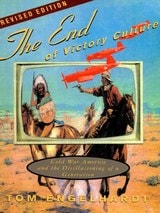
The End of Victory Culture
Cold War America and the Disillusioning of a GenerationThomas M. Engelhardt
University of Massachusetts Press, 2007
In a substantial new afterword to his classic account of the collapse of American triumphalism in the wake of World War II, Tom Engelhardt carries that story into the twenty-first century. He explores how, in the aftermath of September 11, 2001, the younger George Bush headed for the Wild West (Osama bin Laden, “Wanted, Dead or Alive”); how his administration brought “victory culture” roaring back as part of its Global War on Terror and its rush to invade Saddam Husseins's Iraq; and how, from its “Mission Accomplished” moment on, its various stories of triumph crashed and burned in that land.
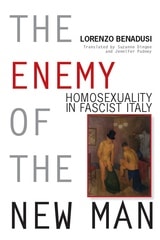
The Enemy of the New Man
Homosexuality in Fascist ItalyLorenzo Benadusi
University of Wisconsin Press, 2012
In this first in-depth historical study of homosexuality in Fascist Italy, Lorenzo Benadusi brings to light immensely important archival documents regarding the sexual politics of the Italian Fascist regime; he adds new insights to the study of the complex relationships of masculinity, sexuality, and Fascism; he explores the connections between new Fascist values and preexisting Italian traditional and Roman Catholic views on morality; he documents both the Fascist regime’s denial of the existence of homosexuality in Italy and its clandestine strategies and motivations for repressing and imprisoning homosexuals; he uncovers the ways that accusations of homosexuality (whether true or false) were used against political and personal enemies; and above all, he shows how homosexuality was deemed the enemy of the Fascist “New Man,” an ideal of a virile warrior and dominating husband vigorously devoted to the “political” function of producing children for the Fascist state.
Benadusi investigates the regulation and regimentation of gender in Fascist Italy, and the extent to which, in uneasy concert with the Catholic Church, the regime engaged in the cultural and legal engineering of masculinity and femininity. He cites a wealth of unpublished documents, official speeches, letters, coerced confessions, private letters and diaries, legal documents, and government memos to reveal and analyze how the orders issued by the regime attempted to protect the “integrity of the Italian race.” For the first time, documents from the Vatican archives illuminate how the Catholic Church dealt with issues related to homosexuality during the Fascist period in Italy.
The Eugenic Fortress
The Transylvanian Saxon Experiment in Interwar RomaniaTudor Georgescu
Central European University Press, 2016
The Fascist Revolution
Toward a General Theory of FascismGeorge L. Mosse, with a critical introduction by Roger Griffin
University of Wisconsin Press, 2021

The Global Police State
William I Robinson
Pluto Press, 2020
"Karl Marx aspired to a world in which our animal needs would be satisfied and our human needs could be addressed. It is a realistic possibility now, as William Robinson outlines—or the alternative that is taking shape before our eyes: a 'global police state' controlled by narrowly concentrated capital with 'surplus humanity' left to survive somehow on its own. The choice is in our hands."
—Noam Chomsky, author of Who Rules the World?
As the world becomes ever more unequal, people become ever more “disposable.” Today, governments systematically exclude sections of their populations from society through heavy-handed policing. But it doesn't always go to plan.
William I. Robinson exposes the nature and dynamics of this out-of-control system, arguing for the urgency of creating a movement capable of overthrowing it. The global police state uses a variety of ingenious methods of control, including mass incarceration, police violence, US-led wars, the persecution of immigrants and refugees, and the repression of environmental activists.
He writes in his Introduction, “I offer a ‘big picture” of the emerging global police state in a short book that is eminently readable. The pages to follow may startle many readers and make them angry. I trust the work will serve as a warning of the dystopic future that is upon us. More importantly, by exposing the nature and dynamic of this out-of-control system, I hope it will contribute to the struggles to bring about an alternative future based on human freedom and liberation.”
Movements have emerged to combat the increasing militarization, surveillance and social cleansing; however, many of them appeal to a moral sense of social justice rather than addressing its root: global capitalism.
Using shocking data which reveals how far capitalism has become a system of repression, Robinson argues that the emerging megacities of the world are becoming the battlegrounds where the excluded and the oppressed face off against the global police state.
The Know-Nothing Campaign Against Higher Learning
James Chandler
Prickly Paradigm Press, 2026
Irony and satire in the contemporary American moment.
The second Trump administration has committed itself to upending the knowledge systems and deliberative institutions that have been essential to modern democracy, with the American university—site of scientific research and liberal education—a primary target. In The Know-Nothing Campaign Against Higher Learning, literary and film critic James Chandler spotlights an American tradition of such hostility to intellectual life, especially the nativist movement of the 1850s that persecuted Catholic immigrants from Ireland and Germany. Ironically, Steve Bannon, the self-proclaimed “Know-Nothing vulgarian” who long ago recruited candidate Trump to his anti-intellectual crusade, is himself the great-grandson of an Irish immigrant who would have faced Know-Nothing backlash in that era.
Such dark ironies define our moment, Chandler argues, and they call out not only for intellectual critique but also for satire. Yet in the midst of the MAGA campaign’s calamitous effects on American public discourse, even satire must confront the “kayfabe” practices imported by Trump from professional wrestling, which mix illusion and reality to turn political life into a “spectacle without thought.” Drawing widely on cultural critics from Jonathan Swift and Alexis de Tocqueville to Roland Barthes, Chandler’s pamphlet offers an elegant and bracing account of the MAGA campaign against higher learning and its transformative effects on criticism and democracy itself.
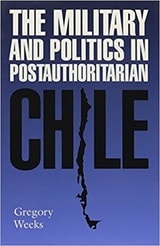
The Military and Politics in Postauthoritarian Chile
Gregory Weeks
University of Alabama Press, 2003
"The Military and Politics in Post-Authoritarian Chile should be read by everyone concerned with the relation between democracy and the armed forces. It is a well-researched, well-written volume that should prove both interesting and useful to scholars and students alike." —Perspectives on Politics
Why have political leaders of developing and authoritarian nations run into so many obstacles as they attempt to establish civilian supremacy over armed forces in the democratization of their countries? This is the question Gregory Weeks poses in his study of Chile from 1990 onward. He explains how the Chilean military has maintained a high level of political influence in the tumultuous aftermath of dictatorial rule by Army General Augusto Pinochet, thus confounding a smooth transition to civilian authority.
Even after the reins of power were officially handed over in 1990, Pinochet continued as commander in chief of the army until 1998, when he took a lifetime seat in the Senate and led the military’s efforts to retain its legal and constitutional prerogatives while limiting civilian oversight of military affairs. This assertion of guardianship by the military has produced a political tug-of-war between it and civilian authorities the two contenders for political primacy in Chile. In addition to recounting the historical background of this situation, Weeks’s study examines where conflict between these two contenders has been most productive and accord has been highest. His findings suggest that formal contacts, conducted through formal institutions, have been the most conducive to civil supremacy and, therefore, the consolidation of democracy.
Based on interviews, government documents, military journals, newspapers, and other archival sources, The Military and Politics in Postauthoritarian Chile describes how presidents, military officers, members of Congress, and judges have interacted since the end of the military regime. With implications for conflict resolution studies, this book will be valuable for Chileanists and policymakers and analysts of Latin American regimes, as well as academic libraries, military historians, social scientists, and students and scholars of Latin American history and politics.
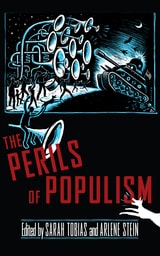
The Perils of Populism
Sarah Tobias
Rutgers University Press, 2022
The Perils of Populism shows how a feminist lens can help diagnose the factors behind the global rise of right-wing populism and teach us how to resist the threat it presents to democracy. Featuring interdisciplinary essays about politics in the United States, the Middle East, Europe, and India from a variety of acclaimed theorists and activists, the volume contributes to a rapidly expanding literature on gender and the far right. Together, these chapters offer a truly intersectional analysis of the problem, addressing everything from how populism has thrived in a “post-truth” era to the ways it appeals to working-class voters looking for an alternative to neoliberalism. Yet the authors also find reasons to be hopeful, as they showcase forms of grassroots feminist activism that challenge right-wing populism by advocating for racial and economic justice.
The Personality of Power
A Theory of Fascism for Anti-fascist LifeBrian Massumi
Duke University Press, 2025
The Rhetoric of Fascism
Edited by Nathan Crick
University of Alabama Press, 2022
Decoding the discourse: Rhetorical foundations of authoritarian power.
Fascism has resurfaced as one of the most pressing problems of our time. The rise of extremist parties and candidates in Europe, the United States, and around the globe has led even mainstream political commentators to begin using the term “fascism” to describe dangerous movements that have revived and repackaged many of the strategies long thought to have been relegated to the margins of political rhetoric. No longer just confined to the state regimes of the past, fascism thrives today as a globally self-augmenting, self-propagating rhetorical phenomenon with a variety of faces and expressions.
The Rhetoric of Fascism defines and interprets the common persuasive devices that characterize fascist discourse to understand the nature of its enduring appeal. By approaching fascism from a rhetorical perspective, this volume complements established political and sociological understandings of fascism as a movement or regime. A rhetorical approach studies fascism less as a party one joins than as a set of persuasive strategies one adopts. Fascism spreads precisely because it is not a coherent entity. Instead, it exists as a loosely bound and often contradictory collection of persuasive trajectories that have attained enough coherence to mobilize and channel the passions of a self-constituted mass of individuals.
Introductory chapters focus on general theories of fascism drawn from twentieth-century history and theory. Contributors investigate specific historical figures and their relationship to contemporary rhetorics, focusing on a specific rhetorical device that is characteristic of fascist rhetoric. A common thread throughout every chapter is that fascist devices are appealing because they speak to us in the familiar language of our culture. As we are seduced by one device at a time, we soon find ourselves part of a movement, a group, or a campaign that makes us act in ways we might never have imagined. This volume reveals that fascism may be closer to home than we think.
CONTRIBUTORS
Patrick D. Anderson / Rya Butterfield / Nathan Crick / Elizabeth R. Earle / Zac Gershberg / Stephen J. Hartnett / Marie-Odile N. Hobeika / Sean Illing / Jacob A. Miller / Fernando Ismael Quiñones Valdivia / Patricia Roberts-Miller / Raquel M. Robvais / Bradley A. Serber / Ryan Skinnell
The Second World War
A Marxist HistoryChris Bambery
Pluto Press, 2014
The Second World War casts a long shadow, portrayed as a necessary and paradigmatic war that defeated fascism. During recent wars in Iraq, Afghanistan and elsewhere, US presidents and British prime ministers have tried to claim they were following in the footsteps of Winston Churchill by standing up to dictators.
In The Second World War Chris Bambery tests this position in a thorough account of the war and tries to understand why it still dominates TV history channels and school history books.
Bambery argues that the conflict ultimately was about a division of the world between the great powers, as well as a rising of ordinary people against fascism. He offers a complex and radical analysis, that is unique when compared to many modern and conventional histories of the war.
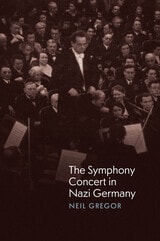
The Symphony Concert in Nazi Germany
Neil Gregor
University of Chicago Press, 2025
In the years after the Nazis came to power in January 1933 and throughout the Second World War, all aspects of life in Germany changed. Despite the social and political upheaval, gentile citizens continued to attend concerts. In this book, historian Neil Gregor surveys how the classical concert scene was impacted in Nazi Germany. Taking the perspective of the audience, rather than institutions or performers, Gregor delves into the cultural lives of ordinary Germans under conditions of dictatorship. Did the ways in which Germans heard music in the period change? Did a Nazi way of listening emerge?
For audiences, Gregor shows, changes to the concert experience were small and often took place around the edges. This, combined with the preserved idea of the concert hall as a space of imagined civility and cultivation, led many concertgoers and music lovers to claim after the war that their field and their practice had been innocent—a place to retreat from the vicious violence and racism of the Nazi regime. Drawing on untapped archival sources, The Symphony Concert in Nazi Germany reveals that the true history was one of disruption but also of near seamless adaptation. Through countless small acts, the symphony concert was reframed within the languages of strident nationalism, racism, and militarism to ensure its place inside the cultural cosmos of National Socialist Germany.
The Totalitarian Experience
Tzvetan Todorov
Seagull Books, 2011
They Thought They Were Free
The Germans, 1933-45Milton Mayer
University of Chicago Press, 1966
“What happened here was the gradual habituation of the people, little by little, to being governed by surprise; to receiving decisions deliberated in secret; to believing that the situation was so complicated that the government had to act on information which the people could not understand, or so dangerous that, even if the people could not understand it, it could not be released because of national security. And their sense of identification with Hitler, their trust in him, made it easier to widen this gap and reassured those who would otherwise have worried about it.”--from Chapter 13, “But Then It Was Too Late”
They Thought They Were Free
The Germans, 1933–45Milton Mayer
University of Chicago Press, 2017
“When this book was first published it received some attention from the critics but none at all from the public. Nazism was finished in the bunker in Berlin and its death warrant signed on the bench at Nuremberg.”
That’s Milton Mayer, writing in a foreword to the 1966 edition of They Thought They Were Free. He’s right about the critics: the book was a finalist for the National Book Award in 1956. General readers may have been slower to take notice, but over time they did—what we’ve seen over decades is that any time people, across the political spectrum, start to feel that freedom is threatened, the book experiences a ripple of word-of-mouth interest.
They Thought They Were Free is an eloquent and provocative examination of the development of fascism in Germany. Mayer’s book is a study of ten Germans and their lives from 1933-45, based on interviews he conducted after the war when he lived in Germany. Mayer had a position as a research professor at the University of Frankfurt and lived in a nearby small Hessian town which he disguised with the name “Kronenberg.” “These ten men were not men of distinction,” Mayer noted, but they had been members of the Nazi Party; Mayer wanted to discover what had made them Nazis. His discussions with them of Nazism, the rise of the Reich, and mass complicity with evil became the backbone of this book, an indictment of the ordinary German that is all the more powerful for its refusal to let the rest of us pretend that our moment, our society, our country are fundamentally immune.
A new foreword to this edition by eminent historian of the Reich Richard J. Evans puts the book in historical and contemporary context. We live in an age of fervid politics and hyperbolic rhetoric. They Thought They Were Free cuts through that, revealing instead the slow, quiet accretions of change, complicity, and abdication of moral authority that quietly mark the rise of evil.
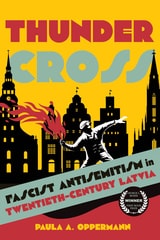
Thunder Cross
Fascist Antisemitism in Twentieth-Century LatviaPaula A. Oppermann
University of Wisconsin Press, 2025
Thunder Cross is the most comprehensive study of Latvia’s fascist movement in English to date, and the only work that investigates the often neglected continuities of fascist antisemitism after World War II. Formulated as an empirical case study, this book draws on international and interdisciplinary secondary literature and sources in seven languages to broaden our understanding of fascism, antisemitism, and mass violence from Germany and Italy to the larger European context.
Totalitarian Societies and Democratic Transition
Essays in Memory of Victor ZaslavskyRiccardo James Vargiu
Central European University Press, 2017
Tyrants Writing Poetry
Albrecht Koschorke
Central European University Press, 2018