Results by title
77 books match the query 'Fieldwork' and 11 start with t
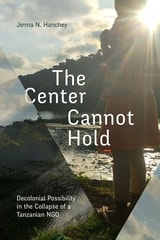
The Center Cannot Hold
Decolonial Possibility in the Collapse of a Tanzanian NGOJenna N. Hanchey
Duke University Press, 2023
In The Center Cannot Hold Jenna N. Hanchey examines the decolonial potential emerging from processes of ruination and collapse. Drawing on ethnographic fieldwork in rural Tanzania at an internationally funded NGO as it underwent dissolution, Hanchey traces the conflicts between local leadership and Western paternalism as well as the unstable subjectivity of Western volunteers—including the author—who are unable to withstand the contradictions of playing the dual roles of decolonializing ally and white savior. She argues that Western institutional and mental structures must be allowed to fall apart to make possible the emergence of decolonial justice. Hanchey shows how, through ruination, privileged subjects come to critical awareness through repeated encounters with their own complicity, providing an opportunity to delink from and oppose epistemologies of coloniality. After things fall apart, Hanchey posits, the creation of decolonial futures depends on the labor required to imagine impossible futures into being.
[more]
The Chicago Guide to Collaborative Ethnography
Luke Eric Lassiter
University of Chicago Press, 2005
Collaboration between ethnographers and subjects has long been a product of the close, intimate relationships that define ethnographic research. But increasingly, collaboration is no longer viewed as merely a consequence of fieldwork; instead collaboration now preconditions and shapes research design as well as its dissemination. As a result, ethnographic subjects are shifting from being informants to being consultants. The emergence of collaborative ethnography highlights this relationship between consultant and ethnographer, moving it to center stage as a calculated part not only of fieldwork but also of the writing process itself.
The Chicago Guide to Collaborative Ethnography presents a historical, theoretical, and practice-oriented road map for this shift from incidental collaboration to a more conscious and explicit collaborative strategy. Luke Eric Lassiter charts the history of collaborative ethnography from its earliest implementation to its contemporary emergence in fields such as feminism, humanistic anthropology, and critical ethnography. On this historical and theoretical base, Lassiter outlines concrete steps for achieving a more deliberate and overt collaborative practice throughout the processes of fieldwork and writing. As a participatory action situated in the ethical commitments between ethnographers and consultants and focused on the co-construction of texts, collaborative ethnography, argues Lassiter, is among the most powerful ways to press ethnographic fieldwork and writing into the service of an applied and public scholarship.
A comprehensive and highly accessible handbook for ethnographers of all stripes, The Chicago Guide to Collaborative Ethnography will become a fixture in the development of a critical practice of anthropology, invaluable to both undergraduates, graduate students, and faculty alike.
[more]
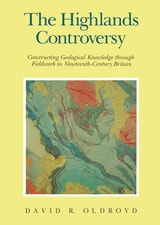
The Highlands Controversy
Constructing Geological Knowledge through Fieldwork in Nineteenth-Century BritainDavid R. Oldroyd
University of Chicago Press, 1990
The Highlands Controversy is a rich and perceptive account of the third and last major dispute in nineteenth-century geology stemming from the work of Sir Roderick Murchison. The earlier Devonian and Cambrian-Silurian controversies centered on whether the strata of Devon and Wales should be classified by lithological or paleontological criteria, but the Highlands dispute arose from the difficulties the Scottish Highlands presented to geologists who were just learning to decipher the very complex processes of mountain building and metamorphism. David Oldroyd follows this controversy into the last years of the nineteenth century, as geology was transformed by increasing professionalization and by the development of new field and laboratory techniques. In telling this story, Oldroyd's aim is to analyze how scientific knowledge is constructed within a competitive scientific community—how theory, empirical findings, and social factors interact in the formation of knowledge.
Oldroyd uses archival material and his own extensive reconstruction of the nineteenth-century fieldwork in a case study showing how detailed maps and sections made it possible to understand the exceptionally complex geological structure of the Highlands
An invaluable addition to the history of geology, The Highlands Controversy also makes important contributions to our understanding of the social and conceptual processes of scientific work, especially in times of heated dispute.
[more]
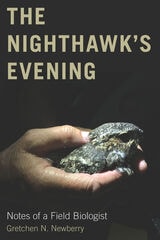
The Nighthawk's Evening
Notes of a Field BiologistGretchen N. Newberry
Oregon State University Press, 2021
In her late thirties, Gretchen Newberry left her office job in Portland, Oregon, to become a wildlife biologist studying nighthawks. The common nighthawk, Chordeiles minor, has long fascinated birders, scientists, farmers, and anyone who has awoken to its raspy calls on a hot city night. In The Nighthawk’s Evening, Newberry charts her journey across North America to study these birds, from the islands of British Columbia to rooftops in South Dakota, Oregon sagebrush, and Wisconsin forests.
This acrobatic, night-flying bird nests on rooftops and flocks in the thousands as it migrates from Alaska to Argentina and back every year. Nighthawks are strange animals, reptiles with feathers, sleepy during the day, but quick, agile, and especially adept at survival. They have the ability to withstand extreme temperatures and adapt to many habitats, but they are struggling for survival in the Anthropocene.
Newberry’s story focuses on the bird itself—its complex conservation status and cultural significance—and the larger, often hidden world of nocturnal animals. Along the way, she gives readers insight into the daily life of a scientist, especially one who works primarily at night. The Nighthawk’s Evening uses one scientist and one species to explore the challenges, disappointments, and successes of scientific research and conservation efforts. An accessible work of science, it will appeal to birders, students, wildlife managers, and anyone who is fascinated by urban wildlife.
[more]
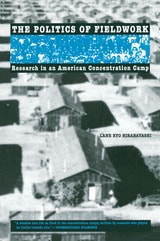
The Politics of Fieldwork
Research in an American Concentration CampLane Ryo Hirabayashi
University of Arizona Press, 1999
During World War II, over thirty American anthropologists participated in empirical and applied research on more than 110,000 Japanese Americans subjected to mass removal and incarceration by the federal government. While that experience has been widely discussed, what has received little critical attention are the experiences of the Japanese and Japanese American field assistants who conducted extensive research within the camps. How did these field researchers carry out data collection in American-style concentration camps? What kinds of constraints and pressures did they face? How did they respond to practical, ethical, and political challenges?
In addressing these questions, author Lane Hirabayashi examines the case of the late Dr. Tamie Tsuchiyama. At the time an advanced doctoral student in anthropology, Tsuchiyama was hired in 1942 to conduct ethnographic fieldwork for the University of California at Berkeley's Japanese American Evacuation and Resettlement Study. Drawing from personal letters, ethnographic fieldnotes, reports, interviews, and other archival sources, The Politics of Fieldwork describes Tsuchiyama's experiences as a researcher at Poston, Arizona—a.k.a. the Colorado River Relocation Center. The book relates the daily life, fieldwork methodology, and politics of the residents and researchers at the Poston camp, as well as providing insight into the pressures that led to Tsuchiyama's ultimate resignation, in protest, from the JERS project in 1945.
Facilitating the critical analysis of Tsuchiyama's role in the JERS research are questions regarding the relationships between Japanese American research and the nature of "colonial science" that merit discussion in contemporary field research. A multidisciplinary synthesis of anthropological, historical, and ethnic studies perspectives, The Politics of Fieldwork is rich with lessons about the ethics and politics of ethnographic fieldwork.
[more]
The Restless Anthropologist
New Fieldsites, New VisionsEdited by Alma Gottlieb
University of Chicago Press, 2012
What does a move from a village in the West African rain forest to a West African community in a European city entail? What about a shift from a Greek sheep-herding community to working with evictees and housing activists in Rome and Bangkok? In The Restless Anthropologist, Alma Gottlieb brings together eight eminent scholars to recount the riveting personal and intellectual dynamics of uprooting one’s life—and decades of work—to embrace a new fieldsite.
Addressing questions of life-course, research methods, institutional support, professional networks, ethnographic models, and disciplinary paradigm shifts, the contributing writers of The Restless Anthropologist discuss the ways their earlier and later projects compare on both scholarly and personal levels, describing the circumstances of their choices and the motivations that have emboldened them to proceed, to become novices all over again. In doing so, they question some of the central expectations of their discipline, reimagining the space of the anthropological fieldsite at the heart of their scholarly lives.
[more]
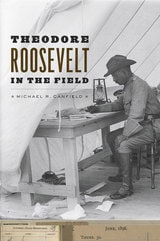
Theodore Roosevelt in the Field
Michael R. Canfield
University of Chicago Press, 2015
Never has there been a president less content to sit still behind a desk than Theodore Roosevelt. When we picture him, he's on horseback or standing at a cliff’s edge or dressed for safari. And Roosevelt was more than just an adventurer—he was also a naturalist and campaigner for conservation. His love of the outdoor world began at an early age and was driven by a need not to simply observe nature but to be actively involved in the outdoors—to be in the field. As Michael R. Canfield reveals in Theodore Roosevelt in the Field, throughout his life Roosevelt consistently took to the field as a naturalist, hunter, writer, soldier, and conservationist, and it is in the field where his passion for science and nature, his belief in the manly, “strenuous life,” and his drive for empire all came together.
Drawing extensively on Roosevelt’s field notebooks, diaries, and letters, Canfield takes readers into the field on adventures alongside him. From Roosevelt’s early childhood observations of ants to his notes on ornithology as a teenager, Canfield shows how Roosevelt’s quest for knowledge coincided with his interest in the outdoors. We later travel to the Badlands, after the deaths of Roosevelt’s wife and mother, to understand his embrace of the rugged freedom of the ranch lifestyle and the Western wilderness. Finally, Canfield takes us to Africa and South America as we consider Roosevelt’s travels and writings after his presidency. Throughout, we see how the seemingly contradictory aspects of Roosevelt’s biography as a hunter and a naturalist are actually complementary traits of a man eager to directly understand and experience the environment around him.
As our connection to the natural world seems to be more tenuous, Theodore Roosevelt in the Field offers the chance to reinvigorate our enjoyment of nature alongside one of history’s most bold and restlessly curious figures.
[more]
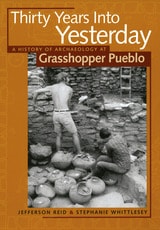
Thirty Years Into Yesterday
A History of Archaeology at Grasshopper PuebloJefferson Reid and Stephanie Whittlesey
University of Arizona Press, 2005
For thirty years, the University of Arizona Archaeological Field School at Grasshopper—a 500-room Mogollon pueblo located on what is today the Fort Apache Indian Reservation in Arizona—probed the past, taught scholars of international repute, and generated controversy. This book offers an extraordinary window into a changing American archaeology and three different research programs as they confronted the same pueblo ruin.
Like the enigmatic Mogollon culture it sought to explore and earlier University of Arizona field schools in the Forestdale Valley and at Point of Pines, Grasshopper research engendered decades of controversy that still lingers in the pages of professional journals. Jefferson Reid and Stephanie Whittlesey, players in the controversy who are intimately familiar with the field school that ended in 1992, offer a historical account of this major archaeological project and the intellectual debates it fostered.
Thirty Years Into Yesterday charts the development of the Grasshopper program under three directors and through three periods dominated by distinct archaeological paradigms: culture history, processual archaeology, and behavioral archaeology. It examines the contributions made each season, the concepts and methods each paradigm used, and the successes and failures of each. The book transcends interests of southwestern archaeologists in demonstrating how the three archaeological paradigms reinterpreted Grasshopper, illustrating larger shifts in American archaeology as a whole. Such an opportunity will not come again, as funding constraints, ethical concerns, and other issues no doubt will preclude repeating the Grasshopper experience in our lifetimes.
Ultimately, Thirty Years Into Yesterday continues the telling of the Grasshopper story that was begun in the authors’ previous books. In telling the story of the archaeologists who recovered the material residue of past Mogollon lives and the place of the Western Apache people in their interpretations, Thirty Years Into Yesterday brings the story full circle to a stunning conclusion.
[more]
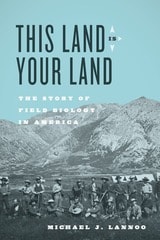
This Land Is Your Land
The Story of Field Biology in AmericaMichael J. Lannoo
University of Chicago Press, 2018
Field biology is enjoying a resurgence due to several factors, the most important being the realization that there is no ecology, no conservation, and no ecosystem restoration without an understanding of the basic relationships between species and their environments—an understanding gleaned only through field-based natural history. With this resurgence, modern field biologists find themselves asking fundamental existential questions such as: Where did we come from? What is our story? Are we part of a larger legacy? In This Land Is Your Land, seasoned field biologist Michael J. Lannoo answers these questions and more in a tale rooted in the people and institutions of the Midwest. It is a story told from the ground up, a rubber boot–based natural history of field biology in America.
Lannoo illuminates characters such as John Wesley Powell, William Temple Hornaday, and Olaus and Adolph Murie—homegrown midwestern field biologists who either headed east to populate major research centers or went west to conduct their fieldwork along the frontier. From the pioneering work of Victor Shelford, Henry Chandler Cowles, and Aldo Leopold to contemporary insights from biologists such as Jim Furnish and historians such as William Cronon, Lannoo’s unearthing of American—and particularly midwestern—field biologists reveals how these scientists influenced American ecology, conservation biology, and restoration ecology, and in turn drove global conservation efforts through environmental legislation and land set-asides. This Land Is Your Land reveals the little-known legacy of midwestern field biologists, whose ethos and discoveries have enabled us to preserve and understand not just their land, but all lands.
Lannoo illuminates characters such as John Wesley Powell, William Temple Hornaday, and Olaus and Adolph Murie—homegrown midwestern field biologists who either headed east to populate major research centers or went west to conduct their fieldwork along the frontier. From the pioneering work of Victor Shelford, Henry Chandler Cowles, and Aldo Leopold to contemporary insights from biologists such as Jim Furnish and historians such as William Cronon, Lannoo’s unearthing of American—and particularly midwestern—field biologists reveals how these scientists influenced American ecology, conservation biology, and restoration ecology, and in turn drove global conservation efforts through environmental legislation and land set-asides. This Land Is Your Land reveals the little-known legacy of midwestern field biologists, whose ethos and discoveries have enabled us to preserve and understand not just their land, but all lands.
[more]
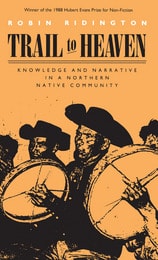
Trail to Heaven
Knowledge and Narrative in a Northern Native CommunityRobin Ridington
University of Iowa Press, 1992
[more]
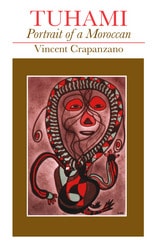
Tuhami
Portrait of a MoroccanVincent Crapanzano
University of Chicago Press, 1980
Tuhami is an illiterate Moroccan tilemaker who believes himself married to a camel-footed she-demon. A master of magic and a superb story-teller, Tuhami lives in a dank, windowless hovel near the kiln where he works. Nightly he suffers visitations from the demons and saints who haunt his life, and he seeks, with crippling ambivalence, liberation from 'A'isha Qandisha, the she-demon.
In a sensitive and bold experiment in interpretive ethnography, Crapanzano presents Tuhami's bizarre account of himself and his world. In so doing, Crapanzano draws on phenomenology, psychoanalysis, and symbolism to reflect upon the nature of reality and truth and to probe the limits of anthropology itself. Tuhami has become one of the most important and widely cited representatives of a new understanding of the whole discipline of anthropology.
In a sensitive and bold experiment in interpretive ethnography, Crapanzano presents Tuhami's bizarre account of himself and his world. In so doing, Crapanzano draws on phenomenology, psychoanalysis, and symbolism to reflect upon the nature of reality and truth and to probe the limits of anthropology itself. Tuhami has become one of the most important and widely cited representatives of a new understanding of the whole discipline of anthropology.
[more]