Results by title
53 books match the query 'Film adaptations' and 4 start with t

Take Two
Adapting the Contemporary American Novel to FilmBarbara Tepa Lupack
University of Wisconsin Press, 1994
Different in its complexities from the classic novels of Dickens, London, and Tolstoy to which earlier filmmakers turned, the contemporary American novel poses a real challenge to the filmmaker, who must translate its occasionally unfilmable essence for a new audience. Take Two closely analyzes the adaptations of ten such works: Catch-22, One Flew over the Cuckoo's Nest, Slaughterhouse-Five, Being There, The World According to Garp, Sophie’s Choice, The Color Purple, Ironweed, Tough Guys Don't Dance, and Billy Bathgate.
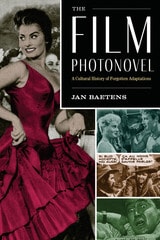
The Film Photonovel
A Cultural History of Forgotten AdaptationsBy Jan Baetens
University of Texas Press, 2019
Discarded by archivists and disregarded by scholars despite its cultural impact on post–World War II Europe, the film photonovel represents a unique crossroads. This hybrid medium presented popular films in a magazine format that joined film stills or set pictures with captions and dialogue balloons to re-create a cinematic story, producing a tremendously popular blend of cinema and text that supported more than two dozen weekly or monthly publications.
Illuminating a long-overlooked ‘lowbrow’ medium with a significant social impact, The Film Photonovel studies the history of the format as a hybrid of film novelizations, drawn novels, and nonfilm photonovels. While the field of adaptation studies has tended to focus on literary adaptations, this book explores how the juxtaposition of words and pictures functioned in this format and how page layout and photo cropping could affect reading. Finally, the book follows the film photonovel's brief history in Latin America and the United States. Adding an important dimension to the interactions between filmmakers and their audiences, this work fills a gap in the study of transnational movie culture.
To Love Is to Act
Les Misérables and Victor Hugo’s Vision for Leading Lives of ConscienceMarva A. Barnett
Swan Isle Press, 2019
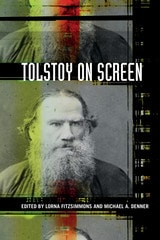
Tolstoy on Screen
Edited by Lorna Fitzsimmons and Michael A. Denner
Northwestern University Press, 2015
Scholarship on screen adaptation has proliferated in recent years, but it has remained largely focused on English- and Romance-language authors. Tolstoy on Screen aims to correct this imbalance with a comprehensive examination of film and television adaptations of Tolstoy’s fiction. Spanning the silent era to the present day, these essays consider well-known as well as neglected works in light of contemporary adaptation and media theory. The book is organized to facilitate a comparative, cross-cultural understanding of the various practices employed in different eras and different countries to bring Tolstoy’s writing to the screen. International in scope and rigorous in analysis, the essays cast new light on Tolstoy’s work and media studies alike.