Results by title
168 books match the query 'Health Policy' and 36 start with t

Technological Change in Health Care
A Global Analysis of Heart AttackMark B. McClellan and Daniel P. Kessler, Editors
University of Michigan Press, 2002
The comparisons presented here confirm that the use of medical technology in treatment for heart attack is strongly related to incentives, and that technological change is an important cause of medical expenditure growth in all developed countries. Each participating research team reviewed the economic and regulatory incentives provided by their country's health system, and major changes in those incentives over the 1980s and 1990s, according to a commonly used framework. Such incentives include: the magnitude of out-of-pocket costs to patients, the generosity of reimbursement to physicians and hospitals, regulation of the use of new technologies or the supply of physicians, regulation of competition, and the structure of hospital ownership. Each team also reviewed how care for heart attacks has changed in their country over the past decade.
The book will be of enormous importance to health economists, medical researchers and epidemiologists, and policymakers.
Mark McClellan is Associate Professor of Economics and of Medicine and, by courtesy, of Health Research and Policy, Stanford University. He is a National Fellow, the Hoover Institution. Daniel P. Kessler is Associate Professor of Economics, Law, and Policy in the Graduate School of Business, Stanford University, and a Research Fellow, the Hoover Institution.
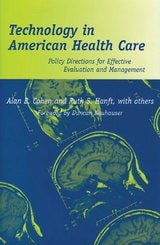
Technology in American Health Care
Policy Directions for Effective Evaluation and ManagementAlan B. Cohen and Ruth S. Hanft, with William E. Encinosa, Stephanie M. Spernak, Shirley A. Stewart, and Catherine C. White
University of Michigan Press, 2004
---The World Future Society, Best Books and Reports
"This excellent book provides a broad overview of the development, impact, and evaluation of health technology in the United States. . . .The authors take a well-organized and thorough approach to address these topics, combining reviews of each with case examples of particular technologies. . . .Given the broad scope of the book, it could serve as a text for students, an introduction to the field for healthcare professionals, or a tool for academics and policymakers wishing to fill knowledge gaps outside their disciplines. . . .The book makes a compelling case for the logic and potential benefits of medical technology evaluation as a tool for improving health care."
---Journal of the American Medical Association
"By being comprehensive in their review, the authors chart a clear path to understanding the future of health care technology in America. They clarify the technical methods for evaluation and provide insight into the sociopolitical aspects of development and diffusion. Case studies are informative. Excellent reading for students and health professionals either as a textbook or as an off-the-shelf guide to methods for deciding among alternative technologies."
---Norman W. Weissman, University of Alabama
"Technology today dominates every aspect of health care. This useful book offers a diverse range of perspectives for students, professors, and medical practitioners who wish to understand how to evaluate medical technology."
---Joel Howell, University of Michigan Medical School
Technology in American Health Care is a comprehensive, multidisciplinary guide to understanding how medical advances-new drugs, biological devices, and surgical procedures-are developed, brought to market, evaluated, and adopted into health care.
Cost-effective delivery of evidence-based health care is the sine qua non of American medicine in the twenty-first century. Health care decision makers, providers, payers, policymakers, and consumers all need vital information about the risks, benefits, and costs of new technologies in order to make informed decisions about which ones to adopt and how to use them. Alan B. Cohen and Ruth S. Hanft explore the evolving field of medical technology evaluation (MTE), as well as the current controversies surrounding the evaluation and diffusion of medical technologies, including the methods employed in their assessment and the policies that govern their adoption and use.
The book opens with an introduction that provides basic definitions and the history of technological change in American medicine, and a second chapter that explores critical questions regarding medical technology in health care. Part I discusses biomedical innovation, the development and diffusion of medical technology, and the adoption and use of technology by hospitals, physicians, and other health care organizations and professions under changing health care market conditions. Part II examines the methods of MTE-including randomized controlled trials, meta-analyses, economic evaluation methods (such as cost-benefit, cost-effectiveness, and cost-utility analyses), and clinical decision analysis. Part III focuses on key public policy issues and concerns that affect the organization, financing, and delivery of health care and that relate importantly to medical technology, including safety, efficacy, quality, cost, access, equity, social, ethical, legal, and evaluation concerns. All three parts of the book provide a historical perspective on the relevant issues, methods, and policy concerns and contain examples of technologies whose development, adoption, evaluation, and use have contributed to our understanding of the field.
This book will be invaluable in making MTE more accessible to individuals who are directly involved in the evaluation process and those who are touched by it in their professional lives-policymakers, clinicians, managers, and researchers.
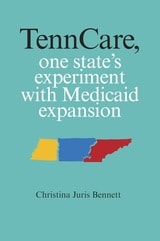
TennCare, One State's Experiment with Medicaid Expansion
Christina Juris Bennett
Vanderbilt University Press, 2014
While many states cut back on their Medicaid enrollments from 1993 to 2001, TennCare grew from 750,000 to 1.47 million enrollees. The state was less successful in controlling costs, however. Each major stakeholder group (the state, the managed care organizations, the providers, and the enrollees and their advocates) pushed back against parts of the state's strategy that adversely affected their interests, and they eventually dismantled the mechanisms of cost constraint.
The author lays out the four stakeholder perspectives for each period in the history of TennCare and provides a link to difficult-to-access primary documents.

Testing Baby
The Transformation of Newborn Screening, Parenting, and PolicymakingGrob, Rachel
Rutgers University Press, 2011
Within forty-eight hours after birth, the heel of every baby in the United States has been pricked and the blood sent for compulsory screening to detect or rule out a large number of disorders. Newborn screening is expanding rapidly, fueled by the prospect of saving lives. Yet many lives are also changed by it in ways not yet recognized.
Testing Baby is the first book to draw on parents’ experiences with newborn screening in order to examine its far-reaching sociological consequences. Rachel Grob’s cautionary tale also explores the powerful ways that parents’ narratives have shaped this emotionally charged policy arena. Newborn screening occurs almost always without parents’ consent and often without their knowledge or understanding, yet it has the power to alter such things as family dynamics at the household level, the context of parenting, the way we manage disease identity, and how parents’ interests are understood and solicited in policy debates.

The African Transformation of Western Medicine and the Dynamics of Global Cultural Exchange
David Baronov
Temple University Press, 2010
The book analyzes biomedicine as a complex and dynamic sociocultural form, the conceptual premises of which make it necessarily subject to ongoing change and development as it travels the globe. David Baronov captures the complexities of this cultural exchange by using world-systems analysis in a way that places global cultural processes on equal footing with political and economic processes. In doing so, he both allows the story of Africa’s transformation of “Western” biomedicine to be told and offers new insights into the capitalist world system.

The Body Soviet
Propaganda, Hygiene, and the Revolutionary StateTricia Starks
University of Wisconsin Press, 2008
Health, though essential to the revolutionary vision and crucial to Soviet plans for utopia, has been neglected by traditional histories caught up in Cold War debates. The Body Soviet recovers this significant aspect of Soviet thought by providing a cross-disciplinary, comparative history of Soviet health programs that draws upon rich sources of health care propaganda, including posters, plays, museum displays, films, and mock trials. The analysis of propaganda makes The Body Soviet more than an institutional history; it is also an insightful critique of the ideologies of the body fabricated by health organizations.
"A masterpiece that will thoroughly fascinate and delight readers. Starks's understanding of propaganda and hygiene in the early Soviet state is second to none. She tells the stories of Soviet efforts in this field with tremendous insight and ingenuity, providing a rich picture of Soviet life as it was actually lived."— Elizabeth Wood, author of From Baba to Comrade: Gender and Politics in Revolutionary Russia
The Challenge of Regulating Managed Care
John E. Billi and Gail B. Agrawal, Editors
University of Michigan Press, 2001

The Changing Hospital Industry
Comparing Not-for-Profit and For-Profit InstitutionsEdited by David M. Cutler
University of Chicago Press, 1999
This timely volume provides a factual basis for discussing for-profit versus not-for-profit ownership of hospitals and gives a first look at the evidence about new and important issues in the hospital industry. The Changing Hospital Industry: Comparing Not-for-Profit and For-Profit Institutions will have significant implications for public-policy reforms in this vital industry and will be of great interest to scholars in the fields of health economics, public finance, hospital organization, and management; and to health services researchers.
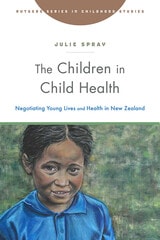
The Children in Child Health
Negotiating Young Lives and Health in New ZealandJulie Spray
Rutgers University Press, 2020
In the unique context of indigenous Māori and migrant Pacific children in postcolonial New Zealand, Julie Spray explores the intertwining issues of epidemic disease, malnutrition, stress, violence, self-harm, and death to address the problem of how scholars and policy-makers alike can recognize and respond to children as social actors in their health. The Children in Child Health innovatively combines perspectives from childhood studies, medical anthropology, and public health and policy together with evocative ethnography to show how a deep understanding of children’s worlds can change our approach to their care.

The China-US Partnership to Prevent Spina Bifida
The Evolution of a Landmark Epidemiological StudyDeborah Kowal
Vanderbilt University Press, 2015
Sixteen thousand staff were involved in running the project, which encountered massive bureaucratic obstacles as well as cultural differences, politicking for study designs and funding, the crisis of Tiananmen Square, and testy debates over research ethics. Nevertheless, the researchers persevered in a collaboration that lasted more than three decades and led to landmark findings on the role of folic acid in preventing spina bifida. Fortifying cereal grain products with folic acid became routine in the United States and a growing number of nations around the world: that intervention was named one of the ten great public health achievements of the last decade.
The City and the Hospital
The Paradox of Medically Overserved CommunitiesDaniel Skinner, Jonathan R. Wynn, and Berkeley Franz
University of Chicago Press, 2023
An enduring paradox of urban public health is that many communities around hospitals are economically distressed and, counterintuitively, medically underserved. In The City and the Hospital two sociologists, Jonathan R. Wynn and Berkeley Franz, and a political scientist, Daniel Skinner, track the multiple causes of this problem and offer policy solutions.
Focusing on three urban hospitals—Connecticut’s Hartford Hospital, the flagship of the Hartford Healthcare system; the Cleveland Clinic, which coordinates with other providers for routine care while its main campus provides specialty care; and the University of Colorado Hospital, a rare example of an urban institution that relocated to a new community—the authors analyze the complicated relationship between a hospital and its neighborhoods. On the one hand, hospitals anchor the communities that surround them, often staying in a neighborhood for decades. Hospitals also craft strategies to engage with the surrounding community, many of those focused on buying locally and hiring staff from their surrounding area. On the other hand, hospitals will often only provide care to the neighboring community through emergency departments, reserving advanced medical care and long-term treatment for those who can pay a premium for it. In addition, the authors show, hospitals frequently buy neighborhood real estate and advocate for development programs that drive gentrification and displacement.
To understand how urban healthcare institutions work with their communities, the authors address power, history, race, and urbanity as much as the workings of the medical industry. These varied initiatives and effects mean that understanding urban hospitals requires seeing them in a new light—not only as medical centers but as complicated urban forces.

The DeMarco Factor
Transforming Public Will into Political PowerMichael Pertschuk
Vanderbilt University Press, 2010
DeMarco's unique strategic template, developed over two decades of serial campaigning, includes momentum-building stages over a multiyear campaign; unrelenting, skillful access to the media for engaging public support; coalitions of hundreds, even thousands, of faith, community, labor, public health, and business groups; and a hard press on candidates to support legislation before elections, rather than after they are comfortably in office. As an organizer/leader, Demarco also succeeds in his campaigns through force of personality: his unquenchable exuberance and idiosyncrasies delight and madden his opponents--sometimes his allies, too.
Michael Pertschuk, himself a veteran advocate, here chronicles three of DeMarco's campaigns, each facing a different obstacle course. His deep analysis draws out strategic and leadership lessons that engaged citizens and advocates for popular causes stonewalled by powerful lobbies can put to immediate and practical use.
The Effluent Eye
Narratives for Decolonial Right-MakingRosemary J. Jolly
University of Minnesota Press, 2024
Why human rights don’t work
In The Effluent Eye, Rosemary J. Jolly argues for the decolonization of human rights, attributing their failure not simply to state and institutional malfeasance but to the very concept of human rights as anthropocentric—and, therefore, fatally shortsighted. In an engaging mix of literary and cultural criticism, Indigenous and Black critique, and substantive forays into the medical humanities, Jolly proposes right-making in the demise of human rights.
Using what she calls an “effluent eye,” Jolly draws on “Fifth Wave” structural public health to confront the concept of human rights—one of the most powerful and widely entrenched liberal ideas. She builds on Indigenous sovereignty work from authors such as Robin Wall Kimmerer, Leanne Betasamosake Simpson, and Mark Rifkin as well as the littoral development in Black studies from Christine Sharpe, Saidiya Hartman, and Tiffany Lethabo King to engage decolonial thinking on a range of urgent topics such as pandemic history and grief; gender-based violence and sexual assault; and the connections between colonial capitalism and substance abuse, the Anthropocene, and climate change.
Combining witnessed experience with an array of decolonial texts, Jolly argues for an effluent form of reading that begins with the understanding that the granting of “rights” to individuals is meaningless in a world compromised by pollution, poverty, and successive pandemics.
Retail e-book files for this title are screen-reader friendly.

The Experiment Must Continue
Medical Research and Ethics in East Africa, 1940–2014Melissa Graboyes
Ohio University Press, 2015
The Experiment Must Continue is a beautifully articulated ethnographic history of medical experimentation in East Africa from 1940 through 2014. In it, Melissa Graboyes combines her training in public health and in history to treat her subject with the dual sensitivities of a medical ethicist and a fine historian. She breathes life into the fascinating histories of research on human subjects, elucidating the hopes of the interventionists and the experiences of the putative beneficiaries.
Historical case studies highlight failed attempts to eliminate tropical diseases, while modern examples delve into ongoing malaria and HIV/AIDS research. Collectively, these show how East Africans have perceived research differently than researchers do and that the active participation of subjects led to the creation of a hybrid ethical form.
By writing an ethnography of the past and a history of the present, Graboyes casts medical experimentation in a new light, and makes the resounding case that we must readjust our dominant ideas of consent, participation, and exploitation. With global implications, this lively book is as relevant for scholars as it is for anyone invested in the place of medicine in society.

The Fibromyalgia Story
Medical Authority And Women'S Worlds Of PainKristin K. Barker
Temple University Press, 2005
The Five Health Frontiers
A New Radical BlueprintChristopher Thomas
Pluto Press, 2022
Covid-19 has exposed the limits of a neoliberal public health orthodoxy. But instead of imagining radical change, the left is stuck in a rearguard action focused on defending the NHS from the wrecking ball of privatization.
Public health expert Christopher Thomas argues that we must emerge from Covid-19 on the offensive - with a bold, new vision for our health and care. He maps out five new frontiers for public health and imagines how we can move beyond safeguarding what we have to a radical expansion of the principles put forward by Aneurin Bevan, the founder of the NHS, over 70 years ago.
Beyond recalibrating our approach to healthcare services, his blueprint includes a fundamental redesign of our economy through Public Health Net Zero; a bold new universal public health service fit to address the real causes of ill health; and a major recalibration in the efforts against the epidemiological reality of an era of pandemics.
The Health Care Safety Net in a Post-Reform World
Hall, Mark A
Rutgers University Press, 2012
The Health Care Safety Net in a Post-Reform World examines how national health care reform will impact safety net programs that serve low-income and uninsured patients. The “safety net” refers to the collection of hospitals, clinics, and doctors who treat disadvantaged people, including those without insurance, regardless of their ability to pay. Despite comprehensive national health care reform, over twenty million people will remain uninsured. And many of those who obtain insurance from reform will continue to face shortages of providers in their communities willing or able to serve them. As the demand for care grows with expanded insurance, so will the pressure on an overstretched safety net.
This book, with contributions from leading health care scholars, is the first comprehensive assessment of the safety net in over a decade. Rather than view health insurance and the health care safety net as alternatives to each other, it examines their potential to be complementary aspects of a broader effort to achieve equity and quality in health care access. It also considers whether the safety net can be improved and strengthened to a level that can provide truly universal access, both through expanded insurance and the creation of a well-integrated and reasonably supported network of direct health care access for the uninsured.
Seeing safety net institutions as key components of post-health care reform in the United States—as opposed to stop-gap measures or as part of the problem—is a bold idea. And as presented in this volume, it is an idea whose time has come.

The Historical Ecology of Malaria in Ethiopia
Deposing the SpiritsJames C. McCann
Ohio University Press, 2015
Malaria is an infectious disease like no other: it is a dynamic force of nature and Africa’s most deadly and debilitating malady. James C. McCann tells the story of malaria in human, narrative terms and explains the history and ecology of the disease through the science of landscape change. All malaria is local. Instead of examining the disease at global or continental scale, McCann investigates malaria’s adaptation and persistence in a single region, Ethiopia, over time and at several contrasting sites.
Malaria has evolved along with humankind and has adapted to even modern-day technological efforts to eradicate it or to control its movement. Insecticides, such as DDT, drug prophylaxis, development of experimental vaccines, and even molecular-level genetic manipulation have proven to be only temporary fixes. The failure of each stand-alone solution suggests the necessity of a comprehensive ecological understanding of malaria, its transmission, and its persistence, one that accepts its complexity and its local dynamism as fundamental features.
The story of this disease in Ethiopia includes heroes, heroines, witches, spirits—and a very clever insect—as well as the efforts of scientists in entomology, agroecology, parasitology, and epidemiology. Ethiopia is an ideal case for studying the historical human culture of illness, the dynamism of nature’s disease ecology, and its complexity within malaria.

The History of Blood Transfusion in Sub-Saharan Africa
William H. Schneider
Ohio University Press, 2013
This first extensive study of the practice of blood transfusion in Africa traces the history of one of the most important therapies in modern medicine from the period of colonial rule to independence and the AIDS epidemic. The introduction of transfusion held great promise for improving health, but like most new medical practices, transfusion needed to be adapted to the needs of sub-Saharan Africa, for which there was no analogous treatment in traditional African medicine.
This otherwise beneficent medical procedure also created a “royal road” for microorganisms, and thus played a central part in the emergence of human immune viruses in epidemic form. As with more developed health care systems, blood transfusion practices in sub-Saharan Africa were incapable of detecting the emergence of HIV. As a result, given the wide use of transfusion, it became an important pathway for the initial spread of AIDS. Yet African health officials were not without means to understand and respond to the new danger, thanks to forty years of experience and a framework of appreciating long-standing health risks. The response to this risk, detailed in this book, yields important insight into the history of epidemics and HIV/AIDS.
Drawing on research from colonial-era governments, European Red Cross societies, independent African governments, and directly from health officers themselves, this book is the only historical study of the practice of blood transfusion in Africa.
The Making and Meaning of Hospital Policy in the United States and Canada
Terry Boychuk
University of Michigan Press, 1999

The Political Economy of Health in Africa
Mis Af#60Toyin Falola
Ohio University Press, 1992

The Political Life of Medicare
Jonathan Oberlander
University of Chicago Press, 2003

The Politics and Challenges of Achieving Health Equity
Alan B. Cohen, Colleen M. Grogan, and Jedediah Horwitt, special issue editors
Duke University Press, 2017
Articles in this issue address the historical, legal, and political contexts of health equity in the United States. Contributors examine the role of the courts in shaping health equity; document the importance of political discourse in framing health equity and establishing agendas for action; look closely at particular policies to reveal current challenges and the potential to achieve health equity in the future; and examine policies in both health and nonhealth domains, including state Medicaid programs, the use of mobile technology, and education and immigration policies. The issue concludes with a commentary on the future of health equity under the Trump administration and an analysis of how an ACA repeal would impact health equity.
Contributors. Alan B. Cohen, Keon L. Gilbert, Daniel Q. Gillion, Colleen M. Grogan, Mark A. Hall, Jedediah N. Horwitt, Tiffany D. Joseph, Alana M.W. LeBron, Julia F. Lynch, Jamila D. Michener, Vanessa Cruz Nichols, Francisco Pedraza, Isabel M. Perera, Rashawn Ray, Jennifer D. Roberts, Sara Rosenbaum, Sara Schmucker, Abigail A. Sewell, Deborah Stone, Keith Wailoo
The Politics of the Opioid Epidemic
Susan L. Moffitt and Eric M. Patashnik, special issue editors
Duke University Press, 0
Contributors. Amanda Abraham, Christina M. Andrews, Clifford S. Bersamira, Andrea Louise Campbell, Sarah E. Gollust, Colleen M. Grogan, Gali Katznelson, Jin Woo Kim, Miriam Laugesen, Joanne M. Miller, Susan L. Moffitt, Evan Morgan, Brendan Nyhan, Eric M. Patashnik, Elizabeth Peréz-Chiqués, Harold A. Pollack, Marie Schenk, Carmel Shachar, Phillip M. Singer, Bikki Tran Smith, Patricia Strach, Paul Testa, Tess Wise, Katie Zuber
The Power to Heal
Civil Rights, Medicare, and the Struggle to Transform America's Health Care SystemDavid Barton Smith
Vanderbilt University Press, 2016
The book draws the reader into the struggles of the unsung heroes of the transformation, black medical leaders whose stubborn courage helped shape the larger civil rights movement. They demanded an end to federal subsidization of discrimination in the form of Medicare payments to hospitals that embraced the "separate but equal" creed that shaped American life during the Jim Crow era. Faced with this pressure, the Kennedy and Johnson Administrations tried to play a cautious chess game, but that game led to perhaps the biggest gamble in the history of domestic policy. Leaders secretly recruited volunteer federal employees to serve as inspectors, and an invisible army of hospital workers and civil rights activists to work as agents, making it impossible for hospitals to get Medicare dollars with mere paper compliance. These triumphs did not come without casualties, yet the story offers lessons and hope for realizing this transformational dream.
This book is the recipient of the Norman L. and Roselea J. Goldberg Prize from Vanderbilt University Press for the best book in the area of medicine.

The Radiology Handbook
A Pocket Guide to Medical ImagingJ. S. Benseler
Ohio University Press, 2006
Designed for busy medical students, The Radiology Handbook is a quick and easy reference for any practitioner who needs information on ordering or interpreting images.
The book is divided into three parts:
- Part I presents a table, organized from head to toe, with recommended imaging tests for common clinical conditions.
- Part II is organized in a question and answer format that covers the following topics: how each major imaging modality works to create an image; what the basic precepts of image interpretation in each body system are; and where to find information and resources for continued learning.
- Part III is an imaging quiz beginning at the head and ending at the foot. Sixty images are provided to self-test knowledge about normal imaging anatomy and common imaging pathology.
Published in collaboration with the Ohio University College of Osteopathic Medicine, The Radiology Handbook is a convenient pocket-sized resource designed for medical students and non radiologists.

The Riddle of Malnutrition
The Long Arc of Biomedical and Public Health Interventions in UgandaJennifer Tappan
Ohio University Press, 2017
More than ten million children suffer from severe acute malnutrition globally each year. In Uganda, longstanding efforts to understand, treat, and then prevent the condition initially served to medicalize it, in the eyes of both biomedical personnel and Ugandans who brought their children to the hospital for treatment and care. Medicalization meant malnutrition came to be seen as a disease—as a medical emergency—not a preventable condition, further compromising nutritional health in Uganda.
Rather than rely on a foreign-led model, physicians in Uganda responded to this failure by developing a novel public health program known as Mwanamugimu. The new approach prioritized local expertise and empowering Ugandan women, blending biomedical knowledge with African sensibilities and cultural competencies.
In The Riddle of Malnutrition, Jennifer Tappan examines how over the course of half a century Mwanamugimu tackled the most fatal form of childhood malnutrition—kwashiorkor—and promoted nutritional health in the midst of postcolonial violence, political upheaval, and neoliberal resource constraints. She draws on a diverse array of sources to illuminate the interplay between colonialism, the production of scientific knowledge, and the delivery of health services in contemporary Africa.
The Social Medicine Reader, Second Edition
Volume 3: Health Policy, Markets, and MedicineJonathan Oberlander, Larry R. Churchill, Sue E. Estroff, Gail E. Henderson, Nancy M. P. King, and Ronald P. Strauss, eds.
Duke University Press, 2005
Praise for the 3-volume second edition of The Social Medicine Reader:
“A superb collection of essays that illuminate the role of medicine in modern society. Students and general readers are not likely to find anything better.”—Arnold S. Relman, Professor Emeritus of Medicine and Social Medicine, Harvard Medical School
Praise for the first edition:
“This reviewer strongly recommends The Social Medicine Reader to the attention of medical educators.”—Samuel W. Bloom, JAMA: The Journal of the American Medical Association
Volume 3:
Over the past four decades the American health care system has witnessed dramatic changes in private health insurance, campaigns to enact national health insurance, and the rise (and perhaps fall) of managed care. Bringing together seventeen pieces new to this second edition of The Social Medicine Reader and four pieces from the first edition, Health Policy, Markets, and Medicine draws on a broad range of disciplinary perspectives—including political science, economics, history, and bioethics—to consider changes in health care and the future of U.S. health policy. Contributors analyze the historical and moral foundation of today’s policy debates, examine why health care spending is so hard to control in the United States, and explain the political dynamics of Medicare and Medicaid. Selections address the rise of managed care, its impact on patients and physicians, and the ethical implications of applying a business ethos to medical care; they also compare the U.S. health care system to the systems in European countries, Canada, and Japan. Additional readings probe contemporary policy issues, including the emergence of consumer-driven health care, efforts to move quality of care to the top of the policy agenda, and the implications of the aging of America for public policy.
Contributors: Henry J. Aaron, Drew E. Altman, George J. Annas, Robert H. Binstock, Thomas Bodenheimer, Troyen A. Brennan, Robert H. Brook, Lawrence D. Brown, Daniel Callahan, Jafna L. Cox, Victor R. Fuchs, Kevin Grumbach, Rudolf Klein, Robert Kuttner, Larry Levitt, Donald L. Madison, Wendy K. Mariner, Elizabeth A. McGlynn, Jonathan Oberlander, Geov Parrish, Sharon Redmayne, Uwe E. Reinhardt, Michael S. Sparer, Deborah Stone
The Social Medicine Reader, Second Edition
Volume One: Patients, Doctors, and IllnessNancy M. P. King, Ronald P. Strauss, Larry R. Churchill, Sue E. Estroff, Gail E. Henderson, and Jonathan Oberlander, eds.
Duke University Press, 2005
Praise for the 3-volume second edition of The Social Medicine Reader:
“A superb collection of essays that illuminate the role of medicine in modern society. Students and general readers are not likely to find anything better.”—Arnold S. Relman, Professor Emeritus of Medicine and Social Medicine, Harvard Medical School
Praise for the first edition:
“This reviewer strongly recommends The Social Medicine Reader to the attention of medical educators.”—Samuel W. Bloom, JAMA: The Journal of the American Medical Association
Volume 1:
A woman with what is quite probably a terminal illness must choose between courses of treatment based on contradictory diagnoses. A medical student causes acute pain in his patients as he learns to insert a central line. One doctor wonders how to react when a patient asks him to pray with her; another struggles to come to terms with his mistakes. A physician writes in a prominent medical journal about facilitating a dying woman’s wish to end her life on her own terms; letters to the editor reflect passionate responses both in support of and in opposition to his actions. These experiences and many more are vividly rendered in Patients, Doctors, and Illness, which brings together nineteen pieces that appeared in the first edition of The Social Medicine Reader and eighteen pieces new to this edition. This volume examines the roles and training of health care professionals and their relationship with patients, ethics in health care, and end-of-life experiences and decisions. It includes fiction and nonfiction narratives and poetry; definitions and case-based discussions of moral precepts in health care, such as truth telling, informed consent, privacy, and autonomy; and readings that provide legal, ethical, and practical perspectives on many familiar but persistent ethical and social questions raised by illness and care.
Contributors: Yehuda Amichai, Marcia Angell, George J. Annas, Marc D. Basson, Doris Betts, Amy Bloom, Abenaa Brewster, Raymond Carver, Eric J. Cassell, Larry R. Churchill, James Dickey, Gerald Dworkin, James Dwyer, Miles J. Edwards, Charles R. Feldstein, Chris Feudtner, Leonard Fleck, Arthur Frank, Benjamin Freedman, Atul Gawande, Jerome Groopman, Lawrence D. Grouse, David Hilfiker, Nancy M. P. King, Perri Klass, Melvin Konner, Bobbie Ann Mason, Steven H. Miles, Sharon Olds, Katha Pollitt, Timothy E. Quill, David Schenck, Daniel Shapiro, Susan W. Tolle, Alice Stewart Trillin, William Carlos Williams
The Social Medicine Reader, Second Edition
Volume Two: Social and Cultural Contributions to Health, Difference, and InequalityGail E. Henderson, Sue E. Estroff, Larry R. Churchill, Nancy M. P. King, Jonathan Oberlander, and Ronald P. Strauss, eds.
Duke University Press, 2005
Praise for the 3-volume second edition of The Social Medicine Reader:
“A superb collection of essays that illuminate the role of medicine in modern society. Students and general readers are not likely to find anything better.”—Arnold S. Relman, Professor Emeritus of Medicine and Social Medicine, Harvard Medical School
Praise for the first edition:
“This reviewer strongly recommends The Social Medicine Reader to the attention of medical educators.”—Samuel W. Bloom, JAMA: The Journal of the American Medical Association
Volume 2:
Ranging from a historical look at eugenics to an ethnographic description of parents receiving the news that their child has Down syndrome, from analyses of inequalities in the delivery of health services to an examination of the meaning of race in genomics research, and from a meditation on the loneliness of the long-term caregiver to a reflection on what children owe their elderly parents, this volume explores health and illness. Social and Cultural Contributions to Health, Difference, and Inequality brings together seventeen pieces new to this edition of The Social Medicine Reader and five pieces that appeared in the first edition. It focuses on how difference and disability are defined and experienced in contemporary America, how the social categories commonly used to predict disease outcomes—such as gender, race and ethnicity, and social class—have become contested terrain, and why some groups have more limited access to health care services than others. Juxtaposing first-person narratives with empirical and conceptual studies, this compelling collection draws on several disciplines, including cultural and medical anthropology, sociology, and the history of medicine.
Contributors: Laurie K. Abraham, Raj Bhopal, Ami S. Brodoff, Daniel Callahan, David Diamond, Liam Donaldson, Alice Dreger, Sue E. Estroff, Paul Farmer, Anne Fausto-Sterling, Jerome Groopman, Gail E. Henderson, Linda M. Hunt, Barbara A. Koenig, Donald R. Lannin, Sandra Soo-Jin Lee, Carol Levine, Judith Lorber, Nancy Mairs, Holly F. Mathews, James P. Mitchell, Joanna Mountain, Alan R. Nelson, Martin S. Pernick, Rayna Rapp, Sally L. Satel, Robert S. Schwartz, Brian D. Smedley, Adrienne Y. Stith, Sharon Sytsma, Gordon Weaver, Bruce Wilson, Irving Kenneth Zola
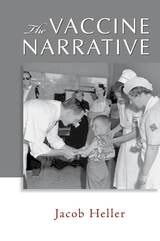
The Vaccine Narrative
Jacob Heller
Vanderbilt University Press, 2008
The author examines four cases that span the twentieth century--diphtheria, rubella, pertussis, and HIV/AIDS. Each case challenges the reader to examine how the values we attribute to vaccines influence their use. Diphtheria vaccination brought laboratory science into an existing narrative based on earlier vaccines. With rubella vaccine, researchers efficiently responded to an epidemic of birth defects while subtly changing the relationship between vaccination recipients and beneficiaries. Opposition to pertussis vaccine from average Americans created a narrative crisis, in which faith in vaccination as a whole seemed to be at risk. With more recent vaccines, including a hoped-for HIV/AIDS vaccine, the persistent cultural narrative continues to encourage vaccine development and use.

The Well-Being of the Elderly in Asia
A Four-Country Comparative StudyAlbert I. Hermalin, Editor
University of Michigan Press, 2010
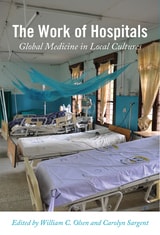
The Work of Hospitals
Global Medicine in Local CulturesWilliam C. Olsen
Rutgers University Press, 2022

Toxic War
The Story of Agent OrangePeter Sills
Vanderbilt University Press, 2014
Originally introduced by Dow and other chemical companies as a herbicide in the United States and adopted by the military as a method of deforesting the war zone of Vietnam, in order to deny the enemy cover, Agent Orange also found its way into the systems of numerous active-duty soldiers. Sills argues that manufacturers understood the dangers of this compound and did nothing to protect American soldiers.
Toxic War takes the reader behind the scenes into the halls of political power and industry, where the debates about the use of Agent Orange and its potential side effects raged. In the end, the only way these veterans could seek justice was in the court of law and public opinion. Unprecedented in its access to legal, medical, and government documentation, as well as to the personal testimonies of veterans, Toxic War endeavors to explore all sides of this epic battle.

Traditional Healers and Childhood in Zimbabwe
Pamela Reynolds
Ohio University Press, 1995
Based on the author’s fieldwork among the people of Zezuru, this study focuses on children as clients and as healers in training. In Reynolds’s ethnographic investigation of possession and healing, she pays particular attention to the way healers are identified and authenticated in communities, and how they are socialized in the use of medicinal plants, dreams, and ritual healing practices. Reynolds examines spiritual interpretation and remediation of children’s problems, including women’s roles in these activities, and the Zezuru concepts of trauma, evil, illness, and death. Because this study was undertaken just after the War of Liberation in Zimbabwe, it also documents the devastating effects of the war.

Tuberculosis Control and Institutional Change in Shanghai, 1911–2011
Rachel S. Core
Hong Kong University Press, 2023
Tuberculosis Control and Institutional Change in Shanghai, 1911–2011 is the first book on the most widespread and deadly infectious disease in China, both historically and today. Weaving together interviews with data from periodicals and local archives in Shanghai, Rachel Core examines the rise and fall of tuberculosis control in China from the 1950s to the 1990s. Under the socialist work unit system, the vast majority of people had guaranteed employment, a host of benefits tied to their workplace, and there was little mobility—factors that made the delivery of medical and public health services possible in both urban and rural areas. The dismantling of work units amid wider market reforms in the 1980s and 1990s led to the rise of temporary and casual employment and a huge migrant worker population, with little access to health care, creating new challenges in TB control. This study of Shanghai will provide valuable lessons for historians, social scientists, public health specialists, and many others working on public health infrastructure on both the national and global levels.