Results by title
124 books match the query 'Health and hygiene' and 16 start with t

That’s Gotta Hurt
The Injuries That Changed Sports ForeverDr. David Geier
University Press of New England, 2017

The Arts of Indigenous Health and Well-Being
Nancy Van Styvendale
University of Manitoba Press, 2021
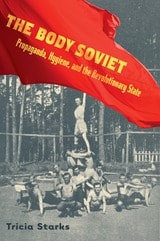
The Body Soviet
Propaganda, Hygiene, and the Revolutionary StateTricia Starks
University of Wisconsin Press, 2008
Health, though essential to the revolutionary vision and crucial to Soviet plans for utopia, has been neglected by traditional histories caught up in Cold War debates. The Body Soviet recovers this significant aspect of Soviet thought by providing a cross-disciplinary, comparative history of Soviet health programs that draws upon rich sources of health care propaganda, including posters, plays, museum displays, films, and mock trials. The analysis of propaganda makes The Body Soviet more than an institutional history; it is also an insightful critique of the ideologies of the body fabricated by health organizations.
"A masterpiece that will thoroughly fascinate and delight readers. Starks's understanding of propaganda and hygiene in the early Soviet state is second to none. She tells the stories of Soviet efforts in this field with tremendous insight and ingenuity, providing a rich picture of Soviet life as it was actually lived."— Elizabeth Wood, author of From Baba to Comrade: Gender and Politics in Revolutionary Russia
The Boundaries of Blackness
AIDS and the Breakdown of Black PoliticsCathy Cohen
University of Chicago Press, 1999
The Boundaries of Blackness is the first full-scale exploration of the social, political, and cultural impact of AIDS on the African-American community. Informed by interviews with activists, ministers, public officials, and people with AIDS, Cathy Cohen unflinchingly brings to light how the epidemic fractured, rather than united, the black community. She traces how the disease separated blacks along different fault lines and analyzes the ensuing struggles and debates.
More broadly, Cohen analyzes how other cross-cutting issues—of class, gender, and sexuality—challenge accepted ideas of who belongs in the community. Such issues, she predicts, will increasingly occupy the political agendas of black organizations and institutions and can lead to either greater inclusiveness or further divisiveness.
The Boundaries of Blackness, by examining the response of a changing community to an issue laced with stigma, has much to teach us about oppression, resistance, and marginalization. It also offers valuable insight into how the politics of the African-American community—and other marginal groups—will evolve in the twenty-first century.
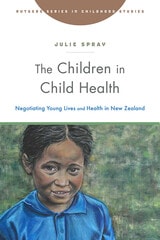
The Children in Child Health
Negotiating Young Lives and Health in New ZealandJulie Spray
Rutgers University Press, 2020
In the unique context of indigenous Māori and migrant Pacific children in postcolonial New Zealand, Julie Spray explores the intertwining issues of epidemic disease, malnutrition, stress, violence, self-harm, and death to address the problem of how scholars and policy-makers alike can recognize and respond to children as social actors in their health. The Children in Child Health innovatively combines perspectives from childhood studies, medical anthropology, and public health and policy together with evocative ethnography to show how a deep understanding of children’s worlds can change our approach to their care.
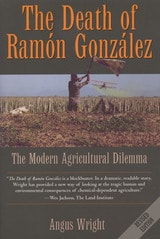
The Death of Ramón González
The Modern Agricultural DilemmaBy Angus Wright
University of Texas Press, 2005
The Death of Ramón González has become a benchmark book since its publication in 1990. It has been taught in undergraduate and graduate courses in every social science discipline, sustainable and alternative agriculture, environmental studies, ecology, ethnic studies, public health, and Mexican, Latin American, and environmental history. The book has also been used at the University of California-Santa Cruz as a model of interdisciplinary work and at the University of Iowa as a model of fine journalism, and has inspired numerous other books, theses, films, and investigative journalism pieces.
This revised edition of The Death of Ramón González updates the science and politics of pesticides and agricultural development. In a new afterword, Angus Wright reconsiders the book's central ideas within the context of globalization, trade liberalization, and NAFTA, showing that in many ways what he called "the modern agricultural dilemma" should now be thought of as a "twenty-first century dilemma" that involves far more than agriculture.
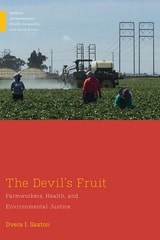
The Devil's Fruit
Farmworkers, Health, and Environmental JusticeDvera I. Saxton
Rutgers University Press, 2021
The Elsewhere Is Black
Ecological Violence and Improvised LifeMarisa Solomon
Duke University Press, 2025
The Kidney and the Cane
Planetary Health and Plantation Labor in NicaraguaAlex M. Nading
Duke University Press, 2025
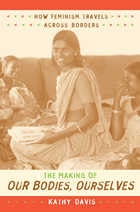
The Making of Our Bodies, Ourselves
How Feminism Travels across BordersKathy Davis
Duke University Press, 2007
Kathy Davis tells the story of this remarkable book’s global circulation. Based on interviews with members of the Boston Women’s Health Book Collective, the group of women who created Our Bodies, Ourselves, as well as responses to the book from readers, and discussions with translators from Latin America, Egypt, Thailand, China, Eastern Europe, Francophone Africa, and many other countries and regions, Davis shows why Our Bodies, Ourselves could never have been so influential if it had been just a popular manual on women’s health. It was precisely the book’s distinctive epistemology, inviting women to use their own experiences as resources for producing situated, critical knowledge about their bodies and health, that allowed the book to speak to so many women within and outside the United States. Davis provides a grounded analysis of how feminist knowledge and political practice actually travel, and she shows how the process of transforming Our Bodies, Ourselves offers a glimpse of a truly transnational feminism, one that joins the acknowledgment of difference and diversity among women in different locations with critical reflexivity and political empowerment.
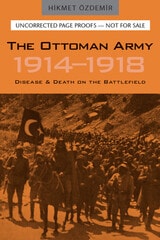
The Ottoman Army 1914 - 1918
Disease and Death on the BattlefieldHikmet Ozdemir
University of Utah Press, 2008
What kind of relationship exists between wars and epidemics? It is widely held that epidemics affected the outcomes of many wars and, until World War II, more victims of war died of disease than of battle wounds. Many disease vectors are present in times of conflict, including mass movements of people across borders and increased contact between persons of different geographic regions, yet disease is rarely treated in depth in histories of war.
Hikmet Özdemir’s The Ottoman Army, 1914–1918 provides extensive documentation of disease and death across the Ottoman Empire during World War I, when epidemic diseases annihilated armies and caused civilians to perish en masse. Drawing on hospital records and information on regional disease prevalence, Özdemir examines the effects that disease and epidemic had on the outcome of the war.
The information on disease mortality explains much that has never been properly understood about wartime events and government actions, events that only begin to make sense when the disease factor is considered. Rich in detail, this is an extremely valuable book that illuminates a facet of the war that has not been adequately considered until now.
The Problems of Disadvantaged Youth
An Economic PerspectiveEdited by Jonathan Gruber
University of Chicago Press, 2009
One of the most important public policy issues in the United States is how to improve the life prospects of disadvantaged youth who, in their formative years, face low-quality school systems, poor access to health care, and high-crime environments. The Problems of Disadvantaged Youth includes a broad range of research examining various aspects of disadvantage, and ways of increasing the ability of low-income youths to improve their circumstances later in life.
Taking an empirical economics perspective, the nine essays in this volume assess the causal impacts of disadvantage on youth outcomes, and how policy interventions can alleviate those impacts. Each chapter develops a framework to describe the relationship between youths and later life outcomes, addressing such factors as educational opportunity, health, neighborhood crime rates, and employment. This vital book documents the serious short- and long-term negative consequences of childhood disadvantage and provides nuanced evidence of the impact of public policy designed to help needy children.
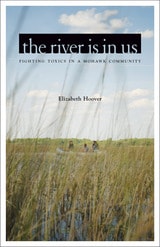
The River Is in Us
Fighting Toxics in a Mohawk CommunityElizabeth Hoover
University of Minnesota Press, 2017
Winner of the Labriola Center American Indian National Book Award 2017
Mohawk midwife Katsi Cook lives in Akwesasne, an indigenous community in upstate New York that is downwind and downstream from three Superfund sites. For years she witnessed elevated rates of miscarriages, birth defects, and cancer in her town, ultimately drawing connections between environmental contamination and these maladies. When she brought her findings to environmental health researchers, Cook sparked the United States’ first large-scale community-based participatory research project.
In The River Is in Us, author Elizabeth Hoover takes us deep into this remarkable community that has partnered with scientists and developed grassroots programs to fight the contamination of its lands and reclaim its health and culture. Through in-depth research into archives, newspapers, and public meetings, as well as numerous interviews with community members and scientists, Hoover shows the exact efforts taken by Akwesasne’s massive research project and the grassroots efforts to preserve the Native culture and lands. She also documents how contaminants have altered tribal life, including changes to the Mohawk fishing culture and the rise of diabetes in Akwesasne.
Featuring community members such as farmers, health-care providers, area leaders, and environmental specialists, while rigorously evaluating the efficacy of tribal efforts to preserve its culture and protect its health, The River Is in Us offers important lessons for improving environmental health research and health care, plus detailed insights into the struggles and methods of indigenous groups. This moving, uplifting book is an essential read for anyone interested in Native Americans, social justice, and the pollutants contaminating our food, water, and bodies.
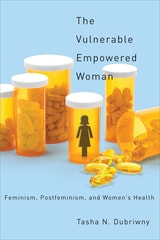
The Vulnerable Empowered Woman
Feminism, Postfeminism, and Women's HealthDubriwny, Tasha N
Rutgers University Press, 2012
Winner of the Organization for the Study of Communication, Language, and Gender 2013 Outstanding Book Award
Winner of the 2013 Bonnie Ritter Book Award from the Feminist and Women's Division of the National Communication Association
The feminist women’s health movement of the 1960s and 1970s is credited with creating significant changes in the healthcare industry and bringing women’s health issues to public attention. Decades later, women’s health issues are more visible than ever before, but that visibility is made possible by a process of depoliticization
The Vulnerable Empowered Woman assesses the state of women’s healthcare today by analyzing popular media representations—television, print newspapers, websites, advertisements, blogs, and memoirs—in order to understand the ways in which breast cancer, postpartum depression, and cervical cancer are discussed in American public life. From narratives about prophylactic mastectomies to young girls receiving a vaccine for sexually transmitted disease, the representations of women’s health today form a single restrictive identity: the vulnerable empowered woman. This identity defuses feminist notions of collective empowerment and social change by drawing from both postfeminist and neoliberal ideologies. The woman is vulnerable because of her very femininity and is empowered not to change the world, but to choose from among a limited set of medical treatments.
The media’s depiction of the vulnerable empowered woman’s relationship with biomedicine promotes traditional gender roles and affirms women’s unquestioning reliance on medical science for empowerment. The book concludes with a call to repoliticize women’s health through narratives that can help us imagine women—and their relationship to medicine—differently.
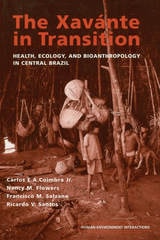
The Xavante in Transition
Health, Ecology, and Bioanthropology in Central BrazilCarlos E. A. Coimbra, Jr., Nancy M. Flowers, Francisco M. Salzano, and Ricardo V. Santos
University of Michigan Press, 2004
". . . an integrated and politically informed anthropology for the new millennium. They show how the local and the regional meet on the ground and under the skin."
--Alan H. Goodman, Professor of Biological Anthropology, Hampshire College
--Daniel Gross, Lead Anthropologist, The World Bank
--Laura R. Graham, Professor of Anthropology, University of Iowa
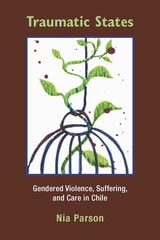
Traumatic States
Gendered Violence, Suffering, and Care in ChileNia Parson
Vanderbilt University Press, 2013
In Traumatic States, anthropologist Nia Parson explores the development of methods of care and recovery from domestic violence. She interviews and contextualizes the lives of numerous individuals who have confronted these acts, as victims, authorities, and activists. Ultimately, Traumatic States argues that facing the challenges of healing both body and mind, and addressing the fundamental inequalities that make those challenges even more formidable, are part of the same battle.