Results by title
85 books match the query 'Heart' and 25 start with t
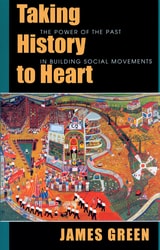
Taking History to Heart
The Power of the Past in Building Social MovementsJames Green
University of Massachusetts Press, 2000
Deftly blending autobiography and history, James Green here reflects on thirty years as an activist, educator, and historian. He recounts how he became deeply immersed in political protest and in recovering and preserving the history of progressive social movements, and how the two are linked. His book, written in an engaging and accessible style, tells powerful stories of people in struggle, framed by the personal account of his own development. As a historian, Green gives voice to generations of Americans who banded together to fight for social justice. His subjects range from the martyrs of the Haymarket tragedy to the Bread and Roses strikers of 1912, from depression-era struggles for democracy to the civil rights crusaders, from recent Rainbow Coalition campaigns to the latest union organizing drives. As an activist, Green describes how his participation in the civil rights and labor movements of our own time has transformed his life, first as a student and radical scholar in the 1960s, then as a public historian and teacher of working-class students. He also describes his efforts to break free from academic confinement and “tell movement stories in public,” in an attempt to offer hope and counsel to those still fighting for equality and fairness. He concludes with a revealing look at how awareness of past social activism has contributed to the revival of the labor movement during the last ten years, an effort in which Green has been vigorously engaged.
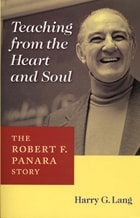
Teaching from the Heart and Soul
The Robert F. Panara StoryHarry G. Lang
Gallaudet University Press, 2007
The Sixth Volume in the Deaf Lives Series
Robert F. Panara lost his hearing from spinal meningitis in 1931 at the age of ten. However, he could read and write, and with his friends’ help, Bob (as he was known), made it through high school. His new solitude created a new passion – reading, reading, and reading. The stage was set for the emergence of one of the great deaf educators in modern time, a life fully captured in Harry G. Lang’s Teaching from the Heart and Soul: The Robert F. Panara Story.
Bob Panara’s many achievements began after his discovery of Gallaudet College in the 1940s. There, he wrote “The Significance of the Reading Problem,” which first expressed his belief that teaching “comes from the heart and soul.” The article secured him his first job at the New York School for the Deaf in White Plains. Bob returned to teach at Gallaudet College from 1948 until 1965, when he left to help found the National Technical Institute for the Deaf (NTID) and the National Theatre of the Deaf (NTD) — all in the same year. He continued to expand arts and literature at NTID until his retirement in 1987.
Bob Panara’s genius resides in the people he inspired with his vivacious teaching style. He believed ardently in involving students, that they should “be the book.” Former students tell story after story about his fabulous interpretations of drama and poetry, a legacy confirmed by his own story in Teaching from the Heart and Soul.

Tecumseh's War
The Epic Conflict for the Heart of AmericaDonald R. Hickey
Westholme Publishing, 2026
The Shawnee leader Tecumseh came to prominence in a war against the United States waged from 1811 to 1815. In 1805, Tecumseh’s younger brother Lalawethika (soon to be known as “the Prophet”) had a vision for an Indian revitalization movement that would restore Native culture and resist American expansion. Tecumseh organized the growing support for this movement, which came from Indigenous peoples across the Old Northwest and parts of the Great Plains, into a loose but powerful military alliance.
In late 1811, while Tecumseh was away on a recruiting mission in the South, General William Henry Harrison led an army to the center of Native resistance at Prophetstown in present-day Indiana. In the early morning hours of November 7, in what came to be known as the Battle of Tippecanoe, Harrison’s men fought off an Indian attack, which marked the beginning of Tecumseh’s War. Seven months later, when the United States declared war on Britain, thus initiating the War of 1812, the British and Tecumseh forged an alliance against the United States. Initially, the Anglo-Indian alliance enjoyed considerable success at Detroit, Chicago, Mackinac, and elsewhere, exposing much of the Old Northwest to border warfare, but the tide turned in 1813 when Harrison invaded Canada. On October 5 the American army defeated a much smaller Anglo-Indian force in the climactic Battle of the Thames. Tecumseh was killed in this battle, and although his confederacy disintegrated, British support ensured that the Indian war would continue for another two years with the Sauk chief Black Hawk now providing the inspiration and leadership. Tecumseh’s War ended only in late 1815 after the British made peace with the United States and abandoned their native allies.
Tecumseh’s War: The Epic Conflict for the Heart of America is the first complete story of this major conflict. Distinguished historian Donald R. Hickey detaches it from the War of 1812, moving Tecumseh’s confederation to center stage to tell the sweeping and engrossing story of this last great Indian War—the last time that Indigenous Peoples had a powerful European ally to oppose United States expansion and thus the lastchance they had of shaping the future of the continent.
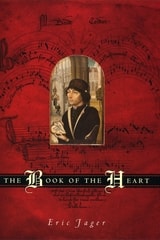
The Book of the Heart
Eric Jager
University of Chicago Press, 2000
Eric Jager traces the history and psychology of the self-as-text concept from antiquity to the modern day. He focuses especially on the Middle Ages, when the metaphor of a "book of the heart" modeled on the manuscript codex attained its most vivid expressions in literature and art. For instance, medieval saints' legends tell of martyrs whose hearts recorded divine inscriptions; lyrics and romances feature lovers whose hearts are inscribed with their passion; paintings depict hearts as books; and medieval scribes even produced manuscript codices shaped like hearts.
"The Book of the Heart provides a fresh perspective on the influence of the book as artifact on our language and culture. Reading this book broadens our appreciation of the relationship between things and ideas."—Henry Petroski, author of The Book on the Bookshelf
The Cleansing of the Heart
Reginald Lynch
Catholic University of America Press, 2017
Reginald Lynch is concerned with the cleansing of the heart—a phrase borrowed from St. Augustine and employed by Aquinas, which describes the effects that natural elements such as water or bread have on the human person when taken up by the Church as sacramental signs. Aquinas' approach to sacramental efficacy is unique for its integration of diverse theological topics such as Christology, merit, grace, creation and instrumentality. While all of these topics will be considered to some extent, the primary focus of The Cleansing of the Heart is the sacraments understood as instrumental causes of grace. This volume provides the historical context for understanding the development of sacramental causality as a theological topic in the scholastic period, emphasizing the unique features of Aquinas' response to this question. Following this, relevant texts from Aquinas' early and later work are examined, noting Aquinas' development and integration of the idea of sacramental causality in his later work. The Cleansing of the Heart concludes by contrasting alternatives to Aquinas' theory of sacramental causality that subsequently emerged. The rise of humanism introduced many changes within rhetoric and philosophy of language that had a profound effect on some theologians during the Modern period. This book provides historical context for understanding the most prominent of these theories in contrast to Aquinas, and examines some of their theological implications.
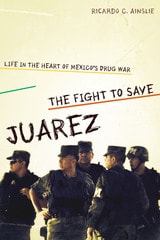
The Fight to Save Juárez
Life in the Heart of Mexico's Drug WarBy Ricardo C. Ainslie
University of Texas Press, 2013
The city of Juárez is ground zero for the drug war that is raging across Mexico and has claimed close to 60,000 lives since 2007. Almost a quarter of the federal forces that former President Felipe Calderón deployed in the war were sent to Juárez, and nearly 20 percent of the country’s drug-related executions have taken place in the city, a city that can be as unforgiving as the hardest places on earth. It is here that the Mexican government came to turn the tide. Whatever happens in Juárez will have lasting repercussions for both Mexico and the United States.
Ricardo Ainslie went to Juárez to try to understand what was taking place behind the headlines of cartel executions and other acts of horrific brutality. In The Fight to Save Juárez, he takes us into the heart of Mexico’s bloodiest city through the lives of four people who experienced the drug war from very different perspectives—Mayor José Reyes Ferriz, a mid-level cartel player’s mistress, a human rights activist, and a photojournalist. Ainslie also interviewed top Mexican government strategists, including members of Calderón’s security cabinet, as well as individuals within U.S. law enforcement. The dual perspective of life on the ground in the drug war and the “big picture” views of officials who are responsible for the war’s strategy, creates a powerful, intimate portrait of an embattled city, its people, and the efforts to rescue Juárez from the abyss.

The Golden Step
A Walk Through the Heart of CreteChristopher Somerville
Haus Publishing, 2012
The Great War in the Heart of Dixie
Alabama During World War IMartin T. Olliff
University of Alabama Press, 2008
The Heart as a Drum
Continuance and Resistance in American Indian PoetryRobin Riley Fast
University of Michigan Press, 2000
The Heart of Achilles
Characterization and Personal Ethics in the IliadGraham Zanker
University of Michigan Press, 1996
"[Zanker] investigates altruistic behavior in the epic with professional sophistication but in a way that makes his investigation available to a wide audience from undergraduates to advanced scholars. . . . [A] very useful interpretative study." --Choice
Graham Zanker is Senior Lecturer in Classics, University of Canterbury, New Zealand.
The Heart of Buddhist Philosophy
Nolan Pliny Jacobson
Southern Illinois University Press, 1988
In arriving at the heart of Buddhist philosophy, Nolan Pliny Jacobson attempts to eliminate some of the confusion in the West (and perhaps in the East as well) concerning the Buddhist view of what is concrete and ultimately real in the world.
Jacobson presents Nāgārjuna, the Plato of the Buddhist tradition, as the major exemplar of the Buddhist expression of life. In his comparison of Buddhism and Western theology, Jacobson demonstrates that some efforts in Western religious thought approach the Buddhist empirical stance.
The Heart of Librarianship
Attentive, Positive, and Purposeful ChangeMichael Stephens
American Library Association, 2016
The Heart of Things
A Midwestern AlmanacJohn Hildebrand
Wisconsin Historical Society Press, 2014
In this remarkable book of days, John Hildebrand charts the overlapping rings—home, town, countryside—of life in the Midwest. Like E. B. White, Hildebrand locates the humor and drama in ordinary life: church suppers, Friday night football, outdoor weddings, garden compost, family reunions, roadside memorials, camouflage clothing. In these wry, sharply observed essays, the Midwest isn’t The Land Time Forgot but a more complicated (and vastly more interesting) place where the good life awaits once we figure exactly out what it means. From his home range in northwestern Wisconsin, Hildebrand attempts to do just that by boiling down a calendar year to its rich marrow of weather, animals, family, home—in other words, all the things that matter.
The Heart of Whiteness
Normal Sexuality and Race in America, 1880–1940Julian B. Carter
Duke University Press, 2007
Carter builds her intricate argument from detailed readings of an array of popular texts, focusing on how sex education for children and marital advice for adults provided significant venues for the dissemination of the new ideal of normality. She concludes that because its overt concerns were love, marriage, and babies, normality discourse facilitated white evasiveness about racial inequality. The ostensible focus of “normality” on matters of sexuality provided a superficially race-neutral conceptual structure that whites could and did use to evade engagement with the unequal relations of power that continue to shape American life today.
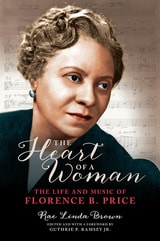
The Heart of a Woman
The Life and Music of Florence B. PriceRae Linda Brown. Edited and with a Foreword by Guthrie P. Ramsey Jr.
University of Illinois Press, 2020
Book Prize Winner of the International Alliance for Women in Music of the 2022 Pauline Alderman Awards for Outstanding Scholarship on Women in Music
The Heart of a Woman offers the first-ever biography of Florence B. Price, a composer whose career spanned both the Harlem and Chicago Renaissances, and the first African American woman to gain national recognition for her works.
Price's twenty-five years in Chicago formed the core of a working life that saw her create three hundred works in diverse genres, including symphonies and orchestral suites, art songs, vocal and choral music, and arrangements of spirituals. Through interviews and a wealth of material from public and private archives, Rae Linda Brown illuminates Price's major works while exploring the considerable depth of her achievement. Brown also traces the life of the extremely private individual from her childhood in Little Rock through her time at the New England Conservatory, her extensive teaching, and her struggles with racism, poverty, and professional jealousies. In addition, Brown provides musicians and scholars with dozens of musical examples.
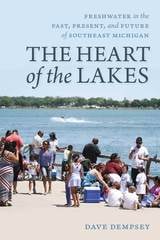
The Heart of the Lakes
Freshwater in the Past, Present and Future of Southeast MichiganDave Dempsey
Michigan State University Press, 2019
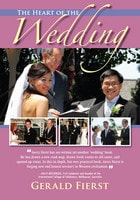
The Heart of the Wedding
Gerald Fierst
Parkhurst Brothers, Inc., 2011
“The Heart of Wedding reconnects the marriage ritual to our twenty-first century lives. Gerald Fierst, celebrant, poet, and storyteller, fills chapter after chapter with examples of ceremonies showing that weddings need not be Victorian relics, but can be filled with a sense of fun and adventure, as well as common sense. Acknowledging our multi-cultural nation where people of every race, Faith, and heritage meet and marry, this book celebrates the new America, respecting tradition while finding a contemporary voice to say ‘I do.’ Gerry brings to this book the same care, precision and artistry I have seen him bring to all of his projects. By connecting life’s passages with a larger vision of humanity – past, present and future – Gerry shows us a way to celebrate our families and ourselves.” --Susan O’Halloran, Director, RaceBridges, Chicago Illinois
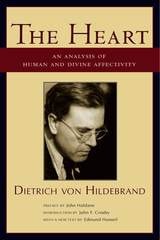
The Heart
An Analysis of Human and Divine AffectationDietrich von Hildebrand
St. Augustine's Press, 2007
This new edition of The Heart (out of print for nearly 30 years) is the flagship volume in a series of Dietrich von Hildebrand’s works to be published by St. Augustine’s Press in collaboration with the Dietrich von Hildebrand Legacy Project. Founded in 2004, the Legacy Project exists in the first place to translate the many German writings of von Hildebrand into English.
While many revere von Hildebrand as a religious author, few realize that he was a philosopher of great stature and importance. Those who knew von Hildebrand as philosopher held him in the highest esteem. Louis Bouyer, for example, once said that “von Hildebrand was the most important Catholic philosopher in Europe between the two world wars.” Joseph Cardinal Ratzinger expressed even greater esteem when he said: “I am personally convinced that, when, at some time in the future, the intellectual history of the Catholic Church in the twentieth century is written, the name of Dietrich von Hildebrand will be most prominent among the figures of our time.”
The Heart is an accessible yet important philosophical contribution to the understanding of the human person. In this work von Hildebrand is concerned with rehabilitating the affective life of the human person. He thinks that for too long philosophers have held it in suspicion and thought of it as embedded in the body and hence as being much inferior to intellect and will. In reality, he argues, the heart, the center of affectivity, has many different levels, including an eminently personal level; at this level affectivity is just as important a form of personal life as intellect and will. Von Hildebrand develops the idea that properly personal affectivity, far than tending away from an objective relation to being, is in fact one major way in which we transcend ourselves and give being its due. Von Hildebrand also developed the important idea that the heart “in many respects is more the real self of the person than his intellect or will.”
At the same time, the author shows full realism about the possible deformities of affective life; he offers rich analyses of what he calls affective atrophy and affective hypertrophy. The second half of The Heart offers a remarkable analysis of the affectivity of the God-Man.
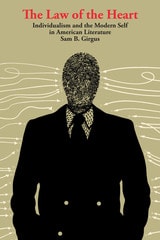
The Law of the Heart
Individualism and the Modern Self in American LiteratureBy Sam B. Girgus
University of Texas Press, 1979
The Law of the Heart is a vigorous challenge to the prevailing concept of the “antidemocratic” image of the self in the American literary and cultural tradition. Sam B. Girgus counters this interpretation and attempts to develop a new understanding of democratic individualism and liberal humanism in American literature under the rubric of literary modernism.
The image of the individual self who retreats inward, conforming to a distorted “law of the heart,” emerges from the works of such writers as Cooper and Poe and composer Charles Ives. Yet, as Girgus shows, other American writers relate the idea of the self to reality and culture in a more complex way: the self confronts and is reconciled to the paradox of history and reality.
In Girgus’ view, the tradition of pragmatic, humanistic individualism provides a foundation for a future where individual liberty is a major priority. He uses literary modernism as a bridge for relating contemporary social conditions to crises of the American self and culture as seen in the works of writers including Emerson, Howells, Whitman, Henry James, William James, Fitzgerald, Bellow, and McLuhan.

The Medical Library Association Guide to Finding Out about Heart Disease
The Best Print and Electronic ResourcesJeanette American Library Association
American Library Association, 2013

The Mind is Not the Heart
Recollections of a Woman PhysicianEva J. Salber
Duke University Press, 1993

The Monastic In Each of Us
Heart, Mind, Body, Soul and SpiritTim Vivian
Catholic University of America Press, 2026

The New Hiking the Monadnock Region
44 Nature Walks and Day-Hikes in the Heart of New EnglandJoe Adamowicz
University Press of New England, 2007
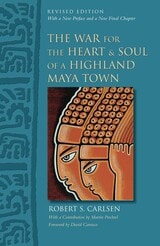
The War for the Heart and Soul of a Highland Maya Town
Revised EditionBy Robert S. Carlsen, with a contribution by Martín Prechtel
University of Texas Press, 2011
This compelling ethnography explores the issue of cultural continuity and change as it has unfolded in the representative Guatemala Mayan town Santiago Atitlán. Drawing on multiple sources, Robert S. Carlsen argues that local Mayan culture survived the Spanish Conquest remarkably intact and continued to play a defining role for much of the following five centuries. He also shows how the twentieth-century consolidation of the Guatemalan state steadily eroded the capacity of the local Mayas to adapt to change and ultimately caused some factions to reject—even demonize—their own history and culture. At the same time, he explains how, after a decade of military occupation known as la violencia, Santiago Atitlán stood up in unity to the Guatemalan Army in 1990 and forced it to leave town.
This new edition looks at how Santiago Atitlán has fared since the expulsion of the army. Carlsen explains that, initially, there was hope that the renewed unity that had served the town so well would continue. He argues that such hopes have been undermined by multiple sources, often with bizarre outcomes. Among the factors he examines are the impact of transnational crime, particularly gangs with ties to Los Angeles; the rise of vigilantism and its relation to renewed religious factionalism; the related brutal murders of followers of the traditional Mayan religion; and the apocalyptic fervor underlying these events.
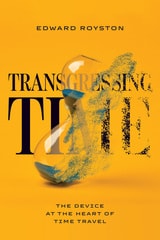
Transgressing Time
The Device at the Heart of Time TravelEdward Royston
The Ohio State University Press, 2026
Royston bolsters this concept through readings of classics such as Back to the Future and Octavia E. Butler’s Kindred, contemporary works such as the video game Outer Wilds and Scott Alexander Howard’s The Other Valley, and lesser-known works such as the nineteenth-century Spanish novel El Anacronópete. These readings demonstrate how time travel functions across different mediums and genres and spotlights the ways authors and creators have used anachronic metalepsis to contend with themes of exile, freedom and consequences, the powers and pitfalls of nostalgia, the nature of history and our relationship to it, and the nature of time itself.