Results by title
75 books match the query 'Historic Preservation' and 12 start with t
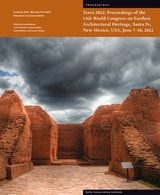
Terra 2022
Proceedings of the 13th World Congress on Earthen Architectural Heritage, Sante Fe, New Mexico, USA, June 7-10, 2022Leslie Rainer
J. Paul Getty Trust, The, 2024
Featuring a global compendium of sites, buildings, urban settlements, and cultural landscapes, this volume combines recent research with practical approaches to conservation of earthen architectural heritage.
Earthen architecture is one of the oldest forms of construction and is evidenced around the globe. This volume gathers the research and presentations from Terra 2022: 13th World Congress on Earthen Architectural Heritage, which brought together in Santa Fe, New Mexico, 350 conservation professionals and practitioners from fifty-two countries.
Seventy richly illustrated papers, fifty-seven in English and thirteen in Spanish, address a range of conservation issues. Abstracts are provided in both English and Spanish for each paper. Themes covered include advances in research, strategies for archaeological sites, community-based care and decision-making, cultural landscapes, decorated surfaces, education, historic and modern buildings, conservation history, risks and vulnerabilities, and traditional materials and practices. Sections that draw on symposia held at the congress spotlight two recent architectural heritage initiatives: the rehabilitation of an urban settlement by the AlUla Old Town and Oasis Conservation Project in Saudi Arabia, and the conservation and management of eight monumental enclosure complexes at the Hopewell Ceremonial Earthworks in Ohio.
Reflecting Getty's commitment to open content, Terra 2022 is available as a free PDF download at: https://www.getty.edu/publications/virtuallibrary/9781606069158.html. This paperback edition is available for sale for readers who wish to have a bound reference copy.
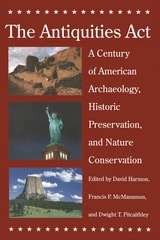
The Antiquities Act
A Century of American Archaeology, Historic Preservation, and Nature ConservationEdited by David Harmon, Frances P. McManamon, and Dwight T. Pitcaithley
University of Arizona Press, 2006
Enacted in 1906, the Antiquities Act is one of the most important pieces of conservation legislation in American history and has had a far-reaching influence on the preservation of our nation’s cultural and natural heritage. Thanks to the foresight of thirteen presidents, parks as diverse as Acadia, Grand Canyon, and Olympic National Park, along with historic and archaeological sites such as Thomas Edison’s Laboratory and the Gila Cliff Dwellings, have been preserved for posterity.
A century after its passage, this book presents a definitive assessment of the Antiquities Act and its legacy, addressing the importance and breadth of the act—as well as the controversy it has engendered. Authored by professionals intimately involved with safeguarding the nation’s archaeological, historic, and natural heritage, it describes the applications of the act and assesses its place in our country’s future. With a scope as far-reaching as the resources the act embraces, this book offers an unparalleled opportunity for today’s stewards to reflect on the act’s historic accomplishments, to remind fellow professionals and the general public of its continuing importance, and to look ahead to its continuing implementation in the twenty-first century.
The Antiquities Act invites all who love America’s natural and cultural treasures not only to learn about the act’s rich legacy but also to envision its next hundred years.
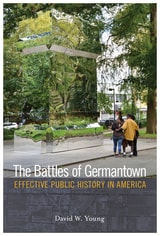
The Battles of Germantown
Effective Public History in AmericaDavid W. Young
Temple University Press, 2019
2020 Philip S. Klein Book Prize Winner, Pennsylvania Historical Association
Known as America’s most historic neighborhood, the Germantown section of Philadelphia (established in 1683) has distinguished itself by using public history initiatives to forge community. Progressive programs about ethnic history, postwar urban planning, and civil rights have helped make historic preservation and public history meaningful. The Battles of Germantown considers what these efforts can tell us about public history’s practice and purpose in the United States.
Author David Young, a neighborhood resident who worked at Germantown historic sites for decades, uses his practitioner’s perspective to give examples of what he calls “effective public history.” The Battles of Germantown shows how the region celebrated “Negro Achievement Week” in 1928 and, for example, how social history research proved that the neighborhood’s Johnson House was a station on the Underground Railroad. These encounters have useful implications for addressing questions of race, history, and memory, as well as issues of urban planning and economic revitalization.
Germantown’s historic sites use public history and provide leadership to motivate residents in an area challenged by job loss, population change, and institutional inertia. The Battles of Germantown illustrates how understanding and engaging with the past can benefit communities today.
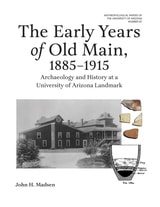
The Early Years of Old Main, 1885–1915
Archaeology and History at a University of Arizona LandmarkJohn H. Madsen
University of Arizona Press, 2026
The Early Years of Old Main, 1885–1915 details the archaeological discoveries revealed during the 2012–14 renovation of Old Main, which, due to its age and historic records, is on the National Register of Historic Places.
Thanks to detailed excavation work by a team of archaeologists, this work documents eight historic features of the building, ranging from equipment pads to drainage systems. Drawing on archaeological monitoring, artifact analysis, archival records, architectural drawings, and historic photographs, the narrative reconstructs how Old Main functioned during the university’s first decades and how its physical spaces supported early scientific instruction in mining, metallurgy, and agriculture.
More than a technical report, this volume offers a tangible glimpse into the material foundations of higher education in territorial and early statehood Arizona. Madsen’s careful documentation preserves knowledge of features that could not be saved during renovation and places them in the broader context of Old Main’s architectural evolution and its central role on campus. The result is an important resource for historians, archaeologists, preservationists, and anyone who values the University of Arizona’s heritage—demonstrating that even the most familiar buildings can still hold untold stories beneath their floors and landscapes.
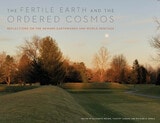
The Fertile Earth and the Ordered Cosmos
Reflections on the Newark Earthworks and World HeritageEdited by M. Elizabeth Weiser, Timothy R. W. Jordan, and Richard D. Shiels
The Ohio State University Press, 2023
The lush photos and wide-ranging essays of The Fertile Earth and the Ordered Cosmos honor this significance, not only to the global community but to local individuals and scholars who have developed intimate connections to the Earthworks. In sharing their experiences with this ancient site, public historians, archaeologists, physicists, architects, and others—including local and Indigenous voices—continue the work of nearly two hundred years of citizen efforts to protect and make accessible the Newark Earthworks after centuries of stewardship by Indigenous people. The resulting volume serves as a rich primer on the site for those unfamiliar with its history and a beautifully produced tribute for those who are already acquainted with its wonders.
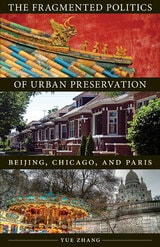
The Fragmented Politics of Urban Preservation
Beijing, Chicago, and ParisYue Zhang
University of Minnesota Press, 2013
While urban preservation is almost as old as cities themselves, it has become increasingly controversial in modern cities. In this book, Yue Zhang presents a cross-national comparative analysis of the politics of urban preservation. Based on comprehensive archival research and more than two hundred in-depth interviews in Beijing, Chicago, and Paris, Zhang finds that urban preservation provides a tool for diverse political and social actors to frame their propositions and advance their favored courses of action.
In cities from West to East, divergent political and economic interests have caused urban preservation to become contested. Exploring three of the world’s great cities, Zhang deftly navigates readers through each case study, illustrating the complexities of the politics of urban preservation in each city. In Beijing, urban preservation was integral to promoting economic growth and enhancing the city’s image during the lead-up to the 2008 Olympics; in Chicago, it is used to increase property values and revitalize neighborhoods; and in Paris, it offers a channel for national and municipal governments to compete for control over urban space.
Although urban preservation serves various purposes in these cities, Zhang explains how different types of political fragmentation have affected the implementation of preservation initiatives in predictable ways, thus generating distinct patterns of urban preservation. A comparative urban politics study of unusual breadth, The Fragmented Politics of Urban Preservation gives us insight into the complex policy process of urban preservation through which political institutions are intertwined with interests and inclinations, fundamentally shaping the direction of urban development, the physical forms of cities, and the lives of citizens.
The Incredible Scream Machine
A History of the Roller CoasterRobert Cartmell
University of Wisconsin Press, 1987
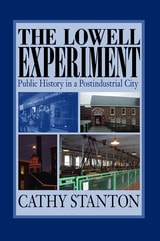
The Lowell Experiment
Public History in a Postindustrial CityCathy Stanton
University of Massachusetts Press, 2006
In the early nineteenth century, Lowell, Massachusetts, was widely studied and emulated as a model for capitalist industrial development. One of the first cities in the United States to experience the ravages of deindustrialization, it was also among the first places in the world to turn to its own industrial and ethnic history as a tool for reinventing itself in the emerging postindustrial economy. The Lowell Experiment explores how history and culture have been used to remake Lowell and how historians have played a crucial yet ambiguous role in that process.
The book focuses on Lowell National Historical Park, the flagship project of Lowell's new cultural economy. When it was created in 1978, the park broke new ground with its sweeping reinterpretations of labor, immigrant, and women's history. It served as a test site for the ideas of practitioners in the new field of public history—a field that links the work of professionally trained historians with many different kinds of projects in the public realm.
The Lowell Experiment takes an anthropological approach to public history in Lowell, showing it as a complex cultural performance shaped by local memory, the imperatives of economic redevelopment, and tourist rituals—all serving to locate the park's audiences and workers more securely within a changing and uncertain new economy characterized by growing inequalities and new exclusions.
The paradoxical dual role of Lowell's public historians as both interpreters of and contributors to that new economy raises important questions about the challenges and limitations facing academically trained scholars in contemporary American culture. As a long-standing and well-known example of “culture-led re-development,” Lowell offers an outstanding site for exploring questions of concern to those in the fields of public and urban history, urban planning, and tourism studies.
The Road to Blair Mountain
Saving a Mine Wars Battlefield from King CoalCharles B. Keeney
West Virginia University Press, 2021
In 1921 Blair Mountain in southern West Virginia was the site of the country’s bloodiest armed insurrection since the Civil War, a battle pitting miners led by Frank Keeney against agents of the coal barons intent on quashing organized labor. It was the largest labor uprising in US history. Ninety years later, the site became embroiled in a second struggle, as activists came together to fight the coal industry, state government, and the military- industrial complex in a successful effort to save the battlefield—sometimes dubbed “labor’s Gettysburg”—from destruction by mountaintop removal mining.
The Road to Blair Mountain is the moving and sometimes harrowing story of Charles Keeney’s fight to save this irreplaceable landscape. Beginning in 2011, Keeney—a historian and great-grandson of Frank Keeney—led a nine-year legal battle to secure the site’s placement on the National Register of Historic Places. His book tells a David-and-Goliath tale worthy of its own place in West Virginia history. A success story for historic preservation and environmentalism, it serves as an example of how rural, grassroots organizations can defeat the fossil fuel industry.
The Robie House of Frank Lloyd Wright
Joseph Connors
University of Chicago Press, 1984
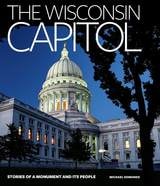
The Wisconsin Capitol
Stories of a Monument and Its PeopleMichael Edmonds
Wisconsin Historical Society Press, 2017
On the occasion of the Capitol’s centennial in 2017, this book tells the remarkable story of the building—in all its incarnations—and the people who made history beneath its dome. The book covers the creation of the territorial capitol in 1837, the construction of the second capitol in the 1860s (and the fire that almost completely destroyed it in 1904), the eleven-year construction project that completed the third capitol in 1917, and the extensive conservation project of the 1990s that restored the building to its grandeur. Supporting the framework of this architectural history are colorful stories about the people who shaped Wisconsin from within the Capitol—attorneys, senators, and governors (from Henry Dodge to Scott Walker), as well as protesters, reformers, secretaries, tour guides, custodians, and even Old Abe, the Capitol’s resident eagle. Combining historical photographs with modern, full-color architectural photos, The Wisconsin Capitol provides fascinating details about the building, while also emphasizing the importance of the Capitol in Wisconsin’s storied history.
The Wisconsin Historical Society
Collecting, Preserving, and Sharing Stories Since 1846John Zimm
Wisconsin Historical Society Press, 2014