76 books match the query 'House' and 17 start with t
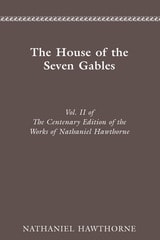
cover of The Centenary Edition of the Works of Nathaniel Hawthorne: VOL. II, THE HOUSE OF THE SEVEN GABLES

The Centenary Edition of the Works of Nathaniel Hawthorne

VOL. II, THE HOUSE OF THE SEVEN GABLES

Nathaniel Hawthorne

The Ohio State University Press, 1965
"Because it represents the first scholarly effort to establish texts as close as possible to the intentions of the author, this Centenary Edition makes obsolete all previous editions, notorious for their textual corruption. An eminent staff . . . has analyzed and synthesized the evidence of all MSS and worthwhile printed editions. Each volume includes a well documented introduction concerning such matters as circumstances leading to composition and history of publication as well as textual notes on alterations in the MSS, editorial emendations, etc." --Choice "The Centenary Edition, which has been producing weighty volumes of definitively edited texts of Hawthorne for a full generation, is now the sine qua non of Hawthorne scholarship. As an example of editorial care and research thoroughness it has been a model for the profession and as a physical object a model for publishers. In addition to the immensely important achievement of producing fully accurate texts of the romances, tales, and sketches, the Centenary editors have made available, for the very first time, all of the various Notebooks and letters. For the letters, especially, the wait has been long but the result is gratifying. Reading straight through the Centenary's six volumes of letters is a self-indulgent pleasure that brings us markedly closer to the man than we can get in any other way." --American Literature Representing decades of work, this is the definitive edition of Hawthorne's works. Each volume includes comprehensive notes and explanatory material. I: The Scarlet Letter $62.95 cloth 0-8142-0059-1 II: The House of the Seven Gables $69.95 cloth 0-8142-0060-5 III: The Blithedale Romance and Fanshawe $72.95 cloth 0-8142-0061-3 IV: The Marble Faun $83.95 cloth 0-8142-0062-1 V: Our Old Home $72.95 cloth 0-8142-0002-8 VI: True Stories from History and Biography $72.95 cloth 0-8142-0157-1 VII: A Wonder Book and Tanglewood Tales $72.95 cloth 0-8142-0158-X VIII: The American Notebooks $98.95 cloth 0-8142-0159-8 IX: Twice-told Tales $83.95 cloth 0-8142-0202-0 X: Mosses from an Old Manse $83.95 cloth 0-8142-0203-9 XI: The Snow Image and Uncollected Tales $72.95 cloth 0-8142-0204-7 XII: The American Claimant Manuscripts $83.95 cloth 0-8142-0251-9 XIII: The Elixir of Life Manuscripts $98.95 cloth 0-8142-0252-7 XIV: The French and Italian Notebooks $98.95 cloth 0-8142-0256-X XV: The Letters, 1813-1843 $98.95 cloth 0-8142-0363-9 XVI: The Letters, 1843-1853 $98.95 cloth 0-8142-0364-7 XVII: The Letters, 1853-1856 $83.95 cloth 0-8142-0365-5 XVIII: The Letters, 1857-1864 $98.95 cloth 0-8142-0383-3 XIX: The Consular Letters, 1853-1855 $83.95 cloth 0-8142-0384-1 XX: The Consular Letters, 1856-1857 $83.95 cloth 0-8142-0462-7 XXI: The English Notebooks, 1853-1856 $98.95 cloth 0-8142-0670-0 XXII: The English Notebooks, 1856-1860 $98.95 cloth 0-8142-0671-9 XXIII: Miscellaneous Prose and Verse $98.95 cloth 0-8142-0644-1
[more]
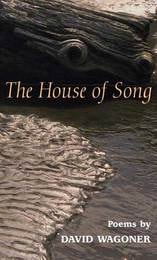
cover of The HOUSE OF SONG: POEMS

The HOUSE OF SONG

POEMS

David Wagoner

University of Illinois Press, 2002

As a recipient of Poetry's Levinson Prize and the Ruth Lilly Prize and a nominee for the American Book Award and National Book Award, David Wagoner is one of this country's most celebrated poets.
 
In The House of Song, he offers a hundred new poems in six parts.  At turns elegiac, comic, and nostalgic, these poems venture to the seemingly infinitesimal points where people, legends, and culture collide with nature, memory, and action. 
 
With characteristic wit and brevity, Wagoner chronicles the material invasions of the natural world, reconsidering Thoreau amid ruminations on voyeurs and destroyers, slug watchers and moth collectors.
 
The House of Song asserts Wagoner's place among the finest of American poets, past and present.
 
[more]
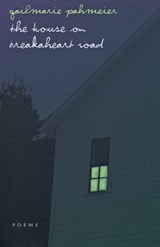
cover of The House On Breakaheart Road: Poems

The House On Breakaheart Road

Poems

Gailmarie Pahmeier

University of Nevada Press, 1998

This breathtaking collection of poems by award-winning Nevada poet Gailmarie Pahmeier explores the many facets of a woman's experience. Told largely through the voice of a fictional character, "Emma," the poems display a range of moods, from tender to wry, ironic, tough, lyrical, reckless. Pahmeier's voice is uniquely her own—strong, profoundly wise, rich in humor and subtlety, utterly feminine. She understands how women live, how they love, and what they need. Ultimately, she teaches us "what comes of it, of love."
[more]
cover of The House and Senate in the 1790s: Petitioning, Lobbying, and Institutional Development

The House and Senate in the 1790s

Petitioning, Lobbying, and Institutional Development

Kenneth R. Bowling

Ohio University Press, 2002

Amid the turbulent swirl of foreign intrigue, external and internal threats to the young nation’s existence, and the domestic partisan wrangling of the 1790s, the United States Congress solidified its role as the national legislature. The ten essays in The House and Senate in the 1790s demonstrate the mechanisms by which this bicameral legislature developed its institutional identity. The first essay sets the scene for the institutional development of Congress by examining its constitutional origins and the efforts of the Founders to empower the new national legislature. The five following essays focus on two related mechanisms—petitioning and lobbying—by which citizens and private interests communicated with national lawmakers.

Although scholars tend to see lobbying as a later nineteenth-century development, the papers presented here clearly demonstrate the existence of lobbyists and lobbying in the 1790s. The final four papers examine other aspects of the institutional development of the House and the Senate, including the evolution of political parties and congressional leadership.

The essays in this collection, the third volume in the series Perspectives on the History of Congress, 1789-1801, originated in a series of conferences held by the United States Capitol Historical Society from 1994 to 2001.
[more]
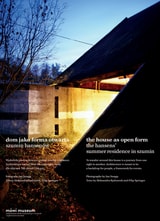
cover of The House as Open Form: The Hansens' Summer Residence in Szumin: Dom jako Forma Otwarta. Szumin Hansenów

The House as Open Form

The Hansens' Summer Residence in Szumin: Dom jako Forma Otwarta. Szumin Hansenów

Aleksandra Kedziorek, Filip Springer, and Jan Smaga

Museum of Modern Art in Warsaw, 2014

This beautifully illustrated volume offers a photographic tour of the iconic house of Polish architect couple: Oskar Hansen, member of Team 10, and his wife, Zofia. Located in Szumin in central Poland and designed in 1968, the house serves as a spatial manifesto of Hansen’s theory of Open Form, an inspiring concept aimed at opening the architecture for its users’ participation and transforming it into a passe-partout for everyday life. An essay on the house and its conceptual underpinnings by journalist Filip Springer accompanies striking photographs by Jan Smaga, and the resulting book is both a portrait of a specific dwelling and a larger analysis of the very idea of architects’ houses and their relationship to their owners’ work.
[more]
cover of The House of Atreus

The House of Atreus

John Lewin

University of Minnesota Press, 1966
The House of Atreus, adapted by John Lewin was first published in 1966. Minnesota Archive Editions uses digital technology to make long-unavailable books once again accessible, and are published unaltered from the original University of Minnesota Press editions.This adaptation of the classic Greek trilogy is designed for contemporary stage presentation and is the version to be used by the Minnesota Theatre Company or its production of the work at the Tyrone Guthrie Theatre in Minneapolis. The volume provides the texts of the three plays, Agamemnon, The Libation Bearers, and The Furies, and, in addition, a director’s introduction by Sir Tyrone Guthrie and an adapter’s introduction by John Lewin.In his introduction, Guthrie points out that fidelity neither to the literal meaning of the original nor to the distinctive spirit of the Oresteia is necessarily the supreme virtue for a stage version of this work. In performance, he explains, the music of verse is almost as important in conveying its meaning as is the syntax, and thus this version, The House of Atreus, with its simple and lyrical choruses, has been created to provide an interesting and vivid dramatic vehicle.In a perceptive and illuminating discussion of the plays in his introduction, John Lewin demonstrates the need for the kinds of changes he has made in the scripts.
[more]
cover of The House of Breath

The House of Breath

William Goyen

Northwestern University Press, 1999
Readers can now rediscover one of William Goyen's most important works in this restoration of the original text. The House of Breath eschews traditional conventions of plot and character presentation. The book is written as an ethereal address to the people and places the narrator remembers from his childhood in a small Texas town. More than a story, it is a meditation on the nature of identity, origins, and memory.
[more]
cover of The House of My Sojourn: Rhetoric, Women, and the Question of Authority

The House of My Sojourn

Rhetoric, Women, and the Question of Authority

Jane S. Sutton

University of Alabama Press, 2010


Employing the trope of architecture, Jane Sutton envisions the relationship between women and rhetoric as a house: a structure erected in ancient Greece by men that, historically, has made room for women but has also denied them the authority and agency to speak from within. Sutton’s central argument is that all attempts to include women in rhetoric exclude them from meaningful authority in due course, and this exclusion has been built into the foundations of rhetoric.

Drawing on personal experience, the spatial tropes of ancient Greek architecture, and the study of women who attained significant places in the house of rhetoric, Sutton highlights a number of decisive turns where women were able to increase their rhetorical access but were not able to achieve full authority, among them the work of Frances Wright, Lucy Stone, and suffragists Mott, Anthony, and Stanton; a visit to the 1893 World’s Columbian Exposition in Chicago, where the busts that became the Portrait Monument were displayed in the Woman’s Building (a sideshow, in essence); and a study of working-class women employed as telephone operators in New York in 1919.

With all the undeniable successes—socially, politically, and financially— of modern women, it appears that women are now populating the house of rhetoric as never before. But getting in the house and having public authority once inside are not the same thing. Sutton argues that women “can only act as far as the house permits.” Sojourn calls for a fundamental change in the very foundations of rhetoric.
[more]
cover of The House of Returned Echoes

The House of Returned Echoes

Arnost Lustig

Northwestern University Press, 2001
Arnošt Lustig's fiction has always been too close to the facts for comfort. In The House of Returned Echoes, he pays tribute to the life of his father, who died in Auschwitz in 1944. In Prague in the difficult time between the wars, a man fights to keep his family and his business alive despite anti-Semitism and economic hardship. Emil Ludvig has always relied on the simple rules of his family and the basic laws of civilization to counteract his misfortunes, and being a decent man himself, he refuses to believe that the Nazi threats will be carried out. Yet, he also becomes a victim of the camps, and his story resonates with both Lustig's personal experiences and the shared memories of the Holocaust.
[more]
cover of The House of a Thousand Floors

The House of a Thousand Floors

Jan Weiss

Central European University Press, 2017

The House of a Thousand Floors is one of the earliest science-fiction novels in European literature, published first in 1929. Besides being a pioneer in its genre, the book is highly regarded for its general merits as psychological literature. The novel tells the story of a dream in fever of a soldier wounded in World War I. He finds himself in the stairway of a gigantic (and kafkaesque) tower-like building, which is a metaphor for modern society. He learns that his task is to rescue Princess Tamara from Muller, the lord of the edifice. After a number of surrealistic encounters in the building, during which he is hailed as a liberator by many and is hunted by the cruel security guards, the main character finds Tamara and faces the cruel lord of Mullerdom. The novel makes fine use of a range of experimental styles and techniques. At times, linear storytelling gives way to a collage of incongruous elements: excerpts from fictitious books, encyclopedia articles, radio broadcast transcripts are used as a shortcut to describe places or events; other narrative ingredients include fanciful advertisements, ludicrous administrative documents or political slogans which highlight the idiosyncrasies of this decadent world.
[more]
cover of The House of the Lord

The House of the Lord

Steven Smith

Catholic University of America Press, 2017
[more]
cover of The House of the Singing Winds: The Life and Work of T. C. Steele

The House of the Singing Winds

The Life and Work of T. C. Steele

Rachel Berenson Perry

Indiana Historical Society Press, 2016

First published in 1966, this account of the life and work of T.C. Steele, one of Indiana's most renowned artists, has become a much-sought-after classic. For this reissue, sixty-two of the book's seventy-six illustrations, including all ten color plates, have been newly photographed and reproduced according to the highest modern standards. The text, unchanged from the first edition, includes a brief biography by the painter's grandson, Theodore L. Steele; a poetic memoir of Steele's last Brown County years by Selma N. Steele; and an appreciation of Steele's work by art historian Wilbur D. Peat.
[more]
cover of The House on Ipswich Marsh: Exploring the Natural History of New England

The House on Ipswich Marsh

Exploring the Natural History of New England

William Sargent

University Press of New England, 2015
In 2003, Bill Sargent bought a big pink house in Ipswich, Massachusetts. His home sits on what is known as the Great Marsh, a fascinating patch of wetland shared by Massachusetts and New Hampshire. Sargent received a grant to study some of the rare and endangered ground-nesting birds that inhabit the public land adjacent to his property. Ipswich Marsh is about these birds, but much else as well. Organized by the seasons of the year, The House on Ipswich Marsh features Sargent’s trademark interplay of information about the natural world, ecology, and politics. In “Spring,” the reader learns about the geological history of the Marsh; the migration patterns of bobolinks; the courtship flights of woodcocks; ticks and Lyme disease; the mating of horseshoe crabs and the underwater arrival of zooplankton, fish eggs, and moon jellyfish. “Summer” introduces plate tectonics and glaciers; sea level rise and glacial rebound; diving at night among lobsters and stone crabs; a day on Crane’s Beach; and a bike trip on Argilla Road. “Autumn” illuminates fishing; the natural and cultural history of Hog Island; harvest time on Appelton Farm; and a Native American Thanksgiving. “Winter” describes the formation of dunes and sandbars; the mating behavior of seals; coyote hunting deer at night; and a late-winter blizzard in which Sargent spies a red-tailed hawk, waiting, like the author, for the return of spring.
[more]
cover of The House on Lemon Street: Japanese Pioneers and the American Dream

The House on Lemon Street

Japanese Pioneers and the American Dream

Mark Rawitsch

University Press of Colorado, 2013

In 1915, Jukichi and Ken Harada purchased a house on Lemon Street in Riverside, California. Close to their restaurant, church, and children's school, the house should have been a safe and healthy family home. Before the purchase, white neighbors objected because of the Haradas' Japanese ancestry, and the California Alien Land Law denied them real-estate ownership because they were not citizens. To bypass the law Mr. Harada bought the house in the names of his three youngest children, who were American-born citizens. Neighbors protested again, and the first Japanese American court test of the California Alien Land Law of 1913-The People of California v. Jukichi Harada-was the result.

Bringing this little-known story to light, The House on Lemon Street details the Haradas' decision to fight for the American dream. Chronicling their experiences from their immigration to the United States through their legal battle over their home, their incarceration during World War II, and their lives after the war, this book tells the story of the family's participation in the struggle for human and civil rights, social justice, property and legal rights, and fair treatment of immigrants in the United States.

The Harada family's quest for acceptance illuminates the deep underpinnings of anti-Asian animus, which set the stage for Executive Order 9066, and recognizes fundamental elements of our nation's anti-immigrant history that continue to shape the American story. It will be worthwhile for anyone interested in the Japanese American experience in the twentieth century, immigration history, public history, and law.

This publication was made possible with the support of Naomi, Kathleen, Ken, and Paul Harada, who donated funds in memory of their father, Harold Shigetaka Harada, honoring his quest for justice and civil rights. Additional support for this publication was also provided, in part, by UCLA's Aratani Endowed Chair as well as Wallace T. Kido, Joel B. Klein, Elizabeth A. Uno, and Rosalind K. Uno.

[more]
cover of The House on Rondo

The House on Rondo

Debra J Stone

University of Minnesota Press, 2025

A young girl reckons with the demolition of a Black Saint Paul neighborhood to make way for the Interstate in the early 1960s

When thirteen-year-old Zenobia has to leave her friends and spend the summer at Grandma’s while Mama recovers from a stroke, life seems so unfair. But then the eviction letters start arriving throughout her grandparents’ neighborhood, and white men chalk arrows to mark the gas and water lines, and a new world of unfairness unfolds before her. It’s 1963, and Zenobia’s grandparents’ house on Rondo Avenue in Saint Paul—like all the homes in this thriving Black community—is targeted for demolition to make way for the new Interstate Highway 94.


As Zenobia gradually learns about what’s planned for the Rondo neighborhood and what this means for everyone who lives there, she discovers how her story is intertwined with the history of her family, all the way back to Great Grandma Zenobia and the secrets Grandma Essie held close about the reason for her light skin. With the destruction of the neighborhood looming, Zenobia takes a stand on behalf of her community, joining her no-nonsense neighbor, onetime cowgirl Mrs. Ruby Pearl, in a protest and ultimately getting arrested. Though Zenobia is grounded for a month, her punishment seems of little consequence in comparison to what is happening all around her. Even though the demolition continues, she is proud to discover the power and connection in protesting injustice.


The House on Rondo captures the heartbreak, resistance, and resilience that marks a community sacrificed in the name of progress—a “progress” that never seems to favor Black families and neighborhoods and that haunts cities like Saint Paul to this day. As Zenobia learns what can be destroyed and what cannot, her story teaches us that joy, community, and love persist, even amid violence and loss.
[more]
cover of The House on the Beach: A Novel

The House on the Beach

A Novel

By Juan García Ponce

University of Texas Press, 1994

Like waves ebbing and flowing, love surges and subsides among four friends who share a vacation at the house on the beach. As they navigate the seas of love and friendship, jealousy and unfaithfulness, Elena, Marta, Eduardo, and Rafael are swept up in the opposing currents that flow between security and personal freedom, marriage and sexual liberation, family and work, provincial and city life, and traditional and unconventional gender roles.

This deceptively simple novel, published in Mexico in 1966 as La casa en la playa and here translated into English for the first time, is an important work by one of Mexico's, and indeed Latin America's, major writers of the twentieth century. Juan García Ponce helped Mexican arts and letters break out of the ossified styles and themes of the post-Revolutionary "Mexican School" with works that explore the conflict between individual desire and the demands of family and work. Written at a turning point in his career, The House on the Beach foreshadows his embrace of the erotic encounter as a means of undermining rigid, socially constructed personal identity. It supports feminist views and probes deeply into the contradictions, backwardness, and progress of modern Mexican society.

[more]
cover of The Writer in Petrograd and the House of Arts

The Writer in Petrograd and the House of Arts

Martha Weitzel Hickey

Northwestern University Press, 2009

Founded by Maksim Gorky and Kornei Chukovsky in 1919 and disbanded in 1922, the Petrograd House of Arts occupied a crucial moment in Russia's cultural history. By chronicling the rise and fall of this literary landmark, this book conveys in greater depth and detail than ever before a significant but little studied period in Soviet literature.
 
Poised between Russian culture's past and her Soviet future, between pre- and post-Revolutionary generations, this once lavish private home on the Nevsky Prospekt housed as many as fifty-six poets, novelists, critics, and artists at one time, during a period of great social and political turbulence. And as such, Hickey contends, the House of Arts served as a crucible for a literature in transition. Hickey shows how the House of Arts, though virtually ignored by Soviet-era cultural historians, played a critical role in shaping the lively literature of the next decade, a literature often straddling the border between fiction and non-fiction. Considering prose writers such as Yevgeny Zamyatin, Olga Forsh, the Serapion Brothers group, Viktor Shklovsky, Boris Eikhenbaum, as well as poets including Alexander Blok, Nikolay Gumilev, Anna Radlova, Osip Mandelstam, and Vladislav Khodasevich, she traces the comings and goings at the House of Arts: the meetings and readings and lectures and, most of all, the powerful influence of these interactions on those who briefly lived and worked there. In her work, the Petrograd House of Arts appears for the first time in all its complexity and importance, as a focal point for the social and cultural ferment of the day, and a turning point in the direction of Russian literature and criticism.
[more]