Results by title
85 books match the query 'Housing' and 15 start with t

The Archive of Loss
Lively Ruination in Mill Land MumbaiMaura Finkelstein
Duke University Press, 2019
The City after Property
Abandonment and Repair in Postindustrial DetroitSara Safransky
Duke University Press, 2023
The Colonias Reader
Economy, Housing and Public Health in U.S.-Mexico Border ColoniasEdited by Angela J. Donelson and Adrian X. Esparza
University of Arizona Press, 2010
The Colonias Reader is the first book to present such a broad overview of these communities, offering a glimpse into life in the colonias and the circumstances that allow them to continue to exist—and even grow—in persistent poverty. The contributors document the depth of existing problems in each state and describe how government agencies, nongovernmental organizations, and community activists have mobilized resources to overcome obstacles to progress.
More than reporting problems and documenting programs, the book provides conceptual frameworks that tie poverty to institutional and class-based conflicts, and even challenges the very basis of colonia designations. Most of these contributions move beyond portraying border residents as hapless victims of discrimination and racism, showing instead their devotion to improving their own living conditions through grassroots organizing and community leadership.
These contributions show that, despite varying degrees of success, all colonia residents aspire to a livable wage, safe and decent housing, and basic health care. The Colonias Reader showcases many situations in which these people have organized to fulfill these ambitions and provides new insight into life along the border.

The Common Camp
Architecture of Power and Resistance in Israel–PalestineIrit Katz
University of Minnesota Press, 2022
Seeing the camp as a persistent political instrument in Israel–Palestine and beyond
The Common Camp underscores the role of the camp as a spatial instrument employed for reshaping, controlling, and struggling over specific territories and populations. Focusing on the geopolitical complexity of Israel–Palestine and the dramatic changes it has experienced during the past century, this book explores the region’s extensive networks of camps and their existence as both a tool of colonial power and a makeshift space of resistance.
Examining various forms of camps devised by and for Zionist settlers, Palestinian refugees, asylum seekers, and other groups, Irit Katz demonstrates how the camp serves as a common thread in shaping lands and lives of subjects from across the political spectrum. Analyzing the architectural and political evolution of the camp as a modern instrument engaged by colonial and national powers (as well as those opposing them), Katz offers a unique perspective on the dynamics of Israel–Palestine, highlighting how spatial transience has become permanent in the ongoing story of this contested territory.
The Common Camp presents a novel approach to the concept of the camp, detailing its varied history as an apparatus used for population containment and territorial expansion as well as a space of everyday life and subversive political action. Bringing together a broad range of historical and ethnographic materials within the context of this singular yet versatile entity, the book locates the camp at the core of modern societies and how they change and transform.
The Coveted Westside
How the Black Homeowners' Rights Movement Shaped Modern Los AngelesJennifer Mandel
University of Nevada Press, 2022
Mandel exposes the enduring struggle between Whites determined to establish their hegemony and create residential heterogeneity in the growing city, and people of color equally determined to obtain full access to the city and the opportunities, including residential, that it offered. Not only does this book document the Black homeowners’ fight against housing discrimination, it shares personal accounts of Blacks’ efforts to settle in the highly desirable Westside of Los Angeles. Mandel explores the White-derived social and legal mechanisms that created this segregated city and the African American-led movement that challenged efforts to block access to fair housing.
The Economics of Aging
Edited by David A. Wise
University of Chicago Press, 1988
The Economics of Aging presents results from an ongoing National Bureau of Economic Research project. Contributors consider the housing mobility and living arrangements of the elderly, their labor force participation and retirement, the economics of their health care, and their financial status. The goal of the research is to further our understanding both of the factors that determine the well-being of the elderly and of the consequences that follow from an increasingly older population with longer individual life spans. Each paper is accompanied by critical commentary.

The Ethics of Space
Homelessness and Squatting in Urban EnglandSteph Grohmann
HAU, 2020
Set against the backdrop of economic crisis, austerity, and a disintegrating British state, Steph Grohmann tells the story of a flourishing squatter community in the city of Bristol and how it was eventually outlawed by the state. The first ethnography of homelessness done by a researcher who was formally homeless throughout fieldwork, this volume explores the intersection between spatial existence, subjectivity, and ethics. The result is a book that rethinks how ethical views are shaped and constructed through our own spatial existences.

The Lofts of SoHo
Gentrification, Art, and Industry in New York, 1950–1980Aaron Shkuda
University of Chicago Press, 2016
American cities entered a new phase when, beginning in the 1950s, artists and developers looked upon a decaying industrial zone in Lower Manhattan and saw, not blight, but opportunity: cheap rents, lax regulation, and wide open spaces. Thus, SoHo was born. From 1960 to 1980, residents transformed the industrial neighborhood into an artist district, creating the conditions under which it evolved into an upper-income, gentrified area. Introducing the idea—still potent in city planning today—that art could be harnessed to drive municipal prosperity, SoHo was the forerunner of gentrified districts in cities nationwide, spawning the notion of the creative class.
In The Lofts of SoHo, Aaron Shkuda studies the transition of the district from industrial space to artists’ enclave to affluent residential area, focusing on the legacy of urban renewal in and around SoHo and the growth of artist-led redevelopment. Shkuda explores conflicts between residents and property owners and analyzes the city’s embrace of the once-illegal loft conversion as an urban development strategy. As Shkuda explains, artists eventually lost control of SoHo’s development, but over several decades they nonetheless forced scholars, policymakers, and the general public to take them seriously as critical actors in the twentieth-century American city.

The Maze of Urban Housing Markets
Theory, Evidence, and PolicyJerome Rothenberg, George C. Galster, Richard V. Butler, and John R. Pitkin
University of Chicago Press, 1991
The authors propose a new understanding of the market structure characterized by a closely interrelated array of quality submarkets. Their comprehensive models ground a unified theory that accounts for demand by both renters and owner occupants, supply by owners of existing dwellings, changes in the stock of housing due to conversions and new construction, and interactions across submarkets.
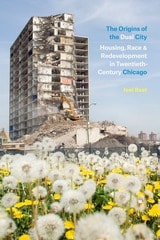
The Origins of the Dual City
Housing, Race, and Redevelopment in Twentieth-Century ChicagoJoel Rast
University of Chicago Press, 2019
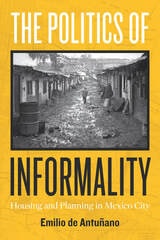
The Politics of Informality
Housing and Planning in Mexico CityEmilio de Antuñano
University of Texas Press, 2026
An examination of the central role and political power of informal neighborhoods in Mexico City.
At the beginning of the twentieth century, Mexico City was tightly bounded, with a population of about half a million people. By the end of that century, it was an unfathomable megalopolis of some 20 million. It had also become exhibit A in an “urban crisis” decried by demographers, NGOs, and the Mexican government. Mexico City’s greatest sin was its shantytowns—informal neighborhoods built in defiance of regulations and viewed as incurably disordered.
The Politics of Informality is an illuminating political and intellectual history, examining how these neighborhoods have figured in Mexican life and in the ideologies underlying urban planning. Prior to the Mexican Revolution of 1910, urban experts saw Mexico City as a tidy modern capital in-waiting. But during the interwar period, informal neighborhoods boomed, as working-class families asserted claims to housing under the revolution’s framework of citizenship and social justice. Then, amid Cold War realignments, a new cohort of urban experts pathologized Mexico City, turning it into a transnational laboratory for the study of poverty, migration, and overpopulation. Tracing a fascinating evolution, ThePolitics of Informality underscores the stubborn opposition between technocratic modernism and revolutionary, extralegal politics.
The Rent Trap
How We Fell into It and How We Get Out of ItSamir Jeraj and Rosie Walker
Pluto Press, 2016
Samir Jeraj and Rosie Walker offer the first in-depth case study of the private rental sector in the United Kingdom, exploring the rent-trap injustices in a first-world economy and exposing the powers that conspire to oppose regulation. A quarter of British MPs are landlords; rent strike is almost impossible; and sudden evictions are growing. Nevertheless, drawing on inspiration from movements in the United Kingdom, continental Europe, and elsewhere, The Rent Trap shows how people are starting to fight back against the financial burdens, health risks, and vicious behavior of landlords, working to create a world of fairer, safer housing for all—lessons that extend well beyond the borders of the UK.
The Sociology of Housing
How Homes Shape Our Social LivesEdited by Brian J. McCabe and Eva Rosen
University of Chicago Press, 2023
In 1947, the president of the American Sociological Association, Louis Wirth, argued for the importance of housing as a field of sociological research. Now, seventy-five years later, the sociology of housing has still not developed as a distinct subfield, leaving efforts to understand housing’s place in society to other disciplines, such as economics and urban planning. With this volume, the editors and contributors solidify the importance of housing studies within the discipline of sociology by tackling topics like racial segregation, housing instability, the supply of affordable housing, and the process of eviction. In doing so, they showcase the very best traditions of sociology: they draw on diverse methodologies, present unique field sites and data sources, and foreground a range of theoretical approaches to elucidate the relationships between contemporary housing, public policy, and key social outcomes.
The Sociology of Housing is a landmark volume that will be used by researchers and students alike to define this growing subfield, map continued directions for research, and center sociologists in interdisciplinary conversations about housing.

The Squatters' Movement in Europe
Commons and Autonomy as Alternatives to CapitalismEdited by Squatting Europe Kollective
Pluto Press, 2014
The Squatters' Movement in Europe is the first definitive guide to squatting as an alternative to capitalism. It offers a unique insider's view on the movement – its ideals, actions and ways of life. At a time of growing crisis in Europe with high unemployment, dwindling social housing and declining living standards, squatting has become an increasingly popular option.
The book is written by an activist-scholar collective, whose members have direct experience of squatting: many are still squatters today. There are contributions from the Netherlands, Spain, the USA, France, Italy, Germany, Switzerland and the UK.
In an age of austerity and precarity this book shows what has been achieved by this resilient social movement, which holds lessons for policy-makers, activists and academics alike.
The Suburban Racial Dilemma
Housing and NeighborhoodsW. Dennis Keating
Temple University Press, 1994