Results by title
828 books match the query 'Research' and 66 start with a
A Constructing Experience
Charles Bazerman
Southern Illinois University Press, 1994
Charles Bazerman’s newest book, a selection of both his published and unpublished essays from recent years, ranges from pedagogy to research to theory, exploring how all three levels are motivated by common concerns and how they are integrated through similar concepts and approaches. From this integrative perspective, Bazerman reveals his life-long inquiry into the nature of language—why it exists and what place it holds in the social world.
Presenting a powerful, action-oriented view of language that finds meaning in local circumstances and local uses, Bazerman divides his essays into four parts, beginning with an examination of the classroom experience. In describing the dynamics of the classroom and the relationship of the classroom to surrounding social arrangements, Bazerman notes how reading relates to writing, how interpersonal relations influence and structure acts of reading and writing, and how reading and writing are themselves forms of social action.
Bazerman, in parts 2 and 3, explains how larger forms of social structure are in dialectic with local acts of literacy, how experience of the world influences both everyday writing and empirically driven research, and how individuals conceive of social situations and actions to think about and plan activities. As he admittedly puzzles through conceptual obstacles, Bazerman explores many of the terms and theories evoked in rhetorical studies and provides a critical examination of the theories of James Kinneavy as well as more general thoughts on the nature of rhetorical study.
In part 4, Bazerman reinterprets the classical rhetorical concept of kairos in the light of theory and research in the social sciences, analyzes intertextuality in a scientific text, and offers a rereading of the writings of Adam Smith.
Throughout this book, Bazerman maintains that research into writing is the examination of what people do and have done, what influences what they do, and what texts do to people who write and read them. In addition, he reiterates the importance of literacy as a connecting device, essential to survival, growth, and change. Lack of literacy cuts people off from the institutions and means of life in a society.
A Contagious Cause
The American Hunt for Cancer Viruses and the Rise of Molecular MedicineRobin Wolfe Scheffler
University of Chicago Press, 2019
A Contagious Cause is the first book to trace the century-long hunt for a human cancer virus in America, an effort whose scale exceeded that of the Human Genome Project. The government’s campaign merged the worlds of molecular biology, public health, and military planning in the name of translating laboratory discoveries into useful medical therapies. However, its expansion into biomedical research sparked fierce conflict. Many biologists dismissed the suggestion that research should be planned and the idea of curing cancer by a vaccine or any other means as unrealistic, if not dangerous. Although the American hunt was ultimately fruitless, this effort nonetheless profoundly shaped our understanding of life at its most fundamental levels. A Contagious Cause links laboratory and legislature as has rarely been done before, creating a new chapter in the histories of science and American politics.

A Critical Review of Research in Land Economics
Leonard A. Salter, Jr.
University of Minnesota Press, 1948
A Critical Review of Research in Land Economics was first published in 1948. Minnesota Archive Editions uses digital technology to make long-unavailable books once again accessible, and are published unaltered from the original University of Minnesota Press editions.
Research relating to the economic problems of agriculture has seen rapid and extensive development during the last three decades. Funds now becoming available through the research and marketing act, together with financial support from other sources, promise further expansion and growth in the study of the economic problems of agriculture, and consequently a keen interest in research methods and approaches.
While this book deals specifically with research progress and methods in the field of land economics, the author's findings and conclusions offer guides to research workers and students in agricultural economics and the social sciences generally. Dr. Salter has set up certain basic requirements for evaluating research reports. He makes a comprehensive analysis of the research methodology now used by social scientists and land economists, and forcefully presents the case for use of experimental method in these fields. Those charged with the responsibility for initiating, planning, and carrying out research studies in social sciences will find stimulus and guidance in this book.
A Guide to Performing Systematic Reviews of Health and Disease
Kurinchi Gurusamy
University College London, 2025
Systematic reviews are the foundation of evidence-based healthcare, shaping treatment decisions and public health policies. A Guide to Performing Systematic Reviews of Health and Disease is a practical, step-by-step resource designed to help students and health professionals conduct high-quality reviews with confidence, even without extensive statistical training. This guide walks readers through the entire review process using free, open-source software. Each chapter features clear learning objectives and integrated videos to support hands-on learning.
Written by leading expert Kurinchi Gurusamy, this book simplifies complex research methodologies, making systematic reviews more accessible to a broad audience. Whether you are a novice researcher or a healthcare professional seeking to refine your evidence-based practice, this guide provides the essential tools to critically synthesize medical research. With an emphasis on clarity and real-world application, A Guide to Performing Systematic Reviews of Health and Disease is an indispensable resource for anyone looking to contribute to the ever-evolving landscape of healthcare research.
A Manual for Writers of Research Papers, Theses, and Dissertations, Eighth Edition
Chicago Style for Students and ResearchersKate L. Turabian
University of Chicago Press, 2013
The Manual retains its familiar three-part structure, beginning with an overview of the steps in the research and writing process, including formulating questions, reading critically, building arguments, and revising drafts. Part II provides an overview of citation practices with detailed information on the two main scholarly citation styles (notes-bibliography and author-date), an array of source types with contemporary examples, and detailed guidance on citing online resources.
The final section treats all matters of editorial style, with advice on punctuation, capitalization, spelling, abbreviations, table formatting, and the use of quotations. Style and citation recommendations have been revised throughout to reflect the sixteenth edition of The Chicago Manual of Style. With an appendix on paper format and submission that has been vetted by dissertation officials from across the country and a bibliography with the most up-to-date listing of critical resources available, A Manual for Writers remains the essential resource for students and their teachers.
A Manual for Writers of Research Papers, Theses, and Dissertations, Ninth Edition
Chicago Style for Students and ResearchersKate L. Turabian
University of Chicago Press, 2018
This new edition filters decades of expertise into modern standards. While previous editions incorporated digital forms of research and writing, this edition goes even further to build information literacy, recognizing that most students will be doing their work largely or entirely online and on screens. Chapters include updated advice on finding, evaluating, and citing a wide range of digital sources and also recognize the evolving use of software for citation management, graphics, and paper format and submission. The ninth edition is fully aligned with the recently released Chicago Manual of Style, 17th edition, as well as with the latest edition of The Craft of Research.
Teachers and users of the previous editions will recognize the familiar three-part structure. Part 1 covers every step of the research and writing process, including drafting and revising. Part 2 offers a comprehensive guide to Chicago’s two methods of source citation: notes-bibliography and author-date. Part 3 gets into matters of editorial style and the correct way to present quotations and visual material. A Manual for Writers also covers an issue familiar to writers of all levels: how to conquer the fear of tackling a major writing project.
Through eight decades and millions of copies, A Manual for Writers has helped generations shape their ideas into compelling research papers. This new edition will continue to be the gold standard for college and graduate students in virtually all academic disciplines.
- Bestselling, trusted, and time-tested advice for writing research papers
- The best interpretation of Chicago style for higher education students and researchers
- Definitive, clear, and easy to read, with plenty of examples
- Shows how to compose a strong research question, construct an evidence-based argument, cite sources, and structure work in a logical way
- Essential for anyone interested in learning about research
- Everything any student or teacher needs to know concerning paper writing
A Manual for Writers of Research Papers, Theses, and Dissertations, Seventh Edition
Chicago Style for Students and ResearchersKate L. Turabian
University of Chicago Press, 2007
Now, with this seventh edition, Turabian’s Manual has undergone its most extensive revision, ensuring that it will remain the most valuable handbook for writers at every level—from first-year undergraduates, to dissertation writers apprehensively submitting final manuscripts, to senior scholars who may be old hands at research and writing but less familiar with new media citation styles. Gregory G. Colomb, Joseph M. Williams, and the late Wayne C. Booth—the gifted team behind The Craft of Research—and the University of Chicago Press Editorial Staff combined their wide-ranging expertise to remake this classic resource. They preserve Turabian’s clear and practical advice while fully embracing the new modes of research, writing, and source citation brought about by the age of the Internet.
Booth, Colomb, and Williams significantly expand the scope of previous editions by creating a guide, generous in length and tone, to the art of research and writing. Growing out of the authors’ best-selling Craft of Research, this new section provides students with an overview of every step of the research and writing process, from formulating the right questions to reading critically to building arguments and revising drafts. This leads naturally to the second part of the Manual for Writers, which offers an authoritative overview of citation practices in scholarly writing, as well as detailed information on the two main citation styles (“notes-bibliography” and “author-date”). This section has been fully revised to reflect the recommendations of the fifteenth edition of The Chicago Manual of Style and to present an expanded array of source types and updated examples, including guidance on citing electronic sources.
The final section of the book treats issues of style—the details that go into making a strong paper. Here writers will find advice on a wide range of topics, including punctuation, table formatting, and use of quotations. The appendix draws together everything writers need to know about formatting research papers, theses, and dissertations and preparing them for submission. This material has been thoroughly vetted by dissertation officials at colleges and universities across the country.
This seventh edition of Turabian’s Manual for Writers of Research Papers, Theses, and Dissertations is a classic reference revised for a new age. It is tailored to a new generation of writers using tools its original author could not have imagined—while retaining the clarity and authority that generations of scholars have come to associate with the name Turabian.

A Manual for Writers of Research Papers, Theses, and Dissertations, Tenth Edition
"The Chicago Manual of Style" for Student ResearchersKate L. Turabian
University of Chicago Press, 2026
The gold standard for generations of college and graduate students writing research papers, now thoroughly updated to reflect today’s expectations.
Whether you are writing your first college research paper or your dissertation, A Manual for Writers of Research Papers, Theses, and Dissertations—also known as “Turabian”—remains a classic resource because of its timeless focus on the fundamentals of good research writing. For more than eight decades, it has offered comprehensive guidance on current expectations for academic writing. Based on the idea that writing a paper means engaging in a conversation with others in your field, it shows you how to conduct research, craft an argument, and produce an original work based on evidence and reasoning that responds to and builds on what others have previously written. Along the way, it also serves as a reference for cultivating consistent and respectful practices toward your readers in citations, language choices, and paper format.
This new edition reflects the continuing evolution in academic writing conventions. It has been updated to reflect the most current editions of The Craft of Research and The Chicago Manual of Style and features the following additional changes:
- A redesign for easier navigation
- Extensive coverage of the appropriate use of generative AI
- A rewritten chapter on visual communication
- Greater attention to writing centers and tutors
- New notes for students and instructors on how to use the book
- Refreshed examples throughout
Further, new ancillary written and video materials to support your use of the book are available online at Turabian.org.
With nearly 10 million copies sold, A Manual for Writers remains the most trusted and time-tested reference for writing research papers. Authoritative, clear, and easy to read with plenty of examples, it is the essential guide for any student or teacher concerned with research and good writing.
A New Brand of Business
Charles Coolidge Parlin, Curtis Publishing Company, and the Origins of Market ResearchDouglas B. Ward
Temple University Press, 2009
Charles Coolidge Parlin was considered by many to be the founder of market research. Working for the dominant Curtis Publishing Company, he revolutionized the industry by providing added value to advertisers through information about the racial, ethnic, and regional biases of readers and consumers. By maintaining contact with both businesses and customers, Parlin and Curtis publications were able to turn consumer wants into corporate profits.
In A New Brand of Business, Douglas Ward provides an intriguing business history that explains how and why Curtis developed its market research division. He reveals the evolution and impact of Parlin’s work, which understood how readers and advertisers in the emerging consumer economy looked at magazines and advertisements. Ward also examines the cultural and social reasons for the development and use of market research—particularly in regard to Curtis' readership of upper-income elites. The result weaves the stories of Parlin and Curtis into the changes taking place in American business and advertising in the early twentieth century.
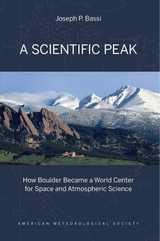
A Scientific Peak
How Boulder Became a World Center for Space and Atmospheric ScienceJoseph P. Bassi
American Meteorological Society, 2015
A Scientific Peak chronicles Boulder’s meteoric rise to eventually become “America’s Smartest City” and a leader in space and atmospheric sciences. In just two decades following World War II, a tenacious group of researchers, supported by groups from local citizenry to the State of Colorado, managed to convince the US government and some of the world’s scientific pioneers to make Boulder a center of the new space age. Joseph P. Bassi introduces us to the characters, from citizens to scientists, and the mix of politics, passion, and sheer luck at the start of Boulder’s transformation from “Scientific Siberia” to the research mecca it is today.
A Study of Southwestern Archaeology
Stephen H. Lekson
University of Utah Press, 2018
Focusing on the enigmatic monumental center at Chaco Canyon, the book provides a historical analysis of how Southwest archaeology confined itself, how it can break out of those confines, and how it can proceed into the future. Lekson suggests that much of what we believe about the ancient Southwest should be radically revised. Looking past old preconceptions brings a different Chaco Canyon into view: more than an eleventh-century Pueblo ritual center, Chaco was a political capital with nobles and commoners, a regional economy, and deep connections to Mesoamerica. By getting the history right, a very different science of the ancient Southwest becomes possible and archaeology can be reinvented as a very different discipline.
Notes
https://uofupress.lib.utah.edu/wp-content/uploads/sites/21/2019/04/Lekson-Notes.pdf
A Thomistic Introduction to Modern Psychology
Leslie Kelley
Catholic University of America Press, 2026
A University Looks at its Program
The Report of the University of Minnesota Bureau of Institutional Research, 1942-1952Ruth Eckert
University of Minnesota Press, 1954
A World of Fiction
Digital Collections and the Future of Literary HistoryKatherine Bode
University of Michigan Press, 2018
Abducting Writing Studies
Edited by Sidney I. Dobrin and Kyle Jensen
Southern Illinois University Press, 2017
Each of the twelve essays that comprise this collection sparks new insights about the phenomenon of writing. A must-read for rhetoric and composition scholars and students, Abducting Writing Studies is sure to foster vibrant discussions about what is possible in writing research and instruction.
Abstracts and the Writing of Abstracts
John M. Swales and Christine B. Feak
University of Michigan Press, 2009
Today's research world demands a variety of different abstracts to serve different purposes. As a result, writing abstracts can be a difficult task for graduate and international students, researchers, and even practiced authors. Abstracts and the Writing of Abstracts is designed to demystify the construction of this essential writing form and to equip scholars with the skills to summarize their work in clear and compelling ways.
This volume represents a revision and expansion of the material on writing abstracts that appeared in English in Today's Research World.
The Abstracts volume focuses on abstracts for research articles before addressing abstracts for short communications, conferences, and PhD dissertations. It also covers keywords, titles, and author names. Wherever appropriate within the text, Language Focus sections discuss options and provide tips for meeting specific linguistic challenges posed by the writing of different types of abstracts.
Academic Writing for Graduate Students, 3rd Edition
Essential Tasks and SkillsJohn M. Swales & Christine B. Feak
University of Michigan Press, 2012
Among the many changes in the third edition:
*newer, longer, and more authentic texts and examples
*greater discipline variety in texts (added texts from hard sciences and engineering)
*more in-depth treatment of research articles
*greater emphasis on vocabulary issues
*revised flow-of-ideas section
*additional tasks that require students to do their own research
*more corpus-informed content
*binding that allows the book to lay flat when open.
The Commentary (teacher's notes and key) (978-0-472-03506-9) has been revised expanded.
Academic Writing for Graduate Students
Essential Tasks and SkillsChristine B. Feak and John M. Swales
University of Michigan Press, 2027
For decades, Academic Writing for Graduate Students has introduced writers to the skills they need for successful academic writing. Now covering academic writing across an even broader range of disciplines, the new edition focuses on recurring rhetorical patterns found in academic texts and on the ways writers consider their audience, purpose, and disciplinary expectations as they make choices.
The book brings together short readings from published, student, and pedagogically-constructed texts with guided tasks to analyze how texts are organized and how claims are presented and supported. The first four units prepare students for academic writing while the following four units dive into genre-specific activities, such as the writing of summaries, critiques, and different research article sections. Throughout the book, readers will develop their rhetorical consciousness to see how strategic writing choices contribute to author positioning.
In Academic Writing for Graduate Students, 4th Edition, students will:
- Analyze real student writing for information flow, citation patterns, and authorial stance
- Learn to recognize different rhetorical patterns, such as cause and effect
- Engage with different types of writing, such as summaries, critiques, data commentary, book reviews, and research articles
Access for All
Expanding Opportunity and Programs to Support Successful Student Outcomes at University of Nevada, RenoMelisa N. Choroszy
University of Nevada Press, 2019
This collection of essays, written by University of Nevada, Reno (UNR) faculty and students, is an examination of the programs and strategies created to support first-generation and other underrepresented student populations. In addition, it serves as a dedication to the families and students whose hopes and dreams include the attainment of a college degree. Readers will gain insight into the framework needed to provide accessible programs and services to a large and diverse student population before, during, and after college graduation as well as first-hand success stories from the students themselves.
Each generation hopes for a better life for their children. Higher education, in particular, has been a dream for many in this country that has been made possible through public and private financial support. Every new generation of college-bound students faces new and evolving challenges, but the fierce dedication and commitment demonstrated in these pages define the key to developing a thriving and diverse institution that helps all students succeed.
Accompaniment with Im/migrant Communities
Engaged EthnographyKristin E. Yarris and Whitney L. Duncan
University of Arizona Press, 2024
This collection brings together the experiences and voices of anthropologists whose engaged work with im/migrant communities pushes the boundaries of ethnography toward a feminist, care-based, decolonial mode of ethnographic engagement called “accompaniment.”
Accompaniment as anthropological research and praxis troubles the boundaries of researcher-participant, scholar-activist, and academic-community to explicitly address issues of power, inequality, and the broader social purpose of the work. More than two dozen contributors show how accompaniment is not merely a mode of knowledge production but an ethical commitment that calls researchers to action in solidarity with those whose lives we seek to understand. The volume stands as a collective conversation about possibilities for caring and decolonial forms of ethnographic engagement with im/migrant communities.
This volume is ideal for scholars, students, immigrant activists, instructors, and those interested in social justice work.
Contributors
Carolina Alonso Bejarano
Anna Aziza Grewe
Alaska Burdette
Whitney L. Duncan
Carlos Escalante Villagran
Christina M. Getrich
Tobin Hansen
Lauren Heidbrink
Dan Heiman
Josiah Heyman
Sarah Horton
Nolan Kline
Alana M. W. LeBrón
Lupe López
William D. Lopez
Aida López Huinil
Mirian A. Mijangos García
Nicole L. Novak
Mariela Nuñez-Janes
Ana Ortez-Rivera
Juan Edwin Pacay Mendoza
Salvador Brandon Pacay Mendoza
María Engracia Robles Robles
Delmis Umanzor
Erika Vargas Reyes
Kristin E. Yarris
Adapting VALUEs
Tracing the Life of a Rubric through Institutional EthnographyJennifer Grouling
University Press of Colorado, 2023
Addiction Trajectories
Eugene Raikhel and William Garriott, eds.
Duke University Press, 2013
Contributors. Nancy D. Campbell, E. Summerson Carr, Angela Garcia, William Garriott, Helena Hansen, Anne M. Lovell, Emily Martin, Todd Meyers, Eugene Raikhel, A. Jamie Saris, Natasha Dow Schüll
Administrative Burden
Policymaking by Other MeansPamela Herd
Russell Sage Foundation, 2018
Winner of the 2020 Outstanding Book Award Presented by the Public and Nonprofit Section of the National Academy of Management
Winner of the 2019 Louis Brownlow Book Award from the National Academy of Public Administration
Through in-depth case studies of federal programs and controversial legislation, the authors show that administrative burdens are the nuts-and-bolts of policy design. Regarding controversial issues such as voter enfranchisement or abortion rights, lawmakers often use administrative burdens to limit access to rights or services they oppose. For instance, legislators have implemented administrative burdens such as complicated registration requirements and strict voter-identification laws to suppress turnout of African American voters. Similarly, the right to an abortion is legally protected, but many states require women seeking abortions to comply with burdens such as mandatory waiting periods, ultrasounds, and scripted counseling. As Herd and Moynihan demonstrate, administrative burdens often disproportionately affect the disadvantaged who lack the resources to deal with the financial and psychological costs of navigating these obstacles.
However, policymakers have sometimes reduced administrative burdens or shifted them away from citizens and onto the government. One example is Social Security, which early administrators of the program implemented in the 1930s with the goal of minimizing burdens for beneficiaries. As a result, the take-up rate is about 100 percent because the Social Security Administration keeps track of peoples’ earnings for them, automatically calculates benefits and eligibility, and simply requires an easy online enrollment or visiting one of 1,200 field offices. Making more programs and public services operate this efficiently, the authors argue, requires adoption of a nonpartisan, evidence-based metric for determining when and how to institute administrative burdens, with a bias toward reducing them. By ensuring that the public’s interaction with government is no more onerous than it need be, policymakers and administrators can reduce inequality, boost civic engagement, and build an efficient state that works for all citizens.
Advice and Consent
The Development of the Policy SciencesPeter DeLeon
Russell Sage Foundation, 1988
Africa and the Disciplines
The Contributions of Research in Africa to the Social Sciences and HumanitiesEdited by Robert H. Bates, V. Y. Mudimbe, and Jean F. O'Barr
University of Chicago Press, 1993
African Studies, contrary to some accounts, is not a separate continent in the world of American higher education. Its intellectual borders touch those of economics, literature, history, philosophy, and art; its history is the story of the world, both ancient and modern. This is the clear conclusion of Africa and the Disciplines, a book that addresses the question: Why should Africa be studied in the American university?
This question was put to distinguished scholars in the social sciences and humanities, prominent Africanists who are also leaders in their various disciplines. Their responses make a strong and enlightening case for the importance of research on Africa to the academy.
Paul Collier's essay, for example, shows how studies of African economies have clarified our understanding of the small open economies, and contributed to the theory of repressed inflation and to a number of areas in microeconomics as well. Art historian Suzanne Blier uses the terms and concepts that her discipline has applied to Africa to analyze the habits of mind and social practice of her own field. Christopher L. Miller describes the confounding and enriching impact of Africa on European and American literary theory. Political scientist Richard Sklar outlines Africa's contributions to the study of political modernization, pluralism, and rational choice. These essays, together with others from scholars in history, anthropology, philosophy, and comparative literature, attest to the influence of African research throughout the curriculum.
For many, knowledge from Africa seems distant and exotic. These powerful essays suggest the contrary: that such knowledge has shaped the way in which scholars in various disciplines understand their worlds. Eloquent testimony to Africa's necessary place in the mainstream of American education, this book should alter the academy's understanding of the significance of African research, its definition of core and periphery in human knowledge.
"These essays are at once exceptionally thoughtful and remarkably comprehensive. Not only do they offer an unusually interesting overview of African studies; they are also striking for the depth and freshness of their insights. This is the sort of volume from which both seasoned regional experts and students stand to learn an enormous amount."—John Comaroff, University of Chicago
"These essays provide an important perspective on the evolution of African studies and offer insights into what Africa can mean for the different humanistic and social science disciplines. Many show in ingenious and subtle ways the enormous potential that the study of Africa has for confounding the main tenets of established fields. One could only hope that the strictures expressed here would be taken to heart in the scholarly world."—Robert L. Tignor, Princeton University
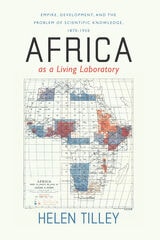
Africa as a Living Laboratory
Empire, Development, and the Problem of Scientific Knowledge, 1870-1950Helen Tilley
University of Chicago Press, 2011
Tropical Africa was one of the last regions of the world to experience formal European colonialism, a process that coincided with the advent of a range of new scientific specialties and research methods. Africa as a Living Laboratory is a far-reaching study of the thorny relationship between imperialism and the role of scientific expertise—environmental, medical, racial, and anthropological—in the colonization of British Africa.
A key source for Helen Tilley’s analysis is the African Research Survey, a project undertaken in the 1930s to explore how modern science was being applied to African problems. This project both embraced and recommended an interdisciplinary approach to research on Africa that, Tilley argues, underscored the heterogeneity of African environments and the interrelations among the problems being studied. While the aim of British colonialists was unquestionably to transform and modernize Africa, their efforts, Tilley contends, were often unexpectedly subverted by scientific concerns with the local and vernacular. Meticulously researched and gracefully argued, Africa as a Living Laboratory transforms our understanding of imperial history, colonial development, and the role science played in both.
Africana Thought, Volume 108
Grant Farred, ed.
Duke University Press, 0
One essay reveals the intricate richness of Africana thought, moving through psychoanalysis, folktales, Western metaphysics, and a critique of the political. Another essay offers a cautionary tale about the prospects for black life in the United States, even in the wake of Barack Obama’s historic political victory. A third essay argues that a “dead zone”—a place where black lives are lost, where hopes are dashed, where history has failed the black subject—exists between the black elite and the disenfranchised black underclass. Still another essay addresses how the discourse about the political has triumphed over everything else in considerations of colonialism and its aftermath and proposes that a turn to culture might offer a new thinking of black futures.
After Parsons
A Theory of Social Action for the Twenty-First CenturyRenee C. Fox
Russell Sage Foundation, 2005
After Prison
Navigating Adulthood in the Shadow of the Justice SystemDavid J. Harding
Russell Sage Foundation, 2020
The transition to young adulthood typically includes school completion, full-time employment, leaving the childhood home, marriage, and childbearing, events that are disrupted by incarceration. While one quarter of the young men who participated in the study successfully transitioned into adulthood—achieving employment and residential independence and avoiding arrest and incarceration—the same number of young men remained deeply involved with the criminal justice system, spending on average four out of the seven years after their initial release re-incarcerated. Not surprisingly, whites are more likely to experience success after prison. The authors attribute this racial disparity to the increased stigma of criminal records for blacks, racial discrimination, and differing levels of social network support that connect whites to higher quality jobs. Black men earn less than white men, are more concentrated in industries characterized by low wages and job insecurity, and are less likely to remain employed once they have a job.
The authors demonstrate that families, social networks, neighborhoods, and labor market, educational, and criminal justice institutions can have a profound impact on young people’s lives. Their research indicates that residential stability is key to the transition to adulthood. Harding and Harris make the case for helping families, municipalities, and non-profit organizations provide formerly incarcerated young people access to long-term supportive housing and public housing. A remarkably large number of men in this study eventually enrolled in college, reflecting the growing recognition of college as a gateway to living wage work. But the young men in the study spent only brief spells in college, and the majority failed to earn degrees. They were most likely to enroll in community colleges, trade schools, and for-profit institutions, suggesting that interventions focused on these kinds of schools are more likely to be effective. The authors suggest that, in addition to helping students find employment, educational institutions can aid reentry efforts for the formerly incarcerated by providing supports like childcare and paid apprenticeships.
After Prison offers a set of targeted policy interventions to improve these young people’s chances: lifting restrictions on federal financial aid for education, encouraging criminal record sealing and expungement, and reducing the use of incarceration in response to technical parole violations. This book will be an important contribution to the fields of scholarly work on the criminal justice system and disconnected youth.
Afterlives of Indigenous Archives
Edited by Ivy Schweitzer and Gordon Henry
Dartmouth College Press, 2019
Aging and Society
An Inventory of Research FindingsMatilda White Riley
Russell Sage Foundation, 1968
Alcohol, Science and Society Revisited
Edith Lisansky Gomberg, John A. Carpenter, and Helene Raskin White, Editors
University of Michigan Press, 1982
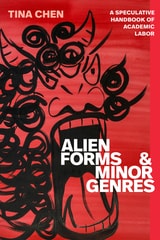
Alien Forms and Minor Genres
A Speculative Handbook of Academic LaborTina Chen
Duke University Press, 2026
Alive in the Writing
Crafting Ethnography in the Company of ChekhovKirin Narayan
University of Chicago Press, 2012
Anton Chekhov is revered as a boldly innovative playwright and short story writer—but he wrote more than just plays and stories. In Alive in the Writing—an intriguing hybrid of writing guide, biography, and literary analysis—anthropologist and novelist Kirin Narayan introduces readers to some other sides of Chekhov: his pithy, witty observations on the writing process, his life as a writer through accounts by his friends, family, and lovers, and his venture into nonfiction through his book Sakhalin Island. By closely attending to the people who lived under the appalling conditions of the Russian penal colony on Sakhalin, Chekhov showed how empirical details combined with a literary flair can bring readers face to face with distant, different lives, enlarging a sense of human responsibility.
Highlighting this balance of the empirical and the literary, Narayan calls on Chekhov to bring new energy to the writing of ethnography and creative nonfiction alike. Weaving together selections from writing by and about him with examples from other talented ethnographers and memoirists, she offers practical exercises and advice on topics such as story, theory, place, person, voice, and self. A new and lively exploration of ethnography, Alive in the Writing shows how the genre’s attentive, sustained connection with the lives of others can become a powerful tool for any writer.
All the Fish in the Sea
Maximum Sustainable Yield and the Failure of Fisheries ManagementCarmel Finley
University of Chicago Press, 2011
Carmel Finley reveals that the fallibility of MSY lies at its very inception—as a tool of government rather than science. The foundational doctrine of MSY emerged at a time when the US government was using science to promote and transfer Western knowledge and technology, and to ensure that American ships and planes would have free passage through the world’s seas and skies. Finley charts the history of US fisheries science using MSY as her focus, and in particular its application to halibut, tuna, and salmon fisheries. Fish populations the world over are threatened, and All the Fish in the Sea helps to sound warnings of the effect of any management policies divested from science itself.
Alt-Labor and the New Politics of Workers' Rights
Daniel J. Galvin
Russell Sage Foundation, 2024
Alt-labor groups have long offered their members services and organizing opportunities to contest their unfair treatment on the job. But many groups have grown frustrated by the limited impact of these traditional strategies and have turned to public policy to scale up their work. They have successfully led campaigns to combat wage theft, raise the minimum wage, improve working conditions, strengthen immigrants’ rights, and more. These successes present something of a puzzle: relative to their larger, wealthier, and better-connected opponents, alt-labor groups are small, poor, and weak. Their members are primarily low-wage immigrant workers and workers of color who are often socially, economically, and politically marginalized. With few exceptions, the groups lack large dues-paying memberships and are dependent on philanthropic foundations and other unpredictable sources of funding. How, given their myriad challenges, have alt-labor groups managed to make gains for their members?
Galvin reveals that alt-labor groups are leveraging their deep roots in local communities, their unique position in the labor movement, and the flexibility of their organizational forms to build their collective power and extend their reach. A growing number of groups have also become more politically engaged and have set out to alter their political environments by cultivating more engaged citizens, influencing candidate selection processes, and expanding government capacities. These efforts seek to enhance alt-labor groups’ probabilities of success in the near term while incrementally shifting the balance of power over the long term.
Alt-Labor and the New Politics of Workers’ Rights comprehensively details alt-labor’s turn to policy and politics, provides compelling insights into the dilemmas the groups now face, and illuminates how their efforts have both invigorated and complicated the American labor movement.
American Public Administration
Past, Present, FutureFrederick C. Mosher
University of Alabama Press, 1975
The essays raise such issues as the education of civil servants, the changes necessitated by crises, the growth of social sciences in governmental concerns, and primarily, the role of public administrators in America. Each author is a distinguished expert in his own right, and each essay can stand alone as a remarkable insight into the changing world of public administration within American society. Frederick Mosher’s expertise and supervision shapes this work into a remarkable and holistic perspective on public administration over time.
An Elusive Science
The Troubling History of Education ResearchEllen Condliffe Lagemann
University of Chicago Press, 2000
"[C]andid and incisive. . . . A stark yet enlightening look at American education."—Library Journal
"[A]n account of the search, over the past hundred or so years, to try and discover how educational research might provide reliable prescriptions for the improvement of education. Through extensive use of contemporary reference material, [Lagemann] shows that the search for ways of producing high-quality research has been, in effect, a search for secure disciplinary foundations."—Dylan William, Times Higher Education Supplement
An Illinois Sampler
Teaching and Research on the PrairieEdited by Mary-Ann Winkelmes and Antoinette Burton with Kyle Mays
University of Illinois Press, 2014
Aimed at alumni and prospective students interested in the university's ongoing mission, as well as current faculty and students wishing to stay up to date on the work being done around them, An Illinois Sampler showcases the best, the most ambitious, and the most effective teaching practices developed and nurtured at one of the world's premier research universities.
Contributors are Nancy Abelmann, Flavia C. D. Andrade, Jayadev Athreya, Betty Jo Barrett, Thomas J. Bassett, Hugh Bishop, Antoinette Burton, Lauren A. Denofrio-Corrales, Lizanne DeStefano, Karen Flynn, Bruce W. Fouke, Rebecca Ginsburg, Julie Jordan Gunn, Geoffrey Herman, Laurie Johnson, Kyle T. Mays, Rebecca Nettl-Fiol, Audrey Petty, Anke Pinkert, Raymond Price, Luisa-Maria Rosu, D. Fairchild Ruggles, Carol Spindel, Mark D. Steinberg, William Sullivan, Richard I. Tapping, Bradley Tober, Agniezska Tuszynska, Bryan Wilcox, Kate Williams, Mary-Ann Winkelmes, and Yi Lu.
An Interpretation of Desire
Essays in the Study of SexualityJohn Gagnon
University of Chicago Press, 2003
Gagnon may be best known as the coauthor of Sexual Conduct—a book that introduced the seminal concept of sexual scripting—and as one of the coauthors of The Social Organization of Sexuality, a foundational work that is widely considered to be the most important study of human sexual behavior since the Kinsey report. The essays collected here first trace the influence of scripting theory on Gagnon, outlining the radical departure he took from the dominant biological and psychiatric models of sex research. The volume then turns to more recent essays that consider such vexed issues as homosexuality, the theories of Sigmund Freud, HIV, hazardous sex, and the social aspects of sexually transmitted diseases.
Anatomy of a Train Wreck
The Rise and Fall of Priming ResearchRuth Leys
University of Chicago Press, 2024
In 2012, a team of Belgian scientists reported that they had been unable to replicate a canonical experiment in the field of psychology known as “priming.” The original experiment, performed by John Bargh in the nineties, had purported to show that words connoting old age unconsciously influenced—or primed—research subjects, causing them to walk more slowly. When subsequent researchers could not replicate these results, Nobel-winning psychologist Daniel Kahneman warned of a “train wreck looming” if Bargh and his colleagues could not address doubts about their work. Since then, the inability to replicate other well-known priming experiments has helped precipitate an ongoing debate over what has gone wrong in psychology, raising fundamental questions about the soundness of research practices in the field.
Anatomy of a Train Wreck offers the first detailed history of priming research from its origins in the early 1980s to its recent collapse. Ruth Leys places priming experiments in the context of contemporaneous debates over not only the nature of automaticity but also the very foundations of social psychology. While these latest discussions about priming have largely focused on methodology—including sloppy experimental practices, inadequate statistical methods, and publication bias—Leys offers a genealogy of the theoretical expectations and scientific paradigms that have guided and motivated priming research itself. Examining scientists’ intellectual strategies, their responses to criticism, and their assumptions about the nature of subjectivity, Anatomy of a Train Wreck raises crucial questions about the evidence surrounding unconscious influence and probes the larger stakes of the replication crisis: psychology’s status as a science.
Animals, Aging, and the Aged
Leo K. Bustad
University of Minnesota Press, 1981
Animals, Aging, and the Aged was first published in 1981. Minnesota Archive Editions uses digital technology to make long-unavailable books once again accessible, and are published unaltered from the original University of Minnesota Press editions.
This volume explores the significant contributions of animals to our understanding of aging, to improving geriatric medicine, and to providing companionship and assistance to the elderly. Leo L. Bustad discusses what can be learned from animal life-span studies about the process of aging, including the problems of cardiovascular disease, cancer, osteoporosis, and age-related mental conditions. The results of these studies suggest that changes in life-style—especially the diet—may modify the effects of chronic degenerative diseases.
Other studies show that caring for a pet can contribute greatly to the health and well being of the elderly. Bustad surveys experiments using animals in therapy and he presents, for the first time, evaluative instruments for choosing the appropriate pet. Companion animals allow many elderly people to maintain their independence. Animals are also helpful as aids for those with visual, hearing, and physical impairments. An appendix lists agencies that train dogs as aids to the physically impaired.
Animals, Aging, and the Aged is a thoughtful discussion of the physical, psychological, and social problems faced by the elderly, with emphasis on the ways that animals have contributed to the solution of some of those problems. As such, it will be useful for those involved in geriatric medicine and social work and in veterinary medicine and research. This book is volume 5 in the series Wesley W. Spink Lectures in Comparative Medicine.
Another Magic Mountain
Kibong'oto Hospital and African Tuberculosis, 1920–2000Christoph Gradmann
Ohio University Press, 2025
Kibong’oto Hospital, opened in 1926, is an East African tuberculosis treatment center located on the slopes of Mount Kilimanjaro. Its history is crucial to understanding tuberculosis in Tanzania and, more broadly, in Africa. With the hospital as a point of departure, Christoph Gradmann presents a history of this disease that engages with local and regional contexts rather than with international elite science and health policies.
The book addresses key questions about the African experience with tuberculosis:
- What did it mean to do clinical science on tuberculosis in colonial and postcolonial contexts?
- Along which trajectories did medical practice and research evolve in a place where international advances in medical science were sometimes heard of only faintly and where resources could be scarce?
- How did a large hospital with several hundred beds dedicated to the treatment of just one condition figure in the development of national and regional health systems?
- How did Kibong’oto Hospital, a pride of colonial health governance, transition after Tanzania gained independence?
- How did treating and researching tuberculosis change throughout the twentieth century in an African hospital dedicated to that condition?
- How did research at the hospital contribute to tuberculosis-control strategies on national and international levels?
The book is based on the hospital’s unique archive: its surviving library of thousands of case summaries. Since 1926, this library has documented an enormous number of patient lives, staff careers, diagnoses, treatments, clinical trials, and much more. For today’s readers, the library provides insight into a history of clinical medicine in Africa, for which very few comparable archives exist. Gradmann supplements this site-specific research with material from national and international archives, as well as interviews with former staff involved in that history. The book’s four chapters offer perspectives on colonial epidemiological research in the interwar years; on late colonial healthcare development plans and the arrival of modern drug therapies; on the role of a national tuberculosis hospital in a newly independent country; and on the history of tuberculosis control in an age of economic crisis, HIV, and emergent global health-treatment programs. Finally, Gradmann discusses what the history of a large hospital can add to today’s tuberculosis research, control policy, and historiography.
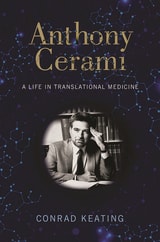
Anthony Cerami
A Life in Translational MedicineConrad Keating
Rutgers University Press, 2021
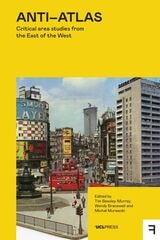
Anti-Atlas
Critical Area Studies from the East of the WestEdited by Tim Beasley-Murray, Wendy Bracewell, and Michal Murawski
University College London, 2025
Anti-Atlas uses the upheavals of Eastern Europe as a lens through which to rethink the politics of area studies. This collection unsettles traditional hierarchies, questioning how knowledge is produced, who controls it, and how we divide the world into “areas.”
Consisting of an eclectic mix of scholars from Europe, the UK, and North America, the book experiments with diverse genres—from academic essays and autobiographical reflections to travel guides and data visualizations. Through this innovative approach, the editors propose a manifesto for area studies to be more critical and reflexive; to be undisciplined and deeply engaged with local perspectives.
By dismantling the assumptions embedded in atlases and disciplinary boundaries, Anti-Atlas invites readers to think differently about how we construct and categorize the world. Of particular interest to scholars of area studies and critical theory, this work reassesses what it means to study places in an era of geopolitical rupture.
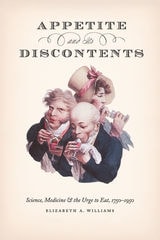
Appetite and Its Discontents
Science, Medicine, and the Urge to Eat, 1750-1950Elizabeth A. Williams
University of Chicago Press, 2020
Williams charts the history of inquiry into appetite between 1750 and 1950, as scientific and medical concepts of appetite shifted alongside developments in physiology, natural history, psychology, and ethology. She shows how, in the eighteenth century, trust in appetite was undermined when researchers who investigated ingestion and digestion began claiming that science alone could say which ways of eating were healthy and which were not. She goes on to trace nineteenth- and twentieth-century conflicts over the nature of appetite between mechanists and vitalists, experimentalists and bedside physicians, and localists and holists, illuminating struggles that have never been resolved. By exploring the core disciplines in investigations in appetite and eating, Williams reframes the way we think about food, nutrition, and the nature of health itself..
Applications of Research in Music Behavior
Clifford K. Madsen
University of Alabama Press, 1991
Applications of Research in Music Behavior stresses the practical applications and implications of investigating music behavior in a systematic, objective manner. Specifically, the book focuses on factors influencing the teaching of children; efficient methods for instructing future teachers; elements affecting musical perception, likes, and dislikes; and innovative efforts to investigate new areas of study. Recent studies by twenty-six nationally known educators that use objective strategies associated with experimental and behavioral research are presented to illustrate how people learn about music and how people are taught to make music.
The research studies are introduced by an article emphasizing the usefulness of research literature in devising a teaching strategy and are grouped into four sections: Teaching Music to Children, Teaching Future Teachers, Preference and Perception, and New Horizons. The concluding article is an allegorical proposal for balance and perspective in the consideration of music education.
Applied Factor Analysis
Rudolf J. Rummel
Northwestern University Press, 1970
Approaches to Lifespan Writing Research
Generating an Actionable CoherenceRyan J. Dippre
University Press of Colorado, 2020
Copublished with CSU Open Press
This edited collection builds on the three themes that emerged from the 2018 inaugural lifespan writing conference—identity, society, and theory—to further the study of writing through the lifespan. The contributors to this collection provide a framework within which the reader can develop a dynamic, interdisciplinary, multifaceted understanding of the limits and possibilities of studying lifespan writing. Recognizing that such research requires methodological rigor and flexibility as well as theoretical precision and adaptability, Approaches to Lifespan Writing Research draws on a range of methodological and theoretical approaches, from autoethnography to longitudinal structural equation modeling. This methodological and theoretical flexibility reflects the challenges inherent in studying lifespan writing—in particular, the need to develop an integrated framework that enables the “translation” of research findings for use by other lifespan writing researchers. Approaches to Lifespan Writing Research begins that process.
This book is also available as an open access ebook through the WAC Clearinghouse
Approaches to Social Theory
Stewart Lindenberg
Russell Sage Foundation, 1986