Results by title
395 books match the query 'How' and 66 start with t
Teaching Vocabulary Is the Writing Teacher's Job
Why and HowKeith S. Folse
University of Michigan Press, 2020
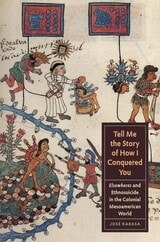
Tell Me the Story of How I Conquered You
Elsewheres and Ethnosuicide in the Colonial Mesoamerican WorldBy José Rabasa
University of Texas Press, 2011
Folio 46r from Codex Telleriano-Remensis was created in the sixteenth century under the supervision of Spanish missionaries in central Mexico. As an artifact of seismic cultural and political shifts, the manuscript painting is a singular document of indigenous response to Spanish conquest. Examining the ways in which the folio's tlacuilo (indigenous painter/writer) creates a pictorial vocabulary, this book embraces the place "outside" history from which this rich document emerged.
Applying contemporary intellectual perspectives, including aspects of gender, modernity, nation, and visual representation itself, José Rabasa reveals new perspectives on colonial order. Folio 46r becomes a metaphor for reading the totality of the codex and for reflecting on the postcolonial theoretical issues now brought to bear on the past. Ambitious and innovative (such as the invention of the concepts of elsewheres and ethnosuicide, and the emphasis on intuition), Tell Me the Story of How I Conquered You embraces the performative force of the native scribe while acknowledging the ineffable traits of 46r—traits that remain untenably foreign to the modern excavator/scholar. Posing provocative questions about the unspoken dialogues between evangelizing friars and their spiritual conquests, this book offers a theoretic-political experiment on the possibility of learning from the tlacuilo ways of seeing the world that dislocate the predominance of the West.
Temptation Transformed
The Story of How the Forbidden Fruit Became an AppleAzzan Yadin-Israel
University of Chicago Press, 2022
How did the apple, unmentioned by the Bible, become the dominant symbol of temptation, sin, and the Fall? Temptation Transformed pursues this mystery across art and religious history, uncovering where, when, and why the forbidden fruit became an apple.
Azzan Yadin-Israel reveals that Eden’s fruit, once thought to be a fig or a grape, first appears as an apple in twelfth-century French art. He then traces this image back to its source in medieval storytelling. Though scholars often blame theologians for the apple, accounts of the Fall written in commonly spoken languages—French, German, and English—influenced a broader audience than cloistered Latin commentators. Azzan Yadin-Israel shows that, over time, the words for “fruit” in these languages narrowed until an apple in the Garden became self-evident. A wide-ranging study of early Christian thought, Renaissance art, and medieval languages, Temptation Transformed offers an eye-opening revisionist history of a central religious icon.
Texan Crucible
How the Irish, Germans, and Czechs Became AngloMarian J. Barber
University of Texas Press, 2026
A history of European immigrants in Texas and how they redefined racial identity.
While the creation of a Black-White racial binary was foundational to most of the United States, nineteenth-century Texas developed a unique tripartite system that acknowledged the role of individuals of Mexican ancestry in a region that was Spanish, Mexican, and an independent nation before becoming a US (and briefly Confederate) state. Yet this framework was fraught, struggling to accommodate new arrivals from beyond North America, in particular the Irish, Germans, and Czechs. Texan Crucible tells the story of these immigrants and how they became Anglo.
Marian Barber reveals the ways language, religion, alcohol use, and attitudes toward slavery distinguished these newcomers to Texas from those arriving from the eastern United States and how they nevertheless created thriving, influential communities. Their status was shaped by events inside and far beyond Texas, including an 1887 prohibition fight, the Civil War, and two world wars that encouraged them to erase their distinctiveness. As segregation was formally outlawed and civil rights activism grew, understandings of race shifted, cementing these groups’ status as Anglo. Texan Crucible recovers the histories of German, Irish, and Czech immigrants and unveils the social construction of racial difference underpinning Texan identity.
The Accidental Network
How a Small Company Sparked a Global Broadband TransformationRouzbeh Yassini-Fard
West Virginia University Press, 2025
The Accidental Network shares the untold story of the invention of the cable modem by the small, struggling tech company LANcity in the early 1990s, illustrating how Yassini-Fard overcame a cascade of technical challenges, investment community naysayers, and unnerving business obstacles to create the cable modem technology that has changed the way billions of individuals across the globe now manage their daily lives and commerce. The cable modem delivered broadband, with speeds ranging from 10 megabits per second (Mbps) to 10 gigabits per second (Gbps)—a big leap from the dial-up speeds of 56 kilobits per second (Kbps). This platform, along with the adoption of the DOCSIS (Data Over Cable Service Interface Specification) standard, engendered the modern revolution in broadband Internet access. Shunned by venture capitalists and surviving on a shoestring budget, Yassini-Fard and his colleagues were willing to bet it all (including the deed for Yassini-Fard’s home) on the creation of the cable modem and the pursuit of global adoption.
The Accidental Network is both a valuable history of technology innovation and an engrossing account of business conducted at high speed. The book details Yassini-Fard’s journey from electrical engineer to entrepreneur in the race to secure technology partners, create a wholly new marketplace, and convince cable industry executives that a bold business awaited in transmitting data to households at a time when skepticism about the reach of personal computing was the norm.
Written from the lens of a devoted idealist and WVU alum known as “the father of the cable modem,” this book reveals how a perfect storm of forces—the rise of cable television, the onset of the personal computing era, a growing awareness of the Internet for information and commerce, and the development of the cable modem—converged to usher in the age of broadband access.
The American Surveillance State
How the U.S. Spies on DissentDavid H. Price
Pluto Press, 2022
New evidence has come to light proving how far the FBI monitored its citizens throughout the Cold War and beyond
When the possibility of wiretapping first became known to Americans they were outraged. Now, in our post-9/11 world, it’s accepted that corporations are vested with human rights, and government agencies and corporations use computers to monitor our private lives. David H. Price pulls back the curtain to reveal how the FBI and other government agencies have always functioned as the secret police of American capitalism up to today, where they luxuriate in a near-limitless NSA surveillance of all.
Price looks through a roster of campaigns by law enforcement, intelligence agencies, and corporations to understand how we got here. Starting with J. Edgar Hoover and the early FBI’s alignment with business, his access to 15,000 pages of never-before-seen FBI files shines a light on the surveillance of Edward Said, Andre Gunder Frank and Alexander Cockburn, Native American communists, and progressive factory owners.
Price uncovers patterns of FBI monitoring and harassing of activists and public figures, providing the vital means for us to understand how these new frightening surveillance operations are weaponized by powerful governmental agencies that remain largely shrouded in secrecy.
The Apple II Age
How the Computer Became PersonalLaine Nooney
University of Chicago Press, 2023
An engrossing origin story for the personal computer—showing how the Apple II’s software helped a machine transcend from hobbyists’ plaything to essential home appliance.
Skip the iPhone, the iPod, and the Macintosh. If you want to understand how Apple Inc. became an industry behemoth, look no further than the 1977 Apple II. Designed by the brilliant engineer Steve Wozniak and hustled into the marketplace by his Apple cofounder Steve Jobs, the Apple II became one of the most prominent personal computers of this dawning industry.
The Apple II was a versatile piece of hardware, but its most compelling story isn’t found in the feat of its engineering, the personalities of Apple’s founders, or the way it set the stage for the company’s multibillion-dollar future. Instead, historian Laine Nooney shows, what made the Apple II iconic was its software. In software, we discover the material reasons people bought computers. Not to hack, but to play. Not to code, but to calculate. Not to program, but to print. The story of personal computing in the United States is not about the evolution of hackers—it’s about the rise of everyday users.
Recounting a constellation of software creation stories, Nooney offers a new understanding of how the hobbyists’ microcomputers of the 1970s became the personal computer we know today. From iconic software products like VisiCalc and The Print Shop to historic games like Mystery House and Snooper Troops to long-forgotten disk-cracking utilities, The Apple II Age offers an unprecedented look at the people, the industry, and the money that built the microcomputing milieu—and why so much of it converged around the pioneering Apple II.

The Battle for Europe
How an Elite Hijacked a Continent - and How we Can Take it BackThomas Fazi
Pluto Press, 2014
The Battle for Europe brings into sharp focus the historical importance of the current Eurozone crisis. Thomas Fazi argues that European Union (EU) elites have seized on the financial crash to push through damaging neoliberal policies, undermining social cohesion and vital public services.
Drawing on a wealth of sources, Fazi argues that the EU’s austerity policies are not simply a case of political and ideological short-sightedness, but part of a long-term project by elites to remove the last remnants of the welfare state and complete the neoliberal project.
As well as an urgent critique of the EU and monetary union as currently constituted, The Battle for Europe showcases a programme for progressive reform and outlines how citizens and workers of Europe can radically overhaul EU institutions.
The Book of Minds
How to Understand Ourselves and Other Beings, from Animals to AI to AliensPhilip Ball
University of Chicago Press, 2022
Sciences from zoology to astrobiology, computer science to neuroscience, are seeking to understand minds in their own distinct disciplinary realms. Taking a uniquely broad view of minds and where to find them—including in plants, aliens, and God—Philip Ball pulls the pieces together to explore what sorts of minds we might expect to find in the universe. In so doing, he offers for the first time a unified way of thinking about what minds are and what they can do, by locating them in what he calls the “space of possible minds.” By identifying and mapping out properties of mind without prioritizing the human, Ball sheds new light on a host of fascinating questions: What moral rights should we afford animals, and can we understand their thoughts? Should we worry that AI is going to take over society? If there are intelligent aliens out there, how could we communicate with them? Should we? Understanding the space of possible minds also reveals ways of making advances in understanding some of the most challenging questions in contemporary science: What is thought? What is consciousness? And what (if anything) is free will?
Informed by conversations with leading researchers, Ball’s brilliant survey of current views about the nature and existence of minds is more mind-expanding than we could imagine. In this fascinating panorama of other minds, we come to better know our own.
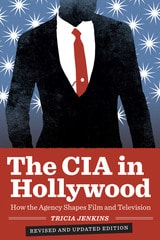
The CIA in Hollywood
How the Agency Shapes Film and TelevisionBy Tricia Jenkins
University of Texas Press, 2016
What’s your impression of the CIA? A bumbling agency that can’t protect its own spies? A rogue organization prone to covert operations and assassinations? Or a dedicated public service that advances the interests of the United States? Astute TV and movie viewers may have noticed that the CIA’s image in popular media has spanned this entire range, with a decided shift to more positive portrayals in recent years. But what very few people know is that the Central Intelligence Agency has been actively engaged in shaping the content of film and television, especially since it established an entertainment industry liaison program in the mid-1990s.
The CIA in Hollywood offers the first full-scale investigation of the relationship between the Agency and the film and television industries. Tricia Jenkins draws on numerous interviews with the CIA’s public affairs staff, operations officers, and historians, as well as with Hollywood technical consultants, producers, and screenwriters who have worked with the Agency, to uncover the nature of the CIA’s role in Hollywood. In particular, she delves into the Agency’s and its officers’ involvement in the production of The Agency, In the Company of Spies, Alias, The Recruit, The Sum of All Fears, Enemy of the State, Syriana, The Good Shepherd, and more. Her research reveals the significant influence that the CIA now wields in Hollywood and raises important and troubling questions about the ethics and legality of a government agency using popular media to manipulate its public image.
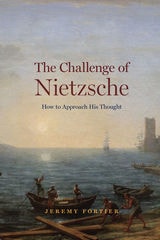
The Challenge of Nietzsche
How to Approach His ThoughtJeremy Fortier
University of Chicago Press, 2020
The Challenge of Nietzsche uses Nietzsche as a guide to Nietzsche, highlighting the fact that Nietzsche equipped his writings with retrospective self-commentaries and an autobiographical apparatus that clarify how he understood his development as an author, thinker, and human being. Fortier shows that Nietzsche used his writings to establish two major character types, the Free Spirit and Zarathustra, who represent two different approaches to the conduct and understanding of life: one that strives to be as independent and critical of the world as possible, and one that engages with, cares for, and aims to change the world. Nietzsche developed these characters at different moments of his life, in order to confront from contrasting perspectives such elemental experiences as the drive to independence, the feeling of love, and the assessment of one’s overall health or well-being. Understanding the tension between the Free Spirit and Zarathustra takes readers to the heart of what Nietzsche identified as the tensions central to his life, and to all human life.
The Changing American Mind
How and Why American Public Opinion Changed Between 1960 and 1988William G. Mayer
University of Michigan Press, 1992
Have Americans become more or less tolerant of racial discrimination? More or less supportive of abortion? Is a new tax revolt underway? Did a "new conservative mood" dominate elections and policy discussions in the early 1980s? Popular and academic discussions about the past and future of American politics often turn on the question of whether and how public opinion has changed. Yet for all the talk about such matters, observes political scientist William G. Mayer, there is surprisingly little hard evidence on many of these questions. The Changing American Mind is designed to fill that gap, by presenting a comprehensive history of American public opinion over the last three decades: how it changed, why it changed, and what difference that makes for American politics. The Changing American Mind is important reading for all who are interested in American politics and public opinion. Its appendices, which include the results of more than 250 survey questions that have been asked regularly of national samples over the last three decades, make it an indispensable reference source for everyone who studies or participates in American politics.
The Channels of Student Activism
How the Left and Right Are Winning (and Losing) in Campus Politics TodayAmy J. Binder and Jeffrey L. Kidder
University of Chicago Press, 2022
The past six years have been marked by a contentious political atmosphere that has touched every arena of public life, including higher education. Though most college campuses are considered ideologically progressive, how can it be that the right has been so successful in mobilizing young people even in these environments?
As Amy J. Binder and Jeffrey L. Kidder show in this surprising analysis of the relationship between political activism on college campuses and the broader US political landscape, while liberal students often outnumber conservatives on college campuses, liberal campus organizing remains removed from national institutions that effectively engage students after graduation. And though they are usually in the minority, conservative student groups have strong ties to national right-leaning organizations, which provide funds and expertise, as well as job opportunities and avenues for involvement after graduation. Though the left is more prominent on campus, the right has built a much more effective system for mobilizing ongoing engagement. What’s more, the conservative college ecosystem has worked to increase the number of political provocations on campus and lower the public’s trust in higher education.
In analyzing collegiate activism from the left, right, and center, The Channels of Student Activism shows exactly how politically engaged college students are channeled into two distinct forms of mobilization and why that has profound consequences for the future of American politics.

The Channels of Student Activism
How the Left and Right Are Winning (and Losing) in Campus Politics TodayAmy J. Binder and Jeffrey L. Kidder
University of Chicago Press, 2022
This is an auto-narrated audiobook edition of this book.
An eye-opening analysis of collegiate activism and its effects on the divisions in contemporary American politics.
The past six years have been marked by a contentious political atmosphere that has touched every arena of public life, including higher education. Though most college campuses are considered ideologically progressive, how can it be that the right has been so successful in mobilizing young people even in these environments?
As Amy J. Binder and Jeffrey L. Kidder show in this surprising analysis of the relationship between political activism on college campuses and the broader US political landscape, while liberal students often outnumber conservatives on college campuses, liberal campus organizing remains removed from national institutions that effectively engage students after graduation. And though they are usually in the minority, conservative student groups have strong ties to national right-leaning organizations, which provide funds and expertise, as well as job opportunities and avenues for involvement after graduation. Though the left is more prominent on campus, the right has built a much more effective system for mobilizing ongoing engagement. What’s more, the conservative college ecosystem has worked to increase the number of political provocations on campus and lower the public’s trust in higher education.
In analyzing collegiate activism from the left, right, and center, The Channels of Student Activism shows exactly how politically engaged college students are channeled into two distinct forms of mobilization and why that has profound consequences for the future of American politics.
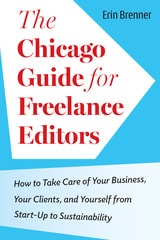
The Chicago Guide for Freelance Editors
How to Take Care of Your Business, Your Clients, and Yourself from Start-Up to SustainabilityErin Brenner
University of Chicago Press, 2024
You’ve been thinking about shifting into the world of freelance editing, but you don’t know where to start. In a time when editors are seeking greater flexibility in their work arrangements and schedules, freelancing is an increasingly common career option. But deciding to go it alone means balancing the risks with the rewards. From the publisher of The Chicago Manual of Style comes The Chicago Guide for Freelance Editors, the definitive guide to running your business and finding greater control and freedom in your work life.
In this book, Erin Brenner—an industry leader and expert on the business of editorial freelancing—gathers everything you need to know into a single resource. Brenner has run her own successful editing business for over two decades and has helped hundreds of editors launch or improve their businesses through her teaching, blog writing, and coaching.
The Chicago Guide for Freelance Editors will walk you through the entire process of conceiving, launching, and working in a freelance editing business, from deciding on services and rates to choosing the best business structure to thinking through branding and marketing strategies and beyond. This book is ideal for beginning freelancers looking to get set up and land their first clients, but it’s equally valuable to those who have already been freelancing, with detailed coverage of such issues as handling difficult clients and continuing professional development. You’ll find a collection of advice from other successful freelance editors in this guide, as well as an extensive list of resources and tools. In the final and perhaps most important chapter, Brenner teaches you how to care for the key component of the business: yourself.
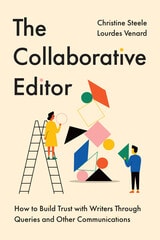
The Collaborative Editor
How to Build Trust with Writers Through Queries and Other CommunicationsChristine Steele and Lourdes Venard
University of Chicago Press, 0
Discover the techniques and tools for building a successful editor-writer relationship.
Becoming an effective editor involves not only working proficiently with words but also learning to forge successful working relationships with the people responsible for those words. Yet this critical element of the profession is often treated as an afterthought. In this book, long-time editors Christine Steele and Lourdes Venard offer strategies for approaching the editor-writer relationship in a spirit of collaboration and trust.
The Collaborative Editor moves beyond the red pen to explore editing as a creative partnership. It teaches editors how to communicate clearly and confidently, how to listen deeply to the writer, and how to thoughtfully ask questions. By prioritizing empathy and communication, editors can build trust with writers and strip away the adversarial tension that can, at times, characterize the feedback process. With advice based on their own years of experience and drawing from interviews with a wide range of editorial professionals, Steele and Venard begin by establishing what an ideal editor-writer relationship looks like in different settings, whether freelance developmental editing for a publishing house, copyediting in a corporate setting, or other scenarios in journalism, academic publishing, and other fields. They also discuss the elements of effective feedback and how to honor cultural and contextual sensitivity in a writer’s work. Several chapters concern querying, including specific examples and suggestions. The final part of the book covers tools to help editors communicate better with writers—including generative AI—and mental health and well-being practices that support both writers and editors.
Whether you are a beginning editor or a seasoned professional, this book will help you transform your workflow from a transactional service into a true collaboration.
The Continental Dollar
How the American Revolution Was Financed with Paper MoneyFarley Grubb
University of Chicago Press, 2023
The Continental Dollar is a revelatory history of how the fledgling United States paid for its first war. Farley Grubb upends the common telling of this story, in which the United States printed cross-colony money, called Continentals, to serve as an early fiat currency—a currency that is not tied to a commodity like gold, but rather to a legal authority. As Grubb details, the Continental was not a fiat currency, but a “zero-coupon bond”—a wholly different species of money. As bond payoffs were pushed into the future, the money’s value declined, killing the Continentals’ viability years before the Revolutionary War would officially end.
Drawing on decades of exhaustive mining of eighteenth-century records, The Continental Dollar is an essential origin story of the early American monetary system, promising to serve as the benchmark for critical work for decades to come.
The Copy Generic
How the Nonspecific Makes Our Social WorldsScott MacLochlainn
University of Chicago Press, 2022
From off-brand products to elevator music, the “generic” is discarded as the copy, the knockoff, and the old. In The Copy Generic, anthropologist Scott MacLochlainn insists that more than the waste from the culture machine, the generic is a universal social tool, allowing us to move through the world with necessary blueprints, templates, and frames of reference. It is the baseline and background, a category that orders and values different types of specificity yet remains inherently nonspecific in itself. Across arenas as diverse as city planning, social media, ethnonationalism, and religion, the generic points to spaces in which knowledge is both overproduced and desperately lacking. Moving through ethnographic and historical settings in the Philippines, Europe, and the United States, MacLochlainn reveals how the concept of the generic is crucial to understanding how things repeat, circulate, and are classified in the world.
The Coveted Westside
How the Black Homeowners' Rights Movement Shaped Modern Los AngelesJennifer Mandel
University of Nevada Press, 2022
Mandel exposes the enduring struggle between Whites determined to establish their hegemony and create residential heterogeneity in the growing city, and people of color equally determined to obtain full access to the city and the opportunities, including residential, that it offered. Not only does this book document the Black homeowners’ fight against housing discrimination, it shares personal accounts of Blacks’ efforts to settle in the highly desirable Westside of Los Angeles. Mandel explores the White-derived social and legal mechanisms that created this segregated city and the African American-led movement that challenged efforts to block access to fair housing.
The Cult of Statistical Significance
How the Standard Error Costs Us Jobs, Justice, and LivesStephen T. Ziliak and Deirdre N. McCloskey
University of Michigan Press, 2010
“McCloskey and Ziliak have been pushing this very elementary, very correct, very important argument through several articles over several years and for reasons I cannot fathom it is still resisted. If it takes a book to get it across, I hope this book will do it. It ought to.”
—Thomas Schelling, Distinguished University Professor, School of Public Policy, University of Maryland, and 2005 Nobel Prize Laureate in Economics
“With humor, insight, piercing logic and a nod to history, Ziliak and McCloskey show how economists—and other scientists—suffer from a mass delusion about statistical analysis. The quest for statistical significance that pervades science today is a deeply flawed substitute for thoughtful analysis. . . . Yet few participants in the scientific bureaucracy have been willing to admit what Ziliak and McCloskey make clear: the emperor has no clothes.”
—Kenneth Rothman, Professor of Epidemiology, Boston University School of Health
The Cult of Statistical Significance shows, field by field, how “statistical significance,” a technique that dominates many sciences, has been a huge mistake. The authors find that researchers in a broad spectrum of fields, from agronomy to zoology, employ “testing” that doesn’t test and “estimating” that doesn’t estimate. The facts will startle the outside reader: how could a group of brilliant scientists wander so far from scientific magnitudes? This study will encourage scientists who want to know how to get the statistical sciences back on track and fulfill their quantitative promise. The book shows for the first time how wide the disaster is, and how bad for science, and it traces the problem to its historical, sociological, and philosophical roots.
Stephen T. Ziliak is the author or editor of many articles and two books. He currently lives in Chicago, where he is Professor of Economics at Roosevelt University. Deirdre N. McCloskey, Distinguished Professor of Economics, History, English, and Communication at the University of Illinois at Chicago, is the author of twenty books and three hundred scholarly articles. She has held Guggenheim and National Humanities Fellowships. She is best known for How to Be Human* Though an Economist (University of Michigan Press, 2000) and her most recent book, The Bourgeois Virtues: Ethics for an Age of Commerce (2006).
The Digital NBA
How the World's Savviest League Brings the Court to Our CouchSteven Secular
University of Illinois Press, 2023
A timely look at a dynamic media landscape, The Digital NBA shows how the games we love became content first and sport a distant second.
The Economics of Killing
How the West Fuels War and Poverty in the Developing WorldVijay Mehta
Pluto Press, 2012
Globalisation has created an interconnected world, but has not diminished violence, militarism and inequality. The Economics of Killing describes how the power of global elites, entrenched under globalisation, has created a deadly cycle of violence.
In this groundbreaking work, Vijay Mehta shows how attempts at peaceful national development are routinely blocked by Western powers. He locates the 2008 financial crisis in US attempts to block China's model of development. He shows how Europe and the US conspire with regional dictators to prevent countries from developing advanced industries, and how this system has fed terrorism.
Mehta argues that a different world is possible, based on policies of disarmament, demilitarisation and sustainable development. This original and thought-provoking book will be of great interest to anyone concerned about the consequences of endless war fuelled by the West.
The Elephant in the Room
How to Stop Making Ourselves and Other Animals SickLiz Kalaugher
University of Chicago Press, 2025
When new diseases spread, news reports often focus on wildlife culprits—rodents, monkeys and mpox; bats and COVID-19; waterfowl and avian flu; or mosquitoes and Zika. But, in this urgent and engaging book, we see it often works the other way around—humans have caused diseases in other animals countless times, through travel and transport, the changes we impose on our environment, and global warming. With science journalist Liz Kalaugher as our guide, we meet the wildlife we have harmed and the experts now studying the crosscurrents between humans, other animals, and health.
Herds of buffalo in Kenya, cloned ferrets in Colorado, and frogs shipped worldwide as living pregnancy tests for humans, all help Kalaugher dive into the murky backstories behind wildlife epidemics past and present. We learn that military conflict likely contributed to the spread of rinderpest, or cattle plague, throughout Africa, devastating pastoral communities. That crowded poultry farms may create virulent new forms of bird flu that spill back into the wild. And that West Nile virus—which affects not only birds and humans, but other animals, including horses, skunks, and squirrels—is spreading as global temperatures rise.
Expanding today’s discussions of environmental protection to include illness and its impact, Kalaugher both sounds the alarm and explores ways to stop the emergence and spread of wildlife diseases. These solutions start with a simple lesson: when we protect other animals, we protect ourselves.
The Fiscal Fed
How the US Central Bank Funds GovernmentWill Bateman
University of Chicago Press, 2026
A revelatory history of how the Federal Reserve finances American power.
Central banks, we are told, are economic superpowers that must remain independent of modern democratic governments. The US Federal Reserve’s presumed insulation from politics affords it autonomy and credibility to control inflation and promote economic stability—or so the story goes.
In The Fiscal Fed, Will Bateman offers a deeply sourced, empirical history that shows the Fed’s primary function is actually, and has always been, fiscal—sustaining the market for Treasury borrowing that makes up the difference between federal spending and federal revenue. Bateman combs Fed meeting transcripts, staff notes, financial accounts, and legal documents to trace loans and public-debt purchases since the central bank’s founding. The result is a milestone work that reveals how, for most of the Fed’s history, its transactions were aimed at government financing—either by providing cheap credit to close budget gaps or by manipulating yields on government debt. The Fed’s support for government finance is a feature, not a bug, of American economic institutions.
The Great Broadening
How the Vast Expansion of the Policymaking Agenda Transformed American PoliticsBryan D. Jones, Sean M. Theriault, and Michelle Whyman
University of Chicago Press, 2019
With The Great Broadening, Bryan D. Jones, Sean M. Theriault, and Michelle Whyman examine in detail the causes, internal dynamics, and consequences of this extended burst of activity. They argue that the broadening of government responsibilities into new policy areas such as health care, civil rights, and gender issues and the increasing depth of existing government programs explain many of the changes in America politics since the 1970s. Increasing government attention to particular issues was motivated by activist groups. In turn, the beneficiaries of the government policies that resulted became supporters of the government’s activity, leading to the broad acceptance of its role. This broadening and deepening of government, however, produced a reaction as groups critical of its activities organized to resist and roll back its growth.

The House Will Come To Order
How the Texas Speaker Became a Power in State and National PoliticsBy Patrick L. Cox and Michael Phillips
University of Texas Press, 2010
In a state assumed to have a constitutionally weak governor, the Speaker of the Texas House wields enormous power, with the ability to almost single-handedly dictate the legislative agenda. The House Will Come to Order charts the evolution of the Speaker's role from a relatively obscure office to one of the most powerful in the state. This fascinating account, drawn from the Briscoe Center's oral history project on the former Speakers, is the story of transition, modernization, and power struggles.
Weaving a compelling story of scandal, service, and opportunity, Patrick Cox and Michael Phillips describe the divisions within the traditional Democratic Party, the ascendance of Republicans, and how Texas business, agriculture, and media shaped perceptions of officeholders. While the governor and lieutenant governor wielded their power, the authors show how the modern Texas House Speaker built an office of equal power as the state became more complex and diverse. The authors also explore how race, class, and gender affected this transition as they explain the importance of the office in Texas and the impact the state's Speakers have had on national politics.
At the apex of its power, the Texas House Speaker's role at last receives the critical consideration it deserves.
The Increasingly United States
How and Why American Political Behavior NationalizedDaniel J. Hopkins
University of Chicago Press, 2018
With The Increasingly United States, Daniel J. Hopkins explores this trend and its implications for the American political system. The change is significant in part because it works against a key rationale of America’s federalist system, which was built on the assumption that citizens would be more strongly attached to their states and localities. It also has profound implications for how voters are represented. If voters are well informed about state politics, for example, the governor has an incentive to deliver what voters—or at least a pivotal segment of them—want. But if voters are likely to back the same party in gubernatorial as in presidential elections irrespective of the governor’s actions in office, governors may instead come to see their ambitions as tethered more closely to their status in the national party.
The Insider
How the Kiplinger Newsletter Bridged Washington and Wall StreetRob Wells
University of Massachusetts Press, 2022
When Willard M. Kiplinger launched the groundbreaking Kiplinger Washington Letter in 1923, he left the sidelines of traditional journalism to strike out on his own. With a specialized knowledge of finance and close connections to top Washington officials, Kiplinger was uniquely positioned to tell deeper truths about the intersections between government and business. With careful reporting and insider access, he delivered perceptive analysis and forecasts of business, economic, and political news to busy business executives, and the newsletter’s readership grew exponentially over the coming decades.
More than just a pioneering business journalist, Kiplinger emerged as a quiet but powerful link between the worlds of Presidents Hoover and Roosevelt, and used his Letter to play a little-known but influential role in the New Deal. Part journalism history, part biography, and part democratic chronicle, The Insider offers a well-written and deeply researched portrayal of how Kiplinger not only developed a widely read newsletter that launched a business publishing empire but also how he forged a new role for the journalist as political actor.

The Krebiozen Hoax
How a Mysterious Cancer Drug Shook Organized MedicineMatthew C. Ehrlich
University of Illinois Press, 2024
The brainchild of an obscure Yugoslav physician, Krebiozen emerged in 1951 as an alleged cancer treatment. Andrew Ivy, a University of Illinois vice president and a famed physiologist dubbed “the conscience of U.S. science,” wholeheartedly embraced Krebiozen. Ivy’s impeccable credentials and reputation made the treatment seem like another midcentury medical miracle. But after years of controversy, the improbable saga ended with Krebiozen proved a sham, its inventor fleeing the country, and Ivy’s reputation and legacy in ruins.
Matthew C. Ehrlich’s history of Krebiozen tells a quintessential story of quackery. Though most experts dismissed the treatment, it found passionate public support not only among cancer patients but also people in good health. The treatment’s rise and fall took place against the backdrop of America’s never-ending suspicion of educational, scientific, and medical expertise. In addition, Ehrlich examines why people readily believe misinformation and struggle to maintain hope in the face of grave threats to well-being.
A dramatic account of fraud and misplaced trust, The Krebiozen Hoax shines a light on a forgotten medical scandal and its all-too-familiar relevance in the twenty-first century.
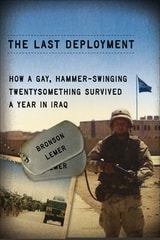
The Last Deployment
How a Gay, Hammer-Swinging Twentysomething Survived a Year in IraqBronson Lemer
University of Wisconsin Press, 2011
In 2003, after serving five and a half years as a carpenter in a North Dakota National Guard engineer unit, Bronson Lemer was ready to leave the military behind. But six months short of completing his commitment to the army, Lemer was deployed on a yearlong tour of duty to Iraq. Leaving college life behind in the Midwest, he yearns for a lost love and quietly dreams of a future as an openly gay man outside the military. He discovers that his father’s lifelong example of silent strength has taught him much about being a man, and these lessons help him survive in a war zone and to conceal his sexuality, as he is required to do by the U.S. military.
Finalist, Minnesota Book Awards
Finalist, Over the Rainbow Selection, American Library Association
Amazon Top Ten 10 Gay & Lesbian Books of 2011
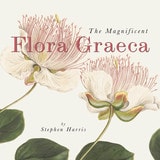
The Magnificent Flora Graeca
How the Mediterranean Came to the English GardenStephen Harris
Bodleian Library Publishing, 2007
The publishing of the Flora Graeca was a landmark event in 1830. Only 25 copies were published, due to the book’s size of 10 double folio volumes and its numerous illustrations, and it cost over £620, a colossal sum at the time. The Flora Graeca brought together beautiful renderings of the fruits of the travels of British scientist John Sibthorp, who made multiple trips to the eastern Mediterranean in the early nineteenth century to collect a rich array of exotic floral specimens. Now The Magnificent Flora Graeca chronicles Sibthorp’s immense undertaking, including brilliant selections from his groundbreaking volume.
The story of the expeditions of Sibthorp and his renowned illustrator Ferdinand Bauer is a tale replete with larger-than-life characters and adventures on land and sea. Harris profiles the lives of Sibthorp, Bauer, and other leading characters, and explores the Flora Graeca’s rich cultural and scientific legacy. Sibthorp’s pioneering adventures unearthed floral specimens previously unknown to science, as he collected the originals of such popular garden flowers as the Crocus flavus ssp. flavus, the parent of the Golden Yellow; and Cyprus’s Cyclamen persicum, the parent of the widely grown garden cyclamens species.
This new volume, drawn from photographs of Sibthorp’s remarkably well-preserved specimens and luminous reproductions of the original watercolors and engravings by Bauer, features more images from the Flora Graeca than have ever been published since its first printing.
A fascinating treasure of floral wonders, The Magnificent Flora Graeca is an essential addition to the bookshelf for the plant lover or anyone curious about the natural history behind their beloved garden retreats.
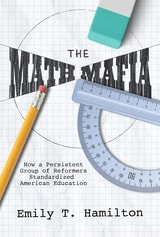
The Math Mafia
How a Persistent Group of Reformers Standardized American EducationEmily T. Hamilton
University of Alabama Press, 2026
How Cold War urgency, academic ambition, and federal power converged to make math the cornerstone of American education policy.
The Math Mafia by Emily T. Hamilton is a historical account of mathematics education reform in twentieth-century America and how that movement played a role in shaping the broader contours of national education policy. Hamilton contends that a cohesive and well-organized community of advocates was instrumental in the rise of standardized testing and curriculum reforms, as well as federal involvement in classrooms, especially during the Cold War. By positioning mathematics as central to national strength and security, these reformers established math education as a key area of federal focus.
The “mafia” at the center of Hamilton’s story includes mathematicians, educators, and researchers from universities, as well as members of government-funded organizations such as the National Science Foundation and various educational psychology circles. Prominent figures such as Edward Begle, who led the School Mathematics Study Group during the “new math” movement, played key roles. Other influential participants include federal education officials, advocates from professional organizations such as the National Council of Teachers of Mathematics, and cognitive scientists, who contributed both research and theoretical frameworks that informed curriculum design and assessment methods.
The Math Mafia offers historians, educators, policymakers, and other interested readers a compelling perspective on the legacy of the math education reforms on federal education policy in the United States and is a welcome contribution to ongoing discourse around “teaching toward the test,” educational equity, school performance, and other hot-button issues in US education today.
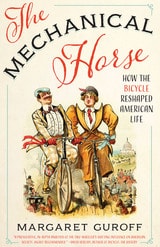
The Mechanical Horse
How the Bicycle Reshaped American LifeBy Margaret Guroff
University of Texas Press, 2016
With cities across the country adding miles of bike lanes and building bike-share stations, bicycling is enjoying a new surge of popularity in America. It seems that every generation or two, Americans rediscover the freedom of movement, convenience, and relative affordability of the bicycle. The earliest two-wheeler, the draisine, arrived in Philadelphia in 1819 and astonished onlookers with the possibility of propelling themselves “like lightning.” Two centuries later, the bicycle is still the fastest way to cover ground on gridlocked city streets.
Filled with lively stories, The Mechanical Horse reveals how the bicycle transformed American life. As bicycling caught on in the nineteenth century, many of the country’s rough, rutted roads were paved for the first time, laying a foundation for the interstate highway system. Cyclists were among the first to see the possibilities of self-directed, long-distance travel, and some of them (including a fellow named Henry Ford) went on to develop the automobile. Women shed their cumbersome Victorian dresses—as well as their restricted gender roles—so they could ride. And doctors recognized that aerobic exercise actually benefits the body, which helped to modernize medicine. Margaret Guroff demonstrates that the bicycle’s story is really the story of a more mobile America—one in which physical mobility has opened wider horizons of thought and new opportunities for people in all avenues of life.
The New Race Question
How the Census Counts Multiracial IndividualsJoel Perlmann
Russell Sage Foundation, 2002

The Obama Effect
How the 2008 Campaign Changed White Racial AttitudesSeth K. Goldman
Russell Sage Foundation, 2014
The Patent Crisis and How the Courts Can Solve It
Dan L. Burk and Mark A. Lemley
University of Chicago Press, 2009
Patent law is crucial to encourage technological innovation. But as the patent system currently stands, diverse industries from pharmaceuticals to software to semiconductors are all governed by the same rules even though they innovate very differently. The result is a crisis in the patent system, where patents calibrated to the needs of prescription drugs wreak havoc on information technologies and vice versa. According to Dan L. Burk and Mark A. Lemley in The Patent Crisis and How the Courts Can Solve It, courts should use the tools the patent system already gives them to treat patents in different industries differently. Industry tailoring is the only way to provide an appropriate level of incentive for each industry.
Burk and Lemley illustrate the barriers to innovation created by the catch-all standards in the current system. Legal tools already present in the patent statute, they contend, offer a solution—courts can tailor patent law, through interpretations and applications, to suit the needs of various types of businesses. The Patent Crisis and How the Courts Can Solve It will be essential reading for those seeking to understand the nexus of economics, business, and law in the twenty-first century.
The Piracy Crusade
How the Music Industry's War on Sharing Destroys Markets and Erodes Civil LibertiesAram Sinnreich
University of Massachusetts Press, 2013
In the decade and a half since Napster first emerged, forever changing the face of digital culture, the claim that “internet pirates killed the music industry” has become so ubiquitous that it is treated as common knowledge. Piracy is a scourge on legitimate businesses and hard-working artists, we are told, a “cybercrime” similar to identity fraud or even terrorism.
In The Piracy Crusade, Aram Sinnreich critiques the notion of “piracy” as a myth perpetuated by today's cultural cartels—the handful of companies that dominate the film, software, and especially music industries. As digital networks have permeated our social environment, they have offered vast numbers of people the opportunity to experiment with innovative cultural and entrepreneurial ideas predicated on the belief that information should be shared widely. This has left the media cartels, whose power has historically resided in their ability to restrict the flow of cultural information, with difficult choices: adapt to this new environment, fight the changes tooth and nail, or accept obsolescence. Their decision to fight has resulted in ever stronger copyright laws and the aggressive pursuit of accused infringers.
Yet the most dangerous legacy of this “piracy crusade” is not the damage inflicted on promising start-ups or on well-intentioned civilians caught in the crosshairs of file-sharing litigation. Far more troubling, Sinnreich argues, are the broader implications of copyright laws and global treaties that sacrifice free speech and privacy in the name of combating the phantom of piracy—policies that threaten to undermine the foundations of democratic society.
The Politics of Hate
How the Christian Right Darkened America's Political SoulAngelia R. Wilson
Temple University Press, 2025
Based on original research, participant observation at events, and data collection, Wilson follows the money to provide a meticulous analysis of how Christian Right political elites operate. She traces the evolutionary development of the Christian Right’s political professionalism and their allegiance to a grand vision that articulates a grammar of war to fulfill their Biblical worldview.
The Politics of Hate demonstrates how Christian Right organizations educate and train networks of soldiers to tactically engage the enemy in local, state, and national legal and political battles. Wilson carefully documents their history of co-belligerency, their strategies of political warfare, and, importantly, the impact of this war that has, over the past fifty years, forever changed American politics.
The Pox of Liberty
How the Constitution Left Americans Rich, Free, and Prone to InfectionWerner Troesken
University of Chicago Press, 2015
Werner Troesken looks at the history of the United States with a focus on three diseases—smallpox, typhoid fever, and yellow fever—to show how constitutional rules and provisions that promoted individual liberty and economic prosperity also influenced, for good and for bad, the country’s ability to eradicate infectious disease. Ranging from federalism under the Commerce Clause to the Contract Clause and the Fourteenth Amendment, Troesken argues persuasively that many institutions intended to promote desirable political or economic outcomes also hindered the provision of public health. We are unhealthy, in other words, at least in part because our political and legal institutions function well. Offering a compelling new perspective, The Pox of Liberty challenges many traditional claims that infectious diseases are inexorable forces in human history, beyond the control of individual actors or the state, revealing them instead to be the result of public and private choices.
The Principles of Comedy Improv
Truths, Tales, and How to ImproviseTom Blank
University of Iowa Press, 2023
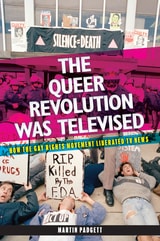
The Queer Revolution Was Televised
How the Gay Rights Movement Liberated TV NewsMartin Padgett
Rutgers University Press, 2027
This book demonstrates, in part through a history of emotions, how assumptions and prejudices about queer lives were challenged throughout the decade through the deceptively prosaic medium of television. Passion and disgust neatly outline the contours of the gay community’s press for equal rights at the dawn of the 1980s, just as fear and anxiety encapsulate the inchoate reactions to the emerging epidemic and the simultaneous explorations of privacy that were initiated by the onslaught of television as technology. While queer people anguished over their very survival and over the indifference of many to their situation, hope surfaced as a cause and potential treatments for HIV emerged and as the Supreme Court decided to make its first direct ruling on gay rights in a generation. When that latter hope was dashed by the Hardwick decision, the anger of gay rights advocates was trebled as they massed for the national March on Washington in homage to the 1963 March on Washington for Jobs and Freedom that lent its key political organizing and messaging tactics to it. With the realization that progress would then be slow and all-consuming, a desperation to change queer lives was enjoined by a determination to do so in the most visible ways possible, through television.
The Quest for Sexual Health
How an Elusive Ideal Has Transformed Science, Politics, and Everyday LifeSteven Epstein
University of Chicago Press, 2022
Since the 1970s, health professionals, researchers, governments, advocacy groups, and commercial interests have invested in the pursuit of something called "sexual health." Under this expansive banner, a wide array of programs have been launched, organizations founded, initiatives funded, products sold—and yet, no book before this one asks: What does it mean to be sexually healthy? When did people conceive of a form of health called sexual health? And how did it become the gateway to addressing a host of social harms and the reimagining of private desires and public dreams?
Conjoining "sexual" with "health" changes both terms: it alters how we conceive of sexuality and transforms what it means to be healthy, prompting new expectations of what medicine can provide. Yet the ideal of achieving sexual health remains elusive and open-ended, and the benefits and costs of promoting it are unevenly distributed across genders, races, and sexual identities. Rather than a thing apart, sexual health is intertwined with nearly every conceivable topical debate—from sexual dysfunction to sexual violence, from reproductive freedom to the practicalities of sexual contact in a pandemic. In this book Steven Epstein analyzes the rise, proliferation, uptake, and sprawling consequences of sexual health activities, offering critical tools to assess those consequences, expand capacities for collective decision making, and identify pathways that promote social justice.
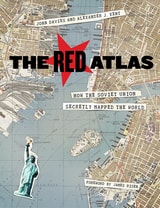
The Red Atlas
How the Soviet Union Secretly Mapped the WorldJohn Davies and Alexander J. Kent
University of Chicago Press, 2017
From 1950 to 1990, the Soviet Army conducted a global topographic mapping program, creating large-scale maps for much of the world that included a diversity of detail that would have supported a full range of military planning. For big cities like New York, DC, and London to towns like Pontiac, MI and Galveston, TX, the Soviets gathered enough information to create street-level maps. What they chose to include on these maps can seem obvious like locations of factories and ports, or more surprising, such as building heights, road widths, and bridge capacities. Some of the detail suggests early satellite technology, while other specifics, like detailed depictions of depths and channels around rivers and harbors, could only have been gained by actual Soviet feet on the ground. The Red Atlas includes over 350 extracts from these incredible Cold War maps, exploring their provenance and cartographic techniques as well as what they can tell us about their makers and the Soviet initiatives that were going on all around us.
A fantastic historical document of an era that sometimes seems less distant, The Red Atlas offers an uncanny view of the world through the eyes of Soviet strategists and spies.

The Renewable Energy Alternative
How the United States and the World Can Prosper without Nuclear Energy or CoalJohn O. Blackburn
Duke University Press, 1987

The Renewal of Generosity
Illness, Medicine, and How to LiveArthur W. Frank
University of Chicago Press, 2004
The Renewal of Generosity evokes medicine as the face-to-face encounter that comes before and after diagnostics, pharmaceuticals, and surgeries. Frank calls upon the Roman emperor Marcus Aurelius, philosopher Emmanuel Levinas, and literary critic Mikhail Bakhtin to reflect on stories of ill people, doctors, and nurses who transform demoralized medicine into caring relationships. He presents their stories as a source of consolation for both ill and professional alike and as an impetus to changing medical systems. Frank shows how generosity is being renewed through dialogue that is more than the exchange of information. Dialogue is an ethic and an ideal for people on both sides of the medical encounter who want to offer more to those they meet and who want their own lives enriched in the process.
The Renewal of Generosity views illness and medical work with grace and compassion, making an invaluable contribution to expanding our vision of suffering and healing.
The Runes of Evolution
How the Universe became Self-AwareSimon Conway Morris
Templeton Press, 2015
A leading evolutionary biologist at the University of Cambridge, Conway Morris came into international prominence for his work on the Cambrian explosion (especially fossils of the Burgess Shale) and evolutionary convergence, which is the process whereby organisms not closely related (not monophyletic), independently evolve similar traits as a result of having to adapt to similar environments or ecological niches.
In The Runes of Evolution, he illustrates how the ubiquity of convergence hints at an underlying framework whereby many outcomes, not least brains and intelligence, are virtually guaranteed on any Earth-like planet. Conway Morris also emphasizes how much of the complexity of advanced biological systems is inherent in microbial forms.
By casting a wider net, The Runes of Evolution explores many neglected evolutionary questions. Some are remarkably general. Why, for example, are convergences such as parasitism, carnivory, and nitrogen fixation in plants concentrated in particular taxonomic hot spots? Why do certain groups have a particular propensity to evolve toward particular states?
Some questions lead to unexpected evolutionary insights: If bees sleep (as they do), do they dream? Why is that insect copulating with an orchid? Why have sponges evolved a system of fiber optics? What do mantis shrimps and submarines have in common? If dinosaurs had not gone extinct what would have happened next? Will a saber-toothed cat ever re-evolve?
Cona Morris observes: “Even amongst the mammals, let alone the entire tree of life, humans represent one minute twig of a vast (and largely fossilized) arborescence. Every living species is a linear descendant of an immense string of now-vanished ancestors, but evolution itself is the very reverse of linear. Rather it is endlessly exploratory, probing the vast spaces of biological hyperspace. Indeed this book is a celebration of how our world is (and was) populated by a riot of forms, a coruscating tapestry of life.”
The Runes of Evolution is the most definitive synthesis of evolutionary convergence to be published to date.
The Science of Play
How to Build Playgrounds That Enhance Children's DevelopmentSusan G. Solomon
University Press of New England, 2014
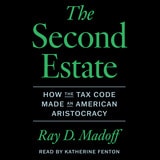
The Second Estate
How the Tax Code Made an American AristocracyRay D. Madoff
University of Chicago Press, 2025
Named by The New Yorker as one of the Best Books of 2025 and featured on the Armchair Expert podcast with Dax Shepherd.
A revelatory book that lifts the curtain on America’s most consequential public deception: how the rich get richer using tools the government gave them.
Amid conflicting narratives about the drivers of wealth and inequality in the United States, one constant hovers in the background: the US tax code. No political force has been more consequential—or more utterly opaque—than the 7,000-page document that details who pays what in American society and government. Most of us have a sense that it’s an unfair system. But does anyone know exactly how it’s unfair?
Legal scholar Ray D. Madoff knows. In The Second Estate, she offers an unprecedented look behind the scenes of America’s byzantine system of taxation, laying bare not only its capacity to consolidate wealth but also the mechanisms by which it has created two fundamentally separate American societies: the working Americans who pay and the ultra-rich who benefit.
This is not a story of offshore accounts or secret tax havens. In The Second Estate, Madoff shows that the US system itself has, over time, been stripped and reconstituted such that it now offers a series of secret paths, hidden in plain sight, for wealthy people in the know to avoid taxation altogether. Through the strategic avoidance of traditional income, leveraging of investments and debt, and exploitation of rules designed to promote charitable giving, America’s wealthy do more than just pay less than their share; they remove themselves from the tax system entirely. Wealth becomes its own sovereign state, and the living is surprisingly—and maddeningly—cheap.
The Second Estate
How the Tax Code Made an American AristocracyRay D. Madoff
University of Chicago Press, 2025
Named by The New Yorker as one of the Best Books of 2025 and featured on the Armchair Expert podcast with Dax Shepherd.
A revelatory book that lifts the curtain on America’s most consequential public deception: how the rich get richer using tools the government gave them.
Amid conflicting narratives about the drivers of wealth and inequality in the United States, one constant hovers in the background: the US tax code. No political force has been more consequential—or more utterly opaque—than the 7,000-page document that details who pays what in American society and government. Most of us have a sense that it’s an unfair system. But does anyone know exactly how it’s unfair?
Legal scholar Ray D. Madoff knows. In The Second Estate, she offers an unprecedented look behind the scenes of America’s byzantine system of taxation, laying bare not only its capacity to consolidate wealth but also the mechanisms by which it has created two fundamentally separate American societies: the working Americans who pay and the ultra-rich who benefit.
This is not a story of offshore accounts or secret tax havens. In The Second Estate, Madoff shows that the US system itself has, over time, been stripped and reconstituted such that it now offers a series of secret paths, hidden in plain sight, for wealthy people in the know to avoid taxation altogether. Through the strategic avoidance of traditional income, leveraging of investments and debt, and exploitation of rules designed to promote charitable giving, America’s wealthy do more than just pay less than their share; they remove themselves from the tax system entirely. Wealth becomes its own sovereign state, and the living is surprisingly—and maddeningly—cheap.
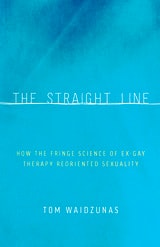
The Straight Line
How the Fringe Science of Ex-Gay Therapy Reoriented SexualityTom Waidzunas
University of Minnesota Press, 2015
To be taken seriously, therapies that claim to “cure” homosexuality wrap themselves in lab coats. Even though the fit is bad, and such therapies and their theorists now inhabit the scientific fringe, the science of sexuality has made some adjustments, too, Tom Waidzunas tells us in this provocative work.
Intervening in the politics of sexuality and science, The Straight Line argues that scientific definitions of sexual orientation do not merely reflect the results of investigations into human nature, but rather emerge through a process of social negotiation between opposing groups. The demedicalization of homosexuality and the discrediting of reparative therapies, ex-gay ministries, and reorientation research have, Waidzunas contends, required scientists to enforce key boundaries around scientific expertise and research methods. Drawing on extensive participant observation at conferences for ex-gays, reorientation therapists, mainstream psychologists, and survivors of ex-gay therapy, as well as interviews with experts and activists, The Straight Line traces reorientation debates in the United States from the 1950s to the present, following homosexuality therapies from the mainstream to the margins. As the ex-gay movement has become increasingly transnational in recent years, Waidzunas turns to Uganda, where ideas about the scientific nature of homosexuality influenced the passage of the Anti-Homosexuality Act of 2014.
While most studies treat the ex-gay movement as a religious phenomenon, this book looks at how the movement, in its attempts to establish legitimacy, has engaged with scientific institutions, shaping virulent anti-gay public policy.