Results by title
71 books match the query 'Human beings' and 12 start with t
The Accidental Species
Misunderstandings of Human EvolutionHenry Gee
University of Chicago Press, 2013
The Accidental Species combines Gee’s firsthand experience on the editorial side of many incredible paleontological findings with healthy skepticism and humor to create a book that aims to overturn popular thinking on human evolution—the key is not what’s missing, but how we’re linked.
The Archaeoclimatology Atlas of Oregon
The Modeled Distribution in Space and Time of Past ClimatesReid A Bryson
University of Utah Press, 2009
The Macrophysical Climate Model (MCM) used for the atlas presents an innovative means of modeling past climate that has been rigorously tested and verified against field evidence worldwide. Broad-scale reconstructions of specific times in the past provide detailed site-specific graphs of precipitation, temperature, evaporation, and snowfall for more than 75 locations in Oregon.
Applications of the model and its implications for human populations in Oregon are explored for each region of the state, demonstrating the variability of human-climate interactions.
Supplemental Spatial Maps

The Context of Self
A Phenomenological Inquiry Using Medicine as a ClueRichard M. Zaner
Ohio University Press, 1981
This study takes up the challenge presented to philosophy in a dramatic and urgent way by contemporary medicine: the phenomenon of human life. Initiated by a critical appreciation of the work of Hans Jonas, who poses that issue as well, the inquiry is brought to focus on the phenomenon of embodiment, using relevant medical writing to help elicit its concrete dimensions.
The explication of embodiment, aided by critical studies and inquiries into medical phenomena (autism, brain injury, terminal illness) make possible the development of the author’s original phenomenological theory of self, and its concrete relationships with the other self. This study attempts not only to show connections among the works of a number of thinkers in terms of central problems, but to demonstrate the mutual relevance of medicine and philosophy through concrete illustrations and analysis.
The Human Career
Human Biological and Cultural Origins, Third EditionRichard G. Klein
University of Chicago Press, 2009
Since its publication in 1989, The Human Career has proved to be an indispensable tool in teaching human origins. This substantially revised third edition retains Richard G. Klein’s innovative approach while showing how cumulative discoveries and analyses over the past ten years have significantly refined our knowledge of human evolution.
Klein chronicles the evolution of people from the earliest primates through the emergence of fully modern humans within the past 200,000 years. His comprehensive treatment stresses recent advances in knowledge, including, for example, ever more abundant evidence that fully modern humans originated in Africa and spread from there, replacing the Neanderthals in Europe and equally archaic people in Asia. With its coverage of both the fossil record and the archaeological record over the 2.5 million years for which both are available, The Human Career demonstrates that human morphology and behavior evolved together. Throughout the book, Klein presents evidence for alternative points of view, but does not hesitate to make his own position clear.
In addition to outlining the broad pattern of human evolution, The Human Career details the kinds of data that support it. For the third edition, Klein has added numerous tables and a fresh citation system designed to enhance readability, especially for students. He has also included more than fifty new illustrations to help lay readers grasp the fossils, artifacts, and other discoveries on which specialists rely. With abundant references and hundreds of images, charts, and diagrams, this new edition is unparalleled in its usefulness for teaching human evolution.
The Human Person
Steven J. Jensen
Catholic University of America Press, 2018
The Human Place in the Cosmos
Max Scheler; Translated from the German by Manfred S. Frings, Introduction by Eugene Kely
Northwestern University Press, 2009
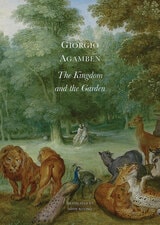
The Kingdom and the Garden
Giorgio Agamben
Seagull Books, 2020
What happened to paradise after Adam and Eve were expelled? The question may sound like a theological quibble, or even a joke, but in The Kingdom and the Garden, Giorgio Agamben uses it as a starting point for an investigation of human nature and the prospects for political transformation. In a tour-de-force reinterpretation of the Christian tradition, Agamben shows that the Garden of Eden has always served as a symbol of humanity’s true nature. Where earlier theologians viewed the expulsion as temporary, Augustine’s doctrine of original sin makes it permanent, reimagining humanity as the paradoxical creature that has been completely alienated from its own nature. From this perspective, there can be no return to paradise, only the hope for the messianic kingdom. Yet there have always been thinkers who rebelled against this idea, and Agamben highlights two major examples. The first is the early medieval philosopher John Scotus Eriugena, who argued for a radical unity of humanity with all living things. The second is Dante, whose vision of the earthly paradise points towards the possibility of genuine human happiness in this world. In place of the messianic kingdom, which has provided the model for modern revolutionary movements, Agamben contends that we should place our hopes for political change in a return to our origins, by reclaiming the earthly paradise.
The Natural World as a Philosophical Problem
Jan Patocka, edited by Ivan Chvatík and Lubica Ucnik, translated by Erika Abrams, foreword by Ludwig Landgrebe
Northwestern University Press, 2016

The Posthuman Condition
Consciousness Beyond the BrainRobert Pepperell
Intellect Books, 2009
Synthetic creativity, organic computers, genetic modification, intelligent machines--such ideas are deeply challenging to many of our traditional assumptions about human uniqueness and superiority. But, ironically, it is our very capacity for technological invention that has secured us so dominant a position in the world which may lead ultimately to (as some have put it) 'The End of Man'. If we are really capable of creating entities that exceed our own skills and intellect then the consequences for humanity are almost inconceivable. Nevertheless, we must now face up to the possibility that attributes like intelligence and consciousness may be synthesised in non-human entities--perhaps within our lifetime. Would such entities have human-like emotions; would they have a sense of their own being?
The Posthuman Condition argues that such questions are difficult to tackle given the concepts of human existence that we have inherited from humanism, many of which can no longer be sustained. New theories about nature and the operation of the universe arising from sophisticated computer modelling are starting to demonstrate the profound interconnections between all things in reality where previously we had seen only separations. This has implications for traditional views of the human condition, consciousness, the way we look at art, and for some of the oldest problems in philosophy.
First published in the 1990s, this important text has been completely revised by the author with the addition of new sections and illustrations.
For further information see: www.post-human.net
The Settlement of the American Continents
A Multidisciplinary Approach to Human BiogeographyEdited by C. Michael Barton, Geoffrey A. Clark, David R. Yesner, and Georges A. Pearson
University of Arizona Press, 2004
This book approaches the human settlement of the Americas from a biogeographical perspective in order to provide a better understanding of the mechanisms and consequences of this unique event. It considers many of the questions that continue to surround the peopling of the Western Hemisphere, focusing not on sites, dates, and artifacts but rather on theories and models that attempt to explain how the colonization occurred.
Unlike other studies, this book draws on a wide range of disciplines—archaeology, human genetics and osteology, linguistics, ethnology, and ecology—to present the big picture of this migration. Its wide-ranging content considers who the Pleistocene settlers were and where they came from, their likely routes of migration, and the ecological role of these pioneers and the consequences of colonization. Comprehensive in both geographic and topical coverage, the contributions include an explanation of how the first inhabitants could have spread across North America within several centuries, the most comprehensive review of new mitochondrial DNA and Y-chromosome data relating to the colonization, and a critique of recent linguistic theories.
Although the authors lean toward a conservative rather than an extreme chronology, this volume goes beyond the simplistic emphasis on dating that has dominated the debate so far to a concern with late Pleistocene forager adaptations and how foragers may have coped with a wide range of environmental and ecological factors. It offers researchers in this exciting field the most complete summary of current knowledge and provides non-specialists and general readers with new answers to the questions surrounding the origins of the first Americans.
Tree Lines
Valerie P Cohen
University of Nevada Press, 2017
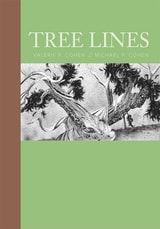
The drawings are black-and-white, pen-and-ink representations of high alpine ecosystems. The prose is stripped bare, abbreviated in an epigrammatic style that is poetic and spontaneous. Trees represented here are the Western Juniper or Sierra Juniper, the Limber, and the Bristlecone Pine—three species of long-lived, slow-growing conifers that grow across the Great Basin. While they represent only a small portion of the vegetative culture high in the western mountains, the Cohens use representation as abstraction as is utilized by writers and artists to convey a unique kind of microcosm of our natural environment. This book compares to such classics as Leopold’s A Sand County Almanac, and Berger’s Ways of Seeing, which open up lines of observation, analysis, and art for a new generation of readers.
Two Lessons on Animal and Man
Gilbert Simondon
University of Minnesota Press, 2011
Simondon is a secret password among certain discussions within philosophy today. As a philosopher of technology, Simondon’s work has a place at the forefront of current thinking in media, technology, psychology, and philosophy with complex accounts of man’s relationship to technology and the realm that continues to form itself via this tension between man and his technical universe. In this introduction to Simondon’s oeuvre, the reader has access to the grounding of one of the most fundamental and critical questions that has been the focus of philosophy for millennia: the relationship between man and animal.