Results by title
220 books match the query 'Individual Artists' and 40 start with t

Talkin' With Your Mouth Full
Conversations with the Videos of Steve FaginSteve Fagin, ed.
Duke University Press, 1998
Combining elements of criticism with various modes of artistic expression, these responses take the form of reviews, letters, interviews, and in one case an imaginary TV programming schedule. Interspersed with—and sometimes literally interrupting—the video scripts, these contributions interact with one another on multiple levels and complement Fagin’s scripts. Historical, political, and theoretical issues dovetail, ricochet, and interplay in this book, revealing a multiplicity of voices, concerns, and cultural revelations.
Unique in its structure and intellectual approach, Talkin’ with Your Mouth Full will appeal equally to those who have seen Fagin’s videos and those who have not. Students of art history and cultural critique, and anyone interested in the ongoing dialogue between artists and theorists, will find particular value in this book.
Contributors. Gregg Bordowitz, Constance DeJong, Leslie Dick, Steve Fagin, Barry Gifford, Victoria Gill, Bill Horrigan, Bertha Jottar, Ivone Margulies, Patricia Mellencamp, Margaret Morse, Constance Penley, Vicente L. Rafael, Mark Rappaport, Andrew Ross, Vivian Sobchack, Trinh T. Minh-ha, John Welchman, Peter Wollen
Tania El Khoury's Live Art
Collaborative Knowledge ProductionLaurel V. McLaughlin
Amherst College Press, 2023
The Afterlife of Piet Mondrian
Nancy J. Troy
University of Chicago Press, 2014
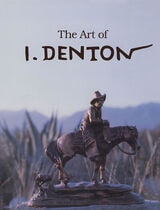
The Art of I. Denton
Ivan Denton
University of Arkansas Press, 1988
The remarkable detail and subtly stylized lines characterizing the artistry of celebrated woodcarver Ivan Denton are in abundant evidence in this beautifully illustrated volume of The Art of I. Denton. Behind each carving presented here, is its story from a piece of wood to a work of art, told in the words of Mr. Denton himself.
This is, in fact, a tour guided by Ivan Denton covering the best of his efforts, his love for the wood, and the process which turns a craftsman into an artist. As he says in describing his work: “Art exists only when you share it. When a tree falls in the woods, in school they said, ‘This tree doesn’t make a noise if someone doesn’t hear it.’ Because, you know, the sound waves don’t bump against the eardrum . . . The idea of not being able to get rid of a piece is basically the concept of an amateur. Not only does a professional need the money, and not only does he need his ego flattered, it’s just that the art doesn’t really exist until it’s shared. That’s an even deeper joy than the ego.”
Chosen from collections across the country, these pieces represent the masterworks from one of a disappearing breed of artisans. But The Art of I. Denton is more than a document of our cultural heritage, it is a tribute to the man and his art.
The Artist in New York
Letters to Jean Charlot and unpublished writings, 1925-1929.By José Clemente Orozco
University of Texas Press, 1974
In his Foreword to this edition, Jean Charlot says: "An unusual feature of Orozco's letters is the great deal that he has to say about art. That one artist writing to another would emphasize art as his subject seems normal enough to the American reader. Yet, within the context of the Mexico of those days, the fact remains exceptional. The patria Orozco was leaving behind had, even from the point of view of its artists, many cares more pressing than art."
The letters and unpublished writings of Orozco from this period (1925-1929) describe an important period of transition in the artist's life, from his departure from Mexico, almost as a defeated man, to the period just before he received the great mural commissions—Pomona, The New School for Social Research in New York, Dartmouth—that were to bring him lasting international fame.
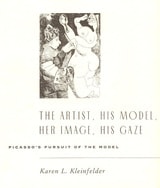
The Artist, His Model, Her Image, His Gaze
Picasso's Pursuit of the ModelKaren L. Kleinfelder
University of Chicago Press, 1993
In this innovative study, Karen L. Kleinfelder rejects the claim that Picasso's later work was a failure. The failing, she claims, lies more in the way we typically have read the images, treating them merely as reflections of an "old-age" style or of the artist's private life.
Focusing on graphics dating from 1954 to 1970, Kleinfelder shows how Picasso plays with the artist-model theme to extend, subvert, and parody both the possibilities and limits of representation. For Kleinfelder, Picasso's graphic work both mystifies and demystifies the creative process, venerates and mocks the effects of aging and the artist's self-image as a living "old master," and acknowledges and denies his own fear of death.
Using recent interpretive and literary theory, Kleinfelder probes the three-way relationship between artist, model, and canvas. The dynamics of this relationship provided Picasso with an open-ended textual framework for exploring the dichotomies of man/woman, self/other, and vitality/mortality. What unfolds is the artist's struggle not only with the impossibility of representing the model on canvas, but also with the inevitability of his own death.
Kleinfelder explores how Picasso's means of pursuing these issues allows him to defer closure on a long, productive career. By focusing on the graphics rather than the paintings, Kleinfelder contradicts the primacy of the painted "masterpiece"; she steers the reader away from the assumption that the artist must work toward creating a final body of work that signifies the culmination of his search for a coherent identify.
Picasso's search, she argues, realizes itself in the creative process. She interprets the late graphics not as a biographical statement but as a tool for investigating the possibilities of representation within the limits of Picasso's medium and his lifetime. Richly illustrated, Kleinfelder's book will open up new approaches to the late work of this complex artist.
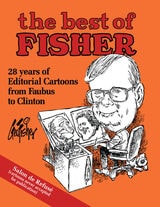
The Best of Fisher
28 years of Editorial Cartoons from Faubus to ClintonGeorge Fisher
University of Arkansas Press, 1993
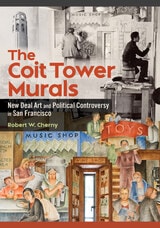
The Coit Tower Murals
New Deal Art and Political Controversy in San FranciscoRobert W. Cherny
University of Illinois Press, 2024
Created in 1934, the Coit Tower murals were sponsored by the Public Works of Art Project (PWAP), the first of the New Deal art programs. Twenty-five master artists and their assistants worked there, most of them in buon fresco, Nearly all of them drew upon the palette and style of Diego Rivera. The project boosted the careers of Victor Arnautoff, Lucien Labaudt, Bernard Zakheim, and others, but Communist symbols in a few murals sparked the first of many national controversies over New Deal art.
Sixty full-color photographs illustrate Robert Cherny’s history of the murals from their conception and completion through their evolution into a beloved San Francisco landmark. Cherny traces and critiques the treatment of the murals by art critics and historians. He also probes the legacies of Coit Tower and the PWAP before surveying San Francisco’s recent controversies over New Deal murals.
An engaging account of an artistic landmark, The Coit Tower Murals tells the full story behind a public art masterpiece.
The Collaborative Artist's Book
Evolving Ideas in Contemporary Poetry and ArtAlexandra J. Gold
University of Iowa Press, 2023
The Collaborative Artist’s Book offers a rare glimpse into collaborations between poets and painters from 1945 to the present, and highlights how the artist’s book became a critical form for experimental American artists in the twentieth and twenty-first centuries. Alexandra Gold provides a broad overview of the artist’s book form and the many ongoing debates and challenges, from the disciplinary to the institutional, that these forms continue to pose.
Gold presents five case studies and details not only how each individual collaboration came to be but how all five together engage and challenge conventional ideals about art, subjectivity, poetry, and interpersonal relations, as well as complex social questions related to gender and race. Taking several of these books out of special collections libraries and museum archives and making them available to a broad readership, Gold brings to light a whole genre that has been largely forgotten or neglected.
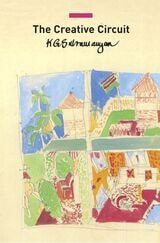
The Creative Circuit
K. G. Subramanyan
Seagull Books, 2024
What conception does a modern artist or critic have of contemporary art activity? How do modern artists react to their environment and cultural inheritance? And what general norms of achievement can we think of in the highly heterogeneous art scene of today? In Creative Circuit, K. G. Subramanyan, one of India's most celebrated artists, draws upon his considerable experience as a practicing artist and theoretician to engage with these concerns from a modern Indian perspective.
Through a series of five lectures, Subramanyan critically examines key concepts such as modernity, eclecticism, and nostalgia, which have become integral to contemporary art discourse. He provocatively questions the perceptions, illusions, and emotional motivations driving artistic expression in today's heterogeneous art scene, prompting readers to reconsider established norms of achievement in the context of evolving artistic practices. With over one hundred color illustrations complementing Subramanyan's insightful discourse, Creative Circuit offers a visually engaging exploration of the interplay between tradition and innovation in contemporary art.
Subramanyan played a pivotal role in shaping India’s artistic identity after Independence. Mani-da, as he was fondly called, seamlessly blended elements of modernism with folk expression in his works, spanning paintings, murals, sculptures, prints, set designs, and toys. Beyond his visual artistry, his writings have laid a solid foundation for understanding the demands of art on the individual. In the year of his centenary, Seagull is proud to publish his writings in special new editions.
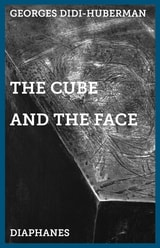
The Cube and the Face
Around a Sculpture by Alberto GiacomettiGeorges Didi-Huberman. Edited by Mira Fliescher and Elena Vogman
Diaphanes, 2015
With The Cube and the Face, renowned French art historian and philosopher Georges Didi-Huberman has conducted a careful analysis of Cube, consulting the artist’s sketches, etchings, texts, and other sculptural works in the years just before and after Cube was created. Cube, he finds, is indeed exceptional—a work without clear stylistic kinship to the works that came before or after it. At the same time, Didi-Huberman shows, Cube marks the transition between the artist’s surrealist and realist phases and contains many elements of Giacometti’s aesthetic consciousness, including his interest in dimensionality, the relation of the body to geometry, and the portrait—or what Didi-Huberman terms “abstract anthropomorphism.” Drawing on Freud, Bataille, Leiris, and others Giacometti counted as influence, Didi-Huberman presents fans and collectors of Giacometti’s art with a new approach to transitional work.
The Essential Paul Laffoley
Works from the Boston Visionary CellPaul Laffoley
University of Chicago Press, 2016
Living and working in a tiny space in Boston he called the “Boston Visionary Cell,” Laffoley became best known for his large mandala-like paintings filled with symbols and texts. Their titles range from the paranormal and arcane, such as The Ectoplasmic Man and The Sexuality of Robots, to the organic, as with Das Urpflanze Haus, to the erudite, including De Rerum Natura, a reference to the Roman poet Lucretius. Whether focused on working with plants to create living architecture or centered on the process of alchemy, these detailed, brilliantly colored works reflect Laffoley’s utopian hopes and transdisciplinary interests: throughout, he aimed to unite the boundless freedom of human imagination with the mathematical precision of the physical world.
Nearly one hundred of Laffoley’s works are showcased here along with his accompanying “thought-forms,” texts specific to each painting that comment on its particular content. Together with an introduction by editor and gallerist Douglas Walla, a biography by fellow artist Steven Moskowitz, and essays by scholars Linda Dalrymple Henderson and Arielle Saiber, this book is a long-awaited celebration of the theories, writings, and artworks of an extraordinary mind.
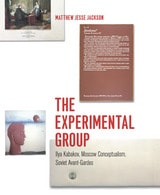
The Experimental Group
Ilya Kabakov, Moscow Conceptualism, Soviet Avant-GardesMatthew Jesse Jackson
University of Chicago Press, 2010
A compelling study of unofficial postwar Soviet art, The Experimental Group takes as its point of departure a subject of strange fascination: the life and work of renowned professional illustrator and conceptual artist Ilya Kabakov.
Kabakov’s art—iconoclastic installations, paintings, illustrations, and texts—delicately experiments with such issues as history, mortality, and disappearance, and here exemplifies a much larger narrative about the work of the artists who rose to prominence just as the Soviet Union began to disintegrate. By placing Kabakov and his conceptualist peers in line with our own contemporary perspective, Matthew Jesse Jackson suggests that the art that emerged in the wake of Stalin belongs neither entirely to its lost communist past nor to a future free from socialist nostalgia. Instead, these artists and their work produced a critical and controversial chapter in the as yet unwritten history of global contemporary art.
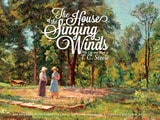
The House of the Singing Winds
The Life and Work of T. C. SteeleRachel Berenson Perry
Indiana Historical Society Press, 2016
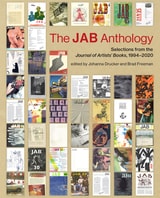
The JAB Anthology
Selections from the Journal of Artists' Books, 1994-2020Johanna Drucker
University of Iowa Press, 2023
The JAB Anthology contains contributions by many renowned figures in the field including: Anne Moeglin-Delcroix, Janet Zweig, Monica Carroll, Adam Dickerson, Alisa Scudamore, Mary Jo Pauly, April Sheridan, Doro Boehme, Gerrit Jan de Rook, Océane Delleaux, Brandon Graham, Jérôme Dupeyrat, Ward Tietz, Paulo Silveira, Philip Cabau, Leszek Brogowski, Lyn Ashby, Tim Mosely, Debra Parr, Pedro Moura, Levi Sherman, Catarina Figueiredo Cardoso, Isabel Baraona, and the editors.
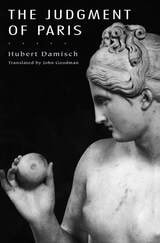
The Judgment of Paris
Hubert Damisch
University of Chicago Press, 1996
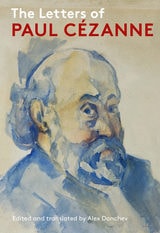
The Letters of Paul Cézanne
Alex Danchev
J. Paul Getty Trust, The, 2013
Revered and misunderstood by his peers and lauded by later generations as the father of modern art, Paul Cézanne (1839-1906) has long been a subject of fascination for artists and art lovers, writers, poets, and philosophers. His life was a ceaseless artistic quest, and he channeled much of his wide-ranging intellect and ferocious wit into his letters. Punctuated by exasperated theorizing and philosophical reflection, outbursts of creative ecstasy and melancholic confession, the artist’s correspondence reveals both the heroic and all-toohuman qualities of a man who is indisputably among the pantheon of all-time greats.
This new translation of Cézanne’s letters includes more than twenty that were previously unpublished and reproduces the sketches and caricatures with which Cézanne occasionally illustrated his words. The letters shed light on some of the key artistic relationships of the modern period—about one third of Cézanne’s more than 250 letters are to his boyhood companion Émile Zola, and he communicated extensively with Camille Pissarro and the dealer Ambroise Vollard. The translation is richly annotated with explanatory notes, and, for the first time, the letters are cross-referenced to the current catalogue raisonné. Numerous inaccuracies and archaisms in the previous English edition of the letters are corrected, and many intriguing passages that were unaccountably omitted have been restored. The result is a publishing landmark that ably conveys Cézanne’s intricacy of expression.
The Living Tradition
Perspectives on Modern Indian ArtK. G. Subramanyan
Seagull Books, 2024
“The fulfillment of a modern Indian artist's wish to be part of a living tradition, i.e. to be individual and innovative, without being an outsider in his own culture, will not come of itself, it calls for concerted effort.”
In Living Tradition, a critical study of modern Indian art as it has evolved through continuous interaction with several traditions—foreign and indigenous—K. G. Subramanyan, one of India's most celebrated artists, offers a theoretical groundwork for that “concerted effort.” In the course of his study, he explores the distinctions between Indian and European traditions, the continuities in India's folk traditions, and the attempts of several thinkers and artists to identify an Indian artistic tradition or to deny it altogether in a quest for personal expression or universality. With over seventy-five illustrations in color complementing Subramanyan's thought-provoking essay, Living Tradition provides readers with a visually engaging exploration of the vibrant tapestry of Indian art.
Subramanyan played a pivotal role in shaping India’s artistic identity after Independence. Mani-da, as he was fondly called, seamlessly blended elements of modernism with folk expression in his works, spanning paintings, murals, sculptures, prints, set designs, and toys. Beyond his visual artistry, his writings have laid a solid foundation for understanding the demands of art on the individual. In the year of his centenary, Seagull is proud to publish his writings in special new editions.
The Magic of Making
Essays on Art and CultureK. G. Subramanyan
Seagull Books, 2024
In this collection of essays, written by K. G. Subramanyan over twenty-five years, this artist delves into the evolving aesthetic sensibilities in a globalized world, offering profound reflections on art, aesthetics, tradition, and societal challenges. As one of India's most celebrated artists, Subramanyan provides invaluable insights into contemporary art and cultural dynamics
Covering a broad spectrum of topics including art, visual perception, creativity, craft practice, tradition, and societal issues, Subramanyan's essays offer a comprehensive exploration of the complexities shaping modern civilization. He critically examines the impact of globalization, industrialization, environmental degradation, and societal disparities on art, education, and society, urging readers to negotiate these challenges with insight and vigilance.
Subramanyan played a pivotal role in shaping India’s artistic identity after Independence. Mani-da, as he was fondly called, seamlessly blended elements of modernism with folk expression in his works, spanning paintings, murals, sculptures, prints, set designs, and toys. Beyond his visual artistry, his writings have laid a solid foundation for understanding the demands of art on the individual. In the year of his centenary, Seagull is proud to publish his writings in special new editions.
The Painting of T'ang Yin
Anne De Coursey Clapp
University of Chicago Press, 1991
Anne De Coursey Clapp's work also explores larger issues of Ming painting raised by the artist's turbulent career. She describes the social and intellectual values exalted in Ming Suchou, its system of patronage, the contrast between the professional and amateur artist, and the formative influence of twelfth-century Sung dynasty styles on Suchou painters. Clapp shows how T'ang Yin's artistic inventions were made in the course of leading the revival of Sung dynasty styles in Suchou: tracing T'ang Yin's early studies of ancient and contemporary masters, she describes how he reworked an antique style, converting it into a vehicle of expression that reached fruition in a long series of fresh and powerful paintings of landscapes and birds-and-flowers. In the process, she revises the distorted version of middle Ming painting written by later Chinese art theorists to justify their own social and artistic values, noting especially the role of art patrons and their effect on artistic production.
Clapp analyzes the increasing currency of painting as a means of social exchange in ancient China. In particular, she identifies commemorative painting as a major genre of the later dynasties and explores the role it played in the oeuvres of professional masters with its humanistic implications for the Chinese view of the ideal scholarly man. Her broad view of T'ang Yin's career shows him divided between the professional and amateur camps of his time: in landscape and figural subjects he was aligned with the professionals; in flower subjects with the amateurs. Clap argues that the uneven distribution of styles and genres between this master who was subject to the market, and those who were independent of it, suggests that T'ang deliberately tried to expand the range of his paintings in order to appeal to buyers in the lower educational and social strata. Illustrated by some of T'ang Yin's most celebrated paintings and by some which are published for the first time, her work is of tremendous importance to art, literary, and cultural historians of Ming China.
"In this important work, Anne de Coursey Clapp has drawn a clear picture of T'ang Yin's life, patronage relationships, and contribution to the history of Chinese painting. In the person of T'ang Yin, she has chosen an ideal focus around which to examine some of the misleading stereotypes
which have distorted our understanding of Chinese painting since the seventeenth century. Marked by analytical clarity and scrupulous scholarship, her work is a welcome addition to the few works in English on individual Chinese artists."—Louise Yuhas, Occidental College
The Picture in Question
Mark Tansey and the Ends of RepresentationMark C. Taylor
University of Chicago Press, 1999
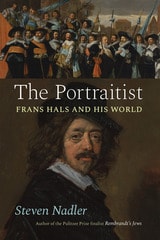
The Portraitist
Frans Hals and His WorldSteven Nadler
University of Chicago Press, 2022
Frans Hals was one of the greatest portrait painters in history, and his style transformed ideas and expectations about what portraiture can do and what a painting should look like.
Hals was a member of the great trifecta of Dutch Baroque painters alongside Rembrandt and Vermeer, and he was the portraitist of choice for entrepreneurs, merchants, professionals, theologians, intellectuals, militiamen, and even his fellow artists in the Dutch Golden Age. His works, with their visible brush strokes and bold execution, lacked the fine detail and smooth finish common among his peers, and some dismissed his works as sloppy and unfinished. But for others, they were fresh and exciting, filled with a sense of the sitter’s animated presence captured with energy and immediacy.
Steven Nadler gives us the first full-length biography of Hals in many years and offers a view into seventeenth-century Haarlem and this culturally rich era of the Dutch Republic. He tells the story not only of Hals’s life, but also of the artistic, social, political, and religious worlds in which he lived and worked.
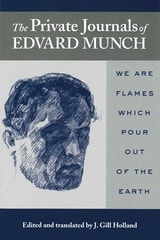
The Private Journals of Edvard Munch
We Are Flames Which Pour Out of the EarthEdvard Munch, edited and translated by J. Gill Holland
University of Wisconsin Press, 2005
This English translation of Edvard Munch's private diaries, the most extensive edition to appear in any language, captures the eloquent lyricism of the original Norwegian text. The journal entries in this volume span the period from the 1880s, when Munch was in his twenties, until the 1930s, reflecting the changes in his life and his work. The book is illustrated with fifteen of Munch's drawings, many of them rarely seen before. While these diaries have been excerpted before, no translation has captured the real passion and poetry of Munch's voice. This is a translation that lets Munch speak for himself and evokes the primal passion of his diaries. J. Gill Holland's exceptional work adds a whole new level to our understanding of the artist and the depth of his scream.
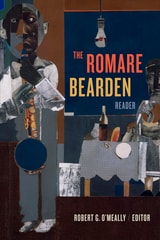
The Romare Bearden Reader
Robert G. O'Meally, editor
Duke University Press, 2019
Contributors. Elizabeth Alexander, Romare Bearden, Mary Lee Corlett, Rachel DeLue, David C. Driskell, Brent Hayes Edwards, Ralph Ellison, Henri Ghent, Farah Jasmine Griffin, Harry Henderson, Kobena Mercer, Toni Morrison, Albert Murray, Robert G. O’Meally, Richard Powell, Richard Price, Sally Price, Myron Schwartzman, Robert Burns Stepto, Calvin Tomkins, John Edgar Wideman, August Wilson
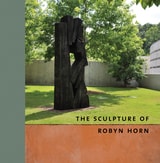
The Sculpture of Robyn Horn
Robyn Horn
University of Arkansas Press, 2018
The essays and images in The Sculpture of Robyn Horn sketch the industrious career of this Little Rock, Arkansas-based sculptor, illuminating her attention to geometry, physics, and the philosophy of design, and exploring the context and origin of the various series—Geodes, Millstones, Standing Stones, and Slipping Stones, among others—that characterize her body of work.
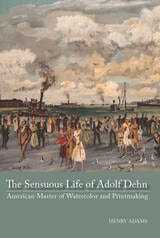
The Sensuous Life of Adolf Dehn
American Master of Watercolor and PrintmakingHenry Adams
University of Missouri Press, 2020
In this wide-ranging biography, Henry Adams explores how a once central figure can come to be forgotten. Noting that Dehn’s watercolor Spring in Central Park has been widely reproduced on calendars, postcards, and other Metropolitan Museum of Art souvenirs, Adams asks why it is that some artists are celebrated as key figures while others, even those who created images that form an integral part of our visual culture, are relatively unknown. With his account of the life of the prolific and influential Dehn, and a look at the circles of artists and writers in which Dehn moved, Adams helps to fill in what he calls the “secret or subterranean history of art.”
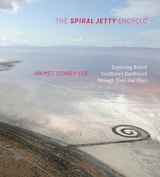
The Spiral Jetty Encyclo
Exploring Robert Smithson's Earthwork through Time and PlaceHikmet Sidney Loe
University of Utah Press, 2017
Copublished with the Tanner Trust Fund, J. Willard Marriott Library.
Robert Smithson’s earthwork, Spiral Jetty (1970), an icon of the Land Art movement of the 1960s and 1970s, is located on the northern shores of Utah’s Great Salt Lake. Smithson built a masterpiece from local materials, one that spirals counterclockwise into the lake and appears or is submerged with fluctuations in the lake’s locally red, saline water.
The Spiral Jetty Encyclo draws on Smithson’s writings for encyclopedic entries that bring to light the context of the earthwork and Smithson’s many points of reference in creating it. Visitors and armchair travelers, too, will discover how much significance Smithson placed on regional considerations, his immersion in natural history, his passion for travel, and his ability to use diverse mediums to create a cohesive and lasting work of art. Containing some 220 images, most of them in color, with some historical black and whites, The Spiral Jetty Encyclo lets readers explore the construction, connections, and significance of Smithson’s 1,500-foot-long curl into Great Salt Lake, created, in Smithson’s words, of “mud, salt crystals, rocks, water.”
Winner of 15 Bytes Book Award for Art Book.
Finalist for the Utah State Historical Society Best Book Award.
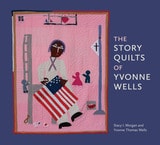
The Story Quilts of Yvonne Wells
Stacy I. Morgan
University of Alabama Press, 2024
The introduction and definitive guide to the work of celebrated folk artist Yvonne Wells, whose vibrant, innovative story quilts address an array of historic, cultural, and religious themes
The Story Quilts of Yvonne Wells is an introduction and definitive guide to the self-taught quilter whose expansive body of work serves as testament to the sweeping tides of American life and Wells’s significance as a major figure within the folk art and art world writ large.
Beginning when she was nearly 40 years old and without formal training, Wells created her first quilt for practical use but was soon hand stitching appliqué figures into bold, original designs that unleashed her voice as a storyteller. Incorporating a wide variety of symbolic materials and unconventional objects—“anything I can stick a needle in”—Wells’s vivid story quilts reveal a fearless and encyclopedic vision ranging from the intimately autobiographical to iconic scenes from African American history, the Bible, Southern culture, and contemporary headlines.
The result of years of close collaboration between Stacy I. Morgan and Wells herself, The Story Quilts of Yvonne Wells is richly illustrated with more than 100 quilts accompanied by narratives about each, told in the artist's own words, and interspersed with in-depth essays documenting Wells’s unique artistic practice and creative journey during her five-decade art career.
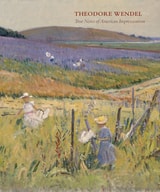
Theodore Wendel
True Notes of American ImpressionismTheodore Wendel
The Artist Book Foundation, 2019
One of the original "Duveneck boys" who studied in Munich at the Royal Academy, Theodore Wendel followed his mentor to Florence and Venice; he later went on to Paris and ultimately joined a colony of young artists at Giverny. The scenes and subject matter in the works he completed there are among the earliest by an American artist to adopt and evolve Impressionist strategies. Upon his return to America, he spent the next decades rendering scenes of the farmland and coast north of Boston that contemporary critics acclaimed as some of the best they had seen. Yet despite his talent and the significant accolades earned during his career, in the near-century following his death the recognition of his achievements has faded. The Artist Book Foundation is delighted to have the opportunity to remedy this siutation with its forthcoming monograph on the artist, Theodore Wendel: True Notes of American Impressionism.
Laurene Buckley's years of exhaustive research inform an engaging and detailed narrative of Wendel's time in Europe and his many years capturing the essence of the farms and fishing villages along the rural coast of Massachusetts. Thanks to her efforts, the book will feature many of his best works, a number of which are in private collections. An informative introduction by William H. Gerdts provides significant artistic context for Wendel and explains the artist's deft ability to draw the viewer into a scene. Concluding the monograph, an extensive chronology, exhibition history, and bibliography complete the scholarship on this long overdue tribute to a master of American Impressionism.
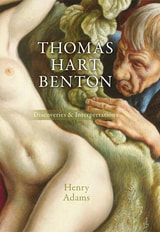
Thomas Hart Benton
Discoveries and InterpretationsHenry Adams
University of Missouri Press, 2027
Few American artists have incited more controversy than Thomas Hart Benton. Argumentative, brilliant, and enormously influential, Benton painted for nearly seventy years, inspiring acclaim and loathing among students, friends, fellow artists, and outraged critics.
Now, in a series of provocative essays, premier Benton scholar Henry Adams examines the many facets of the man as artist and the pitched battles of his long career, including the fight that raged over the subject matter of his murals, the real reasons for Benton’s feud with the radical left and his fall from grace in the New York art world, and his tumultuous, 36-year-long love-hate relationship with the student with whom he worked most closely, another iconic artist of the 20th century, Jackson Pollock. Adams ends with an account of his own twenty-five-year struggle to expose fakes of Benton’s work.
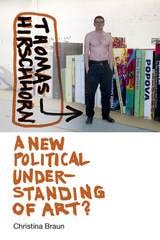
Thomas Hirschhorn
A New Political Understanding of Art?Christina Braun
Dartmouth College Press, 2018
Thomas Kinkade
The Artist in the MallAlexis L. Boylan, ed.
Duke University Press, 2011
Contributors. Julia Alderson, Alexis L. Boylan , Anna Brzyski, Seth Feman, Monica Kjellman-Chapin, Micki McElya, Karal Ann Marling, David Morgan, Christopher Pearson, Andrea Wolk Rager, Jeffrey Vallance
Titian
Sources and DocumentsCharles Hope
Paul Holberton Publishing, 2021
Titian was one of the most famous, successful, and long-lived of the Renaissance painters. Much of his output was for rulers or institutions whose archives have been largely preserved, and many of his family papers have also survived. Titian: Sources and Documents includes all known documents relating to Titian and his work dating from his lifetime, along with all known references to Titian in contemporaneous publications. The relevant section of each text is transcribed in full, preceded by a short summary in English, with extensive annotation and, where necessary, a commentary. The collection also includes all biographical material published before 1700 and all other texts that could realistically be thought to reflect first- or second-hand anecdotal information about him. The particular strengths and limitations of the principal early printed sources and the circumstances in which they were produced are discussed in a substantial introduction, which also includes an overview of the main archival collections consulted in the preparation of the book.
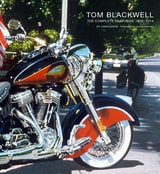
Tom Blackwell
The Complete Paintings, 1970–2014Tom Blackwell
The Artist Book Foundation, 2018
Tom Blackwell (1938–2020) is primarily known for his work in Photorealism, a stylistic movement noted for its ardent embrace of photographic source material. In 1969, he began a series of brashly beautiful motorcycle paintings that established him as one of the founders and foremost artists of the movement. The myriad painterly possibilities of urban store windows became another abiding interest. In his store-window paintings, Blackwell captures the counterpoint between the idealized reality within the store display and the bustling urban life reflected in the glass. As author Linda Chase remarks, "The magic of these paintings resides in the artist's ability to transform the arbitrary photographic information into dynamic and complex artistic compositions, revealing and clarifying the image while preserving its mystery."
In conjunction with his Photorealist paintings, Blackwell has produced a related body of work that is allegorical in its perpective. Combining photo-derived images, he addresses themes such as the passage of time, the fragility of nature, and the continuity that weaves through human history. The paintings, rich in symbolism and interpretive possibilities, fascinate and impress viewers with the breadth of Blackwell's abilities. "As a painter, I have been interested in dealing with the formal issues involved in juxtaposed and overlapping images," he explains. "In my Photorealism work, my goal is to reveal something about the actual world and to explore our photo-mediated perceptions of it."
Blackwell, born in Chicago in 1938, has deftly captured the vibrancy and visual excitement of urban street life for the past four decades and has had solo exhibitions across the United States and abroad. Tom Blackwell: The Complete Paintings, 1970–2014 is a comprehensive study of the artist's work as well as his artistic development and process, and includes a compilation of his early paintings through to his most recent works.
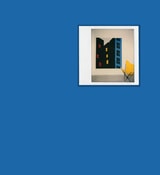
Tom Slaughter (Blue)
Tom Slaughter
The Artist Book Foundation, 2019
Of Tom Slaughter, Henry Geldzahler, the first curator of twentieth-century art at The Metropolitan Museum of Art, commented: "The quality of freshness, the familiar world re-seen, from the water towers of New York City to the rural pleasures of boating, is the most immediately arresting aspect of Tom Slaughter's art... Bold bright colors swiftly laid down echo with resonances: Léger and Stuart Davis, Raoul Dufy and Roy Lichtenstein." His work, with its seemingly effortless whimsy rendered with a strong sense of line, color, and rhythm, has also been compared to Matisse.
Slaughter's Pop-inflected drawings, prints, paintings, and illustrations convey his love of life as he relentlessly explored the complexities of the urban scene or the simple pleasures of boating. The Artist Book Foundation is pleased to publish Tom Slaughter, an extensive monograph of the artist's enormous body of work that celebrates his enduring optimism, personal and artistic honesty, and charming brashness in a landscape of pure joy.
Glenn Lowry, director of the Museum of Modern Art, reveals Slaughter as a treasured friend whose artistry was fueled by endless curiosity about life's simple pleasures, a man who made his innumerable friends and acquaintances part of his personal community. Slaughter's lifelong friend, actor and writer David Marshall Grant, remembers the artist's delight when, in a high school art class, he was introduced to the mysteries of negative space and the enigmatic power it brings to an artwork. Artist, art critic, and independent curator Andy Fabo describes his friend's vibrant art as all about pleasure. Even in the most turbulent of times, he took a celebratory approach to his art, offering his viewers a sensual and visual delight. For Jon Robin Baitz, playwright and screenwriter, the "sweetness" of Slaughter's images was insistent, a compulsive scrutinizing of the visual world of small domesticities. Marthe Jocelyn, the artist's former wife and a children's book author and illustrator, reflects on the couple's acclaimed collaboration on a series of books for the very youngest readers. Jim Kempner, gallery owner, recalls Slaughter as a man of charm and enormous artistic talent who always managed to retain a childlike innocence. Artist George Negroponte remembers Slaughter as focusing on the life around him, especially his daughters, in a unique mixture of everyday images, abstracted yet conveying popular culture. And in an interview both informative and poignant, Slaughter's friends, artists Stephen Hannock,
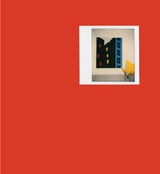
Tom Slaughter (Red)
Tom Slaughter
The Artist Book Foundation, 2019
Of Tom Slaughter, Henry Geldzahler, the first curator of twentieth-century art at The Metropolitan Museum of Art, commented: "The quality of freshness, the familiar world re-seen, from the water towers of New York City to the rural pleasures of boating, is the most immediately arresting aspect of Tom Slaughter's art... Bold bright colors swiftly laid down echo with resonances: Léger and Stuart Davis, Raoul Dufy and Roy Lichtenstein." His work, with its seemingly effortless whimsy rendered with a strong sense of line, color, and rhythm, has also been compared to Matisse.
Slaughter's Pop-inflected drawings, prints, paintings, and illustrations convey his love of life as he relentlessly explored the complexities of the urban scene or the simple pleasures of boating. The Artist Book Foundation is pleased to publish Tom Slaughter, an extensive monograph of the artist's enormous body of work that celebrates his enduring optimism, personal and artistic honesty, and charming brashness in a landscape of pure joy.
Glenn Lowry, director of the Museum of Modern Art, reveals Slaughter as a treasured friend whose artistry was fueled by endless curiosity about life's simple pleasures, a man who made his innumerable friends and acquaintances part of his personal community. Slaughter's lifelong friend, actor and writer David Marshall Grant, remembers the artist's delight when, in a high school art class, he was introduced to the mysteries of negative space and the enigmatic power it brings to an artwork. Artist, art critic, and independent curator Andy Fabo describes his friend's vibrant art as all about pleasure. Even in the most turbulent of times, he took a celebratory approach to his art, offering his viewers a sensual and visual delight. For Jon Robin Baitz, playwright and screenwriter, the "sweetness" of Slaughter's images was insistent, a compulsive scrutinizing of the visual world of small domesticities. Marthe Jocelyn, the artist's former wife and a children's book author and illustrator, reflects on the couple's acclaimed collaboration on a series of books for the very youngest readers. Jim Kempner, gallery owner, recalls Slaughter as a man of charm and enormous artistic talent who always managed to retain a childlike innocence. Artist George Negroponte remembers Slaughter as focusing on the life around him, especially his daughters, in a unique mixture of everyday images, abstracted yet conveying popular culture. And in an interview both informative and poignant, Slaughter's friends, artists Stephen Hannock,
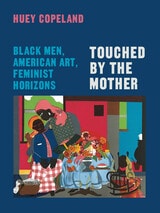
Touched by the Mother
Black Men, American Art, Feminist HorizonsHuey Copeland
University of Chicago Press, 2026
Collecting twenty years of incisive essays, articles, and interviews—including four published here for the first time—by art historian Huey Copeland, this book affirms the extraordinary depth of black men’s cultural production and the diversity of artistic practices that explore visual black masculinity in the United States. Part history, part memoir, part critical manifesto, Touched by the Mother offers a multi-faceted look at American art and discourse of the past fifty years, a personal meditation on navigating the world as a black gay man, and a feminist perspective on the ways transatlantic slavery continues to mark African and African diasporic men. Focusing on how the black maternal shapes black masculinity, Copeland confronts the dynamics that position African-American men—after their mothers—as sites of violence, creativity, and contestation in the cultural imagination.
Richly illustrated throughout, Touched by the Mother considers an exciting range of assemblage, painting, performance, photography, sculpture, and video works by more than twenty renowned practitioners, along with interviews featuring Hilton Als, Thelma Golden, Frank B. Wilderson, III, and other influential figures in contemporary art, culture, and criticism. Works by artists including Mark Bradford, Theaster Gates, David Hammons, Barkley L. Hendricks, Arthur Jafa, Glenn Ligon, Kerry James Marshall, Howardena Pindell, Sun Ra, and Lorna Simpson represent modes of making and thinking that are uniquely “touched by the mother,” Copeland argues, moving us toward the promise of black feminist futures.
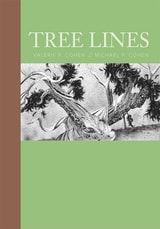
Tree Lines
Valerie P Cohen
University of Nevada Press, 2017
The drawings are black-and-white, pen-and-ink representations of high alpine ecosystems. The prose is stripped bare, abbreviated in an epigrammatic style that is poetic and spontaneous. Trees represented here are the Western Juniper or Sierra Juniper, the Limber, and the Bristlecone Pine—three species of long-lived, slow-growing conifers that grow across the Great Basin. While they represent only a small portion of the vegetative culture high in the western mountains, the Cohens use representation as abstraction as is utilized by writers and artists to convey a unique kind of microcosm of our natural environment. This book compares to such classics as Leopold’s A Sand County Almanac, and Berger’s Ways of Seeing, which open up lines of observation, analysis, and art for a new generation of readers.
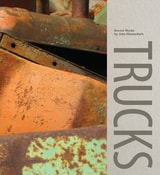
Trucks
Recent Works by John HimmelfarbJohn Himmelfarb
The Artist Book Foundation, 2014
With sculpture, paintings, prints, and drawings, award-winning artist John Himmelfarb explores the iconic American truck. An in-depth consideration of the vehicles that are intrinsically and culturally significant to the American landscape, Trucks: Recent Works by John Himmelfarb showcases the artist's diverse and lighthearted approach, adeptly shifting between mediums, style, and message during his decade-long contemplation of trucks and their specific functions. Under his skillful hands, the utilitarian vehicles of commerce and construction become unique and provocative art forms.
In 2005 and 2006, the truck as narrative becomes center stage for Himmelfarb's work. With his seamless, animated traverse of multiple mediums, viewers cannot help but smile as they appreciate the common truck through unique perspectives. In 2007, another tectonic change occurs in Himmelfarb's pursuit of his theme: as a result of a three-month residency at the John Michael Kohler Arts Center's Arts/Industry program, he begins his first meaningful foray into three-dimensional works.
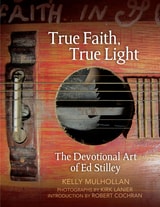
True Faith, True Light
The Devotional Art of Ed StilleyKelly Mulhollan
University of Arkansas Press, 2015
But one day Ed’s life was permanently altered. While plowing his field, he became convinced he was having a heart attack. Ed stopped his work and lay down on the ground. Staring at the sky, he saw himself as a large tortoise struggling to swim across a river. On his back were five small tortoises—his children—clinging to him for survival. And then, as he lay there in the freshly plowed dirt, Ed received a vision from God, telling him that he would be restored to health if he would agree to do one thing: make musical instruments and give them to children.
And so he did. Beginning with a few simple hand tools, Ed worked tirelessly for twenty-five years to create over two hundred instruments, each a crazy quilt of heavy, rough-sawn wood scraps joined with found objects. A rusty door hinge, a steak bone, a stack of dimes, springs, saw blades, pot lids, metal pipes, glass bottles, aerosol cans—Ed used anything he could to build a working guitar, fiddle, or dulcimer. On each instrument Ed inscribed “True Faith, True Light, Have Faith in God.”
True Faith, True Light: The Devotional Art of Ed Stilley documents Ed Stilley’s life and work, giving us a glimpse into a singular life of austere devotion.