Results by title
110 books match the query 'Individual Photographers' and 16 start with t
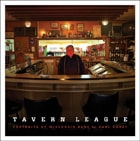
Tavern League
Portraits of Wisconsin BarsCarl Corey
Wisconsin Historical Society Press, 2011
In Tavern League, photographer Carl Corey documents a unique and important segment of the Wisconsin community. Our bars are unique micro-communities, offering patrons a sense of belonging. Many of these bars are the only public gathering place in the rural communities they serve. These simple taverns offer the individual the valuable opportunity for face to face conversation and camaraderie, particularly as people become more physically isolated through the accelerated use of the internet’s social networking, mobile texting, gaming, and the rapid-fire of email.
This collection of 60 pictures captures the Wisconsin tavern as it is today. Carl Corey’s view is both familiar and undeniably unique, his pictures resonant with anyone who has set foot in a Wisconsin tavern. As the Milwaukee Journal Sentinel’s Mary Louise Schumacher has written, “Carl Corey’s photographs . . . document iconic American places that are taken for granted. . . . They are comforting images, places we know, but also eerie and remote, presented with a sense of romance and nostalgia that suggests they are already past.”
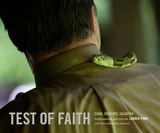
Test of Faith
Signs, Serpents, SalvationLauren Pond
Duke University Press, 2017
Who are the serpent handlers? What motivates them to continue their potentially lethal practices through the generations? Documentary photographer Lauren Pond traveled to West Virginia in search of answers to these questions. There she met Pastor Randy “Mack” Wolford, one of the best-known Signs Following preachers in the region, and spent the following year documenting Mack and his family. The course of her work changed dramatically in May 2012, when Mack, then forty-four years old, suffered a fatal rattlesnake bite during a worship service she attended. Pond photographed the events that followed and has continued her relationship with Mack’s family.
Test of Faith provides a deeply nuanced, personal look at serpent handling that not only invites greater understanding of a religious practice that has long faced derision and criticism; it also serves as a meditation on the photographic process, its ethics, and its capacity to generate empathy.
Published by Duke University Press and the Center for Documentary Studies at Duke University
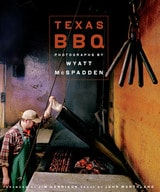
Texas BBQ
Photographs by Wyatt McSpaddenBy Wyatt McSpadden
University of Texas Press, 2009
To Texans, barbecue is elemental. Succulent, savory, perfumed with smoke and spice, it transcends the term "comfort food." It's downright heavenly, and it's also a staff of Texas life. Like a dust storm or a downpour, barbecue is a force of Texas nature, a stalwart tie to the state's cultural and culinary history. Though the word is often shortened to "BBQ," the tradition of barbecue stands Texas-tall.
Photographer Wyatt McSpadden has spent some twenty years documenting barbecue—specifically, the authentic family-owned cafes that are small-town mainstays. Traveling tens of thousands of miles, McSpadden has crisscrossed the state to visit scores of barbecue purveyors, from fabled sites like Kreuz's in Lockhart to remote spots like the Lazy H Smokehouse in Kirbyville. Color or black-and-white, wide angle or close up, his pictures convey the tradition and charm of barbecue. They allow the viewer to experience each place through all five senses. The shots of cooking meat and spiraling smoke make taste and smell almost tangible. McSpadden also captures the shabby appeal of the joints themselves, from huge, concrete-floored dining halls to tiny, un-air-conditioned shacks. Most of all, McSpadden conveys the primal physicality of barbecue—the heat of fire, the heft of meat, the slickness of juices—and also records ubiquitous touches such as ancient scarred carving blocks, torn screen doors and peeling linoleum, and toothpicks in a recycled pepper sauce jar.
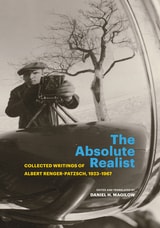
The Absolute Realist
Collected Writings of Albert Renger-Patzsch, 1923–1967Albert Renger-Patzsch
J. Paul Getty Trust, The, 2022
A towering figure in the history of photography, Albert Renger-Patzsch (1897–1966) has come to epitomize New Objectivity, the neorealist movement in modernist literature, film, and the visual arts recognized as the signature artistic style of Germany’s Weimar Republic. Today, his images are regularly exhibited and widely considered key influences on contemporary photographers. Whether they capture geometrically intricate cacti, flooded tidal landscapes, stacks of raw materials, or imposing blast furnace towers, Renger-Patzsch’s photographs embody what his peer Hugo Sieker termed “absolute realism,” an approach predicated upon the idea that photographers have one task: to exploit the camera’s unique capacity to document with uncompromising detail.
Not only a photographer, Renger-Patzsch was also an influential and lucid writer who advocated his unique brand of uncompromising realism in almost a half century’s worth of articles, essays, lectures, brochures, and unpublished manuscripts addressing photography, technology, and modernity. Drawing on his papers at the Getty Research Institute and other archives, The Absolute Realist unites in one volume this skillful photographer’s ideas about the defining visual medium of modernity.

The Bathers
Jennette Williams
Duke University Press, 2009
To create the images in The Bathers, Williams drew on gestures and poses found in iconic paintings of nude women, including tableaux of bathers by Paul Cézanne and Auguste Renoir, renderings of Venus by Giorgione and Titian, Dominique Ingres’s Odalisque and Slave, and Pablo Picasso’s Les Demoiselles d’Avignon. By alluding to these images and others, Williams sought to reflect the religious and mythological associations of water with birth and rebirth, comfort and healing, purification and blessing. She also used copies of the paintings to communicate with her Hungarian- and Turkish-speaking subjects—homemakers, factory workers, saleswomen, secretaries, managers, teachers, and students. Working in steam-filled environments, Williams created quiet, dignified images that evoke not only canonical representations of female nudes but also early pictorial photography. At the same time, they raise contemporary questions about the gaze, the definition of documentary photography, and the representation and perception of beauty and femininity, particularly as they relate to the aging body. Above all else, her photos are sensuously evocative. They invite the viewer to feel the steam, hear the murmur of conversation, and reflect on the allure of the female form.
A CDS Book
Published by Duke University Press and the Center for Documentary Photography
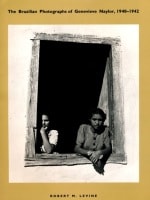
The Brazilian Photographs of Genevieve Naylor, 1940–1942
Robert M. Levine
Duke University Press, 1998
Working under the constraints of the Vargas dictatorship, the instructions of her employers, and a chronic shortage of film and photographic equipment, Naylor took advantage of the freedom granted her as an employee of the U.S. government. Traveling beyond the fashionable neighborhoods of Rio de Janeiro, she conveys in her work the excitement of an outside observer for whom all is fresh and new—along with a sensibility schooled in depression-era documentary photography of Dorothea Lange and Walker Evans, as well as the work of Cartier-Bresson and filmmaker Serge Eisenstein. Her subjects include the very rich and the very poor, black Carnival dancers, fishermen, rural peasants from the interior, workers crammed into trolleys—ordinary Brazilians in their own setting—rather than simply Brazilian symbols of progress as required by the dictatorship or a population viewed as exotic Latins for the consumption of North American travelers.
With Levine’s text providing details of Naylor’s life, perspectives on her photographs as social documents, and background on Brazil’s wartime relationship with the United States, this volume, illustrated with more than one hundred of Naylor’s Brazilian photographs will interest scholars of Brazilian culture and history, photojournalists and students of photography, and all readers seeking a broader perspective on Latin American culture during World War II.
Genevieve Naylor began her career as a photojournalist with Time, Fortune, and the Associated Press before being sent to Brazil. In 1943, upon her return, she became only the second woman to be the subject of a one-woman show at New York’s Museum of Modern Art. She served as Eleanor Roosevelt’s personal photographer and, in the 1950s and 1960s became well known for her work in Harper’s Bazaar, primarily as a fashion photographer and portraitist. She died in 1989.
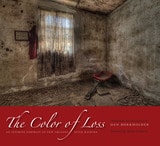
The Color of Loss
An Intimate Portrait of New Orleans after KatrinaPhotographs and introduction by Dan Burkholder
University of Texas Press, 2008
The devastation of New Orleans after Hurricane Katrina has been imprinted in our collective visual memory by thousands of images in the media and books of dramatic photographs by Robert Polidori, Larry Towell, Chris Jordan, Debbie Fleming Caffrey, and others. New Orleanians want the world to see and respond to the destruction of their city and the suffering of its people—and yet so many images of so much destruction threaten a visual and emotional overload that would tempt us to avert our eyes and become numb.
In The Color of Loss, Dan Burkholder presents a powerful new way of seeing the ravaged homes, churches, schools, and businesses of New Orleans. Using an innovative digital photographic technology called high dynamic range (HDR) imaging, in which multiple exposures are artistically blended to bring out details in the shadows and highlights that would be hidden in conventional photographs, he creates images that are almost like paintings in their richness of color and profusion of detail. Far more intense and poetic than purely documentary photographs, Burkholder's images lure viewers to linger over the artifacts of people's lives—a child's red wagon abandoned in a mud-caked room, a molding picture of Jesus—to fully understand the havoc thrust upon the people of New Orleans.
In the deserted, sinisterly beautiful rooms of The Color of Loss, we see how much of the splendor and texture of New Orleans washed away in the flood. This is the hidden truth of Katrina that Dan Burkholder has revealed.
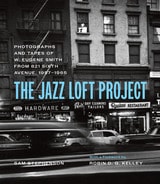
The Jazz Loft Project
Photographs and Tapes of W. Eugene Smith from 821 Sixth Avenue, 1957–1965W. Eugene Smith and Sam Stephenson
University of Chicago Press, 2023
In 1957, Eugene Smith walked away from his longtime job at Life and the home he shared with his wife and four children to move into a dilapidated, five-story loft building at 821 Sixth Avenue in New York City’s wholesale flower district. The loft was the late-night haunt of musicians, including some of the biggest names in jazz—Charles Mingus, Zoot Sims, Bill Evans, and Thelonious Monk among them. Here, from 1957 to 1965, he made nearly 40,000 photographs and approximately 4,000 hours of recordings of musicians. Smith found solace in the chaotic, somnambulistic world of the loft and its artists, and he turned his documentary impulses away from work on his major Pittsburg photo essay and toward his new surroundings.
Smith’s Jazz Loft Project has been legendary in the worlds of art, photography, and music for more than forty years, but until the publication of this book, no one had seen his extraordinary photographs or read any of the firsthand accounts of those who were there and lived to tell the tales.
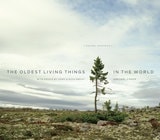
The Oldest Living Things in the World
Rachel Sussman
University of Chicago Press, 2014
Her work is both timeless and timely, and spans disciplines, continents, and millennia. It is underscored by an innate environmentalism and driven by Sussman’s relentless curiosity. She begins at “year zero,” and looks back from there, photographing the past in the present. These ancient individuals live on every continent and range from Greenlandic lichens that grow only one centimeter a century, to unique desert shrubs in Africa and South America, a predatory fungus in Oregon, Caribbean brain coral, to an 80,000-year-old colony of aspen in Utah. Sussman journeyed to Antarctica to photograph 5,500-year-old moss; Australia for stromatolites, primeval organisms tied to the oxygenation of the planet and the beginnings of life on Earth; and to Tasmania to capture a 43,600-year-old self-propagating shrub that’s the last individual of its kind. Her portraits reveal the living history of our planet—and what we stand to lose in the future. These ancient survivors have weathered millennia in some of the world’s most extreme environments, yet climate change and human encroachment have put many of them in danger. Two of her subjects have already met with untimely deaths by human hands.
Alongside the photographs, Sussman relays fascinating – and sometimes harrowing – tales of her global adventures tracking down her subjects and shares insights from the scientists who research them. The oldest living things in the world are a record and celebration of the past, a call to action in the present, and a barometer of our future.
The Past's Threshold
Essays on PhotographySiegfried Kracauer
Diaphanes, 2014
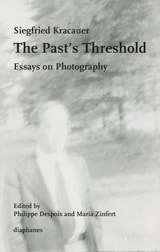
This volume brings together for the first time all of Kracauer’s essays on photography that he wrote between 1927 and 1933 as a journalist for the Frankfurter Zeitung, as well as an essay that appeared in the Magazine of Art after his exile in America, where he would spend the last twenty-five years of his life. The texts show Kracauer as a pioneering thinker of the photographic medium in addition to the important historian, and theorist, of film that he is acknowledged to have been. His writings here build a cohesive theory on the affinities between photography, memory and history.
With a foreword by Philippe Despoix offering insights into Kracauer’s theories and the historical context, and a Curriculum vitae in pictures, photographs from the Kracauer estate annotated by Maria Zinfert.

The Photographic Legacy of Frances Benjamin Johnston
Maria Elizabeth Ausherman
University of Alabama Press, 2022
An illustrated account of the life and work of the pioneering photographer
The Photographic Legacy of Frances Benjamin Johnston (1864–1952) draws on original papers and photographs from the Library of Congress to document the extraordinary life and nearly seventy-year career of this pioneering photographer. Maria Elizabeth Ausherman illuminates the early origins of Johnston’s style and vision, and her attempts to change society through her art. One of the first women to work in an emerging field dominated by men, Johnston achieved acclaim as an accomplished photographer and photojournalist.
As the official White House photographer for five administrations, she was instrumental in defining the medium and inspiring women to train in and appreciate photography. But it is her monumental nine-state survey of southern American architecture that stands as her most significant contribution to the history and development of photography both as art and as documentary. Through her photography, Johnston showed reverence for the beautiful historic buildings she appreciated and also helped shape architectural and photographic preservation in the United States.

The Photography of Gustave Le Gray
Eugenia Parry Janis
University of Chicago Press, 1987
Drawing on entirely new material Eugenia Parry Janis fully analyzes the life and work of Le Gray and demonstrates the originality of his artistic achievement in the context of discoveries about his personal and professional history. Janis, approaching the photographs of Le Gray with the methods and sensibilities of an art historian, reveals telling connections between Le Gray's choices of subject matter and formal means of presentation and the existing pictorial practice of other media such as painting. This same approach makes her sensitive to Le Gray's departures from such traditional practice, and she skillfully illustrates how he evolved from student painter into master photographer. In doing so she gives us a glimpse of the way in which Le Gray's manipulation of the photographic process was always informed by his pictorial needs and by his developing style.

The Poetics and Politics of the Veil in Iran
An Archival and Photographic AdventureAzadeh Fatehrad
Intellect Books, 2019
The Poetics and Politics of the Veil in Iran features Fatehrad’s own photographs in addition to work by artists Hengameh Golestan, Shirin Neshat, Shadi Ghadirian, Abbas Kiarostami, Mohsen Makhmalbaf, Adolf Loos, Gaëtan Gatian de Clérambault, and Alison Watt. In exploring women’s lives in post-revolutionary Iran, Fatehrad considers the role of the found image and the relationship between the archive and the present, resulting in an illuminating history of feminism in Iran in the twentieth and twenty-first centuries.
The Third Coast
America’s Great Lakes ShorelineZurick, David
Northwestern University Press, 2025
A full-color photographic journey around the Great Lakes
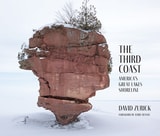
Locals affectionately call the Great Lakes the “third coast”—though at 4,500 miles, this beloved freshwater shoreline is the nation’s longest, covering more distance than the country’s Atlantic and Pacific coasts combined.
Divided into four galleries by lake and season, David Zurick’s award-winning photographs spotlight the distinct personality of each coastline and the people who call its shores home. We visit windswept Lake Superior in winter, Lake Michigan bursting into spring, Lakes Erie and Ontario under the summer sun, and Lake Huron in the changing palette of autumn, with an additional gallery devoted to the straits and rivers that connect them. An evocative foreword from award-winning nature writer Jerry Dennis sets the stage for this sweeping visual tour.
In Zurick’s photographs, lifelong lovers of the Great Lakes will find the familiar shorelines of coastal hometowns, summer refuges, and secret fishing spots—as well as images that reawaken us to the majesty and mystery of North America’s “freshwater seas.”

The Weather and a Place to Live
Photographs of the Suburban WestSteven B. Smith
Duke University Press, 2005
The power of these photographs lies in part in Smith’s unusual knowledge of the places he portrays. Raised in Utah, Smith has worked on construction crews, and he was a contractor in California after living on the East Coast for a few years. When he moved to Los Angeles in 1991, he writes, “I was so astounded by what I saw happening to the landscape as it was being developed that I started photographing it immediately. The landscapes I saw were scraped bare, re-sculpted, sealed, and then covered so as not to erode away before the building process could be completed.”
Smith’s photographs offer a disturbing vision of the future of our planet, where the desire for home ownership is pitted against the costs of development in epic proportions. These altered landscapes force us to consider the consequences of human design battling natural forces across great expanses, a fragile balancing act and a contorted equation in which nature becomes both inspiration and invisible adversary. Smith’s elegant photographs of this constructed universe confront us with the beauty of images as images, yet push us to reflect on the devastation possible in the simple act of choosing a place to live.

Through the Lens of Janet Stone
Portraits, 1953-1979Ian Archie Beck
Bodleian Library Publishing, 2018
Included between these pages are portraits of the composers, actors, novelists, poets, and philosophers in the Stones’ milieu—from Benjamin Britten to Siegfried Sassoon and Frances Partridge—as well as members of the Stone family. Although not a trained photographer, Janet instinctively knew to click the shutter when her subjects were off-guard and at their most informal, capturing an array of candid shots—like one of John Bayley trying on a headscarf and a young Daniel Day-Lewis dressed up as a knight.
These unique portraits offer beguiling insight into a special set of circumstances: an idyllic place and time and a group of people drawn together by two contrasting but complimentary personalities, the shy genius of Reynolds met by the outgoing style and glamour of Janet Stone.