Results by title
40 books match the query 'Plays'
A Commentary on the Plays of Sophocles
James C. Hogan
Southern Illinois University Press, 1991
James C. Hogan introduces each play by highlighting specific and interpretive problems relevant to that play before turning to a line-by-line analysis. The line analysis is comprehensive, ranging from the meanings of words and phrases that pertain to a variety of Greek ideas and institutions to metaphor and imagery specific to each play as well as plots and borrowings from earlier poetry, styles, and characterizations.
Along with his examination of the seven extant plays of Sophocles in English translations, Hogan provides a general introduction to the theatre in Sophocles’ time, discussing staging, the conventions of the Greek theatre, the text of the plays, and mythology and religion.
Alchemies of Theater
Plays, Scores, WritingsDick Higgins
University of Michigan Press, 2024
Alchemies of Theater brings together a broad selection of Higgins’s writings and theater-related work, much of it unpublished or long out of print, including plays and performance scores, drawings, and writings on theater and performance. As this book demonstrates, Higgins deconstructed the drama long before it became a project of theater; undercut the traditional roles of author and director; created what is now considered “devised” theater; pioneered the use of media in theater, writing the first electronic opera; and was a precursor in deconstruction and “postdramatic” avant-garde traditions. His Intermedia manifesto offered a sweeping view of interdisciplinarity—in effect, a new arts ecology.
Avery Hopwood
His Life and PlaysJack F. Sharrar
University of Michigan Press, 1998

Dramatizing Dementia
Madness In The Plays Of Tennessee WilliamsJacqueline O'Connor
University of Wisconsin Press, 1997
Eight Plays for Children
The New Generation Play ProjectEdited by Coleman A. Jennings
University of Texas Press, 1999
The New Generation Play Project was a daring experiment in American children's theatre. Begun in 1989 by a consortium that included the Seattle Children's Theatre, The Children's Theatre Company of Minneapolis, Stage One: The Louisville Children's Theatre, and the Honolulu Theatre for Youth, the NGPP raised half a million dollars to commission major American dramatists to create new works for young people and to produce these plays over a several-year period.
This book provides the full text of the plays produced through the NGPP:
- Constance Congdon, Beauty and the Beast
- Velina Hasu Houston, Hula Heart
- Tina Howe, East of the Sun and West of the Moon
- Len Jenkin, The Invisible Man
- Mark Medoff, Kringle's Window
- Eric Overmyer, Duke Kahanamoku vs. The Surfnappers
- Michael Weller, Dogbrain
- Y York, The Witch of Blackbird Pond
In his introduction, Coleman Jennings describes the work of the NGPP, some of the controversies surrounding its selection of playwrights who do not ordinarily write for young audiences, as well as the playwrights' reactions to the project, and the critical reception of the plays. Suzan Zeder, one of the nation's leading playwrights for family audiences, supplies the foreword.
Geography and Plays
Gertrude Stein; Introduction by Cyrena N. Pondrom
University of Wisconsin Press, 1993
Gogol
Plays and Selected WritingsNikolai Gogol
Northwestern University Press, 1994

Honouring the Strength of Indian Women
Plays, Stories, PoetryVera Manuel
University of Manitoba Press, 2019

Italian Women's Theatre, 1930-1960
An Anthology of PlaysTranslations and Critical Introductions by Daniela Cavallaro
Intellect Books, 2011
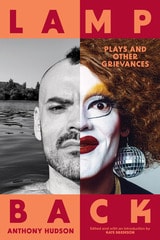
Lamp Back
Plays and Other GrievancesAnthony Hudson, Kate Bredeson
Northwestern University Press, 2027
A major collection of performance works by artist and agitator Anthony Hudson
Lamp Back: Plays and Other Grievances collects nearly a decade of work by Anthony Hudson, a queer Indigenous artist and agitator also known as Portland, Oregon’s premier drag clown, Carla Rossi. Whether fumbling with a lamp in a satirical takedown of land acknowledgments or confronting the history of redface in pop culture, Hudson alternates between Rossi’s cackling “ghost of white privilege” and more earnest, vulnerable confessionals as himself—all with a deep commitment to bitter humor and brutal honesty. In these performance works, a mixed-race Native boy plays a pilgrim in his kindergarten Thanksgiving pageant. A young artist recounts the racism in their favorite musical and the larger American theater system. A drag queen storytime goes disastrously wrong and calls for an exorcism with a plunger. Kate Bredeson’s unflinching introduction speaks to Hudson’s work through a cultural and historical lens and illuminates the importance of his project to filet the American Empire.
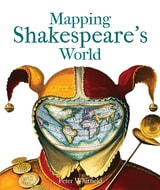
Mapping Shakespeare's World
Peter Whitfield
Bodleian Library Publishing, 2015
Mapping Shakespeare’s World explores these questions with surprising results. It has often been said that setting is irrelevant to Shakespeare’s plays—that, wherever they are set, their enduring appeal lies in their ability to speak to broad questions of human nature. Peter Whitfield shows that, on the contrary, many of Shakespeare’s locations were carefully chosen for their ability to convey subtle meanings an Elizabethan audience would have picked up on and understood. Through the use of paintings, drawings, contemporary maps and geographical texts, Whitfield suggests answers to such questions as where Illyria was located, why The Merry Wives of Windsor could only have taken place in Windsor, and how two utterly different comedies—The Comedy of Errors and Pericles, Prince of Tyre—both came to take place in ancient Ephesus.
Just when one might think there was nothing more to be said about Shakespeare, with Mapping Shakespeare’s World, Whitfield offers a fascinating new point of view.
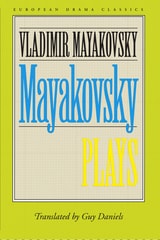
Mayakovsky
PlaysVladimir Mayakovsky
Northwestern University Press, 1995
Mayakovsky: Plays includes Mystery Bouffe, a mock medieval mystery written in 1918 to celebrate the first anniversary of the Revolution; The Bathhouse, a sharp attack on Soviet bureaucracy subtitled "a drama of circus and fireworks"; and The Bedbug, in which a worker with bourgeois pretensions is frozen and resurrected fifty years later, when the world has become a material paradise. The collection also includes Mayakovsky's more personal first play, Vladimir Mayakovsky: A Tragedy.

Performing Captivity, Performing Escape
Cabarets and Plays from the Terezín/Theresienstadt GhettoEdited by Lisa Peschel
Seagull Books, 2014
The concentration camp and Jewish ghetto at Terezín, or Theresienstadt, in what is now the Czech Republic, was a site of enormous suffering, fear, and death. But amid this horrific period, there was also a thriving and desperately vibrant cultural life. While the children’s drawings and musical pieces created in the ghetto have become justly famous, the prisoners’ theatrical works, though a lesser-known aspect of their artistic endeavors, deserves serious attention as well.
Performing Captivity, Performing Escape collects twelve theatrical texts—cabaret songs and sketches, historical and verse dramas, puppet plays, and a Purim play—written by Czech and Austrian Jews. Together these works reveal the wide range of ways in which the prisoners engaged with and escaped from life in the ghetto through performance. The anthology opens with an insightful prologue by novelist Ivan Klíma, who was interned in the ghetto as a child and contains a detailed introduction by editor Lisa Peschel about the pre-war theatrical influences and wartime conditions that inspired the theater of the ghetto. The array of theatrical forms collected in this anthology speaks of the prisoners’ persistence of hope in a harrowing time and will be a moving read for students and scholars of the Holocaust.

Pinter In Play
Critical Strategies and the Plays of Harold PinterSusan Hollis Merritt
Duke University Press, 1990
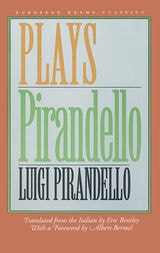
Plays
Luigi Pirandello
Northwestern University Press, 1998
“How has the art of theater managed to survive at all into the era of modernism and the era of what is currently, however ineptly, called postmodernism?” asks preeminent theater scholar Eric Bentley. “Through the work of [Luigi] Pirandello, I should think, more than any other single individual.”
Bentley’s English versions of four of Pirandello’s most celebrated plays—collected here for the first time—capture the playwright’s voice with remarkable perception. He has provided texts that are the standard for American productions, sensitive both to what is uniquely “Sicilian” in Pirandello’s language and to the rigors of the American stage.
Along with Pirandello’s better-known works, Six Characters in Search of an Author, Emperor Henry, and Right You Are, this edition includes the widely performed The Man with the Flower in His Mouth, unavailable in any other collection.
Plays in Time
The Beekeeper's Daughter, Prophecy, Another Life and Extreme WhetherKaren Malpede
Intellect Books, 2017
Each play was developed by Theater Three Collaborative for production in New York and internationally in Italy, Australia, London, Berlin, and Paris.
Plays, Movies, and Critics
Jody McAuliffe, ed.
Duke University Press, 1993
DeLillo's interview play is accompanied in this collection by interviews with theater director Roberta Levitow, Martin Scorsese, and film/theater critic Stanley Kauffmann. Other contributions include a critical look at the current American theater scene, analyses of the place of politics in the careers of G. B. Shaw and Luigi Pirandello, a compelling reading of Chekhov's "The Seagull", a detailed inquiry into the obsessions that energize the works of Sam Shepard, provocative reinterpretations of the films Mean Streets and The Sheltering Sky, and a translation of André Bazin's important piece on theology and film.
Contributors. André Bazin, Robert Brustein, Bert Cardullo, Anthony DeCurtis, Don DeLillo, Jesse Ward Engdhal, Richard Gilman, Jim Hosney, Mame Hunt, Jonathan Kalb, Stanley Kauffmann, Jody McAuliffe, Mary Ann Frese Witt, Jacquelyn Wollman, David Wyatt

Playwrights for Tomorrow
A Collection of Plays, Volume 1Arthur H. Ballet, EditorIntroduction by Arthur H. Ballet
University of Minnesota Press, 1966
Playwrights for Tomorrow was first published in 1966. Minnesota Archive Editions uses digital technology to make long-unavailable books once again accessible, and are published unaltered from the original University of Minnesota Press editions.
Four young playwrights, James Schevill, Megan Terry, Elizabeth Johnson, and Terrence McNally, are represented in this collection, which includes four one-act plays and one three-act play. The authors are writers who have participated in an experimental program at the University of Minnesota under the auspices of the Office for Advanced Drama Research, of which Arthur H. Ballet is the director.
The program of the Office for Advanced Drama Research, established with the aid of a grant from the Rockefeller Foundation, provides an opportunity for promising young playwrights to develop their talents in a situation which offers them, among other advantages, the chance to have their plays actually produced. Dr. Ballet describes the project in an introduction.
The plays which make up this collection are two related one-act plays, The Space Fan and The Master (titled together American Power), by James Schevill; Ex-Miss Cooper Queen on a Set of Pills by Megan Terry; A Bad Play for an Old Lady by Elizabeth Johnson; and And Things That Go Bump in the Night by Terrence McNally. Each playwright provides a discussion of his work, and production data are given. All except one of the plays were produced at the Tyrone Guthrie Theatre in Minneapolis. In addition, one of them, And Things That Go Bump in the Night, has been given on Broadway.
Just as the experimental productions helped the playwrights evaluate their work, publication of the plays will, it is hoped, contribute further to the critical process by giving the plays the benefits of wider audiences and broader appraisal.
Another collection of plays by writers associated with the program of the Office for Advanced Drama Research is available in a second volume.
Playwrights for Tomorrow
A Collection of Plays, Volume 11Arthur H. Ballet, EditorIntroduction by Arthur H. Ballet
University of Minnesota Press, 1973
Playwrights for Tomorrow was first published in 1973. Minnesota Archive Editions uses digital technology to make long-unavailable books once again accessible, and are published unaltered from the original University of Minnesota Press editions.
This volume presents four plays by writers who have worked under the program of the Office for Advanced Drama Research (O.A.D.R.) at the University of Minnesota, an experimental project which provides promising playwrights with the opportunity of working with cooperating theatres in the production of their plays. Arthur H. Ballet, the editor, is director of the
O.A.D.R.
The plays in this volume and the theatres which cooperated in their production are Boxes by Susan Yankowitz, Magic Theatre, Berkeley, California; Canvas by David Roszkowski, Scorpio Rising Theatre, Los Angeles; Bierce Takes on the Railroad! by Philip A. Bosakowski, Theatre III, College of Marin, Kentfield, California; and Chamber Piece by John O'Keefe, Magic Theatre, Berkeley, California.
In an introduction Professor Ballet discussed the program and accomplishments of the O. A.D.R., which was established with the aid of a Rockefeller Foundation grant. He writes: "It seemed obvious that no artist worked in more lonely isolation and needed more direct contact with the theatre than the playwright. Despite loud pronouncements . . . that theatres outside of New York were searching for new plays and writers, the evidence indicates that very few theatres really wanted to work with unknown but living playwrights. The O.A.D.R., in its small way, has tried to open a highway . . . between new, often untried writers and willing, even brave theatres.
As Speech and Drama (England) pointed out in a review of earlier volumes of the Playwrights for Tomorrow series: "Schemes like this one at Minnesota deserve the highest praise. On the evidence of these volumes, the executive committee which operates this venture is not attempting to impose any single imprint on its authors—a further example of the generosity of the patronage."
Playwrights for Tomorrow
A Collection of Plays, Volume 12Arthur H. Ballet, EditorIntroduction by Arthur H. Ballet
University of Minnesota Press, 1975
Playwrights for Tomorrow was first published in 1975. Minnesota Archive Editions uses digital technology to make long-unavailable books once again accessible, and are published unaltered from the original University of Minnesota Press editions.
This twelfth volume in the series of collections of plays by writers who have worked under the auspices of the Office for Advanced Drama Research (O.A.D.R.) at the University of Minnesota contains four plays and an introduction by Arthur H. Ballet. The O.A.D.R., of which Professor Ballet is the director, is an experimental project which provides promising playwrights with the opportunity to work with cooperating theatres in the production of their plays.
The plays which make up this collection are The Root by McCarthy Coyle, Wilson by George Greanias, A Lean and Hungry Priest by Warren Kliewer, and A Bunch of the Gods Were Sitting Around One Day by James Spencer. The plays by Mr. Coyle and by Mr. Spencer were produced at the American Conservatory Theatre of San Francisco. Mr. Greanias's play was staged at the Alley Theatre in Houston, and Mr. Kliewer's was given, in an earlier version, at the Scorpio Rising Theatre, Los Angeles.
In his introduction Professor Ballet points out that works by playwrights in the O.A.D.R. program have been produced not only in cooperating theatres in the United States but in Australia, New Zealand, Scotland, and Canada as well. It grows increasingly difficult, he writes, to find playhouses willing to risk an "imperfect" new play and playwright or to challenge their audiences to dare explore unknown dramatic and theatrical territory. "More dangerous still," he comments, "has been the tendency for some directors to make theatre their own, highly personal art. Many important, and many more unimportant, theatres have become showcases for artistic directors who impose their will on all work, old or new."
Playwrights for Tomorrow
A Collection of Plays, Volume 13Arthur H. Ballet, EditorIntroduction by Arthur H. Ballet
University of Minnesota Press, 1975
Playwrights for Tomorrow was first published in 1975. Minnesota Archive Editions uses digital technology to make long-unavailable books once again accessible, and are published unaltered from the original University of Minnesota Press editions.
Four plays by writers who have worked under the auspices of the Office for Advanced Drama Research (O.A.D.R.) at the University of Minnesota are published in this volume, the thirteenth in the series of such collections. The O.A.D.R. program, which is directed by Arthur H.. Ballet, the series editor, provides an opportunity for promising playwrights to work with cooperating theatres in the production of their plays.
The plays in this volume are The Tunes of Chicken Little by Robert Gordon, The Inheritance by Ernest A. Joselovitz, Blessing by Joseph Landon, and The Kramer by Mark Medoff. Three of the plays—those by Robert Gordon, Joseph Landon, and Mark Medoff—were produced by the American Conservatory Theatre of San Francisco. The play by Mr. Joselovitz was presented by the University of Minnesota Theatre in Minneapolis.
In his introduction Mr. Ballet comments on the achievements and problems of the O.A.D.R. program. He reports that since the program began it had had about one hundred plays produced in some sixty theatres, not only in the United States but also in Australia, New Zealand, Scotland, and Canada. However, he writes, it became increasingly difficult to find playhouses willing to risk the challenge of new plays and playwrights. "More dangerous still," he writes, "has been the tendency for some directors to make theatre their own, highly personal art. Because so many of these directors only like what they know, and they don't know what to make of new work at all, they cannot truly judge and anticipate as a stage piece anything beyond their immediate ken. The rejections are cavalier and unthinking. The directors' lament that there are no new, exciting playwrights must be answered with the accusation that there really are damned few new, exciting, perceptive directors."
Playwrights for Tomorrow
A Collection of Plays, Volume 2Arthur H. Ballet, EditorIntroduction by Arthur H. Ballet
University of Minnesota Press, 1966
Playwrights for Tomorrow was first published in 1966. Minnesota Archive Editions uses digital technology to make long-unavailable books once again accessible, and are published unaltered from the original University of Minnesota Press editions.
This is the second volume of a collection of plays by writers who have participated in an experimental program at the University of Minnesota under the auspices of the Office for Advanced Drama Research, of which Arthur H. Ballet is the director. Three young playwrights, Maria Irene Fornes, Nick Bortez, and Lee H. Kalcheim, are represented in the collection with two one-act plays and two three-act plays.
Under the program, which is described by Dr. Ballet in his introduction, promising young playwrights are given assistance in developing their talents. Among other opportunities, they are offered the chance to have their plays actually produced.
The plays in this volume are Tango Palace and The Successful Life of Three: A Skit for Vaudeville,two one-act plays by Maria Irene Fornes; Shelter Area, a three-act play by Nick Boretz; and The Boy Who Came to Leave,a three-act play by Lee H. Kalcheim. In addition to the scripts, each playwright provides a discussion of his work in a preface. Production data for each play are given also.
Both of the plays by Miss Fornes were produced at the Firehouse Theatre in Minneapolis, and Tango Palace also was given at the Actor's Workshop in San Francisco. Shelter Area was presented in the Playwrights' Premiere Season at the University of Minnesota. Mr. Kalcheim's play was given at the Theatre in the Round, Minneapolis.
The plays in this volume and in Volume 1 of the collection range widely in theme and subject matter but they share a common trait - each represents a new and exciting voice in the American theatre.
Playwrights for Tomorrow
A Collection of Plays, Volume 3Arthur H. Ballet, EditorIntroduction by Arthur H. Ballet
University of Minnesota Press, 1967
Playwrights for Tomorrow was first published in 1967. Minnesota Archive Editions uses digital technology to make long-unavailable books once again accessible, and are published unaltered from the original University of Minnesota Press editions.
Five writers are represented in this third volume of a series of collections of plays by dramatists who have participated in an experimental program conducted at the University of Minnesota by the Office for Advanced Drama Research. Dr. Arthur H. Ballet, editor of the series, is the director of the program. The plays in this volume are Five Easy Payments by John Lewin, Where Is de Queen? by Jean-Claude van Itallie, The Great Git-Away by Romeo Muller, With Malice Aforethought by John Stranack, and I, Elizabeth Otis, Being of Sound Mind by Philip Barber.
As Dr. Ballet explains in his introduction, the program of the Office for Advanced Drama Research provides a testing ground for promising playwrights by giving them a chance to have their plays actually produced. Publication of the plays makes them available to larger audiences and to further critical appraisal.
Playwrights for Tomorrow
A Collection of Plays, Volume 4Arthur H. Ballet, EditorIntroduction by Arthur H. Ballet
University of Minnesota Press, 1967
Playwrights for Tomorrow was first published in 1967. Minnesota Archive Editions uses digital technology to make long-unavailable books once again accessible, and are published unaltered from the original University of Minnesota Press editions.
This is the fourth in a series of volumes which offer collections of plays by dramatists who have participated in an experimental program conducted at the University of Minnesota under the auspices of the Office of Advanced Drama Research (O.A.D.R.). Dr. Arthur H. Ballet, editor of the series, is the director of the O.A.D.R.
This volume contains three full-length plays and one short play. They are The World Tipped Over, and Laying on Its Side (one act) by Mary Feldhaus-Weber, Visions of Sugar Plums by Barry Pritchard, The Strangler by Arnold Powell, and The Long War by Kevin O' Morrison. Mary Feldhaus-Weber is a St. Paul poet who has chosen to work in the theatre. Mr. Pritchard, a former playwright in residence at Theatre St. Paul, now writes for television and films in Hollywood. Mr. Powell is a teacher and theatre director at Birmingham-Southern College in Atlanta, and Mr. O'Morrison pursues an acting career in the Broadway theatre.
As Dr. Ballet explains in his introduction, the program of the O.A.D.R. is designed to give promising playwrights a testing ground for their ideas, skills, and talents by providing them with a chance to have their plays actually produced and, whenever possible, the opportunity of working with the producing groups. He points out that a number of the writers associated with the O.A.D.R. have subsequently moved into the mainstream of contemporary American theatre. Publication of the plays will, it is hoped, bring them to the attention of larger audiences and stimulate further critical appraisal.
Playwrights for Tomorrow
A Collection of Plays, Volume 5Arthur H. Ballet, EditorIntroduction by Arthur H. Ballet
University of Minnesota Press, 1969
Playwrights for Tomorrow was first published in 1969. Minnesota Archive Editions uses digital technology to make long-unavailable books once again accessible, and are published unaltered from the original University of Minnesota Press editions.
This is the fifth volume in a continuing series of collections of plays by dramatists who have participated in an experimental program conducted at the University of Minnesota under the auspices of the Office of Advanced Drama Research (O.A.D.R.). Dr. Arthur H. Ballet, editor of the series, is the director of the O.A.D.R.
The plays published here are Fair Beckoning One by Sarah Monson Koebnick and The New Chautauqua by Frederick Gaines. In an introduction Dr. Ballet comments briefly on the work of the playwrights included in this volume. Of Mrs. Koebnick and her play, Fair Beckoning One,he writes: "Without intending or implying condescension, it is quite safe to say that Sarah Koebnick is the rarest of all theatre birds: a primitive who is both a skilled writer and a keen observer. Her tradition is not modern, unless Ibsen is still considered a modernist, but her awareness and her ability to create touching characters and situations are qualities seldom evident in what comes into our office. Her play, Fair Beckoning One, is about a century away from the work of a Gaines or a Sainer, but her compassion is very 'with it.'"
Of Mr. Gaines and The New Chautauqua he writes: "A graduate-student enterprise, the AnyPlace Theatre, in the summer of 1968 turned Minnesota into a commedia dell'arte territory by carrying plays to the people in the streets. It was, by all measures, enormously successful, and it can be most proud that it presented works of two new writers, with the aid of the O.A.D.R. Fred Gaines is himself a graduate student and an exciting prolific new writer in the theatre. The New Chautauqua is one of his best works (and perhaps one of the best pieces O.A.D.R. has worked with): part commedia, part protest, part entertainment, part commitment, and part sheer, marvelous theatre."
Playwrights for Tomorrow
A Collection of Plays, Volume 6Arthur H. Ballet, EditorIntroduction by Arthur H. Ballet
University of Minnesota Press, 1969
Playwrights for Tomorrow was first published in 1969. Minnesota Archive Editions uses digital technology to make long-unavailable books once again accessible, and are published unaltered from the original University of Minnesota Press editions.
Three plays are published in this sixth volume of a series of collections of plays by dramatists who have participated in an experimental program conducted by the Office for Advanced Drama Research (O.A.D.R.), University of Minnesota. Dr. Arthur H. Ballet, editor of the series, is the director of the program.
The plays in this volume are The Thing Itself by Arthur Sainer, The Marriage Test by Jonathan Gillman, and The End of the World; or, Fragments from a Work in Progress by Keith Neilson. In an introduction Dr. Ballet briefly describes the O.A.D.R. program and comments on the three plays.
Of Mr. Sainer and his play Dr. Ballet writes: "Arthur Sainer represents a new wave in theatrical writing, the semi-improvisational piece which really takes on life only in production, but which also speaks with a voice as old and honorable as theatre itself. The Firehouse Theatre, with its unique and skillful dedication to innovative theatre, brought The Things Itself to exciting production for enthusiastic audiences." Jonathan Gillman's The Marriage Test is, he writes, "a rare and sparkling work for the stage: a classic farce." On the third play and its author he comments: "The End of the World by Keith Neilson was the first play provided with facilities under the O.A.D.R. outside the Minneapolis-St. Paul area in an attempt to see if the program could work at long distance as well as it has at home. The play, the playwright, and the O.A.D.R. were blessed with a wonderful company, theatre, and audience at the Playhouse in the Park, Cincinnati, Ohio, and above all with a dedicated and talented director in Brooks Jones. Neilson is a continuous creator in theatre."
Playwrights for Tomorrow
A Collection of Plays, Volume 7Arthur H. Ballet, EditorIntroduction by Arthur H. Ballet
University of Minnesota Press, 1971
Playwrights for Tomorrow was first published in 1971. Minnesota Archive Editions uses digital technology to make long-unavailable books once again accessible, and are published unaltered from the original University of Minnesota Press editions.
This is the seventh volume in the series Playwrights for Tomorrow,which makes available collections of plays by dramatists who have participated in the program of the Office for Advanced Drama Research (O.A.D.R.) at the University of Minnesota. Arthur H. Ballet, the series editor, is the director of the O.A.D.R. Under the program of the O.A.D.R., promising playwrights are awarded grants and given the opportunity of having their plays produced by college, community, or experimental theatre groups.
In his introduction to this volume Professor Ballet comments on the experience and progress of the O.A.D.R. program. He points out that the playwrights included here represent the first full year of O.A.D.R. work with the theatres in various parts of the country. Previously the productions of the plays under the O.A.D.R. program had been limited to theatrical groups in or near Minneapolis and St. Paul.
The plays in this volume are Grace and George and God by Alexander Hierholzer, Assassin! by David Ball, Freddie the Pigeon by Seymour Leichman, Rags by Nancy Walter, The Orientals by Stephen Grecco, and Drive-In by David Kranes. Six delightful sketches by Mr. Leichman illustrate his play. Details about the initial productions of the plays and sidelights about the authors and their work are given by Professor Ballet in his introduction.
The locales for the premieres of these plays included Cincinnati's Playhouse in the Part, where two of the plays were given; the Firehouse Theatre in Minneapolis; Yale University's Drama School; the Theatre in the Round, Minneapolis; and the theatre at Birmingham-Southern College in Alabama.
Playwrights for Tomorrow
A Collection of Plays, Volume 8Arthur H. Ballet, EditorIntroduction by Arthur H. Ballet
University of Minnesota Press, 1972
Playwrights for Tomorrow was first published in 1972. Minnesota Archive Editions uses digital technology to make long-unavailable books once again accessible, and are published unaltered from the original University of Minnesota Press editions.
Three playwrights are represented in this, the eighth volume of the continuing series Playwrights for Tomorrow, which makes available the work of playwrights who have been sponsored by the University of Minnesota Office for Advanced Drama Research. Under the program of the O.A.D.R., which is aided by a grant from the Rockefeller Foundation, writers are given the opportunity to work on their scripts and have their plays produced by cooperating theater companies. The program is directed by Arthur H. Ballet, the series editor.
The three plays in this volume are A Gun Play by Yale M. Udoff, Anniversary on Weedy Hill by Allen Joseph, and The Nihilist by William N. Monson. Professor Ballet provides an introduction in which he explains the purpose and scope of the O.A.D.R. program, recounts some of its history and accomplishments, and tells a little about the O.A.D.R. productions of each of the plays included here.
A Gun Play was produced by the Hartford Stage Company in Hartford, Connecticut, under the direction of Paul Weidner. Later it had an off-Broadway run in New York City, staged by commercial producers. The author, Yale Udoff, is a professional writer primarily involved in the mass media.
Anniversary on Weedy Hill was produced by Theatre West, a professional company in West Hollywood, California. Allen Joseph, the author, a professional actor in film and television, turned to playwriting in the midst of a well-established career in the theater.
The Nihilist was the second play of the O.A.D.R. offered through the facilities of the University of California at Davis Theatre under the direction of Alfred Rossi. William Monson, the playwright, is from the world of academe.
Playwrights for Tomorrow
A Collection of Plays, Volume 9Arthur H. Ballet, EditorIntroduction by Arthur H. Ballet
University of Minnesota Press, 1972
Playwrights for Tomorrow was first published in 1972. Minnesota Archive Editions uses digital technology to make long-unavailable books once again accessible, and are published unaltered from the original University of Minnesota Press editions.
This is the ninth volume in the continuing series Playwrights for Tomorrow,which makes available collections of plays by dramatists who have participated in the program of the Office for Advanced Drama Research at the University of Minnesota. Arthur H. Ballet, the series editor, is the director of the program.
Professor Ballet writes an introduction to the volume, sketching a history of the O.A.D.R. program, telling about some of its accomplishments and programs, and giving information about the playwrights and productions of the plays included here. He explains: "The O.A.D.R. was established in 1963 at the University of Minnesota, with financial aid from the Rockefeller Foundation, to provide an opportunity for playwrights seeking to try fresh paths, an opportunity to have their work performed without the pressures endemic to the commercial theatre."
The plays in this volume are Encore by David Korr, Madam Popov by Gladden Schrock, Children of the Kingdom by The Company Theatre Ensemble with script by Don Keith Opper, and Psalms of Two Davids by Joel Schwartz. Encore and Madam Popov were presented, in separate productions, at the Other Place Theatre of the Tyrone Guthrie Theater in Minneapolis. Children of the Kingdom was presented by The Company Theatre in Los Angeles. Psalms of Two Davids was produced at the College of Marin in California under the direction of James Dunn. Two of the plays—Children of the Kingdom and Psalms of Two Davids —are full-length and the other two are one-act plays.
Puto
PlaysRicardo A. Bracho. Edited by Jennifer S. Ponce de León, Richard T. Rodríguez, and Randall Williams
Duke University Press, 2026
Ronald Harwood's Tragic Vision
A Critical Analysis of His Novels, Plays, and ScreenplaysAnn C. Hall
University of Iowa Press, 2024
Ronald Harwood’s Tragic Vision offers the first critical analysis of prolific and award-winning British author Ronald Harwood (1934–2020). Though he received an Oscar for The Pianist, a knighthood, and numerous other awards and nominations, Harwood worked as a ghostwriter, script doctor, and veritable unknown for many years. As he became successful, many critics still misread his works and positioned him as a less-fashionable counterpart to his lifelong friend Harold Pinter. This study proposes a conceptual framework to approach his, and others’, work based on the genre of tragedy, offering a greater appreciation for and understanding of the Harwood canon.
Shadowed Cocktails
The Plays of Philip Barry from Paris Bound to The Philadelphia StoryDonald R. Anderson
Southern Illinois University Press, 2010
The Crooked Mirror
Plays from a Modernist Russian CabaretEdited and translated from the Russian by Laurence Senelick
Northwestern University Press, 2023
“Don’t blame the mirror if your mug is crooked!”
Parody dominated early twentieth-century Russian cabaret, but the Crooked Mirror extended its lampooning to theatrical practice itself. Eclectic in its targets, the Saint Petersburg theater mocked not only naturalism but also symbolism, futurism, and “Meyerholditis.” Its shows parodied both the stale conventions of melodrama and opera and the stylized trends in staging, wielding satire to provoke artistic and social reform. Though the theater was liquidated in 1931, many of its innovations would become standard techniques in cabaret repertoires and improv revues.
As a cultural phenomenon of the Silver Age, the Crooked Mirror deserves critical attention, yet it has received only fleeting mention in histories of Russian theater and biographies of its major figures. This anthology fills a critical gap in our understanding of that heady era by bringing together key plays—most appearing in English here for the first time—together with short biographies of their authors and robust commentary and annotations. Laurence Senelick guides readers through the artistic and ideological evolution of the Crooked Mirror and provides performers with the material to bring its innovations back to the stage.

The Plays of David Garrick, Volume 3
Garrick's Adaptations of Shakespeare, 1744 - 1756Edited by Harry William Pedicord and Fredrick Louis Bergmann
Southern Illinois University Press, 1981
David Garrick’s accomplishments as an actor, manager, and theatrical innovator brought him great fame and fortune, and his ideas influenced not only his own age but succeeding ages as well. Yet as a playwright, a part of the elegant combination of talents that was David Garrick, he has never achieved the critical reputation he richly deserves, in main because of the unavailability of texts and the lack of proper assessment of the historic importance of his plays in the English theatre.
This first complete edition makes available to scholars and students all the plays of Garrick in well edited texts, with commentary and notes.
Contents: Macbeth. A Tragedy, 1744; Romeo and Juliet, 1748; The Fairies. An Opera, 1755; Catherine and Petruchio. A Comedy, 1756; Florizel and Perdita. A Dramatic Pastoral, 1756; The Tempest. An Opera, 1756; and King Lear. A Tragedy, 1756.
The Plays of David Storey
A Thematic StudyBy William Hutchings
Southern Illinois University Press, 1988
This is the first comprehensive play-by-play analysis of the drama of David Storey, one of the most acclaimed and innovative, sometimes controversial, writers in the British theatre since World War II. Grouping the plays according to theme, Hutchings demonstrates that the central focus in the drama of David Storey is the devaluation of traditional rituals in contemporary life and the disintegration of the family. A playwright attuned to the poetry in the ordinary, to the profundity, subtle eloquence, and dramatic tension in the mundane, Storey explores the ways people cope, or fail to cope, with complexity, with uncertainty, with constant, bewildering flux. He writes about groups—families (In Celebration, The Farm), rugby teams (The Changing Room), and construction crews (The Contractor). In his plays, individuals seek to overcome isolation and integrate themselves into a significant assemblage that transcends the self.
Hutchings notes that Storey frequently deals with working-class parents who cannot "understand their grown children’s anxieties, their discontentedness with life, their unstable marriages, and their inability to enjoy the benefits of the education and advantages they labored so hard for so many years to provide."
Storey understands and sympathizes with parents who have paid to educate their children out of their own spheres. He saw it happen in his own family, knew the disapproval of his father: "What else could my father think when, nearing sixty, he came home each day from the pit exhausted, shattered by fatigue, to find me—a young man ideally physically equipped to do the job which now left him totally prostrated—painting a picture of flowers, or writing a poem about a cloud. There was, and there is, no hope of reconciliation."
Hutchings supplements his thematic analysis of Storey’s plays by interweaving into his text 90 percent of a major interview with the playwright, the only such comprehensive interview in existence. Storey, who believes that readers "ought to be chary of all interviews," discusses alleged literary influences on his work, the current state of British theatre, and his reactions to critics. He also provides insight into various productions and performances in his work.

The Plays of Georgia Douglas Johnson
From the New Negro Renaissance to the Civil Rights MovementEdited and with an Introduction by Judith L. Stephens
University of Illinois Press, 2006
Recovering the stage work of one of America's finest black female writers
This volume collects twelve of Georgia Douglas Johnson's one-act plays, including two never-before-published scripts found in the Library of Congress. As an integral part of Washington, D.C.'s, thriving turn-of-the-century literary scene, Johnson hosted regular meetings with Harlem Renaissance writers and other artists, including Countee Cullen, Langston Hughes, May Miller, and Jean Toomer, and was herself considered among the finest writers of the time. Johnson also worked for U.S. government agencies and actively supported women's and minorities' rights.
As a leading authority on Johnson, Judith L. Stephens provides a brief overview of Johnson's career and significance as a playwright; sections on the creative environment in which she worked; her S Street Salon; "The Saturday Nighters," and its significance to the New Negro Theatre; selected photographs; and a discussion of Johnson's genres, themes, and artistic techniques.
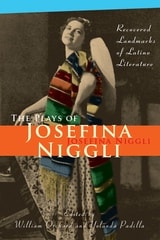
The Plays of Josefina Niggli
Recovered Landmarks of Latino LiteratureJosefina Niggli; Edited by William Orchard and Yolanda Padilla
University of Wisconsin Press, 2007
Although Niggli is perhaps best known for her fiction and folk plays, this anthology recovers her historical dramas, most of which have been long out of print or were never published. These plays are deeply concerned with the aftermath of the 1910 Mexican Revolution, imagining its implications for Mexico, Mexican Americans, and U.S.-Mexico relations. Included are Mexican Silhouettes (1928), Singing Valley (1936), The Cry of Dolores (1936), The Fair God (1936), Soldadera (1938), This is Villa! (1939), and The Ring of General Macias (1943). These works reflect on the making of history and often portray the Revolution through the lens of women’s experiences.
Also included in this volume are an extensive critical introduction to Niggli, a chronology of her life and writings, plus letters and reviews by, to, and about Josefina Niggli. that provide illuminating context for the plays.

The Practical Shakespeare
The Plays in Practice and on the PageColin Butler
Ohio University Press, 2005
A comprehensive treatment of Shakespeare’s plays, The Practical Shakespeare: The Plays in Practice and on the Page illuminates for a general audience how and why the plays work so well.
Noting in detail the practical and physical limitations the Bard faced as he worked out the logistics of his plays, Colin Butler demonstrates how Shakespeare incorporated those limitations and turned them to his advantage: his management of entrances and exits; his characterization techniques; his handling of scenes off-stage; his control of audience responses; his organization of major scenes; and his use of prologues and choruses. A different aspect of the plays is covered in each chapter.
Butler draws most of his examples from mainstream plays, such as Macbeth, Othello, and Much Ado about Nothing. He brings special focus to A Midsummer Night’s Dream, which is treated as one of Shakespeare’s most important plays. Butler supports his major points with quotations, so readers can understand an issue even if they are unfamiliar with the particular play being discussed. The author also cross-references the use of dramatic devices in the plays, increasing the reader’s enjoyment and understanding of Shakespeare’s achievements.
Clear, jargon-free, easy-to-use, and comprehensive, The Practical Shakespeare looks at stagecraft and playwriting as conduits for students, teachers, and general audiences to engage with, understand, and appreciate the genius of Shakespeare.
Theatre for Youth
Twelve Plays with Mature ThemesEdited by Coleman A. Jennings and Gretta Berghammer
University of Texas Press, 1986
Since the beginning of the theatre-for-youth movement in the United States, the majority of plays written for children have been fairy tales. By the 1960s, however, encouraged by changes in social attitudes toward children, playwrights began to respond to a growing tendency on the parts of both parents and teachers to have children face, rather than avoid, the more difficult truths of existence. Thus children's dramatic literature was opened to new subjects, themes and characters previously considered unsuitable for the young audience.
Theatre for Youth seeks to identify and illustrate this trend by examining twelve plays that deal with mature themes: aging, death and dying, conformity, sexuality, divorce, moral culpability. The plays have been chosen not only for their mature content, but also for their professional integrity, the delicacy with which they handle their subject matter, and their respect for their intended audience.
A foreword by Jed H. Davis, an introduction and summary paragraphs for each play by Jennings and Berghammer, and a lengthy annotated list of suggested plays for further reading or viewing make this volume extremely useful both for directors of children's theatre and for teachers.
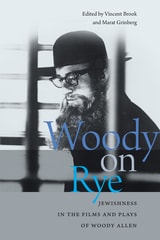
Woody on Rye
Jewishness in the Films and Plays of Woody AllenEdited by Vincent Brook and Marat Grinberg
Brandeis University Press, 2013