Results by title
751 books match the query 'International Relations' and 174 start with t
Taking Books to the World
American Publishers and the Cultural Cold WarAmanda Laugesen
University of Massachusetts Press, 2017
In Taking Books to the World, Amanda Laugesen tells the story of this purposeful enterprise, demonstrating the mix of goodwill and political drive behind its efforts to create modern book industries in developing countries. Examining the project through a clarifying lens, she reveals the ways Franklin's work aligned with cultural currents, exposing the imperial beliefs, charitable hopes, and intellectual reasoning behind this global experiment.

Talking to North Korea
Ending the Nuclear StandoffGlyn Ford
Pluto Press, 2018
This provocative insider’s account blasts apart the myths which paint North Korea as a rogue state run by a mad leader. Informed by extraordinary access to the country's leadership, Glyn Ford investigates the regime from the inside, providing game-changing insights. Acknowledging that North Korea is a deeply flawed and barbaric state, he nonetheless shows that sections of the leadership are desperate to modernize and end their isolation.
With chapters on recent developments including the Trump / Kim summit, Ford supports a dialogue between East and West and provides a road map to avert the looming threat of a war that would threaten the lives of millions.
Tax Reform and the Alliance for Progress
By Raynard M. Sommerfeld
University of Texas Press, 1966
The Alliance for Progress was a program intended to stimulate and aid the economic development of the peoples of Latin America. It proposed that the United States and nineteen Latin American republics pool financial and technical resources to aid the peoples of all these republics in achieving better living standards, greater human dignity, and increased political freedom. Although achievement of these goals depended partially upon the availability of external assistance, it depended even more upon the ability and willingness of the Latin Americans themselves to make numerous far-reaching institutional reforms within their countries.
One of the most important needs was in the area of tax reform, which had been made a quid pro quo for the twenty billion dollars promised by the United States through the program. This limitation upon the use of United States funds made obvious the need for a means of evaluating the adequacy of Latin American tax-reform efforts. In this study Raynard M. Sommerfeld presents an examination of this problem and recommends basic criteria for such evaluation. The study reviews the objectives of the Alliance for Progress, investigates the prevailing tax systems in the Latin American republics, and offers recommendations for tax-reform efforts to harmonize tax policy with the economic development goals stipulated in the Charter of Punta del Este.
The author emphasizes and reiterates the fact that thorough studies of the individual countries are necessary for the planning of truly adequate tax reform. He offers the facts developed in his study as interim tools for United States Alliance for Progress agencies in evaluating Latin American tax-reform efforts, for Latin American planners seeking to guide their countries most easily on the road to economic maturity, and for all scholars, teachers, and students interested in the fields of Latin American economics, taxation, and political history.
Teaching India–Pakistan Relations
Teachers' Attitudes, Practices and AgencyKusha Anand
University College London, 2023
The rivalry between India and Pakistan began with the British withdrawal from the British Indian Empire in 1947 and the sudden partition of India immediately afterward. Seventy-five years later, it remains powerful. While the countries share a long history and considerable socio-cultural affinity, relations since Partition have been marked by three wars, constant border skirmishes, and a deep distrust that permeates both societies. In each, teaching about those relations is weighted with political and cultural significance, and research shows that curricula have been used deliberately to shape the understanding of new generations.
This book explores the attitudes and pedagogical decision-making of teachers in India and Pakistan when teaching India–Pakistan relations. Situating teachers in the context of reformed textbooks and curriculums in both countries that explicitly advocate critical thinking and social cohesion, Kusha Anand explores how far teachers have enacted these changes in their classrooms. What she finds is that while there is progress towards the stated goals, teachers in both countries face pressures from the interests of school and state, and often miss opportunities to engage with multiple perspectives and stereotypes in their classrooms.
Technical Territories
Data, Subjects, and Spaces in Infrastructural AsiaLuke Munn
University of Michigan Press, 2023
Territory is shifting. No longer defined by the dotted line of the border or the national footprint of soil, today’s territories are enacted through data infrastructures. From subsea cables to server halls, these infrastructures underpin new forms of governance, shaping subjects and their everyday lives. Technical Territories moves from masked protestors in Hong Kong to asylum-seekers in Christmas Island and sand miners in Singapore, exploring how these territories are both political and visceral, altering the experience of their inhabitants.
Infrastructures have now become geopolitical, strategic investments that advance national visions, extend influence, and trigger trade wars. Yet at the same time, these technologies also challenge sovereignty as a bounded container, enacting a more distributed and decoupled form of governance. Such “technical territories” construct new zones where subjects are assembled, rights are undermined, labor is coordinated, and capital is extracted. The stable line of the border is replaced by more fluid configurations of power. Luke Munn stages an interdisciplinary intervention over six chapters, drawing upon a wide range of literature from technical documents and activist accounts, and bringing insights from media studies, migration studies, political theory, and cultural and social studies to bear on these new sociotechnical conditions.
Tensions Of Empire
Japan and Southeast Asia in the Colonial and Postcolonial WorldKen’ichi Goto
Ohio University Press, 2003
Beginning with the closing decade of European colonial rule in Southeast Asia and covering the wartime Japanese empire and its postwar disintegration, Tensions of Empire focuses on the Japanese in Southeast Asia, Indonesians in Japan, and the legacy of the war in Southeast Asia. It also examines Japanese perceptions of Southeast Asia and the lingering ambivalence toward Japanese involvement in Asia and toward the war in particular.
Drawing on extensive multilingual archival research and interviews, Ken‘ichi Goto has produced a factually rich and balanced view of this region’s historical events of the last century.
Tensions of Empire features detailed discussions of Portuguese Timor in the 1930s and 1940s, the decolonization of Malaya, and twentieth-century Indonesia. This extended inquiry yields a unique view of the complicated network within and beyond the colonial and imperial relationships between a one-time nonwestern colonial power and an entire region.
Of great interest to students of Japan-Southeast Asia relations and to specialists in the modern history of both Southeast Asia and Japan, Professor Goto’s Tensions of Empire is a fascinating account of Japan’s recent past from the inside.
Terror and Territory
The Spatial Extent of SovereigntyStuart Elden
University of Minnesota Press, 2009
Today's global politics demands a new look at the concept of territory. From so-called deterritorialized terrorist organizations such as al-Qaeda to U.S.-led overthrows of existing regimes in the Middle East, the relationship between territory and sovereignty is under siege. Unfolding an updated understanding of the concept of territory, Stuart Elden shows how the contemporary "war on terror" is part of a widespread challenge to the connection between the state and its territory.
Although the importance of territory has been disputed under globalization, territorial relations have not come to an abrupt end. Rather, Elden argues, the territory/sovereignty relation is being reconfigured. Traditional geopolitical analysis is transformed into a critical device for interrogating hegemonic geopolitics after the Cold War, and is employed in the service of reconsidering discourses of danger that include "failed states," disconnection, and terrorist networks.
Looking anew at the "war on terror"; the development and application of U.S. policy; the construction and demonization of rogue states; events in Lebanon, Somalia, and Pakistan; and the wars continuing in Afghanistan and Iraq, Terror and Territory demonstrates how a critical geographical analysis, informed by political theory and history, can offer an urgently needed perspective on world events.
The Abongo Abroad
Military-Sponsored Travel in Ghana, the United States, and the World, 1959-1992John V. Clune
Vanderbilt University Press, 2017
Merging newly discovered documents from Ghana's armed forces and declassified sources on American military assistance to Africa, this work argues that military-sponsored travel made individual Ghanaians' outlooks on the world more international, just as military assistance planners hoped they would, but the Ghanaian state struggled to turn that new identity into political or economic progress.
The Absolute Weapon Revisited
Nuclear Arms and the Emerging International OrderT. V. Paul, Richard J. Harknett, and James J. Wirtz, Editors
University of Michigan Press, 2000

The Alternate Route
Thomas Graham
Oregon State University Press, 2017
The classic road toward nuclear disarmament appears to be closed for the foreseeable future, but there may be another route. In the last fifty years, well-conceived regional treaties have been developed in Latin America, the South Pacific, Africa, Southeast Asia, and Central Asia. These arrangements have developed for many and varied political and security reasons, but now virtually all of the Southern Hemisphere and important parts of the Northern Hemisphere are legally nuclear-weapon-free. These regional nuclear weapon disarmament treaties are formally respected by the five states recognized under the Non-Proliferation Treaty (NPT) as nuclear weapon states: the United States, the United Kingdom, Russia, France, and China—often referred to collectively as the P-5 states.
Variations of these regional treaties might eventually be negotiated in the Middle East, Northeast Asia, and South Asia, setting aside the P-5 states until the very end of the process. With regional agreements in place around the globe, negotiation among the P-5 states would be all that stands between the world community and the banishment of nuclear weapons, verifiably and effectively worldwide. By the time this point is reached, Russia and the United States might be able to cooperate.
Essential reading for policy advisors, foreign service professionals, and scholars in political science, The Alternate Route examines the possibilities of nuclear-weapon-free zones as a pathway to worldwide nuclear disarmament.
The American Way of Peace
An InterpretationJan S. Prybyla
University of Missouri Press, 2005
The Anti-American Century
Ivan Krastev
Central European University Press, 2007
The Anti-Capitalist Chronicles
David Harvey
Pluto Press, 2020
Amidst waves of economic crises, health crises, class struggle and neo-fascist reaction, few possess the clarity and foresight of world-renowned theorist, David Harvey. Since the publication of his bestselling A Brief History of Neoliberalism, Harvey has been tracking the evolution of the capitalist system as well as tides of radical opposition rising against it. In The Anti-Capitalist Chronicles, Harvey introduces new ways of understanding the crisis of global capitalism and the struggles for a better world.
While accounting for violence and disaster, Harvey also chronicles hope and possibility. By way of conversations about neoliberalism, capitalism, globalization, the environment, technology, social movements and crises like COVID-19, he outlines, with characteristic brilliance, how socialist alternatives are being imagined under very difficult circumstances.
In understanding the economic, political and social dimensions of the crisis, Harvey’s analysis in The Anti-Capitalist Chronicles will be of strategic importance to anyone wanting to both understand and change the world.
The Arc of War
Origins, Escalation, and TransformationJack S. Levy and William R. Thompson
University of Chicago Press, 2011
The Art of Getting More Back in Diplomacy
Negotiation Lessons from North Korea, China, Libya, and the United NationsEric N. Richardson
University of Michigan Press, 2021
In the field of negotiation theory, the Harvard Project’s Getting to Yes and Donald Trump’s The Art of the Deal occupy polar opposition locations on a spectrum considering distributive and integrative negotiation theories. The Art of Getting More Back in Diplomacy offers case studies from international negotiations in which the author participated that can help illustrate the tactics and theories of each type of negotiation and to make students in law, business, and other fields into better negotiators. Among the case studies are lessons drawn from negotiating denuclearization with North Korea, political reconciliation in Libya, human rights improvements in China, Israel-Palestinian peace processes, and UN negotiations over surveillance, privacy, atrocities prevention, LGBTI rights, and other fundamental freedoms. By illustrating these lessons, The Art of Getting More Back in Diplomacy strengthens the tools that students and teachers of negotiations should have in their negotiating toolbox. Perhaps most importantly, Richardson provides concrete examples of how a negotiator is likely to Get More Back for their clients if they deploy these tactics, rather than having them used against the negotiator.
The Battle for the Mind
War and Peace in the Era of Mass CommunicationGary S. Messinger
University of Massachusetts Press, 2011
Most people typically think of armed conflict in physical terms, involving guns and bombs, ships and planes, tanks and missiles. But today, because of mass communication, war and the effort to prevent it are increasingly dependent on non-physical factors—the capacity to persuade combatants and citizens to engage in violence or avoid it, and the packaging of the information on which decision making is based. This book explores the many ways that mass communication has revolutionized international relations, whether the aim is to make war effectively or to prevent it.
Gary Messinger shows that over the last 150 years a succession of breakthroughs in the realm of media has reshaped the making of war and peace. Along with mass newspapers, magazines, books, motion pictures, radio, television, computer software, and telecommunication satellites comes an array of strategies for exploiting these media to control popular beliefs and emotions. Images of war now arrive in many forms and reach billions of people simultaneously. Political and military leaders must react to crowd impulses that sweep around the globe. Nation-states and nongovernmental groups, including terrorists, use mass communication to spread their portrayals of reality.
Drawing on a wide range of media products, from books and articles to films and television programs, as well as his own research in the field of propaganda studies, Messinger offers a fresh and comprehensive overview. He skillfully charts the path that has led us to our current situation and suggests where we might go next.
The Behavioral Origins of War
D. Scott Bennett and Allan C. Stam
University of Michigan Press, 2003
Challenging the view that theories of war are nothing more than competing explanations for observed behavior, this expansive study incorporates variables from multiple theories and thus accounts for war's multiplicity of causes. While individual theories offer partial explanations for international conflict, only a valid set of theories can provide a complete explanation. Bennett and Stam's unconventional yet methodical approach opens the way for cumulative scientific progress in international relations.
D. Scott Bennett is Professor of Political Science at the Pennsylvania State University. Allan C. Stam is Associate Professor in the Government Department at Dartmouth College.
The Borders of Justice
Etienne Balibar
Temple University Press, 2013
International in scope and featuring a diverse group of contributors, The Borders of Justice investigates the complexities of transitional justice that emerge from its “social embeddedness.” This original and provocative collection of essays, which stem from a collective research program on social justice undertaken by the Calcutta Research Group, confronts the concept and practices of justice. The editors and contributors question the relationship between geography, methodology, and justice—how and why justice is meted out differently in different places.
Expanding on Michael Walzer's idea of the “spheres of justice,” the contributors argue that justice is burdened with our notions of social realities and expectations, in addition to the influence of money, law, and government. Chapters provide close readings of Pascal, Plato and Marx, theories on global justice, the relationship between liberalism and multiculturalism, struggles of social injustice, and how and where we draw the borders of justice.
The Burden of the Past
Problems of Historical Perception in Japan-Korea RelationsKan Kimura; Translated by Marie Speed
University of Michigan Press, 2019
Utilizing Japanese and South Korean newspaper databases to review discussion of the two countries’ disputed historical perceptions from the end of World War II to the present, The Burden of the Past provides readers with the historical framework and the major players involved, offering much-needed clarity on such polarizing issues. By seeing behind the public discourse and political rhetoric, this book offers a firmer footing for a discussion and the steps toward resolution.
The CIA in Ecuador
Marc Becker
Duke University Press, 2021
The CIA in Guatemala
The Foreign Policy of InterventionBy Richard H. Immerman
University of Texas Press, 1982
Using documents obtained through the Freedom of Information Act, recently opened archival collections, and interviews with the actual participants, Immerman provides us with a definitive, powerfully written, and tension-packed account of the United States' clandestine operations in Guatemala and their consequences in Latin America today.
The Causes of Post-Mobilization Leadership Change and Continuity
A Comparative Analysis of Post-Color Revolution in Ukraine, Kyrgyzstan, and GeorgiaVasili Rukhadze
University of Michigan Press, 2021
Vasili Rukhadze examines the factors that contributed to post-uprising leadership durability in the Ukraine, Kyrgyzstan, and Georgia in 2004–12, after these countries underwent their so-called “Color Revolutions.” Using structured, focused comparison and process tracing, he argues that the key independent variable influencing post-mobilization leadership durability is ruling coalition size and cohesion. He demonstrates that if the ruling coalitions are large and fragmented, as in the Ukraine and Kyrgyzstan, the coalitions disintegrate, thus facilitating the downfall of the governments. Alternatively, if the ruling coalition is small and cohesive, as in Georgia, the coalition maintains unity, hence helping the government to stay in power.
This study advances the debate on regime changes. By drawing a clear distinction between political leaderships that come to power as a result of popular uprisings and governments that take power through normal democratic processes, military coup, or any other means, the research offers one of the first studies on post-mobilization leadership. Rukhadze helps scholars differentiate between the factors that affect durability of post-uprising leadership from those factors that impact durability of all other political leadership, in turn equipping researchers with new tools to study power politics.
The Challenge of Hegemony
Grand Strategy, Trade, and Domestic PoliticsSteven E. Lobell
University of Michigan Press, 2005
"His conceptually rigorous and tightly reasoned study . . . reminds us that power is never value neutral but organizes commercial systems in liberal or imperial terms."
---Perspectives on Politics
"Lobell's book is tightly written, nicely argued and thoroughly researched to a fault. He seems to delight in historical detail. The complexity of his approach is refreshing."
---International Affairs
"The Challenge of Hegemony is a pleasure to read. It is both theoretically sophisticated and empirically rich."
---International Studies Review
"The Challenge of Hegemony offers a compelling reinterpretation of key historical cases and provides wise guidance as to how the United States should wield its power today."
--Charles A. Kupchan, Council on Foreign Relations
"Lobell demonstrates clearly how the international environment confronting great powers interacts with their domestic political coalitions to produce different grand strategies. Through a masterful sweep of history, Lobell shows us the alternative trajectories before the United States today."
--David A. Lake, University of California, San Diego
The Collision of Political and Legal Time
Foreign Affairs and the Supreme Court's Transformation of Executive AuthorityKimberley L. Fletcher
Temple University Press, 2018
How does the U.S. Supreme Court shape constitutional and political development? In The Collision of Political and Legal Time, Kimberley Fletcher answers this question by analyzing the key role the Court has played in interpreting presidential decision-making in the area of foreign affairs since 1936. She reconsiders the Curtiss-WrightCourt, which instituted a new constitutional order that established plenary powers independent of congressional delegation. Fletcher also reexamines Japanese internment and detainee cases, demonstrating the entrenchment of the new constitutional order and how presidential ascendency becomes institutionalized. Other cases, such as Youngstown, illustrate how the Court, during a time of war, will check Executive power and authority.
The Collision of Political and Legal Time examines these cases and controversies in foreign policymaking through the twentieth and into the twenty-first centuries to show that the Court is not passive or constrained; it does not merely follow politics or the majority coalition. Through her nuanced analysis, Fletcher makes a larger argument about the role of the U.S. Supreme Court as an agent of change, which ultimately transforms power, shapes politics, and redirects history.

The Community of Nuchi Du Takara ("Life Is the Ultimate Treasure") in Postwar Okinawa
Local Subjectivity within and against EmpireMasamichi (Marro) Inoue
University of Michigan Press, 2025
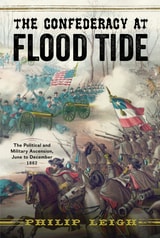
The Confederacy at Flood Tide
The Political and Military Ascension, June to December 1862Philip Leigh
Westholme Publishing, 2016
The first six months of 1862 provided a string of Federal victories in the West at Mill Springs, Fort Donelson, Pea Ridge, Island Number 10, and Shiloh. In May, New Orleans fell, and Union General George McClellan’s army was so close to the Confederate capital of Richmond, Virginia, that the troops could set their watches by the city’s church bells. But then the unexpected happened. In June, Robert E. Lee’s Army of Northern Virginia pushed McClellan’s much larger army back to the James River. In Europe, Confederate diplomats sought international recognition for the Confederate States of America, which was made even more attractive now that a shortage of cotton made the powerful textile interests anxious to end the war. Further tipping the balance, in July, the Confederacy secretly ordered two of the latest ironclad ships from England’s famous Laird Shipyard—the same yard that built the commerce raider Alabama. These steam-powered ironclads would be far superior to anything in the Federal navy.
While the “high tide” of the Confederacy is often identifed as Pickett’s Charge during the Battle of Gettysburg in July 1863, the most opportune time for the Confederacy vanished seven months earlier, coinciding with President Abraham Lincoln’s Emancipation Proclamation on January 1, 1863 and the failure of the secessionist states to be recognized as a sovereign nation. As Philip Leigh explains in his engrossing new book, The Confederacy at Flood Tide: The Political and Military Ascension, June to December 1862, on every battlefront and in the governmental halls of Europe, the Confederate effort reached its furthest extent during the second half of 1862. But with the president’s proclamation, battlefield reverses, Europe's decision to reject Confederate diplomatic overtures, and Britian's decision to halt the sale of the ironclads, the opportunity for Confederate success ended. The Confederacy would recede, and the great battles of 1863 and 1864 only marked the Southerners’ tenacity and stubborn belief in a lost cause.

The Confederate Navy in Europe
Warren F. Spencer
University of Alabama Press, 1983
“A major contribution to Civil War and naval history.” —Journal of Southern History
The Civil War was fought not only on American battlefields but also in the shipyards, diplomatic salons, and ports of Europe. In this sweeping history of the Confederate navy’s operations overseas, Warren Spencer traces the South’s ambitious efforts to build, equip, and deploy a naval force across the Atlantic. Drawing on extensive archival research in the United States, Great Britain, and France, the book reveals how Confederate agents, diplomats, and naval officers pursued international support while attempting to challenge Union power on the seas.
More than a military narrative, this study offers a richly detailed examination of the intersection of naval warfare, diplomacy, and international politics. The author synthesizes scattered research and original documentary evidence to provide a comprehensive account of Confederate naval activity in Europe, illuminating the roles of shipbuilders, foreign governments, intelligence networks, and naval leaders. By engaging both published sources and archival records, the book presents fresh interpretations of controversial episodes and demonstrates how events far from American shores shaped the course of the Civil War.
This volume will appeal to readers of Civil War history, naval history, diplomatic history, and international relations. Scholars, students, and history enthusiasts alike will appreciate its careful research, engaging narrative, and global perspective on a conflict too often viewed solely through a domestic lens. Anyone interested in the maritime dimensions of the Civil War or the Confederacy’s quest for recognition abroad will find this book both enlightening and compelling.

The Contours of America’s Cold War
Matthew Farish
University of Minnesota Press, 2010
Geographic knowledge generated for the Cold War was a form of power, Farish argues, and it was given an urgency in the panels, advisory boards, and study groups established to address the challenges of an atomic world. He investigates how the scales of the city, the continent, the region, the globe, and, by extension, outer space, were brought together as strategic spaces, categories that provided a cartographic orientation for the Cold War and influenced military deployments, diplomacy, espionage, and finance.
Farish analyzes the surprising range of knowledge production involved in the project of claiming and classifying American space. Backed by military and intelligence funding, physicists and policy makers, soldiers and social scientists came together to study and shape the United States and its place in a divided world.
The Cross and the Flag
Papal Diplomacy and John Paul II's Struggle Against the Tyranny of the PossibleJohn Tanyi Nquah Lebui
St. Augustine's Press, 2024
What is papal diplomacy and what role does it play on the larger geopolitical stage? Why does it matter what popes say to a global audience? "As John Tanyi points out, papal diplomacy has followed a trajectory all its own over the years. In today’s globalized world, the Holy See stands out as an important communicator with a widely respected moral voice. It is often said that 'When the Pope speaks, the world listens.' What sets the diplomatic voices of the Holy Father and his envoys apart from all others is that they speak and act for the good of humanity––not just for the sovereign entity they represent, and not just for Catholics. As a former foreign minister of the Holy See, Cardinal Jean Louis Tauran, once described the mission of papal diplomats: 'Our duty is to promote and defend not only the freedom and rights of Catholic communities around the world, but also to promote certain principles without which there is no civilization.'"
The particular example of Pope John Paul II is a groundbreaking example of the critical nature of ecclesiastical diplomacy and why popes as diplomats are playing at a greater level than other statesmen. As George Weigel notes, popes must combat all the problems of the world, but also importantly what he calls the 'tyranny of the possible'––that is, in all things compromise and complacency will play a part. It is the position occupied by one man, the heir of St. Peter, to know when to defy the entirety of global politics (and sometimes what seems like common sense) to say 'yes' and 'no' definitively in light of unchanging truths.
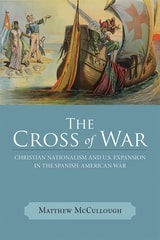
The Cross of War
Christian Nationalism and U.S. Expansion in the Spanish-American WarMatthew McCullough
University of Wisconsin Press, 2014

The Cuban Counterrevolution
Jesús Arboleya
Ohio University Press, 2000
For forty years the Cuban Revolution has been at the forefront of American public opinion, yet few are knowledgeable about the history of its enemies and the responsibility of the U.S. government in organizing and sustaining the Cuban counterrevolution. Available in English for the first time, this outstanding study by Cuban historian and former diplomat Jesús Arboleya traces the evolution of the counterrevolutionary movement from its beginnings before 1959, to its transformation into the Cuban-American groups that today dominate U.S. policy toward Cuba. Arboleya also analyzes the role played by Cuban immigrants to the U.S. and the perspectives for improvement in relations between the two nations as a result of the generational and social changes that have been occurring in the Cuban-American community.
The Cultures of Globalization
Fredric Jameson and Masao Miyoshi, eds.
Duke University Press, 1998
Discussing overlapping themes of transnational consequence, the contributors to this volume describe how the global character of technology, communication networks, consumer culture, intellectual discourse, the arts, and mass entertainment have all been affected by recent worldwide trends. Appropriate to such diversity of material, the authors approach their topics from a variety of theoretical perspectives, including those of linguistics, sociology, economics, anthropology, and the law. Essays examine such topics as free trade, capitalism, the North and South, Eurocentrism, language migration, art and cinema, social fragmentation, sovereignty and nationhood, higher education, environmental justice, wealth and poverty, transnational corporations, and global culture. Bridging the spheres of economic, political, and cultural inquiry, The Cultures of Globalization offers crucial insights into many of the most significant changes occurring in today’s world.
Contributors. Noam Chomsky, Ioan Davies, Manthia Diawara, Enrique Dussel, David Harvey, Sherif Hetata, Fredric Jameson, Geeta Kapur, Liu Kang, Joan Martinez-Alier, Masao Miyoshi, Walter D. Mignolo, Alberto Moreiras, Paik Nak-chung, Leslie Sklair, Subramani, Barbara Trent
The Dark Sahara
America's War on Terror in AfricaJeremy Keenan
Pluto Press, 2009
The US is keen to build a substantial military presence in Africa, citing the need to combat the growth of Al-Qaeda in Somalia, Algeria and other countries on the continent. This book reveals the secret US agenda behind the 'war on terror' in Africa and the shocking methods used to perpetuate the myth that the region is a hot-bed of Islamic terrorism.
Africa expert Jeremy Keenan points to overwhelming evidence suggesting that, from 2003, the Bush administration and Algerian government were responsible for hostage takings blamed on Islamic militants. This created a permissive public attitude, allowing the US to establish military bases in the region and pursue multiple imperial objectives in the name of security.
The shocking revelations in this book seriously undermine the mainstream view of Africa as a legitimate 'second front' in the 'war on terror'.
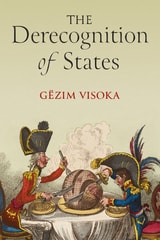
The Derecognition of States
Gëzim Visoka
University of Michigan Press, 2024
Gëzim Visoka argues that state derecognition is a highly controversial and unstable practice that has less to do with the unfulfillment of the conditions of statehood by the claimant than with the advancement of the self-interest of the former base state and derecognizing state. The derecognition of states is not a rule; rather, it is an exception in international diplomacy, driven by political expediency and is incompatible with original rationales for granting recognition. Yet, the derecognition of states is far more important than previously recognized in shaping the reversal dynamics of secession and state creation and in influencing regional peace, geopolitical rivalries, and the international order. By analyzing the withdrawal of recognition, the book offers a window into the reversal politics of unbecoming a sovereign state and how the arbitrary beginning and the end of diplomatic relations between states take place.
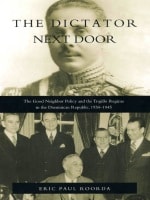
The Dictator Next Door
The Good Neighbor Policy and the Trujillo Regime in the Dominican Republic, 1930-1945Eric Paul Roorda
Duke University Press, 1998
Although Trujillo’s dictatorship was enabled by prior U.S. occupation of the Dominican Republic, the brutality of his regime and the reliance on violence and vanity to sustain his rule was an untenable offense to many in the U.S. diplomatic community, as well as to certain legislators, journalists, and bankers. Many U.S. military officers and congressmen, however—impressed by the civil order and extensive infrastructure the dictator established—comprised an increasingly powerful Dominican lobby. What emerges is a picture of Trujillo at the center of a crowded stage of international actors and a U.S. government that, despite events such as Trujillo’s 1937 massacre of 12,000 Haitians, was determined to foster alliances with any government that would oppose its enemies as the world moved toward war.
Using previously untapped records, privately held papers, and unpublished photographs, Roorda demonstrates how caution, confusion, and conflicting goals marked U.S. relations with Trujillo and set the tone for the ambivalent Cold War relations that prevailed until Trujillo’s assassination in 1961. The Dictator Next Door will interest Latin Americanists, historians, political scientists, and specialists in international relations and diplomacy.
The Diffusion of War
A Study of Opportunity and WillingnessRandolph M. Siverson and Harvey Starr
University of Michigan Press, 1991
The Diplomacy of Involvement
American Economic Expansion across the Pacific, 1784-1900David M. Pletcher
University of Missouri Press, 2001
Like its predecessor, this important new work is focused on the connection between trade and investment on the one hand and U.S. foreign policy on the other. David Pletcher describes the trade of the United States with the Far East, the islands of the Pacific, and the northwest coast of North America from 1784 (the year of the first American trading expedition to China) to 1844 (the year of the first trade treaty with China, followed immediately by the U.S. acquisition of Oregon and California). He then traces the growth of trade and investment in Alaska, Hawaii, and the South Pacific from 1844 to 1890 and proceeds to do the same for China, Japan, and Korea. In the ensuing chapters, Pletcher covers the 1890s, including the annexation of Hawaii, the Sino-Japanese War, the acquisition of the Philippines, and the Open Door policy in China.
He concludes that the American expansion across the Pacific and into the Far East was not a deliberate, consistent drive for economic hegemony but a halting, experimental, improvised movement, carried out against determined opposition and indifference and dotted with setbacks and failures. Providing his own judgments about the wisdom and effectiveness of America's new endeavors, Pletcher summarizes the problems and handicaps involved, demonstrating that errors of the twentieth century were at least partly the result of poor preparation in the 1880s and 1890s.
Touching on every place where Americans undertook significant economic activity, The Diplomacy of Involvement will be an important aid for seasoned scholars, as well as an excellent introduction for the novice.
The Dismantling of the Good Neighbor Policy
By Bryce Wood
University of Texas Press, 1985
The Good Neighbor Policy was unique: a great power obligated itself not to use force in its dealings with twenty smaller powers and not to interfere in their domestic politics. It was a policy that lasted, with some perturbations, for twenty years: instituted by President Roosevelt in 1933 and carried out effectively from 1933 to 1943 by word and action, maintained during the Second World War largely as a result of British concern for continuance of Argentine beef exports, codified in the Charter of the Organization of American States in 1948, and reasserted by Truman and Acheson in 1950–51, it was covertly repudiated in Guatemala in 1954 by Eisenhower and the Dulles brothers, and not so secretly by Kennedy in the disastrous Bay of Pigs invasion of 1961. Openly shattered in the Dominican Republic by Johnson in 1965, it has since been completely abandoned in favor of the usual relationships between large and small powers.
Working with documents from the Public Records Office in London and the National Archives, with recently released materials from the U.S. Department of State, and with secondary sources, Bryce Wood describes the temptations laid before the leaders of one powerful state by its occasionally recalcitrant neighbors, and the ways of reacting that were found. Having told half the story in his The Making of the Good Neighbor Policy, Wood now concludes it in the present volume. One of the chief casualties is shown to be the Organization of American States, which since 1954 has found itself badly crippled in its work to promote harmony and continued cooperation among the member states.

The Distinction of Peace
A Social Analysis of PeacebuildingCatherine Goetze
University of Michigan Press, 2017
Goetze describes how the peacebuilding field came into being, how it defines who belongs to it and who does not, and what kind of group culture it has generated. Using an innovative methodology, she investigates the motivations of individuals who become peacebuilders, their professional trajectories and networks, and the “good peacebuilder” as an ideal. For many, working in peacebuilding in various ways—as an aid worker on the ground, as a lawyer at the United Nations, or as an academic in a think tank—has become not merely a livelihood, but also a form of participation in world politics. As a field, peacebuilding has developed techniques for incorporating and training new members, yet its internal politics also create the conditions of exclusion that often result in practical failures of the peacebuilding enterprise.
By providing a critical account of the social mechanisms that make up the peacebuilding field, Goetze offers deep insights into the workings of Western domination and global inequalities.

The Dynamics of Deterrence
Frank C. Zagare
University of Chicago Press, 1987
The Dynamics of Deterrence is the first comprehensive treatment of deterrence theory since the mid-1960s. Frank C. Zagare introduces a new theoretical framework for deterrence that is rigorous, consistent, and illuminating. By placing the deterrence relationship in a "theory of moves" framework, Zagare is able to remedy the defects of other models. His approach is illustrated by and applied to a number of complex deterrence situations: the Berlin crisis of 1948, the Middle East crises of 1967 and 1973, and The Falkland/Malvinas crisis of 1980. He also examines the strategic relationship between the United States and the Soviet Union from 1945 to the present.
Zagare studies the dynamics of both mutual and unilateral deterrence games in nuclear and non-nuclear situations, and the impact of credibility, capability, and power asymmetries on deterrence stability. He shows that his theory is applicable for analyzing deterrence situations between allies as well as between hostile states. One of the additional strengths of his model, however, is its general usefulness for other levels and settings, such as deterrence games played by husband and wife, parent and child, employer and employee, and the state and its citizens. With its lucid prose and illustrative examples, The Dynamics of Deterrence will be of interest to a wide audience in international relations, peace studies, and political science.

The Dynamics of Enduring Rivalries
Edited by Paul F. Diehl
University of Illinois Press, 1998
The Economics of Killing
How the West Fuels War and Poverty in the Developing WorldVijay Mehta
Pluto Press, 2012
Globalisation has created an interconnected world, but has not diminished violence, militarism and inequality. The Economics of Killing describes how the power of global elites, entrenched under globalisation, has created a deadly cycle of violence.
In this groundbreaking work, Vijay Mehta shows how attempts at peaceful national development are routinely blocked by Western powers. He locates the 2008 financial crisis in US attempts to block China's model of development. He shows how Europe and the US conspire with regional dictators to prevent countries from developing advanced industries, and how this system has fed terrorism.
Mehta argues that a different world is possible, based on policies of disarmament, demilitarisation and sustainable development. This original and thought-provoking book will be of great interest to anyone concerned about the consequences of endless war fuelled by the West.

The Education of an Anti-Imperialist
Robert La Follette and U.S. ExpansionRichard Drake
University of Wisconsin Press, 2013
“An excellent book. . . . As Drake fully documents, La Follette's warnings about [World War I] profiteers and the lust for power were fully justified. Then as now, the American people were lied to by the government and media and manipulated into the stink and blood of war."—Mark Taylor, The Daily Call
“Scholars will . . . value the insights into La Follette's foreign policy education.”—The Historian
The Effects of U.S. Trade Protection and Promotion Policies
Edited by Robert C. Feenstra
University of Chicago Press, 1997
The volume concludes that some policies can act to both protect imports and promote exports, that the threat of protectionist policies can often have effects that are as pronounced as their implementation, and that regulatory policy has as great an impact on trade and investment patterns as does trade policy itself. It will be of crucial interest to international trade economists, policy specialists, and political scientists.
The Empire of Civilization
The Evolution of an Imperial IdeaBrett Bowden
University of Chicago Press, 2009
The term “civilization” comes with considerable baggage, dichotomizing people, cultures, and histories as “civilized”—or not. While the idea of civilization has been deployed throughout history to justify all manner of interventions and sociopolitical engineering, few scholars have stopped to consider what the concept actually means. Here, Brett Bowden examines how the idea of civilization has informed our thinking about international relations over the course of ten centuries.
From the Crusades to the colonial era to the global war on terror, this sweeping volume exposes “civilization” as a stage-managed account of history that legitimizes imperialism, uniformity, and conformity to Western standards, culminating in a liberal-democratic global order. Along the way, Bowden explores the variety of confrontations and conquests—as well as those peoples and places excluded or swept aside—undertaken in the name of civilization. Concluding that the “West and the rest” have more commonalities than differences,this provocative and engaging bookultimately points the way toward an authentic intercivilizational dialogue that emphasizes cooperation over clashes.
The European Radical Left
Movements and Parties since the 1960sGiorgos Charalambous
Pluto Press, 2021
Is today’s left really new? How has the European radical left evolved?
Giorgos Charalambous answers these questions by looking at three moments of rapid political change - the late 1960s to late 1970s; the turn of the millennium; and post-2008. He challenges the conventional understanding of a ‘new left’, drawing out continuities with earlier movements and parties.
Charalambous examines the ‘Long ‘68’, symbolised by the May uprisings in France, which saw the rise of new left forces and the widespread criticism by younger radical activists of traditional communist and socialist parties. He puts this side by side with the turn of the millennium when the Global Justice Movement rose to prominence and changed the face of the international left, and also the period after the financial crash of 2008 and the rise of anti-austerity politics which initiated the most recent wave of new left parties such as Podemos in Spain and Syriza in Greece.
With a unique ‘two-level’ perspective, Charalambous approaches the left through both social movements and party politics, looking at identities, rhetoric and organization, and bringing a fresh new approach to radical history, as well as assessing challenges for both activists and scholars.
The European Union and the Rise of Regionalist Parties
Seth K. Jolly
University of Michigan Press, 2015
The European Union
A Critical GuideSteven P. McGiffen
Pluto Press, 2006
This revised and updated edition offers a well-illustrated analysis of each of the EU¹s major policy areas, and covers arguments both for and against the EU. McGiffen explores subjects including enlargement, internal and external security, the Euro, trade, the environment, employment, transport and regional policy. He explains how and why the debate about membership is frequently and falsely presented as if it were a conflict between 'nationalism' and Œinternationalism', and argues instead that the EU is merely one of a number of possible solutions to the the economic and political problems facing Europe.
Published in association with Spectre.
Steve McGiffen is a writer, author and consultant. Until recently he worked for the United Left Group in the European Parliament and the Socialist Party of the Netherlands. He is editor of Spectre, a radical left website which can be read at www.spectrezine.org, His previous books include Biotechnology (Pluto Press, 2005).
The European Union
From Jean Monnet to the EuroDean Kotlowski
Ohio University Press, 2000
This collection of essays, drawn from the lectures of the 1999 Baker Conference at Ohio University, explores Monnet's vision of an integrated Europe, its gradual implementation, and the social, economic, and international consequences. The scholarship focuses upon Monnet's life, personality, and legacy, the development of social policy within the European Union (EU), the economic and national security implications of the EU, and the continuation of an American presence in Europe through the North Atlantic Treaty Organization.
This significant collection fuses biography with comparative political economy and policy studies to help political scientists, sociologists, economists, international lawyers, and historians on both sides of the Atlantic understand important aspects of Europe's post–1945 development.
The Fall of the US Empire
Global Fault-Lines and the Shifting Imperial OrderVassilis K. Fouskas and Bulent Gokay
Pluto Press, 2012
Whither the US empire? Despite Washington's military supremacy, its economic foundations have been weakening since the Vietnam war – accelerated by the great recession and credit-rating downgrade – and its global authority dented by the quagmires in Iraq and Afghanistan.
In this accessible, punchy text, Vassilis K. Fouskas and Bülent Gökay intervene in the debates that surround the US's status as an Empire. They survey the arguments amongst Marxist and critical scholars, from Immanuel Wallerstein and others who argue that the US is in decline, to those who maintain that it remains a robust superpower. By explaining how America's neo-imperial system of governance has been working since WWII, Fouskas and Gökay link the US's domestic and foreign vulnerabilities.
The Fall of the US Empire argues that the time has come to understand the US empire not by its power but by its systemic vulnerabilities of financialisation, resource depletion and environmental degradation. Its informed and accessible style will have wide appeal to students looking for an introduction to these issues.