Results by title
264 books match the query 'Introduction' and 39 start with t
That Which Is Just in the Church
An Introduction to Canon Law: Volume 1Carlos José Errázuriz
St. Augustine's Press, 2021
Errázuriz presents more than the current Code of Canon Law. He instills a realistic perspective of right and law in the Church, and in so doing fills a massive gap in English scholarship. No introduction to canon law available in English rivals Errázuriz's description of justice in the Church and its relationship with communion and sacramentality.
Volume I is comprised of the first three chapters of the original, Corso fondamentale sul diritto nella Chiesa (in two volumes, Giuffrè: Milan, 2009 and 2017): "Rights, Justice and Law in the Church," "Canon Law in History," and "The Configuration of Rights and Law in the Church."
The Academic Foundations of Interpreting Studies
An Introduction to Its TheoriesCynthia B. Roy
Gallaudet University Press, 2018
As sign language interpreting has emerged and evolved in the last 20 years as an academic field of study, the scope of learning has broadened to include fields beyond the language and culture of deaf people. This text surveys six disciplines that have informed the study of sign language interpreting: history, translation, linguistics, sociology, social psychology, and cognitive psychology, along with their major ideas, principal scholars, and ways of viewing human interaction. Each chapter includes clear learning goals, definitions, discussion questions, and images to aid understanding. The Academic Foundations of Interpreting Studies is required reading for upper-level undergraduate or first-year graduate students in interpreting, Deaf studies, and sign language programs.
The Apostle Paul and His Letters
An IntroductionJames B. Prothro
Catholic University of America Press, 2022
The Bamboo Grove
An Introduction to SijoRichard Rutt
University of Michigan Press, 1998
The popularity of the sijo in Korea--writers range from royalty to common citizens--is always a challenge for the translator, who must often inhabit widely differing backgrounds to completely understand a poem's subtle nuances. Richard Rutt's translations, considered to be some of the best available in English, remain true to the unique structure of the original Korean lyric.
The Bamboo Grove will interest not only poets and students of poetry, but scholars of Korean culture curious to view history through this important and significant form of verse.
The white snow has left the valleys where the clouds are lowering,
Is it true that somewhere the plum trees have happily blossomed?
I stand here alone in the dusk and do not know where to go.
YI SAEK (1328-1396)
Richard Rutt is also the editor and translator of the book Virtuous Women: Three Classic Korean Novels and, most recently, The Zhou Yi: A New Translation with Commentary of the Book of Changes. David R. McCann is Korea Foundation Professor of Korean Literature and Professor of East Asian Languages and Civilizations, Harvard University.
The Deepest Human Life
An Introduction to Philosophy for EveryoneScott Samuelson
University of Chicago Press, 2014
Sometimes it seems like you need a PhD just to open a book of philosophy. We leave philosophical matters to the philosophers in the same way that we leave science to scientists. Scott Samuelson thinks this is tragic, for our lives as well as for philosophy. In The Deepest Human Life he takes philosophy back from the specialists and restores it to its proper place at the center of our humanity, rediscovering it as our most profound effort toward understanding, as a way of life that anyone can live. Exploring the works of some of history’s most important thinkers in the context of the everyday struggles of his students, he guides us through the most vexing quandaries of our existence—and shows just how enriching the examined life can be.
Samuelson begins at the beginning: with Socrates, working his most famous assertion—that wisdom is knowing that one knows nothing—into a method, a way of approaching our greatest mysteries. From there he springboards into a rich history of philosophy and the ways its journey is encoded in our own quests for meaning. He ruminates on Epicurus against the sonic backdrop of crickets and restaurant goers in Iowa City. He follows the Stoics into the cell where James Stockdale spent seven years as a prisoner of war. He spins with al-Ghazali first in doubt, then in the ecstasy of the divine. And he gets the philosophy education of his life when one of his students, who authorized a risky surgery for her son that inadvertently led to his death, asks with tears in her eyes if Kant was right, if it really is the motive that matters and not the consequences. Through heartbreaking stories, humanizing biographies, accessible theory, and evocative interludes like “On Wine and Bicycles” or “On Zombies and Superheroes ,” he invests philosophy with the personal and vice versa. The result is a book that is at once a primer and a reassurance—that the most important questions endure, coming to life in each of us.
The Fragments of Parmenides
A Critical Text With Introduction and Translation, the Ancient Testimonia and a CommentaryA. H, Coxon
Parmenides Publishing, 2009
With a New Preface by Malcolm Schofield
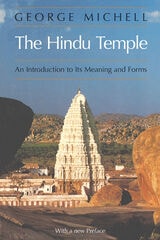
The Hindu Temple
An Introduction to Its Meaning and FormsGeorge Michell
University of Chicago Press, 1988
Michell's discussion of the meaning and forms of the temple in Hindu society encompasses the awe-inspiring rock-cut temples at Ellora and Elephanta, the soaring superstructures and extraordinary sexual exhibitionism of the sculptures at Khajuraho, and the colossal mortuary temple of Angkor Vat, as well as the tiny iconic shrines that many Hindus wear around their necks and the simple shrines found under trees or near ponds.
The Hunters or the Hunted?
An Introduction to African Cave TaphonomyC. K. Brain
University of Chicago Press, 1981
The Language of Genetics
An IntroductionDenis R. Alexander
Templeton Press, 2011
The Language of Genetics: An Introduction is the seventh title published in the Templeton Science and Religion Series, in which scientists from a wide range of fields distill their experience and knowledge into brief tours of their respective specialties. In this volume, Dr. Denis R. Alexander offers readers a basic toolkit of information, explanations, and ideas that can help us grasp something of the fascination and the challenge of the language of genetics.
Alexander surveys the big picture, covering such topics as the birth of the field; DNA: what it is, how it works, and how it was discovered; our genetic history; the role of genes in diseases, epigenetics, and genetic engineering. The book assumes the reader has little scientific background, least of all in genetics, and approaches these issues in a very accessible way, free of specialized or overly technical jargon. In the last chapter, Dr. Alexander explores some of the big questions raised by genetics: what are its implications for notions of human value and uniqueness? Is evolution consistent with religious belief? If we believe in a God of love, then how come the evolutionary process, utterly dependent upon the language of genetics, is so wasteful and involves so much pain and suffering? How far should we go in manipulating the human genome? Does genetics subvert the idea that life has some ultimate meaning and purpose?
Genetics is a rapidly advancing field; it seems new discoveries make headlines every other week. The Language of Genetics is intended to give the general reader the knowledge he or she needs to assess and understand the next big story
in genetics.
The Life of Texts
An Introduction to Literary StudiesKiene Brillenburg Wurth
Amsterdam University Press, 2019
The Life of Texts is designed around particular issues rather than the history of the discipline as such. Each chapter concentrates on a different aspect of 'the life of texts' and introduces the key debates and concepts relevant to its study. The issues discussed range from aesthetics and narrative to intertextuality and intermediality, from reading practices to hermeneutics and semiotics, popular culture to literary canonisation, postcolonial criticism to cultural memory. Key concepts and schools in the field have been highlighted in the text and then collected in a glossary for ease of reference. All chapters are richly illustrated with examples from different language areas.
The Light of Christ
An Introduction to CatholicismThomas Joseph White, OP
Catholic University of America Press, 2017
At the same time, The Light of Christ also addresses topics such as evolution, the modern historical study of Jesus and the Bible, and objections to Catholic moral teaching. Touching on the concerns of contemporary readers, Fr. White examines questions such as whether Christianity is compatible with the findings of the modern sciences, do historical Jesus studies disrupt or confirm the teaching of the faith, and does history confirm the antiquity of Catholic claims.
This book serves as an excellent introduction for young professionals with no specialized background in theology who are interested in learning more about Catholicism, or as an introduction to Catholic theology. It will also serve as a helpful text for theology courses in a university context.
As Fr. White states in the book’s introduction: “This is a book that offers itself as a companion. I do not presume to argue the reader into the truths of the Catholic faith, though I will make arguments. My goal is to make explicit in a few broad strokes the shape of Catholicism. I hope to outline its inherent intelligibility or form as a mystery that is at once visible and invisible, ancient and contemporary, mystical and reasonable.”

The Molds and Man
An Introduction to the FungiClyde M. Christensen
University of Minnesota Press, 1965
The Molds and Man was first published in 1965. Minnesota Archive Editions uses digital technology to make long-unavailable books once again accessible, and are published unaltered from the original University of Minnesota Press editions.
This highly readable volume on a little-known but important subject has been widely used as a text and reference book by the student as well as the interested layman.
The New Science of Politics
An IntroductionEric Voegelin
University of Chicago Press, 1987
What Eric Voegelin attempts in The New Science of Politics is nothing less ambitious than a complete theory of humanity, society, and history. To build his theory, Voegelin draws on a breathtaking range of subjects from throughout history, including the Mongol Orders of Submission, the Behistun Inscription, and a controversy over an alter to the goddess Victoria in the Roman Forum. Addressing the access to truth afforded by myth, revelation, and philosophy, Voegelin then carefully contrasts each with gnosticism. The resulting book is a heady exploration of the development of European politics through the Western tradition and the ongoing importance of the inner quest for transcendent reality. =
The New Science of Politics
An IntroductionEric Voegelin
University of Chicago Press, 1987
"Thirty-five years ago few could have predicted that The New Science of Politics would be a best-seller by political theory standards. Compressed within the Draconian economy of the six Walgreen lectures is a complete theory of man, society, and history, presented at the most profound and intellectual level. . . . Voegelin's [work] stands out in bold relief from much of what has passed under the name of political science in recent decades. . . . The New Science is aptly titled, for Voegelin makes clear at the outset that a 'return to the specific content' of premodern political theory is out of the question. . . . The subtitle of the book, An Introduction, clearly indicates that The New Science of Politics is an invitation to join the search for the recovery of our full humanity."—From the new Foreword by Dante Germino
"This book must be considered one of the most enlightening essays on the character of European politics that has appeared in half a century. . . . This is a book powerful and vivid enough to make agreement or disagreement with even its main thesis relatively unimportant."—Times Literary Supplement
"Voegelin . . . is one of the most distinguished interpreters to Americans of the non-liberal streams of European thought. . . . He brings a remarkable breadth of knowledge, and a historical imagination that ranges frequently into brilliant insights and generalizations."—Francis G. Wilson, American Political Science Review
"This book is beautifully constructed . . . his erudition constantly brings a startling illumination."—Martin Wright, International Affairs
"A ledestar to thinking men who seek a restoration of political science on the classic and Christian basis . . . a significant accomplishment in the retheorization of our age."—Anthony Harrigan, Christian Century
The Philosophical Vision of John Duns Scotus
An IntroductionMary Beth Ingham
Catholic University of America Press, 2004
The Philosophy of Movement
An IntroductionThomas Nail
University of Minnesota Press, 2024
An influential thinker distills years of work on the philosophy of movement into one accessible account
Why are city dwellers worldwide walking on average ten percent faster than they were a decade ago? Why are newcomer immigrant groups so often maligned when migration has always constituted civilization? To analyze and understand the depth of the reasons, Thomas Nail suggests that it serves us well to turn to a philosophy of movement. Synthesizing and extending many years of his influential work, The Philosophy of Movement is a comprehensive argument for how motion is the primary force in human and natural history.
Nail critiques the bias toward stasis at the core of Western thought, asking: what would a philosophy that began with the primacy of movement look like? Interrogating the consequences of movement throughout history and in daily life in the twenty-first century, he draws connections and traces patterns between scales of reality, periods of history, and fields of knowledge. In our age of rapid movements shaped by accelerating climate change and ensuing mass global migration, as well as ubiquitous digital media, Nail provides a contemporary philosophy that helps us understand how we got here and how to grapple with these interlocking challenges.
With a foreword by philosopher Daniel W. Smith, The Philosophy of Movement: An Introduction is a must-read for scholars and students not only of philosophy but also history, anthropology, science and technology studies, mobility studies, and other fields across the humanities and social sciences.

The Political Economy of Global Communication
An IntroductionPeter Wilkin
Pluto Press, 2001
To what extent do developments in global communication enhance or undermine autonomy? As the world's media companies continue to merge, we are moving towards an ever more commercially driven system of global information. Wilkin argues that private ownership provides an increasingly powerful obstacle to human autonomy, and that the neo-liberal institutional and policy framework – now a global tendency – raises major problems for the attainment of human security. At the same time it has provided the ideological justification for the extension of private power into ever wider areas of public life. Changes in global communication reflect wider tendencies to enhance the power of global elites at the expense of working people and the author illustrates how and why these changes have taken place and the forms of opposition that have arisen in response to them.
The Politics of India under Modi
An Introduction to India’s Democracy, Economy, and Foreign PolicyVikash Yadav and Jason A. Kirk
Lever Press, 2023
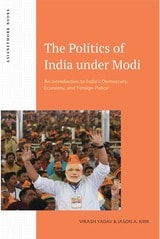
Since the right-wing, Hindu-nationalist government of Narendra Modi’s Bharatiya Janata Party (BJP) came to power at the national level in 2014, and with its consolidation of power in the 2019 general election, India has witnessed a significant realignment of its national politics and a shift toward the right of the political spectrum. The Politics of India under Modi provides a detailed overview of India’s political trends, economic prospects, and international relations in the twenty-first century.
This book is designed as a supplement and update for existing syllabi that trace India’s political economy from the birth of the republic to the quest for economic liberalization and great power status. Undergraduates and scholars interested in India’s foreign policy and political reform will find value in this timely book.
“The subject of this book is extremely compelling and important, as well as timely. BJP rule and the Modi regime, it is now clear, represent some critical turning points in Indian politics, which have yet to be analyzed in depth academically by experts. I see this book as a key first step in this process.”
-Rina Verma Williams, School of Public and International Affairs at the University of Cincinnati

The Power of Data
An Introduction to Using Local, State, and National Data to Support School Library ProgramsSandra D. Andrews
American Library Association, 2012
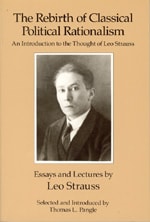
The Rebirth of Classical Political Rationalism
An Introduction to the Thought of Leo StraussLeo Strauss
University of Chicago Press, 1989
"[These essays] display the incomparable insight and remarkable range of knowledge that set Strauss's works apart from any other twentieth-century philosopher's."—Charles R. Kesler, National Review
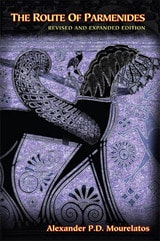
The Route of Parmenides
A new revised edition with a new introduction, three additional essays and a previously unpublished paper by Gregory VlastosAlexander P. D. Mourelatos
Parmenides Publishing, 2008
The SBL Commentary on the Septuagint
An IntroductionDirk Büchner
SBL Press, 2017
Explore the groundwork for a new commentary series from SBL Press
This book contains verse by verse commentary on selections from the Greek text of the Hebrew Bible known as the Septuagint. Each chapter is from a different bible book, for which there will eventually be a full commentary published in the Society of Biblical Literature Commentary on the Septuagint. The commentary series focuses on the actual process of translation, so its authors try to describe and explain the kinds of decisions the ancient Alexandrian translators made about how to render Hebrew into Greek.
Features
- Translations from and commentary on Genesis, Exodus, Leviticus, Numbers, Esther, Job, and Psalms Contributions from eight experts on the Septuagint
- Guidelines and procedures used in the production of the translations in the series
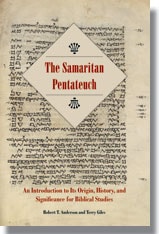
The Samaritan Pentateuch
An Introduction to Its Origin, History, and Significance for Biblical StudiRobert T. Anderson
SBL Press, 2012
The Science of Passionate Interests
An Introduction to Gabriel Tarde's Economic AnthropologyBruno Latour and Vincent Antonin Lépinay
Prickly Paradigm Press, 2009
How can economics become genuinely quantitative? This is the question that French sociologist Gabriel Tarde tackled at the end of his career, and in this pamphlet, Bruno Latour and Vincent Antonin Lépinay offer a lively introduction to the work of the forgotten genius of nineteenth-century social thought. Tarde’s solution was in total contradiction to the dominant views of his time: to quantify the connections between people and goods, you need to grasp “passionate interests.” In Tarde’s view, capitalism is not a system of cold calculations—rather it is a constant amplification in the intensity and reach of passions. In a stunning anticipation of contemporary economic anthropology, Tarde’s work defines an alternative path beyond the two illusions responsible for so much modern misery: the adepts of the Invisible Hand and the devotees of the Visible Hand will learn how to escape the sterility of their fight and recognize the originality of a thinker for whom everything is intersubjective, hence quantifiable.
At a time when the regulation of financial markets is the subject of heated debate, Latour and Lépinay provide a valuable historical perspective on the fundamental nature of capitalism.
The Secret of the Three Cities
An Introduction to Hindu Sakta TantrismDouglas Renfrew Brooks
University of Chicago Press, 1990
The Tallgrass Prairie
An IntroductionCindy Crosby
Northwestern University Press, 2017
Like a walking tour with a literate friend and expert, Cindy Crosby's Tallgrass Prairie prepares travelers and armchair travelers for an adventure in the tallgrass. Crosby's engaging gateway assumes no prior knowledge of tallgrass landscapes, and she acquaints readers with the native plants they’ll discover there. She demystifies botanic plant names and offers engaging mnemonic tips for mastering Latin names with verve and confidence. Visitors to the prairie will learn to identify native plants using the five senses to discover what makes each plant unique or memorable. In the summer, for example, the unusual square stem of cup plant, Silphium perfoliatum, sets it apart from its neighbors. And its distinctive leaf cups water after the rain.
A gifted raconteur, Crosby tells stories about how humankind has adopted the prairie as a grocery, an apothecary, and even as a shop for love charms. Rounding out this exceptional introduction are suggestions for experiencing the American prairie, including journaling techniques and sensory experiences, tips for preparing for a hike in tallgrass landscapes, ways to integrate native prairie plants into home landscapes (without upsetting the neighbors), and a wealth of resources for further exploration.
An instant classic in the tradition of American naturalist writing, The Tallgrass Prairie will delight not only scholars and policy makers, but guests to tallgrass prairie preserves, outdoors enthusiasts and gardeners, and readers interested in American ecosystems and native plants.
The Trinity
An Introduction to Catholic Doctrine on the Triune GodGilles Emery
Catholic University of America Press, 2011
Theodor W. Adorno
An IntroductionGerhard Schweppenhäuser
Duke University Press, 2009
After providing a brief overview of Adorno’s life, Schweppenhäuser turns to the theorist’s core philosophical concepts, including post-Kantian critique, determinate negation, and the primacy of the object, as well as his view of the Enlightenment as a code for world domination, his diagnosis of modern mass culture as a program of social control, and his understanding of modernist aesthetics as a challenge to conceive an alternative politics. Along the way, Schweppenhäuser illuminates the works widely considered Adorno’s most important achievements: Minima Moralia, Dialectic of Enlightenment (co-authored with Horkheimer), and Negative Dialectics. Adorno wrote much of the first two of these during his years in California (1938–49), where he lived near Arnold Schoenberg and Thomas Mann, whom he assisted with the musical aesthetics at the center of Mann’s novel Doctor Faustus.
Theory and Reality
An Introduction to the Philosophy of SciencePeter Godfrey-Smith
University of Chicago Press, 2003
Intended for undergraduates and general readers with no prior background in philosophy, Theory and Reality covers logical positivism; the problems of induction and confirmation; Karl Popper's theory of science; Thomas Kuhn and "scientific revolutions"; the views of Imre Lakatos, Larry Laudan, and Paul Feyerabend; and challenges to the field from sociology of science, feminism, and science studies. The book then looks in more detail at some specific problems and theories, including scientific realism, the theory-ladeness of observation, scientific explanation, and Bayesianism. Finally, Godfrey-Smith defends a form of philosophical naturalism as the best way to solve the main problems in the field.
Throughout the text he points out connections between philosophical debates and wider discussions about science in recent decades, such as the infamous "science wars." Examples and asides engage the beginning student; a glossary of terms explains key concepts; and suggestions for further reading are included at the end of each chapter. However, this is a textbook that doesn't feel like a textbook because it captures the historical drama of changes in how science has been conceived over the last one hundred years.
Like no other text in this field, Theory and Reality combines a survey of recent history of the philosophy of science with current key debates in language that any beginning scholar or critical reader can follow.
Theory and Reality
An Introduction to the Philosophy of Science, Second EditionPeter Godfrey-Smith
University of Chicago Press, 2021
Like no other text in this field, Theory and Reality combines a survey of recent history of the philosophy of science with current key debates that any beginning scholar or critical reader can follow. The second edition is thoroughly updated and expanded by the author with a new chapter on truth, simplicity, and models in science.
Thinking about Music
An Introduction to the Philosophy of MusicLewis E. Rowell
University of Massachusetts Press, 1983
Examines the nature of music and traces the history of music philosophy from ancient Greece to the twentieth century. Lewis Rowell's Thinking about Music is more than an introduction to the connections between music and other arts, and the philosophical underpinnings of aesthetics.
Through French Windows
An Introduction to France in the NinetiesJames Corbett
University of Michigan Press, 1994
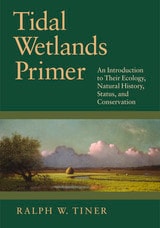
Tidal Wetlands Primer
An Introduction to Their Ecology, Natural History, Status, and ConservationRalph W. Tiner
University of Massachusetts Press, 2013
Illustrated with maps, photographs, and diagrams, this volume provides a clear account of the factors that make these habitats unique and vulnerable. It discusses their formation, the conditions affecting their plant and animal life, and the diversity of types across North America, as well as their history, use by wildlife and humans, current status, conservation, restoration, and likely future. The emphasis is on vegetated wetlands—marshes and swamps—with additional discussion of eelgrass meadows, rocky shores, beaches, and tidal flats.
Ralph Tiner's previous field guides to coastal wetland plants in the Northeast and Southeast have been widely praised. Tidal Wetlands Primer joins Tiner's earlier publications as an authoritative and user-friendly guide that should appeal to anyone with a serious interest in coastal habitats.
Trade-Offs
An Introduction to Economic ReasoningHarold Winter
University of Chicago Press, 2023
The highly engaging introduction to thinking like an economist, updated for a new generation of readers.
When economists wrestle with any social issue—be it unemployment, inflation, healthcare, or crime and punishment—they do so impersonally. The big question for them is: what are the costs and benefits, or trade-offs, of the solutions to such matters? These trade-offs constitute the core of how economists see the world—and make the policies that govern it.
Trade-Offs is an introduction to the economic approach of analyzing controversial policy issues. A useful introduction to the various factors that inform public opinion and policymaking, Trade-Offs is composed of case studies on topics drawn from across contemporary law and society.
Intellectually stimulating yet accessible and entertaining, Trade-Offs will be appreciated by students of economics, public policy, health administration, political science, and law, as well as by anyone following current social policy debates.

Trade-Offs
An Introduction to Economic ReasoningHarold Winter
University of Chicago Press, 2023
This is an auto-narrated audiobook edition of this book.
The highly engaging introduction to thinking like an economist, updated for a new generation of readers.
When economists wrestle with any social issue—be it unemployment, inflation, healthcare, or crime and punishment—they do so impersonally. The big question for them is: what are the costs and benefits, or trade-offs, of the solutions to such matters? These trade-offs constitute the core of how economists see the world—and make the policies that govern it.
Trade-Offs is an introduction to the economic approach of analyzing controversial policy issues. A useful introduction to the various factors that inform public opinion and policymaking, Trade-Offs is composed of case studies on topics drawn from across contemporary law and society.
Intellectually stimulating yet accessible and entertaining, Trade-Offs will be appreciated by students of economics, public policy, health administration, political science, and law, as well as by anyone following current social policy debates.
Trade-Offs
An Introduction to Economic Reasoning and Social IssuesHarold Winter
University of Chicago Press, 2005
Harold Winter provides readers with the analytical tools needed to identify and understand the trade-offs associated with these topics. By considering both the costs and benefits of potential policy solutions, Winter stresses that real-world policy decision making is best served by an explicit recognition of as many trade-offs as possible.
Intellectually stimulating yet accessible and entertaining, Trade-Offs will be appreciated by students of economics, public policy, health administration, political science, and law, as well as by anyone who follows current social policy debates.
Trade-Offs
An Introduction to Economic Reasoning and Social Issues, Second EditionHarold Winter
University of Chicago Press, 2013
Transcend and Transform
An Introduction to Conflict WorkJohan Galtung
Pluto Press, 2004
Twilight Zone Reflections
An Introduction to the Philosophical ImaginationSaul Traiger
Lever Press, 2024
Each short chapter dives into a single episode and concludes with helpful cross-references to other episodes that explore similar philosophical problems and subjects. For example, a reader may be interested in questions about the nature of the mind and whether machines can think. By referencing this book, they could easily discover the thematic connections between episodes like “I Sing the Body Electric” or “The Lateness of the Hour,” and learn how both episodes introduce the viewer to possible worlds that challenge us to consider whether our idea of the mind, and even our very personhood, extends beyond the human to robots and other artificial intelligences. Each chapter introduces fundamental philosophical questions such as these through the lens of The Twilight Zone and inspires additional exploration. Further readings are suggested for all episodes, making this volume indispensable to academics, students, and fans of the show. Each chapter is short and accessible, ensuring that this book is the perfect resource to accompany a complete series re-watch.
The Twilight Zone considered questions that strike at the heart of philosophical inquiry, such as the nature of self, the existence of god, the possibility of an afterlife, the relationship between knowledge and mental illness, the nature of possibility, even the nature of imagination itself, and so much more. Traiger argues that each episode can serve as an entry point for philosophical reflection. Twilight Zone Reflections is a valuable reference for anyone interested in exploring a well-known slice of popular culture history that doubles as a vast store of philosophical ideas.