Results by title
356 books match the query 'Jewish Studies' and 69 start with t
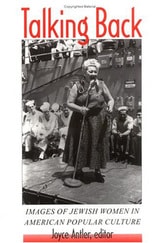
Talking Back
Images of Jewish Women in American Popular CultureEdited by Joyce Antler
Brandeis University Press, 1998
Tangled Roots
The Emergence of Israeli CultureIsrael Bartal
SBL Press, 2020
A new interpretation of the roots of Israeli culture
In Tangled Roots: The Emergence of Israeli Culture, Israel Bartal traces the history of modern Hebrew culture prior to the emergence of political Zionism. Bartal examines how traditional and modernist ideals and Western and non-European Jewish cultures merged in an unprecedented encounter between an ancient land (Israel) and a multigenerational people (the Jews). Premodern Jewish traditionalists, Palestinian locals, foreign imperial forces, and Jewish intellectuals, writers, journalists, and party functionaries each affected the Israeli culture that emerged. As this new Hebrew culture was taking shape, the memory of the recent European past played a highly influential role in shaping the image of the New Hebrew, that mythological hero who was meant to supplant the East European exilic Jew.
Features
- A critical revision of most contemporary politicized histories of Jewish nationalism
- An examination of the history of modern Hebrew culture prior to political Zionism
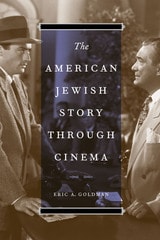
The American Jewish Story through Cinema
By Eric A. Goldman
University of Texas Press, 2013
Like the haggadah, the traditional “telling” of the story of the Israelites’ exodus from Egypt that is read at the Passover seder, cinema offers a valuable text from which to gain an understanding of the social, political, and cultural realities of Jews in America. In an industry strongly influenced by Jewish filmmakers who made and continue to make the decisions as to which films are produced, the complex and evolving nature of the American Jewish condition has had considerable impact on American cinema and, in particular, on how Jews are reflected on the screen. This groundbreaking study analyzes select mainstream films from the beginning of the sound era to today to provide an understanding of the American Jewish experience over the last century.
In the first half of the twentieth century, Hollywood’s movie moguls, most of whom were Jewish, shied away from asserting a Jewish image on the screen for fear that they might be too closely identified with that representation. Over the next two decades, Jewish moviemakers became more comfortable with the concept of a Jewish hero and with an overpowered, yet heroic, Israel. In time, the Holocaust assumed center stage as the single event with the greatest effect on American Jewish identity. Recently, as American Jewish screenwriters, directors, and producers have become increasingly comfortable with their heritage, we are seeing an unprecedented number of movies that spotlight Jewish protagonists, experiences, and challenges.
The American Synagogue
A Sanctuary TransformedEdited by Jack Wertheimer
Brandeis University Press, 1995
The Americanization of the Synagogue, 1820–1870
Leon A. Jick
Brandeis University Press, 1992
The Architect of Genocide
Himmler and the Final SolutionRichard Breitman
Brandeis University Press, 1992
The Benderly Boys and American Jewish Education
Jonathan B. Krasner
Brandeis University Press, 2011
The Besht
Magician, Mystic, and LeaderImmanuel Etkes
Brandeis University Press, 2012
The Boom in Contemporary Israeli Fiction
Edited by Alan Mintz
Brandeis University Press, 1997
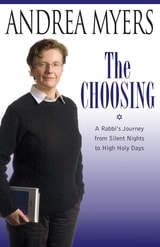
The Choosing
A Rabbi's Journey from Silent Nights to High Holy DaysMyers, Andrea
Rutgers University Press, 2011
A young Lutheran girl grows up on Long Island, New York. She aspires to be a doctor, and is on the fast track to marriage and the conventional happily-ever-after. But, as the Yiddish saying goes, "Man plans, and God laughs." Meet Andrea Myers, whose coming-of-age at Brandeis, conversion to Judaism, and awakening sexual identity make for a rich and well-timed life in the rabbinate.
In The Choosing, Myers fuses heartwarming anecdotes with rabbinic insights and generous dollops of humor to describe what it means to survive and flourish on your own terms. Portioned around the cycle of the Jewish year, with stories connected to each of the holidays, Myers draws on her unique path to the rabbinate--leaving behind her Christian upbringing, coming out as a lesbian, discovering Judaism in college, moving to Israel, converting, and returning to New York to become a rabbi, partner, and parent.
Myers relates tales of new beginnings, of reinventing oneself, and finding oneself. Whether it's a Sicilian grandmother attempting to bake hamantaschen on Purim for her Jewish granddaughter, or an American in Jerusalem saving a chicken from slaughter during a Rosh Hashanah ritual, Myers keeps readers entertained as she reflects that spirituality, goodness, and morality can and do take many forms. Readers will enthusiastically embrace stories of doors closing and windows opening, of family and community, of integration and transformation. These captivating narratives will resonate and, in the author's words, "reach across coasts, continents, and generations."
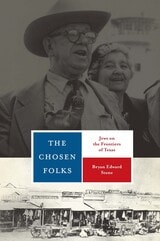
The Chosen Folks
Jews on the Frontiers of TexasBy Bryan Edward Stone
University of Texas Press, 2010
Texas has one of the largest Jewish populations in the South and West, comprising an often-overlooked vestige of the Diaspora. The Chosen Folks brings this rich aspect of the past to light, going beyond single biographies and photographic histories to explore the full evolution of the Jewish experience in Texas.
Drawing on previously unpublished archival materials and synthesizing earlier research, Bryan Edward Stone begins with the crypto-Jews who fled the Spanish Inquisition in the late sixteenth century and then discusses the unique Texas-Jewish communities that flourished far from the acknowledged centers of Jewish history and culture. The effects of this peripheral identity are explored in depth, from the days when geographic distance created physical divides to the redefinitions of "frontier" that marked the twentieth century. The rise of the Ku Klux Klan, the creation of Israel in the wake of the Holocaust, and the civil rights movement are covered as well, raising provocative questions about the attributes that enabled Texas Jews to forge a distinctive identity on the national and world stage. Brimming with memorable narratives, The Chosen Folks brings to life a cast of vibrant pioneers.
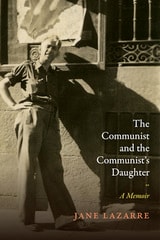
The Communist and the Communist's Daughter
A MemoirJane Lazarre
Duke University Press, 2017
Soon after immigrating to the United States as a young man, Lazarre began a long career as a radical activist, being convicted of sedition, holding leadership positions in the American Communist Party, fighting in the Spanish Civil War, organizing labor unions, testifying in front of the House Un-American Activities Committee, and resisting the FBI’s efforts to recruit him as an informant. Through periods of heroism and deep despair Lazarre never abandoned his ideals or his sustained faith in the fundamental goodness of people.
This is also the story of Jane as she grew up, married an African American civil rights activist, and became a mother and a writer while coming to terms with her father’s legacy. She recounts her arguments with her father over ideology, but also his profound influence on her life. Throughout this poignant and beautifully written work, Jane examines memory, grief, love, and conscience while detailing the sacrifices, humanity, and unwavering convictions of a man who worked tirelessly to create a brighter future for us all.
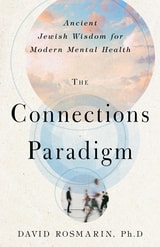
The Connections Paradigm
Ancient Jewish Wisdom for Modern Mental HealthDavid H. Rosmarin
Templeton Press, 2021
The idea behind the paradigm is that at any given moment, human beings are either “connected” or “disconnected” across three key relationships. To be “connected” means to be in a loving, harmonious, and fulfilling relationship; to be “disconnected” means, of course, the opposite. The three relationships are those between our souls and our bodies, ourselves and others, and ourselves and God.
These relationships are hierarchal; each depends on the one that precedes it. This means that we can only connect with God to the extent that we associate with others, and we cannot connect with others if we don’t connect with ourselves. The author, Dr. David H. Rosmarin, devotes a section to each relationship and describes techniques and practices to become a more connected individual. He also brings in compelling stories from his clinical practice to show the process in action.
Whether you’re a clinician working with clients, or a person seeking the healing balm of wisdom; whether you’re a member of the Jewish faith, or a person open to new spiritual perspectives, you will find this book sensible, practical, and timely because, for all of us, connection leads to mental health.
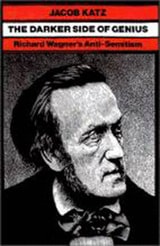
The Darker Side of Genius
Richard Wagner’s Anti-SemitismJacob. Katz
University Press of New England, 2002
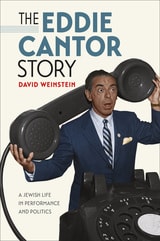
The Eddie Cantor Story
A Jewish Life in Performance and PoliticsDavid Weinstein
Brandeis University Press, 2017
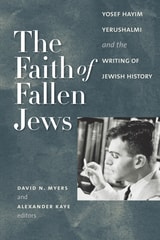
The Faith of Fallen Jews
Yosef Hayim Yerushalmi and the Writing of Jewish HistoryEdited by David N. Myers and Alexander Kaye
Brandeis University Press, 2013

The Future of Art in a Postdigital Age
From Hellenistic to Hebraic Consciousness - Second EditionMel Alexenberg
Intellect Books, 2011
In The Future of Art in a Postdigital Age, artist and educator Mel Alexenberg offers a vision of a postdigital future that reveals a paradigm shift from the Hellenistic to the Hebraic roots of Western culture. He ventures beyond the digital to explore postdigital perspectives rising from creative encounters among art, science, technology, and human consciousness. The interrelationships between these perspectives demonstrate the confluence between postdigital art and the dynamic, Jewish structure of consciousness. Alexenberg’s pioneering artwork––a fusion of spiritual and technological realms––exemplifies the theoretical thesis of this investigation into interactive and collaborative forms that imaginatively envisages the vast potential of art in a postdigital future.
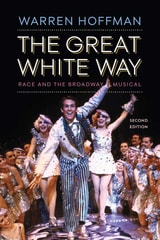
The Great White Way
Race and the Broadway MusicalWarren Hoffman
Rutgers University Press, 2020
Now in a new second edition, The Great White Way is the first book to reveal the racial politics, content, and subtexts that have haunted musicals for almost one hundred years from Show Boat (1927) to Hamilton (2015). This revised edition includes a new introduction and conclusion, updated chapters, as well as a brand-new chapter that looks at the blockbuster musicals The Book of Mormon and Hamilton.
Musicals mirror their time periods and reflect the political and social issues of their day. Warren Hoffman investigates the thematic content of the Broadway musical and considers how musicals work on a structural level, allowing them to simultaneously present and hide their racial agendas in plain view of their audiences. While the musical is informed by the cultural contributions of African Americans and Jewish immigrants, Hoffman argues that ultimately the history of the American musical is the history of white identity in the United States.
Presented chronologically, The Great White Way shows how perceptions of race altered over time and how musicals dealt with those changes. Hoffman focuses first on shows leading up to and comprising the Golden Age of Broadway (1927–1960s), then turns his attention to the revivals and nostalgic vehicles that defined the final quarter of the twentieth century. He offers entirely new and surprising takes on shows from the American musical canon—Show Boat (1927), Oklahoma! (1943), Annie Get Your Gun (1946), The Music Man (1957), West Side Story (1957), A Chorus Line (1975), and 42nd Street (1980), among others. In addition to a new chapter on Hamilton and The Book of Mormon, this revised edition brings The Great White Way fully into the twenty-first century with an examination of jukebox musicals and the role of off-Broadway and regional theaters in the development of the American musical.
New archival research on the creators who produced and wrote these shows, including Leonard Bernstein, Jerome Robbins, Stephen Sondheim, and Edward Kleban, will have theater fans and scholars rethinking forever how they view this popular American entertainment.
The Holocaust & the Exile of Yiddish
A History of the Algemeyne EntsiklopedyeBarry Trachtenberg
Rutgers University Press, 2022
The Holocaust & the Exile of Yiddish untangles the complicated saga of the Algemeyne entsiklopedye and its editors. The editors continued to publish volumes and revise the encyclopedia’s mission while their primary audience, Eastern European Jews, faced persecution and genocide under Nazi rule, and the challenge of reestablishing themselves in the first decades after World War II. Historian Barry Trachtenberg reveals how, over the course of the middle decades of the twentieth century, the project sparked tremendous controversy in Jewish cultural and political circles, which debated what the purpose of a Yiddish encyclopedia should be, as well as what knowledge and perspectives it should contain. Nevertheless, this is not only a story about destruction and trauma, but also one of tenacity and continuity, as the encyclopedia’s compilers strove to preserve the heritage of Yiddish culture, to document its near-total extermination in the Holocaust, and to chart its path into the future.
The Holocaust Averted
An Alternate History of American Jewry, 1938-1967Gurock, Jeffrey S
Rutgers University Press, 2015
This alternate history—where, among many scenarios, Hitler is assassinated, Japan does not bomb Pearl Harbor, and Franklin Delano Roosevelt is succeeded after two terms by Robert A. Taft—does cause us to review and better appreciate history. As Gurock tells his tale, he concludes every chapter with a short section that describes what actually happened and, thus, further educates the reader.
The Holocaust Odyssey of Daniel Bennahmias, Sonderkommando
Rebecca Fromer
University of Alabama Press, 1993
A poignant reminder of the ways enslaved Jews and others were forced to destroy their families and fellow prisoners.
The Holocaust Odyssey of Daniel Bennahmias, Sonderkommando presents the extraordinary testimony of Daniel Bennahmias, a Greek Jew whose life was forever altered by the Holocaust. Deported to Auschwitz-Birkenau as a teenager, Bennahmias was separated from his family and forced into the Sonderkommando, the prisoner unit compelled to work in the crematoria and gas chamber complex. Through painstaking collaboration with survivor and author Rebecca Fromer, this powerful narrative documents his struggle to endure unimaginable brutality while preserving his humanity. Bennahmias's account sheds rare light on the inner workings of Auschwitz, the Sonderkommando revolt, the death marches, and the difficult path toward liberation and recovery. More than a historical record, the book is a testament to courage, memory, and resilience in the face of systematic dehumanization. An essential contribution to Holocaust literature, it preserves the voice of a survivor whose experiences deepen our understanding of one of history's darkest chapters.
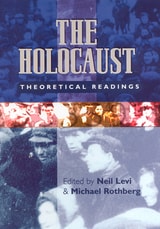
The Holocaust
Theoretical ReadingsLevi, Neil
Rutgers University Press, 2003
This agenda-setting reader brings together both classic and new writings to demonstrate how concerns arising from the Nazi genocide shaped contemporary literary and cultural theory. Wide in its thematic scope, it covers such vital questions as:
- Authenticity and experience
- Memory and trauma
- Historiography and the philosophy of history
- Fascism and Nazi anti-Semitism
- Representation and identity formation
- Race, gender, and genocide
- Implications of the Holocaust for theories of the unconscious, ethics, politics, and aesthetics
The readings, which are fully contextualized by a general introduction, section introductions, and bibliographical notes, represent the work of many influential writers and theorists, including Theodor Adorno, Giorgio Agamben, Hannah Arendt, Jean Baudrillard, Zygmunt Bauman, Walter Benjamin, Cathy Caruth, Jacques Derrida, Shoshana Felman, Saul Friedlander, Paul Gilroy, Lawrence Langer, Emmanuel Levinas, Primo Levi, Jean-François Lyotard, Hayden White, and James E. Young. This multidisciplinary anthology will be welcomed by students and scholars of the Holocaust.
The Individual in History
Essays in Honor of Jehuda ReinharzEdited by ChaeRan Y. Freeze, Sylvia Fuks Fried, and Eugene R. Sheppard
Brandeis University Press, 2015
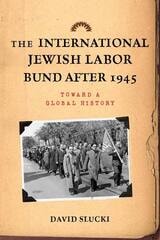
The International Jewish Labor Bund after 1945
Toward a Global HistorySlucki, David
Rutgers University Press, 2012
The Jewish Labor Bund was one of the major political forces in early twentieth-century Eastern Europe. But the decades after the Second World War were years of enormous difficulty for Bundists. Like millions of other European Jews, they faced the challenge of resurrecting their lives, so gravely disrupted by the Holocaust. Not only had the organization lost many members, but its adherents were also scattered across many continents. In this book, David Slucki charts the efforts of the surviving remnants of the movement to salvage something from the wreckage.
Covering both the Bundists who remained in communist Eastern Europe and those who emigrated to the United States, France, Australia, and Israel, the book explores the common challenges they faced—building transnational networks of friends, family, and fellow Holocaust survivors, while rebuilding a once-local movement under a global umbrella. This is a story of resilience and passion—passion for an idea that only barely survived Auschwitz.
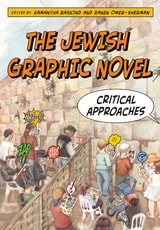
The Jewish Graphic Novel
Critical ApproachesEdited by Samantha Baskind and Ranen Omer-Sherman
Rutgers University Press, 2008
The Jewish Graphic Novel is a lively, interdisciplinary collection of essays that addresses critically acclaimed works in this subgenre of Jewish literary and artistic culture. Featuring insightful discussions of notable figures in the industryùsuch as Will Eisner, Art Spiegelman, and Joann Sfarùthe essays focus on the how graphic novels are increasingly being used in Holocaust memoir and fiction, and to portray Jewish identity in America and abroad
Featuring more than 85 illustrations, this collection is a compelling representation of a major postmodern ethnic and artistic achievement.
The Jewish Response to German Culture
From the Enlightenment to the Second World WarJehuda Reinharz
Brandeis University Press, 1991
The Jews of Chicago
From Shtetl to SuburbIrving Cutler
University of Illinois Press, 1994
The Jews of Europe in the Modern Era
A Socio-Historical OutlineVictor Karady
Central European University Press, 2003
The Jews of New Jersey
A Pictorial HistoryPatricia M. Ard and Michael Aaron Rockland
Rutgers University Press, 2001
Jews have called New Jersey home since the late seventeenth century, and they currently make up almost 6 percent of the states residents. Yet, until now, no book has paid tribute to the richness of Jewish heritage in the Garden State. The Jews of New Jersey: A Pictorial History redresses this lack with a lively narrative and hundreds of archival and family photographsmany rarethat bring this history to life.
Patricia Ard and Michael Rockland focus on representative Jewish communities throughout the state, paying particular attention to the extraordinary stories of ordinary people. Through the joys and struggles of homemakers, storekeepers, factory workers, athletes, children, farmers, activists, religious leaders, and Holocaust survivors, the authors tell the stories of how these communities have evolved, thrived, and changed. They note the difficulties posed by intermarriage and assimilation and, at the same time, depict a burgeoning revival of Jewish orthodoxy and traditions.
The Jews of New Jersey will please both the historian and general reader. Its heartwarming stories and pictures truly make the point that it is through the joys, triumphs, and defeats of everyday people that history is made.
The Jews of Poland Between Two World Wars
Edited by Yisrael Gutman
Brandeis University Press, 1991
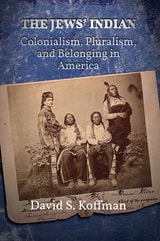
The Jews’ Indian
Colonialism, Pluralism, and Belonging in AmericaKoffman, David S
Rutgers University Press, 2019
Honorable Mention, 2021 Saul Viener Book Prize
The Jews’ Indian investigates the history of American Jewish relationships with Native Americans, both in the realm of cultural imagination and in face-to-face encounters. These two groups’ exchanges were numerous and diverse, proving at times harmonious when Jews’ and Natives people’s economic and social interests aligned, but discordant and fraught at other times. American Jews could be as exploitative of Native cultural, social, and political issues as other American settlers, and historian David Koffman argues that these interactions both unsettle and historicize the often triumphant consensus history of American Jewish life. Focusing on the ways Jewish class mobility and civic belonging were wrapped up in the dynamics of power and myth making that so severely impacted Native Americans, this books is provocative and timely, the first history to critically analyze Jewish participation in, and Jews’ grappling with the legacies of Native American history and the colonial project upon which America rests.
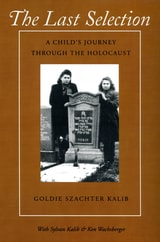
The Last Selection
A Child's Journey through the HolocaustGoldie Szachter Kalib
University of Massachusetts Press, 1991
Just before the end of the Holocaust, Dr. Josef Mengele made “the last selection.” Goldie Szachter Kalib, then a 13-year old Jewish girl from Bodzentyn, Poland, and her mother were part of that selection. In The Last Selection: A Child's Journey through the Holocaust, Goldie describes her life during World War II. She includes accounts about her charming childhood in Bodzentyn, Poland, her experiences hiding with a Polish Christian family, her time in the slave camp and then Auschwitz, life in the gas chamber, her experiences in Bergen-Belsen, and finally liberation. Portions of The Last Selection: A Child's Journey through the Holocaust were used in the ABC Daytime Emmy-Award winning movie on children in the Holocaust.
The Legend of the Wandering Jew
George K. Anderson
Brandeis University Press, 1991
The Life and Thought of Hans Jonas
Jewish DimensionsChristian Wiese
University Press of New England, 2010
The Long Journey of Gracia Mendes
Marianna D. Birnbaum
Central European University Press, 2003
The Long Life and Swift Death of Jewish Rechitsa
A Community in Belarus, 1625–2000Albert Kaganovitch
University of Wisconsin Press, 2013
Based on extensive use of Soviet and Israeli archives, interviews, memoirs, and secondary sources, Kaganovitch’s acclaimed work, originally published in Russian, is presented here in a significantly revised English translation by the author. Details of demographic, social, economic, and cultural changes in Rechitsa’s evolution, presented over the sweep of centuries, reveal a microcosm of daily Jewish life in Rechitsa and similar communities. Kaganovitch looks closely at such critical developments as the spread of Chabad Hasidism, the impact of multiple political transformations and global changes, and the mass murder of Rechitsa’s remaining Jews by the German army in November to December 1941.
Kaganovitch also documents the evolving status of Jews in the postwar era, starting with the reconstitution of a Jewish community in Rechitsa not long after liberation in 1943 and continuing with economic, social, and political trends under Stalin, Khrushchev, and Brezhnev, and finally emigration from post-Soviet Belarus. The Long Life and Swift Death of Jewish Rechitsa is a major achievement.
Winner, Helen and Stan Vine Canadian Jewish Book Award for Scholarship, Koffler Centre of the Arts
The Lost Library
The Legacy of Vilna's Strashun Library in the Aftermath of the HolocaustDan Rabinowitz
Brandeis University Press, 2018
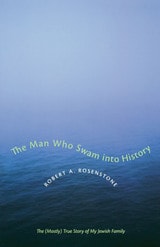
The Man Who Swam into History
The (Mostly) True Story of My Jewish FamilyBy Robert A. Rosenstone
University of Texas Press, 2005
The story begins with a grandfather who heroically escaped from Russia by swimming the Pruth River to Romania—or did he? Then there are stories of another grandfather who kept a lifelong mistress; grandmothers who were ignored except in the kitchen; migrations legal and illegal from Eastern Europe to Canada to California; racketeers on one side of the family and Communists on the other; and a West Coast adolescence in the McCarthy years. All of these (mostly true) stories form a Jewish family's history, a tale of dislocation and assimilation. But in the hands of award-winning historian Robert Rosenstone, they become much more. The fragments of memory so beautifully preserved in The Man Who Swam into History add unforgettable, human characters to the now familiar story of the Jewish diaspora in the twentieth century.
This combination memoir/short story collection recounts the Rosenstone family's passage from Romania to America. Robert Rosenstone tells the story not as a single, linear narrative, but through "tales, sequences, windows, moments, and fragments resurrected from the lives of three generations in my two parental families, set in five countries on two continents over the period of almost a century." This more literary and personal approach allows Rosenstone's relatives to emerge as distinct personalities, voices who quarrel and gossip, share their dreams and fears, and maintain the ties of a loving, if eccentric, family. Among the genre of "coming to America" tales, The Man Who Swam into History is a work of unique vision, one that both records and reconstructs the past even as it continuously—and humorously—questions the truth of its own assertions.
The Men's Section
Orthodox Jewish Men in an Egalitarian WorldElana Maryles Sztokman
Brandeis University Press, 2011
The Modern Israeli and Palestinian Diasporas
A Comparative ApproachEdited by Nahum Karlinsky
University of Texas Press, 2024
A comparative study of contemporary Israeli and Palestinian diasporas.
Exilic and diasporic experience have become ubiquitous in recent decades. Jews, lacking a homeland, spread to various parts of the world, making the Jewish diaspora paradigmatic. But after the establishment of Israel in 1948, a different kind of diaspora emerged, as more than a tenth of Israeli citizens have chosen to leave their newly established state and resettle. Meanwhile, about half of all Palestinians, including Palestinian citizens of Israel, now reside in exile, predominantly as a result of the ongoing Palestinian-Israeli conflict.
Recognizing that Israeli-Jewish and Palestinian-Arab societies coexist and are engaged in constant relations, Nahum Karlinsky has assembled an impressive array of contributors to explore these diasporas alongside one another and in dialogue with other diasporic communities. The collected essays cover such topics as Palestinian exiles and diasporas, the demographics of today’s Israeli diaspora, immigrant enterprises, transnationalism and development, the unique place of Israeli Jews in the United States, the literature of Palestinian transnationals, and the emergence of Berlin as a queer Israeli-Jewish immigrant enclave.The Modern Israeli and Palestinian Diasporas challenges and reimagines the very notion of a homeland.
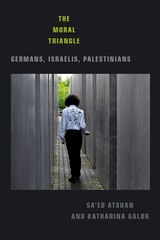
The Moral Triangle
Germans, Israelis, PalestiniansSa'red Atshan and Katharina Galor
Duke University Press, 2020
The Mother Knot
Jane Lazarre
Duke University Press, 1997
The Narrow Bridge
Beyond the HolocaustIsaac Neuman, with Michael Palencia-Roth
University of Illinois Press, 2000
As a boy studying Torah, Isaac Neuman learned to seek the spiritual lessons hidden in everyday life. Likewise, in this narrative of occupation and holocaust, he uncovers a core of human decency and spiritual strength that inhumanity, starvation, and even death failed to extinguish.
Unlike many Holocaust memoirs that focus on physical suffering and endurance, The Narrow Bridge follows a spiritual journey. Neuman describes the world of Polish Jewry before and during the Holocaust, recreating the strong religious and secular personalities of his childhood and early youth in Zdunska Wola, Poland: the outcast butcher, Haskel Traskalawski; the savvy criminal-turned-entrepreneur Nochem Ellia; the trusted Dr. Lemberg, liaison to the German occupation government; and Neuman's beloved teacher, Reb Mendel. Through their stories, Neuman reveals the workings of a community tested to the limits of faith and human dignity.
With his brother Yossel, Neuman was transported to the Poznan area, first to the Yunikowo work camp in May 1941, then on to St. Martin's Cemetery camp, where they removed gold jewelry and fillings from exhumed corpses. A string of concentration camps followed, each more oppressive than the last: Fürstenfelde, Auschwitz, Fünfteichen, Gross Rosen, Mauthausen, Wels, and Ebensee. In the midst of these horrors, the brothers kept their feet on the "narrow bridge" of life by holding to their faith, their memories, and each other. In the end, only Isaac survived.
The Narrow Bridge celebrates symbolic victories of faith over brute force. The execution of Zdunska Wola's Jewish spiritual and intellectual leaders is trumped by an act of breathtaking courage and conviction. A secret Passover Seder is cobbled together from hoarded bits of wax, piecemeal prayers, and matzoh baked in delousing ovens. A dying fellow inmate gives Neuman his warm coat as they both lie freezing on the ground.
Such rituals of faith and acts of kindness, combined with boyhood memories and a sense of spiritual responsibility, sustained Neuman through the Holocaust and helped him to reconstruct his life after the war. His story is a powerful testimony to an unquenchable faith and a spirit tried by fire.
The Narrow Bridge
Jewish Views on MulticulturalismBrettschneider, Marla
Rutgers University Press, 1996
Multiculturalism in the United States has been tricky for Jews. Remaining outside of the dominant Christian culture yet often excluded from multicultural agendas, Jews walk a precarious line––a narrow bridge––between dominance and marginality. Many Jews, aware of the shaky identity of Jewishness, are deeply involved in all levels of the multiculturalism debate. But there still exists a need for careful, reflective analysis of the importance and dangers of multiculturalism to the Jewish community. What is multiculturalism? What can it be to the Jews? What can the Jewish community learn from and contribute to the current debate?
Through a collection of essays by scholars and activists whose writing ranges from the personal to the philosophical, The Narrow Bridge examines multiculturalism within and beyond the Jewish community. How does classism work within the Jewish community? How can synagogues reach out to gays and lesbians? How have tensions between Jews and Blacks developed historically and what can we learn from that history? How can we include Jewish studies in multicultural curricula? This timely collection of provocative articles makes fine use of these and other questions, offering us a look at where Jews have stood, where they now stand, and what they can hope for in the complex arena of multiculturalism.
The New Jewish Diaspora
Russian-Speaking Immigrants in the United States, Israel, and GermanyGitelman, Zvi
Rutgers University Press, 2016
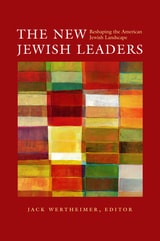
The New Jewish Leaders
Reshaping the American Jewish LandscapeEdited by Jack Wertheimer
Brandeis University Press, 2011
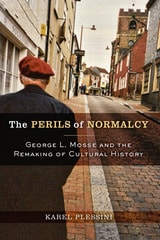
The Perils of Normalcy
George L. Mosse and the Remaking of Cultural HistoryKarel Plessini
University of Wisconsin Press, 2014
In this intellectual biography of George Mosse, Karel Plessini draws on all of Mosse's published and unpublished work to illuminate the origins and development of his groundbreaking methods of historical analysis and the close link between his life and work. He redefined the understanding of modern mass society and politics, masterfully revealing the powerful influence of conformity and political liturgies on twentieth-century history. Mosse warned against the dangers inherent in acquiescence, showing how identity creation and ideological fervor can climax in intolerance and mass murder—a message of continuing relevance.
The Philosophy of Franz Rosenzweig
Edited by Paul Mendes-Flohr
University Press of New England, 2002
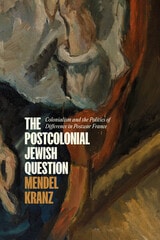
The Postcolonial Jewish Question
Colonialism and the Politics of Difference in Postwar FranceMendel Kranz
University of Chicago Press, 2026
A history of how decolonization shaped Jewish political identity in late-twentieth-century France.
In The Postcolonial Jewish Question, Mendel Kranz shows how France’s colonial history fundamentally shaped contemporary debates among Jews in France about racism, discrimination, and minority politics during the late twentieth century. As the wider country confronted the legacies of the Holocaust and the decline of its colonial empire, Jewish thinkers questioned the boundaries of their own political identity and challenged prevailing paradigms of Western universalism. This book traces how prominent and lesser-known thinkers—including Albert Memmi, Emmanuel Levinas, Alain Finkielkraut, and Wladimir Rabi—as well as organizations like the Colloque des intellectuels juifs de langue française engaged with issues of oppression, nationhood, and communal identity, and the ways that colonialism and its afterlives shaped those discussions. Kranz reveals how the Jewish question itself changed shape through confrontations with postcolonial politics. In doing so, he calls for a reassessment of the parameters of the Jewish question amid colonialism’s enduring legacies in the present.
The Pure Element of Time
Haim Be’er
Brandeis University Press, 2012