Results by title
122 books match the query 'Journalists' and 19 start with t
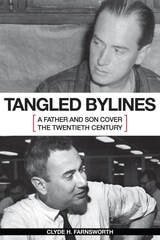
Tangled Bylines
A Father and Son Cover the Twentieth CenturyClyde H. Farnsworth
University of Missouri Press, 2017
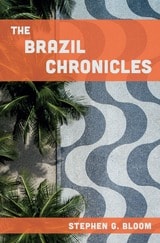
The Brazil Chronicles
Stephen G. Bloom
University of Missouri Press, 2024
As a young journalist at the Brazil Herald from 1979-81, Stephen G. Bloom spent his early professional years working in Rio’s seedy Lapa district, surrounded by fugitives, drug runners, pornographers, and stealth CIA agents. Bloom shares the wild story of this English-language newspaper in The Brazil Chronicles. The expat newspaper was a breeding ground for a different kind of storyteller — audacious risk-takers who told madcap tales of Amazon plantations, Confederate emigres, and lost Indian tribes. Several renown journalists cut their teeth at the Brazil Herald, including acclaimed New York Times correspondent Tad Szulc, Huffington Post CEO Eric Hippeau, and an untamed Gonzo reporter by the name of Hunter S. Thompson.
Drawing from extensive archival research and more than 150 interviews with his former colleagues, Bloom’s eye-opening narrative dive is both entertaining and academically rigorous. With a backdrop of coups, nonstop political instability, censorship, hyper-inflation, and weekends at sultry Ipanema Beach, The Brazil Chronicles doubles as a coming-of-age memoir, following young Bloom as he embarks on his quest to become a foreign correspondent, relocating to a foreign country to pursue under-the-radar stories and tall tales. His firsthand experience provides an insider, eye-witness account of the newspaper’s colorful history, transporting the reader to its sweltering newsroom and delving into the multifarious lives of its eclectic, trailblazing, polyglot staff.
Even as Bloom weaves between personal narrative, history, and accounts from journalism luminaries, it’s clear who the book’s main character is: the one-of-a-kind newspaper itself.
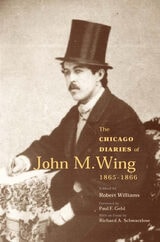
The Chicago Diaries of John M. Wing 1865-1866
Transcribed and Edited by Robert Williams. Foreword by Paul F. Gehl. With an Essay by Richard A. Schwarzlose
Southern Illinois University Press, 2002
The personal—and often intimate—diaries of fledgling journalist and entrepreneur John Mansir Wing create a unique portrait of a rough-and-tumble Chicago in the first few years following the Civil War. Wing writes of a city filled with new immigrants, ex-soldiers, and the thriving merchant class making its fortunes from both before the great fire of 1871 left much of the city in ashes.
Transcribed and edited by noted Chicago bibliophile and historian Robert Williams, and published in cooperation with the Caxton Club, this volume also details the early adventures of a rural Eastern who came to the “Metropolis of the West” in his early twenties and worked for some of the most influential journalists of his day. Wing shared cigars and conversation with notable politicians, businessmen, and war heroes including Sherman and Grant, all the while conducting an active romantic life with members of his own sex in boarding houses and barrooms.
Wing’s greatest passion was for book collecting. Following a successful later career in trade journal publishing and investing, he provided an endowment to create the John M. Wing Foundation at Chicago’s famed Newberry Library. The Wing Foundation became the first American public collection devoted to the history of printing; it remains today among the nation’s best resources for the study of the bibliographic arts.
Despite his lasting importance in publishing and philanthropy, and the fact that no serious history of Chicago can be written without reference to many of his publications, John M. Wing has been largely absent from most histories of the city’s movers and shakers. Complete with historical annotations and a bibliography of Wing’s writings for the press, this fascinating personal account reclaims his deserved place in Chicago life and lore.
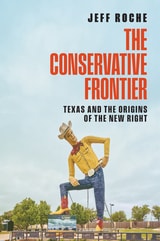
The Conservative Frontier
Texas and the Origins of the New RightJeff Roche
University of Texas Press, 2025
2026 Al Lowman Memorial Prize, Texas State Historical Association (TSHA)
2026 Bonney MacDonald Outstanding Book Award Winner, Center for the Study of the American West at West Texas A&M University (CSAW)
How West Texas business and culture molded the rise of conservatism in the United States.
Much of what we understand as modern American political conservatism was born in West Texas, where today it predominates. How did the people of such a vast region—larger than New England and encompassing big cities like Lubbock and Amarillo, as well as tiny towns from Anson to Dalhart—develop such a uniform political culture? And why and how did it go national?
Jeff Roche finds answers in the history of what he calls cowboy conservatism. Political power players matter in this story, but so do football coaches, newspaper editors, and a breakfast cereal tycoon who founded a capitalist utopia. The Conservative Frontier follows these and other figures as they promoted an ideology grounded in the entrepreneurial and proto-libertarian attitudes of nineteenth-century Texas ranchers, including a fierce devotion to both individualism and small-town notions of community responsibility. This political sensibility was in turn popularized by its association with the mythology and iconography of the cowboy as imagined in twentieth-century mass media. By the 1970s and the rise of Ronald Reagan, Roche shows, it was clear that the cowboy conservatism of West Texas had set the stage for the emergence of the New Right—the more professionalized and tech-savvy operation that dominated national conservative politics for the next quarter century.
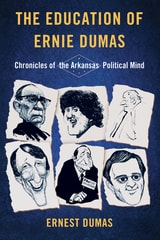
The Education of Ernie Dumas
Chronicles of the Arkansas Political MindErnest Dumas
Butler Center for Arkansas Studies, 2019
Beginning with the defeat of Governor Francis Cherry by the son of a hillbilly socialist at the end of the Joe McCarthy era, Dumas traces the development of a modernist political cast that eventually produced Arkansas’s first president of the United States. It follows the seed from 1978 that would germinate into the second impeachment of an American president.
Dumas has written for newspapers and about politics for sixty-three years, since 1954, the year that the stolid Cherry fell to Orval Eugene Faubus. The book is a political memoir that describes not only his education in the ways of politicians but the politicians’ own education and miseducation in how you win voters and then how you get things done.
It is mostly a collection of untold stories, often deeply personal, that reveal the inner struggles and sometimes the tribulations of the state’s leaders—Cherry, Faubus, Winthrop Rockefeller, Dale Bumpers, David Pryor, John McClellan, J. William Fulbright, Bill Clinton, Jim Guy Tucker, and others.

The Great Reporters
David Randall
Pluto Press, 2005
This unique book is the first to try and answer this question. Author David Randall searched nearly two centuries of newspapers and magazines, consulted editors and journalism experts worldwide, and the result is The Great Reporters---13 in-depth profiles of the best journalists who ever lived. They include nine Americans and four Britons, ten men and three women, whose lives were full of adventure, wit, and the considerable ingenuity required to bring the story home. Among chapters are those on the reporter who:
Booked himself onto a ship likely to be sunk by the Germans so he could report its torpedoing Was called out to a multiple shooting, who interviewed 50 witnesses, went back to the office, and wrote a Pulitzer Prize-winning story of 4,000 words in two and a half hours Was deemed useless by her teacher but who went on to become the greatest crime reporter in history Wrote a story that changed the map of Europe Out-bluffed a top Soviet official to get into Russia so he could cover the appalling famine there Feigned madness to get herself locked up in an asylum so she could expose its terrible conditions Was the best ever to apply words to newsprint Became a national hero in America because he stood up for the little guy and his war reporting told it like it really was At the age of 63, and after three major operations, went under-cover in Iran so she could report on the regime's repression Was nearly fired for fouling up his first major assignment, but went on to shock his nation with his courageous war reporting Wrote faster than anyone who could write better and better than anyone who could write faster Single-handedly took on the tobacco industry Said no to William Randolph Hearst
Each profile tells of the reporter's life and his or her major stories, how they were obtained, and their impact. Packed with anecdotes, and inspiring accounts of difficulties overcome, the book quotes extensively from each reporter's work. It also includes an essay on the history of reporting, charting the technologies, economics, and attitudes that made it the way it is---from the invention of the telegraph to the Internet. The Great Reporters is not just the story of 13 remarkable people, it is the story of how society's information hunter-gatherers succeed in bringing us all what we need to know.
The Insider
How the Kiplinger Newsletter Bridged Washington and Wall StreetRob Wells
University of Massachusetts Press, 2022
When Willard M. Kiplinger launched the groundbreaking Kiplinger Washington Letter in 1923, he left the sidelines of traditional journalism to strike out on his own. With a specialized knowledge of finance and close connections to top Washington officials, Kiplinger was uniquely positioned to tell deeper truths about the intersections between government and business. With careful reporting and insider access, he delivered perceptive analysis and forecasts of business, economic, and political news to busy business executives, and the newsletter’s readership grew exponentially over the coming decades.
More than just a pioneering business journalist, Kiplinger emerged as a quiet but powerful link between the worlds of Presidents Hoover and Roosevelt, and used his Letter to play a little-known but influential role in the New Deal. Part journalism history, part biography, and part democratic chronicle, The Insider offers a well-written and deeply researched portrayal of how Kiplinger not only developed a widely read newsletter that launched a business publishing empire but also how he forged a new role for the journalist as political actor.
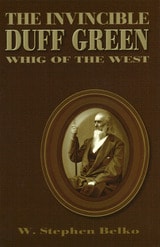
The Invincible Duff Green
Whig of the WestW. Stephen Belko
University of Missouri Press, 2006
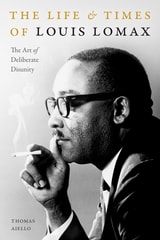
The Life and Times of Louis Lomax
The Art of Deliberate DisunityThomas Aiello
Duke University Press, 2021
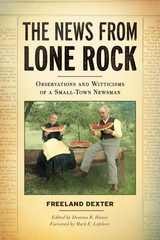
The News from Lone Rock
Observations and Witticisms of a Small-Town NewsmanFreeland Dexter
Wisconsin Historical Society Press, 2016
At the turn of the twentieth century, the bustling railroad town of Lone Rock, Wisconsin, was home to about a thousand residents, and Freeland Dexter seemed to know the business of every single one. Dexter reported all the news from Lone Rock—from the significant to the trivial, the tragic to the comical—for the Weekly Home News of neighboring Spring Green from 1884 to 1912.
This collection of Dexter’s most fascinating, amusing, and poignant stories and observations brings back to life the colorful characters of his time and takes readers on a journey to a world that was both simpler and changing fast. Whether he was reporting who grew the biggest watermelon, teasing the local lovebirds, or taking a side on the ever-controversial question of whether the town should go dry, Dexter wrote with a distinctive wit and an obvious affection for his town and its people. The News from Lone Rock also provides an illuminating window into a time period of rapid technological progress, showing how the introduction of electric light, telephones, and cars changed lives and connected this quaint village more and more to the outside world.
The Power of Journalists
Nick Robinson, Gary Gibbon, Barbara Speed, and Charlie Beckett
Haus Publishing, 2018
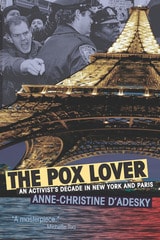
The Pox Lover
An Activist's Decade in New York and ParisAnne-christine d'Adesky
University of Wisconsin Press, 2017
D'Adesky takes us through a fast-changing East Village: squatter protests and civil disobedience lead to all-night drag and art-dance parties, the fun-loving Lesbian Avengers organize dyke marches, and the protest group ACT UP stages public funerals. Traveling as a journalist to Paris, an insomniac d'Adesky trolls the Seine, encountering waves of exiles fleeing violence in the Balkans, Haiti, and Rwanda. As the last of the French Nazis stand trial and the new National Front rises in the polls, d'Adesky digs into her aristocratic family's roots in Vichy France and colonial Haiti. This is a testament with a message for every generation: grab at life and love, connect with others, fight for justice, keep despair at bay, and remember.
The Rise and Fall of the International Organization of Journalists Based in Prague 1946–2016
Useful Recollections Part IIIKaarle Nordenstreng
Karolinum Press, 2021

The Soldier's Friend
A Life of Ernie PyleRay E. Boomhower
Indiana Historical Society Press, 2006
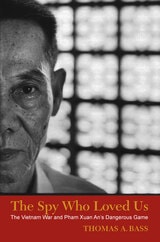
The Spy Who Loved Us
The Vietnam War and Pham Xuan An's Dangerous GameThomas A. Bass
University of Massachusetts Press, 2018
Only after Saigon fell in 1975 did An's colleagues learn that the affable raconteur in their midst, acclaimed as "dean of the Vietnamese press corps," was actually a general in the North Vietnamese Army. In recognition of his tradecraft and his ability to spin military losses—such as the Têt Offensive of 1968—into psychological gains, An was awarded sixteen military medals.
After the book's original publication, WikiLeaks revealed that Thomas A. Bass's account of An's career was distributed to CIA agents as a primer in espionage. Now available in paper with a new preface, An's story remains one of the most gripping to emerge from the era.
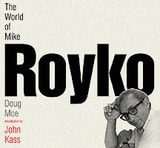
The World of Mike Royko
Doug Moe
University of Wisconsin Press, 1999
This illustrated biography is the first account of the colorful life of Chicago newspaper columnist Mike Royko, Pulitzer Prize winner, best-selling author, and legendary journalist who personified Chicago in all its rough-edged charm. Drawing on exclusive photos and interviews with Royko’s family and intimates, the book chronicles Royko’s rise from a “flat-above-a-tavern” youth—raised above a bar on Chicago’s Polish northwest side—to one of the best-known names in American journalism.
Readers will get the inside scoop on Royko’s epic battles with Mayor Richard J. Daley and other politicians and his hilarious columns featuring “Slats Grobnik.” They’ll also meet a softer, largely unknown, side of Royko, through the love letters he sent to his wife-to-be from an Air Force base in Washington State.
More than 100 photos—many never before available to the public—capture the man and his times. Millions of readers—in 800 newspapers around the world—followed Royko’s work and life. In The World of Mike Royko—he lives again.
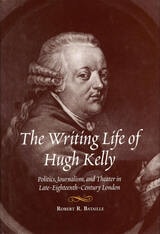
The Writing Life of Hugh Kelly
Politics, Journalism, and Theatre in Late-Eighteenth-Century LondonRobert R. Bataille
Southern Illinois University Press, 2000
Robert R. Bataille demonstrates convincingly that between 1767 and 1777, Anglo-Irish writer Hugh Kelly made major contributions in three areas of British culture: politics, journalism, and theater. Bataille shows how all three activities were integrated in Kelly’s life, suggesting that such interrelationships often existed in the rough and ready London culture during the early reign of King George III.
When he discovered several newspaper campaigns that Kelly orchestrated as a paid political propagandist for George III and his ministers, Bataille understood in part how important Kelly was to his era. In his capacity as propagandist, Kelly defended Hanoverian colonial policies on the eve of the American Revolution, served as a key opponent of the radical Wilkites, and promoted the acceptance of the 1774 Quebec Bill, which established, among other things, the right of the recently defeated French citizens of Quebec to maintain the French language.
A belletristic journalist, Kelly published theater reviews and essays that played a major role in shaping the taste of his era. He wrote in defense of the controversial sentimental drama, and whenever he could, he promoted the major theatrical figure of the age, David Garrick. Under his editorship, the newspaper Public Ledger became a leading source of theater information. Seeking to raise the status of the profession of journalism, he wrote essays and articles that provided his middle-class readers with an insider’s view of the operations of the journalist.
Assessing Kelly’s contributions to the novel and drama, Bataille argues that this powerful journalist stands in the vanguard in the larger struggle against traditional attitudes supporting male superiority and aristocratic privilege. Kelly wrote in favor of gender equality and middle-class respectability, striving to inculcate what modern scholars refer to as the values of sensibility. Bataille also argues, however, that Kelly knew his audience. Instrumental in the rise of professional writing and popular culture, he understood that he had to observe the needs of his audience, detecting cultural trends and using the skills of the rhetorician.
The Yellow Journalism
The Press and America's Emergence as a World PowerDavid R. Spencer
Northwestern University Press, 2007
Most notable among Hearst's competitors was New York City's The World, owned and managed by a European Jewish immigrant named Joseph Pulitzer. The Yellow Journalism describes how these two papers and others exploited the scandal, corruption, and crime among the city's most influential citizens, and its most desperate inhabitants--a policy that made this "journalism of action" remarkably effective, not just as a commercial force, but also as an advocate for the city's poor and defenseless. Spencer shows how many of the innovations first introduced during this period--from investigative reporting to the use of color, entertainment news, and cartoons in papers--have had a lasting effect on journalism; and how media in our day reflects the Yellow Press's influence, but also its threatened irrelevance within the broader realities of contemporary society.
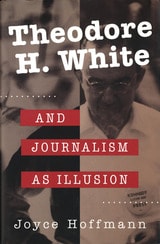
Theodore H. White and Journalism As Illusion
Joyce Hoffmann
University of Missouri Press, 1995
In this groundbreaking study, Joyce Hoffmann examines a critical twenty-five-year period in the work of one of the most influential journalists of the twentieth century. Theodore H. White was already a celebrated reporter when Jacqueline Kennedy summoned him for an exclusive interview in the aftermath of her husband's assassination. With her help, White would preserve what the First Lady claimed had been John F. Kennedy's vision of the New Frontier as an incarnation of that wistful, romantic kingdom--Camelot. Over the years, friends and advisers to Kennedy declared that they had never heard the president speak of Camelot. But White's article, which ran in Life magazine, created a myth that still endures in the popular consciousness.
That story was just one of many by Theodore White that had a lasting impact on the nation. As a correspondent for several of the country's most popular magazines, he covered the crucial events of the 1940s, '50s, and '60s. His best-selling book The Making of the President 1960 changed political reporting forever.
A gifted and likable man with a remarkable skill for ingratiating himself with others, White earned the confidence of key political, military, and diplomatic leaders. First in the Far East, later in Europe, and finally in Washington, D.C., he became a confidant and adviser rather than an adversary to the figures he covered for the news, following a pattern set by elite journalists. Even as he played the impartial reporter, White kept secrets in order to maintain access to his important sources, and he occasionally allowed his subjects, including John F. Kennedy and Nelson Rockefeller, to make changes in his work before publication.
Clinging to the illusion of objectivity, White--like other leading journalists in the postwar years--wrote about the world not as it was but as he believed it ought to be. Hoffmann relates the little-known episode in White's career when he intentionally obscured the truth about Chiang Kai-shek's corrupt and inept Nationalist government because he believed that undermining China's cause would be "a disservice to democracy."
No other book so thoroughly documents how a first-rank journalist can become a political insider and distort the news without losing the gloss of impartiality that is supposed to accompany the profession. Impressively researched, skillfully written, Theodore H. White and Journalism as Illusion is an unflinching look at a key figure in the history of American journalism and at the profession itself.