Results by title
527 books match the query 'Labor' and 100 start with t

Taking Trade to the Streets
The Lost History of Public Efforts to Shape GlobalizationSusan Ariel Aaronson
University of Michigan Press, 2002

Technological Change in Health Care
A Global Analysis of Heart AttackMark B. McClellan and Daniel P. Kessler, Editors
University of Michigan Press, 2002
The comparisons presented here confirm that the use of medical technology in treatment for heart attack is strongly related to incentives, and that technological change is an important cause of medical expenditure growth in all developed countries. Each participating research team reviewed the economic and regulatory incentives provided by their country's health system, and major changes in those incentives over the 1980s and 1990s, according to a commonly used framework. Such incentives include: the magnitude of out-of-pocket costs to patients, the generosity of reimbursement to physicians and hospitals, regulation of the use of new technologies or the supply of physicians, regulation of competition, and the structure of hospital ownership. Each team also reviewed how care for heart attacks has changed in their country over the past decade.
The book will be of enormous importance to health economists, medical researchers and epidemiologists, and policymakers.
Mark McClellan is Associate Professor of Economics and of Medicine and, by courtesy, of Health Research and Policy, Stanford University. He is a National Fellow, the Hoover Institution. Daniel P. Kessler is Associate Professor of Economics, Law, and Policy in the Graduate School of Business, Stanford University, and a Research Fellow, the Hoover Institution.

Terrifying Muslims
Race and Labor in the South Asian DiasporaJunaid Rana
Duke University Press, 2011
The Age of Experiences
Harnessing Happiness to Build a New EconomyBenjamin Kline Hunnicutt
Temple University Press, 2020
In The Age of Experiences, Benjamin Kline Hunnicutt examines how the advance of happiness science is impacting the economy, making possible new experience-products that really make people happy and help forward-looking businesses expand and develop new technologies. In today’s marketplace there is less interest in goods and services and more interest in buying and selling personal improvements and experiences. Hunnicutt traces how this historical shift in consumption to the “softer” technologies of happiness represents not only a change in the modern understanding of progress, but also a practical, economic transformation, profoundly shaping our work and the ordering of our life goals.
Based on incisive historical research, Hunnicutt demonstrates that we have begun to turn from material wealth to focus on the enrichment of our personal and social lives. The Age of Experiences shows how industry, technology, and the general public are just beginning to realize the potential of the new economy. Exploring the broader implications of this historical shift, Hunnicutt concludes that the new demand for experiences will result in the reduction of work time, the growth of jobs, and the regeneration of virtue—altogether an increasingly healthy public life.
The Allure of Labor
Workers, Race, and the Making of the Peruvian StatePaulo Drinot
Duke University Press, 2011
Although the vast majority of laboring peoples in Peru were indigenous, in the minds of social reformers indigeneity was not commensurable with labor: Indians could not be workers and were therefore excluded from the labor policies enacted in the 1920s and 1930s and, more generally, from elite conceptions of industrial progress. Drinot shows how the incommensurability of indigeneity with labor was expressed in the 1920 constitution, in specific labor policies, and in the activities of state agencies created to oversee collective bargaining and provide workers with affordable housing, inexpensive food, and social insurance. He argues that the racialized assumptions of the modernizing Peruvian state are reflected in the enduring inequalities of present-day Peru.

The Ashio Riot of 1907
A Social History of Mining in JapanKazuo Nimura, ed.
Duke University Press, 1997
Arguing against the spontaneous resistance theory that has long dominated Japanese social history accounts, Nimura traces the laborers’ unrest prior to the riots as well as the development of the event itself. Drawing from such varied sources as governmental records, media reports, and secret legal documents relating to the riot, Nimura discusses the active role of the metal mining workers’ trade organization and the stance taken by mine labor bosses. He examines how technological development transformed labor-management relations and details the common characteristics of the laborers who were involved in the riot movement. In the course of this historical analysis, Nimura takes on some of the most influential critical perspectives on Japanese social and labor history. This translation of Nimura’s prize-winning study—originally published in Japan—contains a preface by Andrew Gordon and an introduction and prologue written especially for this edition.

The Birth of Solidarity
The History of the French Welfare StateFrançois Ewald
Duke University Press, 2020
The Black Worker
Race, Labor, and Civil Rights Since EmancipationEdited by Eric Arnesen
University of Illinois Press, 2006
Uniting the latest scholarship on race, labor, and civil rights, The Black Worker aims to establish the richness of the African American working-class experience, and the indisputable role of black workers in shaping the politics and history of labor and race in the United States.
To capture the complexity of African Americans’ experiences in the workplace, this reader examines workers engaged in a wide array of jobs, including sharecropping, coal mining, domestic service, longshoring, automobile manufacturing, tobacco processing, railroading, prostitution, lumbering, and municipal employment. The essays’ subjects include black migration, strikebreaking, black conservatism, gender, and the multiple forms of employment discrimination in the South and North. Other contributions deal explicitly with state policy and black workers during the transition from slavery to freedom, World Wars I and II, and the 1960s.
The variety of challenges made by these workers, both quiet and overt, served as clear reminders to the supporters of white supremacy that, despite their best efforts through violence, fraud, and the law, as long as they insisted on racial inequality, the “race question” would never be fully resolved.
Contributors: Eric Arnesen, Beth Tompkins Bates, Cynthia M. Blair, Tera W. Hunter, William Powell Jones, Brian Kelly, Robert Korstad, Nelson Lichtenstein, Joseph A. McCartin, Steven A. Reich, Leslie A. Schwalm, Nan Elizabeth Woodruff
The Broken Table
The Detroit Newspaper Strike and the State of American LaborChris Rhomberg
Russell Sage Foundation, 2012
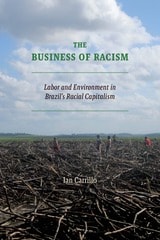
The Business of Racism
Labor and Environment in Brazil's Racial CapitalismIan Carrillo
Duke University Press, 2026

The Butte Irish
Class and Ethnicity in an American Mining Town, 1875-1925David M. Emmons
University of Illinois Press, 1989
From a treasure trove of "Irish stuff," the reports, minutes, and correspondence of the major Irish-American organizations in Butte, Emmons shows how the stalwart supporters of the RELA and the Ancient Order of Hiberians marched and drilled for Irish freedom---and how, as they ran the town, the miners' union, and the largest mining companies, they used this tradition of ethnic cooperation to ensure safe and steady work, Irish mines taking care of Irish miners. Butte was new, overwhelmingly Irish, and extraordinarily dangerous---the ideal place to test the seam between class and ethnicity.
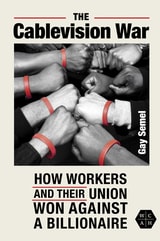
The Cablevision War
How Workers and Their Union Won Against a BillionaireGay Semel
University of Illinois Press, 2027
Gay Semel draws on her front-line experiences to provide an insider’s look at this bitter labor fight and its implications for unionization across the country. Unwilling to accept the vote, Cablevision, and its CEO James Dolan, used aggressive and illegal tactics like harassing and firing the Brooklyn workers to weaken support for the union. The CWA responded by mobilizing public pressure to push back. As the conflict unfolded, the union found support among community leaders, politicians, and activists. Semel traces the slow and difficult process of winning a first contract and details how courage, unity, and perseverance triumphed over a powerful company.
Dramatic and compelling, The Cablevision War tells the inspiring story of an important victory for workers and the lessons it offers for a revitalized labor movement.
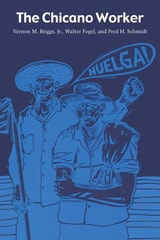
The Chicano Worker
By Vernon M. Briggs, Jr., Walter Fogel, and Fred H. Schmidt
University of Texas Press, 1977
The Chicano Worker is an incisive analysis of the labor-market experiences of Mexican American workers in the late twentieth century. The authors—each established in the fields of labor economics and research on Chicano workers—describe the major employment patterns of the Chicano labor force and discuss the historical and institutional factors determining these patterns. This work speaks to the continuing widespread public interest in Mexican immigration, migrant farm labor, unionization of farm workers, Chicano education and training needs, and the legacy of discriminatory treatment against Chicanos. The authors treat the convergence of these issues and their public policy implications.
Drawing from census data as well as other sources, The Chicano Worker reports on Chicano unemployment, labor-force participation, occupational and industrial distributions of employment, and various indices of earnings. It also deals with such issues as history, family size, health, and culture. The Chicano Worker is likely to open new areas of interest, discussion, and criticism concerning Chicanos in the United States.
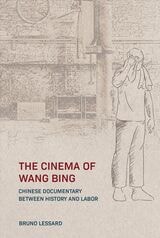
The Cinema of Wang Bing
Chinese Documentary between History and LaborBruno Lessard
Hong Kong University Press, 2023
In The Cinema of Wang Bing, Bruno Lessard examines documentarian Wang Bing’s most important films. He focuses on the two obsessions at the heart of Wang’s oeuvre—the legacy of Maoist China in the present and the transformation of labor since China’s entry into the market economy—and how the crucial figures of survivor and worker are represented on screen. Bruno Lessard argues that Wang is a minjian (grassroots) intellectual whose films document the impact of Mao’s Great Leap Forward on Chinese collective memory and register the repercussions of China’s turn to neoliberalism on workers in the post-Reform era. Bringing together Chinese documentary studies and China studies, Lessard shows how Wang’s practice reflects the minjian ethos when documenting the survivors of the Great Famine and those who have not benefitted from China’s neoliberal policies—from laid-off workers to migrant workers. The films discussed include some of Wang’s most celebrated works such as West of the Tracks and Dead Souls, as well as neglected documentaries such as Coal Money and Bitter Money.
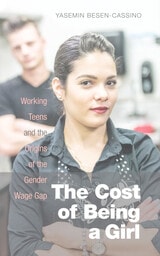
The Cost of Being a Girl
Working Teens and the Origins of the Gender Wage GapYasemin Besen-Cassino
Temple University Press, 2017
The gender wage gap is one of the most persistent problems of labor markets and women’s lives.
Most approaches to explaining the gap focus on adult employment despite the fact that many Americans begin working well before their education is completed. In her critical and compelling new book, The Cost of Being a Girl, Yasemin Besen-Cassino examines the origins of the gender wage gap by looking at the teenage labor force, where comparisons between boys and girls ought to show no difference, but do.
Besen-Cassino’s findings are disturbing. Because of discrimination in the market, most teenage girls who start part-time work as babysitters and in other freelance jobs fail to make the same wages as teenage boys who move into employee-type jobs. The “cost” of being a girl is also psychological; when teenage girls work retail jobs in the apparel industry, they have lower wages and body image issues in the long run.
Through in-depth interviews and surveys with workers and employees, The Cost of Being a Girl puts this alarming social problem—which extends to race and class inequality—in to bold relief. Besen-Cassino emphasizes that early inequalities in the workplace ultimately translate into greater inequalities in the overall labor force.

The Cost of Free Shipping
Amazon in the Global EconomyJake Alimahomed-Wilson
Pluto Press, 2021
Winner of the United Association for Labor Education Book Award 2021, this is essential reading for everyone who wants to understand the role of Amazon in our economy and society. With Amazon, supply-chain, and unionization in the news, it is both timely and incredibly informative.
Amazon is the most powerful corporation on the planet and its CEO, Jeff Bezos, has become one of the richest individuals in history, and one of the few people to profit from a global pandemic. Its dominance has reshaped the global economy itself: we live in the age of “Amazon Capitalism.”
“One-click” instant consumerism and its immense variety of products has made Amazon a worldwide household name, with over 60% of US households subscribing to Amazon Prime. In turn, these subscribers are surveilled by the corporation. Amazon is also one of the world's largest logistics companies, resulting in weakened unions and lowered labor standards.
The company has also become the largest provider of cloud-computing services and home surveillance systems, not to mention the ubiquitous Alexa.
With cutting-edge analyses, this book looks at the many dark facets of the corporation, including automation, surveillance, tech work, workers' struggles, algorithmic challenges, the disruption of local democracy and much more. The Cost of Free Shipping shows how Amazon represents a fundamental shift in global capitalism that we should name, interrogate, and be primed to resist.
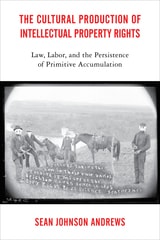
The Cultural Production of Intellectual Property Rights
Law, Labor, and the Persistence of Primitive AccumulationSean Johnson Andrews
Temple University Press, 2019
The protection and accumulation of intellectual property rights—like property rights in general—is one of the most important contemporary American values. In his cogent book, The Cultural Production of Intellectual Property Rights, Sean Johnson Andrews shows that the meaning, power, and value of intellectual properties are the consequence of an extended process of cultural production.
Johnson Andrews argues that it is deeper ideological and historical roots which demand that, in the contemporary global, digital economy, all property rights be held sacrosanct and all value must flow back to the legal owner.
Johnson Andrews explains that if we want to rebalance the protection of copyrights and trademarks, we should focus on undermining the reified culture of property that underpins capitalism as a whole. He outlines a framework for analyzing culture; situates intellectual property rights in the history of capitalist property relations; synthesizes key theories of media, politics, and law; and ultimately provides scholars and activists a path to imagining a different future where we prioritize our collective production of value in the commons.
The Decline of Organized Labor in the United States
Michael Goldfield
University of Chicago Press, 1987

The Declining Significance of Gender?
Francine D. Blau
Russell Sage Foundation, 2006
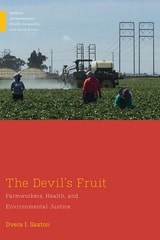
The Devil's Fruit
Farmworkers, Health, and Environmental JusticeDvera I. Saxton
Rutgers University Press, 2021

The Digital Factory
The Human Labor of AutomationMoritz Altenried
University of Chicago Press, 2022
The workers of today’s digital factory include those in Amazon warehouses, delivery drivers, Chinese gaming workers, Filipino content moderators, and rural American search engine optimizers. Repetitive yet stressful, boring yet often emotionally demanding, these jobs require little formal qualification, but can demand a large degree of skills and knowledge. This work is often hidden behind the supposed magic of algorithms and thought to be automated, but it is in fact highly dependent on human labor.
The workers of today’s digital factory are not as far removed from a typical auto assembly line as we might think. Moritz Altenried takes us inside today’s digital factories, showing that they take very different forms, including gig economy platforms, video games, and Amazon warehouses. As Altenried shows, these digital factories often share surprising similarities with factories from the industrial age. As globalized capitalism and digital technology continue to transform labor around the world, Altenried offers a timely and poignant exploration of how these changes are restructuring the social division of labor and its geographies as well as the stratifications and lines of struggle.
The Digital Factory
The Human Labor of AutomationMoritz Altenried
University of Chicago Press, 2022
This is an auto-narrated audiobook edition of this book.
The Digital Factory reveals the hidden human labor that supports today’s digital capitalism.
The workers of today’s digital factory include those in Amazon warehouses, delivery drivers, Chinese gaming workers, Filipino content moderators, and rural American search engine optimizers. Repetitive yet stressful, boring yet often emotionally demanding, these jobs require little formal qualification, but can demand a large degree of skills and knowledge. This work is often hidden behind the supposed magic of algorithms and thought to be automated, but it is in fact highly dependent on human labor.
The workers of today’s digital factory are not as far removed from a typical auto assembly line as we might think. Moritz Altenried takes us inside today’s digital factories, showing that they take very different forms, including gig economy platforms, video games, and Amazon warehouses. As Altenried shows, these digital factories often share surprising similarities with factories from the industrial age. As globalized capitalism and digital technology continue to transform labor around the world, Altenried offers a timely and poignant exploration of how these changes are restructuring the social division of labor and its geographies as well as the stratifications and lines of struggle.

The Digital Is Kid Stuff
Making Creative Laborers for a Precarious EconomyJosef Nguyen
University of Minnesota Press, 2021
How popular debates about the so-called digital generation mediate anxieties about labor and life in twenty-first-century America
“The children are our future” goes the adage, a proclamation that simultaneously declares both anxiety as well as hope about youth as the next generation. In The Digital Is Kid Stuff, Josef Nguyen interrogates this ambivalence within discussions about today’s “digital generation” and the future of creativity, an ambivalence that toggles between the techno-pessimism that warns against the harm to children of too much screen time and a techno-utopianism that foresees these “digital natives” leading the way to innovation, economic growth, increased democratization, and national prosperity.
Nguyen engages cultural histories of childhood, youth, and creativity through chapters that are each anchored to a particular digital media object or practice. Nguyen narrates the developmental arc of a future creative laborer: from a young kid playing the island fictions of Minecraft, to an older child learning do-it-yourself skills while reading Make magazine, to a teenager posting selfies on Instagram, to a young adult creative laborer imagining technological innovations using design fiction.
Focusing on the constructions and valorizations of creativity, entrepreneurialism, and technological savvy, Nguyen argues that contemporary culture operates to assuage profound anxieties about—and to defuse valid critiques of—both emerging digital technologies and the precarity of employment for “creative laborers” in twenty-first-century neoliberal America.

The Economics of Discrimination
Gary S. Becker
University of Chicago Press, 1971
Mr. Becker's work confronts the economic effects of discrimination in the market place because of race, religion, sex, color, social class, personality, or other non-pecuniary considerations. He demonstrates that discrimination in the market place by any group reduces their own real incomes as well as those of the minority.
The original edition of The Economics of Discrimination was warmly received by economists, sociologists, and psychologists alike for focusing the discerning eye of economic analysis upon a vital social problem—discrimination in the market place.
"This is an unusual book; not only is it filled with ingenious theorizing but the implications of the theory are boldly confronted with facts. . . . The intimate relation of the theory and observation has resulted in a book of great vitality on a subject whose interest and importance are obvious."—M.W. Reder, American Economic Review
"The author's solution to the problem of measuring the motive behind actual discrimination is something of a tour de force. . . . Sociologists in the field of race relations will wish to read this book."—Karl Schuessler, American Sociological Review
The Economics of Trade Unions
Albert Rees
University of Chicago Press, 1989
The End of Cheap Labour?
Industrial Transformation and "Social Upgrading" in ChinaFlorian Butollo
Campus Verlag, 2014
In The End of Cheap Labour?, Florian Butollo investigates the recent transformation of the garment and LED lighting industries in the Pearl River Delta, China’s largest industrial hub. He reveals that industrial upgrading rarely supports improvements in working conditions and the basic employment pattern; and this failure of “social upgrading” threatens to undermine the desired rebalancing of the Chinese economy. Butollo demonstrates that the implementation of collective labor rights remains an important obstacle in the future of the Chinese growth model.
The Fantasy Economy
Neoliberalism, Inequality, and the Education Reform MovementKraus, Neil
Temple University Press, 2023
The Fantasy Economy challenges the basic assumptions of the education reform movement of the last few decades. Kraus insists that education cannot control the labor market and unreliable corporate narratives fuel this misinformation. Moreover, misguided public policies, such as accountability and school choice, along with an emphasis on workforce development and STEM over broad-based liberal arts education, have only produced greater inequality.
Ultimately, The Fantasy Economy argues that education should be understood as a social necessity, not an engine of the neoliberal agenda. Kraus’ book advocates for a change in conventional thinking about economic opportunity and the purpose of education in a democracy.
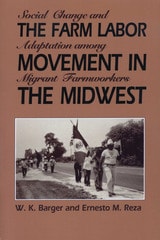
The Farm Labor Movement in the Midwest
Social Change and Adaptation among Migrant FarmworkersBy W. K. Barger and Ernesto M. Reza
University of Texas Press, 1994
The Farm Labor Organizing Committee (FLOC) was founded by Baldemar Velásquez in 1967 to challenge the poverty and powerlessness that confronted migrant farmworkers in the Midwest. This study documents FLOC's development through its first quarter century and analyzes its effectiveness as a social reform movement.
Barger and Reza describe FLOC's founding as a sister organization of the United Farm Workers (UFW). They devote particular attention to FLOC's eight-year struggle (1978-1986) with the Campbell Soup company that led to three-way contracts for improved working conditions between FLOC, Campbell Soup, and Campbell's tomato and cucumber growers in Ohio and Michigan. This contract significantly changed the structure of agribusiness and instituted key reforms in American farm labor.
The authors also address the processes of social change involved in FLOC actions. Their findings are based on extensive research among farmworkers, growers, and representatives of agribusiness, as well as personal involvement with FLOC leaders and supporters.
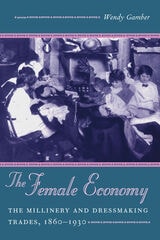
The Female Economy
The Millinery and Dressmaking Trades, 1860-1930Wendy Gamber
University of Illinois Press, 1997
The Female Economy explores that lost world of women's dominance, showing how independent, often ambitious businesswomen and the sometimes imperious consumers they served gradually vanished from the scene as custom production gave way to a largely unskilled modern garment industry controlled by men. Wendy Gamber helps overturn the portrait of wage-earning women as docile souls who would find fulfillment only in marriage and motherhood. She combines labor history, women's history, business history, and the history of technology while exploring topics as wide-ranging as the history of pattern-making and the relationship between entrepreneurship and marriage.
A volume in the series The Working Class in American History, edited by David Brody, Alice Kessler-Harris, David Montgomery, and Sean Wilentz, and in the series Women in American History, edited by Anne Firor Scott, Nancy A. Hewitt, and Stephanie Shaw
The Fight Against Platform Capitalism
An Inquiry into the Global Struggles of the Gig EconomyJamie Woodcock
University of Westminster Press, 2021
“The book rewards readers with interesting first-hand accounts of protests and pickets that are typically absent from academic discussions of the digital economy.” - https://blogs.lse.ac.uk/lsereviewofbooks/2021/03/17/book-review-the-fight-against-platform-capitalism-an-inquiry-into-the-global-struggles-of-the-gig-economy-by-jamie-woodcock/
So far, platform work has been an important laboratory for capital. Management techniques, like the use of algorithms, are being tested with a view to exporting across the global economy and it is argued that automation is undermining workers’ agency. Although the contractual trick of self-employment has allowed platforms to grow quickly and keep their costs down, yet it has also been the case also that workers have also found they can strike without following the existing regulations.
This book develops a critique of platforms and platform capitalism from the perspective of workers and contributes to the ongoing debates about the future of work and worker organising. It presents an alternative portrait returning to a focus on workers’ experience, focusing on solidarity, drawing out a global picture of new forms of agency. In particular, the book focuses on three dynamics that are driving struggles in the platform economy: the increasing connections between workers who are no longer isolated; the lack of communication and negotiation from platforms, leading to escalating worker action around shared issues; and the internationalisation of platforms, which has laid the basis for new transnational solidarity.
Focusing on transport and courier workers, online workers and freelancers author Jamie Woodcock concludes by considering how workers build power in different situations. Rather than undermining worker agency, platforms have instead provided the technical basis for the emergence of new global struggles against capitalism.
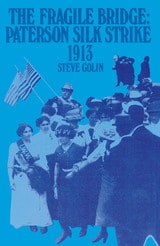
The Fragile Bridge
Paterson Silk Strike, 1913Steve Golin
Temple University Press, 1992
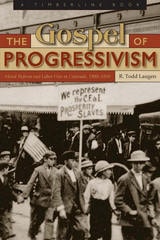
The Gospel of Progressivism
Moral Reform and Labor War in Colorado, 1900-1930R. Todd Laugen
University Press of Colorado, 2010
Sharing enemies like the party boss and corporate lobbyist who undermined honest and responsive government, Progressive leaders were determined to root out selfish political action with public exposure. Labor unions defied bosses and rallied for government protection of workers. Women's clubs appealed to other women as mothers, calling for social welfare, economic justice, and government responsiveness. Protestant church congregations formed a core of support for moral reform. Labor relations experts struggled to prevent the outbreak of violence through mediation between corporate employers and organized labor. Persevering through World War I, Colorado reformers faced their greatest challenge in the 1920s, when leaders of the Ku Klux Klan drew upon the rhetoric of Protestant Progressives and manipulated reform tools to strengthen their own political machine. Once in power, Klan legislators turned on Progressive leaders in the state government.
A story of promising alliances never fully realized, zealous crusaders who resisted compromise, and reforms with unexpected consequences, The Gospel of Progressivism will appeal to those interested in Progressive Era reform, Colorado history, labor relations, and women's activism.
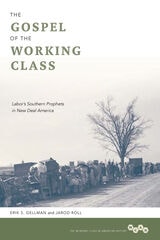
The Gospel of the Working Class
Labor's Southern Prophets in New Deal AmericaErik S. Gellman and Jarod Roll
University of Illinois Press, 2011
In this exceptional dual biography and cultural history, Erik S. Gellman and Jarod Roll trace the influence of two southern activist preachers, one black and one white, who used their ministry to organize the working class in the 1930s and 1940s across lines of gender, race, and geography. Owen Whitfield and Claude Williams, along with their wives Zella Whitfield and Joyce Williams, drew on their bedrock religious beliefs to stir ordinary men and women to demand social and economic justice in the eras of the Great Depression, New Deal, and Second World War.
The Great Strikes of 1877
Edited by David O. Stowell
University of Illinois Press, 2007
A spectacular example of collective protest, the Great Strike of 1877--actually a sequence of related actions--was America's first national strike and the first major strike against the railroad industry. In some places, non-railroad workers also abandoned city businesses, creating one of the nation's first general strikes. Mobilizing hundreds of thousands of workers, the Great Strikes of 1877 transformed the nation's political landscape, shifting the primary political focus from Reconstruction to labor, capital, and the changing role of the state.
Probing essays by distinguished historians explore the social, political, regional, and ethnic landscape of the Great Strikes of 1877: long-term effects on state militias and national guard units; ethnic and class characterization of strikers; pictorial representations of poor laborers in the press; organizational strategies employed by railroad workers; participation by blacks; violence against Chinese immigrants; and the developing tension between capitalism and racial equality in the United States.
Contributors: Joshua Brown, Steven J. Hoffman, Michael Kazin, David Miller, Richard Schneirov, David O. Stowell, and Shelton Stromquist.
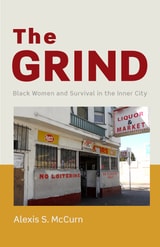
The Grind
Black Women and Survival in the Inner CityMcCurn, Alexis S
Rutgers University Press, 2018
Alexis S. McCurn draws on nearly two years of naturalistic field research among adolescents and adults in Oakland, California to provide an ethnographic account of how black women accomplish the routine tasks necessary for basic survival in poor inner-city neighborhoods and how the intersections of race, gender, and class shape how black women interact with others in public. This book makes the case that the daily consequences of racialized poverty in the lives of African Americans cannot be fully understood without accounting for the personal and collective experiences of poor black women.
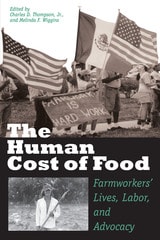
The Human Cost of Food
Farmworkers' Lives, Labor, and AdvocacyEdited by Charles D. Thompson, Jr., and Melinda F. Wiggins
University of Texas Press, 2002
Finding fresh fruits and vegetables is as easy as going to the grocery store for most Americans—which makes it all too easy to forget that our food is cultivated, harvested, and packaged by farmworkers who labor for less pay, fewer benefits, and under more dangerous conditions than workers in almost any other sector of the U.S. economy. Seeking to end the public's ignorance and improve workers' living and working conditions, this book addresses the major factors that affect farmworkers' lives while offering practical strategies for action on farmworker issues.
The contributors to this book are all farmworker advocates—student and community activists and farmworkers themselves. Focusing on workers in the Southeast United States, a previously understudied region, they cover a range of issues, from labor organizing, to the rise of agribusiness, to current health, educational, and legal challenges faced by farmworkers. The authors blend coverage of each issue with practical suggestions for working with farmworkers and other advocates to achieve justice in our food system both regionally and nationally.

The Informal and Underground Economy of the South Texas Border
By Chad Richardson and Michael J. Pisani
University of Texas Press, 2012
Much has been debated about the presence of undocumented workers along the South Texas border, but these debates often overlook the more complete dimension: the region’s longstanding, undocumented economies as a whole. Borderlands commerce that evades government scrutiny can be categorized into informal economies (the unreported exchange of legal goods and services) or underground economies (criminal economic activities that, obviously, occur without government oversight). Examining long-term study, observation, and participation in the border region, with the assistance of hundreds of locally embedded informants, The Informal and Underground Economy of the South Texas Border presents unique insights into the causes and ramifications of these economic channels.
The third volume in UT–Pan American’s Borderlife Project, this eye-opening investigation draws on vivid ethnographic interviews, bolstered by decades of supplemental data, to reveal a culture where divided loyalties, paired with a lack of access to protection under the law and other forms of state-sponsored recourse, have given rise to social spectra that often defy stereotypes. A cornerstone of the authors’ findings is that these economic activities increase when citizens perceive the state’s intervention as illegitimate, whether in the form of fees, taxes, or regulation. From living conditions in the impoverished colonias to President Felipe Calderón’s futile attempts to eradicate police corruption in Mexico, this book is a riveting portrait of benefit versus risk in the wake of a “no-man’s-land” legacy.

The Jobless Future
Second EditionStanley Aronowitz
University of Minnesota Press, 2010
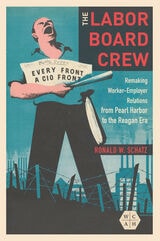
The Labor Board Crew
Remaking Worker-Employer Relations from Pearl Harbor to the Reagan EraRonald W. Schatz
University of Illinois Press, 2021
Schatz argues that the Labor Board vets, who saw themselves as disinterested technocrats, were in truth utopian reformers aiming to transform the world. Beginning in the 1970s stagflation era, they faced unforeseen opposition, and the cooperative relationships they had fostered withered. Yet their protégé George Shultz used mediation techniques learned from his mentors to assist in the integration of Southern public schools, institute affirmative action in industry, and conduct Cold War negotiations with Mikhail Gorbachev.
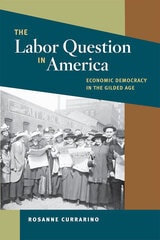
The Labor Question in America
Economic Democracy in the Gilded AgeRoseanne Currarino
University of Illinois Press, 2011
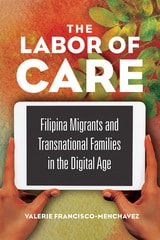
The Labor of Care
Filipina Migrants and Transnational Families in the Digital AgeValerie Francisco-Menchavez
University of Illinois Press, 2018
The Labor of Faith
Gender and Power in Black Apostolic PentecostalismJudith Casselberry
Duke University Press, 2017
The Labor of Job
The Biblical Text as a Parable of Human LaborAntonio Negri
Duke University Press, 2009
The Labor of Job was first published in Italy in 1990. Negri began writing it in the early 1980s, while he was a political prisoner in Italy, and it was the first book he completed during his exile in France (1983–97). As he writes in the preface, understanding suffering was for him in the early 1980s “an essential element of resistance. . . . It was the problem of liberation, in prison and in exile, from within the absoluteness of Power.” Negri presents a Marxist interpretation of Job’s story. He describes it as a parable of human labor, one that illustrates the impossibility of systems of measure, whether of divine justice (in Job’s case) or the value of labor (in the case of late-twentieth-century Marxism). In the foreword, Michael Hardt elaborates on this interpretation. In his commentary, Roland Boer considers Negri’s reading of the book of Job in relation to the Bible and biblical exegesis. The Labor of Job provides an intriguing and accessible entry into the thought of one of today’s most important political philosophers.

The Labor of Literature
Democracy and Literary Culture in Modern ChileJane D. Griffin
University of Massachusetts Press, 2016
By examining alternative literary publications, Griffin recasts the seventeen-year Pinochet dictatorship as a time of editorial experimentation despite widespread cultural oppression and shows how grassroots cultural activism has challenged government-approved corporate publishing models throughout the postdictatorship period. Griffin's work also points to the growing importance of autogestión, or do-it-yourself cultural production, where individuals combine artisanal forms with new technologies to make and share creative work on a global scale.

The Landrum-Griffin Act and Union Democracy
Doris B. McLaughlin and Anita L.W. Schoomaker
University of Michigan Press, 1979
The Leverage of Labor
Managing the Cortés Haciendas in Tehuantepec, 1588–1688Lolita Gutiérrez Brockington
Duke University Press, 1989

The Life and Death of Texas German
Eileen Boris, ed.
Duke University Press, 0
By comparing and contrasting present-day data with data from the German dialects brought to Texas since the 1840s, the volume offers an in-depth analysis of mutual interaction between the German-speaking community and English-speaking Texans, long-term accommodation of Texas German speakers in this new community, and language hybridization on the Texas frontier. The volume also analyzes a number of phonological, syntactic, and morphological changes in Texas German over the past century and examines sociolinguistic aspects of the Texas German community from its foundation to today, providing insight into the dynamics underlying new-dialect formation, diglossia, language shift, language maintenance, and language death. Finally, the volume investigates the rapid disappearance of languages, which has global social and cultural implications for areas beyond linguistics.
The Many Futures of Work
Rethinking Expectations and Breaking MoldsEdited by Peter A. Creticos, Larry Bennett, Laura Owen, Costas Spirou, and Maxine Morphis-Riesbeck
Temple University Press, 2021
What will work eventually look like? This is the question at the heart of this timely collection. The editors and contributors—a mix of policy experts, academics, and advocates—seek to reframe the typical projections of the “future” of work. They examine the impact of structural racism on work, the loss of family‑sustaining jobs, the new role of gig work, growing economic inequality, barriers to rewarding employment such as age, gender, disability, and immigration status, and the business policies driving these ongoing challenges.
Together the essays present varied and practical insights into both U.S. and global trends, discuss the role of labor activism in furthering economic justice, and examine progressive strategies to improve the experience of work, wages, and the lives of workers. The Many Futures of Work offers a range of viable policies and practices that can promote rewarding employment and steer our course away from low-wage, unstable jobs toward jobs that lead to equitable prosperity and economic inclusion.

The Many and the Few
A Chronicle of the Dynamic Auto WorkersHenry Kraus. With an Introduction by Neil O. Leighton, William J. Meyer, and Nan Pendrell
University of Illinois Press, 1985
The Mine Next Door
Turning Points in Corporate Social Responsibility Communicative PracticeAmy O'Connor
University of Michigan Press, 2026
The Mine Next Door peels back the veneer of corporate public relations to expose the jagged edges that define the boundaries of corporate social responsibility (CSR) in Minnesota’s Iron Range. With five years of ethnographic and archival research, Amy O’Connor was able to interview over seventy people, including miners, retired miners, community members, elected officials, and representatives from Cleveland-Cliffs Inc. In addition to illuminating the everyday lives of Minnesota’s taconite miners and community members, she compares the corporate narratives of CSR with these lived experiences to reveal how CSR boundaries are co-constructed, contested, and consequential.
In this rare ethnographic account of iron ore mining in the United States, O’Connor shows how turning points—whether macrolevel (e.g., capitalism, governmental policy, and regulation) or microlevel (e.g., miner experiences, local culture, company proclivities)—create CSR communicative practice boundaries that are influenced by culture, history, and geography. The permanence and precariousness of the mining industry offers a unique opportunity to show how corporations, workers, and communities both collaborate and clash. The Mine Next Door argues that to understand CSR communicative practices, we must move beyond the staid, homogeneous CSR reports and glossy public relations documents to reveal the messy and contradictory moments of decision wherein corporations and communities determine where a company has power and responsibility.