Results by title
169 books match the query 'Land' and 32 start with t
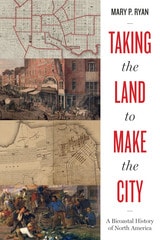
Taking the Land to Make the City
A Bicoastal History of North AmericaBy Mary P. Ryan
University of Texas Press, 2019
The history of the United States is often told as a movement westward, beginning at the Atlantic coast and following farmers across the continent. But cities played an equally important role in the country’s formation. Towns sprung up along the Pacific as well as the Atlantic, as Spaniards and Englishmen took Indian land and converted it into private property. In this reworking of early American history, Mary P. Ryan shows how cities—specifically San Francisco and Baltimore—were essential parties to the creation of the republics of the United States and Mexico.
Baltimore and San Francisco share common roots as early trading centers whose coastal locations immersed them in an international circulation of goods and ideas. Ryan traces their beginnings back to the first human habitation of each area, showing how the juggernaut toward capitalism and nation-building could not commence until Europeans had taken the land for city building. She then recounts how Mexican ayuntamientos and Anglo American city councils pioneered a prescient form of municipal sovereignty that served as both a crucible for democracy and a handmaid of capitalism. Moving into the nineteenth century, Ryan shows how the citizens of Baltimore and San Francisco molded landscape forms associated with the modern city: the gridded downtown, rudimentary streetcar suburbs, and outlying great parks. This history culminates in the era of the Civil War when the economic engines of cities helped forge the East and the West into one nation.
Teaching About Place
Learning From The LandLaird Christensen
University of Nevada Press, 2008
Technologies for the Electrification of Land and Sea Transportation
Muhyaddin J.H. Rawa
The Institution of Engineering and Technology, 2025
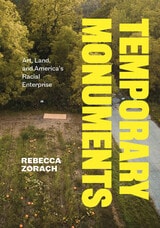
Temporary Monuments
Art, Land, and America's Racial EnterpriseRebecca Zorach
University of Chicago Press, 2024
Art has long played a key role in constructing how people understand and imagine America. Starting with contemporary controversies over public monuments in the United States, Rebecca Zorach carefully examines the place of art in the occupation of land and the upholding of White power in the US, arguing that it has been central to the design of America’s racial enterprise. Confronting closely held assumptions of art history, Zorach looks to the intersections of art, nature, race, and place, working through a series of symbolic spaces—the museum, the wild, islands, gardens, home, and walls and borders—to open and extend conversations on the political implications of art and design.
Against the backdrop of central moments in American art, from the founding of early museums to the ascendancy of abstract expressionism, Zorach shows how contemporary artists—including Dawoud Bey, Theaster Gates, Maria Gaspar, Kerry James Marshall, Alan Michelson, Dylan Miner, Postcommodity, Cauleen Smith, and Amanda Williams—have mined the relationship between environment and social justice, creating works that investigate and interrupt White supremacist, carceral, and environmentally toxic worlds. The book also draws on poetry, creative nonfiction, hip-hop videos, and Disney films to illuminate crucial topics in art history, from the racial politics of abstraction to the origins of museums and the formation of canons.
Territorial Ambition
Land and Society in Arkansas, 1800-1840S. Charles Bolton
University of Arkansas Press, 2020
The Arkansas Delta
Land of ParadoxWilliard B. Gatewood Jr.
University of Arkansas Press, 1993
The Church and the Land
The National Catholic Rural Life Conference and American Society, 1923–2007David S. Bovée
Catholic University of America Press, 2010
The Devil and the Land of the Holy Cross
Witchcraft, Slavery, and Popular Religion in Colonial BrazilBy Laura de Mello e Souza
University of Texas Press, 2004
Originally published in Brazil as O Diabo e a Terra de Santa Cruz, this translation from the Portuguese analyzes the nature of popular religion and the ways it was transferred to the New World in the sixteenth and seventeenth centuries. Using richly detailed transcripts from Inquisition trials, Mello e Souza reconstructs how Iberian, indigenous, and African beliefs fused to create a syncretic and magical religious culture in Brazil.
Focusing on sorcery, the author argues that European traditions of witchcraft combined with practices of Indians and African slaves to form a uniquely Brazilian set of beliefs that became central to the lives of the people in the colony. Her work shows how the Inquisition reinforced the view held in Europe (particularly Portugal) that the colony was a purgatory where those who had sinned were exiled, a place where the Devil had a wide range of opportunities. Her focus on the three centuries of the colonial period, the multiple regions in Brazil, and the Indian, African, and Portuguese traditions of magic, witchcraft, and healing, make the book comprehensive in scope.
Stuart Schwartz of Yale University says, "It is arguably the best book of this genre about Latin America...all in all, a wonderful book." Alida Metcalf of Trinity University, San Antonio, says, "This book is a major contribution to the field of Brazilian history...the first serious study of popular religion in colonial Brazil...Mello e Souza is a wonderful writer."
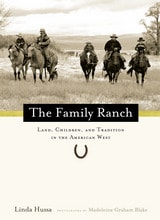
The Family Ranch
Land, Children, and Tradition in the American WestLinda Hussa
University of Nevada Press, 2010
Ranch families in the twenty-first century face many challenges, from competition with government-subsidized agribusiness corporations to tax laws that encourage development over agriculture and prevent the smooth transfer of land from one generation to the next. As a stabilizing force in the American West, ranch families play a critical role in our country, perhaps more so today than ever before, yet their stories have rarely been told. They contribute to our nation with the food they raise, the environments they protect, and the resources they manage, and they preserve our western heritage while holding the West open for the rest of us. In The Family Ranch, award-winning author Linda Hussa offers readers a personal, inside view into the lives of six diverse ranching families and the land that shapes their days and nights. Photographer Madeleine Graham Blake provides engaging and often moving images that portray each family at work and at play. With chapters on the critical issues that face each of them—from grazing rights and water use, to children's education and the emerging rural marketplace—these family profiles are set in a larger context. This is family ranching as it is now, a tracing of how it always was, but made far more complex in modern times. By combining their traditions with the tools of modern technology, these people strengthen the ideal of family and give the business of ranching a vibrant and viable future.The Family Ranch is rich in remarkable stories of what happens when parents, children, work, and nature come together for a lifetime of commitment. It speaks to urban and rural people in important ways, illuminating the realities of the western ranch and the people who make their living, and their lives, on it. Essential reading for people who love the West and care about its future. The Family Ranch inspires thoughts about tradition, values, and responsibility that are applicable to all communities.
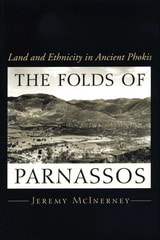
The Folds of Parnassos
Land and Ethnicity in Ancient PhokisBy Jeremy McInerney
University of Texas Press, 2000
Independent city-states (poleis) such as Athens have been viewed traditionally as the most advanced stage of state formation in ancient Greece. By contrast, this pioneering book argues that for some Greeks the ethnos, a regionally based ethnic group, and the koinon, or regional confederation, were equally valid units of social and political life and that these ethnic identities were astonishingly durable.
Jeremy McInerney sets his study in Phokis, a region in central Greece dominated by Mount Parnassos that shared a border with the panhellenic sanctuary at Delphi. He explores how ecological conditions, land use, and external factors such as invasion contributed to the formation of a Phokian territory. Then, drawing on numerous interdisciplinary sources, he traces the history of the region from the Archaic age down to the Roman period. McInerney shows how shared myths, hero cults, and military alliances created an ethnic identity that held the region together over centuries, despite repeated invasions. He concludes that the Phokian koinon survived because it was founded ultimately on the tenacity of the smaller communities of Greece.
The Hanford Reach
A Land of ContrastsText by Susan Zwinger; Photographs by Skip Smith
University of Arizona Press, 2004
The Land and the Loom
Peasants and Profit in Northern France, 1680–1800Liana Vardi
Duke University Press, 1993
Drawing on evidence culled from parish registers, notarial records, and judicial archives, Liana Vardi outlines the development of the linen weaving trade in Montigny and details the local peasants' participation. The peasants that emerge from her study are not the figures of tradition, driven solely by symbolic attachment to the land and unreasonably devoted to village solidarities. Instead they reveal remarkable flexibility and diversity, not only improving farming methods and raising yields during the eighteenth century, but also using land to finance investments in industry and to develop local business, far-flung commercial networks and complex credit mechanisms. The eighteenth-century French countryside appears as a region and time of capitalist experimentation, cut short by pre-Revolutionary and Revolutionary crises.
Meticulously documented, broadly interpretive, and beautifully written, this fascinating book will permenantly alter conventional perceptions of peasant life and rural industry and, ultimately, the way ordinary people are seen in seemingly distant times and places.
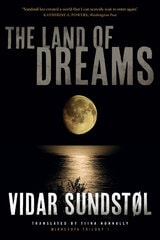
The Land of Dreams
Vidar Sundstøl
University of Minnesota Press, 2014
Winner of the Riverton Prize for best Norwegian crime novel and named by Dagbladet as one of the top twenty-five Norwegian crime novels of all time, The Land of Dreams is the chilling first installment in Vidar Sundstøl’s critically acclaimed Minnesota Trilogy, set on the rugged north shore of Lake Superior and in the region’s small towns and deep forests.
The grandson of Norwegian immigrants, Lance Hansen is a U.S. Forest Service officer and has a nearly all-consuming passion for local genealogy and history. But his quiet routines are shattered one morning when he comes upon a Norwegian tourist brutally murdered near a stone cross on the shore of Lake Superior. Another Norwegian man is nearby; covered in blood and staring out across the lake, he can only utter the word kjærlighet. Love.
FBI agent Bob Lecuyer is assigned to the case, as is Norwegian detective Eirik Nyland, who is immediately flown in from Oslo. As the investigation progresses, Lance begins to make shocking discoveries—including one that involves the murder of an Ojibwe man on the very same site more than one hundred years ago. As Lance digs into two murders separated by a century, he finds the clues may in fact lead toward someone much closer to home than he could have imagined.
The Land of Dreams is the opening chapter in a sweeping chronicle from one of Norway’s leading crime writers—a portrait of an extraordinary landscape, an exploration of hidden traumas and paths of silence that trouble history, and a haunting study in guilt and the bonds of blood.

The Land of Green Plums
Herta Muller
Northwestern University Press, 1998
The Land of Houlouf
Genesis of a Chadic Polity, 1900 B.C.–A.D. 1800Augustin F. C. Holl
University of Michigan Press, 2002
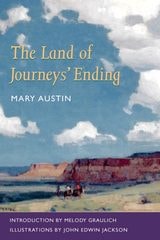
The Land of Journeys' Ending
Mary Austin
University of Illinois Press, 2003
When The Land of Journeys' Ending was first published in 1924, The Literary Reviewwarned, "This book is treacherous, waiting to overwhelm you with its abundant poetry." In it, successful New York author Mary Austin describes the epic journey she undertook in 1923, when left her East Coast home at the age of fifty-five to travel through the southwestern United States, the area where she lived as a child and where she would later retire.
The journey the book describes is a double one. Austin describes her transition from the cosmopolitan North East to the arid and largely unfamiliar land between the Colorado River and the Rio Grande. In telling her own story, Austin also tells the story of those who journeyed there before her-–Native American tribes, Spanish conquistadores, miners, adventurers, and California-bound migrants. The result is both an homage to the magnificence of the desert, mountains, rivers, canyons, plants, and animals of the Southwest and a history of the waves of people who inhabited the region.
Part memoir, part travel narrative, part historical investigation, and part ecological study, The Land of Journeys' Ending is a moving account of a woman coming full circle, finding solace in the broad landscape of her youth.
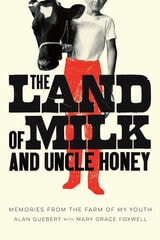
The Land of Milk and Uncle Honey
Memories from the Farm of My YouthAlan Guebert with Mary Grace Foxwell
University of Illinois Press, 2015
Here are Guebert's tireless parents, measuring the year not in months but in seasons for sewing, haying, and doing the books; Jackie the farmhand, needing ninety minutes to do sixty minutes' work and cussing the entire time; Hoard the dairyman, sore fingers wrapped in electrician's tape, sharing wine and the prettiest Christmas tree ever; and the unflappable Uncle Honey, spreading mayhem via mistreated machinery, flipped wagons, and the careless union of diesel fuel and fire.
Guebert's heartfelt and humorous reminiscences depict the hard labor and simple pleasures to be found in ennobling work, and show that in life, as in farming, Uncle Honey had it right with his succinct philosophy for overcoming adversity: "the secret's not to stop."
https://www.youtube.com/watch?v=DooGQqUlXI4&index=1&list=FLPxtuez-lmHxi5zpooYEnBg
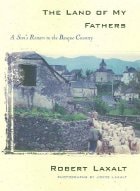
The Land of My Fathers
A Son's Return to the Basque CountryRobert Laxalt
University of Nevada Press, 2024
In 1960, renowned Nevada writer Robert Laxalt moved himself and his family to a small Basque village in the French Pyrenees. The son of Basque emigrants, Laxalt wanted to learn as much as he could about the ancient and mysterious people from which he was descended and about the country from which his parents came. Thanks to his Basque surname and a wide network of family connections, Laxalt was able to penetrate the traditional reserve of the Basques in a way that outsiders rarely can. In the process, he gained rare insight into the nature of the Basques and the isolated, beautiful mountain world where they have lived for uncounted centuries. Based on Laxalt’s personal journals of this and a later sojourn in 1965, The Land of My Fathers is a moving record of a people and their homeland. Through Laxalt’s perceptive eyes and his wife Joyce’s photographs, we observe the Basques’ market days and festivals, join their dove hunts and harvests, share their humor and history, their deep sense of nationalism, their abiding pride in their culture and their homes, and discover the profound sources of the Basques’ strength and their endurance as a people. Photography by Joyce Laxalt.
The Land of the Dead Is Open for Business
Jacob Strautmann
Four Way Books, 2020
The Lies of the Land
Seeing Rural America for What It Is—and Isn’tSteven Conn
University of Chicago Press, 2023
It seems everyone has an opinion about rural America. Is it gripped in a tragic decline? Or is it on the cusp of a glorious revival? Is it the key to understanding America today? Steven Conn argues that we’re missing the real question: Is rural America even a thing? No, says Conn, who believes we see only what we want to see in the lands beyond the suburbs—fantasies about moral (or backward) communities, simpler (or repressive) living, and what it means to be authentically (or wrongheadedly) American. If we want to build a better future, Conn argues, we must accept that these visions don’t exist and never did.
In The Lies of the Land, Conn shows that rural America—so often characterized as in crisis or in danger of being left behind—has actually been at the center of modern American history, shaped by the same forces as everywhere else in the country: militarization, industrialization, corporatization, and suburbanization. Examining each of these forces in turn, Conn invites us to dispense with the lies and half-truths we’ve believed about rural America and to pursue better solutions to the very real challenges shared all across our nation.
The Ozarks
Land and LifeMilton D. Rafferty
University of Arkansas Press, 2001
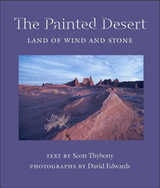
The Painted Desert
Land of Wind and StoneText by Scott Thybony; Photographs by David Edwards
University of Arizona Press, 2006
But this remote pocket of the Arizona desert, sandwiched between the Little Colorado River on one side and bold escarpments on the other, is much more than most tourists ever experience. An ethereal landscape of sculpted rock, wind-fluted cliffs, and elegantly drifting sand, the Painted Desert is a rich storehouse of natural beauty, colorful history, and scientific wonders. Here the strongest winds in Arizona blow across extensive dunefields, where less than ten inches of rain falls each year and only a few desert-savvy Navajo are able to live.
Now, for the first time award-winning writer Scott Thybony and freelance photographer David Edwards offer an intimate look at a place that remains inhospitable and inaccessible to so many. They share insights about the geology, paleontology, anthropology, and human history of the region as well as personal stories that dispel the misconceptions and mysteries that surround this delicate and difficult landscape.
With fifteen stunning photographs gracing the text, this book offers a vibrant portrait of one of the Southwest’s most barren, and most colorful landscapes.
The Politics of Ecology
Land, Life, and Law in Medieval BritainEdited by Randy P. Schiff and Joseph Taylor
The Ohio State University Press, 2016
This volume, edited by Randy P. Schiff and Joseph Taylor, presents a diverse and stimulating group of interconnected essays that respond to these questions by infusing biopolitical material and theory into ecocentric studies of medieval life. The Politics of Ecology: Land, Life, and Law in Medieval Britain pursues the political power of sovereign law as it disciplines and manages various forms of natural life, and discloses the literary biopolitics played out in texts that work out the fraught interactions of life and law, in all its forms. Contributors to this volume explore such issues as legal networks and death, Arthurian bare life, Chaucerian medical biopolitics, the biopolitics of fur, ecologies of sainthood, arboreal political theology, conservation and political ecology, and geographical melancholy.
Bringing together both established and rising critical voices, The Politics of Ecology creates a place for cutting-edge medievalist ecocriticism focused on the intersections of land, life, and law in medieval English, French, and Latin literature.
The Use of Land and Water Resources in the Past and Present Valley of Oaxaca, Mexico
Anne V. T. Kirkby
University of Michigan Press, 1973
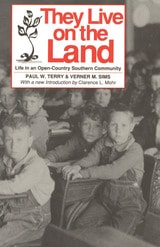
They Live on The Land
Life in an Open Country Southern CommunityPaul W. Terry
University of Alabama Press, 1993
—Florida Historical Quarterly
"One of the finest examples of the genre of the community survey. . . The book is remarkably free of special pleading. And every chapter is paced with fascinating data and insights. The University of Alabama Prss is to be congratulated for reissuing this splendid community study; the volume fits the description of a classic. And Clarence L. Mohr's introduction alone is worth the price of the volume."
—Journal of Southwest Georgia History
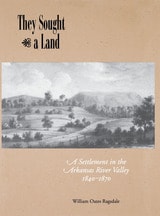
They Sought a Land
A Settlement in the Arkansas River Valley, 1840–1870William Oates Ragsdale
University of Arkansas Press, 1997
Pisgah grew and prospered, developing increasingly successful farming practices, landholding patterns, and trading strategies. But the Civil War took a heavy toll, taking workers away from farms, subjecting those left on the home front to deprivation and violence, and creating division in the community. By 1870, the people of Pisgah had dispersed into Arkansas’s larger developing society.
Absorbing to read and rich with colorful detail, They Sought a Land is an important story of the westward expansion of the United States and the settling of the American South during the nineteenth century.
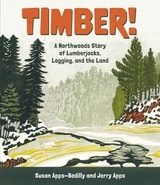
Timber!
A Northwoods Story of Lumberjacks, Logging, and the LandSusan Apps-Bodilly
Wisconsin Historical Society Press, 2024
How did the logging boom begin? What was it like to work in the woods? What happened to the land after the trees were cut down? The latest book for young readers from father-daughter duo Jerry Apps and Susan Apps-Bodilly explores the origin story of Wisconsin’s logging boom, the devastation it caused to the land, and the extraordinary efforts to restore the cutover land and log sustainably.
Timber! helps young readers examine a complex and pivotal chapter in our state and nation’s history, covering a wide range of topics, including:
• how Native people used, shared, and relied on natural resources for thousands of years
• the forced removal of Native people from forested lands
• how the lumber industry made possible the westward expansion of the United States
• what it was like to work in a logging camp, on a log drive, and inside a sawmill
• the roles on a logging team, from sawyer to cook
• the destructive legacy of early logging practices and early efforts to restore the land
• the emergence of sustainable forestry practices
This comprehensive yet easy-to-read history includes letters, postcards, and other primary sources paired with discussion questions designed to engage young readers’ creativity and critical-thinking skills. Timber! also features more than 100 images, a glossary, suggested activities, and an extensive list of related resources, including books, websites, teaching materials, museums, and outdoor places to visit. Timber! will inspire readers of all ages to explore, protect, and learn about trees and forests in their own communities.
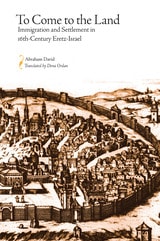
To Come to the Land
Immigration and Settlement in 16th-Century Eretz-IsraelAbraham David, translated by Dena Ordan
University of Alabama Press, 1999
To Come to the Land makes available in English a vast body of research,
previously available only in Hebrew, on the early history of the land now
known as Israel.
Abraham David here focuses on the Spanish and Portuguese Jews who fled
the Iberian Peninsula during the 16th century, tracing the beginnings of
Sephardic influence in the land of Israel.
After the Ottoman Turks conquered Syria, Palestine, and Egypt in 1516,
the Ottoman regime, unlike their Mamluk predecessors, encouraged economic
development and settlement throughout the region. This openness to immigration
offered a solution to the crisis Iberian Jews were undergoing as a result
of their expulsion from Spain and the forced conversions in Portugal. Within
a few years of the Ottoman conquest, Jews of Spanish extraction, many of
them clustered in urban areas, dominated the Jewish communities of Eretz-Israel.
In this carefully researched study, David examines the lasting impression
made by these enterprising Jewish settlers on the commercial, social, and
intellectual life of the area under early Ottoman rule. Of particular interest
is his examination of the cities of Jerusalem and Safed and David's succinct
biographies of leading Jewish personalities throughout the region.
This first English translation of a ground-breaking Hebrew work provides
a comprehensive overview of a significant chapter in the history of Israel
and explores some of the factors that brought to it the best minds of the
age. Essential for scholars of late Medieval Jewish history, To Come to
the Land will also be an important resource for scholars of intellectual
history, as it provides background crucial to an understanding of the intellectual
flourishing of the period.
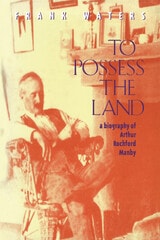
To Possess The Land
A Biography Of Arthur Rochford ManbyFrank Waters
Ohio University Press, 1993
Ambitious and only twenty-four years old, Arthur Manby arrived from England to the Territory of New Mexico in 1883 and saw in its wilderness an empire that he believed himself destined to rule. For his kingdom, he chose a vast Spanish land grant near Taos, a wild 100,000 acres whose title was beyond question. Obsessed, he poured more than twenty years into his dream of glory, and schemed, stole, lied, cajoled, begged, and bribed to take the vast grant from its rightful owners. With great mastery, Waters draws us into this obsession, and the intense drama of these years is at once psychological and historical. In May 1913, Manby came at last to possess the grant, but within three years it had slipped again from his grasp.
The story does not end there, and perhaps only Frank Waters could have portrayed the strange disintegration of Manby’s personality as he aged, his frantic but ingenious efforts to regain “his” land. Among these was the creation of a secret society which terrorized whole towns and villages, becoming so powerful that even Manby no longer knew all its members and workings. At the same time he turned deeper inward, locked and bolted his gates against the outside world which hated and feared him more than ever. On July 3, 1929, a swollen, headless body was discovered in Manby’s Taos home. Some said it was murder; others swore the body was not Manby’s; still others reported seeing him alive afterward. The story blazed into national headlines and an official inquiry followed. Step by step, Waters takes us into the web of strange clues, evidence, more murders and complications—an investigation which the New Mexican government inexplicably called to a halt. The case remains one of the West’s greatest unsolved mysteries.
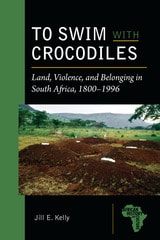
To Swim with Crocodiles
Land, Violence, and Belonging in South Africa, 1800-1996Jill E Kelly
Michigan State University Press, 2018
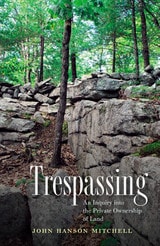
Trespassing
An Inquiry into the Private Ownership of LandJohn Hanson Mitchell
University Press of New England, 2015
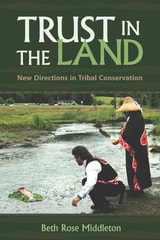
Trust in the Land
New Directions in Tribal ConservationBeth Rose Middleton
University of Arizona Press, 2011
—Cayuse Chief Young Chief, Walla Walla Council of 1855
America has always been Indian land. Historically and culturally, Native Americans have had a strong appreciation for the land and what it offers. After continually struggling to hold on to their land and losing millions of acres, Native Americans still have a strong and ongoing relationship to their homelands. The land holds spiritual value and offers a way of life through fishing, farming, and hunting. It remains essential—not only for subsistence but also for cultural continuity—that Native Americans regain rights to land they were promised.
Beth Rose Middleton examines new and innovative ideas concerning Native land conservancies, providing advice on land trusts, collaborations, and conservation groups. Increasingly, tribes are working to protect their access to culturally important lands by collaborating with Native and non- Native conservation movements. By using private conservation partnerships to reacquire lost land, tribes can ensure the health and sustainability of vital natural resources. In particular, tribal governments are using conservation easements and land trusts to reclaim rights to lost acreage. Through the use of these and other private conservation tools, tribes are able to protect or in some cases buy back the land that was never sold but rather was taken from them.
Trust in the Land sets into motion a new wave of ideas concerning land conservation. This informative book will appeal to Native and non-Native individuals and organizations interested in protecting the land as well as environmentalists and government agencies.