Results by title
135 books match the query 'Landscape' and 20 start with t
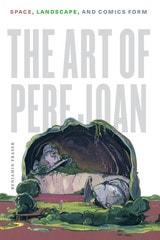
The Art of Pere Joan
Space, Landscape, and Comics FormBy Benjamin Fraser
University of Texas Press, 2019
Born in Mallorca, Pere Joan Riera (known professionally as Pere Joan) thrived in the underground comics world, beginning in the mid-1970s with the self-published collections Baladas Urbanas and MuŽrdago, both of which were released almost immediately after the death of the dictator Francisco Franco and Spain's transition to democracy. The first monograph in English on a comics artist from Spain, The Art of Pere Joan takes a topographical approach to reading comics, applying theories of cultural and urban geography to Pere Joan’s treatment of space and landscape in his singular body of work.
Balancing this goal with an exploration of specific works by Pere Joan, Benjamin Fraser demonstrates that looking at the thematic, structural, and aesthetic originality of the artist's landscape-driven work can help us begin to newly understand the representational properties of comics as a spatial medium. This in-depth examination reveals the resonance between the cultural landscapes of Mallorca and Pere Joan's metaphorical approach to both rural and urban environments in comics that weave emotional, ecological, and artistic strands in revolutionary ways.

The Book of American Windsor Furniture
Styles and TechnologiesJohn Kassay
University of Massachusetts Press, 1998
Combining comfort, simplicity, and craftsmanship, Windsor chairs have long been prized by collectors. Introduced from England in the early 1700s, the Windsor style took hold in America first as seating for the well-to-do and later as the favorite chair of the general population. Included in the Windsor family are stools, tables, settees, high chairs, cradles, and candle stands, but the greatest variety is found in the chairs, which range from comb-back to bow-back to step-down versions. Their makers took advantage of the natural properties of different woods for particular components of the chairs, employing hickory, red oak, or ash for bent parts, maple for turnings, and pine for seats.
Kassay meticulously documents all of these features and styles with drawings so accurate and precise that amateur furniture makers can use them as blueprints for creating Windsor reproductions. The drawings are complemented by narrative descriptions, photographs, and a list of measured parts for each of the pieces under discussion.

The Book of Shaker Furniture
John Kassay
University of Massachusetts Press, 1980
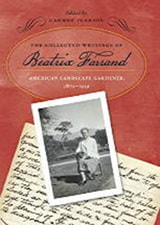
The Collected Writings of Beatrix Farrand
American Landscape Gardener, 1872-1959Beatrix Farrand
University Press of New England, 2009
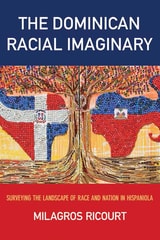
The Dominican Racial Imaginary
Surveying the Landscape of Race and Nation in HispaniolaRicourt, Milagros
Rutgers University Press, 2016
This book begins with a simple question: why do so many Dominicans deny the African components of their DNA, culture, and history?
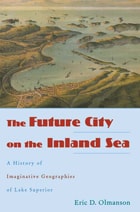
The Future City on the Inland Sea
A History of Imaginative Geographies of Lake SuperiorEric D. Olmanson
Ohio University Press, 2007
Winner of the AAG’s John Brinckerhoff Jackson Prize
Winner of the Great Lakes American Studies Association/Ohio University Press Book Award
Throughout the nineteenth century, the southern shores of Lake Superior held great promise for developers imagining the next great metropolis. These new territories were seen as expanses to be filled, first with romantic visions, then with scientific images, and later with vistas designed to entice settlement and economic development. The Future City on the Inland Sea describes the attempts of explorers under government, commercial, or scientific sponsorship to project their imaginative visions on a region where the future did not happen as planned.
Author Eric D. Olmanson takes a fresh look at the settlements in the vicinity of Chequamegon Bay and the Apostle Islands by analyzing the texts and images left by the missionaries, geologists, ordinance surveyors, newspaper editors, and boosters. The Future City on the Inland Sea shows how new visions of the place absorbed and replaced the old ones, eventually producing what might be called for the first time “a region.”
More than a regional geography, The Future City on the Inland Sea is an appraisal of these early efforts to meld geographies of physical nature with those of human ideals, a demonstration of how thoroughly and paradoxically those two realms are entangled.
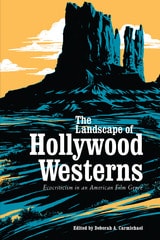
The Landscape of Hollywood Westerns
Ecocriticism in an American Film GenreCarmichael, Deborah A
University of Utah Press, 2006
The essays in this volume scrutinize the special place of nature and landscape in films—including silent, documentary, and feature length film—that are specifically American and Western. The films discussed here go beyond the stereotypical sagebrush setting. Although many of the films closely fit the standard conventions of the Western, others demonstrate the fluidity of the genre. The wildness of the western environment as a central fact of the American mythos encompasses far more than a brief period of national history or a specific geographical location.
The Landscape of Rural Service Learning, and What It Teaches Us All
Randy Stoecker
Michigan State University Press, 2016
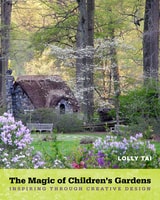
The Magic of Children's Gardens
Inspiring Through Creative DesignLolly Tai
Temple University Press, 2017
Children’s gardens are magical places where kids can interact with plants, see where food and fibers grow, and experience the role of birds, butterflies, and bees in nature. These gardens do more than just expose youngsters to outdoor environments, they also provide marvelous teaching opportunities for them to visit a small plot, care for vegetables and flowers, and interact in creative spaces designed to stimulate all five senses.
In The Magic of Children’s Gardens, landscape architect Lolly Tai provides the primary goals, concepts and key considerations for designing outdoor spaces that are attractive to and suitable for children especially in urban environments. Tai presents inspiring ideas for creating children’s green spaces by examining nearly twentycase studies, including the Chicago Botanic Gardens and Longwood Gardens in Kennett Square, PA.
The Magic of Children’s Gardens features hundreds of comprehensive drawings and gorgeous photographs of successful children’s outdoor environments, detailed explanations of the design process, and the criteria needed to create attractive and pleasing gardens for children to augment their physical, mental, and emotional development.
Exposing youth to well-planned outdoor environments promotes our next generation of environmental stewards. The Magic of Children's Gardens offers practitioners a guide to designing these valued spaces.
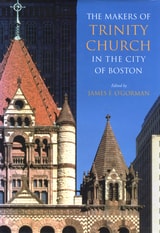
The Makers of Trinity Church in the City of Boston
James F. O'Gorman
University of Massachusetts Press, 2004
While critics often speak of the church as Richardson's creation, this collection of essays, written by leading scholars in the field, recognizes and assesses the individual contributions of the rector, Phillips Brooks; the chairman of the building committee, Robert Treat Paine; the builder, O. W. Norcross; and the decorator, John La Farge, as well as Richardson. The book includes the first study of the furnishings of the interior by the architect's office and features chapters on the stained glass designers Sarah Wyman Whitman and Margaret Redmond, as well as the architect Charles D. Maginnis, whose remodeling of the chancel in the 1930s brought the building to its full glory. These architectural collaborators are rarely given the recognition they receive here, although the absence of any one of them would have produced a very different result. Such omissions would have significantly diminished this towering landmark of America's cultural heritage.
In addition to the editor, contributors to the volume include Keith Bakker, David B. Chesebrough, Kathleen A. Curran, Erica Hirshler, Keith N. Morgan, Thomas M. Paine, Virginia Chieffo Raguin, Milda B. Richardson, Theodore E. Stebbins Jr., and Charles A. Vandersee.
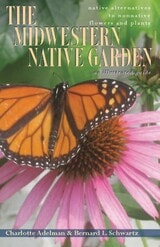
The Midwestern Native Garden
Native Alternatives to Nonnative Flowers and PlantsCharlotte Adelman, Bernard L. Schwartz
Ohio University Press, 2011
The Midwestern Pastoral
Place and Landscape in Literature of the American HeartlandWilliam Barillas
Ohio University Press, 2006
The Necessity for Ruins and Other Topics
J. B. Jackson
University of Massachusetts Press, 1980

The Northwest Gardens of Lord and Schryver
Valencia Libby
Oregon State University Press, 2021
Published in Cooperation with the Lord & Schryver Conservancy
Lord & Schryver, the first landscape architecture firm founded and operated by women in the Pacific Northwest, designed more than two hundred gardens in Oregon and Washington, including residential, civic, and institutional landscapes. Elizabeth Lord and Edith Schryver met as young women and in 1929 established their highly successful firm in Salem; their work is acknowledged as one of the milestones in the history of garden design in the Northwest and beyond. Theirs is the only Oregon firm recognized in Pioneers of Landscape Architecture, compiled by the National Park Service. The Cultural Landscape Foundation describes them as “consummate professionals in the broadest sense, as they worked to raise the profile of landscape architects by involving an audience beyond their clients. Their work represented a transition from a formal symmetrical style of garden design to one which responded in a distinctive way to the unique features of Northwest climate, soil, topography, and plant material.”
Gaiety Hollow, their purpose-built Salem home, garden, and studio, is now owned by the Lord & Schryver Conservancy and is open to the public. The conservancy has lovingly restored the gardens at Gaiety Hollow according to Lord & Schryver’s original plans. They have also restored and now maintain the gardens at Deepwood, a former residence that is now a public park.
Students of landscape architecture, garden design, Pacific Northwest history, ornamental horticulture, and general readers who are interested in the contributions of women to once male-dominated professions will find inspiration in these pages.
Learn more about Elizabeth Lord and Edith Schryver at www.lordschryver.org

The Re-creation of Landscape
A Study of Wordsworth, Coleridge, Constable, and TurnerJames A. W. Heffernan
Dartmouth College Press, 2002
The Stages of Memory
Reflections on Memorial Art, Loss, and the Spaces BetweenJames E. Young
University of Massachusetts Press, 2016
Winner of the 2017 National Council on Public History Book Award
From around the world, whether for New York City's 9/11 Memorial, at exhibits devoted to the arts of Holocaust memory, or throughout Norway's memorial process for the murders at Utøya, James E. Young has been called on to help guide the grief stricken and survivors in how to mark their losses. This poignant, beautifully written collection of essays offers personal and professional considerations of what Young calls the “stages of memory,” acts of commemoration that include spontaneous memorials of flowers and candles as well as permanent structures integrated into sites of tragedy. As he traces an arc of memorial forms that spans continents and decades, Young returns to the questions that preoccupy survivors, architects, artists, and writers: How to articulate a void without filling it in? How to formalize irreparable loss without seeming to repair it?
Richly illustrated, the volume is essential reading for those engaged in the processes of public memory and commemoration and for readers concerned about how we remember terrible losses.
The Visual Elements Landscapes
John A. Jakle
University of Massachusetts Press, 1987
This Vast Book of Nature
Writing the Landscape of New Hampshire’s White Mountains, 1784–1911Pavel Cenkl
University of Iowa Press, 2006
Starting with an exploration of Jeremy Belknap’s 1784 expedition to Mount Washington, which Cenkl links to the origins of tourism in the White Mountains, to the transformation of touristic and residential relationships to landscape, This Vast Book of Nature explores the ways competing visions of the landscape have transformed the White Mountains culturally and physically, through settlement, development, and—most recently—preservation, a process that continues today.
Tourism, Landscape, and the Irish Character
British Travel Writers in Pre-Famine IrelandWilliam H. A. Williams
University of Wisconsin Press, 2007
Picturesque but poor, abject yet sublime in its Gothic melancholy, the Ireland perceived by British visitors during the eighteenth and nineteenth centuries did not fit their ideas of progress, propriety, and Protestantism. The rituals of Irish Catholicism, the lamentations of funeral wakes, the Irish language they could not comprehend, even the landscapes were all strange to tourists from England, Wales, and Scotland. Overlooking the acute despair in England’s own industrial cities, these travelers opined in their writings that the poverty, bog lands, and ill-thatched houses of rural Ireland indicated moral failures of the Irish character.
Transatlantic Romanticism
British and American Art and Literature, 1790-1860Andrew Hemingway
University of Massachusetts Press, 2014
In the book's introduction, Andrew Hemingway—building on the theoretical work of Michael Lowy and Robert Sayre—proposes that we need to remobilize the concept of Weltanschauung, or comprehensive worldview, in order to develop the kind of synthetic history of arts and ideas the phenomenon of Romanticism demands. The essays that follow focus on the London and New York art worlds and such key figures as Benjamin West, Thomas Bewick, John Vanderlyn, Washington Allston, John Martin, J. M. W. Turner, Thomas Cole, James Fenimore Cooper, George Catlin, Edgar Allan Poe, Harriet Beecher Stowe, and Herman Melville. Taken together, these essays plot the rise of a romantic anti-capitalist Weltanschauung as well as the dialectic between Romanticism's national and international manifestations.
In addition to the volume editors, contributors include Matthew Beaumont, David Bindman, Leo Costello, Nicholas Grindle, Wayne Franklin, Janet Koenig, William Pressly, Robert Sayre, William Truettner, Dell Upton, and William Vaughan.