Results by title
460 books match the query 'Law and legislation' and 100 start with t
Taxing Women
Edward J. McCaffery
University of Chicago Press, 1997
"Taxing Women is a must-have primer for any woman who wants to understand how our current tax system affects her family's economic condition. In plain English, McCaffery explains how the tax code stacks the deck against women and why it's in women's economic interest to lead the next great tax rebellion."—Patricia Schroeder
"McCaffery is an expert on the interplay between taxes and social policy. . . . Devastating in his analysis. . . . Intriguing."—Harris Collingwood, Working Women
"A wake-up call regarding the inequalities of an archaic system that actually penalizes women for working."—Publishers Weekly
Telecommunications Regulation
John Buckley
The Institution of Engineering and Technology, 2003

TennCare, One State's Experiment with Medicaid Expansion
Christina Juris Bennett
Vanderbilt University Press, 2014
While many states cut back on their Medicaid enrollments from 1993 to 2001, TennCare grew from 750,000 to 1.47 million enrollees. The state was less successful in controlling costs, however. Each major stakeholder group (the state, the managed care organizations, the providers, and the enrollees and their advocates) pushed back against parts of the state's strategy that adversely affected their interests, and they eventually dismantled the mechanisms of cost constraint.
The author lays out the four stakeholder perspectives for each period in the history of TennCare and provides a link to difficult-to-access primary documents.
The Age of Sex
Custom, Law, and Ritual in Twentieth-Century East AfricaCorrie Decker
University of Wisconsin Press, 2025
In The Age of Sex, Decker demonstrates how maturation became defined as the hypothetical moment when a girl becomes a woman capable of engaging in heterosexual activity and a boy becomes a man imbued with the right and responsibility to have heterosexual intercourse. Colonial ethnographic studies reduced complex precolonial rites of passage to “puberty rites” fixated on these sexual transformations. The resulting stereotypes influenced, in turn, how colonial and postcolonial court officials decided age-of-consent and other sex crime cases. Court rituals thus legally transformed girls into women by ruling on their sexual maturity and boys into men by sentencing them to corporal punishment, marking their acceptance of heterosexual responsibilities.
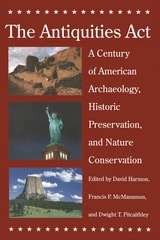
The Antiquities Act
A Century of American Archaeology, Historic Preservation, and Nature ConservationEdited by David Harmon, Frances P. McManamon, and Dwight T. Pitcaithley
University of Arizona Press, 2006
Enacted in 1906, the Antiquities Act is one of the most important pieces of conservation legislation in American history and has had a far-reaching influence on the preservation of our nation’s cultural and natural heritage. Thanks to the foresight of thirteen presidents, parks as diverse as Acadia, Grand Canyon, and Olympic National Park, along with historic and archaeological sites such as Thomas Edison’s Laboratory and the Gila Cliff Dwellings, have been preserved for posterity.
A century after its passage, this book presents a definitive assessment of the Antiquities Act and its legacy, addressing the importance and breadth of the act—as well as the controversy it has engendered. Authored by professionals intimately involved with safeguarding the nation’s archaeological, historic, and natural heritage, it describes the applications of the act and assesses its place in our country’s future. With a scope as far-reaching as the resources the act embraces, this book offers an unparalleled opportunity for today’s stewards to reflect on the act’s historic accomplishments, to remind fellow professionals and the general public of its continuing importance, and to look ahead to its continuing implementation in the twenty-first century.
The Antiquities Act invites all who love America’s natural and cultural treasures not only to learn about the act’s rich legacy but also to envision its next hundred years.
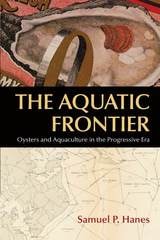
The Aquatic Frontier
Oysters and Aquaculture in the Progressive EraSamuel P. Hanes
University of Massachusetts Press, 2019
The Aquatic Frontier explores the forms this debate took between 1870 and 1920 in law enforcement, legislative advising, natural science, and oyster cartography. Samuel P. Hanes argues that the effort to centralize and privatize the industry failed due to a lack of understanding of the complex social-ecological systems in place—a common dilemma for environmental managers in this time period and for fisheries management confronting dangers from dwindling populations today.
The Arkansas Freedom of Information Act
John J. Watkins
University of Arkansas Press, 2017
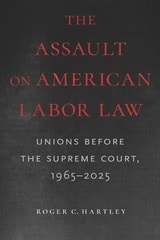
The Assault on American Labor Law
Unions Before the Supreme Court, 1965–2025Roger C. Hartley
University of Massachusetts Press, 2025
Reviewing the dismantling of American labor law in more than 100 Supreme Court cases
The National Labor Relations Act (NLRA), signed into law by Franklin Delano Roosevelt in 1935, guarantees the right of private sector employees to organize into trade unions, engage in collective bargaining, and take collective action such as strikes. Since its passage, the NLRA has functioned as the foundational statute of United States labor law. Opposed by conservatives and members of the Republican Party from the beginning, its provisions were largely upheld by the Supreme Court until the 1960s. In the latter part of the twentieth century and into the twenty-first, however, the Court began to erode the protections of the NLRA. While some cases have received widespread attention from commentators and scholars, such as Starbucks Corp. v. McKinney (2024), there have been numerous detrimental rulings that are little discussed. Taken as a whole, the Supreme Court’s efforts to undermine the NLRA appear sustained and systematic.
In The Assault on American Labor Law, distinguished labor law professor Roger C. Hartley collects and carefully reviews every Supreme Court decision concerning the NLRA over the past sixty years. By examining approximately 100 cases, Hartley demonstrates that the Court has often operated more like a legislature than a judicial body, effectively amending the NLRA’s collectivist policy underpinnings in favor of the interests of individuals and businesses. These judicial decisions create staggering obstacles for American workers to collectively organize and force them to face globalization, deindustrialization, and technological change individually, without the negotiating leverage provided by union representation. While scholars have suggested individual reforms to re-establish the efficacy of the NLRA, Hartley’s thorough study illuminates how the current crisis in US labor law evolved—a comprehensive view that is necessary to help restore the rights of workers to unionize.
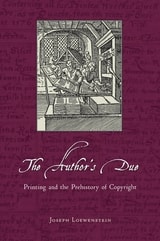
The Author's Due
Printing and the Prehistory of CopyrightJoseph Loewenstein
University of Chicago Press, 2002
As Loewenstein shows, copyright is a form of monopoly that developed alongside a range of related protections such as commercial trusts, manufacturing patents, and censorship, and cannot be understood apart from them. The regulation of the press pitted competing interests and rival monopolistic structures against one another—guildmembers and nonprofessionals, printers and booksellers, authors and publishers. These struggles, in turn, crucially shaped the literary and intellectual practices of early modern authors, as well as early capitalist economic organization.
With its probing look at the origins of modern copyright, The Author's Due will prove to be a watershed for historians, literary critics, and legal scholars alike.

The Baneberry Disaster
A Generation of Atomic FalloutLarry C. Johns
University of Nevada Press, 2017
The authors are attorneys from Las Vegas who spent 25 years pursuing a lawsuit for the victims at Baneberry. The story begins in 1971, just after the Baneberry test vented, and takes the reader through the years leading up to the trial, the 41-day trial in 1979, and the multiple appeals following the trial. It discusses the claims and lawsuits filed by others exposed to atomic testing, and the congressional investigations that led to the enactment of the Radiation Exposure Compensation Act in 1990.
The Bellwomen
The Story of the Landmark AT&T Sex Discrimation CaseStockford, Marjorie A
Rutgers University Press, 2004
In the early 1970s, David Copus, a young, long-haired lawyer, teamed up with his government colleagues to confront the mature and staid executives of AT&T over the company’s treatment of its female and minority employees. Their disagreement resulted in a $38 million settlement that benefited 15,000 employees, more than 13,000 of them women, and changed our perceptions of women’s and men’s roles in the workplace forever.
Copus, who worked for the Equal Employment Opportunity Commission (EEOC), was charged with representing American citizens who suffered from employment discrimination. Time and again he saw young, black women in the South being turned down for available jobs in local phone companies—usually as telephone operators—often for no valid reason at all. He and the EEOC decided to challenge AT&T’s company-wide sex discrimination practices. Eventually, AT&T’s corporate colleagues, witnessing AT&T’s capitulation, began to hire and promote women into better jobs themselves. At the same time, the EEOC started to more aggressively push corporate America to give women better opportunities.
The Bellwomen recounts the history of this case in a novelistic style, illuminating the motivations, strengths, and weaknesses of all the players, from AT&T corporate leaders, to the lawyers of the EEOC, to the female activists fighting for what they believed. Stockford also profiles three beneficiaries of the case, presenting their ambitions and achievements.
Combined with the power of America’s civil rights laws and the influence of the second wave women’s movement, this case provided a catalyst that drove many more women into the paid workforce in non-traditional jobs. By the late twentieth century, when women could be seen working everywhere, from construction sites to corporate offices, it appeared that they belonged there and always had.
The Big Leagues Go to Washington
Congress and Sports Antitrust, 1951-1989David George Surdam
University of Illinois Press, 2015
In The Big Leagues Go to Washington, David Surdam chronicles the key issues that arose during the hearings and the ways opposing sides used economic data and theory to define what was right, what was feasible, and what was advantageous to one party or another. As Surdam shows, the hearings affected matters as fundamental to the modern game as broadcasting rights, player drafts and unions, league mergers, and the dominance of the New York Yankees. He also charts how lawmakers from the West and South pressed for the relocation of ailing franchises to their states and the ways savvy owners dodged congressional interference when they could and adapted to it when necessary.
The Black Laws
Race and the Legal Process in Early OhioStephen Middleton
Ohio University Press, 2005
The Black Tax
150 Years of Theft, Exploitation, and Dispossession in AmericaAndrew W. Kahrl
University of Chicago Press, 2024
American taxation is unfair, and it is most unfair to the very people who critically need its support. Not only do taxpayers with fewer resources—less wealth, power, and land—pay more than the well-off, but they are forced to fight for their rights within an unjust system that undermines any attempts to improve their position or economic standing. In The Black Tax, Andrew W. Kahrl reveals the shocking history and ruinous consequences of inequitable and predatory tax laws in this country—above all, widespread and devastating racial dispossession.
Throughout the twentieth century, African Americans acquired substantial amounts of property nationwide. But racist practices, obscure processes, and outright theft diminished their holdings and their power. Of these, Kahrl shows, few were more powerful, or more quietly destructive, than property taxes. He examines all the structural features and hidden traps within America’s tax system that have forced Black Americans to pay more for less and stripped them of their land and investments, and he reveals the staggering cost. The story of America’s now enormous concentration of wealth at the top—and the equally enormous absence of wealth among most Black households—has its roots here.
Kahrl exposes the painful history of these practices, from Reconstruction up to the present, and tells, for the first time, the story of Black Americans’ experiences as taxpayers and their fight for a more fair and equitable system for raising and spending the public’s money. This is a history that deepens our understanding of the disadvantages and persistent inequalities that African American households continue to face and reveals hidden engines of economic inequality in America. Detailing the hows and whys of America’s profoundly unequal tax system, The Black Tax equips readers with the knowledge needed to combat inequality and injustice today.

The Business of Professional Sports
Edited by Paul D. Staudohar and James A. Mangan
University of Illinois Press, 1991
Beyond the highly publicized heroics and foibles of players and teams, when the grandstands are empty and the scoreboards dark, there is a world of sport about which little is known by even the most ardent fan. It is the business world of sport; it is characterized by a thirst for power and money, and its players are just as active as those on the professional teams they oversee. In this collection, some of the best scholars in the field use examples from baseball, football, basketball, and hockey to illuminate the significant economic, legal, social, and historic aspects of the business of professional sports.
Contributors: Dennis A. Ahlburg, Rob B. Beamish, Joan M. Chandler, James B. Dworkin, Lawrence M. Kahn, Charles P. Korr, John J. MacAloon, David Mills, Roger G. Noll, Steven A. Reiss, Gary R. Roberts, Stephen F. Ross, Peter D. Sherer, Leigh Steinberg, and David G. Voigt,
The Case About Amy
R. C. Smith, foreword by Frank G. Bowe
Temple University Press, 1996
The Rowley family's struggle began when Amy entered kindergarten and culminated five years later in a pivotal decision by the U.S. Supreme Court. In effect, the Court majority concluded that the Individuals with Disabilities Education Act did not mandate equal opportunity for children with disabilities in classes with typical children; a disappointing decision for disability advocates.
The Supreme Court decided that schools were required only to provide enough help for children with disabilities to pass from grade to grade. The Court reversed the lower courts' rulings, which had granted Amy an interpreter, setting a precedent that could affect the quality of education for all individuals with disabilities.
From the time Amy entered kindergarten in Peekskill, New York, her parents battled with school officials to get a sign language interpreter in the classroom. Nancy and Clifford Rowley, also deaf, struggled with officials for their own right to a communications process in which they could fully participate. Stuck in limbo was a bright, inquisitive child, forced to rely on partial lipreading of rapid classroom instruction and interaction, and sound amplifiers that were often broken and always cumbersome.
R.C. Smith chronicles the Rowley family's dealings with school boards, lawyers, teachers, expert consultants, advocates, and supporters, and their staunch determination to get through the exhaustive process of presenting the case time after time to school adjudicative bodies and finally the federal courts. The author also documents his own "coming to awareness" about how the "able" see the "disabled."
In the series Health, Society, and Policy, edited by Sheryl Ruzek and Irving Kenneth Zola.
The Cedarville Conspiracy
Indicting U.S. SteelL. Stephen Cox
University of Michigan Press, 2005
The Cedarville Conspiracy is the story of that doomed ship and its crew. It is also the first Great Lakes history to expose the heroism, villainy, courage, and confusion surrounding the Cedarville disaster.
In atmospheric, cinematic style, L. Stephen Cox's gripping page-turner dramatizes the events surrounding the collision between the Norwegian and American freighters. As the mortally wounded Cedarville began to list and sink, U.S. Steel refused to allow the crew to escape to safety, while the captain secretly donned his life jacket and abandoned the sinking ship. Ten seamen died in the frigid waters that morning as the captain and survivors swam to safety.
Researching the story, author L. Stephen Cox interviewed the surviving crew and their rescuers and attorneys, examined more than 20,000 pages of Coast Guard reports, and discovered deposition transcripts and other documentary evidence that detailed the deterioration of the ship, the captain's disregard of Great Lakes navigational rules, the company's participation in the decision to confine the men aboard the sinking vessel, and the subsequent efforts by U.S. Steel to manipulate the evidence.
The Child Cases
How America's Religious Exemption Laws Harm ChildrenAlan Rogers
University of Massachusetts Press, 2014
When a four-year-old California girl died on March 9, 1984, the state charged her mother with involuntary manslaughter because she failed to provide her daughter with medical care, choosing instead to rely on spiritual healing. During the next few years, a half dozen other children of Christian Science parents died under similar circumstances. The children's deaths and the parents' trials drew national attention, highlighting a deeply rooted, legal/political struggle to define religious freedom.
Through close analysis of these seven cases, legal historian Alan Rogers explores the conflict between religious principles and secular laws that seek to protect children from abuse and neglect. Christian Scientists argued—often with the support of mainline religious groups—that the First Amendment's “free exercise” clause protected religious belief and behavior. Insisting that their spiritual care was at least as effective as medical treatment, they thus maintained that parents of seriously ill children had a constitutional right to reject medical care.
Congress and state legislatures confirmed this interpretation by inserting religious exemption provisos into child abuse laws. Yet when parental prayer failed and a child died, prosecutors were able to win manslaughter convictions by arguing—as the U.S. Supreme Court had held for more than a century—that religious belief could not trump a neutral, generally applicable law. Children's advocates then carried this message to state legislatures, eventually winning repeal of religious exemption provisions in a handful of states.

The Climate Trial
Law and Justice on a Melting PlanetNoah Walker-Crawford
Duke University Press, 2026
The Columbia River Treaty Revisited
Transboundary River Governance in the Face of UncertaintyEdited by Barbara Cosens
Oregon State University Press, 2012
The Columbia River Treaty Revisited, with contributions from historians, geographers, environmental scientists, and other experts, is intended to facilitate conversation about the impending expiration. It allows the reader, through the close inspection of the Columbia River Basin, to better grasp the uncertainty of water governance. It aids efforts, already underway, to understand changes in the basin since the treaty was passed, to predict future changes, and to determine whether alteration of the treaty is ultimately advisable.
The Columbia River Treaty Revisited will appeal to those interested in water basin management–scholars, stakeholders, and residents of the Columbia River basin alike.
A Project of the Universities Consoritum on Columbia River Governance
The Universities Consortium on Columbia River Governance, with representatives from universities in the U.S. and Canada, formed to offer a nonpartisan platform to facilitate an informed, inclusive, international dialogue among key decision-makers and other interested people and organizations; to connect university research to problems faced within the basin; and to expose students to a complex water resources problem. The Consortium organized the symposium on which this volume is based.
The Conditions of Discretion
Joel Handler
Russell Sage Foundation, 1986
The Constitutional Logic of Affirmative Action
Ronald J. Fiscus
Duke University Press, 1992
Beginning with a distinction drawn between principles of compensatory and distributive justice, Fiscus argues that the former, although often the basis for judgments made in individual discrimination cases, cannot sufficiently justify broad programs of affirmative action. Only a theory of distributive justice, one that assumes minorities have a right to what they would have gained proportionally in a nonracist society, can persuasively provide that justification. On this basis, the author argues in favor of proportional racial quotas—and challenges the charge of “reverse discrimination” raised in protest in the name of the “innocent victims” of affirmative action—as an action necessary to approach the goals of fairness and equality.
The Constitutional Logic of Affirmative Action focuses on Supreme Court affirmative action rulings from Bakke (1976) to Croson (1989) and includes an epilogue by editor Stephen L. Wasby that considers developments through 1995. General readers concerned with racial justice, affirmative action, and public policy, as well as legal specialists and constitutional scholars will find Fiscus’s argument passionate, balanced, and persuasive.
The Constitutional Underclass
Gays, Lesbians, and the Failure of Class-Based Equal ProtectionEvan Gerstmann
University of Chicago Press, 1999
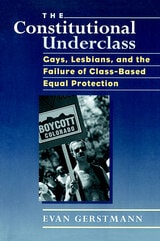
The Court divides people into legal classes that receive varying levels of protection; gays and lesbians and other groups, such as the elderly and the poor, receive the least. Gerstmann reveals how these standards are used to favor certain groups over others, and also how Amendment 2 advocates used the Court's doctrine to convince voters that gays and lesbians were seeking "special rights" in Colorado.
Concluding with a call for wholesale reform of equal-protection jurisprudence, this book is essential reading for anyone interested in fair, coherent, and truly equal protection under the law.
The Corporate Contract in Changing Times
Is the Law Keeping Up?Edited by Steven Davidoff Solomon and Randall Stuart Thomas
University of Chicago Press, 2019
With The Corporate Contract in Changing Times, Steven Davidoff Solomon and Randall Stuart Thomas bring together leading corporate law scholars, judges, and lawyers from top corporate law firms to explore what needs to change and what has prevented reform thus far. Among the topics addressed are how the law could be adapted to the reality that activist hedge funds pose a more serious threat to corporations than the hostile takeovers and how statutory laws, such as the rules governing appraisal rights, could be reviewed in the wake of appraisal arbitrage. Together, the contributors surface promising paths forward for future corporate law and public policy.
The Court vs. Congress
Prayer, Busing, and AbortionEdward Keynes and Randall Miller
Duke University Press, 1989
Edward Keynes and Randall Miller argue that Congress lacks the constitutional power to legislate away the powers of the federal courts and to prevent individuals from seeking redress for presumed infringements of their constitutional rights in these areas. They demonstrate that neither the framers nor ratifiers of the Constitution intended the Congress to exercise plenary power over the appellate jurisdiction of the Supreme Court. Throughout its history the Court has never conceded unlimited powers to Congress; and until the late 1950s Congress had not attempted to gerrymander the Court’s jurisdiction in response to specific decisions. But the authors contend this is just what the sponsors of recent legislative attacks on the Court intend, and they see such efforts as threatening the Court’s independence and authority as defined in the separation of powers clauses of the Constitution.
The Crimes of Womanhood
Defining Femininity in a Court of LawA. Cheree Carlson
University of Illinois Press, 2014
Carlson analyzes the situations of several women of varying historical stature, from the insanity trials of Mary Todd Lincoln and Lizzie Borden's trial for the brutal slaying of her father and stepmother, to lesser-known trials involving insanity, infidelity, murder, abortion, and interracial marriage. The insanity trial of Elizabeth Parsons Ware Packard, the wife of a minister, resulted from her attempts to change her own religion, while a jury acquitted Mary Harris for killing her married lover, suggesting that loss of virginity to an adulterous man was justifiable grounds for homicide. The popular conception of abortion as a "woman's crime" came to the fore in the case of Ann Loman (also known as Madame Restell), who performed abortions in New York both before and after it became a crime. Finally, Alice Rhinelander was sued for fraud by her new husband Leonard for "passing" as white, but the jury was more moved by the notion of Alice being betrayed as a woman by her litigious husband than by the supposed defrauding of Leonard as a white male. Alice won the case, but the image of womanhood as in need of sympathy and protection won out as well.
At the heart of these cases, Carlson reveals clearly just how narrow was the line that women had to walk, since the same womanly virtues that were expected of them--passivity, frailty, and purity--could be turned against them at any time. These trials of popular status are especially significant because they reflect the attitudes of the broad audience, indicate which forms of knowledge are easily manipulated, and allow us to analyze how the verdict is argued outside the courtroom in the public and press. With gripping retellings and incisive analysis of these scandalous criminal and civil cases, this book will appeal to historians, rhetoricians, feminist researchers, and anyone who enjoys courtroom drama.
The Crucible of Desegregation
The Uncertain Search for Educational EqualityR. Shep Melnick
University of Chicago Press, 2023
In 1954, the Supreme Court delivered the landmark decision of Brown v. Board of Education—establishing the right to attend a desegregated school as a national constitutional right—but the decision contained fundamental ambiguities. The Supreme Court has never offered a clear definition of what desegregation means or laid out a framework for evaluating competing interpretations. In The Crucible of Desegregation, R. Shep Melnick examines the evolution of federal school desegregation policy from 1954 through the termination of desegregation orders in the first decades of the twenty-first century, combining legal analysis with a focus on institutional relations, particularly the interactions between federal judges and administrators. Melnick argues that years of ambiguous, inconsistent, and meandering Court decisions left lower court judges adrift, forced to apply contradictory Supreme Court precedents in a wide variety of highly charged political and educational contexts. As a result, desegregation policy has been a patchwork, with lower court judges playing a crucial role and with little opportunity to analyze what worked and what didn’t. The Crucible of Desegregation reveals persistent patterns and disagreements that continue to roil education policy.
The Cultural Production of Intellectual Property Rights
Law, Labor, and the Persistence of Primitive AccumulationSean Johnson Andrews
Temple University Press, 2019
The protection and accumulation of intellectual property rights—like property rights in general—is one of the most important contemporary American values. In his cogent book, The Cultural Production of Intellectual Property Rights, Sean Johnson Andrews shows that the meaning, power, and value of intellectual properties are the consequence of an extended process of cultural production.
Johnson Andrews argues that it is deeper ideological and historical roots which demand that, in the contemporary global, digital economy, all property rights be held sacrosanct and all value must flow back to the legal owner.
Johnson Andrews explains that if we want to rebalance the protection of copyrights and trademarks, we should focus on undermining the reified culture of property that underpins capitalism as a whole. He outlines a framework for analyzing culture; situates intellectual property rights in the history of capitalist property relations; synthesizes key theories of media, politics, and law; and ultimately provides scholars and activists a path to imagining a different future where we prioritize our collective production of value in the commons.
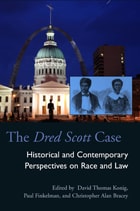
The Dred Scott Case
Historical and Contemporary Perspectives on Race and LawDavid Thomas Konig
Ohio University Press, 2010
In 1846 two slaves, Dred and Harriet Scott, filed petitions for their freedom in the Old Courthouse in St. Louis, Missouri. As the first true civil rights case decided by the U.S. Supreme Court, Dred Scott v. Sandford raised issues that have not been fully resolved despite three amendments to the Constitution and more than a century and a half of litigation.
The Dred Scott Case: Historical and Contemporary Perspectives on Race and Law presents original research and the reflections of the nation’s leading scholars who gathered in St. Louis to mark the 150th anniversary of what was arguably the most infamous decision of the U.S. Supreme Court. The decision, which held that African Americans “had no rights” under the Constitution and that Congress had no authority to alter that, galvanized Americans and thrust the issue of race and law to the center of American politics. This collection of essays revisits the history of the case and its aftermath in American life and law. In a final section, the present-day justices of the Missouri Supreme Court offer their reflections on the process of judging and provide perspective on the misdeeds of their nineteenth-century predecessors who denied the Scotts their freedom.
Contributors: Austin Allen, Adam Arenson, John Baugh, Hon. Duane Benton, Christopher Alan Bracey, Alfred L. Brophy, Paul Finkelman, Louis Gerteis, Mark Graber, Daniel W. Hamilton, Cecil J. Hunt II, David Thomas Konig, Leland Ware, Hon. Michael A. Wolff

The Economics of Privacy
Edited by Avi Goldfarb and Catherine E. Tucker
University of Chicago Press, 2024
A foundational new collection examining the mechanics of privacy in the digital age.
The falling costs of collecting, storing, and processing data have allowed firms and governments to improve their products and services, but have also created databases with detailed individual-level data that raise privacy concerns. This volume summarizes the research on the economics of privacy and identifies open questions on the value of privacy, the roles of property rights and markets for privacy and data, the relationship between privacy and inequality, and the political economy of privacy regulation.
Several themes emerge across the chapters. One is that it may not be possible to solve privacy concerns by creating a market for the right to privacy, even if property rights are well-defined and transaction costs are low. Another is that it is difficult to measure and value the benefits of privacy, particularly when individuals have an intrinsic preference for privacy. Most previous attempts at valuation have focused only on quantifiable economic outcomes, such as innovation. Finally, defining privacy through an economic lens is challenging. The broader academic and legal literature includes many distinct definitions of privacy, and different definitions may be appropriate in different contexts. The chapters explore a variety of frameworks for examining these questions and provide a range of new perspectives on the role of economics research in understanding the benefits and costs of privacy and of data flows. As the digital economy continues to expand the scope of economic theory and research, The Economics of Privacy provides the most comprehensive survey to date of this field and its next steps.

The Environmental Justice
William O. Douglass and American ConservationAdam M. Sowards
Oregon State University Press, 2009
The Fallacy of Campaign Finance Reform
John Samples
University of Chicago Press, 2006
At first glance, campaign finance reform looks like a good idea. McCain-Feingold, for instance, regulates campaigns by prohibiting national political parties from accepting soft money contributions from corporations, labor unions, and wealthy individuals. But are such measures, or any of the numerous and similarly restrictive proposals that have circulated through Washington in recent years, really good for our democracy?
John Samples says no, and here he takes a penetrating look into the premises and consequences of the long crusade against big money in politics. How many Americans, he asks, know that there is little to no evidence that campaign contributions really influence members of Congress? Or that so-called negative political advertising actually improves the democratic process by increasing voter turnout and knowledge? Or that limits on campaign contributions make it harder to run for office, thereby protecting incumbent representatives from losing their seats of power?
Posing tough questions such as these, Samples uncovers numerous fallacies beneath proposals for campaign finance reform. He argues that our most common concerns about money in politics are misplaced because the ideals implicit in our notion of corruption are incoherent or indefensible. The chance to regulate money in politics allows representatives to serve their own interests at a cost to their constituents. And, ironically, this long crusade against the corruption caused by campaign contributions allows public officials to reduce their vulnerability by suppressing electoral competition.
Defying long-held ssumptions and conventional political wisdom, The Fallacy of Campaign Finance Reform is a provocative and decidedly nonpartisan work that will be essential for anyone concerned about the future of American government.
The Fourth Amendment
Original Understandings and Modern PolicingMichael J.Z. Mannheimer
University of Michigan Press, 2023
Police are required to obey the law. While that seems obvious, courts have lost track of that requirement due to misinterpreting the two constitutional provisions governing police conduct: the Fourth and Fourteenth Amendments. The Fourth Amendment forbids "unreasonable searches and seizures" and is the source of most constitutional constraints on policing. Although that provision technically applies only to the federal government, the Fourteenth Amendment, ratified in the wake of the Civil War, has been deemed to apply the Fourth Amendment to the States.
This book contends that the courts’ misinterpretation of these provisions has led them to hold federal and state law enforcement mistakenly to the same constitutional standards. The Fourth Amendment was originally understood as a federalism, or “states’ rights,” provision that, in effect, required federal agents to adhere to state law when searching or seizing. Thus, applying the same constraint to the States is impossible. Instead, the Fourteenth Amendment was originally understood in part as requiring that state officials (1) adhere to state law, (2) not discriminate, and (3) not be granted excessive discretion by legislators. These principles should guide judicial review of modern policing. Instead, constitutional constraints on policing are too strict and too forgiving at the same time. In this book, Michael J.Z. Mannheimer calls for a reimagination of what modern policing could look like based on the original understandings of the Fourth and Fourteenth Amendments.
The Fundamentals of Campaign Finance in the U.S.
Why We Have the System We HaveDiana Dwyre and Robin Kolodny
University of Michigan Press, 2024
The Fundamentals of Campaign Finance in the U.S. takes care to situate the campaign finance system in the context of the broader U.S. political and economic system. Dwyre and Kolodny offer readers a brief tour through the development of the campaign finance regulatory structure, highlighting the Supreme Court’s commitment to free speech over political equality from Buckley v. Valeo (1976) through the passage of the Bipartisan Campaign Reform Act (BCRA, 2002). They also examine the driving force behind campaign finance reform—corruption—through historical, transactional, and institutional perspectives. While diving into the insufficiency of the disclosure and enforcement of campaign finance laws and calling attention to multiple federal agencies, including the Securities and Exchange Commission, the Federal Communications Commission, the Internal Revenue Service, and (principally) the Federal Election Commission, the authors show how a narrow view on campaign finance makes change difficult and why reforms often have limited success. By examining the fundamentals, Dwyre and Kolodny show the difficulties of changing a political system whose candidates have always relied on private funding of campaigns to one that guarantees free speech rights while minimizing concerns of corruption.
The Future of Healthcare Reform in the United States
Edited by Anup Malani and Michael H. Schill
University of Chicago Press, 2015
In the years since the passage of the Patient Protection and Affordable Care Act (PPACA, or, colloquially, Obamacare), most of the discussion about it has been political. But as the politics fade and the law's many complex provisions take effect, a much more interesting question begins to emerge: How will the law affect the American health care regime in the coming years and decades?
This book brings together fourteen leading scholars from the fields of law, economics, medicine, and public health to answer that question. Taking discipline-specific views, they offer their analyses and predictions for the future of health care reform. By turns thought-provoking, counterintuitive, and even contradictory, the essays together cover the landscape of positions on the PPACA's prospects. Some see efficiency growth and moderating prices; others fear a strangling bureaucracy and spiraling costs. The result is a deeply informed, richly substantive discussion that will trouble settled positions and lay the groundwork for analysis and assessment as the law's effects begin to become clear.

The Game of Conservation
International Treaties to Protect the World’s Migratory AnimalsMark Cioc
Ohio University Press, 2009
The Game of Conservation is a brilliantly crafted and highly readable examination of nature protection around the world.
Twentieth-century nature conservation treaties often originated as attempts to regulate the pace of killing rather than as attempts to protect animal habitat. Some were prompted by major breakthroughs in firearm techniques, such as the invention of the elephant gun and grenade harpoons, but agricultural development was at least as important as hunting regulations in determining the fate of migratory species. The treaties had many defects, yet they also served the goal of conservation to good effect, often saving key species from complete extermination and sometimes keeping the population numbers at viable levels. It is because of these treaties that Africa is dotted with large national parks, that North America has an extensive network of bird refuges, and that there are any whales left in the oceans. All of these treaties are still in effect today, and all continue to influence nature-protection efforts around the globe.
Drawing on a wide variety of primary and secondary sources, Mark Cioc shows that a handful of treaties—all designed to protect the world’s most commercially important migratory species—have largely shaped the contours of global nature conservation over the past century. The scope of the book ranges from the African savannahs and the skies of North America to the frigid waters of the Antarctic.

The Global Guide to Animal Protection
Edited by Andrew Linzey
University of Illinois Press, 2013

The Grasping Hand
"Kelo v. City of New London" and the Limits of Eminent DomainIlya Somin
University of Chicago Press, 2015
In this detailed study of one of the most controversial Supreme Court cases in modern times, Ilya Somin argues that Kelo was a grave error. Economic development and “blight” condemnations are unconstitutional under both originalist and most “living constitution” theories of legal interpretation. They also victimize the poor and the politically weak for the benefit of powerful interest groups and often destroy more economic value than they create. Kelo itself exemplifies these patterns. The residents targeted for condemnation lacked the influence needed to combat the formidable government and corporate interests arrayed against them. Moreover, the city’s poorly conceived development plan ultimately failed: the condemned land lies empty to this day, occupied only by feral cats. The Supreme Court’s unpopular ruling triggered an unprecedented political reaction, with forty-five states passing new laws intended to limit the use of eminent domain. But many of the new laws impose few or no genuine constraints on takings. The Kelo backlash led to significant progress, but not nearly as much as it may have seemed.
Despite its outcome, the closely divided 5-4 ruling shattered what many believed to be a consensus that virtually any condemnation qualifies as a public use under the Fifth Amendment. It also showed that there is widespread public opposition to eminent domain abuse. With controversy over takings sure to continue, The Grasping Hand offers the first book-length analysis of Kelo by a legal scholar, alongside a broader history of the dispute over public use and eminent domain and an evaluation of options for reform.

The Grasping Hand
"Kelo v. City of New London" and the Limits of Eminent DomainIlya Somin
University of Chicago Press, 2015
In this detailed study of one of the most controversial Supreme Court cases in modern times, Ilya Somin argues that Kelo was a grave error. Economic development and “blight” condemnations are unconstitutional under both originalist and most “living constitution” theories of legal interpretation. They also victimize the poor and the politically weak for the benefit of powerful interest groups and often destroy more economic value than they create. Kelo itself exemplifies these patterns. The residents targeted for condemnation lacked the influence needed to combat the formidable government and corporate interests arrayed against them. Moreover, the city’s poorly conceived development plan ultimately failed: the condemned land lies empty to this day, occupied only by feral cats. The Supreme Court’s unpopular ruling triggered an unprecedented political reaction, with forty-five states passing new laws intended to limit the use of eminent domain. But many of the new laws impose few or no genuine constraints on takings. The Kelo backlash led to significant progress, but not nearly as much as it may have seemed.
Despite its outcome, the closely divided 5-4 ruling shattered what many believed to be a consensus that virtually any condemnation qualifies as a public use under the Fifth Amendment. It also showed that there is widespread public opposition to eminent domain abuse. With controversy over takings sure to continue, The Grasping Hand offers the first book-length analysis of Kelo by a legal scholar, alongside a broader history of the dispute over public use and eminent domain and an evaluation of options for reform.
The Gulf of California
Biodiversity and ConservationRichard C. Brusca
University of Arizona Press, 2010
Few places in the world can claim such a diversity of species as the Gulf of California (Sea of Cortez), with its 6,000 recorded animal species estimated to be half the number actually living in its waters. So rich are the Gulf's water that over a half-million tons of seafood are taken from them annually—and this figure does not count the wasted by-catch, which would triple or quadruple that tonnage. This timely book provides a benchmark for understanding the Gulf's extraordinary diversity, how it is threatened, and in what ways it is—or should be—protected.
In spite of its dazzling richness, most of the Gulf's coastline now harbors but a pale shadow of the diversity that existed just a half-century ago. Recommendations based on sound, careful science must guide Mexico in moving forward to protect the Gulf of California.
This edited volume contains contributions by twenty-four Gulf of California experts, from both sides of the U.S.-Mexico border. From the origins of the Gulf to its physical and chemical characteristics, from urgently needed conservation alternatives for fisheries and the entire Gulf ecosystem to information about its invertebrates, fishes, cetaceans, and sea turtles, this thought-provoking book provides new insights and clear paths to achieve sustainable use solidly based on robust science. The interdisciplinary, international cooperation involved in creating this much-needed collection provides a model for achieving success in answering critically important questions about a precious but rapidly disappearing ecological treasure.
The Illusion of Equality
The Rhetoric and Reality of Divorce ReformMartha Albertson Fineman
University of Chicago Press, 1991
The Indecent Screen
Regulating Television in the Twenty-First CenturyChris, Cynthia
Rutgers University Press, 2019
The Jurisprudence of Emergency
Colonialism and the Rule of LawNasser Hussain
University of Michigan Press, 2003
Ever-more-frequent calls for the establishment of a rule of law in the developing world have been oddly paralleled by the increasing use of "exceptional" measures to deal with political crises. To untangle this apparent contradiction, The Jurisprudence of Emergency analyzes the historical uses of a range of emergency powers, such as the suspension of habeas corpus and the use of military tribunals. Nasser Hussain focuses on the relationship between "emergency" and the law to develop a subtle new theory of those moments in which the normative rule of law is suspended.
The Jurisprudence of Emergency examines British colonial rule in India from the late eighteenth to the early twentieth century in order to trace tensions between the ideology of liberty and government by law, which was used to justify the British presence, and the colonizing power's concurrent insistence on a regime of conquest. Hussain argues that the interaction of these competing ideologies exemplifies a conflict central to all Western legal systems—between the universal, rational operation of law on the one hand and the absolute sovereignty of the state on the other. The author uses an impressive array of historical evidence to demonstrate how questions of law and emergency shaped colonial rule, which in turn affected the development of Western legality.
The pathbreaking insights developed in The Jurisprudence of Emergency reevaluate the place of colonialism in modern law by depicting the colonies as influential agents in the interpretation and delineation of Western ideas and practices. Hussain's interdisciplinary approach and subtly shaded revelations will be of interest to historians as well as scholars of legal and political theory.
The Jurisprudence of Emergency
Colonialism and the Rule of LawNasser Hussain
University of Michigan Press, 2019
The Jurisprudence of Emergency examines British rule in India from the late eighteenth to the early twentieth century, tracing tensions between the ideology of liberty and government by law used to justify the colonizing power's insistence on a regime of conquest. Nasser Hussain argues that the interaction of these competing ideologies exemplifies a conflict central to all Western legal systems—between the universal, rational operation of law on the one hand and the absolute sovereignty of the state on the other. The author uses an impressive array of historical evidence to demonstrate how questions of law and emergency shaped colonial rule, which in turn affected the development of Western legality.
The pathbreaking insights developed in The Jurisprudence of Emergency reevaluate the place of colonialism in modern law by depicting the colonies as influential agents in the interpretation of Western ideas and practices. Hussain's interdisciplinary approach and subtly shaded revelations will be of interest to historians as well as scholars of legal and political theory.
The Laws of Slavery in Texas
Historical Documents and EssaysEdited by Randolph B. Campbell
University of Texas Press, 2010
The laws that governed the institution of slavery in early Texas were enacted over a fifty-year period in which Texas moved through incarnations as a Spanish colony, a Mexican state, an independent republic, a part of the United States, and a Confederate state. This unusual legal heritage sets Texas apart from the other slave-holding states and provides a unique opportunity to examine how slave laws were enacted and upheld as political and legal structures changed. The Laws of Slavery in Texas makes that examination possible by combining seminal historical essays with excerpts from key legal documents from the slave period and tying them together with interpretive commentary by the foremost scholar on the subject, Randolph B. Campbell.
Campbell's commentary focuses on an aspect of slave law that was particularly evident in the evolving legal system of early Texas: the dilemma that arose when human beings were treated as property. As Campbell points out, defining slaves as moveable property, or chattel, presented a serious difficulty to those who wrote and interpreted the law because, unlike any other form of property, slaves were sentient beings. They were held responsible for their crimes, and in numerous other ways statute and case law dealing with slavery recognized the humanness of the enslaved. Attempts to protect the property rights of slave owners led to increasingly restrictive laws—including laws concerning free blacks—that were difficult to uphold. The documents in this collection reveal both the roots of the dilemma and its inevitable outcome.
The Lecherous Professor
Sexual Harassment on CampusBillie Wright Dziech and Linda Weiner
University of Illinois Press, 1990

The Library's Legal Answer Book
Tomas A. Lipinski
American Library Association, 2003
The Limits of Sovereignty
Property Confiscation in the Union and the Confederacy during the Civil WarDaniel W. Hamilton
University of Chicago Press, 2006
Americans take for granted that government does not have the right to permanently seize private property without just compensation. Yet for much of American history, such a view constituted the weaker side of an ongoing argument about government sovereignty and individual rights. What brought about this drastic shift in legal and political thought?
Daniel W. Hamilton locates that change in the crucible of the Civil War. In the early days of the war, Congress passed the First and Second Confiscation Acts, authorizing the Union to seize private property in the rebellious states of the Confederacy, and the Confederate Congress responded with the broader Sequestration Act. The competing acts fueled a fierce, sustained debate among legislators and lawyers about the principles underlying alternative ideas of private property and state power, a debate which by 1870 was increasingly dominated by today’s view of more limited government power.
Through its exploration of this little-studied consequence of the debates over confiscation during the Civil War, The Limits of Sovereignty will be essential to an understanding of the place of private property in American law and legal history.
The Limits to Union
Same-Sex Marriage and the Politics of Civil RightsJonathan Goldberg-Hiller
University of Michigan Press, 2004
"The Limits to Union is a superb book about the complexities of recent political struggles over same-sex marriage. Goldberg-Hiller offers a sophisticated account of egalitarian rights advocacy and the reaction it has generated from established majorities animated by a 'new common sense' of exclusionary sovereign authority. The author's analysis is multidimensional and nuanced, but the core argument is bold, important, and well-supported. I recommend it very highly to everyone interested in understanding the character, possibilities, and constraints of civil rights amid our contemporary culture wars."
-Michael McCann, author of Rights at Work: Pay Equity Reform and the Politics of Legal Mobilization
"In this excellent book, Goldberg-Hiller uses Hawaii's experience to examine the interaction between courts and the political system. . . . Relying on briefs, legislative statements, and interviews with activists from both sides of the question, he views this familiar debate . . . through the unfamiliar prism of gay marriage, which allows him to gauge the viability and the pliability of the American civil rights ideal, and how gay and lesbian issues fit (or don't fit) within that ideal."
-Willian Heinzen, New York Law Journal
"Goldberg-Hiller presents the history of the same-sex marriage question since it first sparked debate in Hawaii. He follows the shifting debate through court cases, state propositions, and state and federal legislatures, considering questions about the constitutionality of the Defense of Marriage Act and the concept of equal protection under the law for gays and lesbians. This detailed treatment of the legal issues surrounding same-sex marriages is highly recommended."
-R. L. Abbott, University of Evansville
"[A] valuable contribution to the field, situating the gay marriage debate in broader contexts of theory, law and practice. [S]ame-sex marriage is an important issue...that finds itself caught in the friction points of much larger debates over the nature of rights, the limits of sovereignty and the proper role of courts and law in a democratic society. The Limits to Union should therefore be of interest even to those who do not think of themselves as interested in gay and lesbian rights issues."
-Evan Gerstmann, Loyola Marymount University, Law and Politics Book Review
The Long Walk to Equality
Perspectives on Racial Inequality, Injustice and the LawAvis Whyte, Patricia Tuitt and Judith Bourne
University of Westminster Press, 2024