Results by title
123 books match the query 'Legacy' and 36 start with t

Telecommunications Quality of Service Management
From legacy to emerging servicesAntony Oodan
The Institution of Engineering and Technology, 2003
Terrible Swift Sword
The Legacy of John BrownPeggy A. Russo
Ohio University Press, 2005
More than two centuries after his birth and almost a century and a half after his death, the legendary life and legacy of John Brown go marching on. Variously deemed martyr, madman, monster, terrorist, and saint, he remains one of the most controversial figures in America’s history. Brown’s actions in Kansas and in Harpers Ferry, West Virginia, were major catalysts for the American Civil War, and continue today to evoke praise or condemnation.
Through the prisms of history, literature, psychology, criminal justice, oral history, African American studies, political science, film studies, and anthropology, Terrible Swift Sword offers insights not only into John Brown’s controversial character and motives but also into the nature of a troubled society before, during, and after the Civil War. The contributors discuss reasons why Brown’s contemporaries supported him, analyze Brown’s behavior and his depiction in literature, and examine the iconography and mythology surrounding him.
The interdisciplinary focus brought by editors Peggy A. Russo and Paul Finkelman makes this collection unique. Terrible Swift Sword: The Legacy of John Brown will appeal to a broad audience of readers interested in this turbulent moment in American history.
Texas Rangers
Lives, Legend, and LegacyBob Alexander
University of North Texas Press, 2017
Texas-Style Exclusion
Mexican Americans and the Legacy of Limited OpportunityJennifer Van Hook
Russell Sage Foundation, 2024
Drawing on census and archival data on the quality of public schooling, Van Hook and Bachmeier find that Industrial Era European immigrants, who were primarily located in the northeastern U.S., benefited from programs and policies championed by the Americanization and Progressive movements. The Americanization movement sought to help acclimate new arrivals and transform “foreigners” into “Americans” by providing night school programs to promote civic integration and basic education, as well as other services. The Progressive movement, which aimed to improve education, work, and health conditions, sought to expand investment in public schools and make primary and secondary schooling mandatory, which kept working class children in school as opposed to entering the workforce. This access to education allowed for integration and astonishing intergenerational mobility.
Mexican immigrants in the 1920s and 1930s, the majority of whom resided in Texas, had radically different experiences from their European counterparts. Mexicans in Texas were subjected to racism, segregation, labor exploitation, and intentional school failures. This resulted in tremendous generational disadvantage that persists to the current day. Mexicans from this cohort who left Texas for states with strong Americanization and Progressive movements saw improved educational outcomes and integration. Additionally, Mexicans who immigrated after the Civil Rights Movement saw significantly greater inter-generational mobility and educational attainment than earlier cohorts due to the protections provided by civil rights laws. Van Hook and Bachmeier conclude that whether one is optimistic or pessimistic about the integration of Mexican Americans depends on when and where one looks.
Texas-Style Exclusion is an engaging examination of policies and practices that have been glossed over and forgotten that promoted mobility and integration for certain immigrant groups and impeded them for others.
The Art of Mbira
Musical Inheritance and LegacyPaul F. Berliner
University of Chicago Press, 2020
In this book, Berliner provides insight into the communities of study, performance, and worship that surround mbira. He chronicles how master player Cosmas Magaya and his associates have developed their repertory and practices over more than four decades, shaped by musical interaction, social and political dynamics in Zimbabwe, and the global economy of the music industry. At once a detailed exposition of the music’s forms and practices, it is also an indispensable historical and cultural guide to mbira in a changing world.
Together with Berliner and Magaya's compendium of mbira compositions, Mbira’s Restless Dance, The Art of Mbira breaks new ground in the depth and specificity of its exploration of an African musical tradition, and in the entwining of the authors’ collaborative voices. It is a testament to the powerful relationship between music and social life—and the rewards of lifelong musical study, performance, and friendship.
The Attention of a Traveller
Essays on William Bartram's "Travels" and LegacyEdited by Kathryn H. Braund
University of Alabama Press, 2022
An interdisciplinary reevaluation of William Bartram’s Travels, illuminating the natural, cultural, and intellectual landscapes of the eighteenth‑century Southeast through diverse scholarly lenses.
William Bartram, author of Travels through North and South Carolina, Georgia, East and West Florida, the Cherokee Country, the Extensive Territories of the Muscogulees, or Creek Confederacy, and the Country of the Chactaws, was colonial America’s first native born naturalist and artist, and the first author in the modern genre of writers who portrayed nature through personal experience as well as scientific observation. His book, first published in 1791, was based on his journeys through southern Indian nations and Britain’s southern colonies in the years just prior to the American Revolution and provides descriptions of the natural and cultural environments of what would soon become the American South. Scholars and general readers alike have long appreciated Bartram’s lush, vivid prose, his clarity of observation and evident wonder at the landscapes he traversed, and his engagement with the native nations whose lands he traveled through.
The Attention of a Traveller: Essays on William Bartram’s “Travels” and Legacy offers an interdisciplinary assessment of Bartram’s influence and evolving legacy, opening new avenues of research concerning the flora, fauna, and people connected to Bartram and his writings. Featuring 13 essays divided into five sections, contributors to the volume weave together scholarly perspectives from geology, art history, literary criticism, geography, and philosophy, alongside the more traditional Bartram-affiliated disciplines of biology and history. The collection concludes with a comprehensive treatment of the book as a material historical artifact.
The Book Keeper
A Memoir of Race, Love, and LegacyJulia McKenzie Munemo
Ohio University Press, 2020
“A fiercely felt memoir about family shame and the transformative power of love even as it’s also an ongoing meditation on privilege and race in twenty-first-century America. This is a debut striking in its empathetic imagination, observational acuity, and emotional intelligence.” — Jim Shepard, author of Like You’d Understand, Anyway.
In a memoir that’s equal parts love story, investigation, and racial reckoning, Munemo unravels and interrogates her whiteness, a shocking secret, and her family’s history.
When interracial romance novels written by her long-dead father landed on Julia McKenzie Munemo’s kitchen table, she—a white woman—had been married to a black man for six years and their first son was a toddler. Out of shame about her father’s secret career as a writer of “slavery porn,” she hid the books from herself, and from her growing mixed-race family, for more than a decade. But then, with police shootings of African American men more and more in the public eye, she realized that understanding her own legacy was the only way to begin to understand her country.
The Church, the Councils, and Reform
The Legacy of the Fifteenth CenturyGerald Christianson
Catholic University of America Press, 2008

The First Cold War
The Legacy of Woodrow Wilson in U.S. - Soviet RelationsDonald E. Davis & Eugene P. Trani
University of Missouri Press, 2002
The Fornes Frame
Contemporary Latina Playwrights and the Legacy of Maria Irene FornesAnne García-Romero
University of Arizona Press, 2016
In The Fornes Frame: Contemporary Latina Playwrights and the Legacy of Maria Irene Fornes, Anne García-Romero considers the work of five award-winning Latina playwrights in the early twenty-first century, offering her unique perspective as a theatre studies scholar who is also a professional playwright.
The playwrights in this book include Pulitzer Prize–winner Quiara Alegría Hudes; Obie Award–winner Caridad Svich; Karen Zacarías, resident playwright at Arena Stage in Washington, DC; Elaine Romero, member of the Goodman Theatre Playwrights Unit in Chicago, Illinois; and Cusi Cram, company member of the LAByrinth Theater Company in New York City.
Using four key concepts—cultural multiplicity, supernatural intervention, Latina identity, and theatrical experimentation—García-Romero shows how these playwrights expand past a consideration of a single culture toward broader, simultaneous connections to diverse cultures. The playwrights also experiment with the theatrical form as they redefine what a Latina play can be. Following Fornes’s legacy, these playwrights continue to contest and complicate Latina theatre.
The Heavens Declare
Natural Theology and the Legacy of Karl BarthRodney Holder
Templeton Press, 2012
In The Heavens Declare, author Rodney Holder re-examines Barth’s natural theology argument and then explores how it has been critiqued and responded to by others, starting with Dietrich Bonhoeffer and Wolfhart Pannenberg. Holder then considers the contributions of two notable British participants in the science-religion dialogue, Thomas Torrance and Alister McGrath, who, despite their repudiation of natural theology in the traditional sense, also provide many positive lessons. The book concludes by defending an overall position which takes into account the ideas of the aforementioned theologians as well as others who are currently engaged positively in natural theology, such as John Polkinghorne and Richard Swinburne.
Holder’s new study is sure to be of interest to theologians, philosophers of religion, and all scholars interested in the science-religion dialogue, especially those interested in natural theology as an enterprise in itself.
The Last Great Colonial Lawyer
The Life and Legacy of Jeremiah GridleyCharles R. McKirdy
University of Massachusetts Press, 2018
Jeremiah Gridley (1702–1767) is considered “the greatest New England lawyer of his generation,” yet we know little about him. Most of his renown is a product of the fame of his students, most notably John Adams. Gridley deserves more. He was an active participant in the Writs of Assistance trial and the Stamp Act controversy, and as a leader of the Boston bar, an editor, speculator, legislator, and politician, his life touched and was touched by much that was integral to eighteenth-century Massachusetts.
The Last Great Colonial Lawyer presents a portrait of Gridley against the background of his times. Religious controversies enter into this narrative, as do colonial wars and the increasing strains with Great Britain, but Charles R. McKirdy also rescues from the footnotes of time subjects such as the smallpox epidemic of 1721 and the currency crisis of the 1740s. Because Gridley was above all a lawyer, the primary focus is on his cases, which illuminate in a unique and very human way attitudes regarding race, status, commerce, property, and power.
The Legacy Of Language
A Tribute To Charlton LairdPhillip C. Boardman
University of Nevada Press, 1987
In this tribute to Charlton Laird, ten scholars in the fields of language and linguistics provide ordinary readers with new insight into the workings of the English language. Laird, one of Nevada's treasured authors, was a professor of English at the University of Nevada, Reno.
The Legacy of Black Women in Librarianship
When They Dared to Be PowerfulEdited by Nicole A. Cooke
American Library Association, 2025
- span the entire 20th Century, stretching from rural South Carolina and Florida to urban centers like New York and Los Angeles;
- profile better known figures such as Augusta Baker and Eliza Atkins Gleason as well as many who have yet to receive their due;
- grapple with the toxic legacy of segregation in library education, universities, public libraries, schools, and other institutions, showing how these persevering Black women dared to strive and work towards more equitable futures;
- include an inspiring Afterword by Dr. Aisha Johnson-Jones, an educator and revelator of Southern intellectual history;
- will encourage LIS students and newer librarians of all backgrounds to see themselves reflected in the profession’s long and rich heritage; and
- shed light on how librarianship can become ever more diverse and community centered.
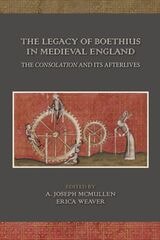
The Legacy of Boethius in Medieval England
The Consolation and its AfterlivesA. Joseph McMullen
Arizona Center for Medieval and Renaissance Studies, 2018
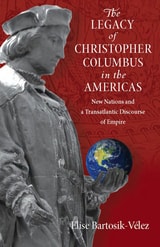
The Legacy of Christopher Columbus in the Americas
New Nations and a Transatlantic Discourse of EmpireElise Bartosik-Velez
Vanderbilt University Press, 2014
Bartosik-Velez seeks to explain the meaning of Christopher Columbus throughout the so-called New World, first in the British American colonies and the United States, as well as in Spanish America, during the eighteenth and nineteenth centuries. She argues that, during the pre- and post-revolutionary periods, New World societies commonly imagined themselves as legitimate and powerful independent political entities by comparing themselves to the classical empires of Greece and Rome. Columbus, who had been construed as a figure of empire for centuries, fit perfectly into that framework. By adopting him as a national symbol, New World nationalists appeal to Old World notions of empire.
The Legacy of David Foster Wallace
Samuel Cohen and Lee Konstantinou
University of Iowa Press, 2012
Considered by many to be the greatest writer of his generation, David Foster Wallace was at the height of his creative powers when he committed suicide in 2008. In a sweeping portrait of Wallace’s writing and thought and as a measure of his importance in literary history, The Legacy of David Foster Wallace gathers cutting-edge, field-defining scholarship by critics alongside remembrances by many of his writer friends, who include some of the world’s most influential authors.
The Legacy of Division
East and West after 1989Ferenc Laczó
Central European University Press, 2020
This volume examines the legacy of the East–West divide since the implosion of the communist regimes in Europe. The ideals of 1989 have largely been frustrated by the crises and turmoil of the past decade. The liberal consensus was first challenged as early as the mid-2000s. In Eastern Europe, grievances were directed against the prevailing narratives of transition and ever sharper ethnic-racial antipathies surfaced in opposition to a supposedly postnational and multicultural West. In Western Europe, voices regretting the European Union's supposedly careless and premature expansion eastward began to appear on both sides of the left–right and liberal–conservative divides. The possibility of convergence between Europe's two halves has been reconceived as a threat to the European project.
In a series of original essays and conversations, thirty-three contributors from the fields of European and global history, politics and culture address questions fundamental to our understanding of Europe today: How have perceptions and misperceptions between the two halves of the continent changed over the last three decades? Can one speak of a new East–West split? If so, what characterizes it and why has it reemerged? The contributions demonstrate a great variety of approaches, perspectives, emphases, and arguments in addressing the daunting dilemma of Europe's assumed East–West divide.
The Legacy of Edward W. Said
William V. Spanos
University of Illinois Press, 2008
With the untimely death of Edward W. Said in 2003, various academic and public intellectuals worldwide have begun to reassess the writings of this powerful oppositional intellectual. Figures on the neoconservative right have already begun to discredit Said’s work as that of a subversive intent on slandering America’s benign global image and undermining its global authority. On the left, a significant number of oppositional intellectuals are eager to counter this neoconservative vilification, proffering a Said who, in marked opposition to the “anti-humanism” of the great poststructuralist thinkers who were his contemporaries--Jacques Derrida, Jean-Francois Lyotard, Jacques Lacan, Louis Althusser, and Michel Foucault--reaffirms humanism and thus rejects poststructuralist theory.
In this provocative assessment of Edward Said’s lifework, William V. Spanos argues that Said’s lifelong anti-imperialist project is actually a fulfillment of the revolutionary possibilities of poststructuralist theory. Spanos examines Said, his legacy, and the various texts he wrote--including Orientalism,Culture and Imperialism, and Humanism and Democratic Criticism--that are now being considered for their lasting political impact.
The Legacy of Fort William Henry
Resurrecting the PastDavid R. Starbuck
University Press of New England, 2014

The Legacy of Hurricane Mitch
Lessons from Post-Disaster Reconstruction in HondurasMarisa O. Ensor
University of Arizona Press, 2009
As it swept across the Honduran landscape, the exceptional size, power and duration of Hurricane Mitch abruptly and brutally altered the already diminished economic, social, and environmental conditions of the population. In the aftermath of the disaster a group of seven socio-environmental scientists set out to investigate the root causes of the heightened vulnerability that characterized pre-Mitch Honduras, the impact of the catastrophe on the local society, and the subsequent recovery efforts. Edited by Marisa O. Ensor, this volume presents the findings of their investigation.
The Legacy of Hurricane Mitch offers a comprehensive analysis of the immediate and long-term consequences of Hurricane Mitch in Honduras. Based on longitudinal ethnographic fieldwork and environmental assessments, this volume illustrates the importance of adopting an approach to disaster research and practice that places “natural” trigger events within their political, cultural, and socio-economic contexts. The contributors make a compelling case against post-disaster recovery efforts that limit themselves to alleviating the symptoms, rather than confronting the root causes of the vulnerability that prefigured the disaster.
The Legacy of Kenneth Burke
Herbert W. Simons
University of Wisconsin Press, 1989
Capturing the lively modernist milieu of Kenneth Burke’s early career in Greenwich Village, where Burke arrived in 1915 fresh from high school in Pittsburgh, this book discovers him as an intellectual apprentice conversing with “the moderns.” Burke found himself in the midst of an avant-garde peopled by Malcolm Cowley, Marianne Moore, Jean Toomer, Katherine Anne Porter, William Carlos Williams, Allen Tate, Hart Crane, Alfred Stieglitz, and a host of other fascinating figures.
Burke himself, who died in 1993 at the age of 96, has been hailed as America’s most brilliant and suggestive critic and the most significant theorist of rhetoric since Cicero. Many schools of thought have claimed him as their own, but Burke has defied classification and indeed has often been considered a solitary, eccentric genius immune to intellectual fashions. But Burke’s formative work of the 1920s, when he first defined himself and his work in the context of the modernist conversation, has gone relatively unexamined.
Here we see Burke living and working with the crowd of poets, painters, and dramatists affiliated with Others magazine, Stieglitz’s “291” gallery, and Eugene O’Neill’s Provincetown Players; the leftists associated with the magazines The Masses and Seven Arts; the Dadaists; and the modernist writers working on literary journals like The Dial, where Burke in his capacity as an associate editor saw T. S. Eliot’s “The Wasteland” into print for the first time and provided other editorial services for Thomas Mann, e.e. cummings, Ezra Pound, and many other writers of note. Burke also met the iconoclasts of the older generation represented by Theodore Dreiser and H. L. Mencken, the New Humanists, and the literary nationalists who founded Contact and The New Republic. Jack Selzer shows how Burke’s own early poems, fiction, and essays emerged from and contributed to the modernist conversation in Greenwich Village. He draws on a wonderfully rich array of letters between Burke and his modernist friends and on the memoirs of his associates to create a vibrant portrait of the young Burke’s transformation from aesthete to social critic.
The Legacy of Rousseau
Edited by Clifford Orwin and Nathan Tarcov
University of Chicago Press, 1996
The volume begins by taking up a central theme noted by the late Allan Bloom—Rousseau's critique of the bourgeois as the dominant modern human type and as a being fundamentally in contradiction, caught between the sentiments of nature and the demands of society. It then turns to Rousseau's crucial polarity of nature and society and to the later conceptions of history and culture it gave rise to. The third part surveys Rousseau's legacy in both domestic and international politics. Finally, the book examines Rousseau's contributions to the virtues that have become central to the current sensibility: community, sincerity, and compassion.
Contributors include Allan Bloom, François Furet, Pierre Hassner, Christopher Kelly, Roger Masters, and Arthur Melzer.
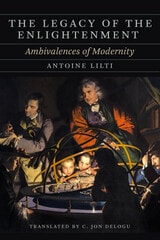
The Legacy of the Enlightenment
Ambivalences of ModernityAntoine Lilti
University of Chicago Press, 2025
The Enlightenment has come under substantial attack over the past several years, with some going so far as to recommend leaving behind its thinkers and their Eurocentric prejudices. In response, the most orthodox defenders of the Enlightenment have insisted that its values are not just foundational but indispensable and that abandoning them would mean opening the door to nihilism and relativism. For Antoine Lilti, one of the leading scholars of the French Enlightenment, both sides are wrong.
In this tactfully argued series of essays, Lilti emphasizes a non-dogmatic, non-ideological view of the Enlightenment—one that sees its legacy as a critical, attentive approach that can and should serve as its own best critic. Along the way, he engages with everyone from Rousseau and Kant to Foucault and Habermas, as well as prominent contemporary voices, such as Jonathan Israel. The result is a remarkable new reading of the Enlightenment that redraws the stakes of old debates and offers an alternative way to engage with both canonical thinkers and later scholarship that is both honest about the past and useful for the future.
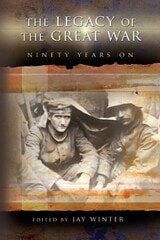
The Legacy of the Great War
Ninety Years OnEdited by Jay Winter
University of Missouri Press, 2009
In late 2007 and early 2008, world-renowned historians gathered in Kansas City for a series of public forums on World War I. Each of the five events focused on a particular topic and featured spirited dialogue between its prominent participants.
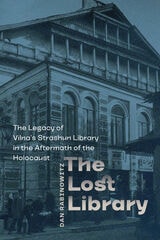
The Lost Library
The Legacy of Vilna's Strashun Library in the Aftermath of the HolocaustDan Rabinowitz
Brandeis University Press, 2018
The Modern Legislative Veto
Macropolitical Conflict and the Legacy of ChadhaMichael J. Berry
University of Michigan Press, 2016
Berry argues that, since the U.S. Supreme Court declared the legislative veto unconstitutional in Immigration and Naturalization Service (INS) v. Chadha (1983), Congress has strategically modified its use of the veto to give more power to appropriations committees. Using an original dataset of legislative veto enactments, Berry finds that Congress has actually increased its use of this oversight mechanism since Chadha, especially over defense and foreign policy issues. Democratic and Republican presidents alike have fought back by vetoing legislation containing legislative vetoes and by using signing statements with greater frequency to challenge the legislative veto’s constitutionality. A complementary analysis of state-level use of the legislative veto finds variation in oversight powers granted to state legislatures, but similar struggles between the legislature and the executive.
This ongoing battle over the legislative veto points to broader efforts by legislative and executive actors to control policy, efforts that continually negotiate how the democratic republic established by the Constitution actually operates in practice.
The Northwest Ordinance
Essays on its Formulation, Provisions, and LegacyFrederick D. Williams
Michigan State University Press, 1989
Adoption of the Northwest Ordinance in 1787 ended a long and sometimes acrimonious debate over the question of how to organize and govern the western territories of the United States. Many eastern leaders viewed the Northwest Territory as a colonial possession, while freedom-loving settlers demanded local self- government. These essays address the ambiguities of the Ordinance, balance of power politics in North America, missionary activity in the territory, slavery, and higher education in the Old Northwest.
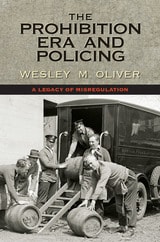
The Prohibition Era and Policing
A Legacy of MisregulationWesley M. Oliver
Vanderbilt University Press, 2018
Intrusive searches for alcohol during Prohibition destroyed middle-class Americans' faith in police and ushered in a new basis for controlling police conduct. State courts in the 1920s began to exclude perfectly reliable evidence obtained in an illegal search. Then, as Prohibition drew to a close, a presidential commission awakened the public to torture in interrogation rooms, prompting courts to exclude coerced confessions irrespective of whether the technique had produced a reliable statement.
Prohibition's scheme lingered long past the Roaring '20s. Racial tensions and police brutality were bigger concerns in the 1960s than illegal searches, yet when the Supreme Court imposed limits on officers' conduct in 1961, searches alone were regulated. Interrogation law during the 1960s, fundamentally reshaped by the Miranda ruling, ensured that suspects who invoked their rights would not be subject to coercive tactics, but did nothing to ensure reliable confessions by those who were questioned. Explicitly recognizing that its decisions excluding evidence had not been well-received, the Court in the 1970s refused to exclude identifications merely because they were made in suggestive lineups. Perhaps a larger project awaits—refocusing our rules of criminal procedure on those concerns from which Prohibition distracted us: conviction accuracy and the use of force by police.
The Scripps School
Its Stories, People, and LegacyRalph Izard
Ohio University Press, 2018
An anecdotal history published on the occasion of the one hundredth anniversary of Ohio University’s renowned E. W. Scripps School of Journalism.
After its founding in 1924, what is now the E. W. Scripps School of Journalism at Ohio University quickly became one of the premier programs in the country. For decades, it has produced leaders who have reached the highest levels of journalism and communication in their careers, and their success is a direct product not only of the education they get in Athens but of the community the school fosters.
In this book, nearly one hundred alumni, faculty, friends, and students offer their stories of life at and after Scripps. The result is a multilayered, inspiring portrait of the school and how it shapes those who pass through its doors. At the same time, The Scripps School gives a nuanced history of journalism education at Ohio University. From covering assassinations and presidential elections to major moments in sports, alumni have documented the unprecedented and the historic, and here they show just how Scripps prepared them to be there.
The Scripps School, edited by former director Ralph Izard, is a love letter to the people and the institution. At a time when journalism is more important than ever, this book humanizes and contextualizes the profession in ways that will resonate in the Scripps community and beyond.
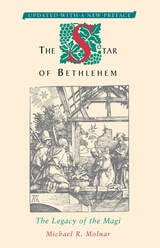
The Star of Bethlehem
The Legacy of the MagiMolnar, Michael R.
Rutgers University Press, 2013
Could the $50 purchase of an ancient coin by a Rutgers astronomer have unlocked the mystery of the Christmas Star? For years, scientists have looked, with little success, to astronomical records for an explanation of the magical star that guided the Magi to Christ’s manger. Intrigued by the image he found on the latest addition to his coin collection, Michael Molnar thought there might be more to learn by looking, instead, at the teachings of ancient astrologers.
Molnar argues in his book that the Star of Bethlehem was not a star at all, but rather a regal portent centering around the planet Jupiter that was eclipsed by the moon. He bases this theory on the actual beliefs of astrologers, such as the Magi, who lived around the time of Christ. Molnar found some intriguing clues to the mystery while researching the meaning of astrological symbols he found an ancient coin, which bore the image of Aries looking back at a star. He found that Aries was a symbol of Judea at the time, and that ancient astrologers believed that a new king would be born when the moon passed in front of Jupiter. Molnar wondered, could the coin have been issued as a response to the Great Messianic Portent, the Star of Bethlehem?
To match the story of the appearance of the Christmas star, Molnar also knew the event had to happen when Jupiter was “in the east.” Using these criteria and a computer program, he was able to chart an eclipse of Jupiter in Aries on April 17, 6 B.C., a day when Jupiter was precisely “in the east,” which confirmed his theory. Moreover, he found that a Roman astrologer described the conditions of that day as fitting the birth of a “divine and immortal” person.
According to Harvard University Professor Owen Gingerich, “this is the most original and important contribution of the entire 20th century” about the Magi’s star. Using clues from astronomy, astrology, and history, Molnar has created a provocative, fascinating theory on the Christmas Star. He weaves together an intriguing scientific detective story which resolves one of the world’s greatest mysteries: The Star of Bethlehem at the birth of Christ.
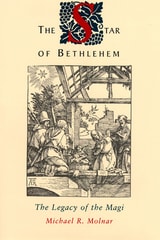
The Star of Bethlehem
The Legacy of the MagiMolnar, Michael R.
Rutgers University Press, 1999
Could the $50 purchase of an ancient coin by a Rutgers astronomer have unlocked the mystery of the Christmas Star? For years, scientists have looked, with little success, to astronomical records for an explanation of the magical star that guided the Magi to Christ’s manger. Intrigued by the image he found on the latest addition to his coin collection, Michael Molnar thought there might be more to learn by looking, instead, at the teachings of ancient astrologers.
Molnar argues in his book that the Star of Bethlehem was not a star at all, but rather a regal portent centering around the planet Jupiter that was eclipsed by the moon. He bases this theory on the actual beliefs of astrologers, such as the Magi, who lived around the time of Christ. Molnar found some intriguing clues to the mystery while researching the meaning of astrological symbols he found an ancient coin, which bore the image of Aries looking back at a star. He found that Aries was a symbol of Judea at the time, and that ancient astrologers believed that a new king would be born when the moon passed in front of Jupiter. Molnar wondered, could the coin have been issued as a response to the Great Messianic Portent, the Star of Bethlehem?
To match the story of the appearance of the Christmas star, Molnar also knew the event had to happen when Jupiter was “in the east.” Using these criteria and a computer program, he was able to chart an eclipse of Jupiter in Aries on April 17, 6 B.C., a day when Jupiter was precisely “in the east,” which confirmed his theory. Moreover, he found that a Roman astrologer described the conditions of that day as fitting the birth of a “divine and immortal” person.
According to Harvard University Professor Owen Gingerich, “this is the most original and important contribution of the entire 20th century” about the Magi’s star. Using clues from astronomy, astrology, and history, Molnar has created a provocative, fascinating theory on the Christmas Star. He weaves together an intriguing scientific detective story which resolves one of the world’s greatest mysteries: The Star of Bethlehem at the birth of Christ.
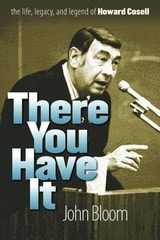
There You Have It
The Life, Legacy, and Legend of Howard CosellJohn Bloom
University of Massachusetts Press, 2010
Raised in Brooklyn in a middle-class Jewish family, Cosell carried with him a deeply ingrained sense of social justice. Yet early on he abandoned plans for a legal career to become a pioneer in sports broadcasting, first in radio and then in television. The first white TV reporter to address the former Cassius Clay by his chosen Muslim name, Cosell was also the first sportscaster to conduct locker room interviews with professional athletes, using a tape recorder purchased with his own money. At the 1968 Olympics in Mexico City, he not only defended the fisted "Black Power" salutes of American track medalists John Carlos and Tommie Smith, but he publicly excoriated Olympic Committee chairman Avery Brundage for "hypocritical," racist policies. He was also instrumental in launching ABC's Monday Night Football, a prime-time sports program that evolved into an American cultural institution.
Yet while Cosell took courageous stands on behalf of civil rights and other causes, he could be remarkably blind to the inconsistencies in his own life. In this way, John Bloom argues, he embodied contradictions that still resonate widely in American society today.
Toward a Pragmatist Sociology
John Dewey and the Legacy of C. Wright MillsRobert G. Dunn
Temple University Press, 2018
In Toward a Pragmatist Sociology, Robert Dunn explores the relationship between the ideas of philosopher and educator John Dewey and those of sociologist C. Wright Mills in order to provide a philosophical and theoretical foundation for the development of a critical and public sociology. Dunn recovers an intellectual and conceptual framework for transforming sociology into a more substantive, comprehensive, and socially useful discipline.
Toward a Pragmatist Sociology argues that Dewey and Mills shared a common vision of a relevant, critical, public sociology dedicated to the solution of societal problems. Dunn investigates the past and present state of the discipline, critiquing its dominant tendencies, and offering historical examples of alternatives to conventional sociological approaches.
By stressing the similar intellectual and moral visions of both men, Toward a Pragmatist Sociology provides an original treatment of two important American thinkers whose work offers a conception and model of a sociology with a sense of moral and political purpose and public relevance. It should liberate future sociologists and others to regard the discipline as not only a science but an intellectual, moral, and political enterprise.
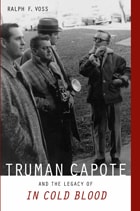
Truman Capote and the Legacy of "In Cold Blood"
Ralph F. Voss
University of Alabama Press, 2011
Voss examines Capote and In Cold Blood from many perspectives, not only as the crowning achievement of Capote’s career, but also as a story in itself, focusing on Capote’s artfully composed text, his extravagant claims for it as reportage, and its larger status in American popular culture.
Voss argues that Capote’s publication of In Cold Blood in 1966 forever transcended his reputation as a first-rate stylist but second-rate writer of “Southern gothic” fiction; that In Cold Blood actually is a gothic novel, a sophisticated culmination of Capote’s artistic development and interest in lurid regionalism, but one that nonetheless eclipsed him both personally and artistically. He also explores Capote’s famous claim that he created a genre called the “non-fiction novel,” and its status as a foundational work of “true crime” writing as practiced by authors ranging from Tom Wolfe and Norman Mailer to James Ellroy, Joe McGinniss, and John Berendt.
Voss also examines Capote’s artful manipulation of the story’s facts and circumstances: his masking of crucial homoerotic elements to enhance its marketability; his need for the killers to remain alive long enough to get the story, and then his need for them to die so that he could complete it; and Capote’s style, his shaping of the narrative, and his selection of details–why it served him to include this and not that, and the effects of such choices—all despite confident declarations that “every word is true.”
Though it’s been nearly 50 years since the Clutter murders and far more gruesome crimes have been documented, In Cold Blood continues to resonate deeply in popular culture. Beyond questions of artistic selection and claims of truth, beyond questions about capital punishment and Capote’s own post-publication dissolution, In Cold Blood’s ongoing relevance stems, argues Voss, from its unmatched role as a touchstone for enduring issues of truth, exploitation, victimization, and the power of narrative.