Results by title
275 books match the query 'Letters' and 55 start with t
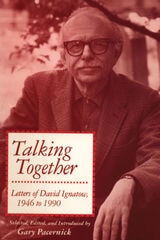
Talking Together
Letters of David Ignatow, 1946-1990David Ignatow; Selected, Edited and Introduced by Gary Pacernick
University of Alabama Press, 1992
The letters of David Ignatow reveal the poet in “company” with a community of writers as he shares with them the details and nuances of his everyday existence: the key acts of friendship and enmity, of good news and bad, of struggle, work, success, and failure that comprise a life devoted to making art. The letters also serve as a vehicle for Ignatow to express his views on a whole range of issues from writing, teaching, and editing poetry, to his visions of the self, death and the cosmos. But the key is “company”—the support system that helps sustain the poet and that enables him to help others.
One of the many things we may learn from the letters of David Ignatow is the power of the individual to affect another’s life, to help sustain and even change it.
Teaching Life
Letters from a Life in LiteratureDale Salwak
University of Iowa Press, 2008
Written in response to the sudden death of one of his students, who died tragically in an automobile accident on her way to Salwak’s office to talk over her career plans, Teaching Life is an effort to impart lessons to the next generation of teachers: “It was the suddenness of her death, I think, along with the utter loss of so much potential, which struck me forcibly, and I found myself wondering if anything I had said in class had made a difference in her too-short life or, for that matter, in the lives of any of my students.”
By turns analytical, reflective, and exhortatory, Teaching Life unselfconsciously captures the fascination, enlightenment, and sheer joy that literary studies can offer professors and students. It also implicitly speaks to society's prevailing—and disturbing—prejudice against the profession.
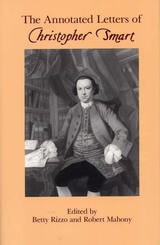
The Annotated Letters of Christopher Smart
Edited by Betty Rizzo and Robert Mahony
Southern Illinois University Press, 1991
The only collection of all known letters of Christopher Smart provides the best psychological explanation to date of that complex and elusive eighteenth-century poet.
The significant characteristics that distinguish Smart’s prose letters from his poetry, Betty Rizzo and Robert Mahony note, are that his letters were requests for assistance while his verses were bequests, gifts in which he set great store. Indeed, it was Smart’s lifelong conviction that he was a poet of major importance.
As Smart biographer Karina Williamson notes, "The splendidly informative and vivaciously written accounts of the circumstances surrounding each letter, or group of letters, add up to what is in effect a miniature biography."
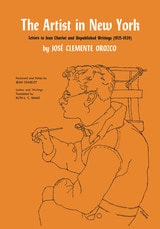
The Artist in New York
Letters to Jean Charlot and unpublished writings, 1925-1929.By José Clemente Orozco
University of Texas Press, 1974
In his Foreword to this edition, Jean Charlot says: "An unusual feature of Orozco's letters is the great deal that he has to say about art. That one artist writing to another would emphasize art as his subject seems normal enough to the American reader. Yet, within the context of the Mexico of those days, the fact remains exceptional. The patria Orozco was leaving behind had, even from the point of view of its artists, many cares more pressing than art."
The letters and unpublished writings of Orozco from this period (1925-1929) describe an important period of transition in the artist's life, from his departure from Mexico, almost as a defeated man, to the period just before he received the great mural commissions—Pomona, The New School for Social Research in New York, Dartmouth—that were to bring him lasting international fame.

The Collected Letters of George Gissing Volume 5
1892-1895George Gissing
Ohio University Press, 1994
Gissing’s career, which spanned the period of about 1877 to his death in 1903, was characterized by prodigious output (almost a novel a year in the early days), modest recognition, and modest income. He wrote of poverty, socialism, class differences, social reform, and later on, about the problems of women and industrialization. His best known works are New Grub Street (1891) and Private Papers of Henry Ryecroft (1903), rich sources of social commentary that reflect a literary transition from the Victorian to the modern period.
For many years, the only Gissing letters available to the public were those in the modest selection of letters to his family published in 1927. Now the editors have culled widely scattered sources—private and public collections, journals, newspapers, memoirs, biographies, and sales catalogs—to gather and organize Gissing’s correspondence, including letters to him, and to provide an editorial context.
The years 1892-1895 saw an increase in the bulk and scope of Gissing’s literary production, coinciding with his new and cordial association with publishers Bullen and Lawrence. During this period, the partners published Denzil Quarrier, The Odd Women, In the Year of Jubilee, ad Eve’s Ransom, while A. and C. Black brought out Born in Exile. Gissing’s correspondence with his publishers, some of which is printed here for the first time, is matched in significance by his letters to his literary agent William Morris Colles and to editors such as Clement Shorter, who were instrumental in turning Gissing to the short story. His domestic life remained grim: his unfortunate marriage ruled out the possibility of satisfactory social relationships, and his anxiety over the care of his son Walter was eased only by sending the infant away to stay with strangers. New friends, especially Clara Collet and Edward Clodd, were a precious asset—in their presence he could be his better self, a highly cultured, joy-loving individual whose work was finding greater favor with the public.
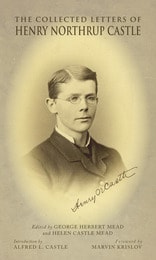
The Collected Letters of Henry Northrup Castle
Henry Northrup Castle
Ohio University Press, 2012
George Herbert Mead, one of America’s most important and influential philosophers, a founder of pragmatism, social psychology, and symbolic interactionism, was also a keen observer of American culture and early modernism. In the period from the 1870s to 1895, Henry Northrup Castle maintained a correspondence with family members and with Mead—his best friend at Oberlin College and brother-in-law—that reveals many of the intellectual, economic, and cultural forces that shaped American thought in that complex era. Close friends of John Dewey, Jane Addams, and other leading Chicago Progressives, the author of these often intimate letters comments frankly on pivotal events affecting higher education, developments at Oberlin College, Hawaii (where the Castles lived), progressivism, and the general angst that many young intellectuals were experiencing in early modern America.
The letters, drawn from the Mead-Castle collection at the University of Chicago, were collected and edited by Mead after the tragic death of Henry Castle in a shipping accident in the North Sea. Working with his wife Helen Castle (one of Henry’s sisters), he privately published fifty copies of the letters to record an important relationship and as an intellectual history of two progressive thinkers at the end of the nineteenth century. American historians, such as Robert Crunden and Gary Cook, have noted the importance of the letters to historians of the late nineteenth century.
The letters are made available here using the basic Mead text of 1902. Additional insights into the connection between Mead, John Dewey, Henry and Harriet Castle, and Hawaii’s progressive kindergarten system are provided by the foundation’s executive director Alfred L. Castle. Marvin Krislov, president of Oberlin College, has added additional comments on the importance of the letters to understanding the intellectual relationship that flourished at Oberlin College.
Published with the support of the Samuel N. and Mary Castle Foundation.

The Collected Letters of Thomas and Jane Welsh Carlyle
1812–21, Volume 1Charles Richard Sanders
Duke University Press, 0
Back volumes are available for purchase. To ensure that you don't miss a single issue, subscribe to The Collected Letters of Thomas and Jane Welsh Carlyle today. For more information, click here.
The Collected Letters of Thomas and Jane Welsh Carlyle
1841, Volume 13Clyde de L. Ryals and Kenneth J. Fielding
Duke University Press, 0
The Collected Letters of Thomas and Jane Welsh Carlyle
1852, Volume 27Clyde de L. Ryals and Kenneth J. Fielding
Duke University Press, 0
The Collected Letters of Thomas and Jane Welsh Carlyle
January–December 1851, Volume 26Clyde de L. Ryals and Kenneth J. Fielding
Duke University Press, 0
The Collected Works of William Howard Taft, Volume IV
Presidential Messages to CongressDavid H. Burton
Ohio University Press, 2002
“A time when panics seem far removed is the best time to prepare our financial system to withstand a storm. The most crying need this country has is a proper banking and currency system. The existing one is inadequate, and everyone who has studied the question admits it.”—William Howard Taft
The interaction between President William Howard Taft and the Congress provides a window on his leadership. Volume IV of The Collected Works of William Howard Taft is devoted to his messages to the legislative branch and concerns some of the pressing issues of the day, issues that have relevance still.
Oftentimes President Taft was at odds with a somewhat reactionary Congress, causing him to veto legislation that he thought unwise. For example, his commitment to the independence of elected judges led him to reject statehood for Arizona until its constitution was altered to address his objection.
His messages also touched on subjects for which he led the way over the objections of Congress, such as his recommendation of a federal law to protect resident aliens against denial of their civil rights and his advocacy of free trade with Canada.
In his commentary to the volume, Professor Burton points out: “There is exhibited time after time concern for the American people, for men and women from different walks of life. Taft comes across less as a judge, which he had been, or the chief justice he was to become, and more as a sitting president of all the people.”
Taft’s Presidential Messages to Congress provides the documentary evidence to support that claim.
The Complete Writings and Selected Correspondence of John Dickinson
Volume 1Jane E. Calvert
University of Delaware Press, 2011
The Complete Writings and Selected Correspondence of John Dickinson
Volume 2Jane E. Calvert
University of Delaware Press, 2021
Dickinson’s hard work on behalf of his clients brought him success in other areas of his public life. In October 1759, he was elected to his first public position as a representative for Kent County, Del., the following year he was elevated to the position of speaker, and in 1762, he became a representative for Philadelphia County, Pa. As a legislator in two colonies, learning his craft as a global war unfolded, he contributed to bills on military and defense, Indian relations, infrastructure improvements and city management, and served on various committees. The death of George II occasioned debates over laws and judges, in which Dickinson participated. This era concludes with Dickinson playing a central role in managing the unfolding Paxton Riots, in which frontiersmen massacred peaceful Indians and threatened the Quaker leadership of Pennsylvania.
In private, Dickinson lost the two most prominent male figures in his life in 1760, his father, Samuel, and soon thereafter, his mentor, colleague, and friend, John Moland. In honor of Moland, Dickinson published a poem and became a proxy head to Moland’s large family. Though his extant correspondence during this period is small, he exchanged letters with Mary Cadwalader Dickinson, Israel Pemberton, William Allason, George Read, Thomas McKean, and others. Perhaps most significant, he wrote a lengthy, unpublished essay on the flag-of-truce trade and also maintained commonplace books as he considered his place within the British Empire, opening up the next phase in Dickinson’s life as a leader of the resistance against Britain.
Published by the University of Delaware Press. Distributed worldwide by Rutgers University Press.
The Complete Writings and Selected Correspondence of John Dickinson
Volume 3Jane E. Calvert
University of Delaware Press, 2024
The Complete Writings and Selected Correspondence of John Dickinson
Volume 4, 1767-1769John Dickinson
University of Delaware Press, 0
The Confessions and Correspondence, Including the Letters to Malesherbes
Jean-Jacques Rousseau
Dartmouth College Press, 1998
The Converse of the Pen
Acts of Intimacy in the Eighteenth-Century Familiar LetterBruce Redford
University of Chicago Press, 1987
Redford examines six masters of the "talking letter": Lady Mary Wortley Montagu, William Cowper, Thomas Gray, Horace Walpole, James Boswell, and Samuel Johnson. All seek the paradoxical goal of artful spontaneity. Each exploits the distinctive resources of the eighteenth-century letter writer: a flexible conversational manner, a repertoire of literary and social allusion, a flair for dramatic impersonation. The voices of these letter writers "make distance, presence," in Samuel Richardson's phrase, by devising substitutes for gesture, vocal inflection, and physical context, turning each letter into a performance—an act. The resulting verbal constructs create a mysterious tension between the claims of fact and the possibilities of art. Redford recovers a neglected literary form and makes possible a deeper understanding of major eighteenth-century writers who devoted much of their talent and time to "the converse of the pen."
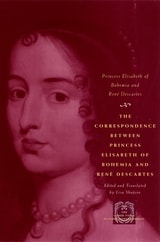
The Correspondence between Princess Elisabeth of Bohemia and René Descartes
Princess Elisabeth of Bohemia and René Descartes
University of Chicago Press, 2007
Between the years 1643 and 1649, Princess Elisabeth of Bohemia (1618–80) and René Descartes (1596–1650) exchanged fifty-eight letters—thirty-two from Descartes and twenty-six from Elisabeth. Their correspondence contains the only known extant philosophical writings by Elisabeth, revealing her mastery of metaphysics, analytic geometry, and moral philosophy, as well as her keen interest in natural philosophy. The letters are essential reading for anyone interested in Descartes’s philosophy, in particular his account of the human being as a union of mind and body, as well as his ethics. They also provide a unique insight into the character of their authors and the way ideas develop through intellectual collaboration.
Philosophers have long been familiar with Descartes’s side of the correspondence. Now Elisabeth’s letters—never before available in translation in their entirety—emerge this volume, adding much-needed context and depth both to Descartes’s ideas and the legacy of the princess. Lisa Shapiro’s annotated edition—which also includes Elisabeth’s correspondence with the Quakers William Penn and Robert Barclay—will be heralded by students of philosophy, feminist theorists, and historians of the early modern period.
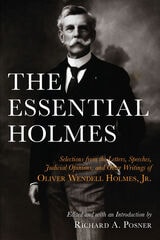
The Essential Holmes
Selections from the Letters, Speeches, Judicial Opinions, and Other Writings of Oliver Wendell Holmes, Jr.Oliver Wendell Holmes
University of Chicago Press, 1992
"A first-rate prose stylist, [Holmes] was perhaps the most quotable of all judges, as this ably edited volume shows."—Washington Post Book World
"Brilliantly edited, lucidly organized, and equipped with a compelling introduction by Judge Posner, [this book] is one of the finest single-volume samplers of any author's work I have seen. . . . Posner has fully captured the acrid tang of him in this masterly anthology."—Terry Teachout, National Review
"Excellent. . . . A worthwhile contribution to current American political/legal discussions."—Library Journal
"The best source for the reader who wants a first serious acquaintance with Holmes."—Thomas C. Grey, New York Review of Books
The Fenwick Letters
A Transnational Feminist Life Reconstructed, Volume I: 1797-1821Eliza Fenwick
University of Delaware Press, 2026
The Fenwick Letters
A Transnational Feminist Life Reconstructed, Volume II: 1822-1840Eliza Fenwick
University of Delaware Press, 2027
The second of this two-volume edition of The Fenwick Letters covers the North American phase of Eliza Fenwick’s transformative, transnational odyssey, from 1822 to 1840. Although no longer the radical author she was in the 1790s, advocating for the rights of women to be educated, or the innovative author of children’s books that she was in the early 1800s, she was still very much a writer. In her North American incarnation, however, she was primarily an educator, a businesswoman running her own school, and a single, working grandmother attempting to find safety as well as economic and domestic stability for herself and her remaining family. Eliza’s letters are consistently riveting, filled with sharply drawn portraits of the people, places, environment, politics, and culture of each community in which she lived. The letters also reveal Eliza’s genius for developing networks of social, political, and cultural connections as she established and sought to support herself and her family in North America.
The Gift of Correspondence in Classical Rome
Friendship in Cicero's Ad Familiares and Seneca's Moral EpistlesAmanda Wilcox
University of Wisconsin Press, 2012
Amanda Wilcox offers an innovative approach to two major collections of Roman letters—Cicero’s Ad Familiares and Seneca’s Moral Epistles—informed by modern cross-cultural theories of gift-giving.
By viewing letters and the practice of correspondence as a species of gift exchange, Wilcox provides a nuanced analysis of neglected and misunderstood aspects of Roman epistolary rhetoric and the social dynamics of friendship in Cicero’s correspondence. Turning to Seneca, she shows that he both inherited and reacted against Cicero’s euphemistic rhetoric and social practices, and she analyzes how Seneca transformed the rhetoric of his own letters from an instrument of social negotiation into an idiom for ethical philosophy and self-reflection. Though Cicero and Seneca are often viewed as a study in contrasts, Wilcox extensively compares their letters, underscoring Cicero’s significant influence on Seneca as a prose stylist, philosopher, and public figure.
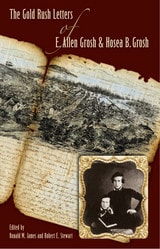
The Gold Rush Letters of E. Allen Grosh and Hosea B. Grosh
Ronald M. James
University of Nevada Press, 2016
The Groshes’ letters are rich in color and important historical details. Generously annotated and with an introduction that provides a context for the brothers’ career and the setting in which they tried to make their fortune, these documents powerfully depict the often harsh realities of Gold Rush life and society.
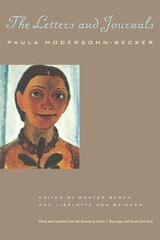
The Letters and Journals
Paula Modersohn-Becker
Northwestern University Press, 1998
The Letters and the Law
Legal and Literary Culture in Late Imperial RussiaAnna Schur
Northwestern University Press, 2022
Anna Schur combines historical research and literary analysis to argue that the first generations of Russian trial lawyers shaped their professional identity with an eye to the celebrated figure of the writer and that they considered their own activities to be a form of verbal art. A fuller understanding of writers’ antipathy to the law, Schur contends, must take into account this overlooked cultural backdrop. Laced with the better‑known critique of the lawyer’s legalistic proclivities and lack of moral principle are the writer’s reactions to a whole network of explicit and implicit claims of similarity between the two professions’ goals, methods, and missions that were central to the lawyer’s professional ideal. Viewed in this light, writers’ critiques of the law and lawyers emerge as a concerted effort at protecting literature’s exclusive cultural status in the context of modernization and the rapidly expanding public sphere.
The study draws upon a mix of well-known and rarely studied nineteenth-century authors and texts—with particular attention paid to Fyodor Dostoevsky and Mikhail Saltykov-Shchedrin—and on a wide range of nonliterary sources, including courtroom speeches, guides to forensic oratory, legal treatises, and specialized press.
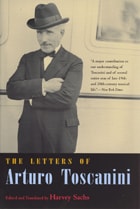
The Letters of Arturo Toscanini
Arturo Toscanini
University of Chicago Press, 2006
“This is a major contribution to our understanding of Toscanini and of several entire eras of late nineteenth- and twentieth-century musical life, especially the almost improvisatory looseness of opera in Italy, the glamour of European festivals, and the concert life of the United States. It’s also a wonderful, sometimes downright salacious read.”—New York Times
“Toscanini’s large, cranky humanity comes alive throughout his letters, as it does in his best recordings.”—New York Review of Books
“Edited with scrupulous care and wide-ranging erudition.”—Wall Street Journal
“Sachs has served the conductor well . . . by editing this generously annotated and unprecedentedly revealing collection of letters that were written, usually in haste and often in fury, over the course of seventy years.”—Washington Post
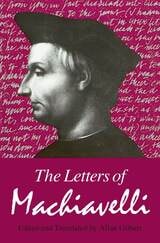
The Letters of Machiavelli
Niccolò Machiavelli
University of Chicago Press, 1988

The Letters of Mina Harker
Dodie Bellamy; with a new Forward by Dennis Cooper
University of Wisconsin Press, 2004
Bigger-than-life, half goddess, half Bette Davis, Mina sends letter after letter to friends and co-conspirators, holding her reader captive through a display of illusion and longing. Juggling quivering vulnerability on one hand and gossip on the other, Mina spoofs and consumes and spews back up demented reembodiments of trash media and high theory alike. It's all fodder for her ravenous libido and "a messy ambiguous place where pathology meets pleasure." Sensuous and captivating, The Letters of Mina Harker describes one woman's struggles finding the right words to explain her desires and fears without confining herself to one identity.
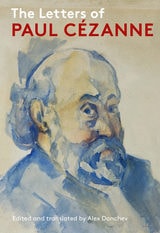
The Letters of Paul Cézanne
Alex Danchev
J. Paul Getty Trust, The, 2013
Revered and misunderstood by his peers and lauded by later generations as the father of modern art, Paul Cézanne (1839-1906) has long been a subject of fascination for artists and art lovers, writers, poets, and philosophers. His life was a ceaseless artistic quest, and he channeled much of his wide-ranging intellect and ferocious wit into his letters. Punctuated by exasperated theorizing and philosophical reflection, outbursts of creative ecstasy and melancholic confession, the artist’s correspondence reveals both the heroic and all-toohuman qualities of a man who is indisputably among the pantheon of all-time greats.
This new translation of Cézanne’s letters includes more than twenty that were previously unpublished and reproduces the sketches and caricatures with which Cézanne occasionally illustrated his words. The letters shed light on some of the key artistic relationships of the modern period—about one third of Cézanne’s more than 250 letters are to his boyhood companion Émile Zola, and he communicated extensively with Camille Pissarro and the dealer Ambroise Vollard. The translation is richly annotated with explanatory notes, and, for the first time, the letters are cross-referenced to the current catalogue raisonné. Numerous inaccuracies and archaisms in the previous English edition of the letters are corrected, and many intriguing passages that were unaccountably omitted have been restored. The result is a publishing landmark that ably conveys Cézanne’s intricacy of expression.
The Letters of St. Patrick and Early Patrician Literature
Philip Freeman
Catholic University of America Press, 2025
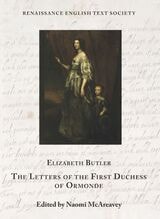
The Letters of the First Duchess of Ormonde
Elizabeth Butler
Iter Press, 2022
The volume comprises more than three hundred letters written by Ormonde to her husband and family, agents and servants, and friends and clients. Spanning six decades, these letters are meticulously transcribed, edited, and annotated, and the volume includes a substantial scholarly introduction, family trees, a glossary, and other resources.
The Life and Letters
Irving Feldman
University of Chicago Press, 1994
The Making of Pioneer Wisconsin
Voices of Early SettlersMichael E. Stevens
Wisconsin Historical Society Press, 2018
The Making of Pioneer Wisconsin provides a unique and intimate glimpse into the lives of these early settlers, as they describe what it felt like to be a teenager in a wagon heading west or an isolated young wife living far from her friends and family. Woven together with context provided by historian Michael E. Stevens, these first-person accounts form a fascinating narrative that deepens our ability to understand and empathize with Wisconsin’s early pioneers.
The Making of a Mystic
New and Selected Letters of Evelyn UnderhillEvelyn Underhill. Edited by Carol Poston.
University of Illinois Press, 2010
In time for the centennial celebration of her classic Mysticism, this volume of Underhill's letters will enable readers and researchers to follow her as she reconciled her beliefs with her daily life. The letters reveal her personal and theological development and clarify the relationships that influenced her life and work. Hardly aloof, she enjoyed the interests, mirth, and compassion of close friendships.
Drawing from collections previously unknown to scholars, The Making of a Mystic shows the range of Evelyn Underhill's mind and interests as well as the immense network of her correspondents, including Sir James Frazier and Nobel Prize laureate Rabindranath Tagore. This substantial selection of Underhill's correspondence demonstrates an exceptional scope, beginning with her earliest letters from boarding school to her mother and extending to a letter written to T. S. Eliot from what was to be her deathbed in London in 1941 as the London Blitz raged around her.
The Marlin Compound
Letters of a Singular FamilyBy Frank Calvert Oltorf
University of Texas Press, 1968
Written over a hundred-year period, the letters of Zenas Bartlett and his family and friends capture the vitality that marked the expansion and development of Texas during the nineteenth century. Warm, humorous, and illuminating, these letters and other papers record the changes in a family and in a region as bustling towns replaced clusters of log cabins and the hardships of the frontier were gradually mellowed by the luxuries of settled life.
The earliest letters describe the adventures of young Zenas Bartlett, who left his home in Maine and traveled first to Alabama and then to camps of the California Gold Rush. A new venture brought him to Marlin, Texas, in 1854. The transformation of a wilderness area into a prosperous community is the unifying theme of the rest of the collection.
Churchill Jones, Bartlett’s future father-in-law, writes about his struggles to establish a cotton plantation at the Falls of the Brazos River. Zenas’ antebellum letters perceptively reveal the poignancy of his partner’s death and the joys of his own fulfilling marriage.
John Watkins, an associate in Bartlett’s store, expresses the pride, loyalty, and eventual disillusionment of a soldier in the Civil War. Zenas’ correspondence with his family in the East describes the privations endured by Marlin during Reconstruction.
Beguiling Mollie Dickson’s schoolgirl journal and the letters of Zenas’ large family depict happier times during the eighties and nineties. The last letters were written by Lottie Barnes, a former servant who recalls the tranquil years following the turn of the century. An epilogue brings the story to conclusion, and selections from the author’s delightful collection of family photographs illustrate the book.
Frank Calvert Oltorf was reared on the “Marlin Compound,” the home where members of this singular family lived or visited and where many of the manuscripts included in this book were found. His comments bind the letters in a narrative of pioneering, which is also a humorous and human family history.
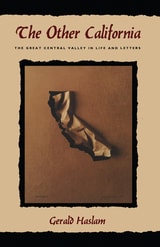
The Other California
The Great Central Valley In Life And LettersGerald W. Haslam
University of Nevada Press, 1993
Oildale native, Gerald Haslam, doesn’t like it when folks dismiss the Central Valley as boring and flat. In this collection of essays, he argues that it is California’s heartland and economic hub. In addition, the valley has produced a crop of gifted writers. These nineteen essays range from reminiscences of childhood and adolescence to a portrait of Mexican-Americans and their position in the Valley’s society to a moving essay about having the author’s aging father come to live with the family. Even if you have never lived in the Valley, reading this book will give you an entirely new perspective the next time you drive into it.
The Philosophy of Epicurus
Letters, Doctrines, and Parallel Passages from LucretiusEpicurus, translated with commentary and introduction by George K. Strodach
Northwestern University Press, 1963
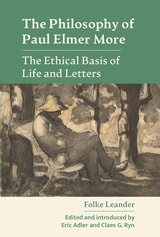
The Philosophy of Paul Elmer More
The Ethical Basis of Life and LettersFolke Leander
University of Missouri Press, 2026
Folke Leander (1910-1981) was a prolific and internationally known Swedish philosopher. He is best known in the United States as an explicator of the New Humanism, an informal movement of literary and cultural criticism founded by Paul Elmer More (1864-1937) and Irving Babbitt (1865-1933).
Leander’s manuscript for The Philosophy of Paul Elmer More was completed in the early 1970s, but because of the academic environment at the time and the book’s special philosophical focus, Leander was unable to find a publisher. Since then, the work existed only as a typescript, a copy of which he left with Claes G. Ryn, his former student and collaborator, in the hope that one day in more favorable intellectual circumstances it might be published.
Leander is rare among the scholars of the New Humanism for his first-rate philosophical training, depth of insight, and clarity of expression. In The Philosophy of Paul Elmer More he grapples carefully and precisely with the most fundamental tenets of the New Humanism. Although very supportive of the movement, Leander provides essential critiques of its contentions—and even improves upon some of them in crucial respects. In a series of concise, limpid chapters, he explains and assesses such fundamental—but often hazily understood—Humanist concepts as the “inner check,” “naturalism,” and “the higher will.” The result is a book essential for anyone who wants to understand the New Humanism.
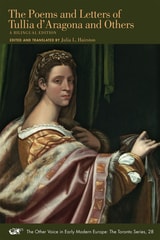
The Poems and Letters of Tullia d'Aragona and Others
A Bilingual EditionTullia d'Aragona and Others, Edited by Julia L. Hairston, Translated by Julia L. Hairston
Iter Press, 2014
Hairston has constructed a full personal, cultural and literary biography for d’Aragona, using newly discovered letters, archival material of other kinds, and contemporary theory about gender in women’s writing. Footnotes establish the intricacy of Tullia’s intellectual networks and her courting of intellectuals in rhyme. Hairston includes poems written to d’Aragona, including Girolamo Muzio’s long pastoral, Tirrhenia. She addresses with tact the question of how sexual Tullia’s relationships were with her various interlocutors. At times, as she says, one just can’t know, but that the issue is much less important than the poems themselves. I agree wholeheartedly. This is the editor Tullia has been waiting for: an indefatigable researcher, a creative biographer, and a precise and appreciative literary critic.
—Ann Rosalind Jones
Esther Cloudman Dunn Professor of Comparative Literature, Smith College
The figure of Tullia d’Aragona has long fascinated readers as the prototype of the “honest courtesan”, a woman who successfully exploited her physical and intellectual charms to win the adoration and respect of the Italian cultural elite. With Julia Hairston’s richly annotated edition of her collected verse, the product of more than a decade of scholarship, d’Aragona finally comes into focus also as poet. She emerges in this volume as one of the most distinctive protagonists in a key transitional moment in Italian literary history, when the aristocratic tradition of Petrarchist lyric began to be reshaped and democratized by its encounter with print.
—Virginia Cox
Professor of Italian, New York University
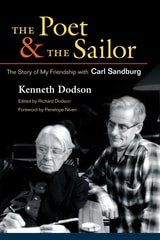
The Poet and the Sailor
The Story of My Friendship with Carl SandburgKenneth Dodson. Edited by Richard Dodson. Foreword by Penelope Niven
University of Illinois Press, 2006
Carl Sandburg first encountered Kenneth Dodson through a letter written at sea during World War II. Though Dodson wrote the letter to his wife, Letha, Sandburg read it in tears and told her, "I've got to meet this man." Composed primarily of their correspondence that continued until Sandburg's death in 1967, The Poet and the Sailor is a chronicle of the deep friendship that followed. Ranging over anything they found important, from writing to health and humor, the letters are arranged by Richard Dodson and are accompanied by a foreword from Sandburg's noted biographer, Penelope Niven.
The Prendergast Letters
Correspondence from Famine-Era Ireland, 1840–1850Shelley Barber
University of Massachusetts Press, 2006
Most important, the letters offer a rare contemporary, firsthand account of Ireland's an Gorta Mor, the Great Famine that began with the failure of the potato crop in 1845. Letters written in the months and years following the announcement of the first crop failure provide insight into not only the sufferings of one family but also the response of the community and nation as this crisis transformed Ireland.
James and Elizabeth Prendergast were the parents of six children. Their letters from Milltown, County Kerry, dictated to a scrivener, were posted to sons Thomas and Jeffrey and daughter Julia Riordan and her husband Cornelius, all of whom had emigrated in search of employment to Boston, Massachusetts—a city that would itself be transformed by the famine-era influx of Irish immigrants.
In addition to transcriptions of the forty-eight letters in the collection, this volume includes contextual essays by historian Ruth-Ann Harris and genealogist Marie Daly. The evidence of the letters themselves, along with the contributions of Harris and Daly, demonstrate the ways in which the family of James Prendergast was at once exceptional and typical.
The Selected Letters of Bernard DeVoto and Katharine Sterne
Mark DeVoto
University of Utah Press, 2012
A busy man with a busy life, DeVoto found time to write and answer letters in abundance. In 1933 he received a fan letter from Katharine Sterne, a young woman hospitalized with tuberculosis; his reply touched off an extraordinary eleven-year correspondence. Sterne had graduated with honors from Wellesley College in 1928 and had served as an assistant art critic at the New York Times before her illness. Despite her enforced invalidism she maintained an active intellectual life. Sterne and DeVoto wrote to each other until her death in 1944, sometimes in many pages and as often as twice a week, exchanging opinions about life, literature, art, current events, family news, gossip, and their innermost feelings. DeVoto’s biographer, Wallace Stegner, states that in these letters DeVoto “expressed himself more intimately than in any other writings.” Although their correspondence amounted to more than 868 letters (and is virtually complete on both sides), DeVoto and Sterne never met, both of them doubtless realizing that physical remoteness permitted a psychological proximity that was deeply nourishing.
This volume contains 140 of their letters. They have been selected by DeVoto’s son Mark, who has also provided detailed notes clarifying ambiguities and obscure references. Readers will enjoy these letters for their wit and literary flair, but they will also gain insight into the cultural and historical crosscurrents of the 1930s and ’40s while taking an intimate and engaging look at a friendship forged entirely through words.
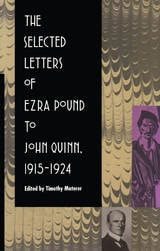
The Selected Letters of Ezra Pound to John Quinn
1915–1924Timothy Materer, ed.
Duke University Press, 1991
Pound wrote to John Quinn—a New York lawyer, an expert in business law, and a collector of unusual taste and discrimination—about these artists and many more, urging him to support their journals, collect their manuscripts, and buy and exhibit their paintings and sculptures. Quinn at one time owned manuscripts of Ulysses and The Waste Land, Brancusi’s sculpture Mlle. Pogany, and Picasso’s painting Three Musicians. Yet he was often skeptical about the value of new schools of art, such as Vorticism, and disturbed by the outspokenness of authors such as Joyce. Pound’s letters are unusually tactful when he counters Quinn’s doubts and explains the premises of experimental art. Pound’s letters to Quinn are touched with his characteristic humor and wordplay and are especially notable for their lucidity of expression, engendered by Pound’s deep respect for Quinn.
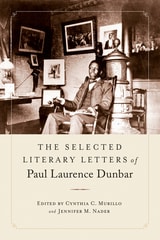
The Selected Literary Letters of Paul Laurence Dunbar
Edited by Cynthia C. Murillo and Jennifer M. Nader
University of Alabama Press, 2021
Discovering Paul Laurence Dunbar's personal and literary life through 250 of his transcribed and annotated letters.
Paul Laurence Dunbar (1873–1906) was arguably the most famous African American poet, novelist, and dramatist at the turn of the twentieth century and one of the earliest African American writers to receive national recognition and appreciation. Scholars have taken a renewed interest in Dunbar but much is still unknown about this once-famous African American author’s life and literary efforts. Dunbar’s letters to various editors, friends, benefactors, scholars, and family members are crucial to any critical or theoretical understanding of his journey as a writer. His literary correspondence, in particular, records the development of an extraordinary figure whose work reached a broad readership in his lifetime, but not without considerable cost.
The Selected Literary Letters of Paul Laurence Dunbar is a collection of 250 letters, transcribed and annotated, that reveal the personal and literary life of one of the most highly regarded African American writers and intellectuals. Editors Cynthia C. Murillo and Jennifer M. Nader highlight Dunbar not just as a determined author and master of rhetoric, but also as a young, sensitive, thoughtful, keenly intelligent, and talented writer who battled depression, alcoholism, and tuberculosis as well as rejection and racism. Despite Dunbar’s personal struggles, his literary letters disclose that he was full of hopes and dreams coupled with the resolve to flourish as a writer—at almost any cost, even when it caused controversy.
Taken together, Dunbar’s letters depict his concerted effort to succeed as an author within an overtly racist literary culture, among sharp divides within the African American intellectual community, and in opposition to the demands of popular public tastes—often dictated by the demands of publishers. This wide-ranging selection of Dunbar’s most relevant literary letters will serve to correct many matters of conjecture about Dunbar’s life, writing, and choices by supplying factual evidence to counter speculation, assumption, and incomplete information.
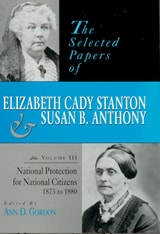
The Selected Papers of Elizabeth Cady Stanton and Susan B. Anthony
National Protection for National Citizens, 1873 to 1880Gordon, Ann D
Rutgers University Press, 2003
National Protection for National Citizens, 1873 to 1880 is the third of six planned volumes of TheSelected Papers of Elizabeth Cady Stanton and Susan B. Anthony. The entire collection documents the friendship and accomplishments of two of America's most important social and political reformers. Though neither Stanton nor Anthony lived to see passage of the Nineteenth Amendment in 1920, each of them devoted fifty-five years to the cause of woman suffrage.
The third volume of the Selected Papers of Elizabeth Cady Stanton and Susan B. Anthony opens while woman suffragists await the decision of the U.S. Supreme Court in cases testing whether the Constitution recognized women as voters within the terms of the Fourteenth and Fifteenth Amendments. At its close they are pursuing their own amendment to the Constitution and pressing the presidential candidates of 1880 to speak in its favor. Through their letters, speeches, articles, and diaries, the volume recounts the national careers of Elizabeth Cady Stanton and Susan B. Anthony as popular lecturers, their work with members of Congress to expand women's rights, their protests during the Centennial Year of 1876, and the launch that same year of their campaign for a Sixteenth Amendment.
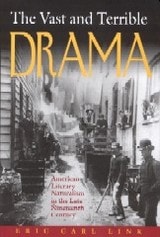
The Vast and Terrible Drama
American Literary Naturalism in the Late Nineteenth CenturyEric Carl Link
University of Alabama Press, 2004
A broad treatment of the cultural, social, political, and literary under-pinnings of an entire period and movement in American letters
The Vast and Terrible Drama is a critical study of the context in which authors such as Oliver Wendell Holmes, Stephen Crane, Frank Norris, Theodore Dreiser, and Jack London created their most significant work. In 1896 Frank Norris wrote: "Terrible things must happen to the characters of the naturalistic tale. They must be twisted from the ordinary . . . and flung into the throes of a vast and terrible drama." There could be "no teacup tragedies here." This volume broadens our understanding of literary naturalism as a response to these and other aesthetic concerns of the 19th century.
Themes addressed include the traditionally close connection between French naturalism and American literary naturalism; relationships between the movement and the romance tradition in American literature, as well as with utopian fictions of the 19th century; narrative strategies employed by the key writers; the dominant naturalist theme of determinism; and textual readings that provide broad examples of the role of the reader. By examining these and other aspects of American literary naturalism, Link counters a century of criticism that has perhaps viewed literary naturalism too narrowly, as a subset of realism, bound by the conventions of realistic narration.

The Welsh in America
Letters From the ImmigrantsAlan Conway, Editor
University of Minnesota Press, 1961
The Welsh in America was first published in 1961. Minnesota Archive Editions uses digital technology to make long-unavailable books once again accessible, and are published unaltered from the original University of Minnesota Press editions.
The Welsh formed a small but significant part of the great migration from Europe to the United States during the nineteenth century. In this volume they tell their own story in letters they wrote from America to their families and friends back home. The letters are highly readable, written, for the most part, in vivid and entertaining style which reveals the Welsh as an unusually literate people.
The 197 letters are arranged chronologically and geographically, starting with letters that tell of the voyage across the Atlantic. Once in America, the immigrants described their experiences in the farming country of New York, Pennsylvania, Ohio, and some of the other midwestern states. Later, as the frontier moved west, they wrote of their efforts to establish exclusive Welsh settlements on the Great Plains. From the industrial centers there are letters from coal miners and iron and steel workers. The fortune seekers who went to California in the gold rush or to the mines in Colorado are also represented. Still others tell of their search for salvation in the Mormon Zion of Utah.
For each chapter or group of letters Mr. Conway has written an introduction giving the general background of the region or period and relating it to the Welsh settlers. Thus the events chronicled and the views expressed in the letters become significant in the history of the times. The majority of the letters were written in Welsh and they appear here in translation. Some were obtained from the files of old newspapers or denominational magazines; others came from the collections of the National Library of Wales or from individuals.
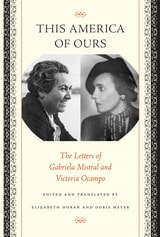
This America of Ours
The Letters of Gabriela Mistral and Victoria OcampoBy Gabriela Mistral and Victoria Ocampo
University of Texas Press, 2003
2005 — Best Book Translation Prize – New England Council of Latin American Studies
Gabriela Mistral and Victoria Ocampo were the two most influential and respected women writers of twentieth-century Latin America. Mistral, a plain, self-educated Chilean woman of the mountains who was a poet, journalist, and educator, became Latin America's first Nobel Laureate in 1945. Ocampo, a stunning Argentine woman of wealth, wrote hundreds of essays and founded the first-rate literary journal Sur. Though of very different backgrounds, their deep commitment to what they felt was "their" America forged a unique intellectual and emotional bond between them.
This collection of the previously unpublished correspondence between Mistral and Ocampo reveals the private side of two very public women. In these letters (as well as in essays that are included in an appendix), we see what Mistral and Ocampo thought about each other and about the intellectual and political atmosphere of their time (including the Spanish Civil War, World War II, and the dictatorships of Latin America) and particularly how they negotiated the complex issues of identity, nationality, and gender within their wide-ranging cultural connections to both the Americas and Europe.
This State of Wonders
The Letters of an Iowa Frontier Family, 1858-1861John Kent Folmar
University of Iowa Press, 1991
When the John Hugh Williams family immigrated to Homer, Iowa, in the 1850s, they had six children, ranging in age from five to twenty. Suddenly land poor, in debt, and caught in the Panic of '57, they sent their eldest son, James, to Georgia to work and add to the family income.
The seventy-five letters collected here represent the family's correspondence to their absent son and brother. From 1858 to 1861, James' sisters, brothers, mother, and father wrote to him frequently, each with distinct views on their daily life and struggles. While Mr. Williams wrote most often about money, farming, and moral advice (he was minister in the Church of New Jerusalem, as well as a merchant and farmer), Mrs. Williams commented on her daily chores, the family's health, the ever-important weather, and her leisure activities, including the contemporary journals and books she read, such as David Copperfield and Jane Eyre. James' sisters and brothers wrote about many concerns, from schoolwork and housework to games and family celebrations in nearby Webster City.
As the letters continue, the affection for the absent James becomes more pronounced. And, as the years go by, the letters touch on more current national trends, including the Pikes Peak Gold Rush and the growing North/South crisis, on which James and his family strongly disagree. James was never to return to Iowa but married and remained in the South, becoming a lieutenant colonel in the Confederate army.
Complete with voices both young and old, male and female, This State of Wonders offers a wealth of information about the daily life of an ordinary family on the Iowa prairie. It is a book to be treasured by all Iowans interested in the early life of their state and by all historians looking for a complete portrait of family life on the midwestern frontier.
Through a Long Absence
Words from My Father's WarsJoy Passanante
The Ohio State University Press, 2017
Against the backdrop of World War II, Joy Passanante’s touching new book, Through a Long Absence: Words from My Father’s Wars, is the saga of a wartime medical unit, a passionate long-distance love, the making of a surgeon, and two first-generation American families. Told through her father’s eyes—drawing on hundreds of his letters to his beloved wife, his four-volume wartime diary, and his paintings—Passanante masterfully recreates his wartime journey and physically retraces his steps more than sixty years later in an attempt to understand a time in her parents’ lives that they’d spoken about very little.
More than just a World War II story, Through a Long Absence delves into one man’s past to explore his personal wars: a stint as a child bootlegger, a marriage between newlyweds separated by continents and strained by years apart, and his struggle late in life with his own mind. The narrative propels readers to surprising places—from a freight train through North Africa to an underground St. Louis distillery during Prohibition, from a young couple’s forbidden courtship to the chaos of surgical tents under fire in Normandy, from an underground trove of priceless artwork hidden by the Nazis to Jewish New Year services in Paris a week after its liberation. Through a Long Absence is a love story, an honest look into one man’s life, and a daughter’s moving quest to rediscover her father years later through his own words.