Results by title
1228 books match the query 'Library & Information Science' and 234 start with t

Tablet Computers in School Libraries and Classrooms
Heather Moorefield-Lang
American Library Association, 2014
Tablet Computers in the Academic Library
Rebecca K. Miller
American Library Association, 2014
Tactical Urbanism for Librarians
Quick, Low-Cost Ways to Make Big ChangesKaren Munro
American Library Association, 2017
Teaching Banned Books
12 Guides for Young ReadersPat R. Scales
American Library Association, 2001
Teaching Banned Books
32 Guides For Children And TeensPat R. Scales
American Library Association, 2019
As standard-bearers for intellectual freedom, school and children’s librarians are in ideal positions to collaborate with educators to not only protect the freedom to read but also ensure that valued books which touch upon important topics are not quarantined from the readers for whom they were written. In this best-selling classroom- and library-ready book of discussion guides, thoroughly updated and expanded to include genres such as graphic novels and nonfiction, award-winning champion of children's literature Scales shows that there is a way to teach these books while respecting all views. Also freshened to include only books that are in print, this resource
- reprints Judy Blume's stirring introduction from the first edition;
- aids educators and librarians in stimulating the critical thinking skills of young readers aged 9-18 while also encouraging freedom of thought and expression, in either classroom or book club settings;
- spotlights titles dealing with sensitive but vital issues such as bullying, racism, bigotry, making tough choices, other cultures, and our uncertain future;
- offers tips for introducing each book and its associated topics;
- provides open-ended questions for discussion which explore the book as a whole rather than simply its "controversial" aspects, along with research and writing activities; and
- includes short summaries of each book, plus a read-alikes section to keep the conversation going.
Teaching Business Information Literacy
Genifer Snipes
American Library Association, 2022
At the same time, the resources, research techniques, and assignments that business students need to master often have little in common with a traditional research paper. Teaching Business Information Literacy provides guidance to new business specialists, generalists, and subject librarians in other disciplines being asked to teach business research classes for the first time. Featuring more than 40 practical, classroom-proven lesson plans for one-shot, embedded, and credit-bearing library classes, it’s divided into nine sections:
- Basic Business Research
- Finance and Accounting
- Entrepreneurship
- Management
- Marketing
- Specialty Subjects
- Data Literacy/Data Visualization
- Experiential Learning/Career
- Using Technology in the Classroom
Chapters cover such crucial topics as competitive intelligence, market research, financial analysis, ethics, intellectual property, accounting and auditing, supply chain management, job searching, and more. Each one guides you through the background of the topic and activity being taught, pre-class planning and preparation, a step-by-step lesson plan, how to adapt the activity for other institutional contexts, and learning outcomes. Additional supporting materials such as slide decks, worksheets, and game boards are freely available in the ACRL Sandbox (sandbox.acrl.org) and findable with the tag “#bizinfolit.”
Teaching Critical Reading Skills v1
Strategies for Academic Librarians Volume 1Hannah Gascho Rempel
Assoc of College & Research Libraries, 2023
Volume 1
- Part I: Reading in the Disciplines
- Part II: Reading for Specific Populations
Volume 2
- Part III: Reading Beyond Scholarly Texts
- Part IV: Reading to Evaluate
- Part V: Reading in the World
Each of the 45 chapters contains teaching and programmatic strategies, resources, and lesson plans, as well as a section titled “Critical Reading Connection” that highlights each author’s approach for engaging with the purpose of reading critically and advancing the conversation about how librarians can foster this skill.
Academic librarians and archivists have a long history of engaging with different types of literacy and acting as a bridge between faculty and students. We understand the different reading needs of specific student populations and the affective challenges with reading that are often shared across learner audiences. We know what types of sources are read, the histories—and needed changes—of how authority has been granted in various fields, how students may be expected to apply what they read in future professional or civic settings, and frequently look beyond our local institutions to think about the larger structural and social justice implications of what is read, how we read, and who does the reading.
These volumes can help you make the implicit explicit for learners and teach that reading is both a skill that must be practiced and nurtured and a communal act. Teaching Critical Reading Skills demonstrates librarians’ and archivists’ deep connections to our campus communities and how critical reading instruction can be integrated in a variety of contexts within those communities.
Teaching Critical Reading Skills v2
Strategies for Academic Librarians Volume 2Hannah Gascho Rempel
Assoc of College & Research Libraries, 2023
Volume 1
- Part I: Reading in the Disciplines
- Part II: Reading for Specific Populations
Volume 2
- Part III: Reading Beyond Scholarly Texts
- Part IV: Reading to Evaluate
- Part V: Reading in the World
Each of the 45 chapters contains teaching and programmatic strategies, resources, and lesson plans, as well as a section titled “Critical Reading Connection” that highlights each author’s approach for engaging with the purpose of reading critically and advancing the conversation about how librarians can foster this skill.
Academic librarians and archivists have a long history of engaging with different types of literacy and acting as a bridge between faculty and students. We understand the different reading needs of specific student populations and the affective challenges with reading that are often shared across learner audiences. We know what types of sources are read, the histories—and needed changes—of how authority has been granted in various fields, how students may be expected to apply what they read in future professional or civic settings, and frequently look beyond our local institutions to think about the larger structural and social justice implications of what is read, how we read, and who does the reading.
These volumes can help you make the implicit explicit for learners and teach that reading is both a skill that must be practiced and nurtured and a communal act. Teaching Critical Reading Skills demonstrates librarians’ and archivists’ deep connections to our campus communities and how critical reading instruction can be integrated in a variety of contexts within those communities.
Teaching Critical Reading Skills
Strategies for Academic Librarians Set: 2-Volume SetHannah Gascho Rempel
Assoc of College & Research Libraries, 2023
Volume 1
- Part I: Reading in the Disciplines
- Part II: Reading for Specific Populations
Volume 2
- Part III: Reading Beyond Scholarly Texts
- Part IV: Reading to Evaluate
- Part V: Reading in the World
Each of the 45 chapters contains teaching and programmatic strategies, resources, and lesson plans, as well as a section titled “Critical Reading Connection” that highlights each author’s approach for engaging with the purpose of reading critically and advancing the conversation about how librarians can foster this skill.
Academic librarians and archivists have a long history of engaging with different types of literacy and acting as a bridge between faculty and students. We understand the different reading needs of specific student populations and the affective challenges with reading that are often shared across learner audiences. We know what types of sources are read, the histories—and needed changes—of how authority has been granted in various fields, how students may be expected to apply what they read in future professional or civic settings, and frequently look beyond our local institutions to think about the larger structural and social justice implications of what is read, how we read, and who does the reading.
These volumes can help you make the implicit explicit for learners and teach that reading is both a skill that must be practiced and nurtured and a communal act. Teaching Critical Reading Skills demonstrates librarians’ and archivists’ deep connections to our campus communities and how critical reading instruction can be integrated in a variety of contexts within those communities.
Teaching Gender with Libraries and Archives
Sara De Jong
Central European University Press, 2014
Teaching Generation M
A Handbook for Librarians and EducatorsAmerican Library Association, 2009
Teaching Information Literacy Online
Trudi E. Jacobson
American Library Association, 2011
Teaching Information Literacy Reframed
50+ Framework-Based Exercises for Creating Information-Literate LearnersJoanna M. Burkhardt
American Library Association, 2016
The six threshold concepts outlined in the Framework for Information Literacy for Higher Education are not simply a revision of ACRL's previous Information Literacy Competency Standards for Higher Education. They are instead an altogether new way of looking at information literacy. In this important new book, bestselling author and expert instructional librarian Burkhardt decodes the Framework, putting its conceptual approach into straightforward language while offering more than 50 classroom-ready Framework-based exercises. Guiding instructors towards helping students cross each threshold, this book
- discusses the history of the development of the Framework document and briefly deconstructs the six threshold concepts;
- thoroughly addresses each threshold concept, scaffolding from the beginner level to the intermediate level;
- includes exercises that can be used in the one-shot timeframe as well as others designed for longer class sessions and semester-long courses;
- offers best practices in creating learning outcomes, assessments, rubrics, and teaching tricks and tips; and
- looks at how learning, memory, and transfer of learning applies to the teaching of information literacy.
Offering a solid starting point for understanding and teaching the six threshold concepts in the Framework, Burkhardt's guidance will help instructors create their own local information literacy programs.

Teaching Information Literacy Skills to Social Sciences Students and Practitioners
A Casebook of ApplicationsDouglas Cook
Assoc of College & Research Libraries, 2011
Teaching Information Literacy Skills to Social Sciences Students and Practitioners
A Casebook of ApplicationsDouglas Cook
Assoc of College & Research Libraries, 2011
Teaching Information Literacy Threshold Concepts
LessonPatricia Bravender
Assoc of College & Research Libraries, 2015
Teaching Information Literacy Threshold Concepts
Lesson Plans for LibrariansPatricia Bravender
Assoc of College & Research Libraries, 2015
Teaching Information Literacy by Discipline
Using and Creating Adaptations of the FrameworkScott P. Libson
Assoc of College & Research Libraries, 2025
In nine thorough sections, Teaching Information Literacy by Discipline shows the great diversity in how librarians understand, adapt, and apply the Framework. It explores how frames are applied when drafting learning outcomes, building research guides, crafting assignments, designing curricula for a particular discipline, and more.
- Arts
- Writing
- Humanities
- Interdisciplinary Studies
- Social Sciences
- Business
- Education and Behavioral Studies
- Health
- Sciences
Teaching Information Literacy
50 Standards-Based Exercises for College StudentsJoanna M. Burkhardt
American Library Association, 2010
Teaching Literary Research
Challenges in a Changing EnvironmentKathleen A. Johnson
Assoc of College & Research Libraries, 2011
Teaching Literary Research
Challenges in a Changing EnvironmentKathleen A. Johnson
Assoc of College & Research Libraries, 2011
Teaching Media Literacy
Belinha S. De Abreu
American Library Association, 2019
Foreword by Michelle Ciulla Lipkin, Executive Director, National Association for Media Literacy Education
Preface by Denise E. Agosto
Though media literacy and information literacy are intertwined, there are important differences; and there has never been a more urgent need for an incisive examination of the crucial role librarians and other educators can play in teaching the skills necessary to access, analyze, evaluate, and create media. Media literate youth and adults are better able to understand the complex messages emanating from television, movies, radio, the internet, news outlets, magazines, books, billboards, video games, music, and all other forms of media. In this book, international expert De Abreu melds advice from a diverse array of practitioners and subject experts with her own research findings to examine how consuming media and technology impacts the learning of K–12 students, tackling such paramount issues as
- fake news/alternative facts;
- critical thinking
- digital literacy and digital citizenship;
- social inclusion and equity;
- global interconnectivity; and
- social justice and advocacy.
Teaching Undergraduates with Archives
Nancy Bartlett
Michigan Publishing Services, 2019
"The contributions to this volume capture exceptionally well the passion and the creativity that archivists and special collections librarians who teach and do outreach with primary sources are bringing to their work in this increasingly important activity domain."
-- Martha O’Hara Conway, Director, Special Collections Research Center, University of Michigan Library
"As teaching with archival materials has moved to the foreground of the archival mission for many institutions, this timely, inspiring, and practical volume, which comes out of the multi-day symposium solely devoted to teaching undergraduates with archival materials, is a required reading for anyone who teaches with archival materials, or who would like to. It really captures the spirit and enthusiasm that these authors brought to that symposium."
-- Josué Hurtado, Coordinator of Public Services & Outreach, Special Collections Research Center, Temple University Libraries
"Reflecting the increasing priority of teaching in archives and special collections libraries, this book captures a variety of perspectives, insights, approaches, and prognostications that will enlighten, challenge, and inspire a growing community of practitioners."
-- Bill Landis, Head of Public Services, Manuscripts and Archives, Yale University Library
"Building on the momentum generated at the symposium, this book is a treasure trove for professionals in the field who are eager for innovative ideas regarding collaboration and experimentation in teaching with archival material."
-- Elizabeth Williams-Clymer, Special Collections Librarian, Kenyon College
Teaching for Inquiry
Engaging the Learner WithinBarbara K. Stripling
American Library Association, 2012
Technically Involved
American Library Association, 2003
Techniques for Electronic Resource Management
TERMS and the Transition to OpenJill Emery
American Library Association, 2020
Technological Innovation
Perceptions and DefinitionsJason American Library Association
American Library Association, 2013
Technology Disaster Response and Recovery Planning
A LITA GuideMary Mallery
American Library Association, 2015
Technology Training in Libraries
American Library Association, 2010
Technology and Literacy
21st Century Library Programming for Children and TeensJennifer Nelson
American Library Association, 2012
Technology for Results
American Library Association, 2005
Technology for Small and One-Person Libraries
A LITA GuideRene J. Erlandson
American Library Association, 2013
Teen Craft Projects 2
Tina Coleman
American Library Association, 2013
Teens and Libraries
Getting It RightElaine Meyers
American Library Association, 2003

Teens, Digital Media, and the Chicago Public Library
Penny Bender Sebring, Eric R. Brown, Kate M. Julian, Stacy B. Ehrlich, Susan E. Sporte, Erin Bradley, and Lisa Meyer
University of Chicago Press, 2013
Consortium on Chicago School Research finds.
-Illuminates how the design of YOUmedia shapes youth participation
-Describes the teens that YOUmedia serves, their patterns of participation, and the activities in which they engage
-Provides examples of the benefits youth perceive from their participation
-Characterizes the roles adults play in engaging teens and the ways programmatic choices have shifted
-Offers suggestions for organizations intending to launch similar initiatives
-Illustrates how YOUmedia instantiates elements of the emerging Connected Learning Model
Telling the Technical Services Story
Communicating ValueKimberley A. Edwards
American Library Association, 2021
Technical Services isn’t the hidden discipline it once was. Even so, despite all the cross-departmental interaction, misconceptions about the work are all too common. It’s incumbent on technical services staff to take a proactive approach by communicating to others their value to the library and institutional mission. Spotlighting several successful initiatives, this collection will give you the guidance to bolster communication within departments, across the library, and campus-wide. You’ll learn about
- applying the 7 principles of communities of practice to break down silos;
- software such as Trello, Basecamp, and Confluence that can improve communications workflows;
- ticketing systems and training to help frontline staff solve e-resource access problems;
- engaging faculty in collection decisions using a mix of communication channels;
- how informational classes on metadata can improve the work of staff across the library;
- supporting research data management through metadata outreach;
- using focus groups to develop shared expectations with subject librarians;
- 4 narrative strategies to market library resources;
- using infographics as a dynamic way to illustrate progress in a collection management program;
- developing an external communication plan for a library de-selection project;
- using portfolio management to collaboratively implement new services; and
- planning a cross-departmental retreat.
Text and Data Mining Literacy for Librarians
Whitney Kramer
Assoc of College & Research Libraries, 2025
Text and Data Mining Literacy for Librarians collects ways that academic libraries are supporting TDM literacy through services, workflows, and professional development. In five parts, it offers a variety of perspectives, insights, and experiences that can help you address the challenges of supporting TDM research, fit it into your existing reference and instruction work, and conduct your own.
- Essentials of Text and Data Mining (TDM) Literacy
- Data Literacy, Licensing, and Management Challenges with TDM
- TDM Research in Action: Practical Applications and Case Studies
- Generating Insights from Library Reference Data
- Proprietary TDM Software: Examples and Implementations
Textbooks in Academic Libraries
Selection, Circulation, and AssessmentChris Diaz
American Library Association, 2017
The 360 Librarian
A Framework for Integrating Mindfulness, Emotional Intelligence, and Critical Reflection in the WorkplaceTammi M. Owens
Assoc of College & Research Libraries, 2019
The ALA Book of Library Grant Money
Ann Kepler
American Library Association, 2012
The ALA Book of Library Grant Money
Nancy Kalikow Maxwell
American Library Association, 2014
The ALA Guide to Researching Modern China
Yunshan Ye
American Library Association, 2014
The Academic Library Administrator's Field Guide
Bryce Nelson
American Library Association, 2014
The Academic Library Administrator's Field Guide
Bryce Nelson
American Library Association, 2022
The Archival Turn in Feminism
Outrage in OrderKate Eichhorn
Temple University Press, 2014
A volume in the American Literatures Initiative
The Art, Science, and Magic of the Data Curation Network
A Retrospective on Cross-Institutional CollaborationJake Carlson
Michigan Publishing Services, 2023
The Art, Science, and Magic of the Data Curation Network: A Retrospective on Cross Institutional Collaboration captures the results of a project retrospective meeting and describes the necessary components of the DCN’s sustained collaboration in the hopes that the insights will be of use to other collaborative efforts. In particular, the authors describe the successes of the community and challenges of launching a cross-institutional network. Additionally, this publication details the administrative, tool-based, and trust-based structures necessary for establishing this community, the “radical collaboration” that is the cornerstone of the DCN, and potential future collaborations to address shared challenges in libraries and research data management. This in-depth case study provides an overview of the critical work of launching a collaborative network and transitioning to sustainability. This publication will be of special interest to research librarians, data curators, and anyone interested in academic community building.
The Bed Bug Guide for Public Libraries
Sarah Kittrell
American Library Association, 2016
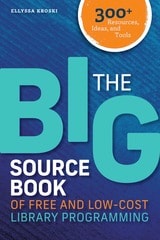
The Big Sourcebook of Free and Low-Cost Library Programming
300+ Resources, Ideas, and ToolsEllyssa Kroski
American Library Association, 2024
There’s no need to spend hours trying to come up with creative programming ideas—bestselling library activity guru Kroski has already done all the hard work for you! Largely drawn from contributions by library workers across the country, this e-book is a cornucopia of ready-to-go activities, easily accessible resources, and adaptable tools for inspiring countless fun and engaging programs at your library. Best of all, these exciting low cost/no-cost library programs can be implemented using only free resources. Offering a broad selection of ideas for adults, tweens, and younger children that can be tailored to a variety of contexts, inside this sourcebook you’ll discover
- seniors and older adult programming resources on such topics as genealogy, financial literacy, lifelong learning, gardening, and health and wellness;
- career, ESL/literacy, and "just for fun" programs and book clubs perfect for adults;
- young adult programming resources such as the Book to Action toolkit, YALSA’s Teen Programming Guidelines, literacy and educational resources, computers and coding activities, live action roleplaying games (LARPS), and many more;
- free resources to teach financial responsibility to toddlers, lesson plans from NASA, resources to host an Earth Day event incorporating a “free trees for kids” program, StoryWalks and more ideas for children;
- makerspace, STEM, and art programming resources;
- Pinterest boards, idea lists, writing prompts, coloring pages, free books, and passive programming downloadables and printables;
- information about more than two dozen grant opportunities for funding programs; and
- planning templates, marketing tips, assessment resources, and tools for brainstorming and productivity.
The Black Belt Librarian
Real-World Safety & SecurityWarren Graham
American Library Association, 2011
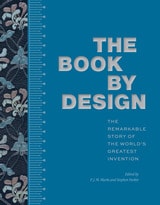
The Book by Design
The Remarkable Story of the World's Greatest InventionEdited by P.J.M. Marks and Stephen Parkin
University of Chicago Press, 2023
For centuries across the world, books have been created as objects of beauty, with bookmakers lavishing great care on their paper, binding materials, illustrations, and lettering.
The Book by Design, featuring an array of books from the British Library's collection, focuses on the sensory experience of holding and reading these objects. Each selection represents a specific moment in the development of what we know today as the book—from scrolls and bound illuminated manuscripts to paperbacks and formatted digital information. These range from the seventh century to the present and include examples from China, Japan, Southeast Asia, the Middle East, Europe, and North America, in addition to a look at book traditions in Africa and Oceania. John James Audubon’s Birds of America, the works of Chaucer, Russian Futurist books, limited editions, historic copies of the Qur’an and the Bible, mass-market paperbacks, and more come together to tell the visual, tactile, artistic, and cultural history of books.
Expert curators and specialists explore these books from the perspective of design and manufacturing, original art photographs offer vivid representations of their textures and materials, and graphics detail the size and specifications of each book. Offering a wide-ranging look at the creation and use of books, illustrated with hundreds of color images, this volume is itself an object of beauty.