Results by title
905 books match the query 'Literary' and 299 start with t
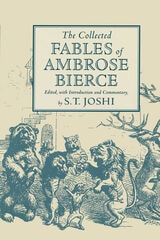
THE COLLECTED FABLES OF AMBROSE BIERCE
Ambrose Bierce, Edited with introduction and commentary by S. T. Joshi
The Ohio State University Press, 2000
Ambrose Bierce was a well-known and highly admired journalist, short story writer, and satirist. After distinguished Civil War service, Bierce became a journalist, and in 1887 he became a columnist for William Randolph Hearst’s Sunday Examiner. His work for the San Francisco Examiner made his reputation, especially on the West Coast. In 1914 he vanished on a trip to Mexico.
The work for which he is best know, The Devil’s Dictionary, was first published in 1906. Bierce also published volumes of short stories. His Tales of Soldiers and Civilians (1891) represents some of the finest writing to come out of the Civil War. Bierce’s stories of the supernatural, collected in Can Such Things Be? (1893), established him as one of the leading American authors of supernatural fiction.
This volume gathers together for the first time the 850 fables written by Bierce over his forty-year career, including more than 400 fables never reprinted from the magazines and newspapers in which they originally appeared.
Bierce’s fables are distinguished for their biting wit and their cynical reflection of the political and social events of his time. Local and national political figures; corrupt lawyers, judges, and clergymen; and even incidents in the Spanish-American War are all mercilessly lampooned. The fables not only testify to Bierce’s hatred of “hypocrisy, cant, and all sham” but provide a window into late nineteenth-century American society. S. T. Joshi has provided extensive commentary explaining historical and literary references in the fables.
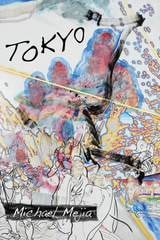
TOKYO
Michael Mejia
University of Alabama Press, 2018
TOKYO is an incisive, shape-shifting tour de force, a genre-bending mix of lyric prose, science fiction, horror, and visual collage exploring the erotic undercurrents of American perceptions of Japanese culture and identity.
By turns noir, surreal, and clinical in its language and style, TOKYO employs metaphors of consumption, disease, theater, gender fluidity, monstrousness, and ecological disaster in intertwined accounts touching on matters of cultural appropriation, fiction's powerful capacity to produce immersive realities, and the culturally corrupting late capitalist excesses that entangle both the United States and Japan.
The novel opens with a fantastic, slyly comic report written by a Japanese executive, describing the anomalous bluefin tuna his company purchased at Tokyo’s iconic fish market, as well as the dissolution of the executive’s marriage to his Japanese-American, or Sansei, wife. But when an American writer—whose own Sansei wife was previously married to a Japanese executive—begins investigating the report’s author and his claims, assisted by a mysterious Japanese correspondent the American suspects may once have been his wife’s lover, identities begin to scramble until it’s uncertain who is imagining who, and who is and isn’t Japanese. Meanwhile, a secret plot to establish pure Japaneseness through the global distribution of genetically engineered bluefin tuna seems to be rushing toward its conclusion like a great wave.

TRIAL OF EBENEZER SCROOGE
Bruce Bueno de Mesquita
The Ohio State University Press, 2001
What happened to Ebenezer Scrooge after the night he was visited by the three spirits?
When we left Ebenezer Scrooge at the end of A Christmas Carol, he appeared to be a man transformed. But did he sincerely repent and earn admission to heaven? The Trial of Ebenezer Scrooge, written in Dickensian style and with tongue firmly lodged in cheek, follows Scrooge through the Court of Heavenly Justice, where his soul’s fate is to be determined. In this courtroom drama, using frequent flashbacks, the author uncovers startling evidence, much of it directly from Dickens’s classic, that reveals Scrooge to have lived a saintly life before being confronted by three Christmas ghosts. Evidence mounts that Mr. Scrooge struck a Faustian bargain with the Ghost of Christmas Yet to Come, a deal to extend his own mortality in exchange for yielding his soul as a tool for the forces of darkness to infiltrate heaven. Readers will enjoy the remaking of some of Dickens’s best-known characters. Tiny Tim emerges as a villain, while little Eppie, borrowed from George Eliot’s Silas Marner, is Scrooge’s protector and source of salvation. This new novel provides the much-needed redemption of Ebenezer Scrooge’s reputation and offers a welcome departure from the standard saccharine fare at Christmastime. Dickens buffs will have a merry time trying to find where Dickens’s voice ends and the author’s begins. All readers will puzzle over how we could have so misjudged Ebenezer Scrooge, or whether we judged Scrooge aright from the start.
Take It or Leave It
Raymond Federman
University of Alabama Press, 1976
Moving freely from past to present (and Vice Versa), and from place to place leap-frogging from digression to digression, Take It or Leave It explores new possibilities of narrative technique. Whie the story of Frenchy is being told, the narrator involves his listeners in digressive arguments about politics, sex, America, literature, laughter, death, and the telling of the story itself. Consequently, as this "exaggerated second-hand tale to be read aloud either standing or sitting" progresses, it also deviates from its course, and eventually cancels itself as the voices of the fiction multiply. Take It or Leave It, the ultimate postmodern novel, makes a shamble of traditional fiction and conventional modes of writing, and does so with effrontery and laughter.
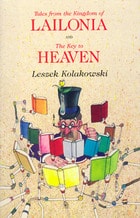
Tales from the Kingdom of Lailonia and The Key to Heaven
Leszek Kolakowski
University of Chicago Press, 1989

Tamangur
Leta Semadeni
Seagull Books, 2025
Romansh poet Leta Semadeni’s debut novel, Tamangur, is a multifaceted gem that delves into the shadowed depths of a remote valley in the Engadin Alps. More than a setting, the ancient stone pine forest of Tamangur serves as a mystical realm, a Valhalla for hunters and their kin, where the living brush against the world of the dead.
A richly woven narrative, Tamangur unfolds through eighty-four interlocking vignettes. We follow an unnamed young girl, referred to only as “the child,” and her grandmother as they navigate their shared grief. The loss of the girl’s beloved grandfather and younger brother casts a long shadow, with the child believing she is to blame for her brother’s death—a burden that has led her parents to abandon her. The small village they inhabit is populated by a cast of quirky characters: Elsa, who passionately loves the absent Elvis; a seamstress who steals others’ memories; a brooding chimney sweep; and a rude goat. Amidst the sorrow, these oddballs form a patchwork family, softening the harsh edges of fate with their peculiar charm.
Semadeni’s prose is crystalline and evocative, blending the poignant with the absurd in a way that captures the heart and imagination. Tamangur is a haunting exploration of loss, memory, and the fragile connections that bind us.
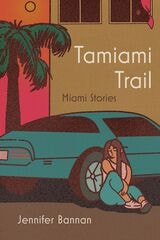
Tamiami Trail
Miami StoriesJennifer Bannan
Carnegie Mellon University Press, 2025
The Tamiami Trail cuts through the contradictions of Miami: a city shaped by swamps and skyscrapers, violence and desire. In Tamiami Trail: Miami Stories, Jennifer Bannan brings us eighteen vivid portraits of women navigating this teeming, volatile landscape.
An adolescent trapped in a toxic relationship. A middle-aged woman entangled with a reckless boy. A marketing executive profiting off the chaos of hurricanes. These women—mothers, daughters, lovers—take their chances in a world where environmental and personal disasters collide, where the ocean’s expanse mirrors the risks they take with their own lives.
Steamy, sharp, and deeply human, Tamiami Trail depicts the beauty and brutality of Miami, evoking its lush landscapes and relentless energy. With wit and sharp insight, Bannan maps the unruly desires that drive her unforgettable characters and the city that shapes them.
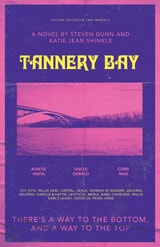
Tannery Bay
A NovelSteven Dunn and Katie Jean Shinkle
University of Alabama Press, 2024
In a town trapped in endless July, love, resistance, and imagination break the loop
Enter a world where time stands still and summer never ends. In the enchanted town of Tannery Bay, it’s July 37, and then July 2 again, but the year is a mystery. Trapped in an eternal loop, the residents embark on an extraordinary journey of self-discovery, unity, and defiance against the forces that seek to divide them.
Otis and Joy, intrepid siblings, work with their family and friends to oppose a formidable adversary: The Owners. These cunning and ruthless old men, driven by insatiable greed, hold the town hostage, exploiting its resources and dividing its people. In this powerful #OwnVoices narrative, Tannery Bay is a captivating tale of Black Joy and Queer Joy and the ways in which family is both biological and chosen, where love transcends boundaries, and where art is a vehicle for change.
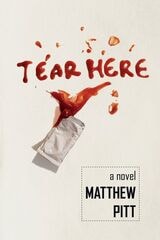
Tear Here
a NovelMatthew Pitt
Carnegie Mellon University Press, 2026
Matthew Pitt’s first novel draws from characters introduced in his debut story collection. The rock band Some Assault—comprised of dropouts and hedonists—flails from gig to gig, directed by their volatile drummer Liddy, who careens between foster homes and addictions. She and the band strike up a surprise friendship with Charlie Shales, their remedial algebra teacher. At first, this link is transactional, with Shales seeking drugs and the band seeking a customer. Before long, an odd and meaningful bond is formed.
When Charlie later passes, Liddy orchestrates an elaborate sonic empire, dismissing her own health woes. She recruits new members with targeted zeal, including Oliv, heiress to twin fortunes in condiment packaging and shortbread cookies. Deploying Oliv’s funds to buy a shuttered women’s prison, Some Assault converts the acreage into a farm collective and a massive recording studio dubbed The Hive.
Misfits continue to swell Some Assault’s roster, lured by The Hive’s promise of security and rabid praise: Andy Warhol’s Factory in an Instagram age. However, once the band’s fifteen minutes of fame threaten to expire, territorial violence rises, driven by dark desires to command the public eye at all costs. Chronicled by a member who managed to flee The Hive, Tear Here surveys the fierce fallout of cravings for celebrity that warp into cultish conduct.
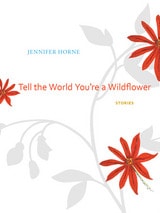
Tell the World You're a Wildflower
StoriesJennifer Horne
University of Alabama Press, 2014
In Tell the World You’re a Wildflower, each character must decide what to tell, whether to tell it, and to whom to tell it. Each struggles with questions of identity and truth, trying to understand who she is and what holds true for her. Some tell their stories plainly, directly, others more obliquely, nesting one within another. Anchored in the tradition of southern storytelling, these women contend with loss, change, and growth while going to church, school, and prison, navigating love and sex, and worrying too much about what people might think.
Yet these women generally refuse to behave, and they wander in and out of each other’s stories just like people do in small towns across the South. Small town lives are always interconnected: your third-grade teacher is your new neighbor’s aunt and the boy you dated your senior year falls from political grace after being caught in a hot tub with your second cousin. Though they may have had little say in where they were planted, Horne’s protagonists nevertheless do their best to bloom.
Rich, multifaceted, and unforgettable, Tell the World You’re a Wildflower is the work of a veteran explorer of the twentieth and twenty-first century South. Horne’s quest to understand her culture through decades of reading and observing has now yielded these narratives that imaginatively and insightfully enter the hearts and minds of southern women.
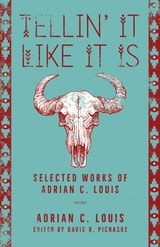
Tellin' It Like It Is
Selected Works of Adrian C. LouisAdrian C. Louis
University of Nevada Press, 2026
Tellin’ It Like It Is offers a powerful introduction to Adrian C. Louis (1946–2018), one of the most unflinching Native American literary voices of the twentieth century. Drawing from a half-century of published writing—and including a few previously unpublished pieces—this collection captures the evolution of Louis’s voice, worldview, and craft.
Editor David Pichaske, a close friend of Louis in his later years, curates this volume with deep insight into both the public figure and the private man. Selections are arranged chronologically to trace Louis’s transformation from a Nevada reservation teenager to a California hippie, a sixties hitchhiker, a Boston academic, a South Dakota reservation journalist, and finally, a Midwestern college professor.
Louis’s work immerses readers in reservation life, yet its critique reaches the broadest dimensions of American and human experience. To enrich understanding, the book includes literary reviews, scholarly essays (including one by a noted Polish critic), an interview with Louis, and his own reflections on literature and identity. A foreword by poet Bojan Louis provides further context for this essential collection.
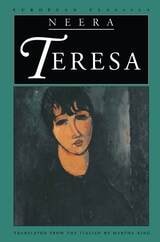
Teresa
Neera, translated by Martha King
Northwestern University Press, 1999
Through Teresa and other women characters, Neera addressed the injustice of such societal restrictions in nineteenth-century Italy. Neera's narratives are noted for their subtle psychoanalytical presentation of feminine states of mind as well as for an unflinching examination of society.
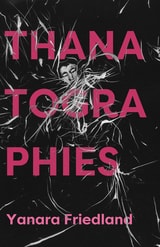
Thanatographies
Yanara Friedland
University of Alabama Press, 2026
A haunting, poetic excavation of memory, the nocturnal imagination, and a search for new forms of language to act upon legacies of violence and erasure.
Thanatographies is a genre-defying meditation on disappearance, memory, and the porous boundaries between the living and the dead. In poetic prose, Yanara Friedland weaves together dreamscapes, historical fragments, personal recollections, and philosophical inquiry to explore the afterlives of loss and survival. Moving through rooms, cities, forests, and archives, the text becomes a living document of insomnia, exile, and the spectral presence of women across time, including artists, revolutionaries, caretakers, and ghosts.
Structured in four sections titled Room, Night, Medusas, and Burials, the book traverses inner and outer landscapes, from Berlin’s haunted streets to the intimate terrain of the body. Friedland’s voice is both lyrical and incisive, drawing on figures such as Unica Zürn, Rosa Luxemburg, and Else Lasker-Schüler to illuminate the intersections of gender, violence, and historical erasure. The result is a deeply embodied poetics of wakefulness, where hidden life remembers and speaks.
Thanatographies is written for readers of experimental literature, feminist theory, and contemporary poetics. The book resonates with artists, scholars, and seekers who are compelled by the aesthetics of mourning, the politics of memory, and the radical potential of language to hold what is otherwise unspeakable.
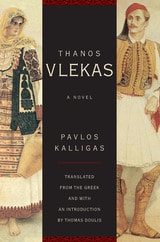
Thanos Vlekas
A NovelPavlos Kalligas, Translated from the Greek by Thomas Doulis
Northwestern University Press, 2001
Thanos is a young farmer struggling to improve himself despite the derision of his mother, who considers him incapable of bearing arms for his country. She prefers instead her more "heroic" son, the brave and ambitious brigand Tassos, whose courage and resistance to authority embodying the virtues that helped Greece drive out the Turks. While Thanos works his land, his ruthless brother uses the political machinery and wealth gained from robbery and murder to replace the old Ottoman landowners and subjugate the villagers.
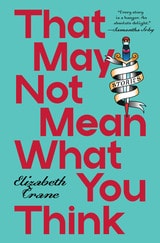
That May Not Mean What You Think
StoriesElizabeth Crane
Northwestern University Press, 2026
A visionary and profound new collection from innovative author Elizabeth Crane
Throughout her body of work, Elizabeth Crane’s literary vision has always been singular and innovative, twisting form and bending reality into new universes. Her latest collection, That May Not Mean What You Think, explores themes of aging and youth, gender and discrimination, and sex and love. In “Training Module,” Crane takes the structure and protocol of workplace harassment prevention training and turns it on its head; “The Box” tells the story of a woman trying to recover from divorce with the help of a literal unicorn; and “The Youngs” follows a group of teenagers experiencing loss for the first time, clinging to the belief that they’ll live forever. Across these delightfully weird and disarmingly truthful stories, American culture is refracted through humor and heart, asking readers to consider their complicity and to imagine new possibilities of participating in a better future.
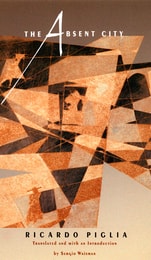
The Absent City
Ricardo Piglia
Duke University Press, 2000
The novel follows Junior, a reporter for a daily Buenos Aires newspaper, as he attempts to locate a secret machine that contains the mind and the memory of a woman named Elena. While Elena produces stories that reflect on actual events in Argentina, the police are seeking her destruction because of the revelations of atrocities that she—the machine—is disseminating through texts and taped recordings. The book thus portrays the race to recover the history and memory of a city and a country where history has largely been obliterated by political repression. Its narratives—all part of a detective story, all part of something more—multiply as they intersect with each other, like the streets and avenues of Buenos Aires itself.
The second of Piglia’s novels to be translated by Duke University Press—the first was Artifical Respiration—this book continues the author’s quest to portray the abuses and atrocities that characterize dictatorships as well as the difficulties associated with making the transition to democracy. Translated and with an introduction by Sergio Waisman, it includes a new afterword by the author.
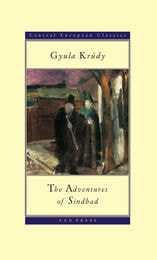
The Adventures of Sindbad
Gyula Krúdy
Central European University Press, 1998
In these marvellously written tales, Sindbad, a voyager in the realms of memory and imagination, travels through the centuries in pursuit of an ideal of love that is directed as much at the feminine essence as at his individual lovers. He is by nature a melancholy sensualist, but whether the women he seduces and loves are projections of his desire, or he of theirs, is a moot question.
These short stories flow without a strict narrative framework Sindbad journeys between the past and the present and is merely a ghost in many of his adventures. Although Sindbad can move through time, it is time that proves his chief enemy, and youth that remains his real love. This deeply autumnal book, full of resonances and associations, is an erotic elegy to the dying Habsburg Empire.
The stories are taken from the omnibus triple-volume Hungarian edition published as The Three Books of Sindbad in Hungary in 1944, which includes The Travels of Sindbad (1912), The Resurrection of Sindbad (1916), and The Youth and Grief of Sindbad (1917).
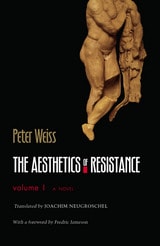
The Aesthetics of Resistance, Volume I
A Novel, Volume 1Peter Weiss
Duke University Press, 2005
Spanning the period from the late 1930s to World War II, this historical novel dramatizes antifascist resistance and the rise and fall of proletarian political parties in Europe. Living in Berlin in 1937, the unnamed narrator and his peers—sixteen- and seventeen-year-old working-class students—seek ways to express their hatred for the Nazi regime. They meet in museums and galleries, and in their discussions they explore the affinity between political resistance and art, the connection at the heart of Weiss’s novel. Weiss suggests that meaning lies in embracing resistance, no matter how intense the oppression, and that we must look to art for new models of political action and social understanding. The novel includes extended meditations on paintings, sculpture, and literature. Moving from the Berlin underground to the front lines of the Spanish Civil War and on to other parts of Europe, the story teems with characters, almost all of whom are based on historical figures. The Aesthetics of Resistance is one of the truly great works of postwar German literature and an essential resource for understanding twentieth-century German history.
The Aesthetics of Resistance, Volume II
A Novel, Volume 2Peter Weiss
Duke University Press, 2020
Volume II, initially published in 1978, opens with the unnamed narrator in Paris after having retreated from the front lines of the Spanish Civil War. From there, he moves on to Stockholm, where he works in a factory, becomes involved with the Communist Party, and meets Bertolt Brecht. Featuring the narrator's extended meditations on paintings, sculpture, and literature, the novel teems with characters, almost all of whom are based on historical figures. Throughout, the narrator explores the affinity between political resistance and art—the connection at the heart of Weiss's novel. Weiss suggests that meaning lies in embracing resistance, no matter how intense the oppression, and that we must look to art for new models of political action and social understanding. The Aesthetics of Resistance is one of the truly great works of postwar German literature and an essential resource for understanding twentieth-century German history.
The Aesthetics of Resistance, Volume III
A Novel, Volume 3Peter Weiss
Duke University Press, 2025
Volume III, initially published in 1981, teems with characters, many of whom are based on historical figures. It commences in May of 1940, as the narrator’s parents flee Nazi forces in Eastern Europe and reunite with their son in Sweden. While in Stockholm, the narrator and other Communist activists living in exile struggle to build structures in the German underground. The story then follows Communist resistance fighter Charlotte Bischoff as she is smuggled to Bremen on a freighter. In Berlin, she contacts the narrator’s friends and joins the Red Orchestra resistance group. Soon, the Gestapo cracks the underground group’s code, arrests a number of its members, and takes them to Plötzensee Prison, where most of them are executed. Featuring the narrator’s meditations on paintings, sculpture, and literature throughout, The Aesthetics of Resistance demonstrates the affinity between political resistance and art. Ultimately, Weiss argues that we must look to art for new models of political action and social understanding.
The Age of Discovery and Other Stories
Becky Hagenston
The Ohio State University Press, 2021
“These ingenious stories are so funny and sparkling and slyly inventive that their pain catches you by surprise, like a sunburn after a day at the beach.”—Eric Puchner
Winner, 2022 Mississippi Institute for Arts and Letters Prize for Best Fiction
In Becky Hagenston’s fourth collection, the real and the fantastic collide in stories that span from Mississippi to Europe, and from the recent past to the near future. The characters are sex-toy sellers, internet trolls, parents, students, and babysitters—all trying to make sense of a world where nothing is quite what it appears to be. A service robot makes increasingly disturbing requests. A middle school teacher is accused of witchcraft—and realizes the accusations might be true. Two college students devise a way to avoid getting hit on in bars. A baker finds bizarre anomalies in his sourdough. A librarian follows her dead ex-husband through the Atlanta airport. In these stories, men and women confront grief, danger, loneliness, and sometimes—the strangest discovery of all—unexpected joy. Hagenston delivers a collection that is, at its weird and shining heart, about people discovering what—for better or worse—they are capable of.
The Agnostics
Wendy Rawlings
University of Michigan Press, 2007
“Who knows if there’s a God? There’s us, now, and caterpillars and other insects and mulch. So thinks Stephen Wirth as he watches his marriage collapse. Between bouts of alcoholism and attempts to restore a fleet of decrepit boats, Stephen does his best to help his daughters cope with their mother having fallen in love with another woman. But growing up and making sense of the world is something the girls must do on their own, just as for their mother there is no easy way around building a new life. Set on Long Island, The Agnostics follows the Wirths through several decades as they struggle to redefine themselves and their idea of family.
Painting with a fine and delicate brush, Wendy Rawlings reveals her characters’ lives as a series of discrete moments, illuminating the intimate story of one American middle-class family.
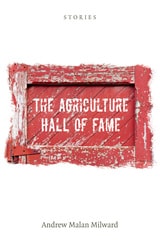
The Agriculture Hall of Fame
StoriesAndrew Malan Milward
University of Massachusetts Press, 2012
These powerful stories limn the complexities and dilemmas of life in Kansas, a state at “the center of the center of America,” as a billboard in one story announces. Andrew Malan Milward explores the less visible aspects of the Kansas experience—where its agrarian past comes into conflict with the harsh present reality of drugs, fundamentalism, and corporatism, relegating its agrarian identity to museums and amusement parks.
Presented in a triptych, the stories in Milward's debut collection range across a varied terrain, from tumbledown rural barns to modern urban hospitals, revealing the secrets contained therein.
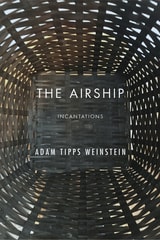
The Airship
IncantationsAdam Tipps Weinstein
University of Alabama Press, 2021
A hypnotic tale of a Jewish refugee from Europe and his three years stranded aboard the Vasari
The Airship is the entrancing fictional biography of Nathan Cohen, who was deported from the US in 1912 under the Alien Act and spent the first years of World War I on a passenger ship, shuttled between the US and Argentina. Newspapers called him “The Wandering Jew” and “The Man Without a Country,” speculating he would spend the rest of his life at sea.
Adam Tipps Weinstein provides a wise, rich, nuanced, and mischievous exploration of Cohen’s emigration from Bauska, in the Russian Pale of Settlement, to Las Pampas, in Argentina. The Airship is finally Cohen’s wish for a new line of flight, which he realizes when he launches his beloved Laika, aboard a scavenged hot-air balloon.
Told through a series of incantations—spells, songs, folk tales, ghosts, charms—the book traces Cohen’s biography across time and a great expanse of geography. The concepts of home and homeland are stretched until they break. Was there ever a home? The Airship incants these paradoxes of location, nationality, faith, and belonging in a bordered and borderless world.
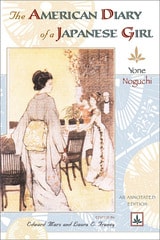
The American Diary of a Japanese Girl
An Annotated EditionYone Noguchi, edited by Edward Marx with Laura E. Franey
Temple University Press, 2007

The Architects
Stefan Heym
Northwestern University Press, 2006
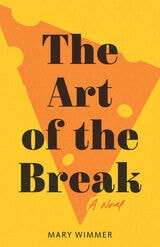
The Art of the Break
Mary Wimmer
University of Wisconsin Press, 2022
Hyperaware of her own childhood losses and the challenges posed by Rick’s PTSD and heavy drinking, Charlie strives to build a stable home for Lucy. Her degree in biochemistry from the University of Wisconsin gives her a leg up, and the quiet joys of working at the cheese vat provide a deep, healing peace that points the way toward happiness.
But Falls River is too narrow-minded to accept a female business owner, and Charlie is ill-prepared for the pettiness and conventions of small-town life. When debts come due, including a lien against her family’s land, she must quickly figure out who is on her side—and how to keep her dreams alive.
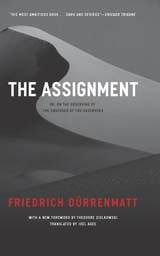
The Assignment
or, On the Observing of the Observer of the ObserversFriedrich Dürrenmatt
University of Chicago Press, 1988
“The narrative is accelerated from the start. . . . As the novella builds to its horripilating climax, we realize the extent to which all values have thereby been inverted. The Assignment is a parable of hell for an age consumed by images.”—New York Times Book Review
“His most ambitious book . . . dark and devious . . . almost obsessively drawn to mankind’s most fiendish crimes.”—Chicago Tribune
“A tour-de-force . . . mesmerizing.”—Village Voice
The Auburn Conference
Tom Piazza
University of Iowa Press, 2023
The Axe
Ludvik Vaculik
Northwestern University Press, 1994
In late Sixties Czechoslovakia, communist ideology is failing. A disillusioned middle-aged journalist retreats from the politics of Prague to the Moravian countryside of his youth. There he rediscovers the complex relationship with his dead father, a communist crusader. But when the journalist is accused of disgracing his father and his proletariat background, he realizes that he, too, is a leader—and that the stakes are now reversed.
The Bad Lands
A NovelOakley Hall
University of Chicago Press, 2016
An action-packed western from one of the masters of the genre, Oakley Hall’s The Bad Lands blends roundups and rustlers, whorehouses and land grabs, shoot-outs and the threat of hangings in a tale of the war between the cowboys and the cattle barons. But more than this, it is an elegy to the wild beauty of the badlands before the ranchers moved in, chased off the free-rangers, the trappers, and the tribes, and fenced it all in.
The Barbary Figs
Rashid Boudjedra
Haus Publishing, 2013
The Basket Woman
A Book Of Indian TalesMary Austin
University of Nevada Press, 1999
The Basque Hotel
Robert Laxalt
University of Nevada Press, 1993
The Beckoning World
A NovelDouglas Bauer
University of Iowa Press, 2022
But dreams sometimes suffer from a lovely abundance, and in Earl’s case her name is Emily Marchand. They fall quickly and deeply in love, but with that love comes heartbreaking complications.
The Beckoning World gathers a cast of characters that include Babe Ruth and Lou Gehrig; a huge-hearted Pullman steward offering aphoristic wisdom; and countless others, not least of which is the 1918 Spanish flu taking vivid spectral form. At the center is a relentless love that Earl and Emily are defenseless against, allied as they are “in this business of their hearts.”

The Bingo Long Traveling All-Stars and Motor Kings
A NOVELWilliam Brashler. Introduction by Peter C. Bjarkman
University of Illinois Press, 1993
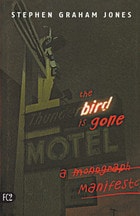
The Bird is Gone
A ManifestoStephen Graham Jones
University of Alabama Press, 2003
A lost pipe holds the power to rewrite a nation.
Cleverly blending alternate history, mystery, and indigenous resurgence, Stephen Graham Jones’s The Bird Is Gone unfolds in a transformed Great Plains where a visionary conservation act has made the land truly “Indian again.” Fourteen years later, a motley crew led by LP Deal converges in a bowling alley within Indian Territories, on a quest for a forgotten treaty pipe—sealed in a locker and flushed into oblivion—that could return all of America to Indigenous hands. Surreal, suspenseful, and richly original, this manifesto of resistance challenges readers to reconsider power, history, and the stakes of reclaiming a stolen world.
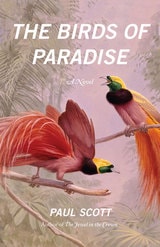
The Birds of Paradise
A NovelPaul Scott
University of Chicago Press, 2013
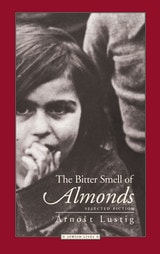
The Bitter Smell of Almonds
Arnost Lustig
Northwestern University Press, 2001
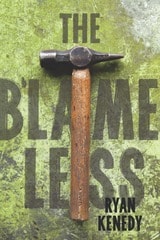
The Blameless
Ryan Kenedy
University of Wisconsin Press, 2023
Meanwhile, having spent three decades serving a life sentence for murdering the California preacher who rescued him from the streets, Travis thinks of himself as a reformed man. Traveling from Folsom Prison to his new home in the Mojave Desert, a remote location with minimal temptations, he struggles to reconcile his past and embrace his newfound freedom. But there are more challenges to staying on the straight and narrow than he ever could have imagined.
Virginia’s and Travis’s braided narratives slowly tighten as they approach their inevitable collision. Unflinching, compassionate, and gripping, this bold novel evocatively examines the ambiguities wrought by both violence and redemption.
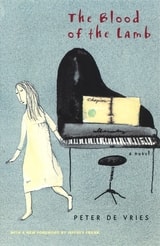
The Blood of the Lamb
A NovelPeter De Vries
University of Chicago Press, 2005
One of John Green's "favorite books ever," a powerful, moving novel of family, parenthood, and loss
The most poignant of all Peter De Vries's novels, The Blood of the Lamb is also the most autobiographical. It follows the life of Don Wanderhop from his childhood in an immigrant Calvinist family living in Chicago in the 1950s through the loss of a brother, his faith, his wife, and finally his daughter-a tragedy drawn directly from De Vries's own life. Despite its foundation in misfortune, The Blood of the Lamb offers glimpses of the comic sensibility for which De Vries was famous. Engaging directly with the reader in a manner that buttresses the personal intimacy of the story, De Vries writes with a remarkableblend of grief, love, wit, and fury.
The Blossom Festival
(A Novel)Lawrence Coates
University of Nevada Press, 1999
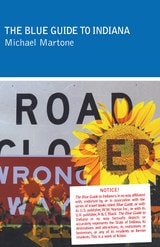
The Blue Guide to Indiana
Michael Martone
University of Alabama Press, 2001
The master of the nearly true is back with The Blue Guide to Indiana, an ersatz travel book for the Hoosier State. Michael Martone, whose trademark is the blurring of the lines between fact and fiction, has created an Indiana that almost is, a landscape marked by Lover's Lane franchises and pharmaceutical drug theme parks. Visit the Trans-Indiana Mayonnaise Pipeline and the Field of Lightbulbs. Learn about Our Lady of the Big Hair and Feet or the history of the License Plate Insurrection of 1979. Let Martone guide you through every inch of the amazing state that is home to the Hoosier Infidelity Resort Area, the National Monument for Those Killed by Tornadoes in Trailer Parks and Mobile Home Courts, and the Annual Eyeless Fish Fry. All your questions will be answered, including many you never thought to ask (like: "What's a good recipe for Pork Cake?").
The Boarding-School Girl
Nadezhda Khvoshchinskaya
Northwestern University Press, 2000
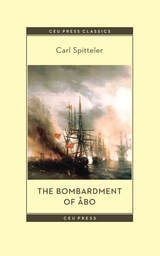
The Bombardment of Åbo
A Novella Based on a Historical Event in Modern TimesCarl Spitteler
Central European University Press, 2022
This farcical tale tells how the British bombing of a Finnish port city changes the life of the Russian governor, his wife, their cook, and the cook's Finnish fiancé. The story takes place during a Nordic offshoot of the Crimean conflict, known as the Åland War, in which a British-French naval force attacked military and civilian facilities on the coast of the Grand Duchy of Finland in 1854–1856. The location of the novella is Åbo, today’s Turku, where soldiers in the Russian garrison enjoy life, Cossacks dance and drink, and the governor’s wife is preoccupied about her cook’s marriage to a local lad, against which the governor and the English admiral devise a plot.
After studies in Swiss and German universities, Carl Spitteler worked in Russia between 1871 and 1879 as the private tutor in the family of a Finnish general. In the process he came to know Finnish and Baltic noble families in Saint Petersburg and Finland. He published this story in 1889, and went on to become, in 1919, the first Swiss winner of the Nobel Prize for literature. The Bombardment of Åbo is an ironic Western gaze on life and culture in the Tsarist Empire. Spitteler’s deeply held pacifism breaks through his otherwise sarcastic description of the characters and episodes in the novella.
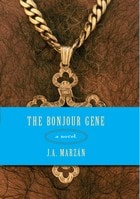
The Bonjour Gene
A NovelJ. A. Marzán; Introduction by David Huddle
University of Wisconsin Press, 2005
Descended from three French brothers who settled in Puerto Rico, Bonjours now belong to extended branches, some settled in New York City. Removed in varying degrees, all remain connected by the lore that only one island family possesses their surname, and that starting with the three brothers—sowers of a legacy of adultery and abandonment—every Bonjour male carries a reckless, womanizing gene.
Lineage and legend of lineage haunt but do not make these lives predictable. So Daisy, who hardly knew her father and has passed her prime without much interest in marriage, secretly falls in love with the man who paid her to marry him so he could get a green card. Ten-year-old Marco does not know what the reader does: that his visiting, divorced Bonjour father is gay. Recently married Gabriel, having flown to Puerto Rico to bury a father who intermittently entered his life, meets an African American down from Georgia, whom he learns is his embittered brother, and his beautiful stepsister, with whom he faces the same temptation that sidetracked his father.
Interconnected like his Bonjour families, these stories of unpredictable and unforgettable characters will transport the reader to a plane where ethnicity becomes universality.
The Book of Doubt
Tessa de Loo
Haus Publishing, 2011
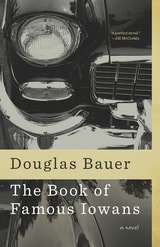
The Book of Famous Iowans
A NovelDouglas Bauer
University of Iowa Press, 2014
But mostly what Will summons up in his intimate remembrance are those few catastrophic days in early June when he was “three months shy of twelve,” more than a decade after his parents have married and returned to the Vaughns’ home place, where Lewis farms his family’s land. For it is during those days that Leanne’s affair with a local man named Bobby Markum becomes known—first to Lewis and then, in a fiercely dramatic public confrontation, to young Will, to his beloved Grandmother Vaughn, and by nightfall to all the citizens of the town. The knowledge of such scandal, in so small a place, sets off a series of highly charged reactions, vivid consequences that surely determine the fates of every member of this unforgettable family.
A tale of memory and hero worship and the restless pulse of longing, The Book of Famous Iowans examines those forces that define not only a state made up of a physical geography, but more important, those states of the wholly human spirit.
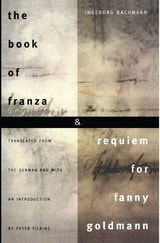
The Book of Franza and Requiem for Fanny Goldmann
Ingeborg Bachmann, translated from the German by Peter Filkins
Northwestern University Press, 2010
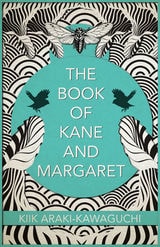
The Book of Kane and Margaret
A NovelKiik Araki-Kawaguchi, Illustrations by Gautam Rangan
University of Alabama Press, 2020
WINNER OF FC2’S RONALD SUKENICK INNOVATIVE FICTION PRIZE
A novel about two teenage lovers who disrupt a World War II internment camp in Arizona
Kane Araki and Margaret Morri are not only the names of teenage lovers living in a World War II Japanese relocation camp. Kane Araki is also the name of a man who, mysteriously, sprouts a pair of black raven’s wings overnight. Margaret Morri is the name of the aging healer who treats embarrassing conditions (smelly feet and excessive flatulence). It’s also the name of an eleven-year-old girl who communes with the devil, trading human teeth for divine wishes.
In The Book of Kane and Margaret, dozens of Kane Arakis and Margaret Morris populate the Canal and Butte camp divisions in Gila River. Amidst their daily rituals and family dramas, they find ways to stage quiet revolutions against a domestic colonial experience. Some internees slip through barbed wire fences to meet for love affairs. Others attempt to smuggle whiskey, pornography, birds, dogs, horses, and unearthly insects into their family barracks. And another seeks a way to submerge the internment camp in Pacific seawater.