Results by title
100 books match the query 'London' and 17 start with t
The Complete Short Stories, Volume 1
Enid Dinnis
Catholic University of America Press, 2023

The GEC Research Laboratories 1919-1984
Robert Clayton
The Institution of Engineering and Technology, 1989
The Haydn Economy
Music, Aesthetics, and Commerce in the Late Eighteenth CenturyNicholas Mathew
University of Chicago Press, 2022
In this far-reaching work of music history and criticism, Nicholas Mathew reimagines the world of Joseph Haydn and his contemporaries, with its catastrophic upheavals and thrilling sense of potential. In the process, Mathew tackles critical questions of particular moment: how we tell the history of the European Enlightenment and Romanticism; the relation of late eighteenth-century culture to incipient capitalism and European colonialism; and how the modern market and modern aesthetic values were—and remain—inextricably entwined.
The Haydn Economy weaves a vibrant material history of Haydn’s career, extending from the sphere of the ancient Esterházy court to his frenetic years as an entrepreneur plying between London and Vienna to his final decade as a venerable musical celebrity, during which he witnessed the transformation of his legacy by a new generation of students and acolytes, Beethoven foremost among them. Ultimately, Mathew asserts, Haydn’s historical trajectory compels us to ask what we might retain from the cultural and political practices of European modernity—whether we can extract and preserve its moral promise from its moral failures. And it demands that we confront the deep histories of capitalism that continue to shape our beliefs about music, sound, and material culture.
The Kinks
Songs of the Semi-DetachedMark Doyle
Reaktion Books, 2020
The Last Asylum
A Memoir of Madness in Our TimesBarbara Taylor
University of Chicago Press, 2015
The Last Asylum is Taylor’s breathtakingly blunt and brave account of those years. In it, Taylor draws not only on her experience as a historian, but also, more importantly, on her own lived history at Friern— once known as the Colney Hatch Lunatic Asylum and today the site of a luxury apartment complex. Taylor was admitted to Friern in July 1988, not long before England’s asylum system began to undergo dramatic change: in a development that was mirrored in America, the 1990s saw the old asylums shuttered, their patients left to plot courses through a perpetually overcrowded and underfunded system of community care. But Taylor contends that the emptying of the asylums also marked a bigger loss, a loss of community. She credits her own recovery to the help of a steadfast psychoanalyst and a loyal circle of friends— from Magda, Taylor’s manic-depressive roommate, to Fiona, who shares tips for navigating the system and stories of her boyfriend, the “Spaceman,” and his regular journeys to Saturn. The forging of that network of support and trust was crucial to Taylor’s recovery, offering a respite from the “stranded, homeless feelings” she and others found in the outside world.
A vivid picture of mental health treatment at a moment of epochal change, The Last Asylum is also a moving meditation on Taylor’s own experience, as well as that of millions of others who struggle with mental illness.
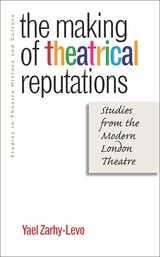
The Making of Theatrical Reputations
Studies from the Modern London TheatreYael Zarhy-Levo
University of Iowa Press, 2008
Today's successful plays and playwrights achieve their prominence not simply because of their intrinsic merit but because of the work of mediators, who influence the whole trajectory of a playwright's or a theatre company's career. Critics and academic writers are primarily considered the makers of reputations, but funding organizations and various media agents as well as artistic directors, producers, and directors also pursue separate agendas in shaping the reputations of theatrical works. In The Making of Theatrical Reputations Yael Zarhy-Levo demonstrates the processes through which these mediatory practices by key authority figures situate theatrical companies and playwrights within cultural and historical memory.
To reveal how these authorizing powers-that-be promote theatrical events, companies, and playwrights, Zarhy-Levo presents four detailed case studies that reflect various angles of the modern London theatre. In the case of the English Stage Company's production of John Osborne's Look Back in Anger, she centers on a specific event. She then focuses on the trajectory of a single company, the Theatre Workshop, particularly through its first decade at the Theatre Royal, Stratford East, London. Next, she explores the career of the dramatist John Arden, especially its first ten years, in part drawing upon an interview with Arden and his wife, actress and playwright Margaretta D'Arcy, before turning to her fourth study: the playwright Harold Pinter's shifting reputation throughout the different phases of his career.
Zarhy-Levo's accounts of these theatrical events, companies, and playwrights through the prism of mediation bring fresh insights to these landmark productions and their creators.
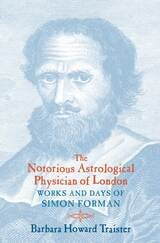
The Notorious Astrological Physician of London
Works and Days of Simon FormanBarbara Howard Traister
University of Chicago Press, 2000
Although he received no formal medical education, Forman built a thriving practice. His success rankled the College of Physicians of London, who hounded Forman with fines and jail terms for nearly two decades. In addition to detailing case histories of his medical practice—the first such records known from London—as well as his run-ins with the College, Forman's manuscripts cover a wide variety of other matters, from astrology and alchemy to gardening and the theater. His autobiographical writings are among the earliest English examples of their genre and display an abiding passion for reworking his personal history in the best possible light, even though they show little evidence that Forman ever intended to publish them.
Fantastic as many of Forman's manuscripts are, it is their more mundane aspects that make them such a priceless record of what daily life was like for ordinary inhabitants of Shakespeare's London. Forman's descriptions of the stench of a privy, the paralyzed limbs of a child, a lost bitch dog with a velvet collar all offer tantalizing glimpses of a world that seems at once very far away and intimately familiar. Anyone who wants to reclaim that world will enjoy this book.

The People of the Abyss
Jack London
Pluto Press, 2001
As well as being a literary masterpiece, The People of the Abyss stands as a major sociological study. While other American writers were blindly celebrating the glories of the British Empire at its peak, Jack London was asking why such misery was to be found in the heart of a capital city of immense wealth.
This is a work of reportage - London lets his observations speak for themselves. A precursor to the writings of George Orwell, this book remains a standard-bearer critique of capitalism, as powerful today as it was then.
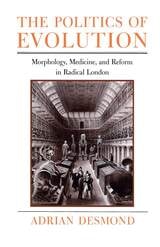
The Politics of Evolution
Morphology, Medicine, and Reform in Radical LondonAdrian Desmond
University of Chicago Press, 1990
"The Politics of Evolution is intellectual dynamite, and certainly one of the most important books in the history of science published during the past decade."—Jim Secord, Times Literary Supplement
"One of those rare books that not only stakes out new territory but demands a radical overhaul of conventional wisdom."—John Hedley Brooke, Times Higher Education Supplement
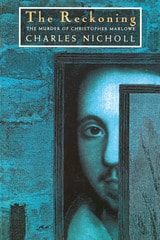
The Reckoning
The Murder of Christopher MarloweCharles Nicholl
University of Chicago Press, 1995
Here, in a tour de force of scholarship and ingenuity, Charles Nicholl penetrates four centuries of obscurity to reveal not only a complex and unsettling story of entrapment and betrayal, chimerical plot and sordid felonies, but also a fascinating vision of the underside of the Elizabethan world.
"Provides the sheer enjoyment of fiction, and might just be true."—Michael Kenney, Boston Globe
"Mr. Nicholl's glittering reconstruction of Marlowe's murder is only one of the many fascinating aspects of this book. Indeed, The Reckoning is equally compelling for its masterly evocation of a vanished world, a world of Elizabethan scholars, poets, con men, alchemists and spies, a world of Machiavellian malice, intrigue and dissent."—Michiko Kakutani, New York Times
"The rich substance of the book is his detail, the thick texture of betrayal and evasion which was Marlowe's life."—Thomas Flanagan, Washington Post Book World
Winner of the Crime Writer's Gold Dagger Award for Nonfiction Thriller
The Streets of Europe
The Sights, Sounds, and Smells That Shaped Its Great CitiesBrian Ladd
University of Chicago Press, 2020
Merchants’ shouts, jostling strangers, aromas of fresh fish and flowers, plodding horses, and friendly chatter long filled the narrow, crowded streets of the European city. As they developed over many centuries, these spaces of commerce, communion, and commuting framed daily life. At its heyday in the 1800s, the European street was the place where social worlds connected and collided.
Brian Ladd recounts a rich social and cultural history of the European city street, tracing its transformation from a lively scene of trade and crowds into a thoroughfare for high-speed transportation. Looking closely at four major cities—London, Paris, Berlin, and Vienna—Ladd uncovers both the joys and the struggles of a past world. The story takes us up to the twentieth century, when the life of the street was transformed as wealthier citizens withdrew from the crowds to seek refuge in suburbs and automobiles. As demographics and technologies changed, so did the structure of cities and the design of streets, significantly shifting our relationships to them. In today’s world of high-speed transportation and impersonal marketplaces, Ladd leads us to consider how we might draw on our history to once again build streets that encourage us to linger.
By unearthing the vivid descriptions recorded by amused and outraged contemporaries, Ladd reveals the changing nature of city life, showing why streets matter and how they can contribute to public life.

The Trial of Charles I
A Documentary HistoryEdited by David Lagomarsino and Charles T. Wood
Dartmouth College Press, 1989
The Worlds of Victor Sassoon
Bombay, London, Shanghai, 1918–1941Rosemary Wakeman
University of Chicago Press, 2024
In this book, historian Rosemary Wakeman brings to life the frenzied, crowded streets, markets, ports, and banks of Bombay, London, and Shanghai. In the early twentieth century, these cities were at the forefront of the sweeping changes taking the world by storm as it entered an era of globalized commerce and the unprecedented circulation of goods, people, and ideas. Wakeman explores these cities and the world they helped transform through the life of Victor Sassoon, who in 1924 gained control of his powerful family’s trading and banking empire. She tracks his movements between these three cities as he grows his family’s fortune and transforms its holdings into a global juggernaut. Using his life as its point of entry, The Worlds of Victor Sassoon paints a broad portrait not just of wealth, cosmopolitanism, and leisure but also of the discrimination, exploitation, and violence wreaked by a world increasingly driven by the demands of capital.
The Writing Life of Hugh Kelly
Politics, Journalism, and Theatre in Late-Eighteenth-Century LondonRobert R. Bataille
Southern Illinois University Press, 2000
Robert R. Bataille demonstrates convincingly that between 1767 and 1777, Anglo-Irish writer Hugh Kelly made major contributions in three areas of British culture: politics, journalism, and theater. Bataille shows how all three activities were integrated in Kelly’s life, suggesting that such interrelationships often existed in the rough and ready London culture during the early reign of King George III.
When he discovered several newspaper campaigns that Kelly orchestrated as a paid political propagandist for George III and his ministers, Bataille understood in part how important Kelly was to his era. In his capacity as propagandist, Kelly defended Hanoverian colonial policies on the eve of the American Revolution, served as a key opponent of the radical Wilkites, and promoted the acceptance of the 1774 Quebec Bill, which established, among other things, the right of the recently defeated French citizens of Quebec to maintain the French language.
A belletristic journalist, Kelly published theater reviews and essays that played a major role in shaping the taste of his era. He wrote in defense of the controversial sentimental drama, and whenever he could, he promoted the major theatrical figure of the age, David Garrick. Under his editorship, the newspaper Public Ledger became a leading source of theater information. Seeking to raise the status of the profession of journalism, he wrote essays and articles that provided his middle-class readers with an insider’s view of the operations of the journalist.
Assessing Kelly’s contributions to the novel and drama, Bataille argues that this powerful journalist stands in the vanguard in the larger struggle against traditional attitudes supporting male superiority and aristocratic privilege. Kelly wrote in favor of gender equality and middle-class respectability, striving to inculcate what modern scholars refer to as the values of sensibility. Bataille also argues, however, that Kelly knew his audience. Instrumental in the rise of professional writing and popular culture, he understood that he had to observe the needs of his audience, detecting cultural trends and using the skills of the rhetorician.
The X Club
Power and Authority in Victorian ScienceRuth Barton
University of Chicago Press, 2018
These six ambitious professionals and three wealthy amateurs—J. D. Hooker, T. H. Huxley, John Tyndall, John Lubbock, William Spottiswoode, Edward Frankland, George Busk, T. A. Hirst, and Herbert Spencer—wanted to guide the development of science and public opinion on issues where science impinged on daily life, religious belief, and politics. They formed a private dining club, which they named the X Club, to discuss and further their plans. As Ruth Barton shows, they had a clear objective: they wanted to promote “scientific habits of mind,” which they sought to do through lectures, journalism, and science education. They devoted enormous effort to the expansion of science education, with real, but mixed, success.
For twenty years, the X Club was the most powerful network in Victorian science—the men succeeded each other in the presidency of the Royal Society for a dozen years. Barton’s group biography traces the roots of their success and the lasting effects of their championing of science against those who attempted to limit or control it, along the way shedding light on the social organization of science, the interactions of science and the state, and the places of science and scientific men in elite culture in the Victorian era.
Theatre, Community, and Civic Engagement in Jacobean London
Mark Bayer
University of Iowa Press, 2011
Taking to heart Thomas Heywood’s claim that plays “persuade men to humanity and good life, instruct them in civility and good manners, showing them the fruits of honesty, and the end of villainy,” Mark Bayer’s captivating new study argues that the early modern London theatre was an important community institution whose influence extended far beyond its economic, religious, educational, and entertainment contributions. Bayer concentrates not on the theatres where Shakespeare’s plays were performed but on two important amphitheatres, the Fortune and the Red Bull, that offer a more nuanced picture of the Jacobean playgoing industry. By looking at these playhouses, the plays they staged, their audiences, and the communities they served, he explores the local dimensions of playgoing.

Tides and Floods
New Research on London and the Tidal Thames from the Middle Ages to the Twentieth CenturyJames Galloway
University of London Press, 2010